INTRODUCTION
      TO
REMOTE SENSING
       
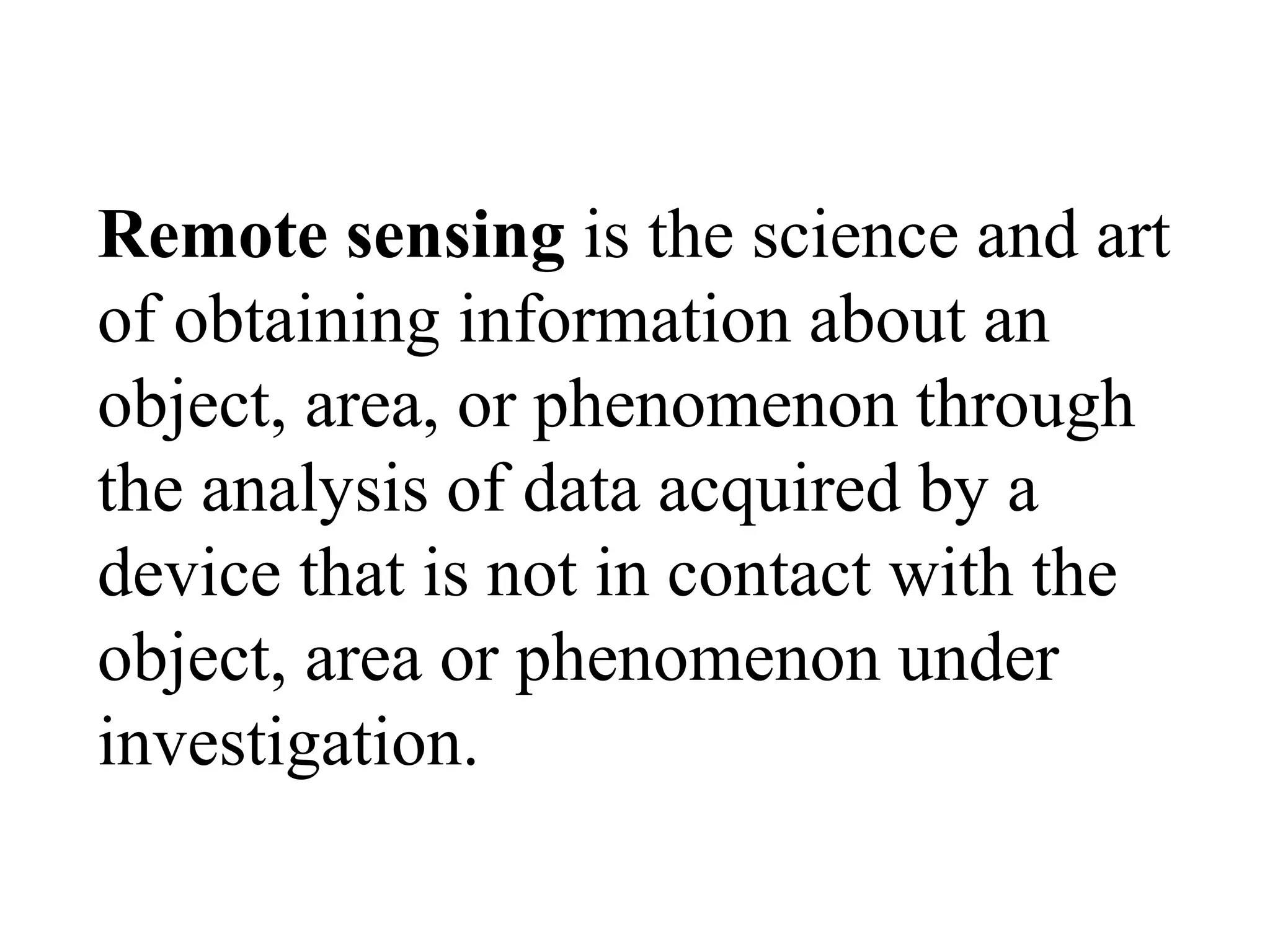
Remote sensing is the science and art
of obtaining information about an
object, area, or phenomenon through
the analysis of data acquired by a
device that is not in contact with the
object, area or phenomenon under
investigation.
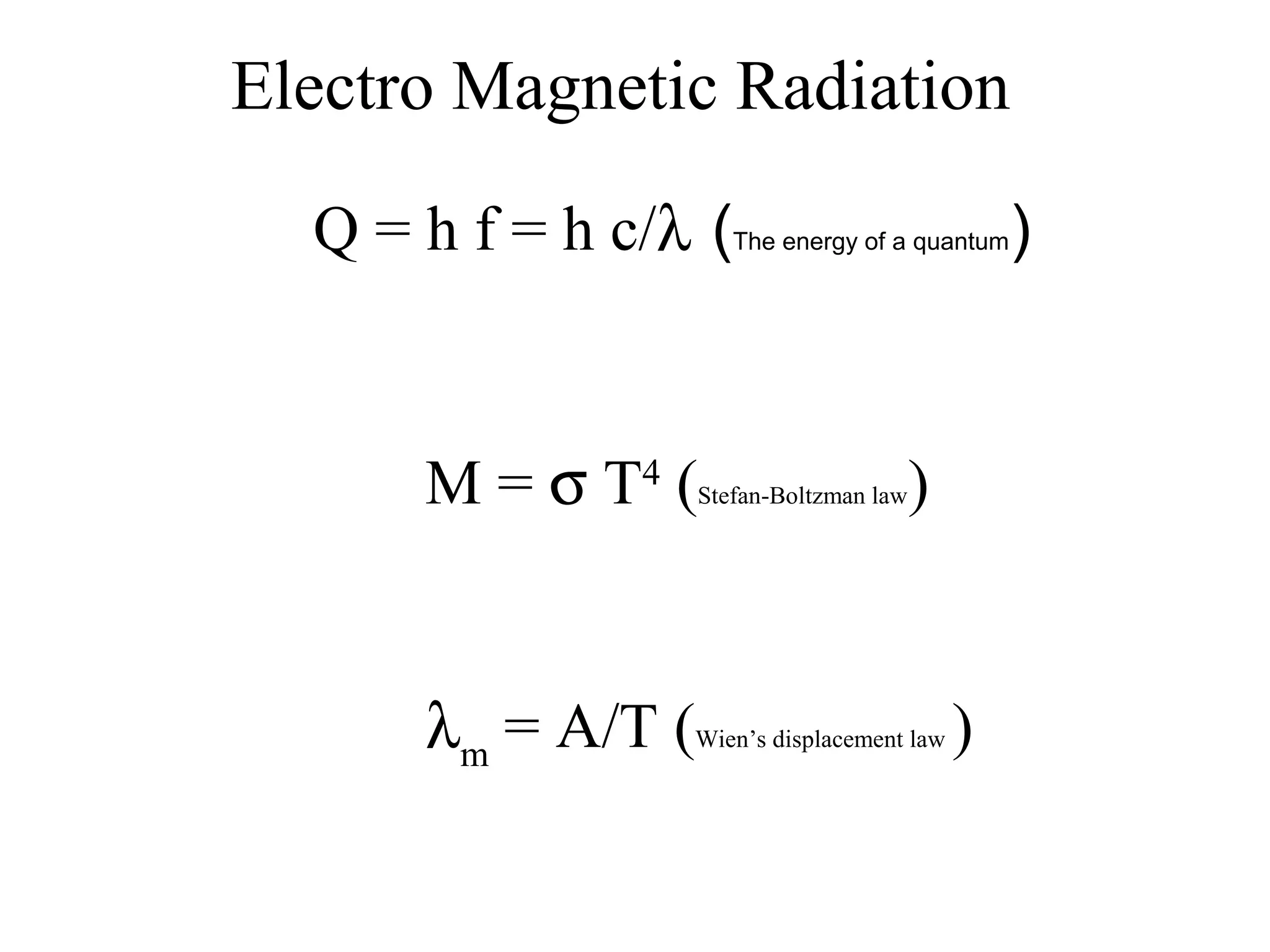
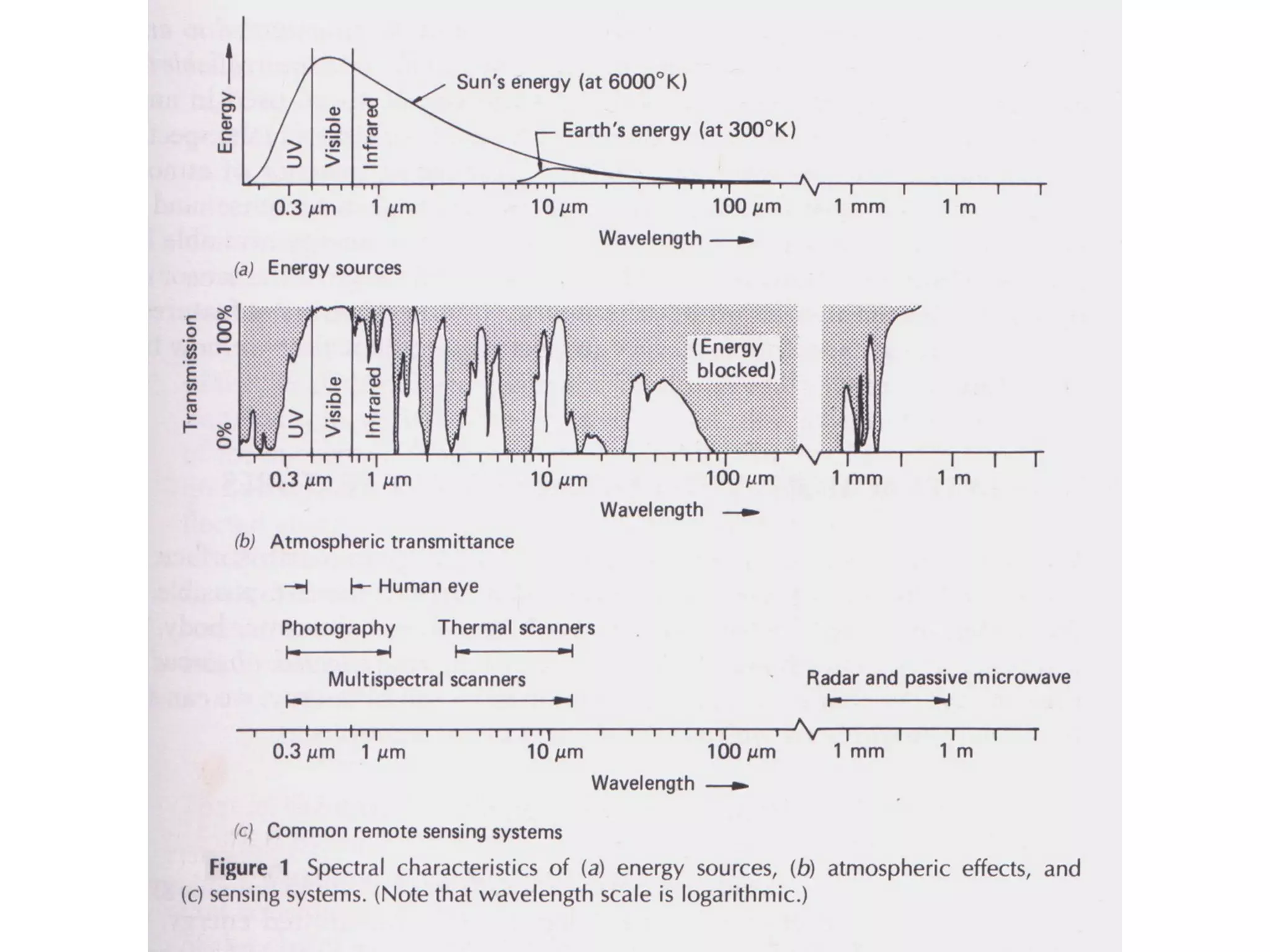
Electro Magnetic Radiation
  Q = h f = h c/λ (   The energy of a quantum    )


      M = σ T4 (   Stefan-Boltzman law   )


      λm = A/T (   Wien’s displacement law   )
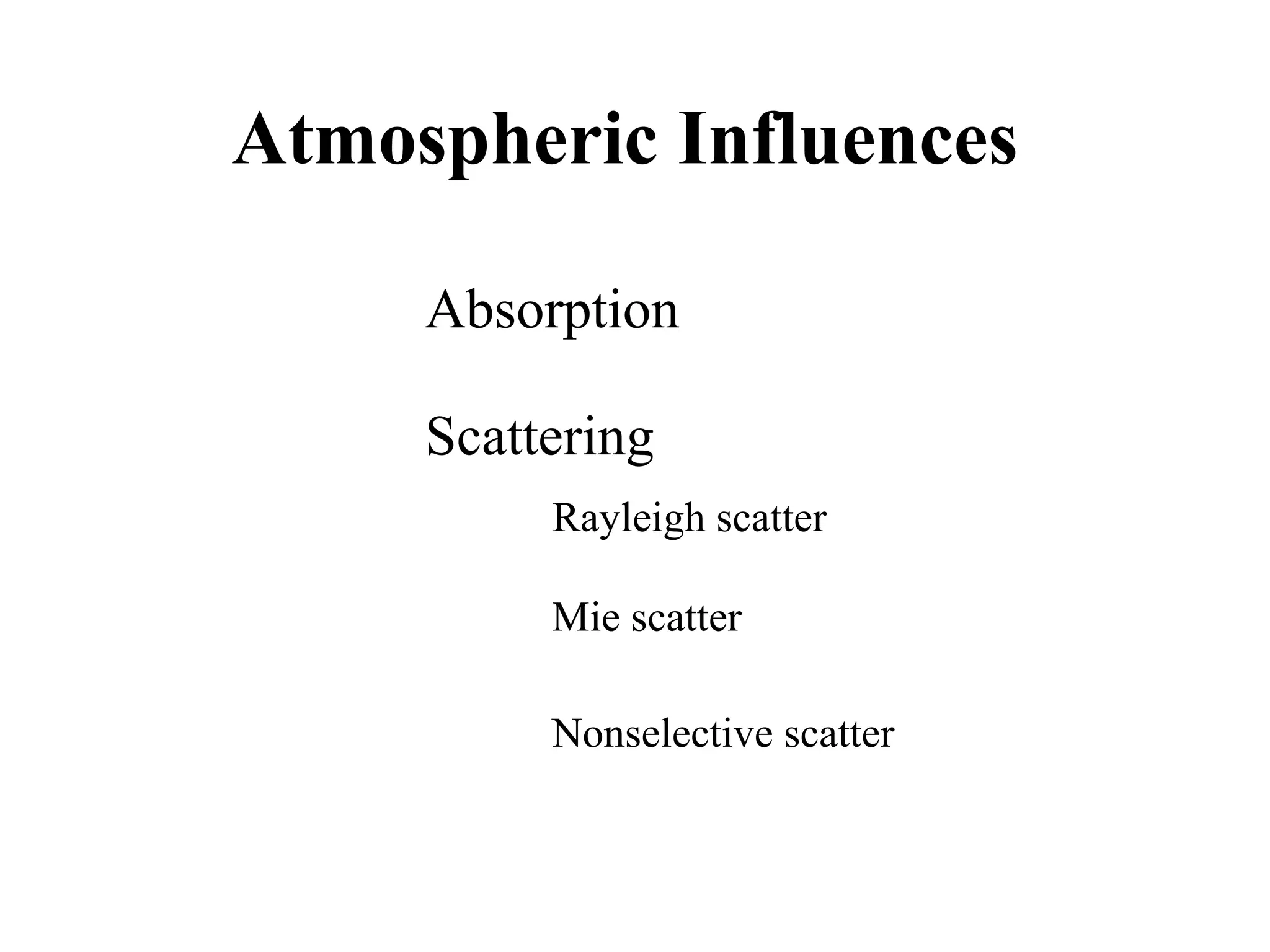
Atmospheric Influences

     Absorption

     Scattering
          Rayleigh scatter

          Mie scatter

          Nonselective scatter
Image Acquisition
   Photographic Sensors

   Digital Data

   Earth Resource Satellites
Image Resolution
 Spatial resolution

 Spectral resolution

 Radiometric resolution

 Temporal resolution
Image Interpretation
    Shape
    Size
    Pattern
    Tone (Hue)
    Texture
    Shadows
    Site
    Association
Applications
Land Use/Land Cover Mapping
Geologic and Soil Mapping
Agricultural Applications
Forestry Applications
Rangeland Applications
Urban and Regional Planning Applications
Wetland Mapping
Wildlife Ecology Applications
Archaeological applications
Environmental Assessment
Oil Exploration
Mineral Exploration
Landforms Identification and Evaluation
Water Resource Applications etc.
Conclusions
A picture is worth a thousand words, because pictures concisely convey
information about positions, size, and interrelationships between objects.
The basic advantages of images over the ground observation are i)
Improved vantage point, ii) Capability to stop action, iii) Permanent
recording, iv) Broadened spectral sensitivity, v) Increased spatial resolution
and geometric fidelity, vi) providing data for inaccessible regions etc.

Remote sensing will continue to play an increasingly broad and important
role in natural resources management. The technical capabilities of sensors,
space platforms, data communication systems, GPSs, digital image
processing systems, and GISs are improving on almost a daily basis. At the
same time, we are witnessing an evolution of various remote sensing
procedures from being purely research activities to being commercially
available services. Most importantly, we are becoming increasingly aware
of how interrelated and fragile the elements of our global resource base
really are and of the role remote sensing can play in inventorying,
monitoring, and managing earth resources and in modeling and helping us
understand the global ecosystem.

Anna univ Remote sensing and GIS

  • 1.
    INTRODUCTION TO REMOTE SENSING  
  • 2.
    Remote sensing isthe science and art of obtaining information about an object, area, or phenomenon through the analysis of data acquired by a device that is not in contact with the object, area or phenomenon under investigation.
  • 3.
    Electro Magnetic Radiation Q = h f = h c/λ ( The energy of a quantum ) M = σ T4 ( Stefan-Boltzman law ) λm = A/T ( Wien’s displacement law )
  • 4.
    Atmospheric Influences Absorption Scattering Rayleigh scatter Mie scatter Nonselective scatter
  • 7.
    Image Acquisition Photographic Sensors Digital Data Earth Resource Satellites
  • 8.
    Image Resolution Spatialresolution Spectral resolution Radiometric resolution Temporal resolution
  • 9.
    Image Interpretation Shape Size Pattern Tone (Hue) Texture Shadows Site Association
  • 10.
    Applications Land Use/Land CoverMapping Geologic and Soil Mapping Agricultural Applications Forestry Applications Rangeland Applications Urban and Regional Planning Applications Wetland Mapping Wildlife Ecology Applications Archaeological applications Environmental Assessment Oil Exploration Mineral Exploration Landforms Identification and Evaluation Water Resource Applications etc.
  • 11.
    Conclusions A picture isworth a thousand words, because pictures concisely convey information about positions, size, and interrelationships between objects. The basic advantages of images over the ground observation are i) Improved vantage point, ii) Capability to stop action, iii) Permanent recording, iv) Broadened spectral sensitivity, v) Increased spatial resolution and geometric fidelity, vi) providing data for inaccessible regions etc. Remote sensing will continue to play an increasingly broad and important role in natural resources management. The technical capabilities of sensors, space platforms, data communication systems, GPSs, digital image processing systems, and GISs are improving on almost a daily basis. At the same time, we are witnessing an evolution of various remote sensing procedures from being purely research activities to being commercially available services. Most importantly, we are becoming increasingly aware of how interrelated and fragile the elements of our global resource base really are and of the role remote sensing can play in inventorying, monitoring, and managing earth resources and in modeling and helping us understand the global ecosystem.