How animals survives
What is mimicry in the biology?
 When an animal displays physical or behavioral traits
by copying of different species or their surroundings,
and incur a survival advantages on account of it is
called mimicry .
Mimicry Vs Camouflage
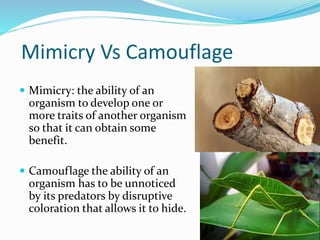
 Mimicry: the ability of an
organism to develop one or
more traits of another organism
so that it can obtain some
benefit.
 Camouflage the ability of an
organism has to be unnoticed
by its predators by disruptive
coloration that allows it to hide.
Types of mimicry
 Defensive mimicry
 The defensive mimicry is specially performed by
animals that have lots of predators, so their
survival rates depend on avoiding their predators.
 Non-Defensive mimicry
 This type is not used for defense but several other
purposes:
Types of defencive mimicrey
 Batesian
 Müllerian
 Mertensian
 Wasmannian
Batesian Mimicry
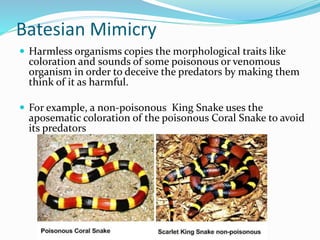
 Harmless organisms copies the morphological traits like
coloration and sounds of some poisonous or venomous
organism in order to deceive the predators by making them
think of it as harmful.
 For example, a non-poisonous King Snake uses the
aposematic coloration of the poisonous Coral Snake to avoid
its predators
Müllerian Mimicry
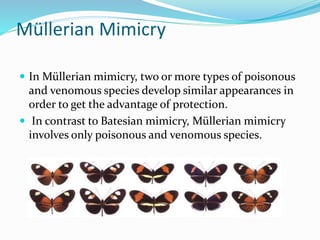
 In Müllerian mimicry, two or more types of poisonous
and venomous species develop similar appearances in
order to get the advantage of protection.
 In contrast to Batesian mimicry, Müllerian mimicry
involves only poisonous and venomous species.
Mertensian Mimicry
This is very unusual form of mimicry
 This type of mimicry helps in lowering the predation
rates because a predator eating a deadly species dies so
it will be unable to transmit the information that the
prey is harmful so the predation rate remains high.
 But if the deadly species resembles a less harmful
species and the prey eats the less harmful species, it
will transmit information to the other species that
“Don’t eat this prey, its harmful”.
Wasmannian mimicry
 It occurs when the mimic resembles it's predator in
order to live within the same nest or structure
Non-Defensive Mimicry
Aggressive Mimicry
 Unlike defensive mimicry, in aggressive mimicry, the
predators develop the traits of a harmless or even
beneficial species so they get unnoticed by their prey
or hostage.
 “a wolf in sheep’s clothing”
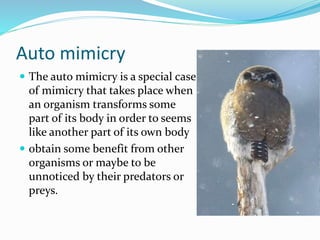
Auto mimicry
 The auto mimicry is a special case
of mimicry that takes place when
an organism transforms some
part of its body in order to seems
like another part of its own body
 obtain some benefit from other
organisms or maybe to be
unnoticed by their predators or
preys.
Beetles like the Staphylinidae (right) and Phosphaenus hemipterus (left)
mimic scorpions that may scare predators.
Signs of warning:
(maybe) I’m dangerous
Mimicry makes animals to evolve!
 Mimicry is one of the processes that makes animals to
evolve faster and become more fittest.
 These changes may occur in a higher or lower speed. So,
what about those animals that mimic other organisms?
Mimetic animals are in constant selective pressure to look
more like their models in order to go unnoticed and
improve their survival, but at the same time imitated
organisms (the models) are also under selection to sharp
their ability to discern between models and imitators.
 . . .

Animal mimicry

  • 1.
  • 3.
    What is mimicryin the biology?  When an animal displays physical or behavioral traits by copying of different species or their surroundings, and incur a survival advantages on account of it is called mimicry .
  • 4.
    Mimicry Vs Camouflage Mimicry: the ability of an organism to develop one or more traits of another organism so that it can obtain some benefit.  Camouflage the ability of an organism has to be unnoticed by its predators by disruptive coloration that allows it to hide.
  • 5.
    Types of mimicry Defensive mimicry  The defensive mimicry is specially performed by animals that have lots of predators, so their survival rates depend on avoiding their predators.  Non-Defensive mimicry  This type is not used for defense but several other purposes:
  • 6.
    Types of defencivemimicrey  Batesian  Müllerian  Mertensian  Wasmannian
  • 7.
    Batesian Mimicry  Harmlessorganisms copies the morphological traits like coloration and sounds of some poisonous or venomous organism in order to deceive the predators by making them think of it as harmful.  For example, a non-poisonous King Snake uses the aposematic coloration of the poisonous Coral Snake to avoid its predators
  • 8.
    Müllerian Mimicry  InMüllerian mimicry, two or more types of poisonous and venomous species develop similar appearances in order to get the advantage of protection.  In contrast to Batesian mimicry, Müllerian mimicry involves only poisonous and venomous species.
  • 9.
    Mertensian Mimicry This isvery unusual form of mimicry  This type of mimicry helps in lowering the predation rates because a predator eating a deadly species dies so it will be unable to transmit the information that the prey is harmful so the predation rate remains high.  But if the deadly species resembles a less harmful species and the prey eats the less harmful species, it will transmit information to the other species that “Don’t eat this prey, its harmful”.
  • 10.
    Wasmannian mimicry  Itoccurs when the mimic resembles it's predator in order to live within the same nest or structure
  • 11.
    Non-Defensive Mimicry Aggressive Mimicry Unlike defensive mimicry, in aggressive mimicry, the predators develop the traits of a harmless or even beneficial species so they get unnoticed by their prey or hostage.  “a wolf in sheep’s clothing”
  • 12.
    Auto mimicry  Theauto mimicry is a special case of mimicry that takes place when an organism transforms some part of its body in order to seems like another part of its own body  obtain some benefit from other organisms or maybe to be unnoticed by their predators or preys.
  • 13.
    Beetles like theStaphylinidae (right) and Phosphaenus hemipterus (left) mimic scorpions that may scare predators. Signs of warning: (maybe) I’m dangerous
  • 14.
    Mimicry makes animalsto evolve!  Mimicry is one of the processes that makes animals to evolve faster and become more fittest.  These changes may occur in a higher or lower speed. So, what about those animals that mimic other organisms? Mimetic animals are in constant selective pressure to look more like their models in order to go unnoticed and improve their survival, but at the same time imitated organisms (the models) are also under selection to sharp their ability to discern between models and imitators.  . . .