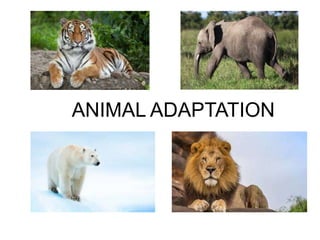
ANIMAL ADAPTATION
ADAPTATION
• Adaptation is the biological process by
which organisms adjust to new
environments or to changes in their
current environment.
Types of Animal Adaptation
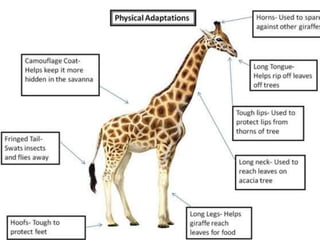
• Structural Adaptations
• Camouflage
• Behavioural Adaptations
• Physiological Adaptations
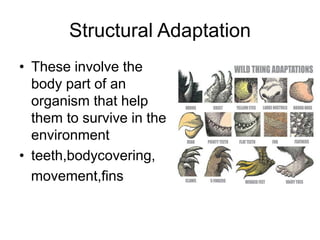
Structural Adaptation
• These involve the
body part of an
organism that help
them to survive in the
environment
• teeth,bodycovering,
movement,fins
Camouflage
• Camouflage is a
mechanism that allows
animal to blend with
environment.It makes
harder to spot.
• ex:Chameleon,leopard,
frogs
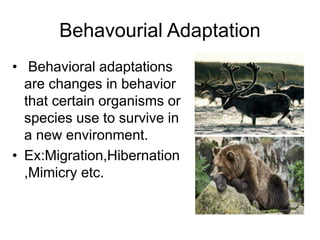
Behavourial Adaptation
• Behavioral adaptations
are changes in behavior
that certain organisms or
species use to survive in
a new environment.
• Ex:Migration,Hibernation
,Mimicry etc.
Physiological Adaptation
• It is an internal body process to regulate
and maintain homeostasis for an
organism to survive in the environment
• Examples: temperature regulation,
release of toxins or poisons, releasing
antifreeze proteins to avoid freezing in
cold environments
Animal adaptation
Animal adaptation
Animal adaptation

Animal adaptation

  • 1.
  • 2.
    ADAPTATION • Adaptation isthe biological process by which organisms adjust to new environments or to changes in their current environment.
  • 3.
    Types of AnimalAdaptation • Structural Adaptations • Camouflage • Behavioural Adaptations • Physiological Adaptations
  • 4.
    Structural Adaptation • Theseinvolve the body part of an organism that help them to survive in the environment • teeth,bodycovering, movement,fins
  • 5.
    Camouflage • Camouflage isa mechanism that allows animal to blend with environment.It makes harder to spot. • ex:Chameleon,leopard, frogs
  • 6.
    Behavourial Adaptation • Behavioraladaptations are changes in behavior that certain organisms or species use to survive in a new environment. • Ex:Migration,Hibernation ,Mimicry etc.
  • 7.
    Physiological Adaptation • Itis an internal body process to regulate and maintain homeostasis for an organism to survive in the environment • Examples: temperature regulation, release of toxins or poisons, releasing antifreeze proteins to avoid freezing in cold environments