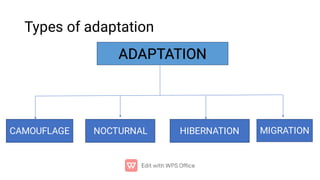
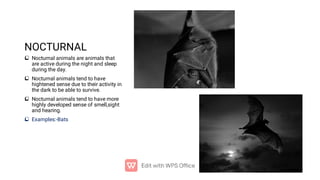
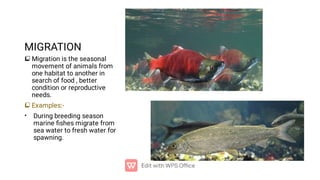
This document summarizes different types of adaptations including camouflage, nocturnal behavior, hibernation, and migration. It defines adaptation as a biological process where organisms adjust to new environments. Adaptations help organisms survive and are modifications that increase fitness. Camouflage allows animals to blend into their surroundings to hide from predators. Nocturnal animals are active at night and have enhanced senses for low-light conditions. Hibernation is a deep sleep used in winter or times of scarce resources to conserve energy. Migration moves animals seasonally for food, conditions, or breeding. Adaptations play a key role in survival through the struggle for existence.