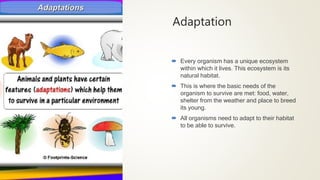
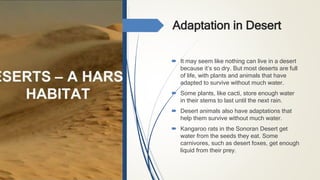
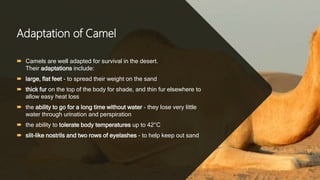
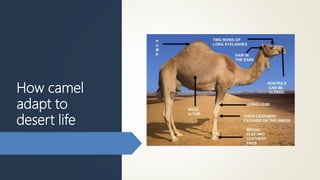
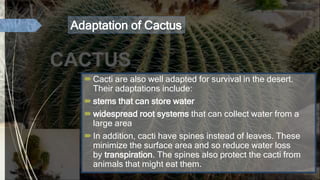
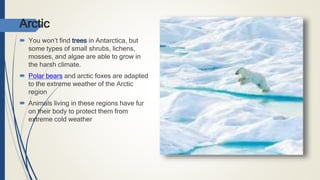
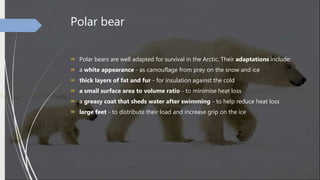
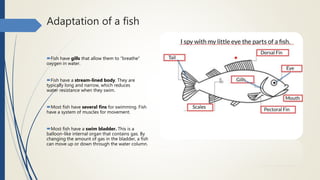
This document discusses animal adaptations to different habitats. It provides examples of how camels, cacti, polar bears, and fish have adapted to survive in deserts and Arctic environments. Camels have adaptations like thick fur, the ability to go long periods without water, and slit-like nostrils to survive in hot, dry deserts. Cacti store water in their stems and have widespread root systems and spines instead of leaves to minimize water loss. Polar bears have white fur for camouflage, thick layers of fat and fur for insulation, and large feet to distribute their weight on ice. The document also notes fish have gills to breathe underwater and streamlined bodies to reduce resistance while swimming. Adaptations help










![谷歌留痕技术 [ 𝙩𝙤𝙥 𝟮𝟯𝟯. 𝙘 𝙤𝙢 ]](https://cdn.slidesharecdn.com/ss_thumbnails/top233-260130174328-3833018c-thumbnail.jpg?width=640&height=640&fit=bounds)

