Anger
Management
Skills
Does everybody experience anger?

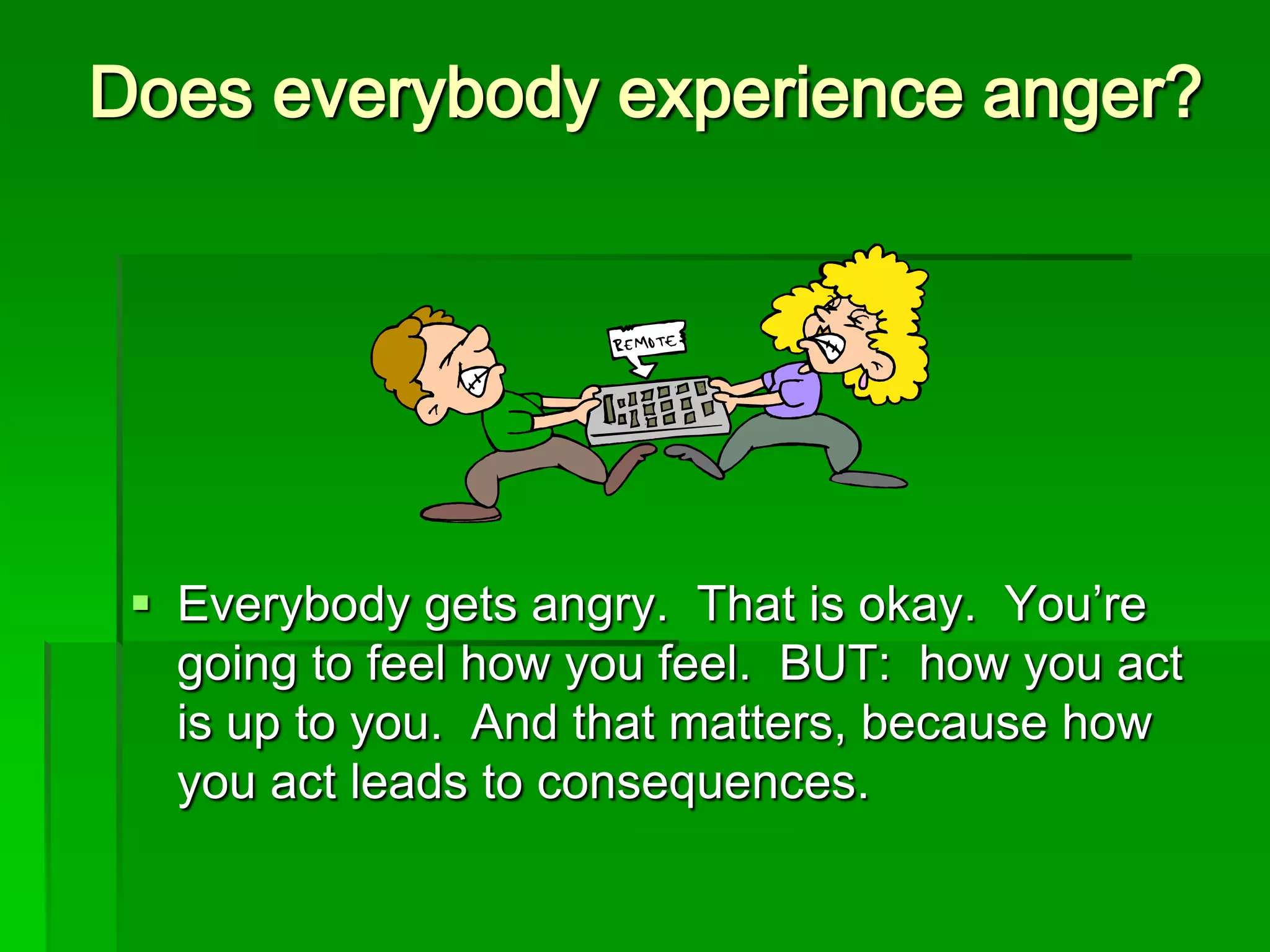
 Everybody gets angry. That is okay. You’re
going to feel how you feel. BUT: how you act
is up to you. And that matters, because how
you act leads to consequences.
Objectives:





1.
2.
3.
4.

Identify your anger triggers
Know your anger cues
Know your anger style
Deal with your anger effectively
TRIGGERS
What bugs you?

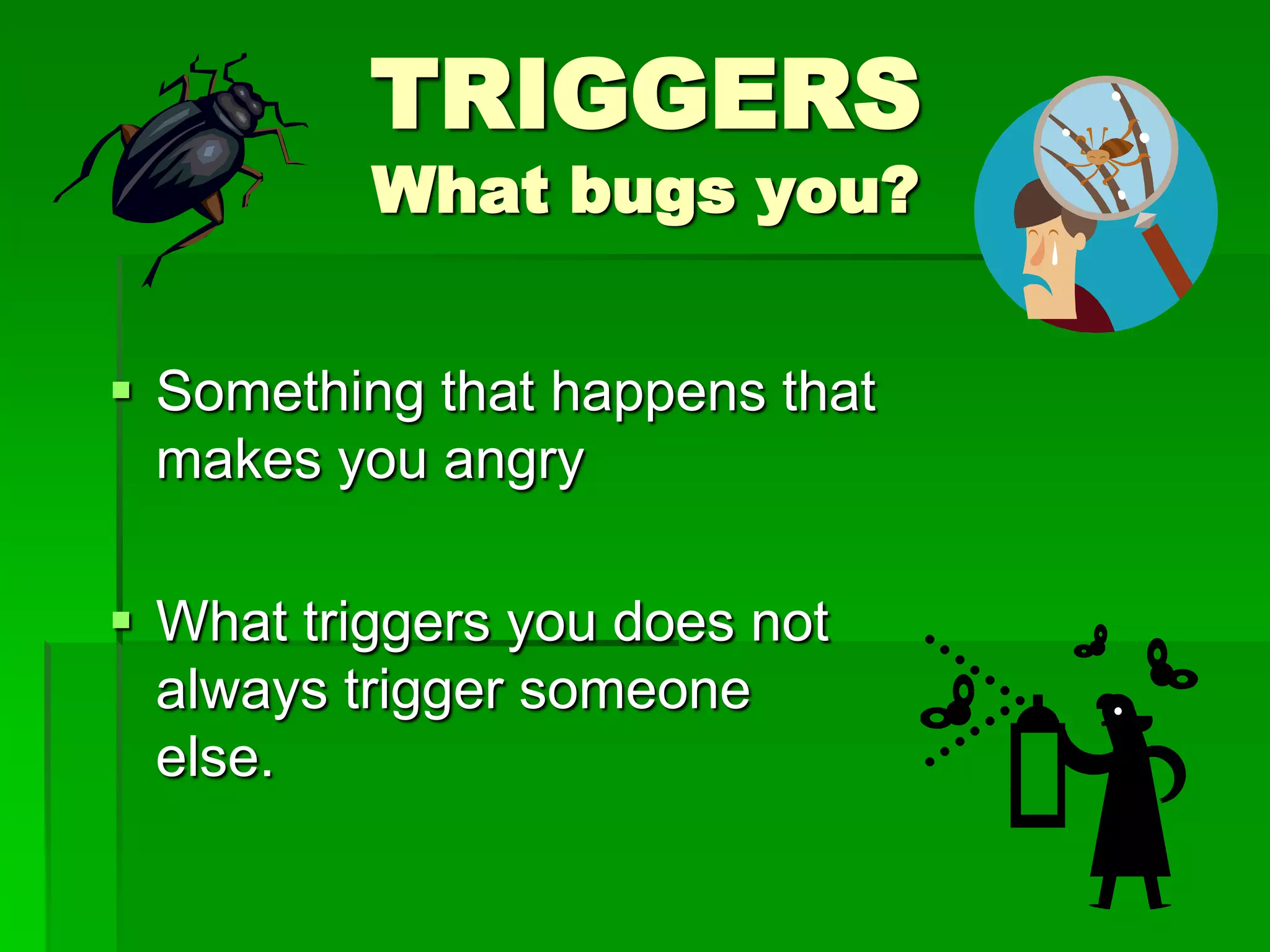
 Something that happens that
makes you angry
 What triggers you does not
always trigger someone
else.
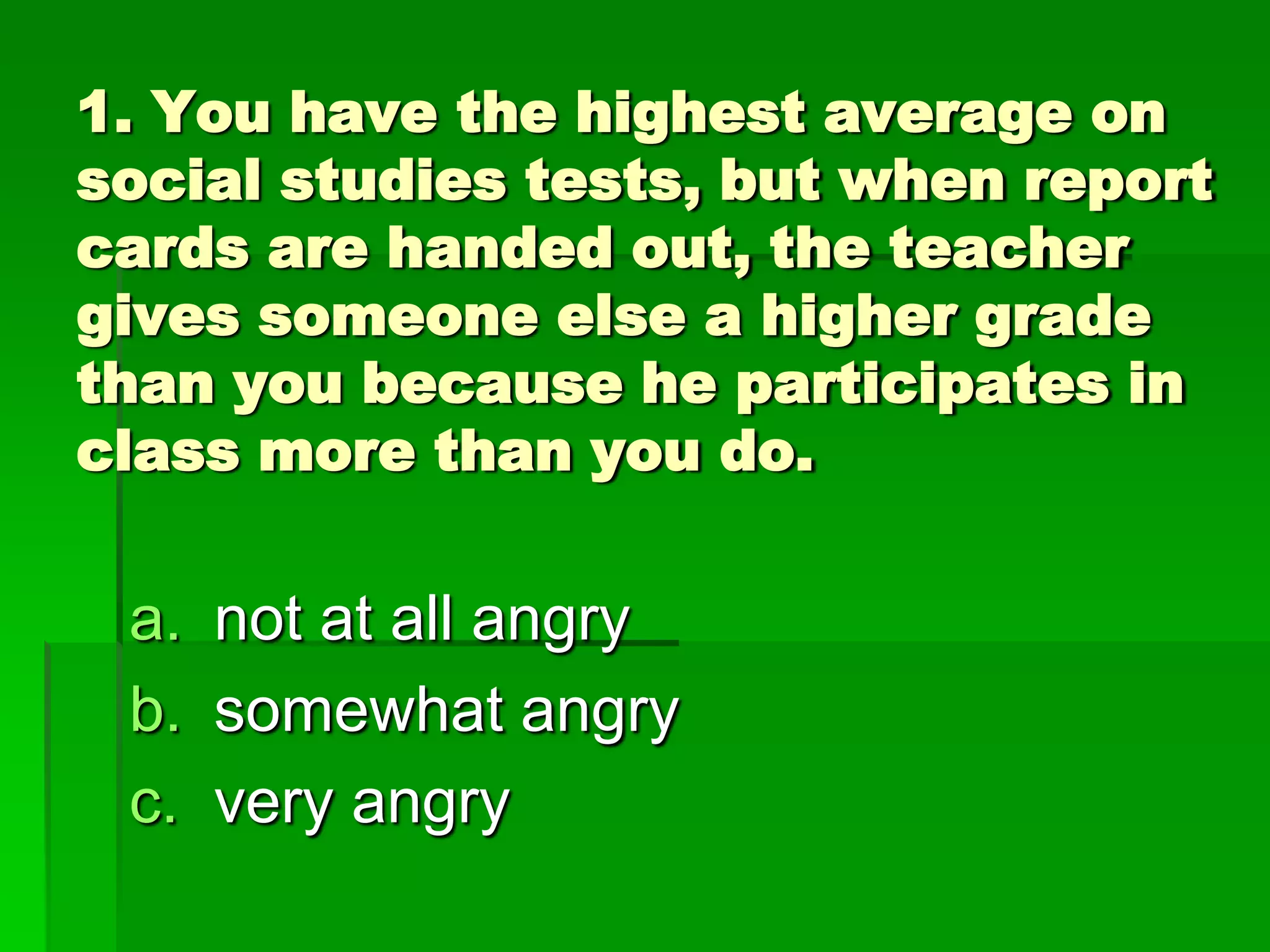
1. You have the highest average on
social studies tests, but when report
cards are handed out, the teacher
gives someone else a higher grade
than you because he participates in
class more than you do.

a. not at all angry
b. somewhat angry
c. very angry
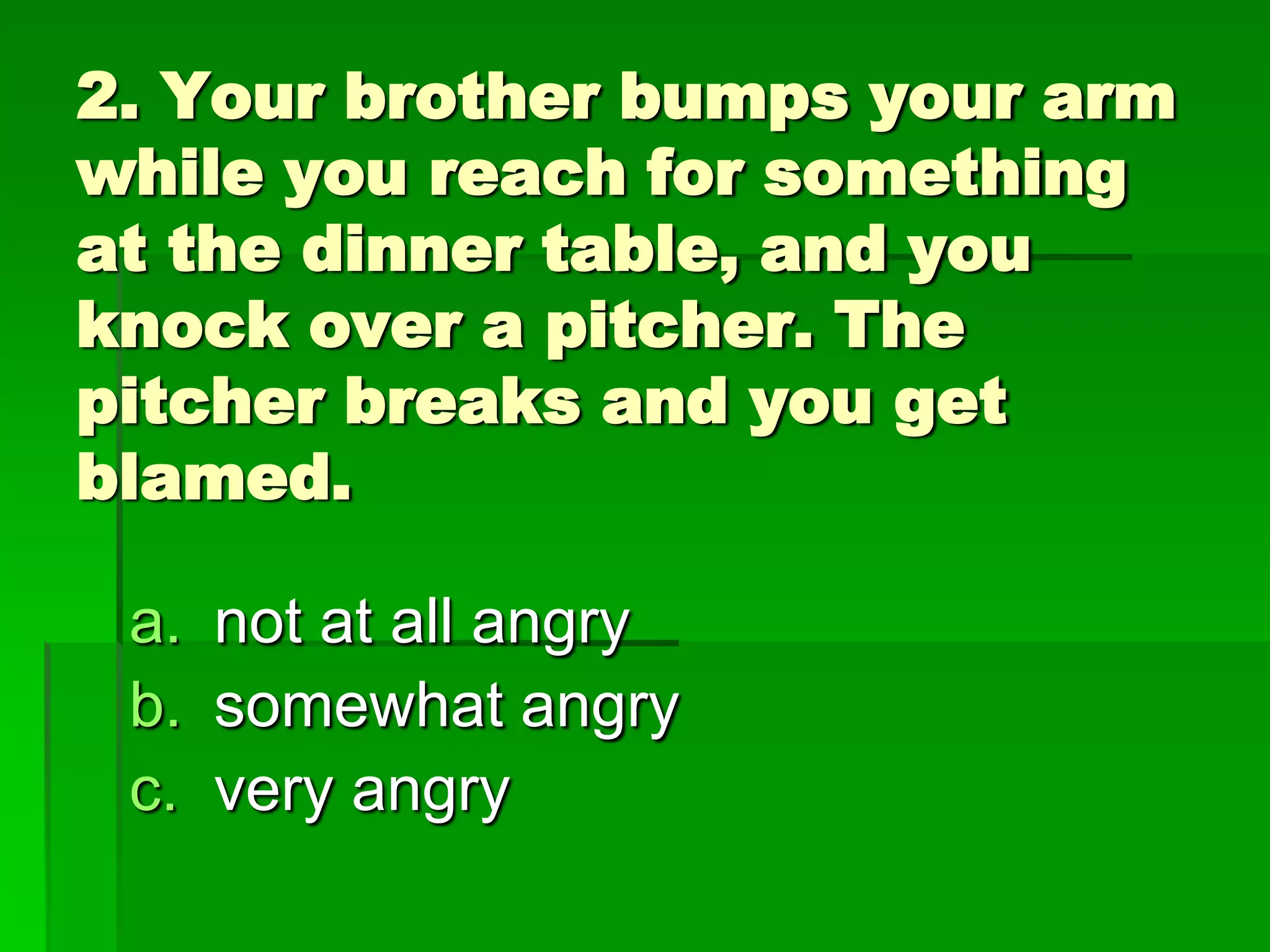
2. Your brother bumps your arm
while you reach for something
at the dinner table, and you
knock over a pitcher. The
pitcher breaks and you get
blamed.
a. not at all angry
b. somewhat angry
c. very angry
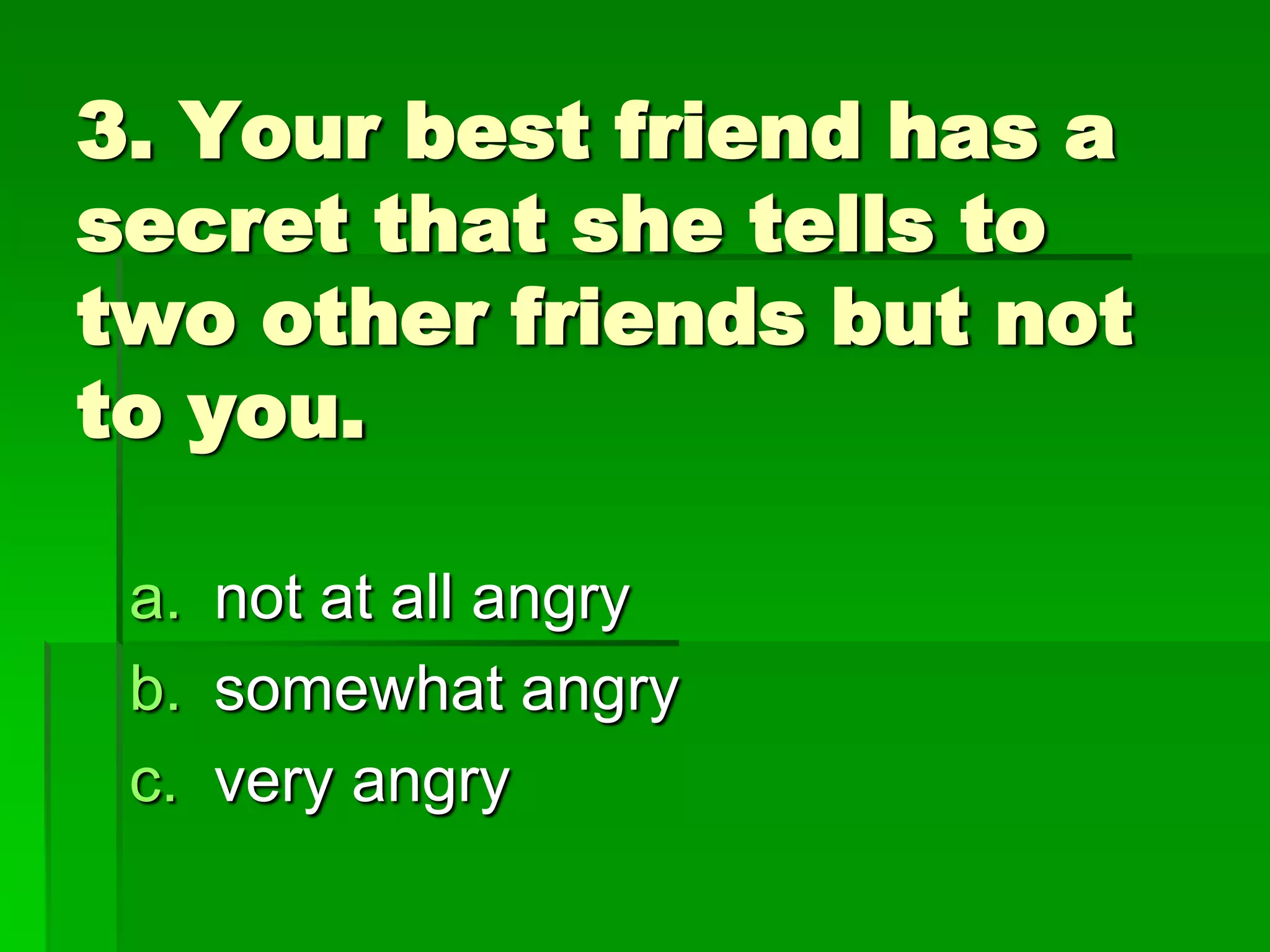
3. Your best friend has a
secret that she tells to
two other friends but not
to you.
a. not at all angry
b. somewhat angry
c. very angry
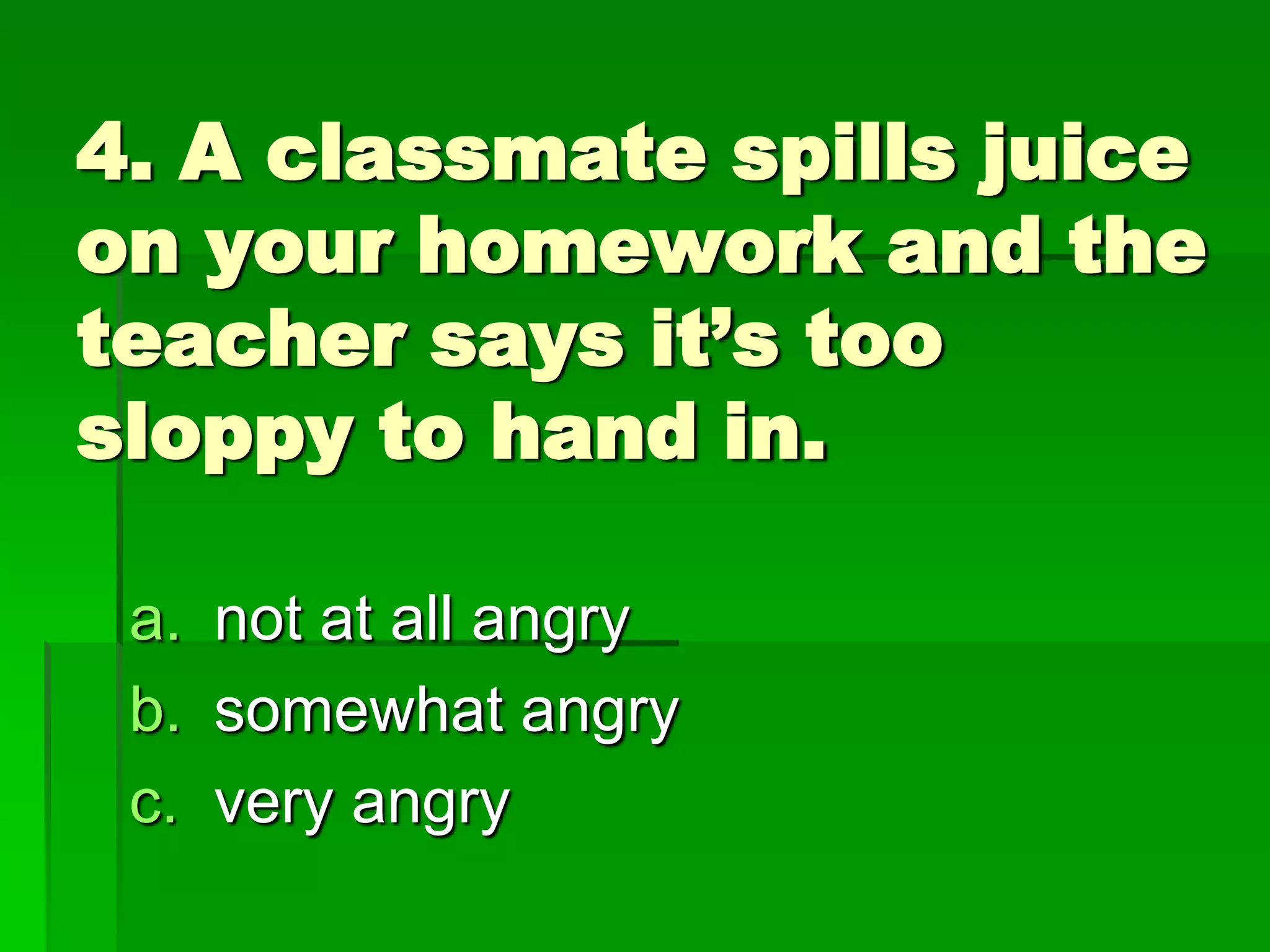
4. A classmate spills juice
on your homework and the
teacher says it’s too
sloppy to hand in.
a. not at all angry
b. somewhat angry
c. very angry
5. One of your friends is so
bossy that she insists on
telling you who to invite to
your birthday party.
a. not at all angry
b. somewhat angry
c. very angry
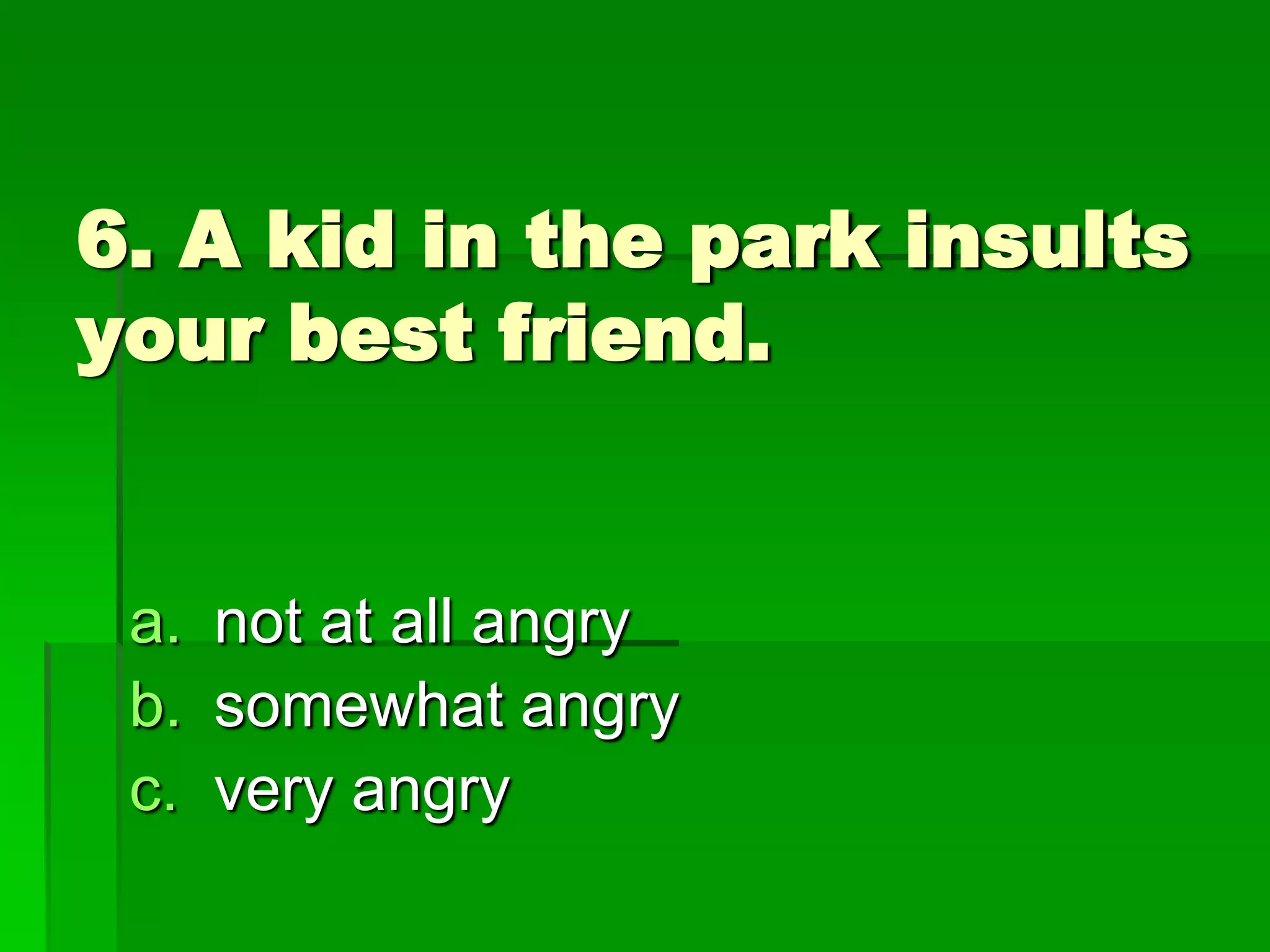
6. A kid in the park insults
your best friend.

a. not at all angry
b. somewhat angry
c. very angry
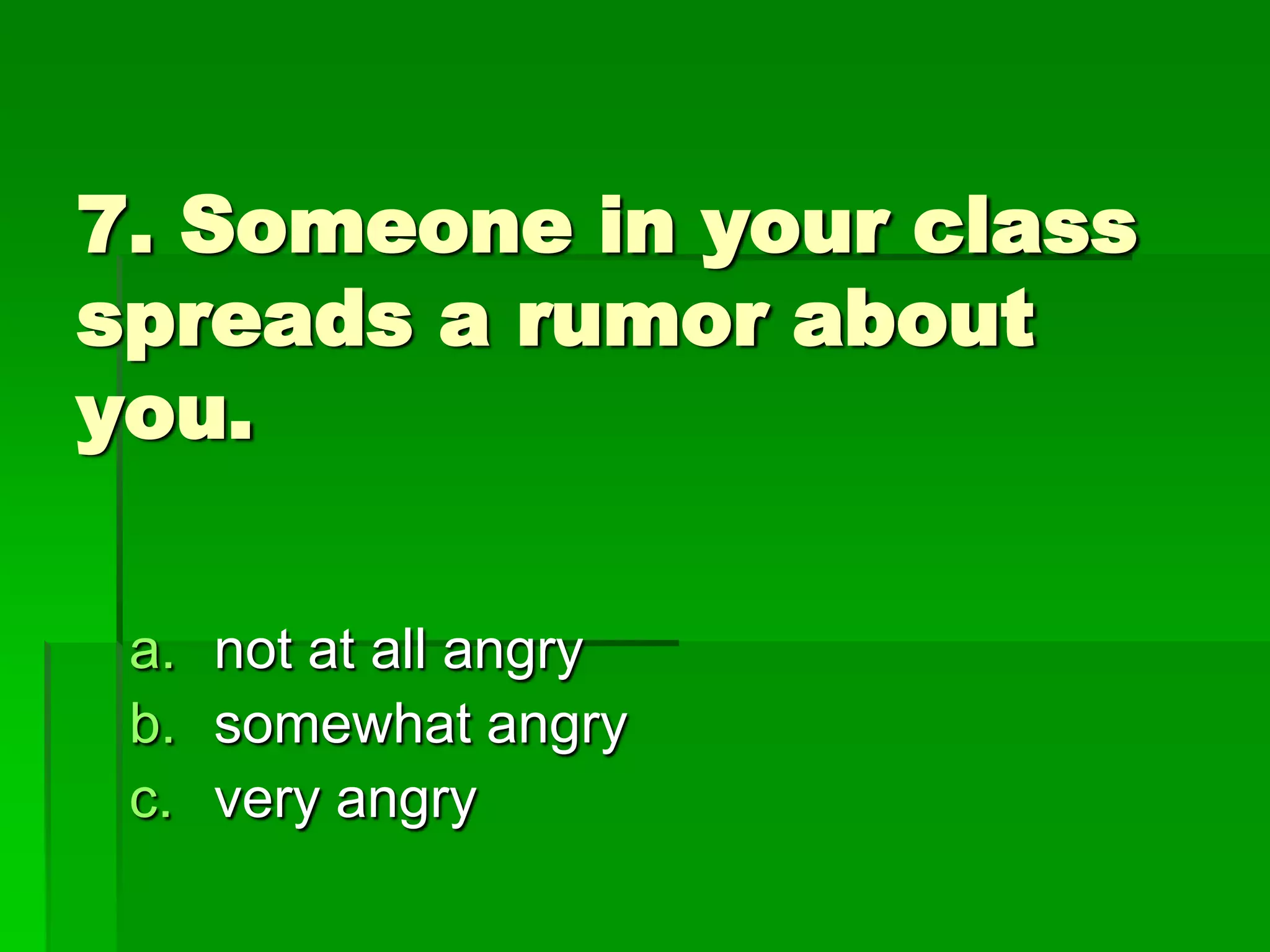
7. Someone in your class
spreads a rumor about
you.
a. not at all angry
b. somewhat angry
c. very angry
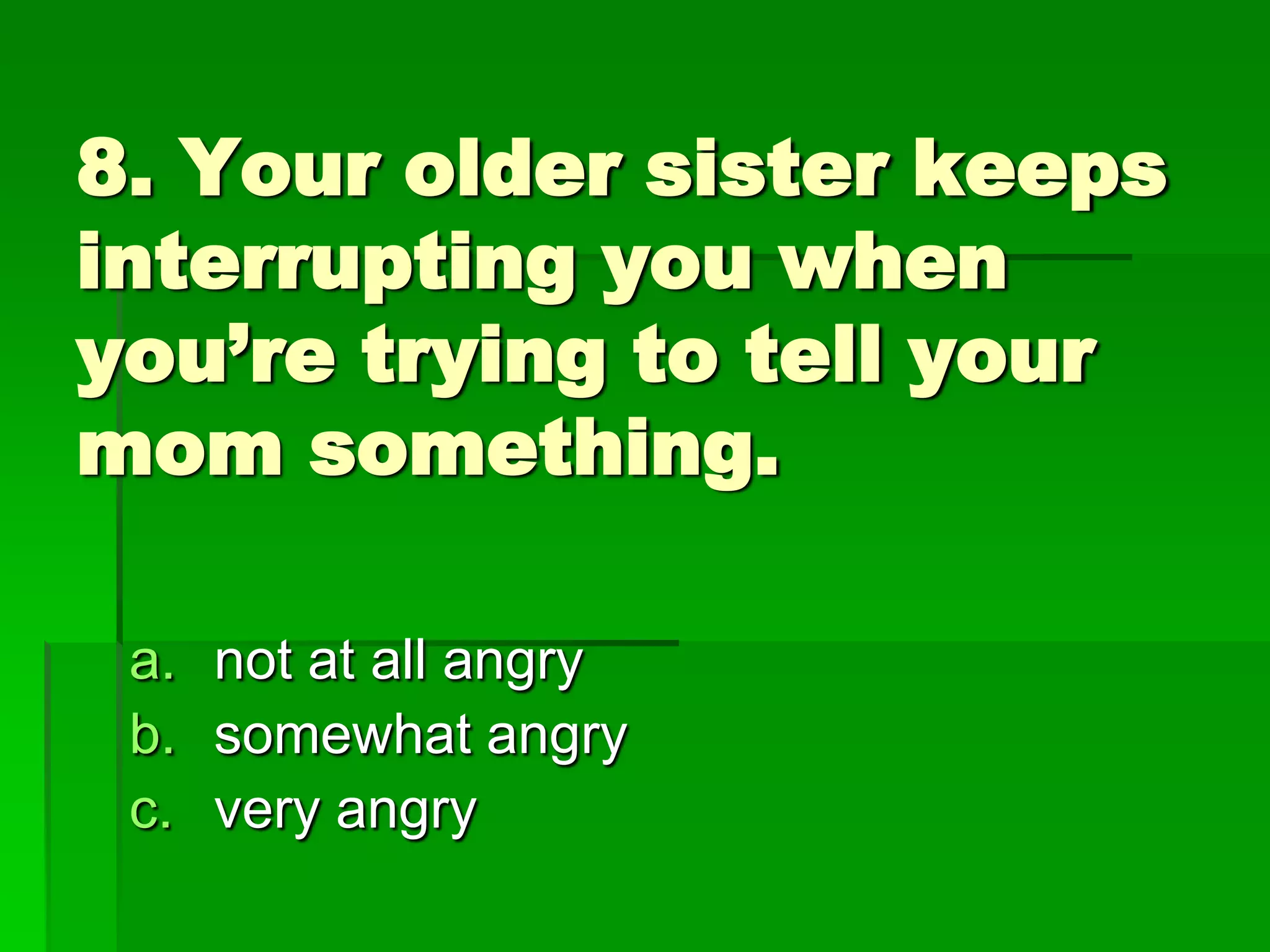
8. Your older sister keeps
interrupting you when
you’re trying to tell your
mom something.
a. not at all angry
b. somewhat angry
c. very angry
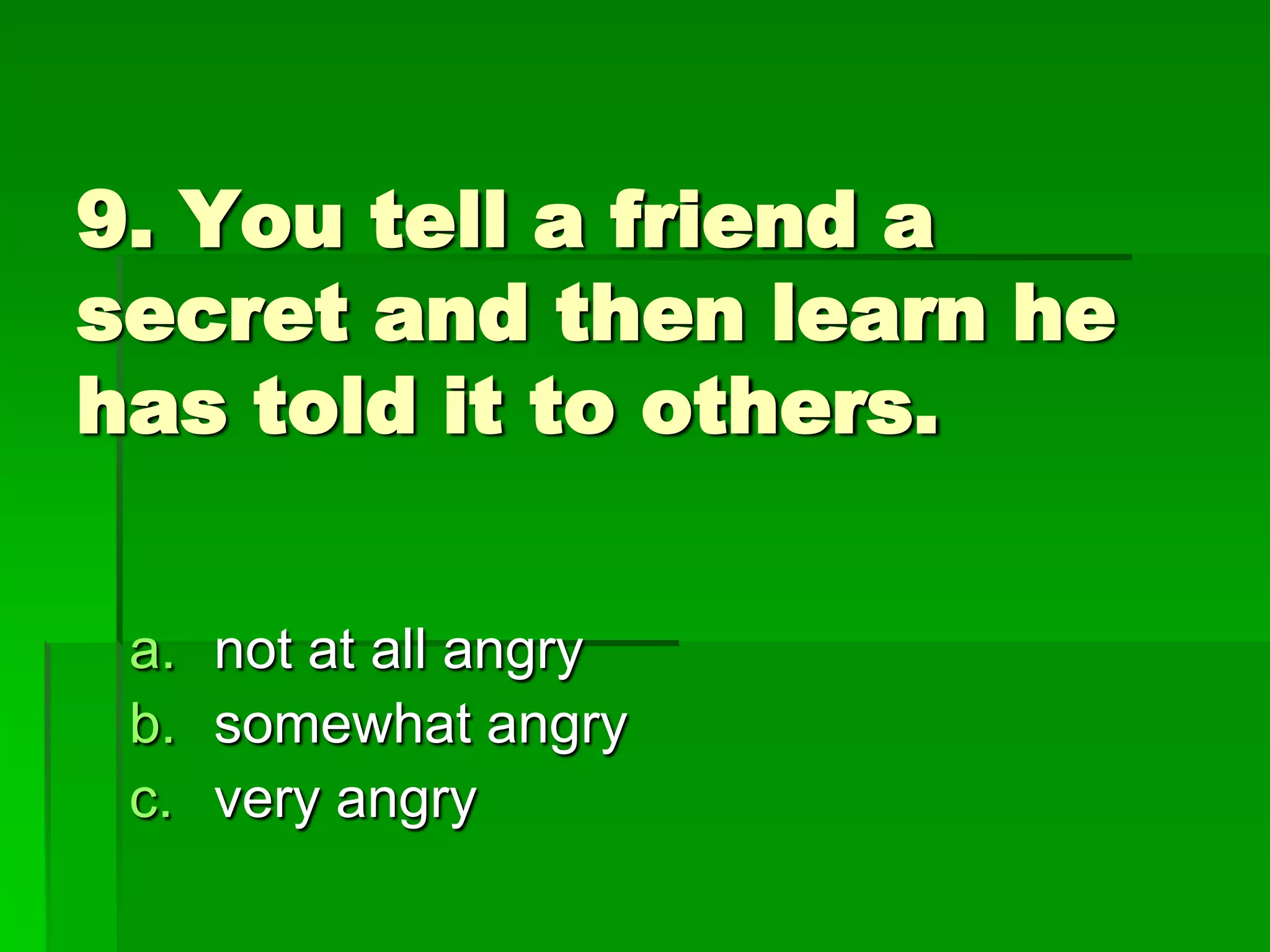
9. You tell a friend a
secret and then learn he
has told it to others.
a. not at all angry
b. somewhat angry
c. very angry
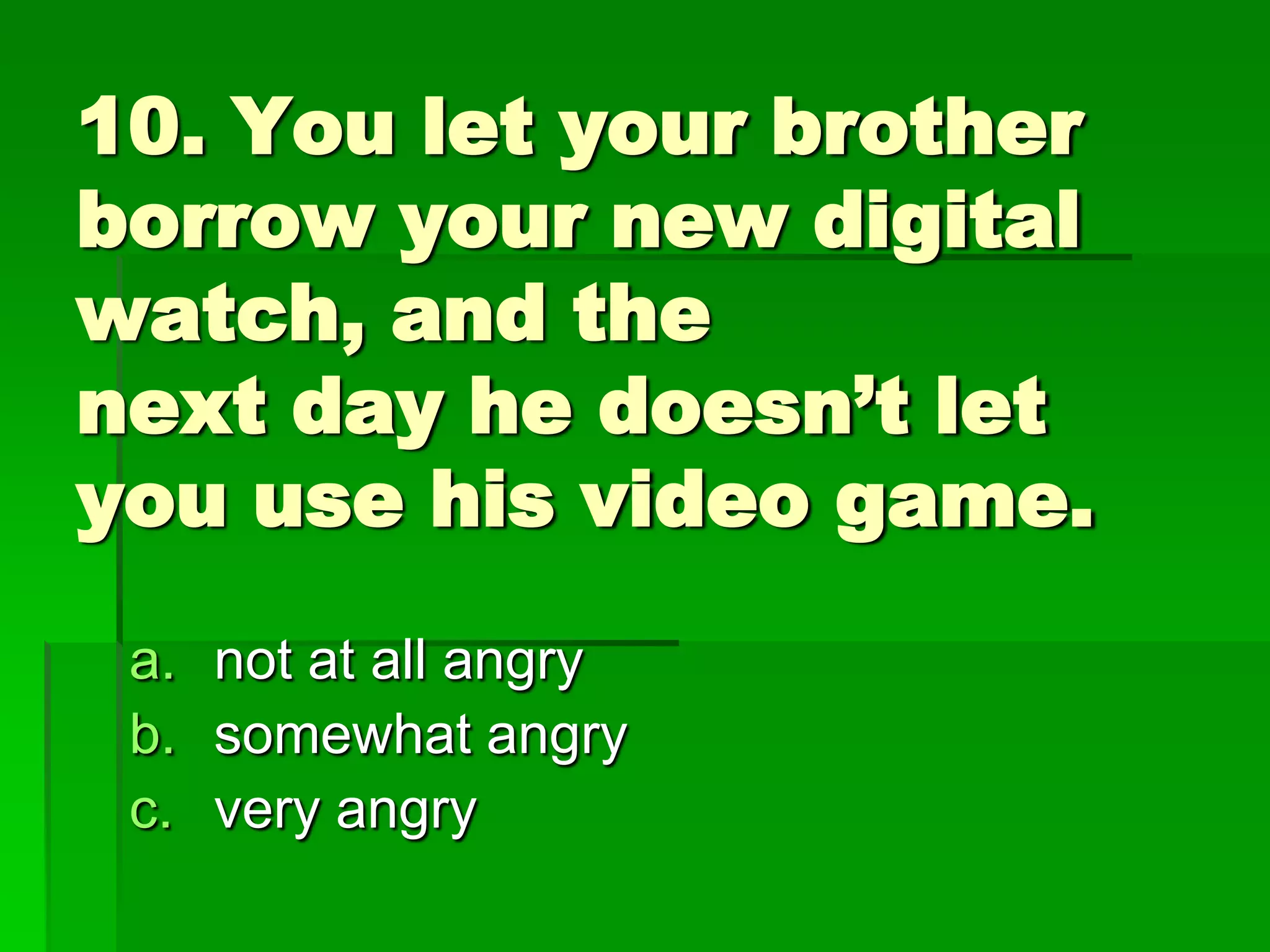
10. You let your brother
borrow your new digital
watch, and the
next day he doesn’t let
you use his video game.
a. not at all angry
b. somewhat angry
c. very angry
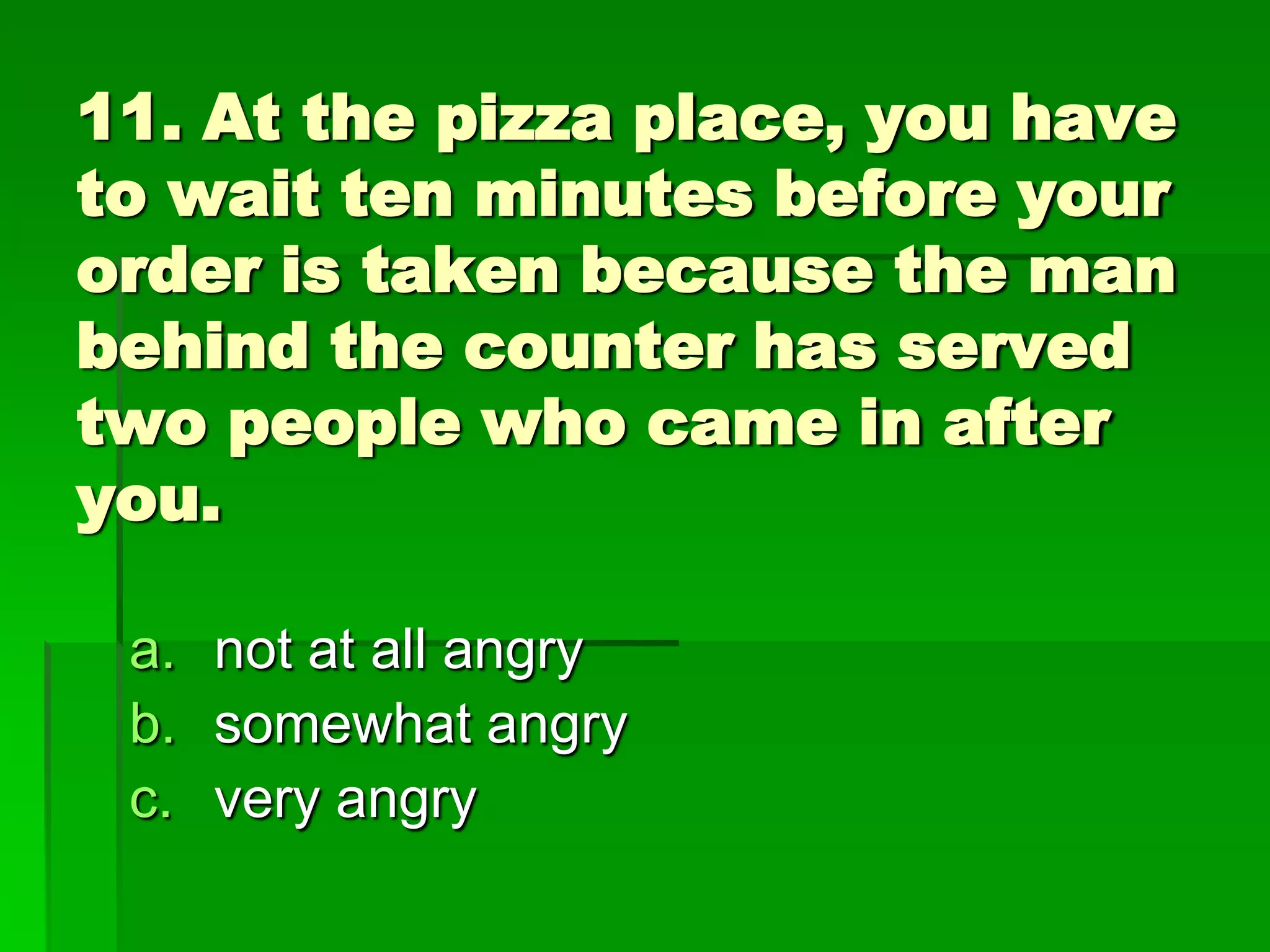
11. At the pizza place, you have
to wait ten minutes before your
order is taken because the man
behind the counter has served
two people who came in after
you.
a. not at all angry
b. somewhat angry
c. very angry
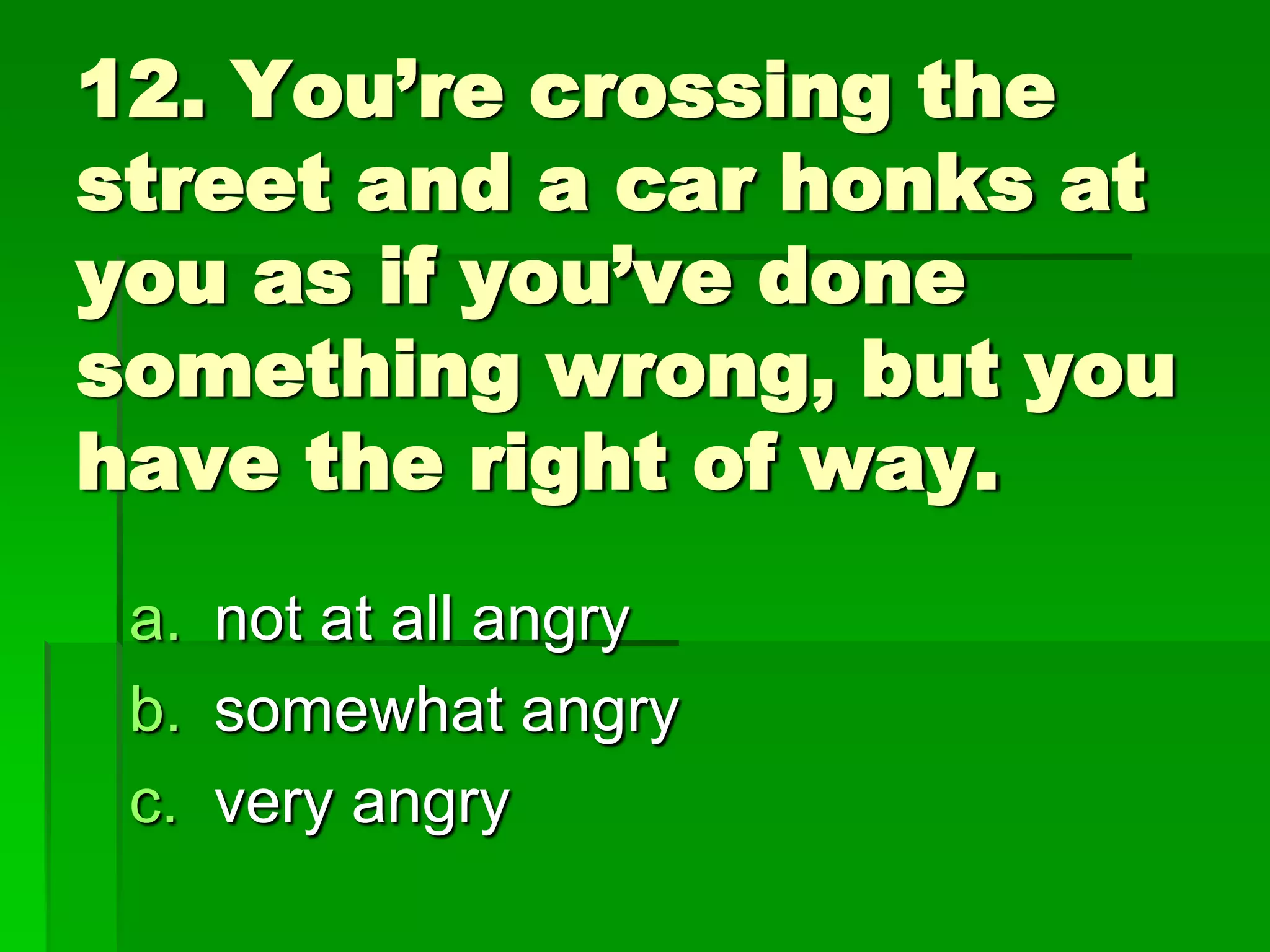
12. You’re crossing the
street and a car honks at
you as if you’ve done
something wrong, but you
have the right of way.
a. not at all angry
b. somewhat angry
c. very angry
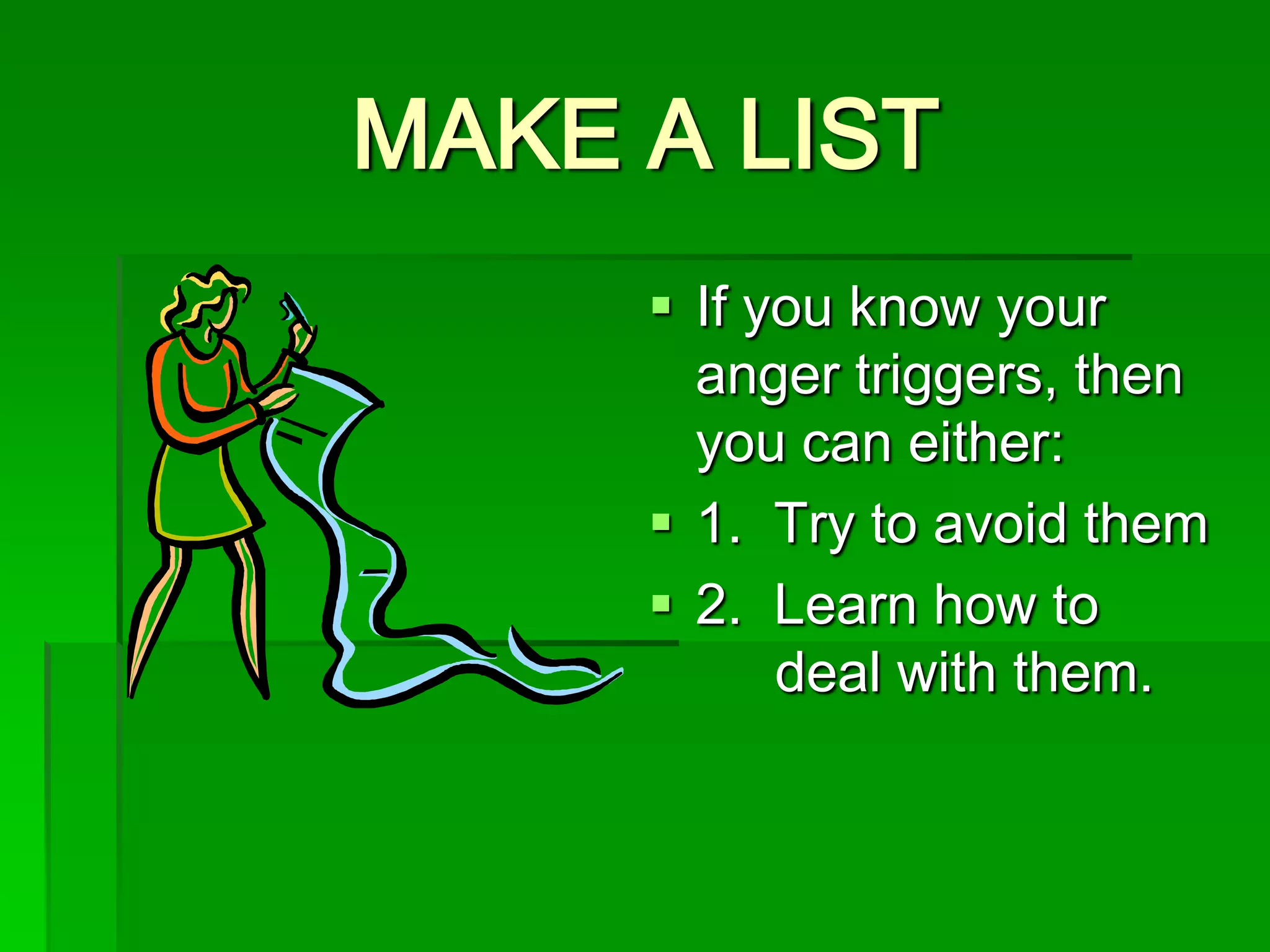
MAKE A LIST
 If you know your
anger triggers, then
you can either:
 1. Try to avoid them
 2. Learn how to
deal with them.
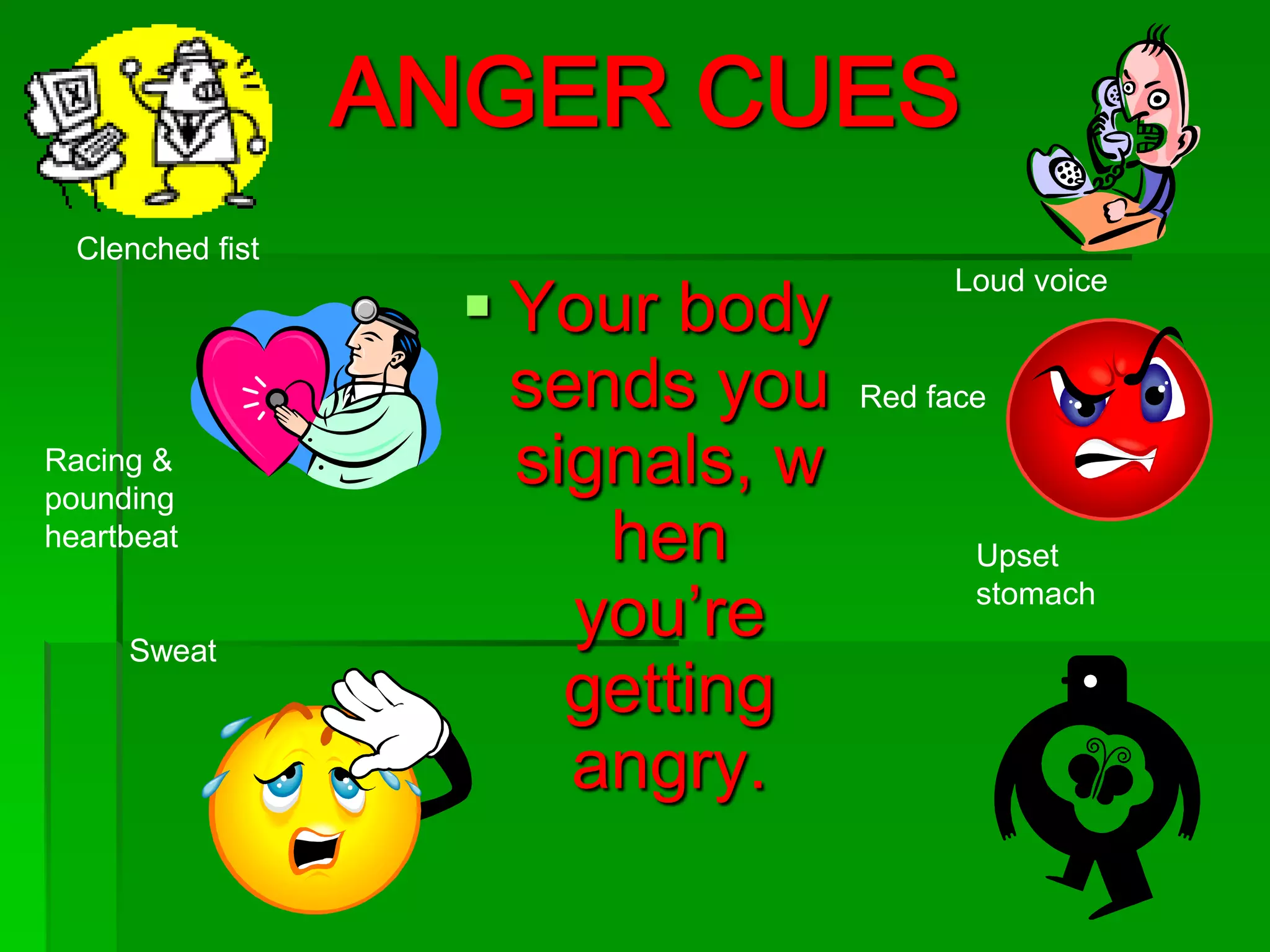
ANGER CUES
Clenched fist

Racing &
pounding
heartbeat

Sweat

 Your body
sends you
signals, w
hen
you’re
getting
angry.

Loud voice

Red face

Upset
stomach
Complete the Checklist
 What are your anger cues?
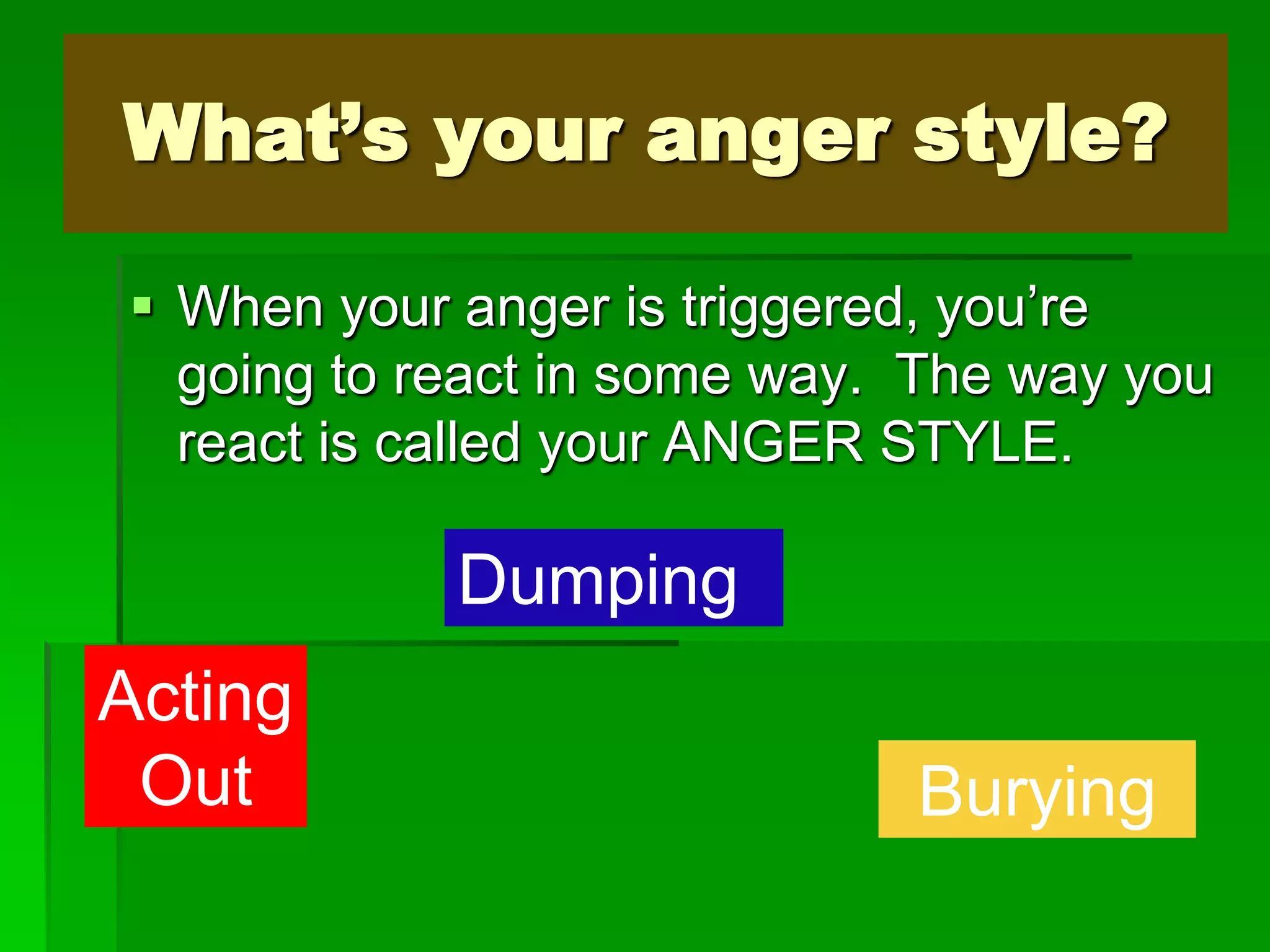
What’s your anger style?
 When your anger is triggered, you’re
going to react in some way. The way you
react is called your ANGER STYLE.

Dumping
Acting
Out

Burying
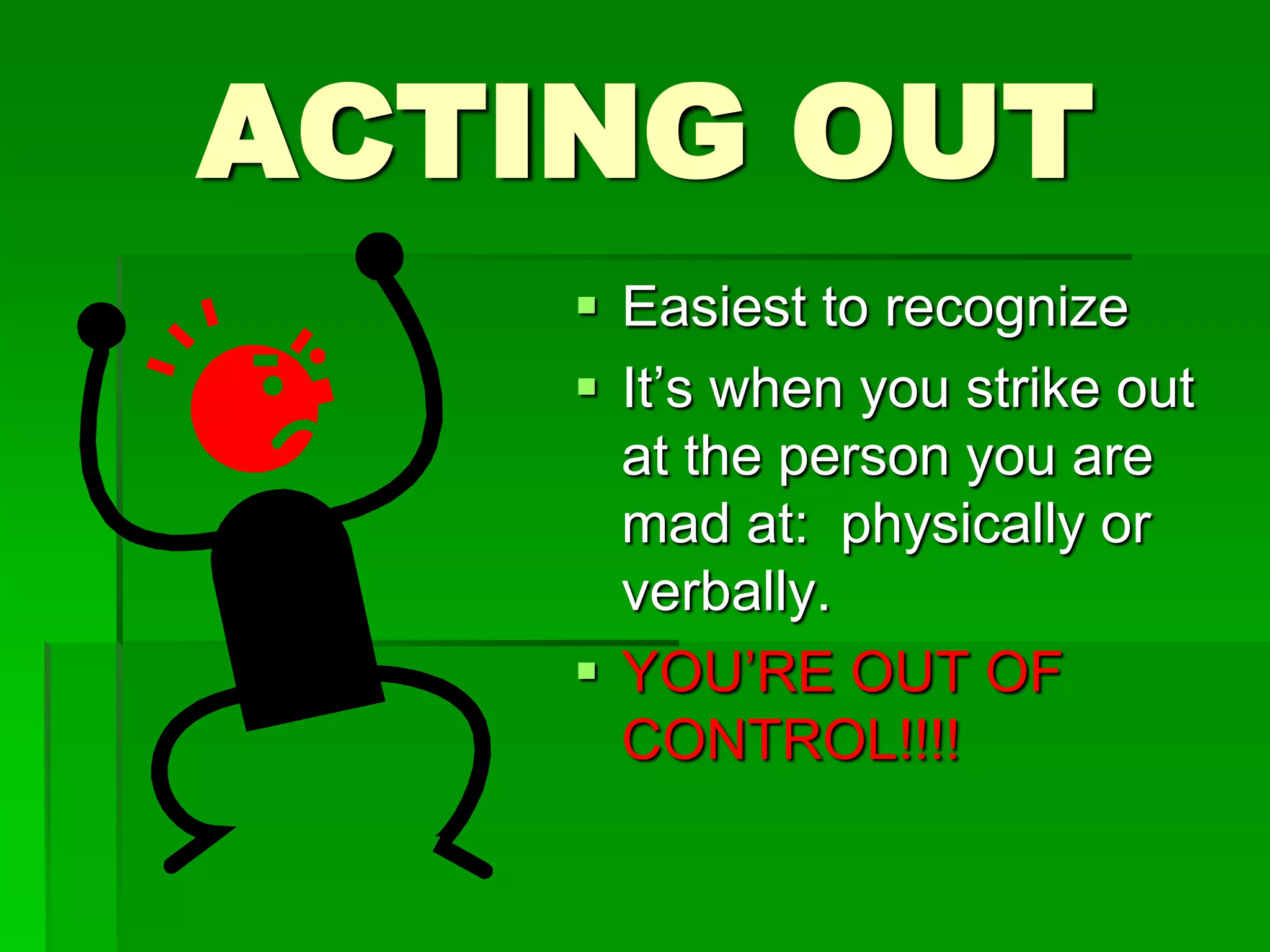
ACTING OUT
 Easiest to recognize
 It’s when you strike out
at the person you are
mad at: physically or
verbally.
 YOU’RE OUT OF
CONTROL!!!!
Consequences
You get in trouble
Problem is not solved
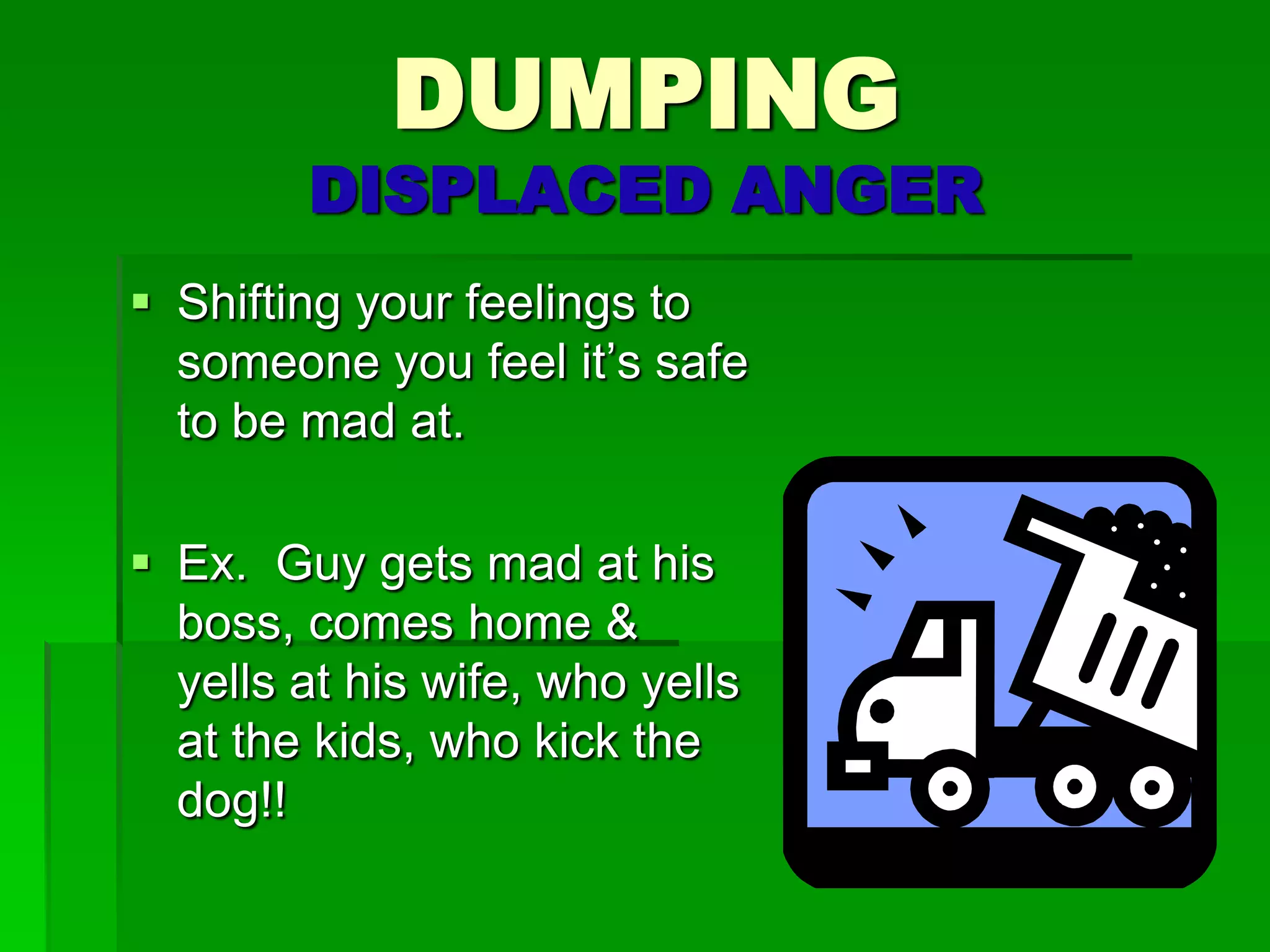
DUMPING

DISPLACED ANGER
 Shifting your feelings to
someone you feel it’s safe
to be mad at.

 Ex. Guy gets mad at his
boss, comes home &
yells at his wife, who yells
at the kids, who kick the
dog!!
Consequences
 You hurt innocent people
 Problem is not solved
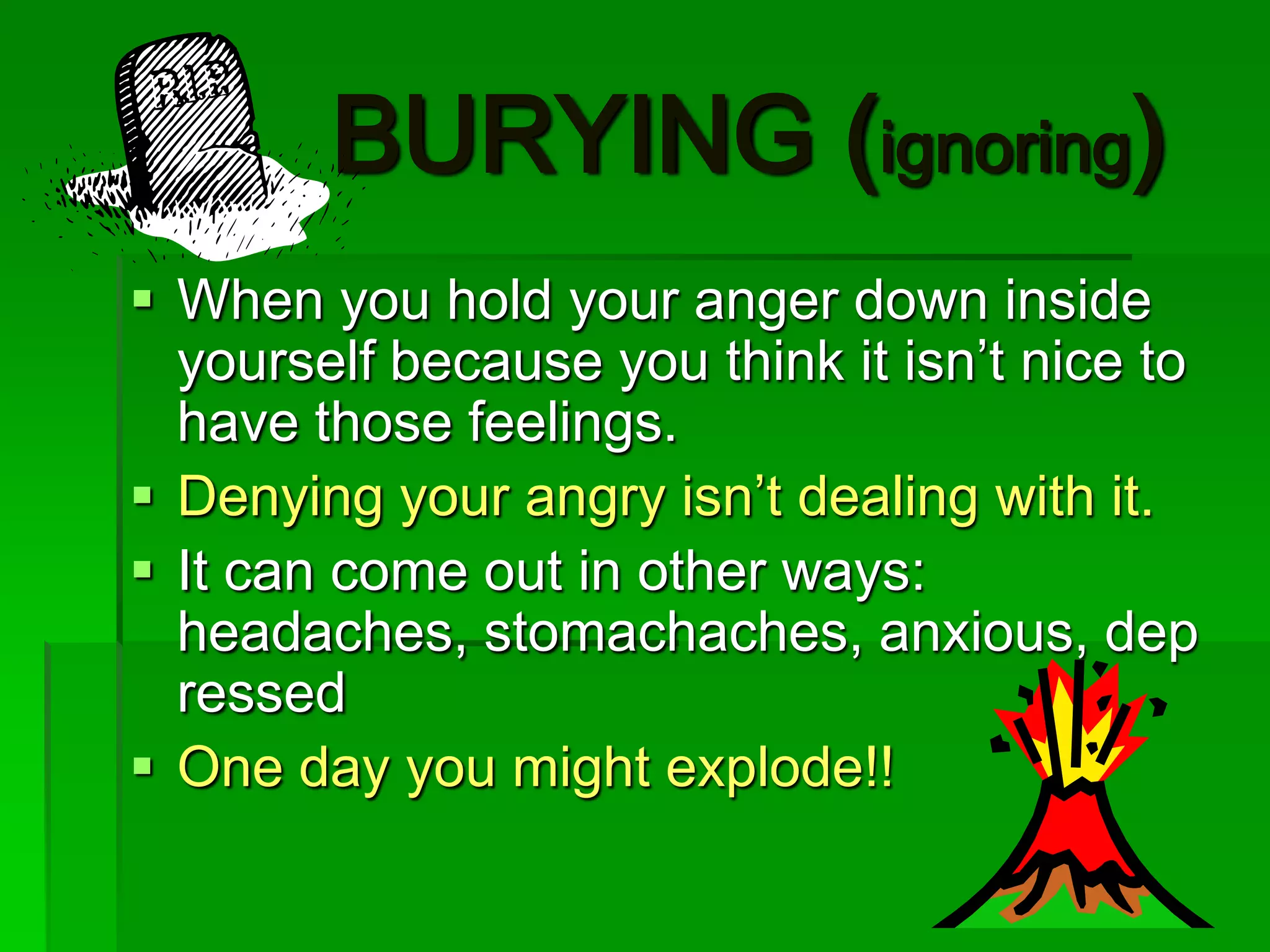
BURYING (ignoring)
 When you hold your anger down inside
yourself because you think it isn’t nice to
have those feelings.
 Denying your angry isn’t dealing with it.
 It can come out in other ways:
headaches, stomachaches, anxious, dep
ressed
 One day you might explode!!
Consequences
 You hurt yourself
 You may hurt others when you
EXPLODE
 Problem is not solved
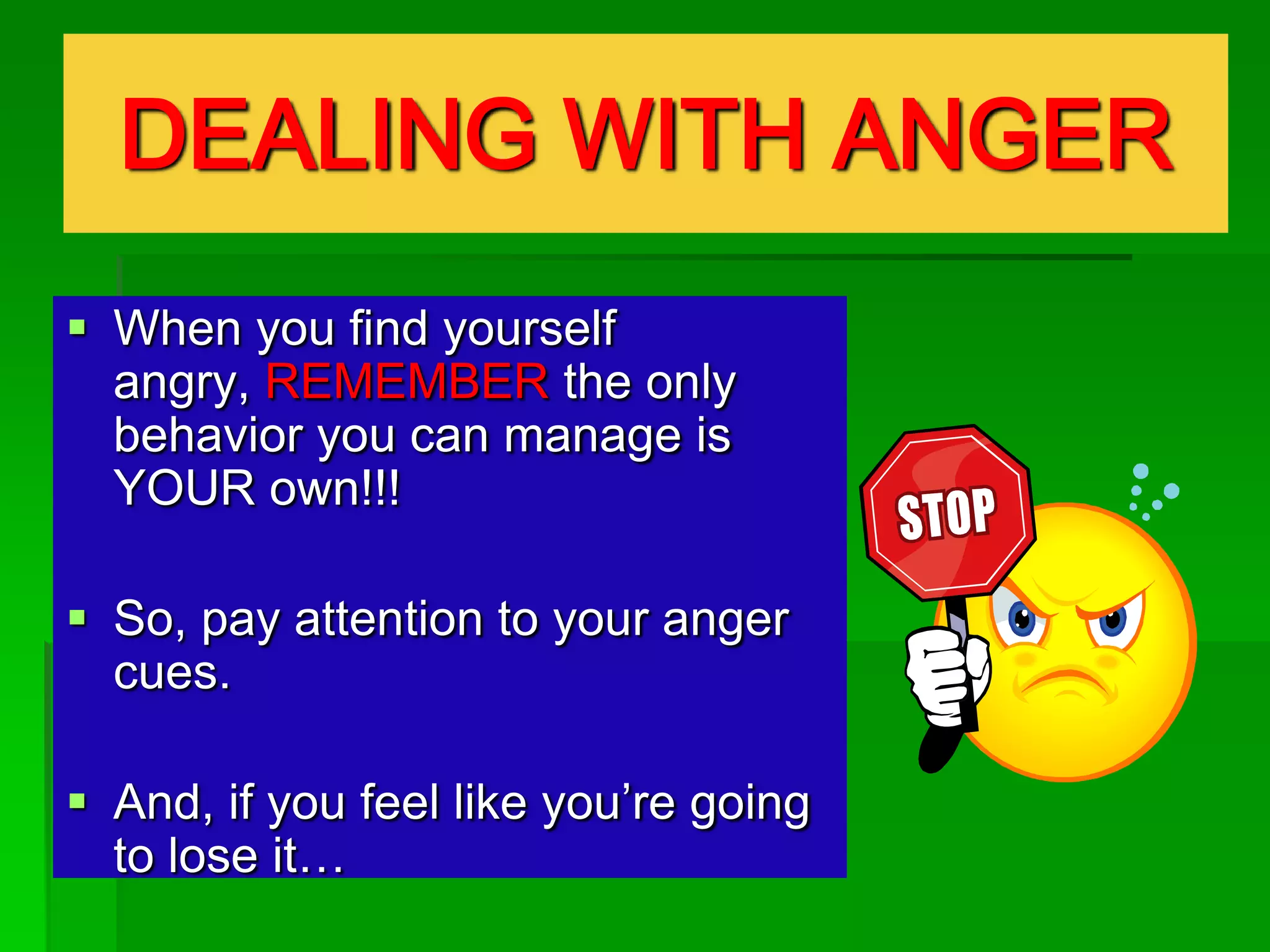
DEALING WITH ANGER
 When you find yourself
angry, REMEMBER the only
behavior you can manage is
YOUR own!!!
 So, pay attention to your anger
cues.
 And, if you feel like you’re going
to lose it…
Get a grip!!!
 1. Cool off, stay calm.
 Walk away
 Count to 10
 Take deep breaths
 Use calming self-talk: “I can handle this.
Chill. It’s not as bad as it seems.”
 Imagine you are in a peaceful place.
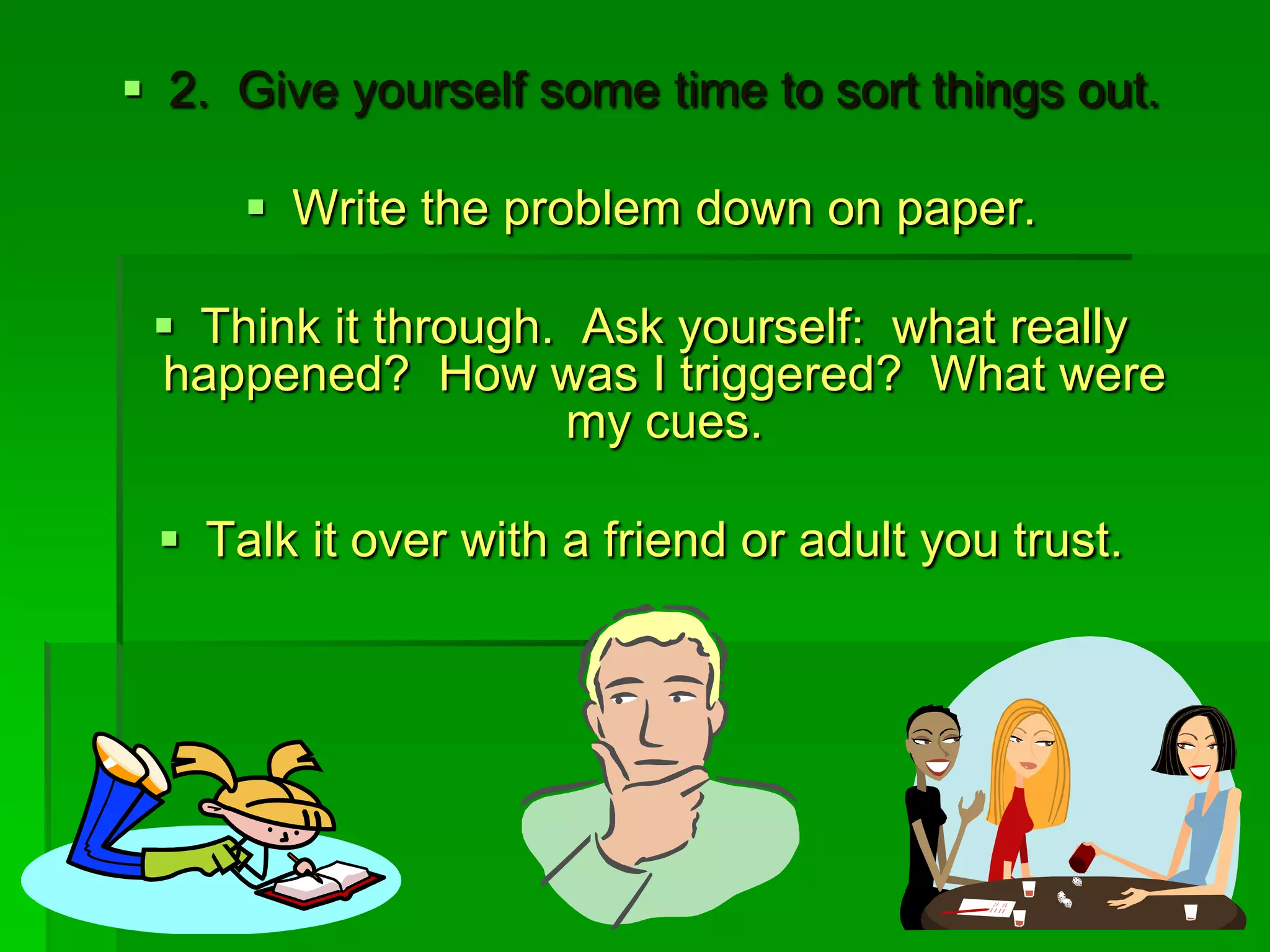
 2. Give yourself some time to sort things out.
 Write the problem down on paper.

 Think it through. Ask yourself: what really
happened? How was I triggered? What were
my cues.
 Talk it over with a friend or adult you trust.
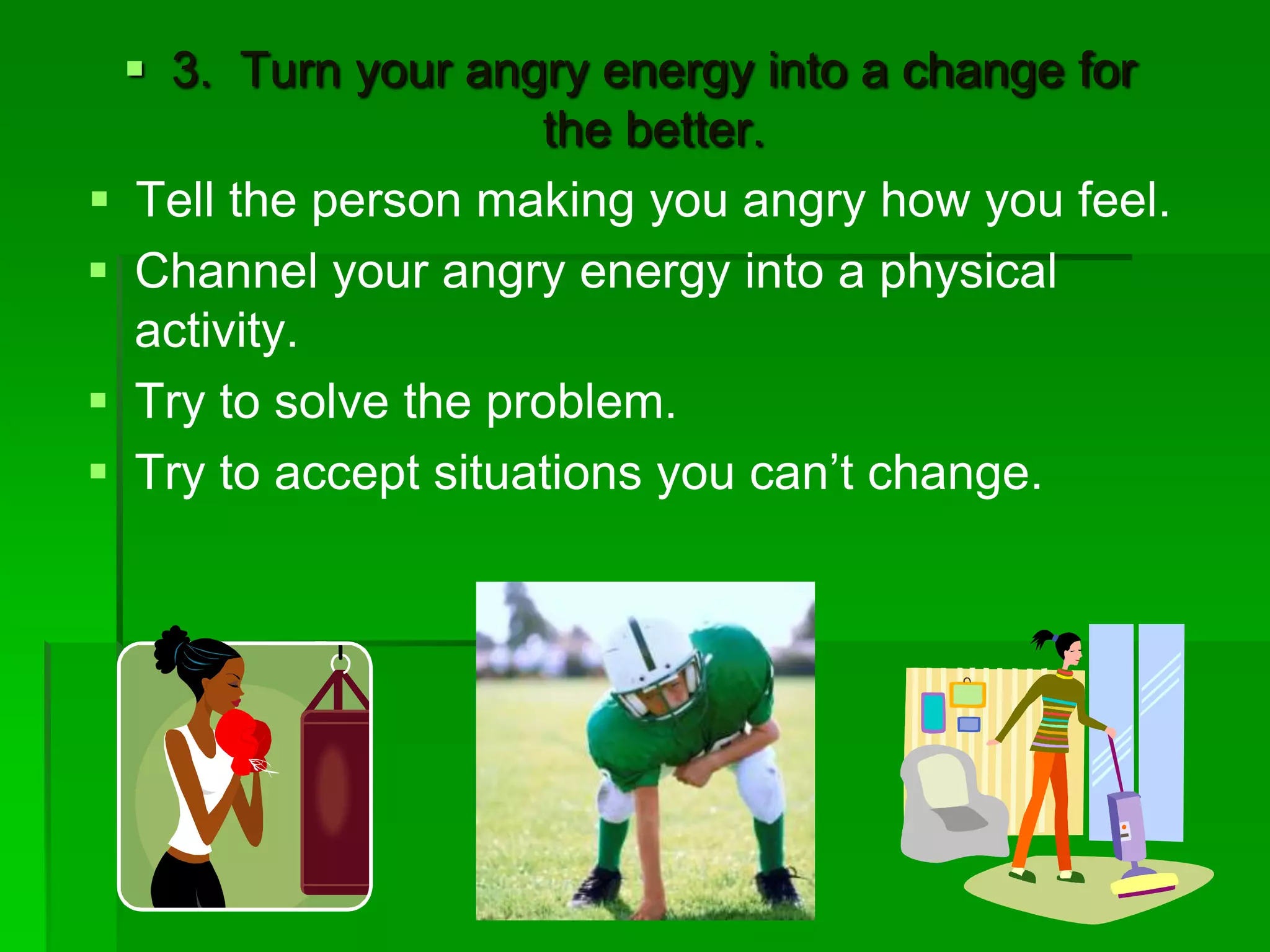
 3. Turn your angry energy into a change for
the better.
 Tell the person making you angry how you feel.
 Channel your angry energy into a physical
activity.
 Try to solve the problem.
 Try to accept situations you can’t change.
EVERYBODY GETS ANGRY
 That’s just how it is.
 The difference comes in what you do
about it.

SO:

GET A GRIP!!!

Anger management skills 13

  • 1.
  • 2.
    Does everybody experienceanger?  Everybody gets angry. That is okay. You’re going to feel how you feel. BUT: how you act is up to you. And that matters, because how you act leads to consequences.
  • 3.
    Objectives:     1. 2. 3. 4. Identify your angertriggers Know your anger cues Know your anger style Deal with your anger effectively
  • 4.
    TRIGGERS What bugs you? Something that happens that makes you angry  What triggers you does not always trigger someone else.
  • 5.
    1. You havethe highest average on social studies tests, but when report cards are handed out, the teacher gives someone else a higher grade than you because he participates in class more than you do. a. not at all angry b. somewhat angry c. very angry
  • 6.
    2. Your brotherbumps your arm while you reach for something at the dinner table, and you knock over a pitcher. The pitcher breaks and you get blamed. a. not at all angry b. somewhat angry c. very angry
  • 7.
    3. Your bestfriend has a secret that she tells to two other friends but not to you. a. not at all angry b. somewhat angry c. very angry
  • 8.
    4. A classmatespills juice on your homework and the teacher says it’s too sloppy to hand in. a. not at all angry b. somewhat angry c. very angry
  • 9.
    5. One ofyour friends is so bossy that she insists on telling you who to invite to your birthday party. a. not at all angry b. somewhat angry c. very angry
  • 10.
    6. A kidin the park insults your best friend. a. not at all angry b. somewhat angry c. very angry
  • 11.
    7. Someone inyour class spreads a rumor about you. a. not at all angry b. somewhat angry c. very angry
  • 12.
    8. Your oldersister keeps interrupting you when you’re trying to tell your mom something. a. not at all angry b. somewhat angry c. very angry
  • 13.
    9. You tella friend a secret and then learn he has told it to others. a. not at all angry b. somewhat angry c. very angry
  • 14.
    10. You letyour brother borrow your new digital watch, and the next day he doesn’t let you use his video game. a. not at all angry b. somewhat angry c. very angry
  • 15.
    11. At thepizza place, you have to wait ten minutes before your order is taken because the man behind the counter has served two people who came in after you. a. not at all angry b. somewhat angry c. very angry
  • 16.
    12. You’re crossingthe street and a car honks at you as if you’ve done something wrong, but you have the right of way. a. not at all angry b. somewhat angry c. very angry
  • 17.
    MAKE A LIST If you know your anger triggers, then you can either:  1. Try to avoid them  2. Learn how to deal with them.
  • 18.
    ANGER CUES Clenched fist Racing& pounding heartbeat Sweat  Your body sends you signals, w hen you’re getting angry. Loud voice Red face Upset stomach
  • 19.
    Complete the Checklist What are your anger cues?
  • 20.
    What’s your angerstyle?  When your anger is triggered, you’re going to react in some way. The way you react is called your ANGER STYLE. Dumping Acting Out Burying
  • 21.
    ACTING OUT  Easiestto recognize  It’s when you strike out at the person you are mad at: physically or verbally.  YOU’RE OUT OF CONTROL!!!!
  • 22.
    Consequences You get introuble Problem is not solved
  • 23.
    DUMPING DISPLACED ANGER  Shiftingyour feelings to someone you feel it’s safe to be mad at.  Ex. Guy gets mad at his boss, comes home & yells at his wife, who yells at the kids, who kick the dog!!
  • 24.
    Consequences  You hurtinnocent people  Problem is not solved
  • 25.
    BURYING (ignoring)  Whenyou hold your anger down inside yourself because you think it isn’t nice to have those feelings.  Denying your angry isn’t dealing with it.  It can come out in other ways: headaches, stomachaches, anxious, dep ressed  One day you might explode!!
  • 26.
    Consequences  You hurtyourself  You may hurt others when you EXPLODE  Problem is not solved
  • 27.
    DEALING WITH ANGER When you find yourself angry, REMEMBER the only behavior you can manage is YOUR own!!!  So, pay attention to your anger cues.  And, if you feel like you’re going to lose it…
  • 28.
    Get a grip!!! 1. Cool off, stay calm.  Walk away  Count to 10  Take deep breaths  Use calming self-talk: “I can handle this. Chill. It’s not as bad as it seems.”  Imagine you are in a peaceful place.
  • 29.
     2. Giveyourself some time to sort things out.  Write the problem down on paper.  Think it through. Ask yourself: what really happened? How was I triggered? What were my cues.  Talk it over with a friend or adult you trust.
  • 30.
     3. Turnyour angry energy into a change for the better.  Tell the person making you angry how you feel.  Channel your angry energy into a physical activity.  Try to solve the problem.  Try to accept situations you can’t change.
  • 31.
    EVERYBODY GETS ANGRY That’s just how it is.  The difference comes in what you do about it. SO: GET A GRIP!!!