By Dr. Ida Greene


Let Dr. Ida Greene inspire your group to perform at peak performance. She will teach you
how to Light Your Fire Within and keep it ablaze as you Say Goodbye to Your Smallness
and Hello to Your Greatness.
The emotion of anger has many purposes, some of which can serve
us well.Anger can be used by others to confuse or control you. In
conflict resolution anger is a useful emotion when used to support
yourself against attack by others. Anger takes away your energy,
because it charges you emotionally, even when used constructively.
Because of its potential to hurt or destroy one's self-confidence,
anger must be under your control. It can be likened to an atomic
bomb when uncontrolled.
Anger is a major block to your self-esteem and self-image. Anger is
also a choice we make. We decide how we will react to a perceived
threat to our ego, or emotional well being. It is a signal to help you
see what is going on in your emotions, to find the cause of the anger.
Everybody has his or her own definition of anger. Webster's New
World Dictionary defines anger as: a feeling of displeasure resulting
from mistreatment, injury, and opposition, usually showing itself in
a desire to fight back at the supposed cause of the feeling.
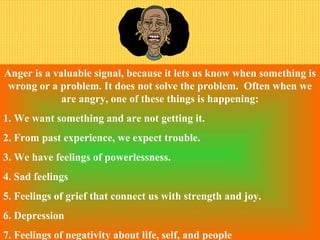
Anger is a valuable signal, because it lets us know when something is
 wrong or a problem. It does not solve the problem. Often when we
             are angry, one of these things is happening:
1. We want something and are not getting it.
2. From past experience, we expect trouble.
3. We have feelings of powerlessness.
4. Sad feelings
5. Feelings of grief that connect us with strength and joy.
6. Depression
7. Feelings of negativity about life, self, and people
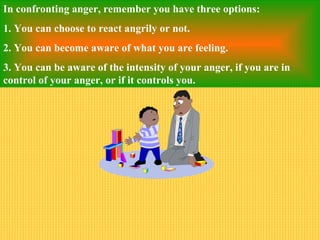
In confronting anger, remember you have three options:
1. You can choose to react angrily or not.
2. You can become aware of what you are feeling.
3. You can be aware of the intensity of your anger, if you are in
control of your anger, or if it controls you.
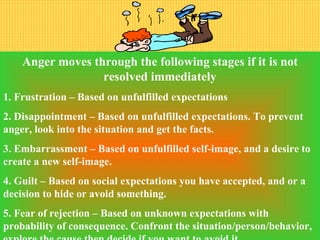
Anger moves through the following stages if it is not
                  resolved immediately
1. Frustration – Based on unfulfilled expectations
2. Disappointment – Based on unfulfilled expectations. To prevent
anger, look into the situation and get the facts.
3. Embarrassment – Based on unfulfilled self-image, and a desire to
create a new self-image.
4. Guilt – Based on social expectations you have accepted, and or a
decision to hide or avoid something.
5. Fear of rejection – Based on unknown expectations with
probability of consequence. Confront the situation/person/behavior,
Alternatives To An Anger Reaction
To change your expression of anger, you must change your thinking.
 Change what you say to yourself in your head, in response to the
external event.
These four steps can help:
1. Take time to rethink on what has provoked you.
2. Use a planned relaxation technique .
3. Stay calm and keep your cool.
4. Ask yourself if you are overreacting, justifying your right to be
angry, or taking things too seriously.
What Causes Anger
Anger is triggered by external events called provocations, which
create anger thoughts, anger arousal, and angry actions. All of these
stimulate each other until they are fused together, in an anger
feedback loop that leads to destructive consequences. An angry
outburst can be likened to a hurricane or tornado, as the center of
the energy gets smaller, the tension becomes greater, making it
harder to generate productive actions to change. And productive
actions cannot be made when the anger feedback loop is completely
fused. Your anger work out will prevents fusion or confusion.
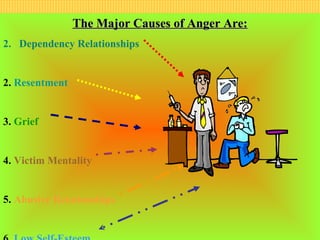
The Major Causes of Anger Are:
2. Dependency Relationships


2. Resentment


3. Grief


4. Victim Mentality


5. Abusive Relationships
When you develop inner control of a powerful emotion like
anger, you become powerful. When your outer
environment controls you, you lose the opportunity to have
inner control. To become good at any skill, whether it is
controlling your physical expression of anger or your
tongue, requires continuous practice.
Ten Steps to Control Your Anger:
1. Make a list of things that make you mad, and memorize it.
2. Talk about you feelings, let people know when things bother you.
3. When you feel angry, do something with the energy. Slowly
breathe in and out ten times. On the exhale, spread you fingers apart
widely and imagine the negative energy leaving your body as you do
so.
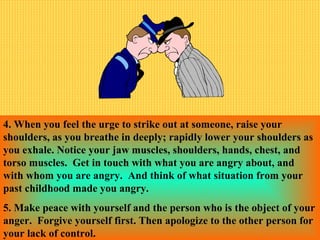
4. When you feel the urge to strike out at someone, raise your
shoulders, as you breathe in deeply; rapidly lower your shoulders as
you exhale. Notice your jaw muscles, shoulders, hands, chest, and
torso muscles. Get in touch with what you are angry about, and
with whom you are angry. And think of what situation from your
past childhood made you angry.
5. Make peace with yourself and the person who is the object of your
anger. Forgive yourself first. Then apologize to the other person for
your lack of control.
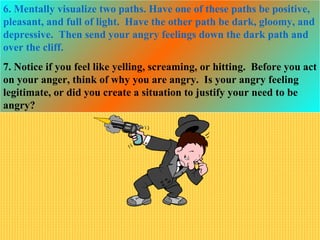
6. Mentally visualize two paths. Have one of these paths be positive,
pleasant, and full of light. Have the other path be dark, gloomy, and
depressive. Then send your angry feelings down the dark path and
over the cliff.
7. Notice if you feel like yelling, screaming, or hitting. Before you act
on your anger, think of why you are angry. Is your angry feeling
legitimate, or did you create a situation to justify your need to be
angry?
8. Talk your way through your anger. Tell yourself you can change
from being a reactor of your emotions to being a processor. Notice
your thoughts, change negative thoughts to positive.
9. Change the image you have of yourself from "blowing your stack,
to being a cool headed person." Whenever you are able to control
your anger, reinforce it by saying something kind to yourself.
10. Daily seek ways to change your image, inner thoughts, and outer
behavior, so the two match.
Always assume responsibility for what you are feeling, and own all
your feelings including anger. Anger that is unresolved turns into
resentment, envy, jealousy, revenge, and hatred. Unresolved anger,
manifests as depression. There is always an underlying feeling of
inadequacy when you are angry. Taking responsibility for these
feelings and how you cope with them can enhance your self-esteem
and will bring harmony to your life and your relationships.

Control your anger

  • 1.
    By Dr. IdaGreene Let Dr. Ida Greene inspire your group to perform at peak performance. She will teach you how to Light Your Fire Within and keep it ablaze as you Say Goodbye to Your Smallness and Hello to Your Greatness.
  • 2.
    The emotion ofanger has many purposes, some of which can serve us well.Anger can be used by others to confuse or control you. In conflict resolution anger is a useful emotion when used to support yourself against attack by others. Anger takes away your energy, because it charges you emotionally, even when used constructively. Because of its potential to hurt or destroy one's self-confidence, anger must be under your control. It can be likened to an atomic bomb when uncontrolled.
  • 3.
    Anger is amajor block to your self-esteem and self-image. Anger is also a choice we make. We decide how we will react to a perceived threat to our ego, or emotional well being. It is a signal to help you see what is going on in your emotions, to find the cause of the anger. Everybody has his or her own definition of anger. Webster's New World Dictionary defines anger as: a feeling of displeasure resulting from mistreatment, injury, and opposition, usually showing itself in a desire to fight back at the supposed cause of the feeling.
  • 4.
    Anger is avaluable signal, because it lets us know when something is wrong or a problem. It does not solve the problem. Often when we are angry, one of these things is happening: 1. We want something and are not getting it. 2. From past experience, we expect trouble. 3. We have feelings of powerlessness. 4. Sad feelings 5. Feelings of grief that connect us with strength and joy. 6. Depression 7. Feelings of negativity about life, self, and people
  • 5.
    In confronting anger,remember you have three options: 1. You can choose to react angrily or not. 2. You can become aware of what you are feeling. 3. You can be aware of the intensity of your anger, if you are in control of your anger, or if it controls you.
  • 6.
    Anger moves throughthe following stages if it is not resolved immediately 1. Frustration – Based on unfulfilled expectations 2. Disappointment – Based on unfulfilled expectations. To prevent anger, look into the situation and get the facts. 3. Embarrassment – Based on unfulfilled self-image, and a desire to create a new self-image. 4. Guilt – Based on social expectations you have accepted, and or a decision to hide or avoid something. 5. Fear of rejection – Based on unknown expectations with probability of consequence. Confront the situation/person/behavior,
  • 7.
    Alternatives To AnAnger Reaction To change your expression of anger, you must change your thinking. Change what you say to yourself in your head, in response to the external event. These four steps can help: 1. Take time to rethink on what has provoked you. 2. Use a planned relaxation technique . 3. Stay calm and keep your cool. 4. Ask yourself if you are overreacting, justifying your right to be angry, or taking things too seriously.
  • 8.
    What Causes Anger Angeris triggered by external events called provocations, which create anger thoughts, anger arousal, and angry actions. All of these stimulate each other until they are fused together, in an anger feedback loop that leads to destructive consequences. An angry outburst can be likened to a hurricane or tornado, as the center of the energy gets smaller, the tension becomes greater, making it harder to generate productive actions to change. And productive actions cannot be made when the anger feedback loop is completely fused. Your anger work out will prevents fusion or confusion.
  • 9.
    The Major Causesof Anger Are: 2. Dependency Relationships 2. Resentment 3. Grief 4. Victim Mentality 5. Abusive Relationships
  • 10.
    When you developinner control of a powerful emotion like anger, you become powerful. When your outer environment controls you, you lose the opportunity to have inner control. To become good at any skill, whether it is controlling your physical expression of anger or your tongue, requires continuous practice.
  • 11.
    Ten Steps toControl Your Anger: 1. Make a list of things that make you mad, and memorize it. 2. Talk about you feelings, let people know when things bother you. 3. When you feel angry, do something with the energy. Slowly breathe in and out ten times. On the exhale, spread you fingers apart widely and imagine the negative energy leaving your body as you do so.
  • 12.
    4. When youfeel the urge to strike out at someone, raise your shoulders, as you breathe in deeply; rapidly lower your shoulders as you exhale. Notice your jaw muscles, shoulders, hands, chest, and torso muscles. Get in touch with what you are angry about, and with whom you are angry. And think of what situation from your past childhood made you angry. 5. Make peace with yourself and the person who is the object of your anger. Forgive yourself first. Then apologize to the other person for your lack of control.
  • 13.
    6. Mentally visualizetwo paths. Have one of these paths be positive, pleasant, and full of light. Have the other path be dark, gloomy, and depressive. Then send your angry feelings down the dark path and over the cliff. 7. Notice if you feel like yelling, screaming, or hitting. Before you act on your anger, think of why you are angry. Is your angry feeling legitimate, or did you create a situation to justify your need to be angry?
  • 14.
    8. Talk yourway through your anger. Tell yourself you can change from being a reactor of your emotions to being a processor. Notice your thoughts, change negative thoughts to positive. 9. Change the image you have of yourself from "blowing your stack, to being a cool headed person." Whenever you are able to control your anger, reinforce it by saying something kind to yourself. 10. Daily seek ways to change your image, inner thoughts, and outer behavior, so the two match.
  • 15.
    Always assume responsibilityfor what you are feeling, and own all your feelings including anger. Anger that is unresolved turns into resentment, envy, jealousy, revenge, and hatred. Unresolved anger, manifests as depression. There is always an underlying feeling of inadequacy when you are angry. Taking responsibility for these feelings and how you cope with them can enhance your self-esteem and will bring harmony to your life and your relationships.