INDIVIDUAL THERAPY
PRESENTED BY:
Ms Mamta Bisht
Lecturer
presented by Mamta Bisht 1
presented by Mamta Bisht 2
DEFINITION
Individual psychotherapy is based on the
development of therapeutic relationship with
the client to modify client behavior by exploring
his or her feelings, attitude & thinking.
It is a process of assisting a person in dealing
with symptoms or problems a person is
having.
presented by Mamta Bisht 3
INDIVIDUAL THERAPY
• It is conducted on a one to one basis i.e. the
therapist deals with one client at a time
• By this therapist helps the patient to come to
a greater understanding of himself & to find a
way of dealing with his problem.
presented by Mamta Bisht 4
INDIVIDUAL THERAPY
Duration: 7-8 sessions depending upon the
client’s progress.
Follow up session after 1 month, 6 months and
12 months
presented by Mamta Bisht 5
INDICATIONS
• Stress-related problems
• Anxiety disorders
• Depression
• Alcohol & drug dependence
• Grief and loss
• Adjustment disorders
• Relationship issues
• Sexual disorder & marital disharmony
• Personal growth & exploration
presented by Mamta Bisht 6
GOALS OF INDIVIDUAL THERAPY
• Remove or modify existing symptoms.
• Mediate disturbed patterns of behavior.
• Promote positive personality growth and
development.
presented by Mamta Bisht 7
PURPOSE OF INDIVIDUAL THERAPY
• Changing maladaptive behavior pattern.
• Improving interpersonal skills and other
competence like communication skills.
• Helps the client to resolve inner conflicts
• Helps the client to develop a sense of self worth
and self identity.
presented by Mamta Bisht 8
COMPONENTS OF INDIVIDUAL
THERAPY
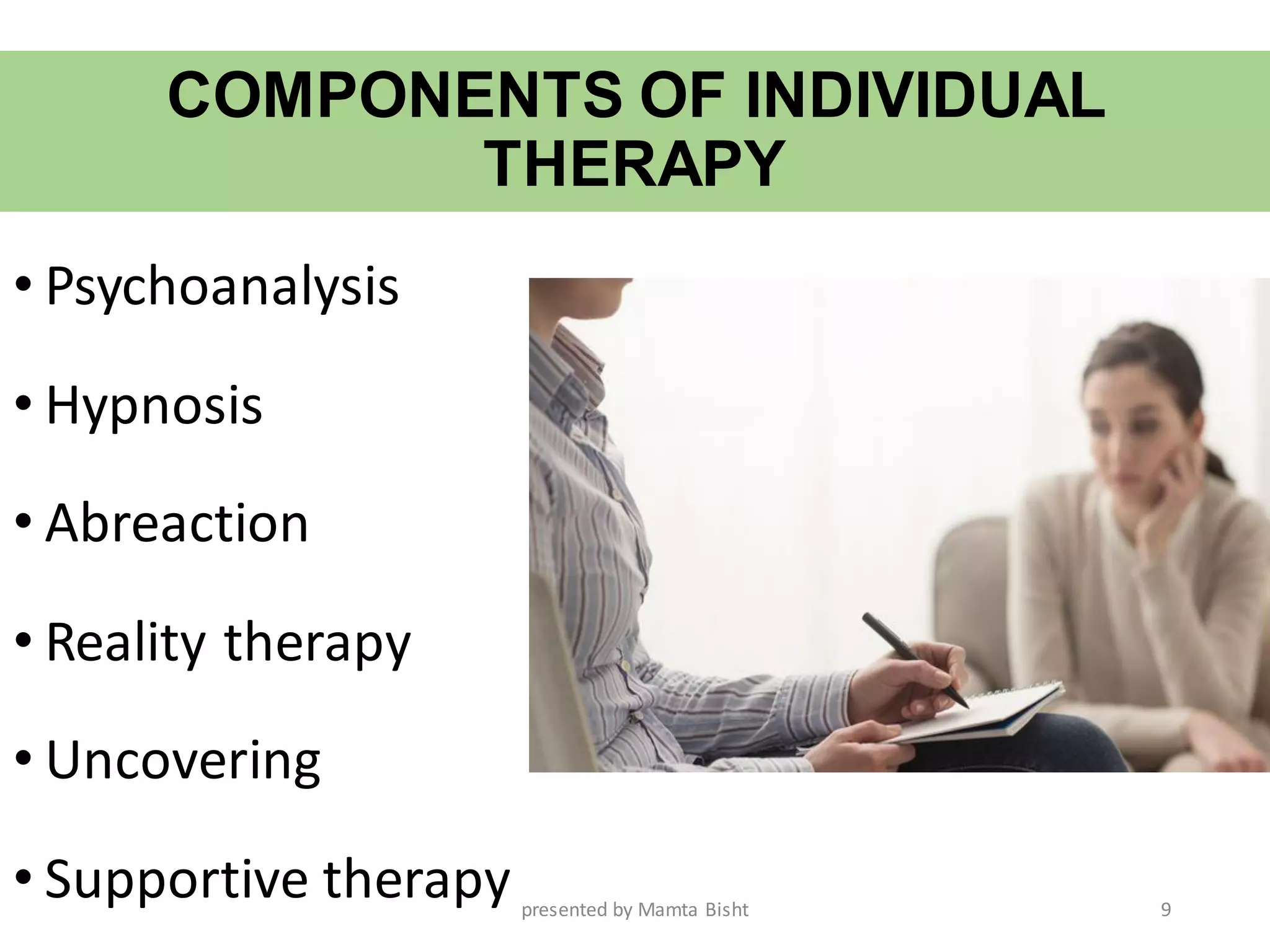
• Psychoanalysis
• Hypnosis
• Abreaction
• Reality therapy
• Uncovering
• Supportive therapy presented by Mamta Bisht 9
PSYCHOANALYSIS
Psychoanalysis focuses on the influence of
unconscious forces such as repressed
impulses & memories, internal conflicts &
childhood trauma on mental functioning and
adjustment of the individual.
presented by Mamta Bisht 10
PSYCHOANALYSIS
The aim of therapy is to bring all repressed
material to unconscious awareness so that the
patient can work towards a healthy resolution
of his problems, which are causing the
symptoms
presented by Mamta Bisht 11
HYPNOSIS
• Hypnosis is a heightened state of
awareness (trance), focussed attention, and
intense concentration that is achieved by
guided relaxation.
• Hypnosis is also known as hypnotherapy or
hypnotic suggestion.
• The client becomes highly suggestible,
submissive & abandons control & responds
to therapist influence.
presented by Mamta Bisht 12
HYPNOSIS
Hypnotic experience involves three factors:
1. Absorption
2. Dissociation
3. Suggestibility/Analysis
presented by Mamta Bisht 13
ABREACTION THERAPY
Abreaction is a process by which repressed
material, particularly a painful experience or
conflict is brought back to consciousness.
The person not only recalls but also relieves
the situation, which is accompanied by the
appropriate emotional response.
presented by Mamta Bisht 14
REALITY THERAPY
Reality therapy focus on improving present
relationships & circumstances, without
discussing the past events.
It is based on the assumption that
psychological symptoms occur because of
choosing wrong behaviors to fulfil their needs
The goal of reality therapy is to help people in
improving their lives by learning to make better
choices.
presented by Mamta Bisht 15
UNCOVERING
• Uncovering or Insight Psychotherapy is a
technique used to bring the patient’s
repressed conflict & traumatic experience to
the surface.
• It helps the patient in gaining an insight.
• The patient explores different methods to
cope with problem, once he gain an insight
into his conflict or problem.
presented by Mamta Bisht 16
SUPPORTIVE PSYCHOTHERAPY
The therapist helps the patient to relieve
emotional distress & symptoms without
probing in to past or attempting to change or
alter the basic personality of the individual.
The therapist reinforces the existing defences
used by the client.
presented by Mamta Bisht 17
ADVANTAGES
• Can be set up quickly.
• Patient with a trained professional to talk to.
• Helps define the problems the client is
having.
• Improves communication skills.
• Teaches better ways to cope.
presented by Mamta Bisht 18
DISADVANTAGES
• Client can talk but not make any real
changes.
• Some clients don’t have interest in talking
about their problems.
• May not provide enough help for the severity
of problems.
presented by Mamta Bisht 19
ROLE OF NURSE
• Reinforce positive behavior.
• Co-ordinate with other team members.
• Allow patient to take decision.
• Explain about the treatment.
• Develop a trusting relationship.
• Set limits on unacceptable behavior
presented by Mamta Bisht 20
THANK YOU
presented by Mamta Bisht 21

Individual psychotherapy

  • 1.
    INDIVIDUAL THERAPY PRESENTED BY: MsMamta Bisht Lecturer presented by Mamta Bisht 1
  • 2.
  • 3.
    DEFINITION Individual psychotherapy isbased on the development of therapeutic relationship with the client to modify client behavior by exploring his or her feelings, attitude & thinking. It is a process of assisting a person in dealing with symptoms or problems a person is having. presented by Mamta Bisht 3
  • 4.
    INDIVIDUAL THERAPY • Itis conducted on a one to one basis i.e. the therapist deals with one client at a time • By this therapist helps the patient to come to a greater understanding of himself & to find a way of dealing with his problem. presented by Mamta Bisht 4
  • 5.
    INDIVIDUAL THERAPY Duration: 7-8sessions depending upon the client’s progress. Follow up session after 1 month, 6 months and 12 months presented by Mamta Bisht 5
  • 6.
    INDICATIONS • Stress-related problems •Anxiety disorders • Depression • Alcohol & drug dependence • Grief and loss • Adjustment disorders • Relationship issues • Sexual disorder & marital disharmony • Personal growth & exploration presented by Mamta Bisht 6
  • 7.
    GOALS OF INDIVIDUALTHERAPY • Remove or modify existing symptoms. • Mediate disturbed patterns of behavior. • Promote positive personality growth and development. presented by Mamta Bisht 7
  • 8.
    PURPOSE OF INDIVIDUALTHERAPY • Changing maladaptive behavior pattern. • Improving interpersonal skills and other competence like communication skills. • Helps the client to resolve inner conflicts • Helps the client to develop a sense of self worth and self identity. presented by Mamta Bisht 8
  • 9.
    COMPONENTS OF INDIVIDUAL THERAPY •Psychoanalysis • Hypnosis • Abreaction • Reality therapy • Uncovering • Supportive therapy presented by Mamta Bisht 9
  • 10.
    PSYCHOANALYSIS Psychoanalysis focuses onthe influence of unconscious forces such as repressed impulses & memories, internal conflicts & childhood trauma on mental functioning and adjustment of the individual. presented by Mamta Bisht 10
  • 11.
    PSYCHOANALYSIS The aim oftherapy is to bring all repressed material to unconscious awareness so that the patient can work towards a healthy resolution of his problems, which are causing the symptoms presented by Mamta Bisht 11
  • 12.
    HYPNOSIS • Hypnosis isa heightened state of awareness (trance), focussed attention, and intense concentration that is achieved by guided relaxation. • Hypnosis is also known as hypnotherapy or hypnotic suggestion. • The client becomes highly suggestible, submissive & abandons control & responds to therapist influence. presented by Mamta Bisht 12
  • 13.
    HYPNOSIS Hypnotic experience involvesthree factors: 1. Absorption 2. Dissociation 3. Suggestibility/Analysis presented by Mamta Bisht 13
  • 14.
    ABREACTION THERAPY Abreaction isa process by which repressed material, particularly a painful experience or conflict is brought back to consciousness. The person not only recalls but also relieves the situation, which is accompanied by the appropriate emotional response. presented by Mamta Bisht 14
  • 15.
    REALITY THERAPY Reality therapyfocus on improving present relationships & circumstances, without discussing the past events. It is based on the assumption that psychological symptoms occur because of choosing wrong behaviors to fulfil their needs The goal of reality therapy is to help people in improving their lives by learning to make better choices. presented by Mamta Bisht 15
  • 16.
    UNCOVERING • Uncovering orInsight Psychotherapy is a technique used to bring the patient’s repressed conflict & traumatic experience to the surface. • It helps the patient in gaining an insight. • The patient explores different methods to cope with problem, once he gain an insight into his conflict or problem. presented by Mamta Bisht 16
  • 17.
    SUPPORTIVE PSYCHOTHERAPY The therapisthelps the patient to relieve emotional distress & symptoms without probing in to past or attempting to change or alter the basic personality of the individual. The therapist reinforces the existing defences used by the client. presented by Mamta Bisht 17
  • 18.
    ADVANTAGES • Can beset up quickly. • Patient with a trained professional to talk to. • Helps define the problems the client is having. • Improves communication skills. • Teaches better ways to cope. presented by Mamta Bisht 18
  • 19.
    DISADVANTAGES • Client cantalk but not make any real changes. • Some clients don’t have interest in talking about their problems. • May not provide enough help for the severity of problems. presented by Mamta Bisht 19
  • 20.
    ROLE OF NURSE •Reinforce positive behavior. • Co-ordinate with other team members. • Allow patient to take decision. • Explain about the treatment. • Develop a trusting relationship. • Set limits on unacceptable behavior presented by Mamta Bisht 20
  • 21.
    THANK YOU presented byMamta Bisht 21