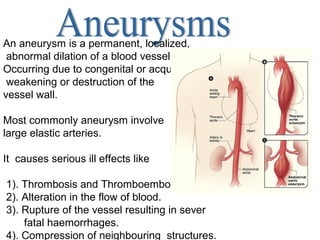
An aneurysm is a permanent, localized,
 abnormal dilation of a blood vessel
Occurring due to congenital or acquired
 weakening or destruction of the
vessel wall.

Most commonly aneurysm involve
large elastic arteries.

It causes serious ill effects like

1). Thrombosis and Thromboembolism.
2). Alteration in the flow of blood.
3). Rupture of the vessel resulting in sever
    fatal haemorrhages.
4). Compression of neighbouring structures.
Aneurysms are classified by three ways i.e

1).Depending upon the composition of wall.

2).Depending upon the shape.

3).Depending upon pathogenic mechanisms
Depending upon composition of vessel wall there are 2 types of
  aneurysm i.e

1). True aneurysm
          when all the 3 normal layers of the blood vessel are
   involved.

2). False aneurysm
                When only fibrous layer of the wall is involved and
   the rest of the layers are damaged due to trauma.
There are 5 types i.e
1).spherical having spherical outpouching.

2).Fusiform having spindle shape dilatation
.
3).Cylindrical having continuous parallel
    dilatation.

3).varicose having tortuous dilation of the vessel.


4).Racemose having mass of intercommunicating small arteries and veins.
1).Atherosclerotic aneurysms.

2).Syphilitic aneurysms.

3).Mycotic aneurysms.

4).Berry aneurysms.

5).Dissecting aneurysms.
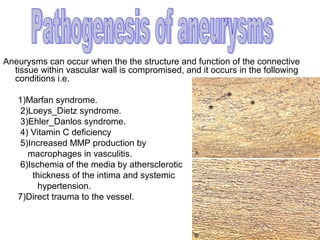
Aneurysms can occur when the the structure and function of the connective
  tissue within vascular wall is compromised, and it occurs in the following
  conditions i.e.

   1)Marfan syndrome.
   2)Loeys_Dietz syndrome.
   3)Ehler_Danlos syndrome.
   4) Vitamin C deficiency
   5)Increased MMP production by
     macrophages in vasculitis.
   6)Ischemia of the media by athersclerotic
      thickness of the intima and systemic
        hypertension.
   7)Direct trauma to the vessel.
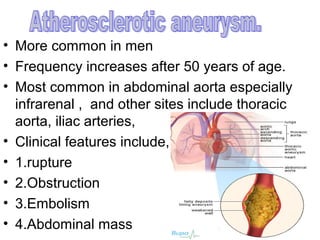
• More common in men
• Frequency increases after 50 years of age.
• Most common in abdominal aorta especially
  infrarenal , and other sites include thoracic
  aorta, iliac arteries,
• Clinical features include,
• 1.rupture
• 2.Obstruction
• 3.Embolism
• 4.Abdominal mass
Syphilitic aneurysm occurs usually in tertiary stage
  of syphilis.
• More common in men after the age of 50 years.
• The predominant site of involvement is thoracic
  aorta.
• Pathogenesis;
                Inflammatory infiltrate around the
  vasa vasorum          endarteritis obliterans
  destruction of smooth muscle and elastic tissue
Of media            weakening of vessel wall
  formation of aneurysm
1. Respiratory difficulties.
2. Difficulty in swallowing
3. Persistent cough due to pressure on recurrent
   laryngeal nerve.
4. Pain caused by erosion of vertebral bodies.
5. Cardiac disease
6. Rupture
Usually death occurs due to cardiac diseases…….
It results from weakening of arterial wall by
     microbial infection.
It originates from,
1. Embolization of a septic embolus as a
     complication of infective endocarditis.
2. Extention of adjacent suppurative
     process.
3. Circulating organisms directly infecting
     the arterial wall
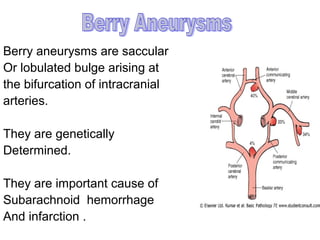
Berry aneurysms are saccular
Or lobulated bulge arising at
the bifurcation of intracranial
arteries.

They are genetically
Determined.

They are important cause of
Subarachnoid hemorrhage
And infarction .
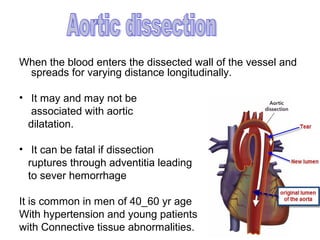
When the blood enters the dissected wall of the vessel and
 spreads for varying distance longitudinally.

• It may and may not be
   associated with aortic
  dilatation.

• It can be fatal if dissection
  ruptures through adventitia leading
  to sever hemorrhage

It is common in men of 40_60 yr age
With hypertension and young patients
with Connective tissue abnormalities.
The major risk factor is hypertension.

Intimal tear is the 1st step.

Hypertension causes aortic medial degeneration by
 pressure related ischemic injury.

Inherited or acquired connective tissue disorders also
  contributory factors.
Dissection occurs b/w inner 2/3 and outer 1/3 of
  media.
There are 2 types of classifications
           1.DeBakey classification.
           2. Recent classification.
1.Chest pain
2.Myocardial infarction
3.Aortic insufficiency
4.Vascular obstruction
5.Cardiac tamponade
6.Death due to rupture of dissection into pericardial
  ,peritoneal ,and pleural cavities.

 Rapid diagnosis and institution of antihypertensive therapy
   coupled with surgical procedures permit 65_75% of
  individuals to be saved.
The most common site of involvement of
   atherosclerotic aneurysm is???????

A. Arch of aorta

B.) Thoracic aorta

C. Suprarenal abdominal aorta

D.infrarenal abdominal aorta
The most common cause of dissecting
 haematoma is????????

A.Cystic medial necrosis.

B.Traumatic during cardic catherization.

C.Systemic hypertension.

D.Marfan syndrome.
Dissecting heamatoma causes separation of
   aortic wall as under.

A. Between intima and media

B. Between inner 1/3of media and outer 2/3 of
   media
C. Between inner 2/3 of media and outer 1/3

D. Between media and adventitia.
Aneurysm by  dr.majid nawaz

Aneurysm by dr.majid nawaz

  • 2.
    An aneurysm isa permanent, localized, abnormal dilation of a blood vessel Occurring due to congenital or acquired weakening or destruction of the vessel wall. Most commonly aneurysm involve large elastic arteries. It causes serious ill effects like 1). Thrombosis and Thromboembolism. 2). Alteration in the flow of blood. 3). Rupture of the vessel resulting in sever fatal haemorrhages. 4). Compression of neighbouring structures.
  • 3.
    Aneurysms are classifiedby three ways i.e 1).Depending upon the composition of wall. 2).Depending upon the shape. 3).Depending upon pathogenic mechanisms
  • 4.
    Depending upon compositionof vessel wall there are 2 types of aneurysm i.e 1). True aneurysm when all the 3 normal layers of the blood vessel are involved. 2). False aneurysm When only fibrous layer of the wall is involved and the rest of the layers are damaged due to trauma.
  • 5.
    There are 5types i.e 1).spherical having spherical outpouching. 2).Fusiform having spindle shape dilatation . 3).Cylindrical having continuous parallel dilatation. 3).varicose having tortuous dilation of the vessel. 4).Racemose having mass of intercommunicating small arteries and veins.
  • 6.
    1).Atherosclerotic aneurysms. 2).Syphilitic aneurysms. 3).Mycoticaneurysms. 4).Berry aneurysms. 5).Dissecting aneurysms.
  • 7.
    Aneurysms can occurwhen the the structure and function of the connective tissue within vascular wall is compromised, and it occurs in the following conditions i.e. 1)Marfan syndrome. 2)Loeys_Dietz syndrome. 3)Ehler_Danlos syndrome. 4) Vitamin C deficiency 5)Increased MMP production by macrophages in vasculitis. 6)Ischemia of the media by athersclerotic thickness of the intima and systemic hypertension. 7)Direct trauma to the vessel.
  • 8.
    • More commonin men • Frequency increases after 50 years of age. • Most common in abdominal aorta especially infrarenal , and other sites include thoracic aorta, iliac arteries, • Clinical features include, • 1.rupture • 2.Obstruction • 3.Embolism • 4.Abdominal mass
  • 9.
    Syphilitic aneurysm occursusually in tertiary stage of syphilis. • More common in men after the age of 50 years. • The predominant site of involvement is thoracic aorta. • Pathogenesis; Inflammatory infiltrate around the vasa vasorum endarteritis obliterans destruction of smooth muscle and elastic tissue Of media weakening of vessel wall formation of aneurysm
  • 10.
    1. Respiratory difficulties. 2.Difficulty in swallowing 3. Persistent cough due to pressure on recurrent laryngeal nerve. 4. Pain caused by erosion of vertebral bodies. 5. Cardiac disease 6. Rupture Usually death occurs due to cardiac diseases…….
  • 11.
    It results fromweakening of arterial wall by microbial infection. It originates from, 1. Embolization of a septic embolus as a complication of infective endocarditis. 2. Extention of adjacent suppurative process. 3. Circulating organisms directly infecting the arterial wall
  • 12.
    Berry aneurysms aresaccular Or lobulated bulge arising at the bifurcation of intracranial arteries. They are genetically Determined. They are important cause of Subarachnoid hemorrhage And infarction .
  • 13.
    When the bloodenters the dissected wall of the vessel and spreads for varying distance longitudinally. • It may and may not be associated with aortic dilatation. • It can be fatal if dissection ruptures through adventitia leading to sever hemorrhage It is common in men of 40_60 yr age With hypertension and young patients with Connective tissue abnormalities.
  • 14.
    The major riskfactor is hypertension. Intimal tear is the 1st step. Hypertension causes aortic medial degeneration by pressure related ischemic injury. Inherited or acquired connective tissue disorders also contributory factors. Dissection occurs b/w inner 2/3 and outer 1/3 of media.
  • 15.
    There are 2types of classifications 1.DeBakey classification. 2. Recent classification.
  • 16.
    1.Chest pain 2.Myocardial infarction 3.Aorticinsufficiency 4.Vascular obstruction 5.Cardiac tamponade 6.Death due to rupture of dissection into pericardial ,peritoneal ,and pleural cavities. Rapid diagnosis and institution of antihypertensive therapy coupled with surgical procedures permit 65_75% of individuals to be saved.
  • 18.
    The most commonsite of involvement of atherosclerotic aneurysm is??????? A. Arch of aorta B.) Thoracic aorta C. Suprarenal abdominal aorta D.infrarenal abdominal aorta
  • 19.
    The most commoncause of dissecting haematoma is???????? A.Cystic medial necrosis. B.Traumatic during cardic catherization. C.Systemic hypertension. D.Marfan syndrome.
  • 20.
    Dissecting heamatoma causesseparation of aortic wall as under. A. Between intima and media B. Between inner 1/3of media and outer 2/3 of media C. Between inner 2/3 of media and outer 1/3 D. Between media and adventitia.