A B R I E F G U I D E T O 
L S Coding & Education LLC
Health care is a giant industry, made up of patients, files, hospitals, doctors, medicines, 
insurance companies, procedures, government agencies, tests, forms, and administrators. 
With all that going on, it is important to have a way of simply communicating to all the 
parts through all the different pieces of paperwork. That’s where medical coding and 
medical coders come into the picture.
FROM PATIENT 
TO CODER 
When a patient visits a hospital, the doctor will 
run tests, create a diagnosis, and then assign a 
treatment. The medical coder will issue a code 
to each diagnosis and procedure. 
For example, there is a 
specific code for a pigmented 
mole located on a patient’s 
lower back: 
ICD-9-CM Diagnosis Code 216.5 
Benign neoplasm of skin of trunk, 
except scrotum
MEDICAL 
CODES 
To code a patient’s file, the 
coder will review the 
medical provider’s notes and 
translate them into ICD-9-CD 
and HCPCS Level I and Level 
II codes. Currently, there are 
over 13,000 medical codes 
in ICD-9-CD alone. The 
doctor’s notes are usually a 
brief description of the exact 
diagnosis and procedure 
that was administered.
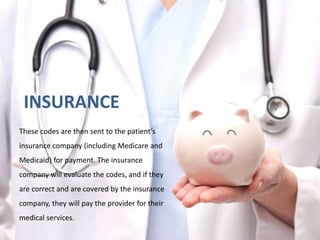
INSURANCE 
These codes are then sent to the patient’s 
insurance company (including Medicare and 
Medicaid) for payment. The insurance 
company will evaluate the codes, and if they 
are correct and are covered by the insurance 
company, they will pay the provider for their 
medical services.
ANALYZING 
DOCTOR’S NOTES 
The medical provider’s notes are as unique as the 
patient’s diagnosis. Some notes can be quite simple 
while others can be extremely difficult to code 
correctly. Even some of the commonly used codes 
can fall into gray areas amongst different coders.
DIFFICULT 
CASES 
Even the most experienced 
coders may come across a very 
complex or unusual case that 
can be very difficult to 
interpret. For these types of 
situations, coders will rely on 
peers and other professionals 
to wade through the nuances of 
the case to determine the 
proper code.
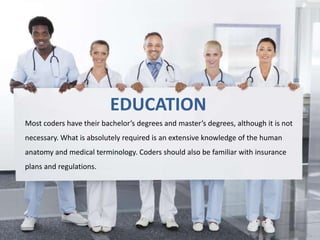
EDUCATION 
Most coders have their bachelor’s degrees and master’s degrees, although it is not 
necessary. What is absolutely required is an extensive knowledge of the human 
anatomy and medical terminology. Coders should also be familiar with insurance 
plans and regulations.
L S Coding & Education LLC 
For more information on medical coding education, please contact (866) 737-3701 or 
visit http://cpc.certifiedcodertraining.com/ . 
If you are looking for a professional and unique medical coding program L S Coding and 
Education is the place. Instructor and President, Lynn Schoeler, has been providing an 
AAPC Professional Medical Coding Curriculum for over two decades.
Summary 
• With all the facets to consider amongst 
patients, doctors, administrators, and 
insurance companies it’s no wonder why the 
health care industry needed a fast and precise 
way to communicate. We have put together a 
brief guide to medical coding to reveal what 
goes on behind the nurse’s desk.

A brief guide to Medical Coding

  • 1.
    A B RI E F G U I D E T O L S Coding & Education LLC
  • 2.
    Health care isa giant industry, made up of patients, files, hospitals, doctors, medicines, insurance companies, procedures, government agencies, tests, forms, and administrators. With all that going on, it is important to have a way of simply communicating to all the parts through all the different pieces of paperwork. That’s where medical coding and medical coders come into the picture.
  • 3.
    FROM PATIENT TOCODER When a patient visits a hospital, the doctor will run tests, create a diagnosis, and then assign a treatment. The medical coder will issue a code to each diagnosis and procedure. For example, there is a specific code for a pigmented mole located on a patient’s lower back: ICD-9-CM Diagnosis Code 216.5 Benign neoplasm of skin of trunk, except scrotum
  • 4.
    MEDICAL CODES Tocode a patient’s file, the coder will review the medical provider’s notes and translate them into ICD-9-CD and HCPCS Level I and Level II codes. Currently, there are over 13,000 medical codes in ICD-9-CD alone. The doctor’s notes are usually a brief description of the exact diagnosis and procedure that was administered.
  • 5.
    INSURANCE These codesare then sent to the patient’s insurance company (including Medicare and Medicaid) for payment. The insurance company will evaluate the codes, and if they are correct and are covered by the insurance company, they will pay the provider for their medical services.
  • 6.
    ANALYZING DOCTOR’S NOTES The medical provider’s notes are as unique as the patient’s diagnosis. Some notes can be quite simple while others can be extremely difficult to code correctly. Even some of the commonly used codes can fall into gray areas amongst different coders.
  • 7.
    DIFFICULT CASES Eventhe most experienced coders may come across a very complex or unusual case that can be very difficult to interpret. For these types of situations, coders will rely on peers and other professionals to wade through the nuances of the case to determine the proper code.
  • 8.
    EDUCATION Most codershave their bachelor’s degrees and master’s degrees, although it is not necessary. What is absolutely required is an extensive knowledge of the human anatomy and medical terminology. Coders should also be familiar with insurance plans and regulations.
  • 9.
    L S Coding& Education LLC For more information on medical coding education, please contact (866) 737-3701 or visit http://cpc.certifiedcodertraining.com/ . If you are looking for a professional and unique medical coding program L S Coding and Education is the place. Instructor and President, Lynn Schoeler, has been providing an AAPC Professional Medical Coding Curriculum for over two decades.
  • 10.
    Summary • Withall the facets to consider amongst patients, doctors, administrators, and insurance companies it’s no wonder why the health care industry needed a fast and precise way to communicate. We have put together a brief guide to medical coding to reveal what goes on behind the nurse’s desk.