Art of AncientGreece
Greek art, be it sculpture,
paintings, architecture, or
even music, show ideas that
the Greeks value such as
courage, valor and
independence.
4.
Ancient Greek wasdivided into four
periods:
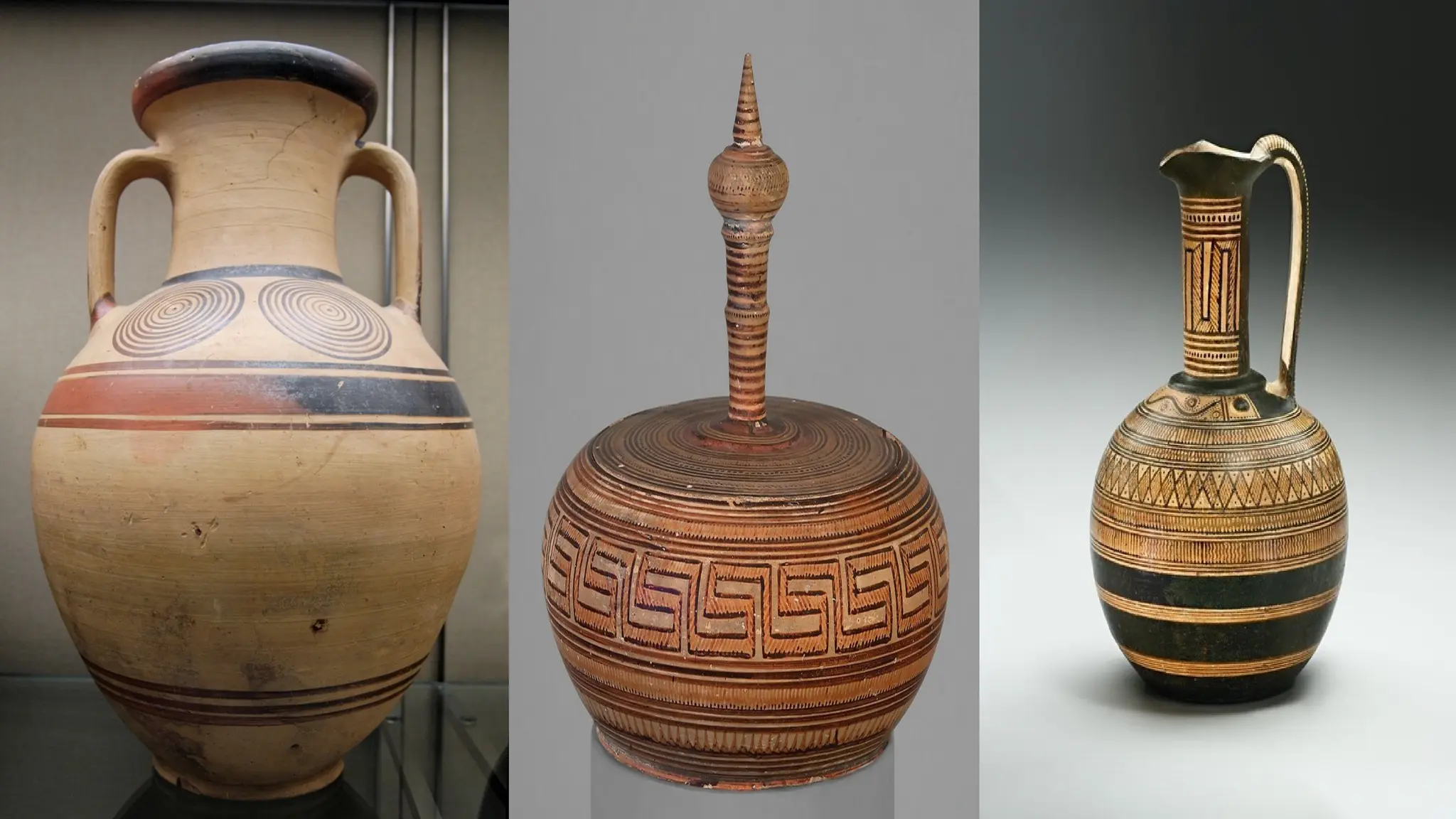
a. Geometric Period - Geometric
art is a phase of Greek art,
characterized largely by geometric
motifs in vase painting that
flourished towards the end of the
Greek Dark Ages.
6.
Ancient Greek wasdivided into four
periods:
b. Archaic period - The term is
most frequently used by art
historians to denote the period of
artistic development in Greece.
The start of the Persian Wars.
7.
Ancient Greek wasdivided into four
periods:
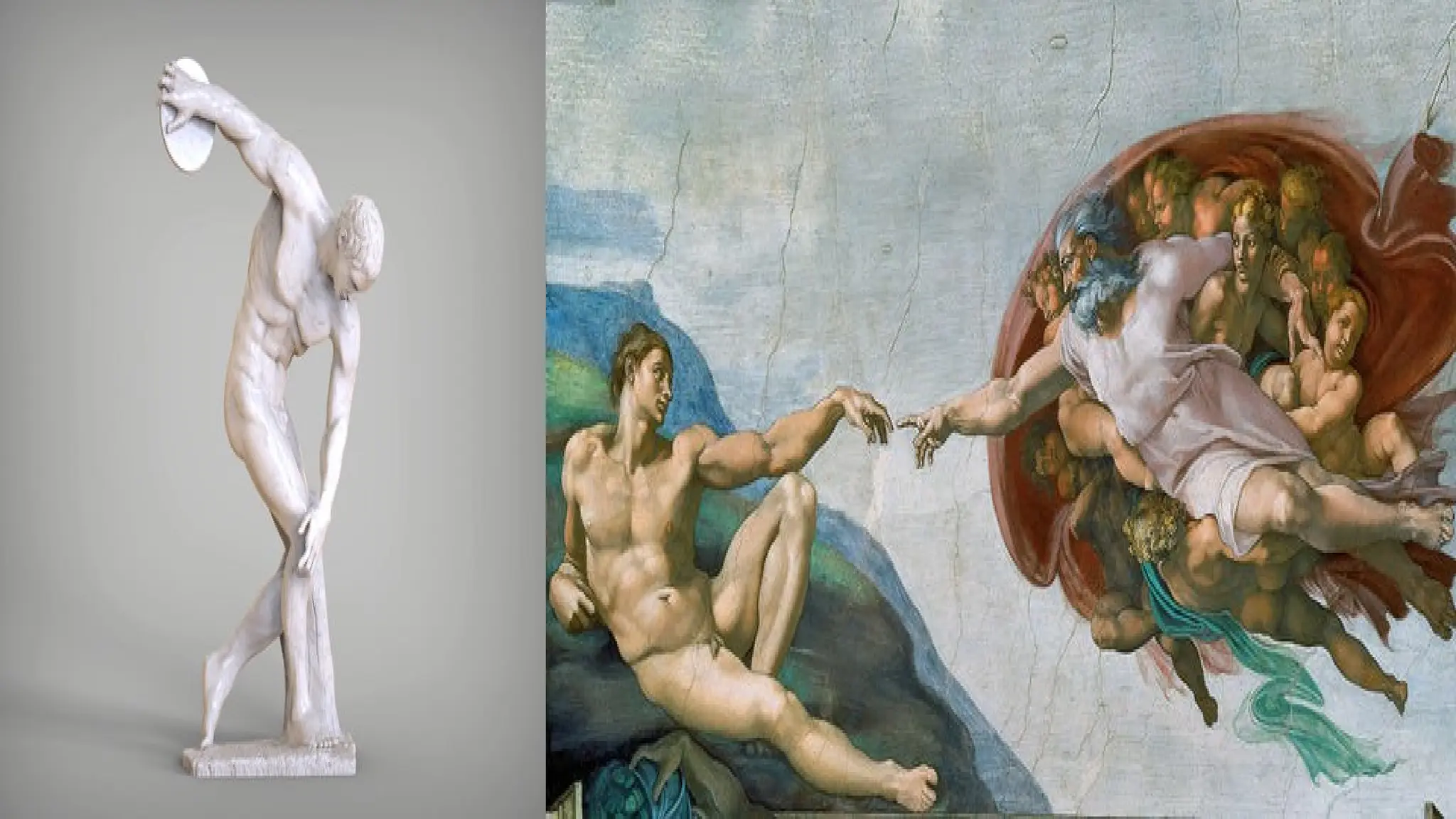
c. Classical Period – This period is
where many of the recognizable
ancient Greek artworks come
from.
9.
Ancient Greek wasdivided into four
periods:
d. Hellenistic period – The last
ancient Greek art period is set
during the reign of Alexander the
Great
10.
Another characteristic of
ancientGreek art is the need to
achieve perfect proportion. Greeks
used a mathematical equation
called the golden ratio.
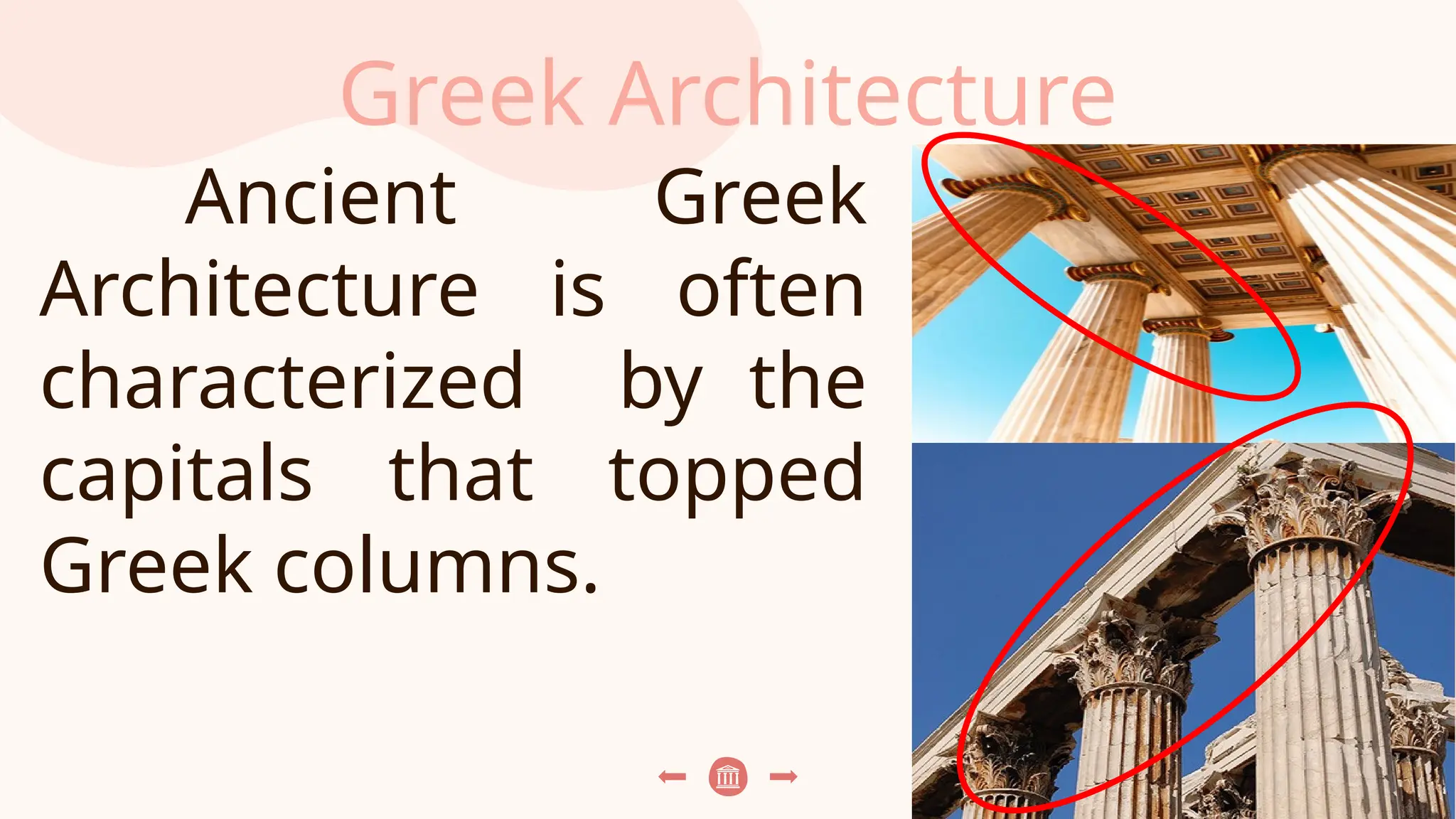
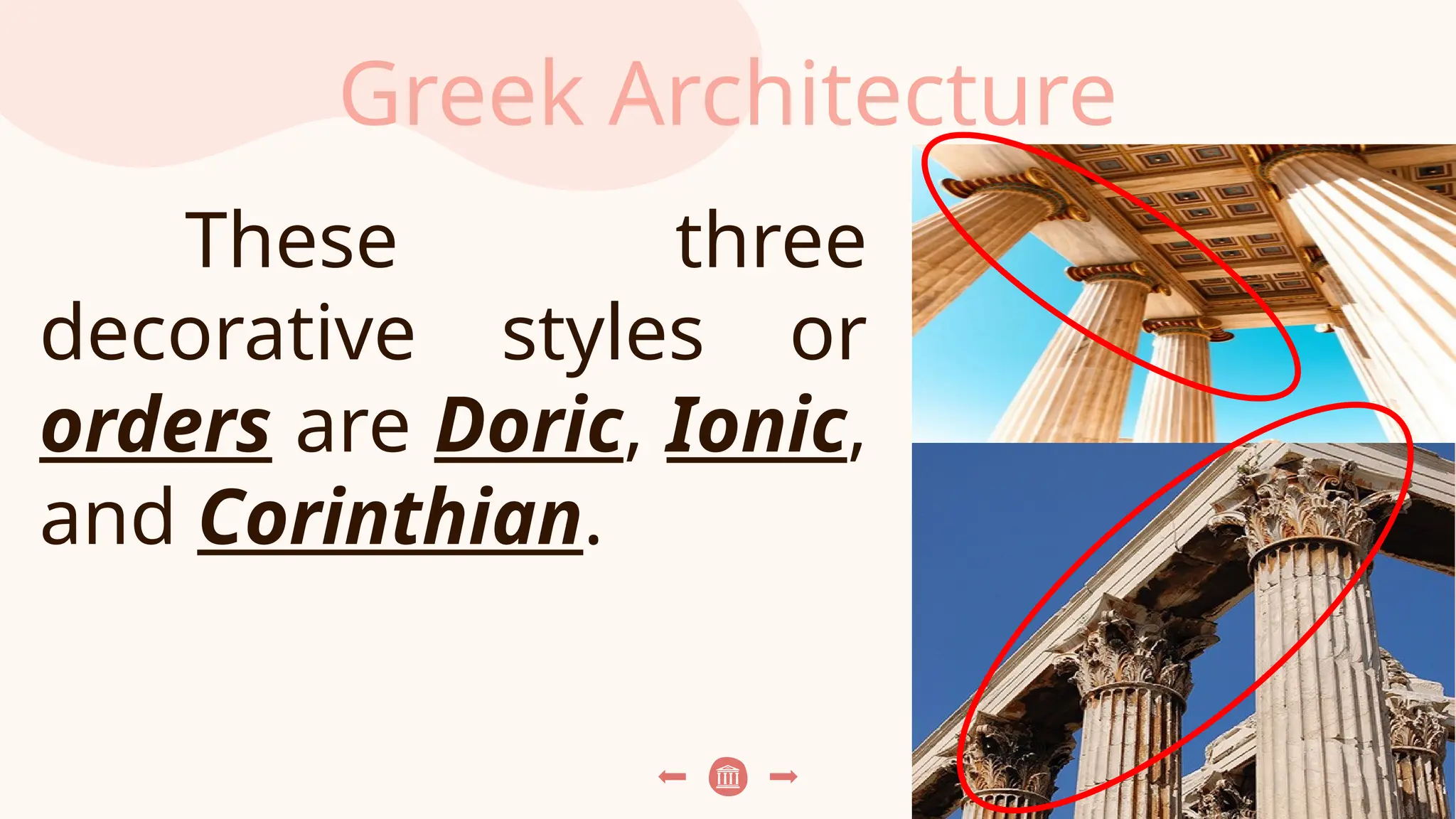
Greek Architecture
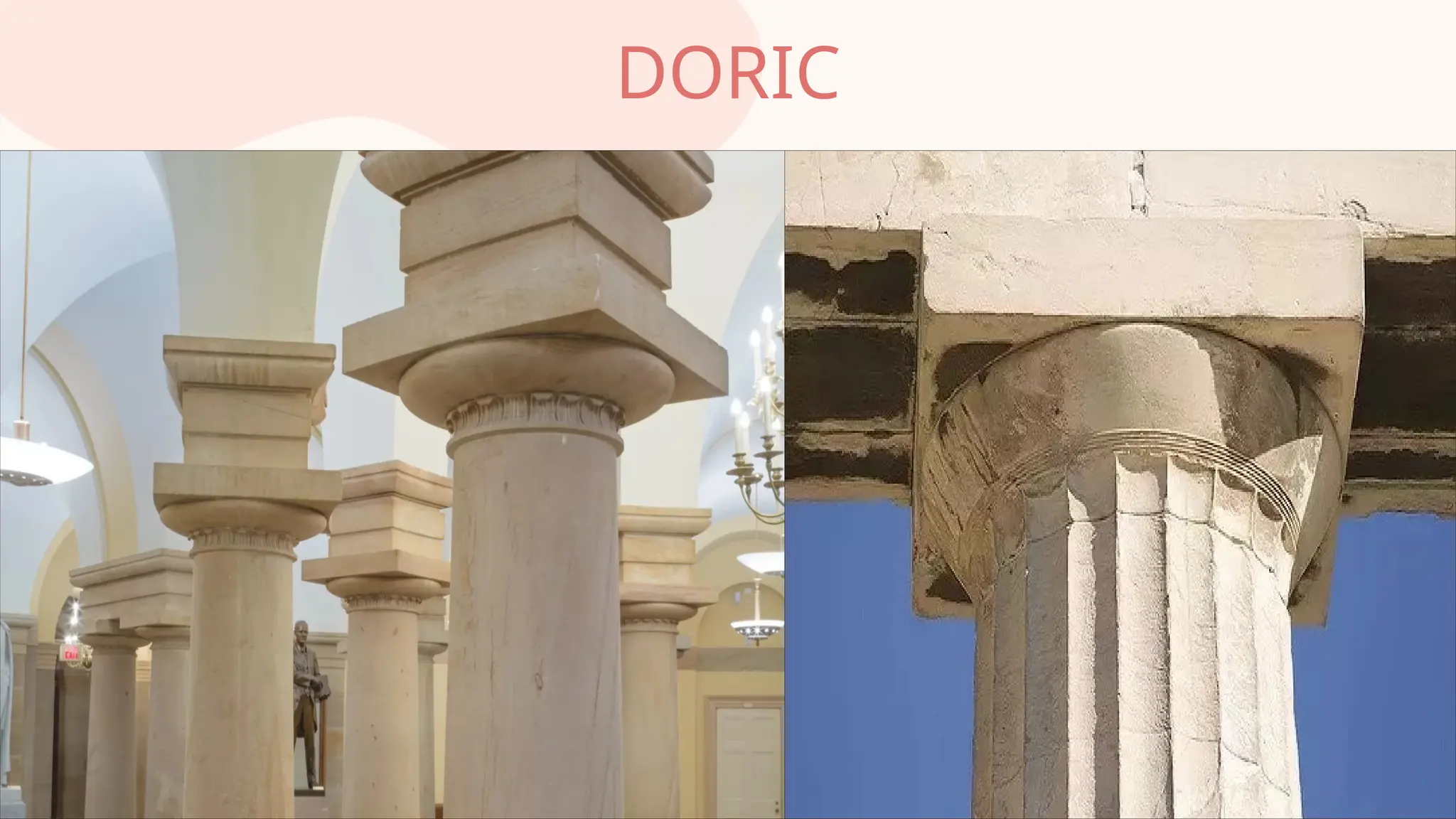
1. Doricorder – is the simplest with
broad and rectangular capital that
tops the columns, it was also the first
of the different orders.
Greek Architecture
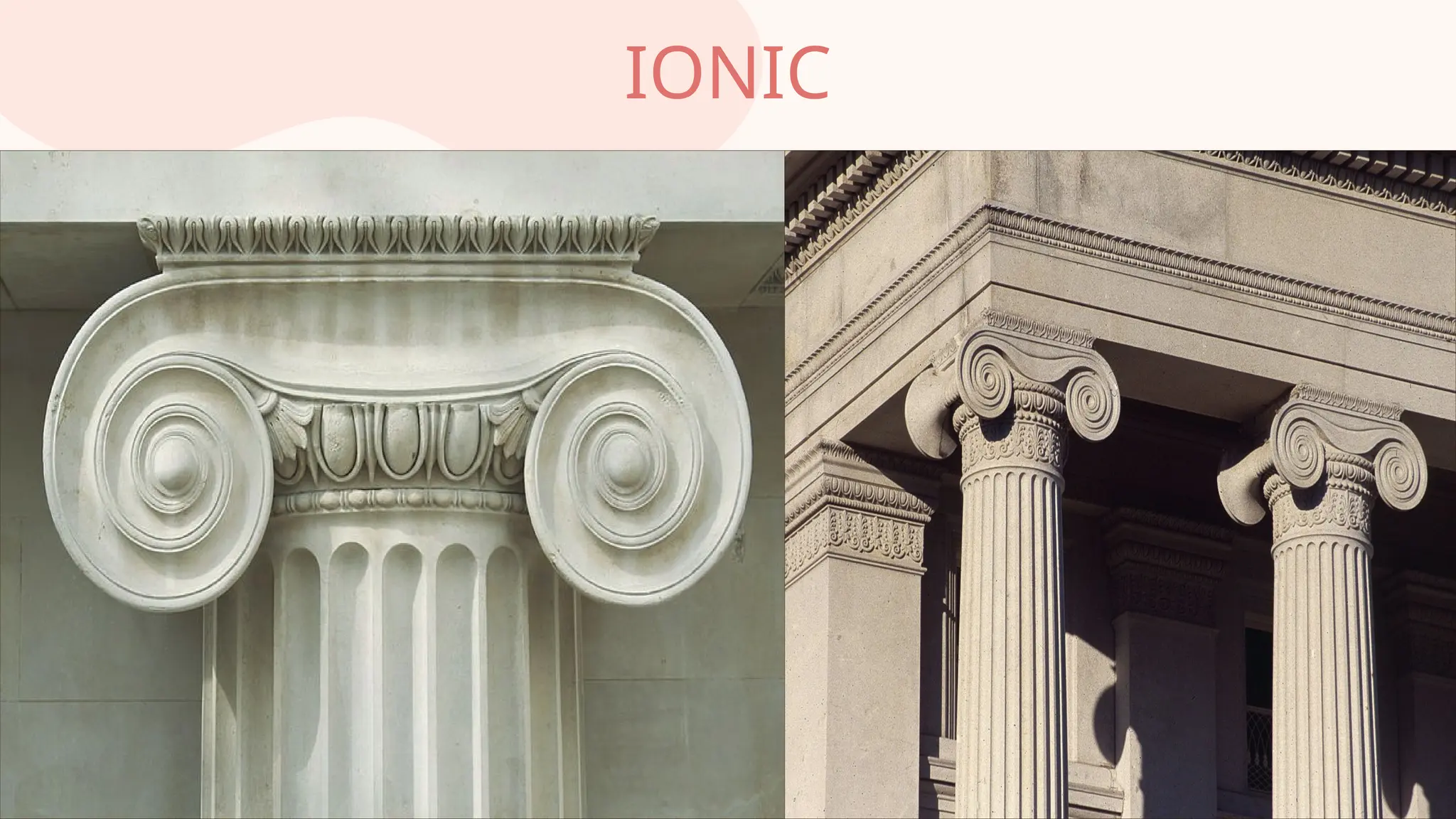
2. Ionicorder – is distinguished with
its capital that looks like scrolls. It was
developed in Ionia, a coastal region of
Anatolla (Turkey).
Greek Architecture
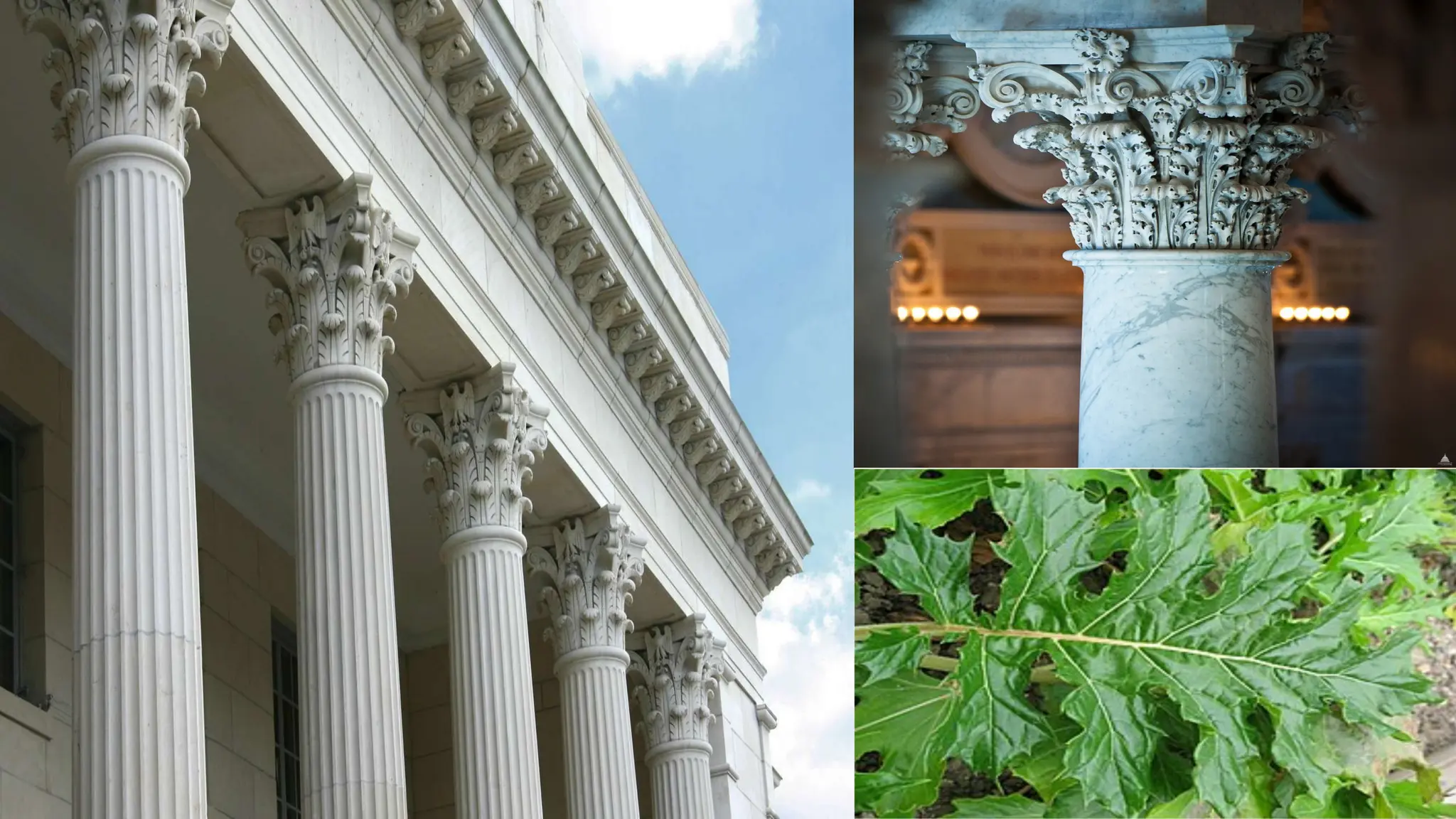
3. Corinthianorder – has a capital that
is carved with the stylized leaves of
the acanthus plant. It was used in
both Greek and Roman sculptures.
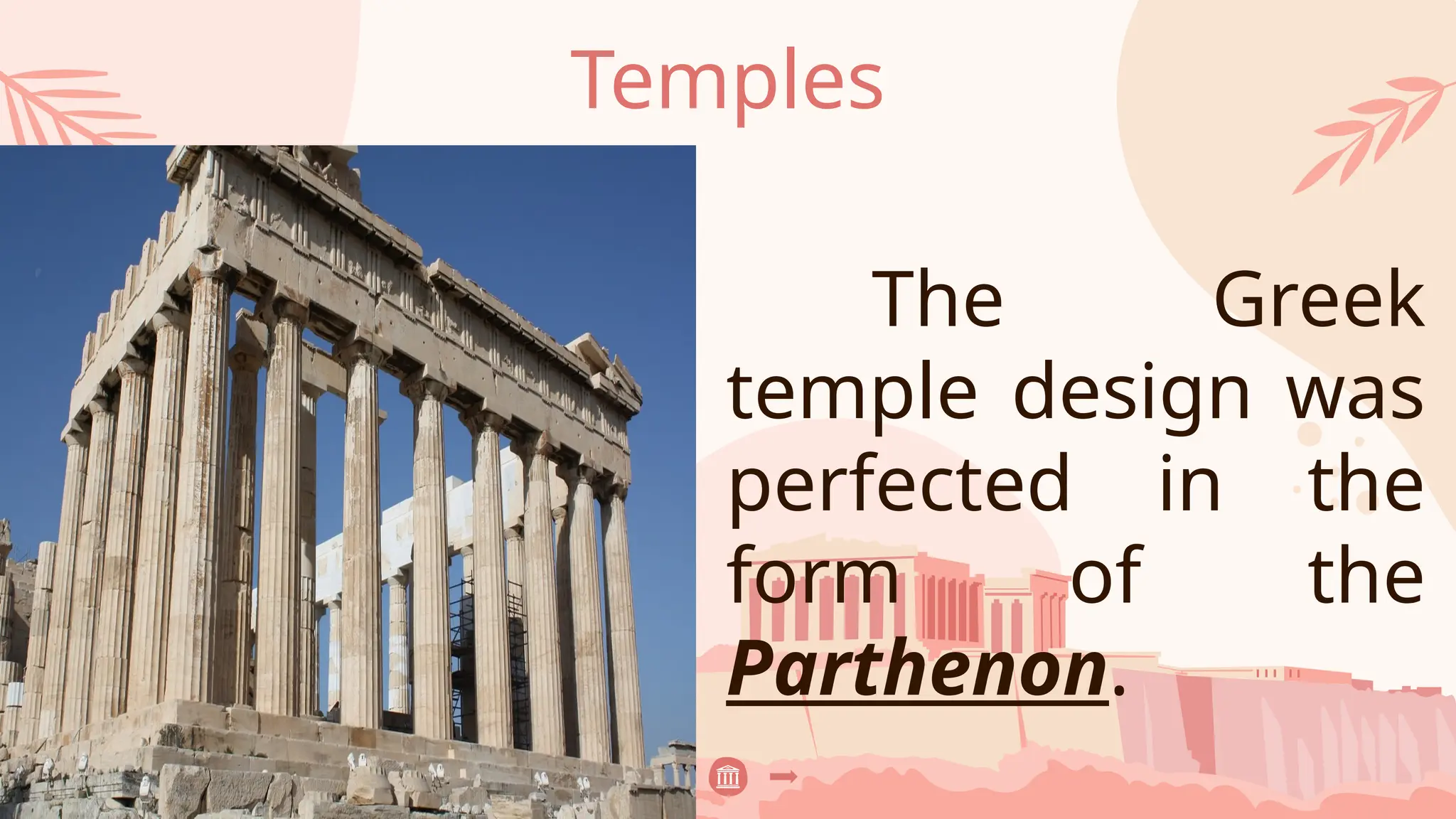
Temples
Most recognizable exampleof
architecture.
Honor of Athena, the Greek
goddess of wisdom and patroness
of the city.
Largest Doric Greek temple
Iktinos and Kallikrates,
architecture.
21.
Greek Sculpture
Greece wasblessed
with an abundance of
marble and limestone,
which they used
extensively in their
sculptures.
22.
Greek Sculpture
Bronze wasalso used
for sculptures, but few
have survived since their
metal was reused by later
generations.
23.
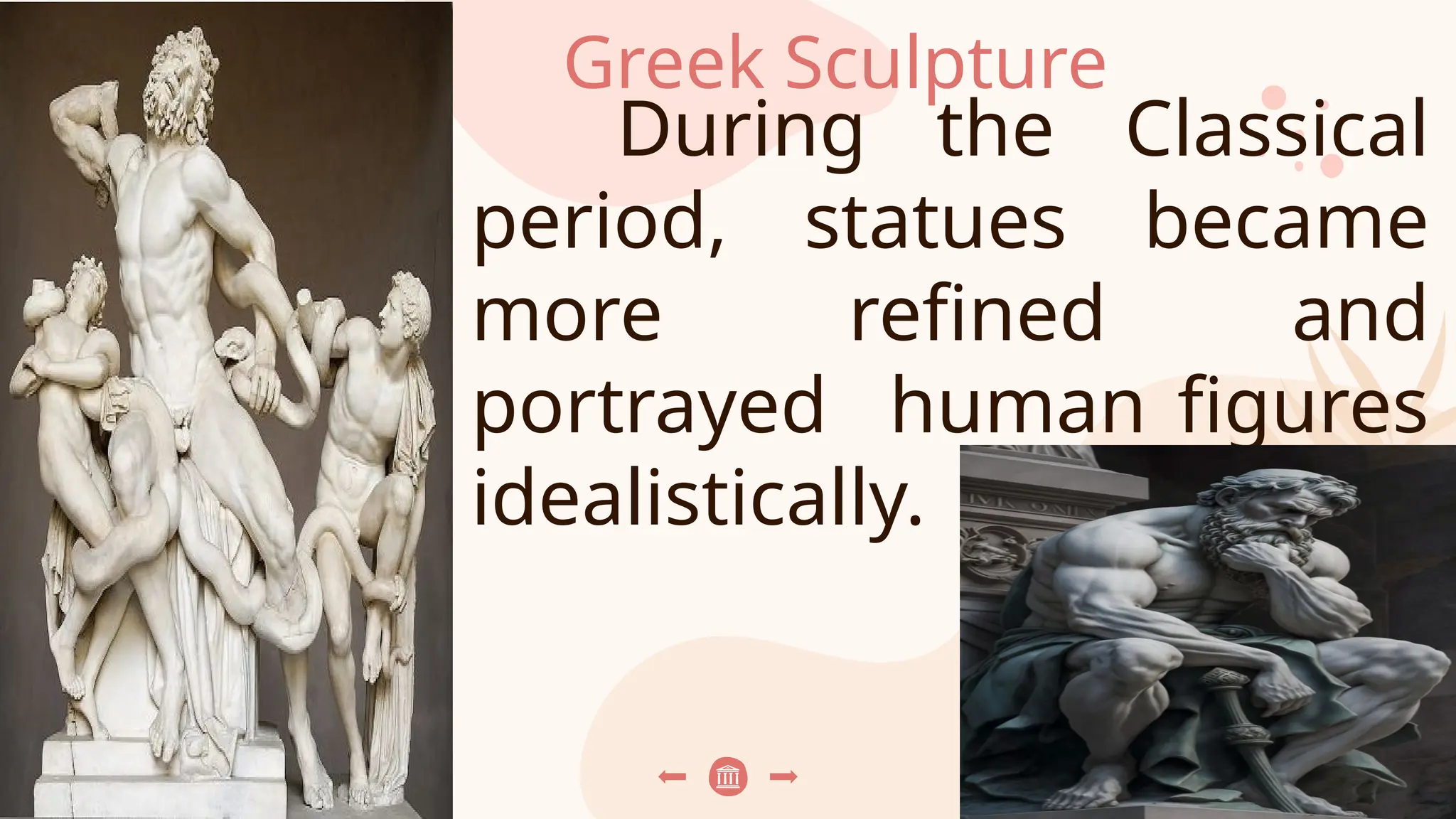
Greek Sculpture
During theClassical
period, statues became
more refined and
portrayed human figures
idealistically.
24.
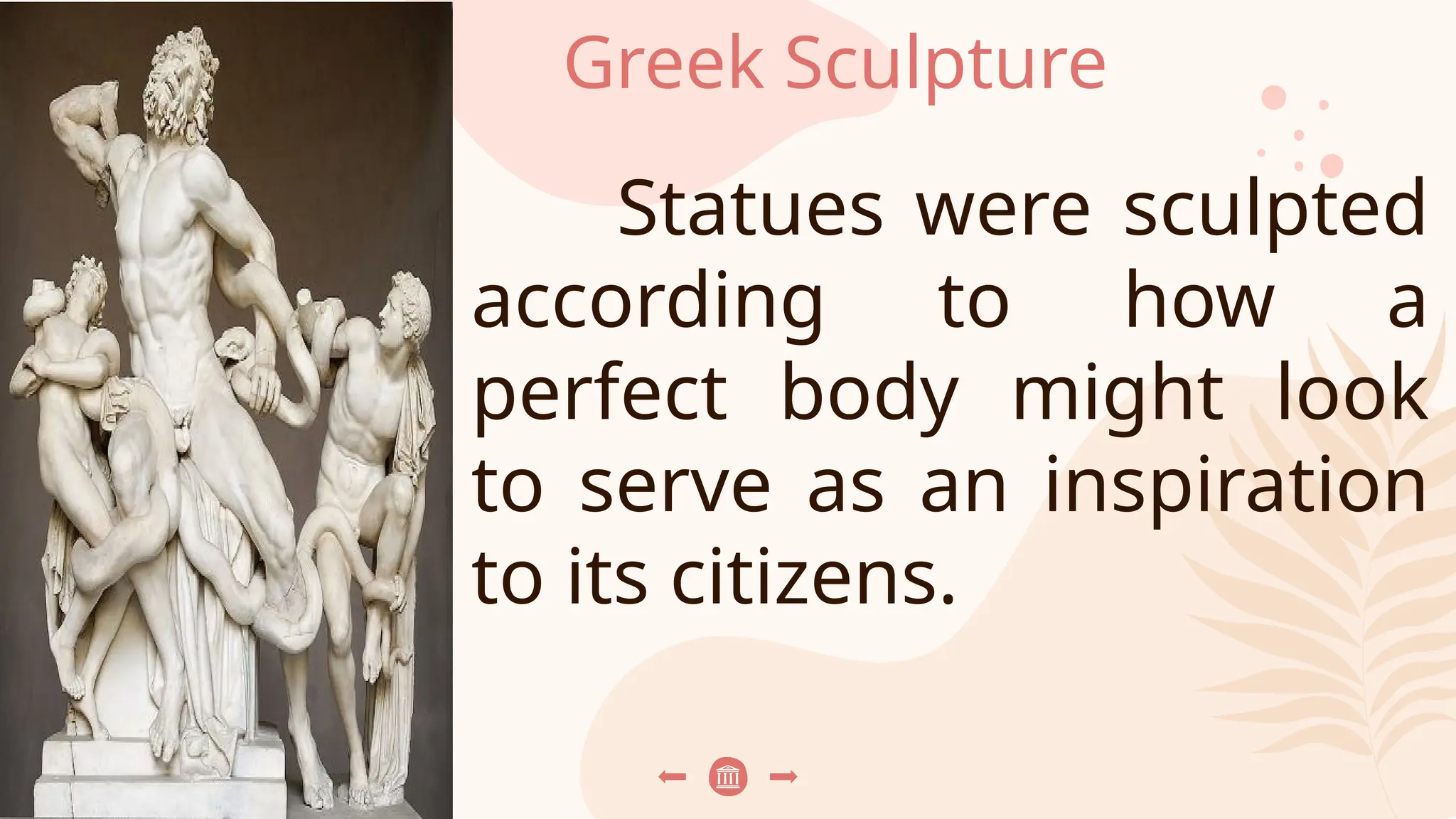
Greek Sculpture
Statues weresculpted
according to how a
perfect body might look
to serve as an inspiration
to its citizens.
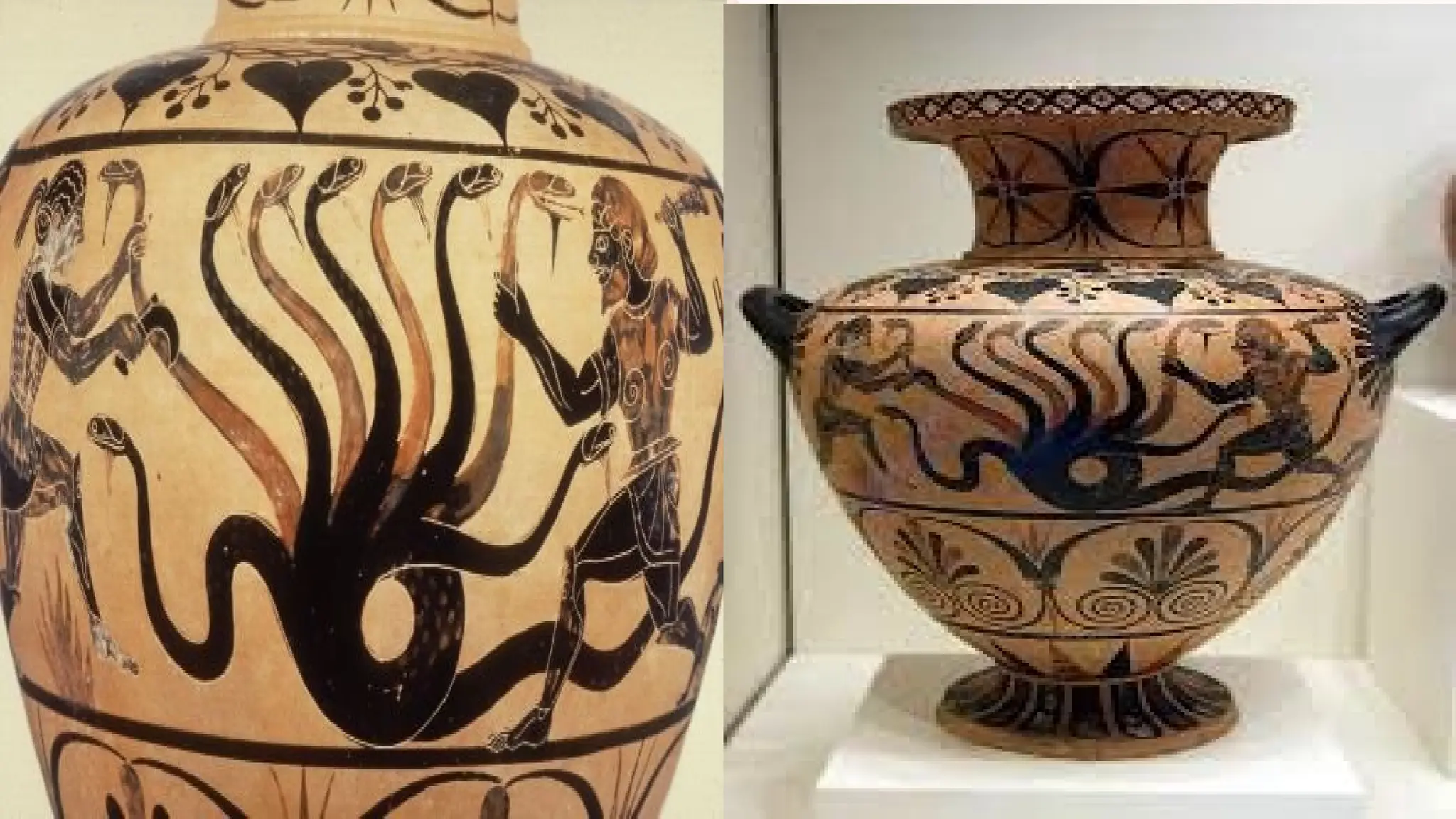
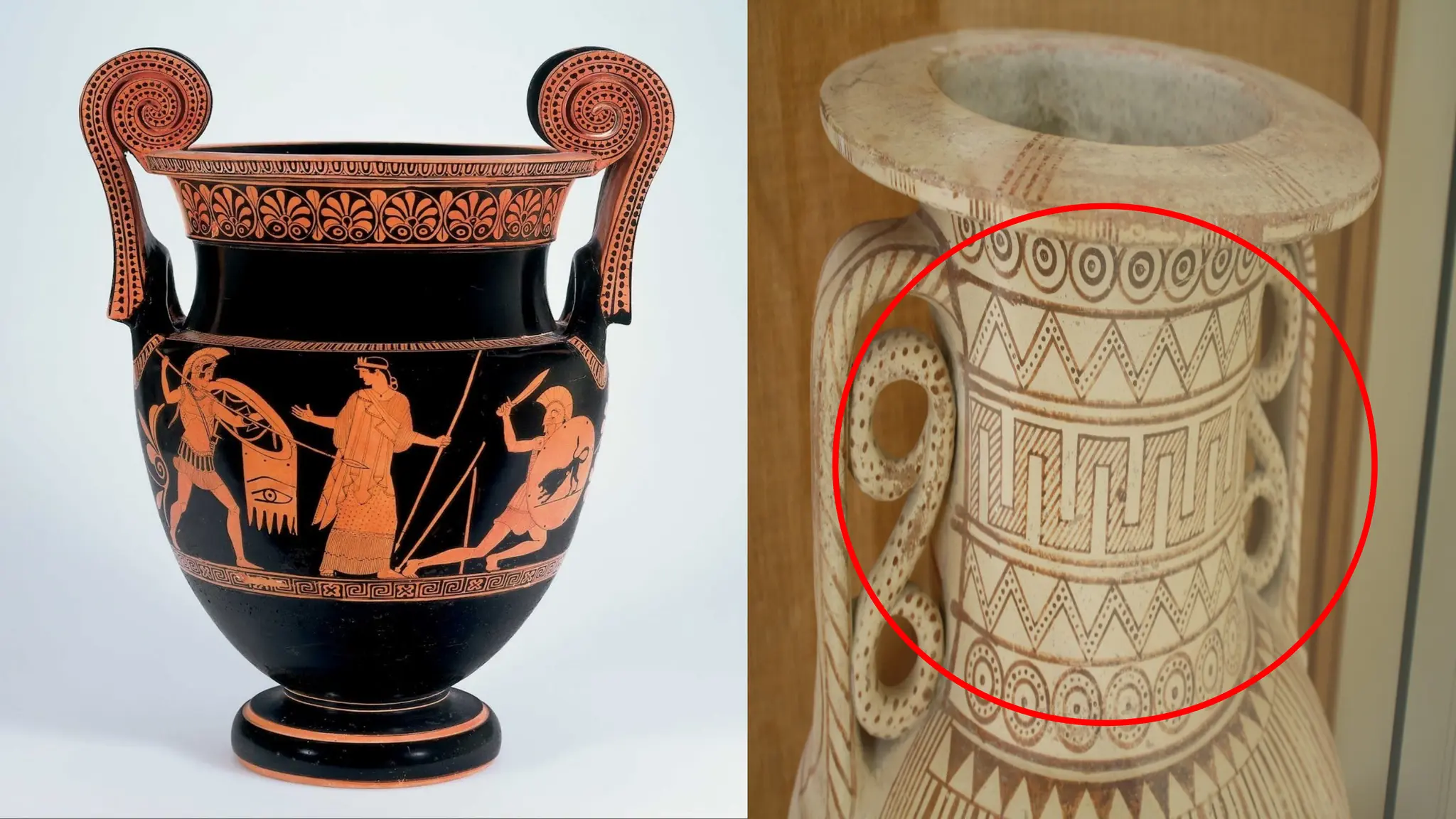
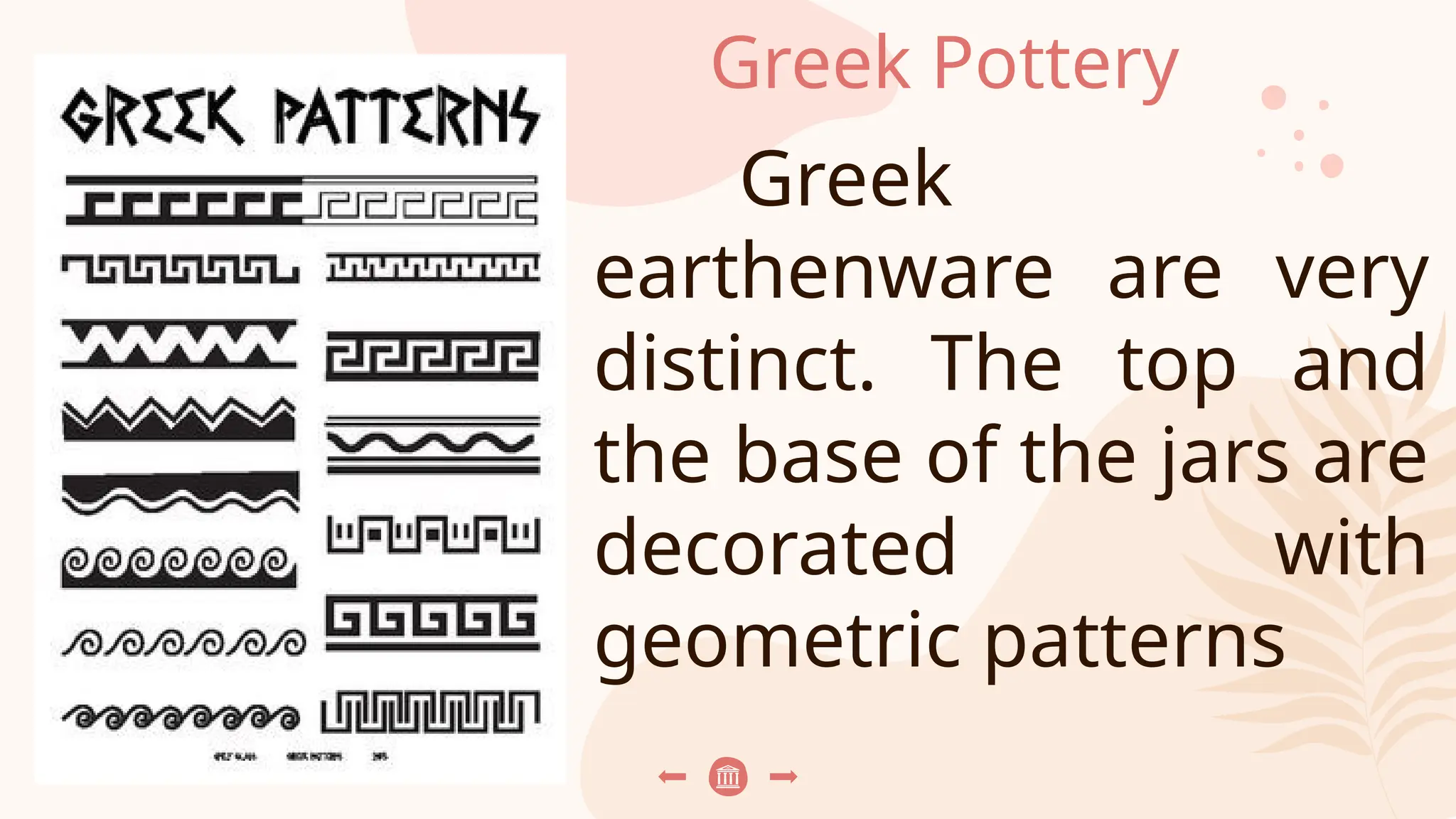
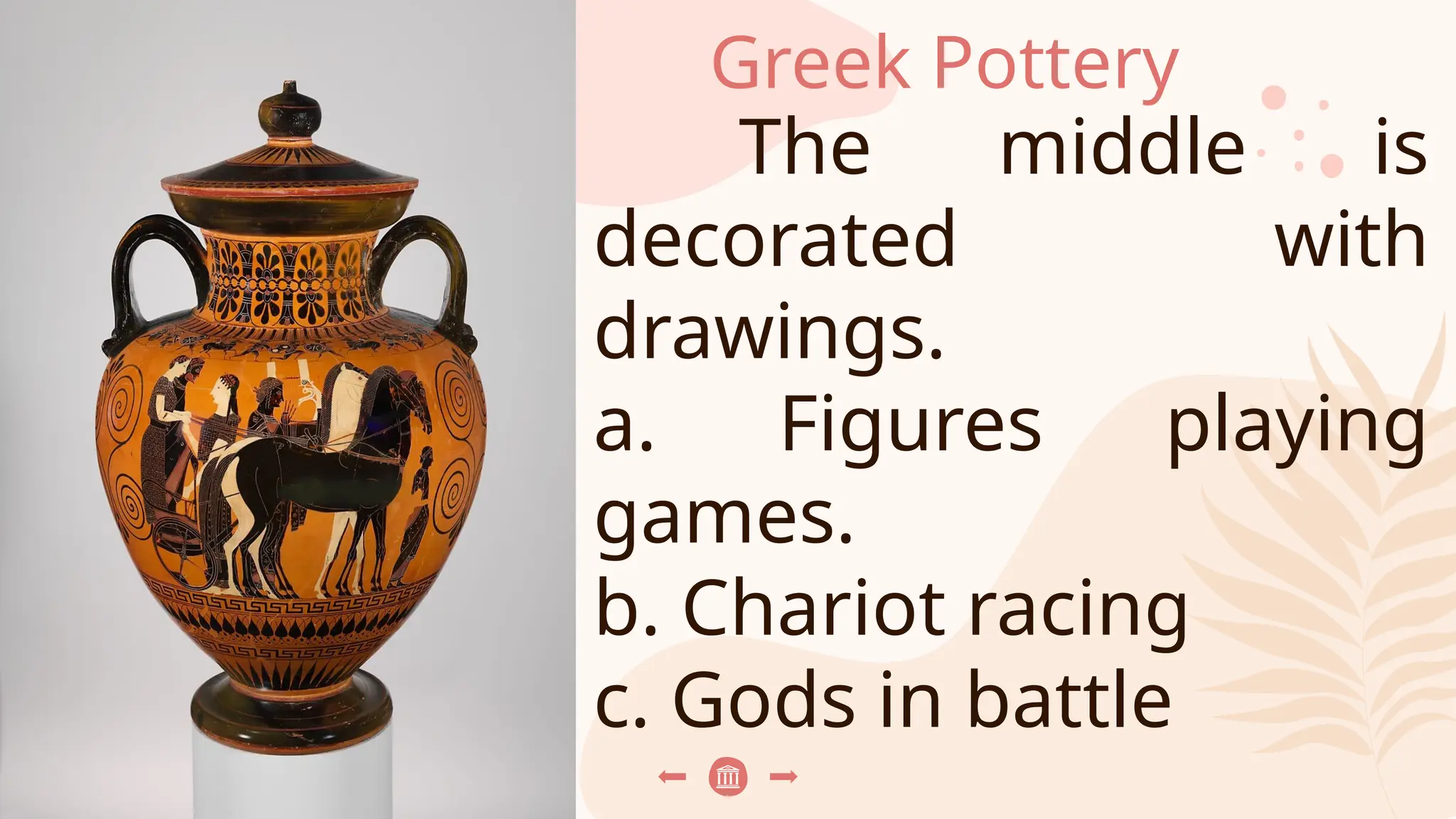
Greek Pottery
The middleis
decorated with
drawings.
a. Figures playing
games.
b. Chariot racing
c. Gods in battle
28.
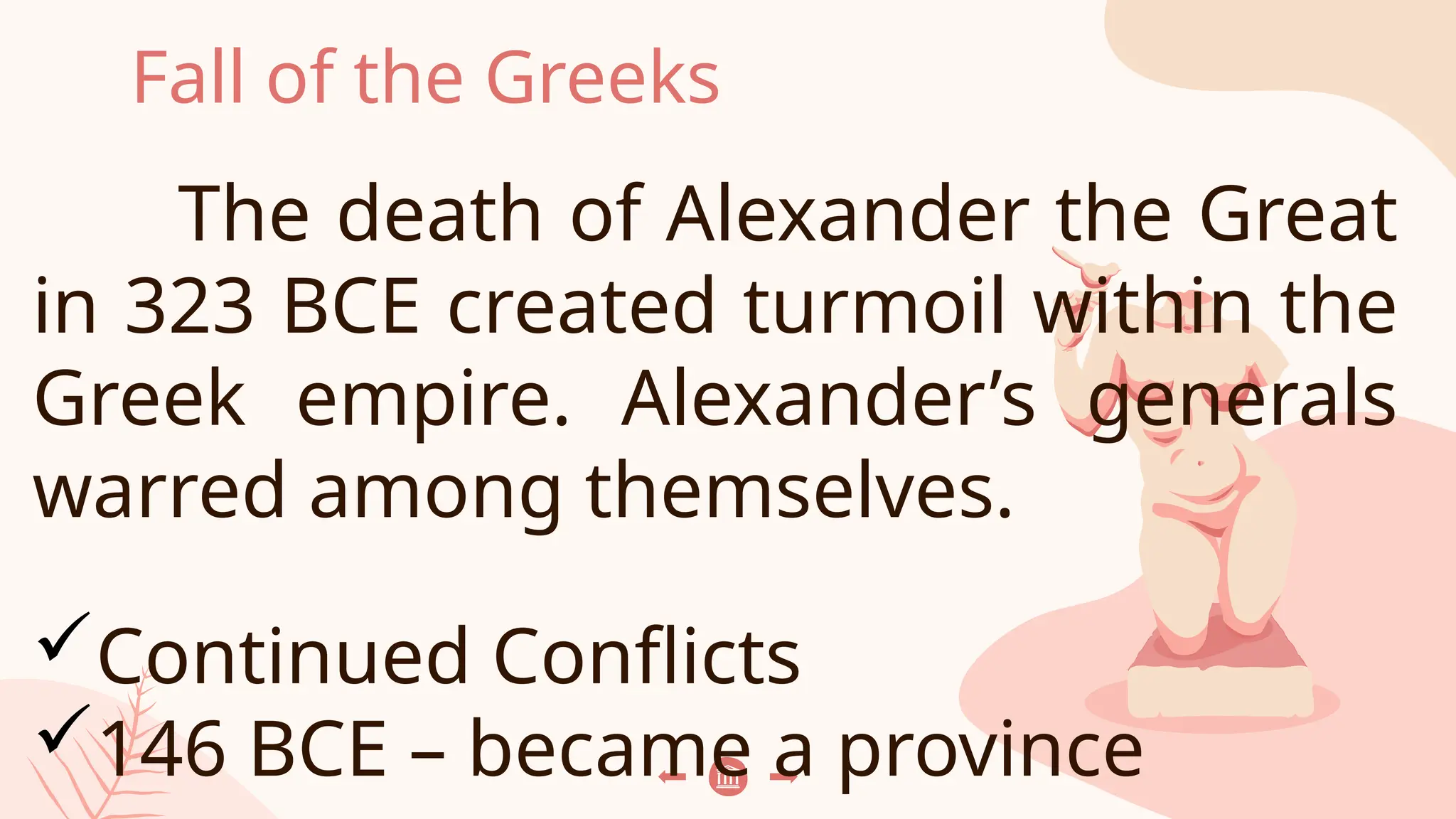
Fall of theGreeks
The death of Alexander the Great
in 323 BCE created turmoil within the
Greek empire. Alexander’s generals
warred among themselves.
Continued Conflicts
146 BCE – became a province
29.
Art of AncientRome
The art of Ancient Rome and
its Empire includes architecture,
painting, sculpture and mosaic
work.
30.
Art of AncientRome
Luxury objects in metal-work,
gem engraving, ivory carvings,
and glass are sometimes
considered to be minor forms of
Roman art.
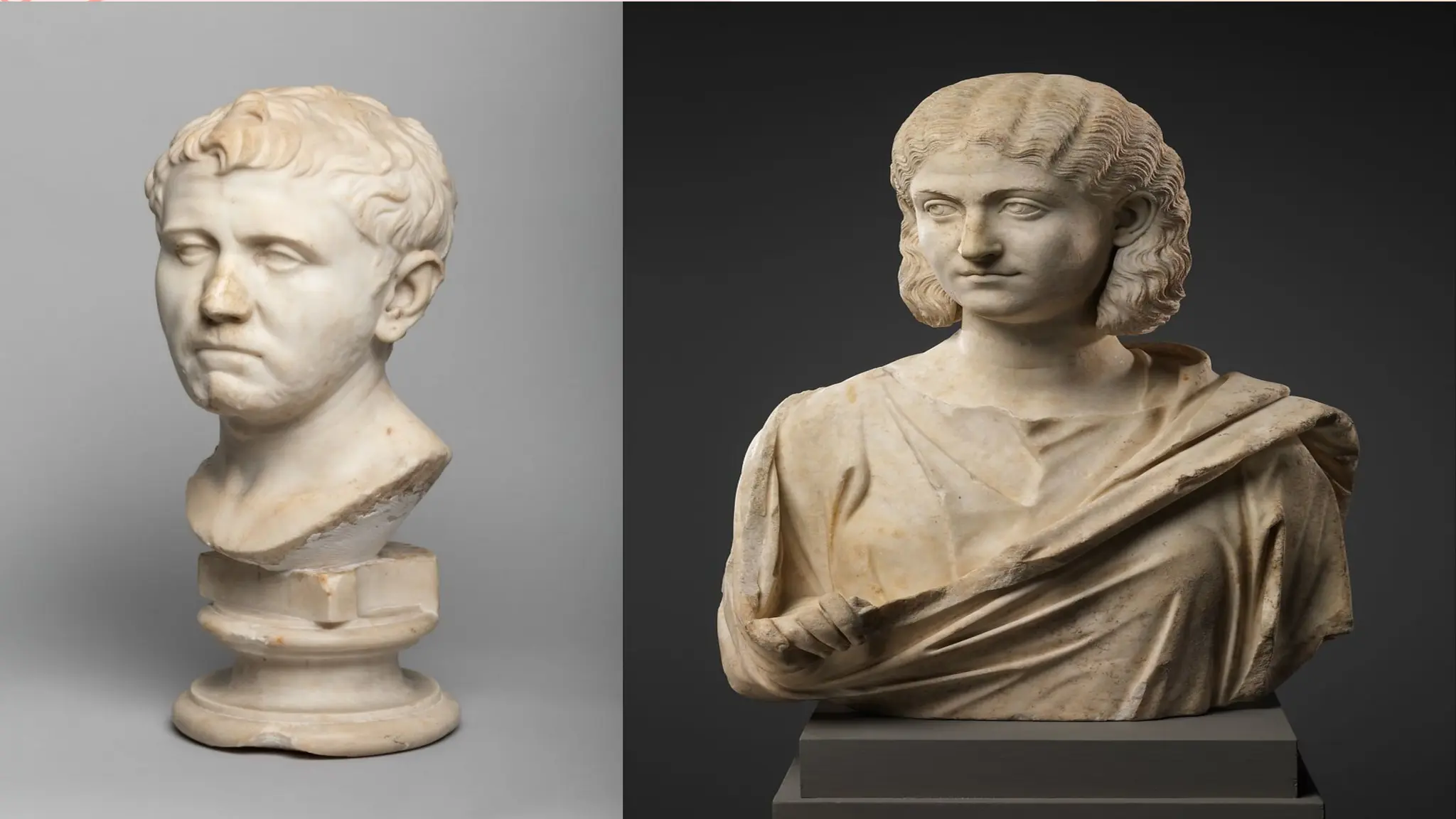
31.
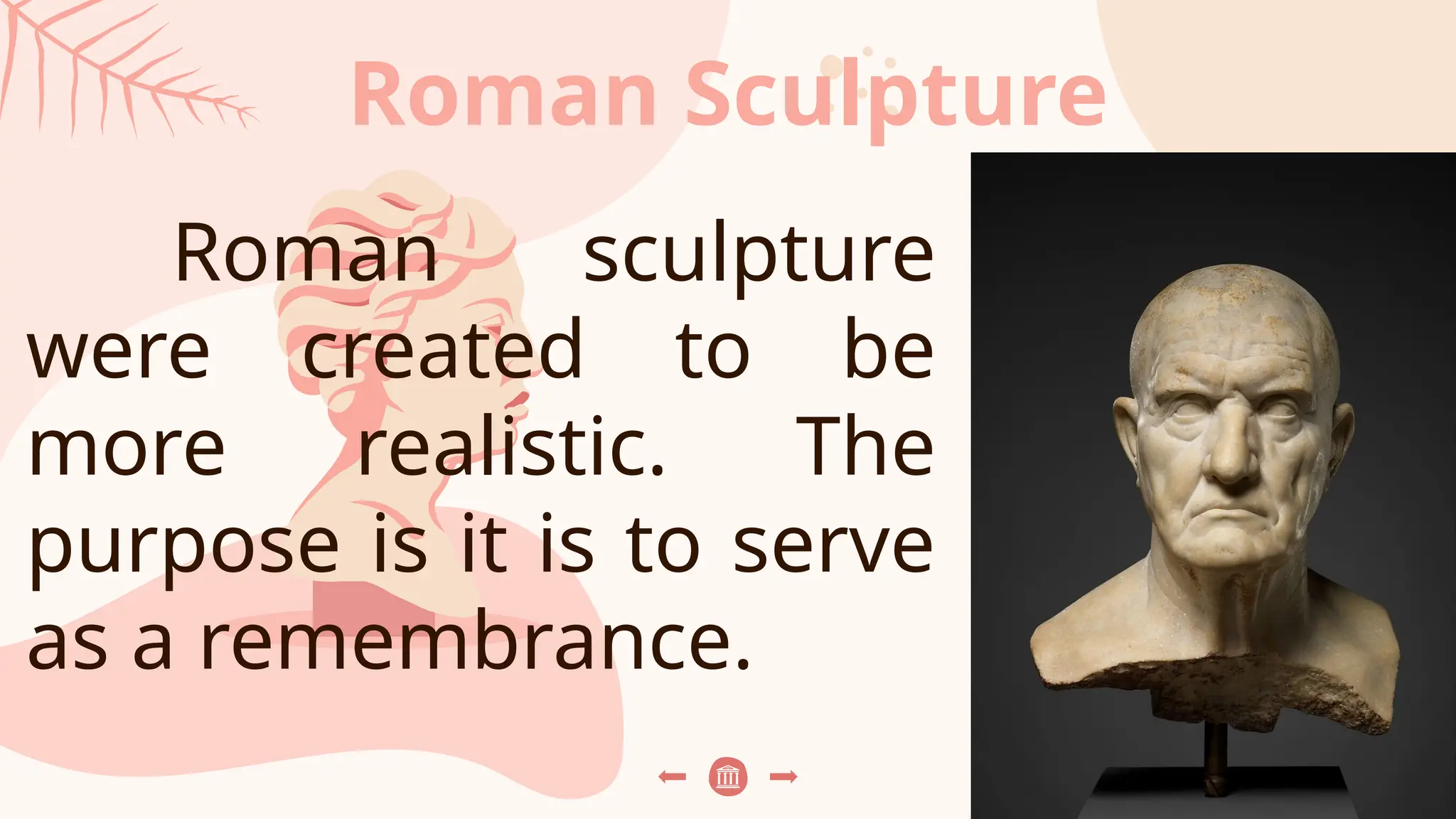
Roman Sculpture
The fascinationof the Romans
with portraits started when wax
molds of the faces of the deceased,
which were called sculpted
portraits, were used as reminders
of their loved ones.
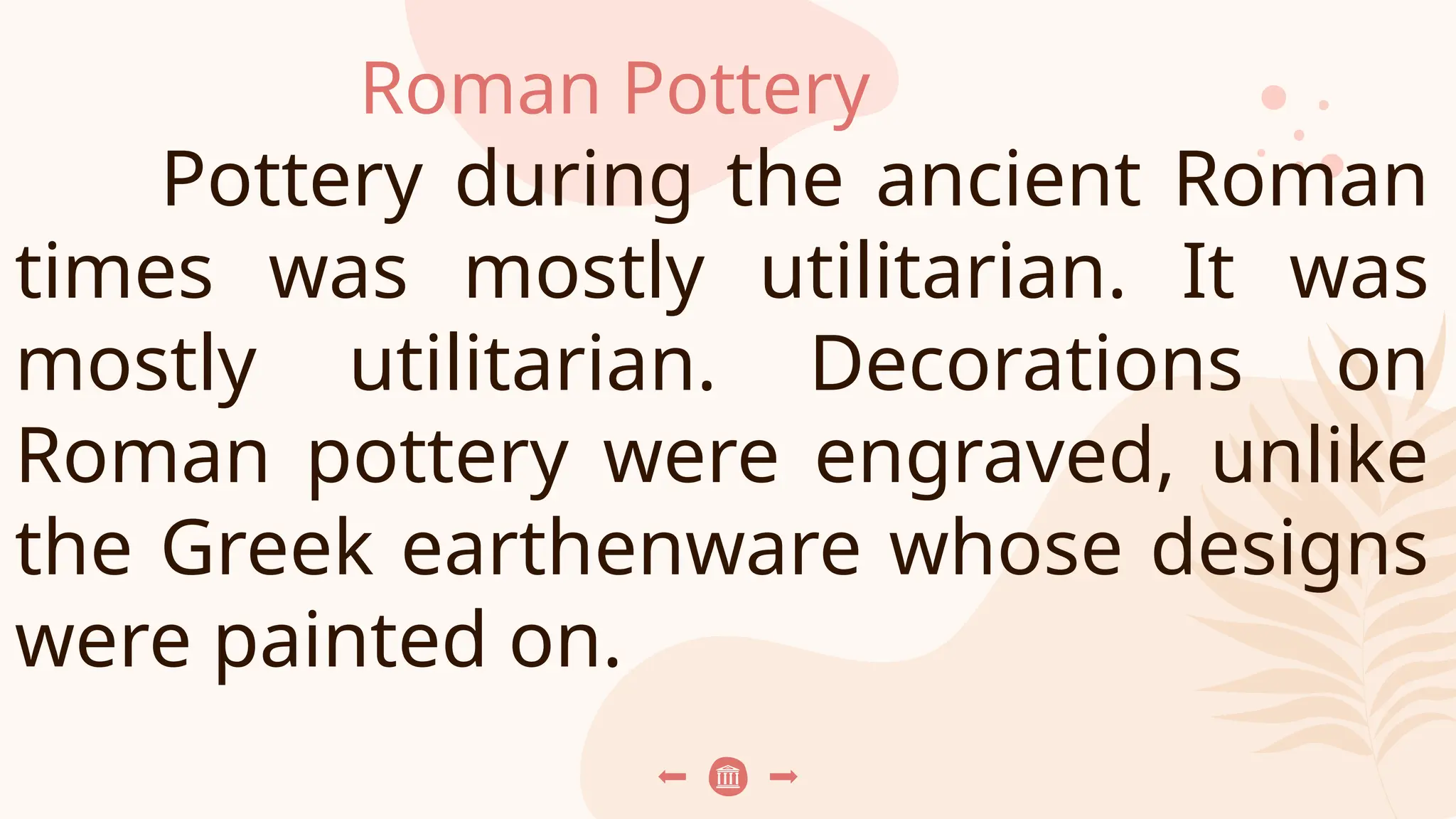
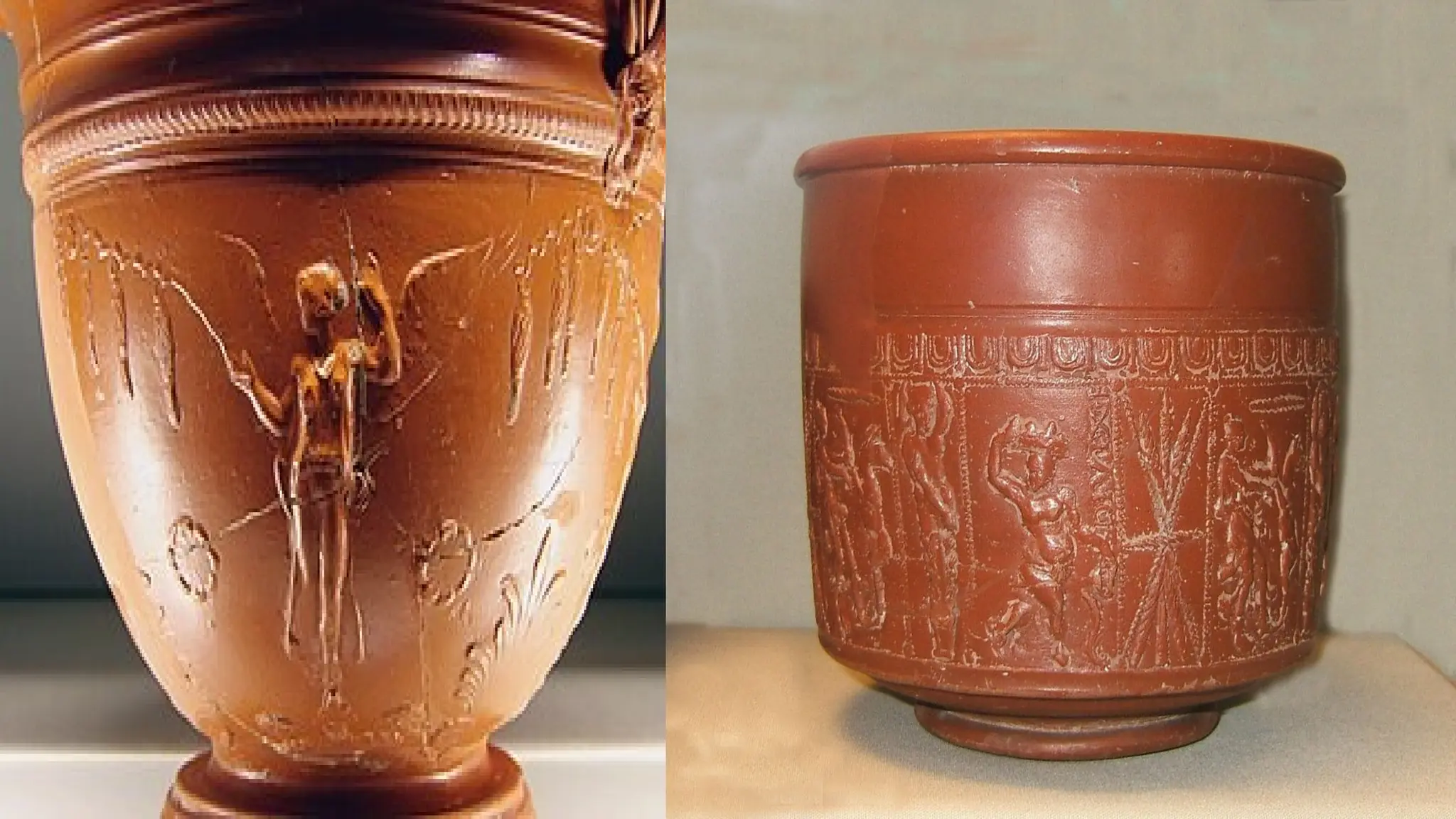
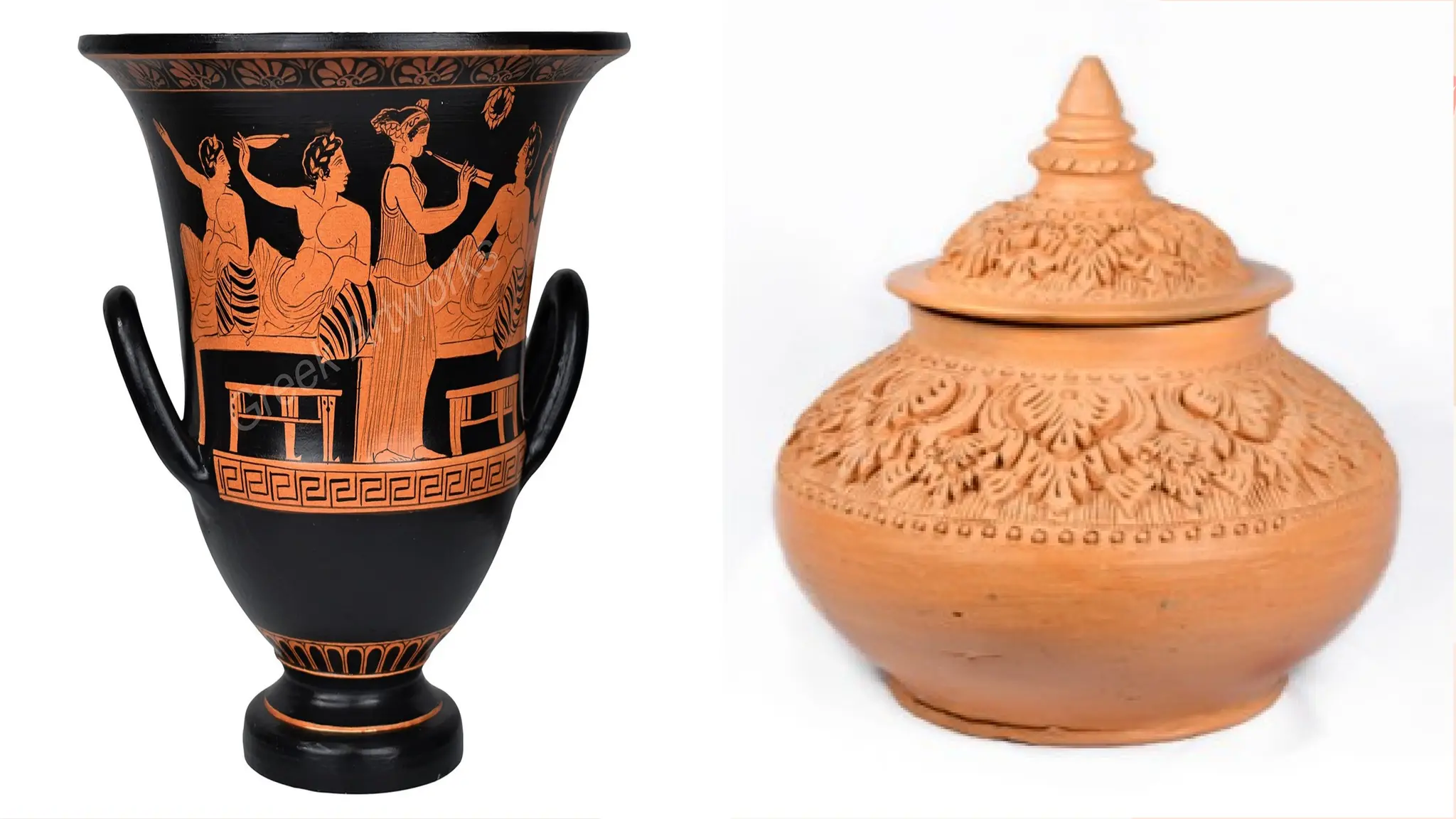
Roman Pottery
Pottery duringthe ancient Roman
times was mostly utilitarian. It was
mostly utilitarian. Decorations on
Roman pottery were engraved, unlike
the Greek earthenware whose designs
were painted on.
37.
You can describethe topic
of the section here
Objectives
You can describe the topic
of the section here
Methodology
You can describe the topic
of the section here
Schedule
Table of
contents
01
02
03
38.
2 types ofRoman earthenware:
a. Coarse ware – used for cooking,
storing liquids, etc.
b. Fine ware – used for formal
occasions and often used as serving
plates
39.
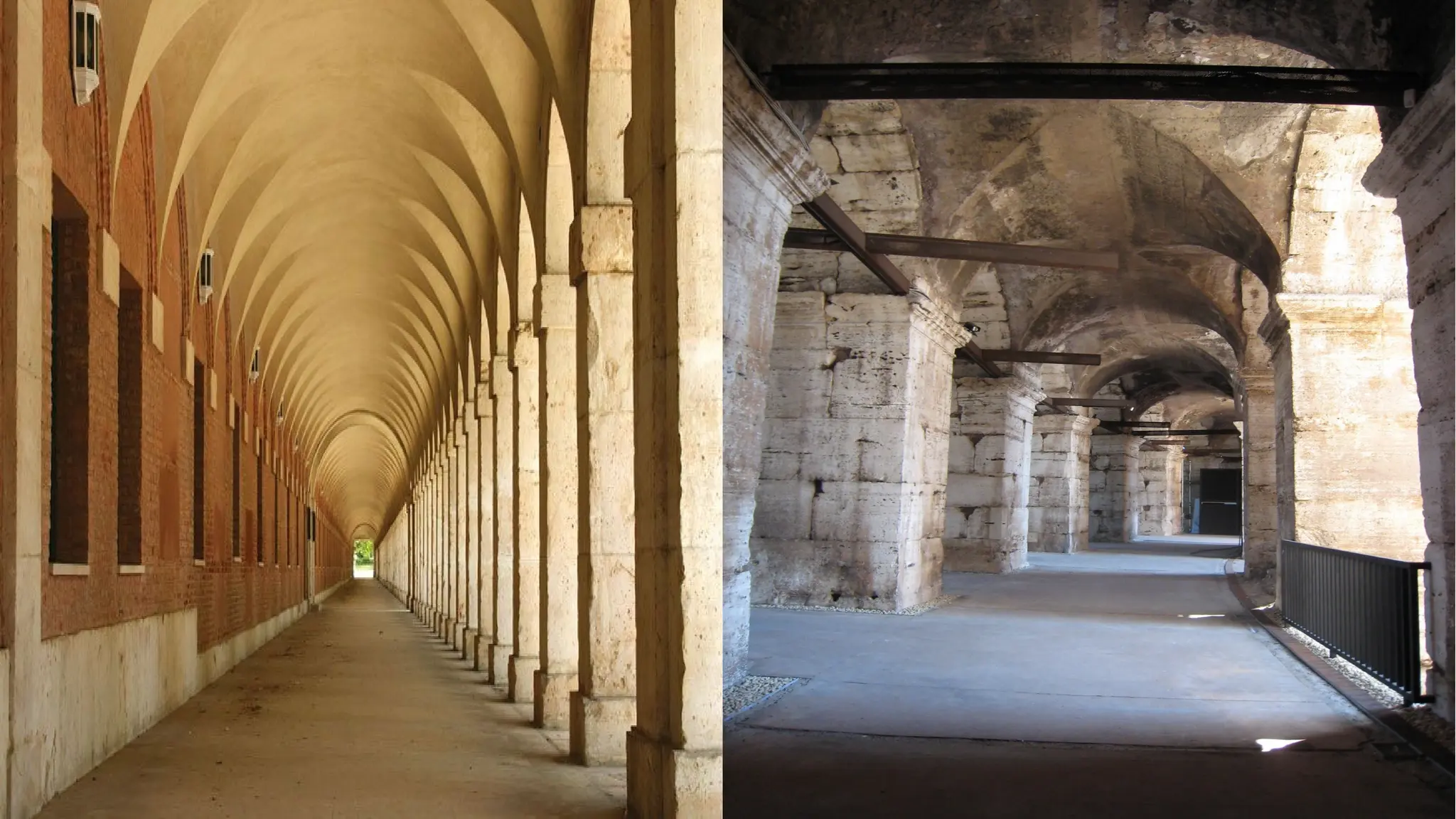
Roman Architecture
They builtsturdy stone structures
both for use and to perpetuate their
glory. They erected huge halls and
arenas for public games, baths etc.
They built them of gigantic arches of
stone, bricks and concrete called
“barrel vaults”.
42.
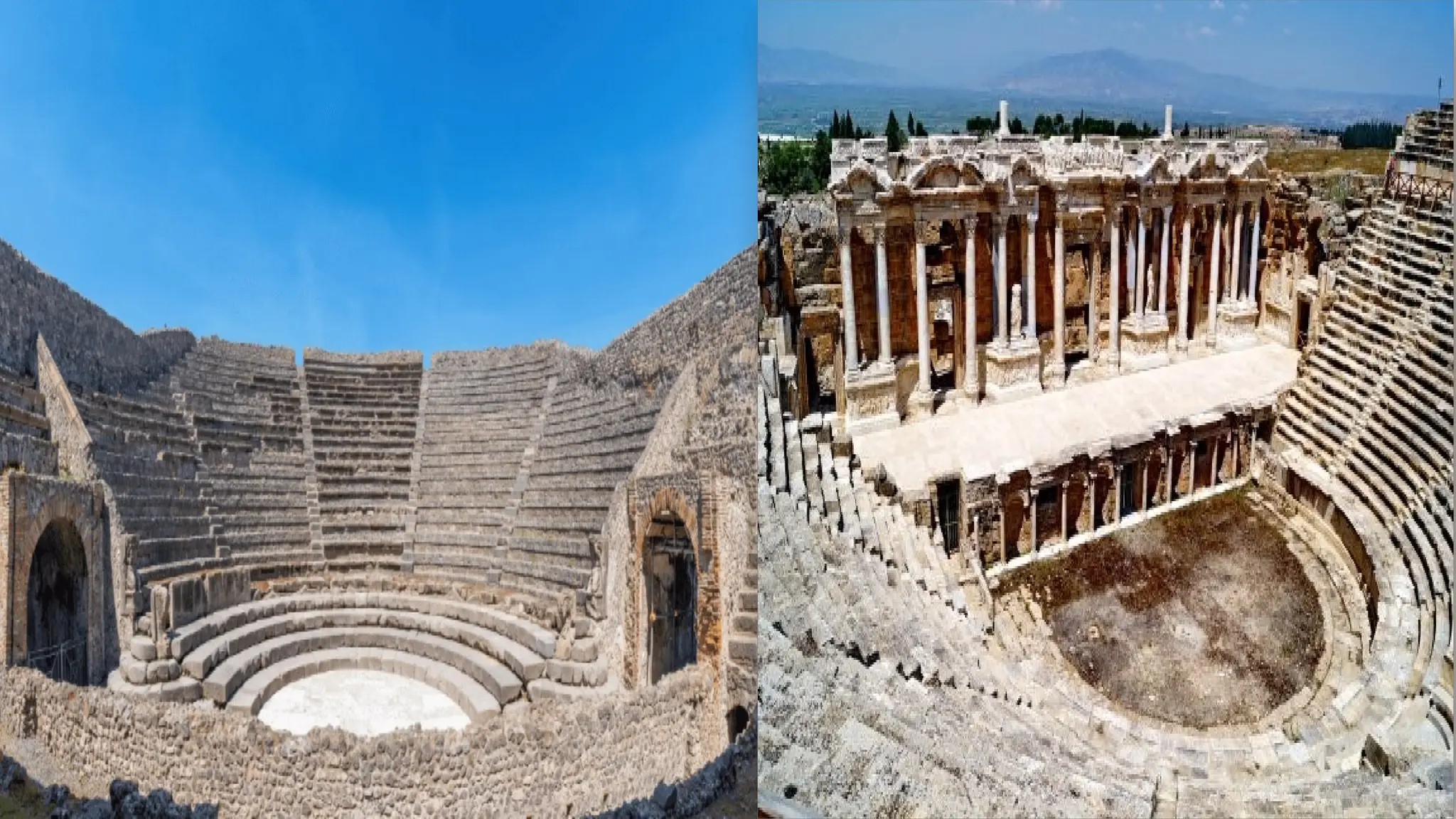
To keep thepeople entertained,
emperors organized arenas for
sporting events, chariot races and
gladiator combats that were held in
open-air building called
“amphitheaters”.
43.
You can describethe
topic of the section here
Schedule
You can describe the
topic of the section here
Methodolog
y
01 02 03
04 05 06
Table of contents
You can describe the
topic of the section here
Conclusions
You can describe the
topic of the section here
Analysis
You can describe the
topic of the section here
Hypothesis
Objectives
You can describe the
topic of the section here
44.
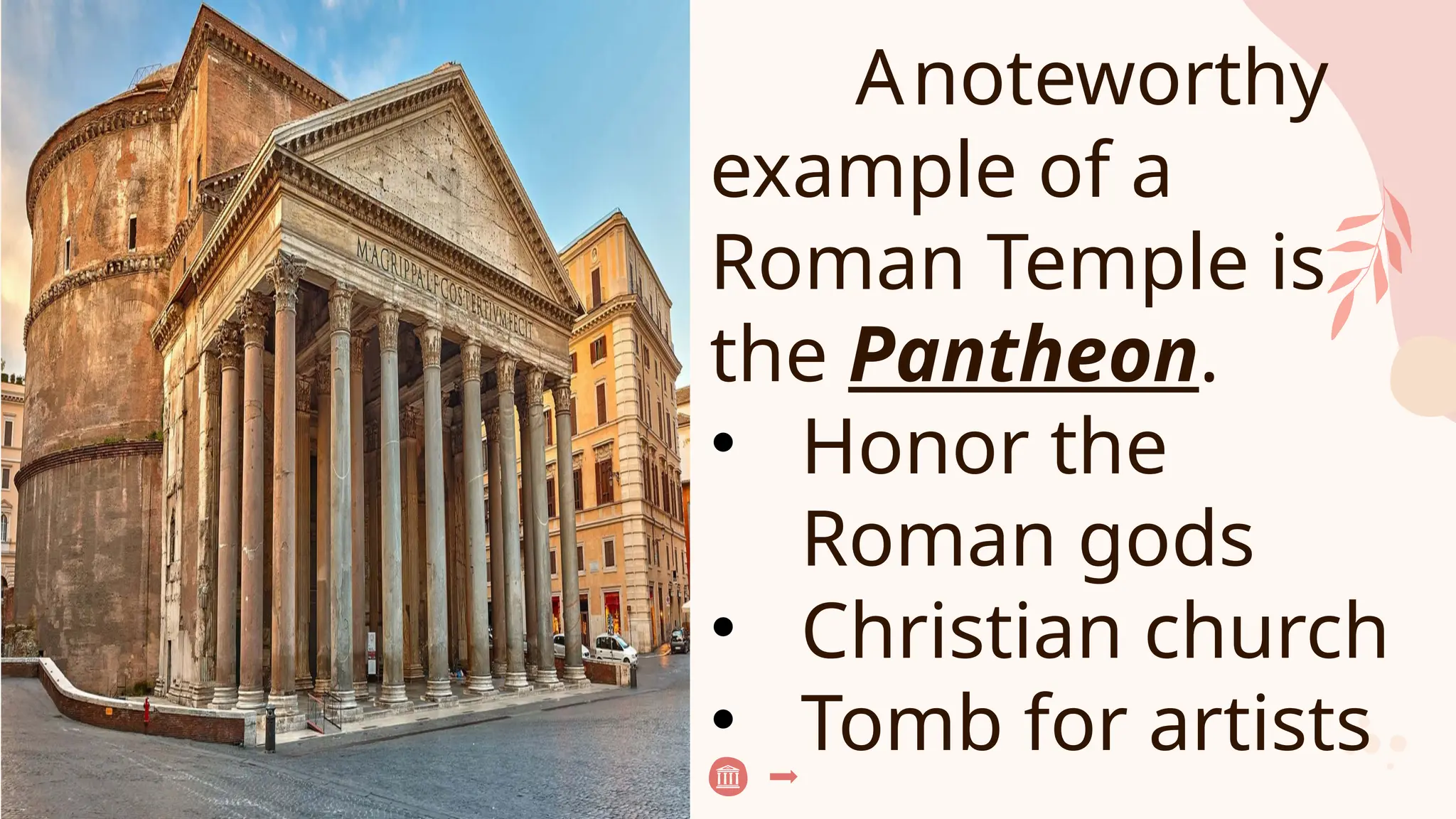
Roman Temples
The designsof the Roman
temples were adapted from the
designs of the Greeks. Unlike the
Greeks temples used the columns for
structural uses; Romans used
columns for decorations.
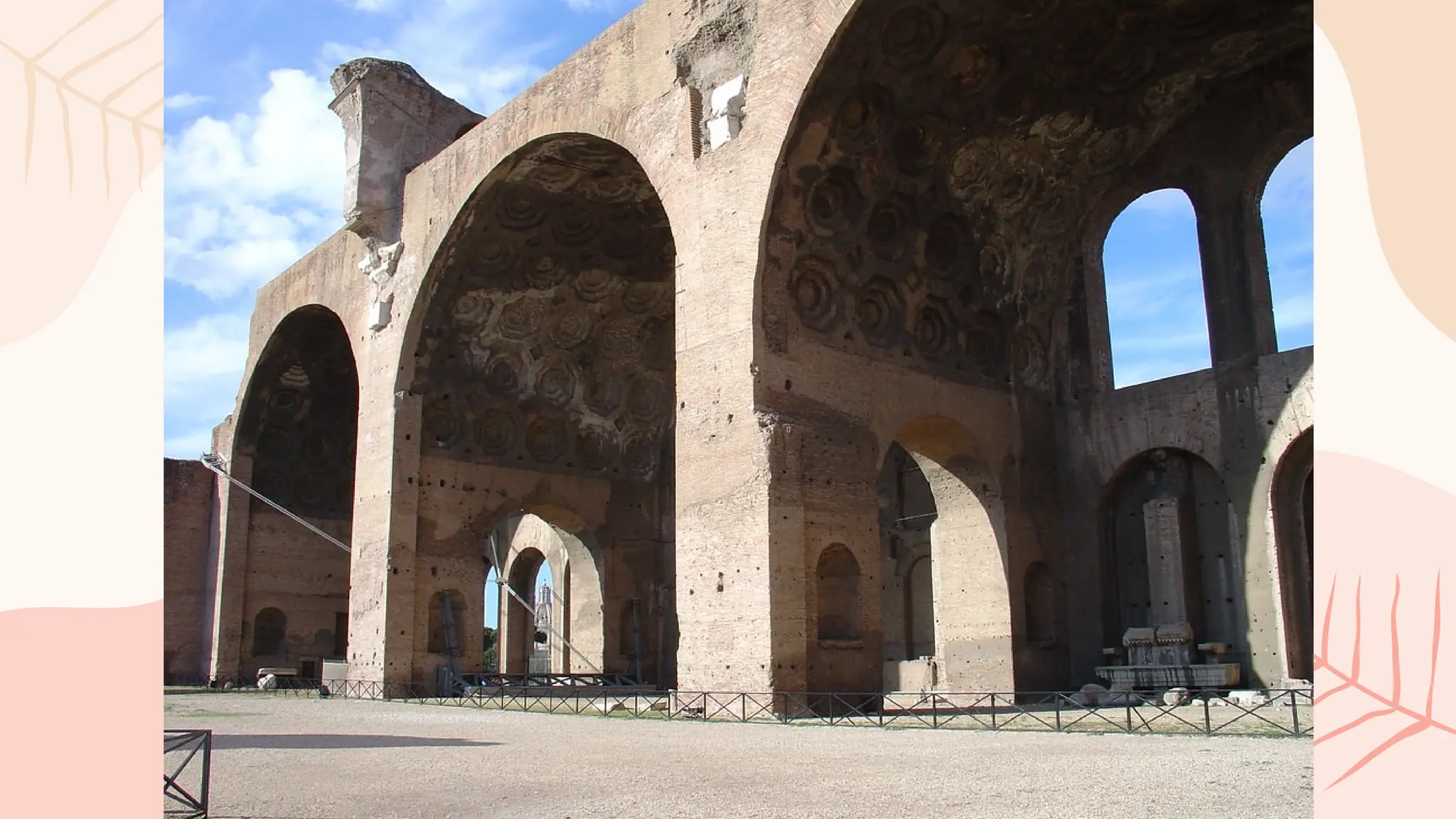
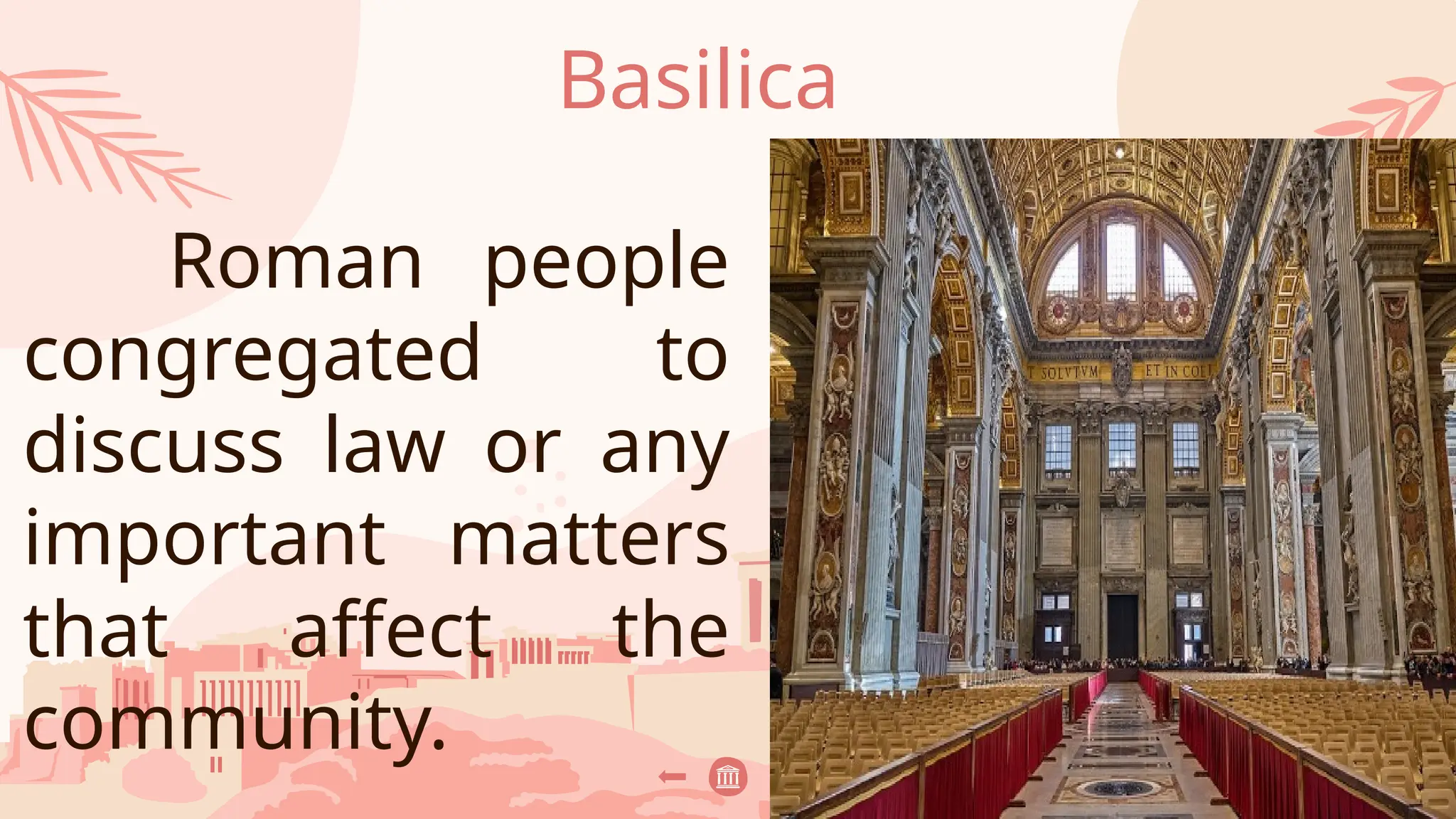
Basilica
The basilica isdivided by a (1)
nave the central part of the Basilica (2)
aisles narrower corridors of a
Basilica (3) apse where the
government officials sat on raised
platforms



![Reading Techniques [Autosaved].pptxReading Techniques [Autosaved].pptx](https://cdn.slidesharecdn.com/ss_thumbnails/readingtechniquesautosaved-251211193055-b8821f9d-thumbnail.jpg?width=640&height=640&fit=bounds)


