Greece 1750 – 133 BCE
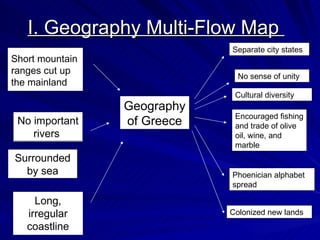
I. Geography Multi-Flow Map  Geography of Greece Short mountain ranges cut up the mainland  No important rivers  Long, irregular coastline No sense of unity Cultural diversity Encouraged fishing and trade of olive oil, wine, and marble Phoenician alphabet spread  Colonized new lands Separate city states Surrounded by sea
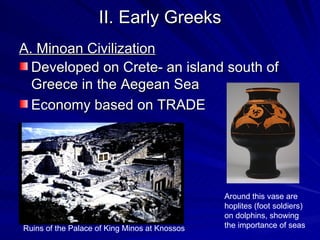
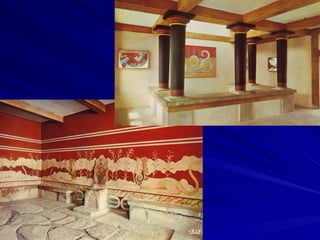
II. Early Greeks Developed on Crete- an island south of Greece in the Aegean Sea Economy based on TRADE Ruins of the Palace of King Minos at Knossos Around this vase are hoplites (foot soldiers)  on dolphins, showing the importance of seas A. Minoan Civilization
 
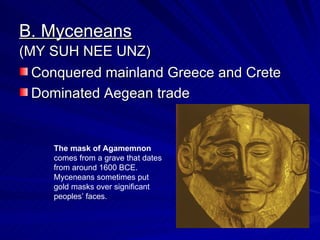
B. Myceneans Conquered mainland Greece and Crete Dominated Aegean trade (MY SUH NEE UNZ) The mask of Agamemnon  comes from a grave that dates from around 1600 BCE.  Myceneans sometimes put gold masks over significant peoples’ faces.
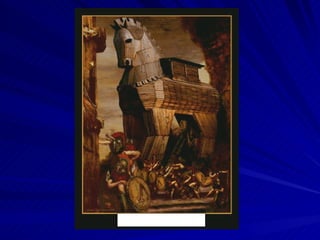
1. The Trojan War 1250 BCE War over trade and control of the Bosporus and Dardanelle straits  Legend: Trojan prince Paris kidnapped Helen, the wife of a Greek king Greeks left a “Trojan Horse” filled with hidden warriors Trojan brought it in and Greeks burned the city.
 
2. Homer Homer was a traveling poet He wrote two great Epic poems The Iliad The Odyssey
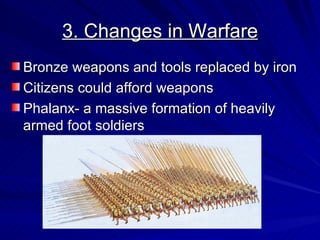
3. Changes in Warfare Bronze weapons and tools replaced by iron Citizens could afford weapons Phalanx- a massive formation of heavily armed foot soldiers
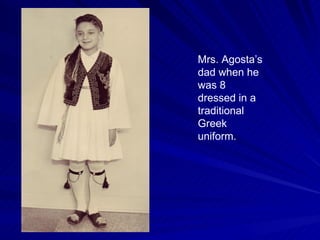
Mrs. Agosta’s dad when he was 8 dressed in a  traditional Greek uniform.
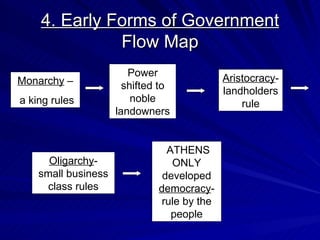
4. Early Forms of Government Flow Map Monarchy  – a king rules Power shifted to noble landowners Aristocracy - landholders rule Oligarchy - small business class rules ATHENS ONLY developed  democracy - rule by the people
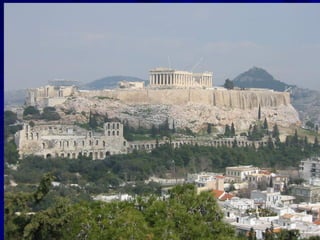
III. The Polis A city-state built on two levels 1. Acropolis- high city   - temples  2. Lower city- flatter ground - market, theater, homes
 
 
A. Athens Started as a  limited democracy - only male citizens could vote - Had a  Legislature - lawmaking body     - Council of 500 Only boys were educated if families could afford it
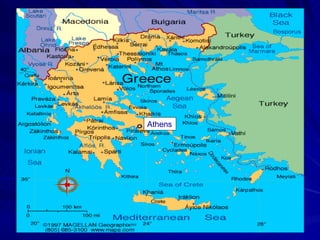
Athens
Solon’s reforms - expanded rights to more Athenians Pericles - improved Athens from 460 to 429 BCE Direct democracy-  system of government in which citizens directly vote on issues  Encouraged the arts Made Athens the cultural center of Greece
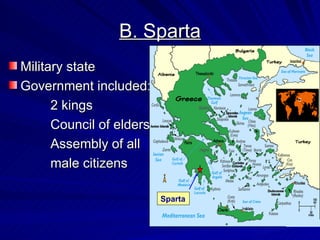
B. Sparta Military state Government included: 2 kings Council of elders Assembly of all  male citizens Sparta
At age 7, boys began military training Sickly kids were abandoned Girls were to produce healthy sons,  were encouraged to exercise
C. Other City States Corinth  Delphi
 
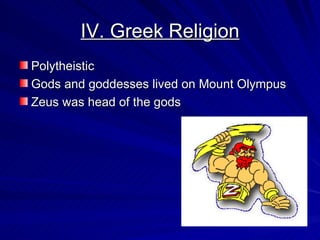
IV. Greek Religion Polytheistic Gods and goddesses lived on Mount Olympus Zeus was head of the gods
 
V. Greek Conflicts Greeks felt superior to non-Greeks and called them  barbaroi  even though they borrowed others’ ideas  (Eg. Phoenicians, Egyptians)
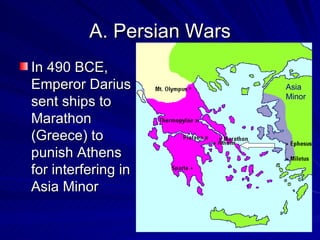
A. Persian Wars In 490 BCE, Emperor Darius sent ships to Marathon (Greece) to punish Athens for interfering in Asia Minor Asia Minor
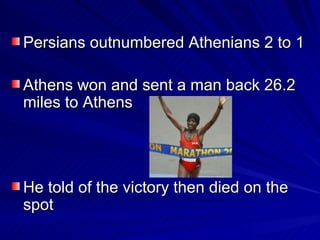
Persians outnumbered Athenians 2 to 1 Athens won and sent a man back 26.2 miles to Athens He told of the victory then died on the spot
In 480 BCE, Darius’ son Xerxes  (ZERK SEEZ) wanted revenge Greeks unified to defeat Persians again Delian League (Athenian led alliance with other Greek city-states) was formed
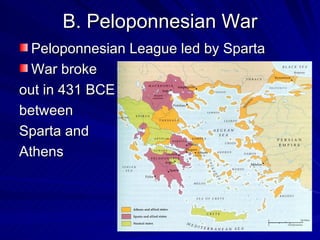
B. Peloponnesian War Peloponnesian League led by Sparta War broke  out in 431 BCE  between  Sparta and  Athens
A plague broke out killing 1/3 of the people including Pericles Even the Persians helped Sparta defeat Athens in 404 BCE

Ancient Greece

  • 1.
  • 2.
    I. Geography Multi-FlowMap Geography of Greece Short mountain ranges cut up the mainland No important rivers Long, irregular coastline No sense of unity Cultural diversity Encouraged fishing and trade of olive oil, wine, and marble Phoenician alphabet spread Colonized new lands Separate city states Surrounded by sea
  • 3.
    II. Early GreeksDeveloped on Crete- an island south of Greece in the Aegean Sea Economy based on TRADE Ruins of the Palace of King Minos at Knossos Around this vase are hoplites (foot soldiers) on dolphins, showing the importance of seas A. Minoan Civilization
  • 4.
  • 5.
    B. Myceneans Conqueredmainland Greece and Crete Dominated Aegean trade (MY SUH NEE UNZ) The mask of Agamemnon comes from a grave that dates from around 1600 BCE. Myceneans sometimes put gold masks over significant peoples’ faces.
  • 6.
    1. The TrojanWar 1250 BCE War over trade and control of the Bosporus and Dardanelle straits Legend: Trojan prince Paris kidnapped Helen, the wife of a Greek king Greeks left a “Trojan Horse” filled with hidden warriors Trojan brought it in and Greeks burned the city.
  • 7.
  • 8.
    2. Homer Homerwas a traveling poet He wrote two great Epic poems The Iliad The Odyssey
  • 9.
    3. Changes inWarfare Bronze weapons and tools replaced by iron Citizens could afford weapons Phalanx- a massive formation of heavily armed foot soldiers
  • 10.
    Mrs. Agosta’s dadwhen he was 8 dressed in a traditional Greek uniform.
  • 11.
    4. Early Formsof Government Flow Map Monarchy – a king rules Power shifted to noble landowners Aristocracy - landholders rule Oligarchy - small business class rules ATHENS ONLY developed democracy - rule by the people
  • 12.
    III. The PolisA city-state built on two levels 1. Acropolis- high city - temples 2. Lower city- flatter ground - market, theater, homes
  • 13.
  • 14.
  • 15.
    A. Athens Startedas a limited democracy - only male citizens could vote - Had a Legislature - lawmaking body - Council of 500 Only boys were educated if families could afford it
  • 16.
  • 17.
    Solon’s reforms -expanded rights to more Athenians Pericles - improved Athens from 460 to 429 BCE Direct democracy- system of government in which citizens directly vote on issues Encouraged the arts Made Athens the cultural center of Greece
  • 18.
    B. Sparta Militarystate Government included: 2 kings Council of elders Assembly of all male citizens Sparta
  • 19.
    At age 7,boys began military training Sickly kids were abandoned Girls were to produce healthy sons, were encouraged to exercise
  • 20.
    C. Other CityStates Corinth Delphi
  • 21.
  • 22.
    IV. Greek ReligionPolytheistic Gods and goddesses lived on Mount Olympus Zeus was head of the gods
  • 23.
  • 24.
    V. Greek ConflictsGreeks felt superior to non-Greeks and called them barbaroi even though they borrowed others’ ideas (Eg. Phoenicians, Egyptians)
  • 25.
    A. Persian WarsIn 490 BCE, Emperor Darius sent ships to Marathon (Greece) to punish Athens for interfering in Asia Minor Asia Minor
  • 26.
    Persians outnumbered Athenians2 to 1 Athens won and sent a man back 26.2 miles to Athens He told of the victory then died on the spot
  • 27.
    In 480 BCE,Darius’ son Xerxes (ZERK SEEZ) wanted revenge Greeks unified to defeat Persians again Delian League (Athenian led alliance with other Greek city-states) was formed
  • 28.
    B. Peloponnesian WarPeloponnesian League led by Sparta War broke out in 431 BCE between Sparta and Athens
  • 29.
    A plague brokeout killing 1/3 of the people including Pericles Even the Persians helped Sparta defeat Athens in 404 BCE