Allergies and
Anaphylaxis
Sections
 Pathophysiology
 Assessment Findings in
  Anaphylaxis
 Management of Anaphylaxis
 Assessment Findings in Allergic
  Reaction
 Management of Allergic Reactions
 Patient Education
Allergies and Anaphylaxis
 Allergic Reaction
   An exaggerated response by the immune
    system to a foreign substance
 Anaphylaxis
   An unusual or exaggerated allergic reaction
   A life-threatening emergency
Pathophysiology
 The Immune System
     Pathogens
     Toxins
     Cellular Immunity
     Humoral Immunity
       Antibodies (Immunoglobulins)
        • IgA, IgD, IgE, IgG, IgM
Pathophysiology
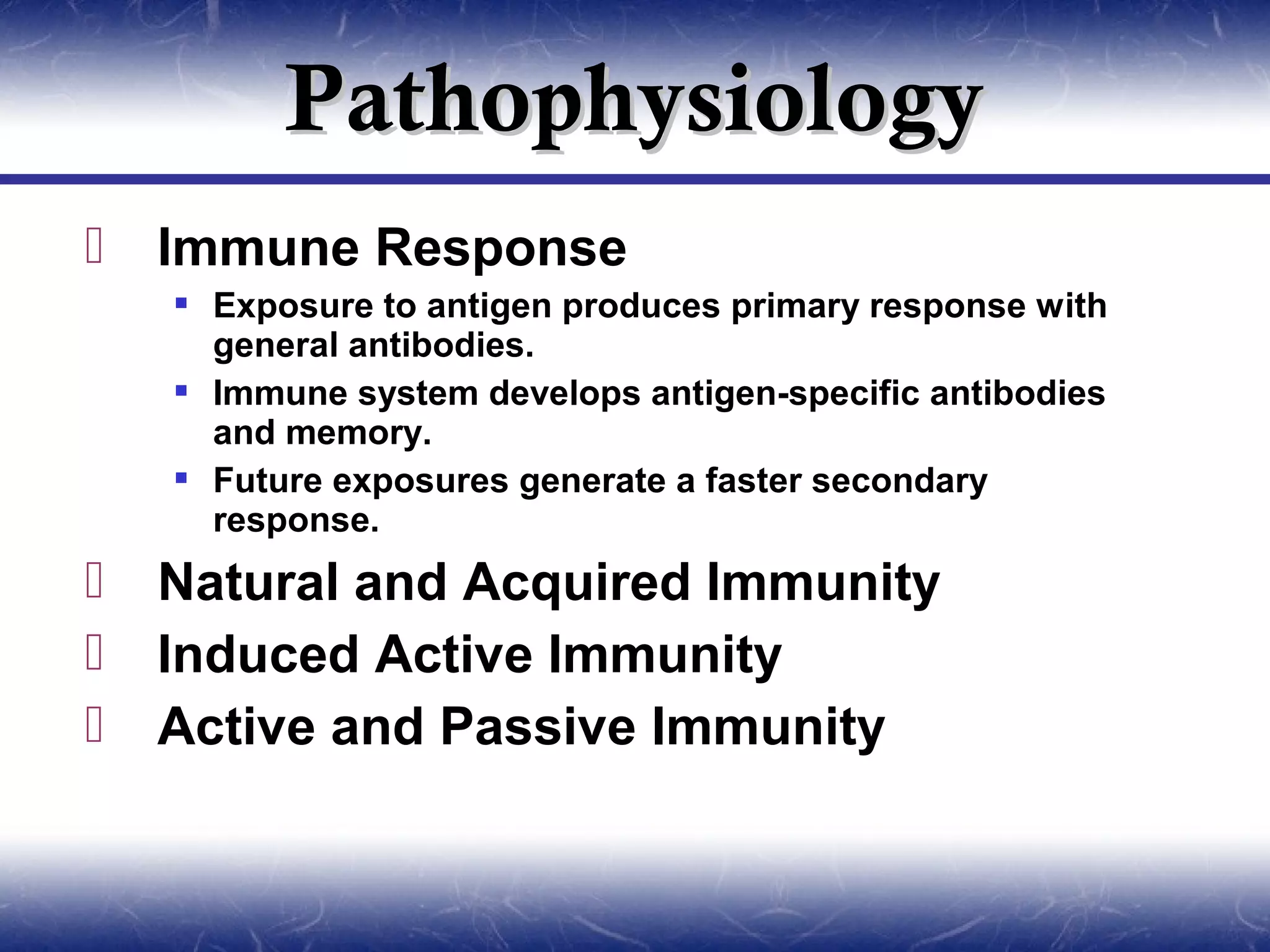
   Immune Response
     Exposure to antigen produces primary response with
      general antibodies.
     Immune system develops antigen-specific antibodies
      and memory.
     Future exposures generate a faster secondary
      response.
   Natural and Acquired Immunity
   Induced Active Immunity
   Active and Passive Immunity
Allergies
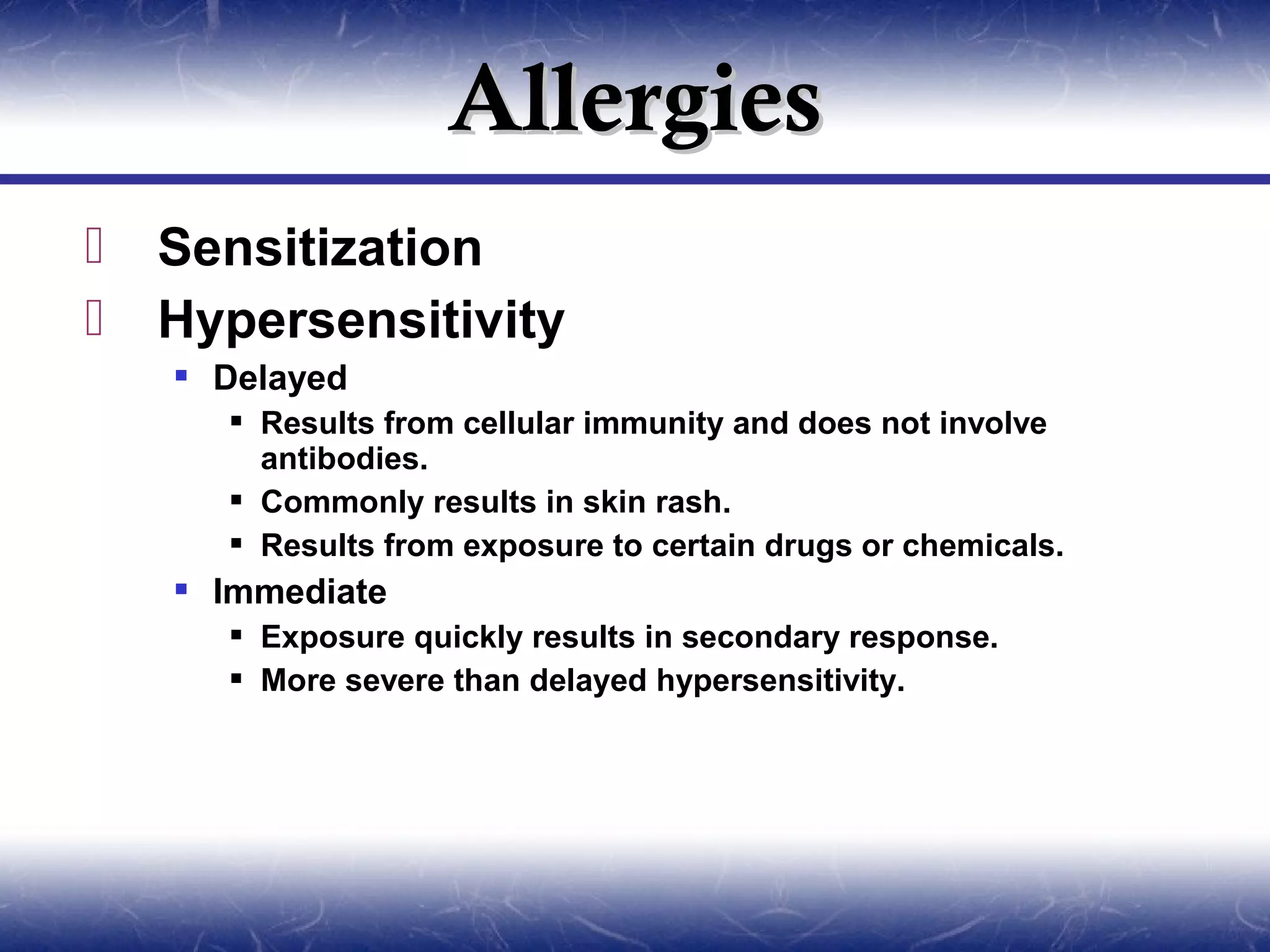
   Sensitization
   Hypersensitivity
     Delayed
       Results from cellular immunity and does not involve
        antibodies.
       Commonly results in skin rash.
       Results from exposure to certain drugs or chemicals.
     Immediate
       Exposure quickly results in secondary response.
       More severe than delayed hypersensitivity.
Allergies
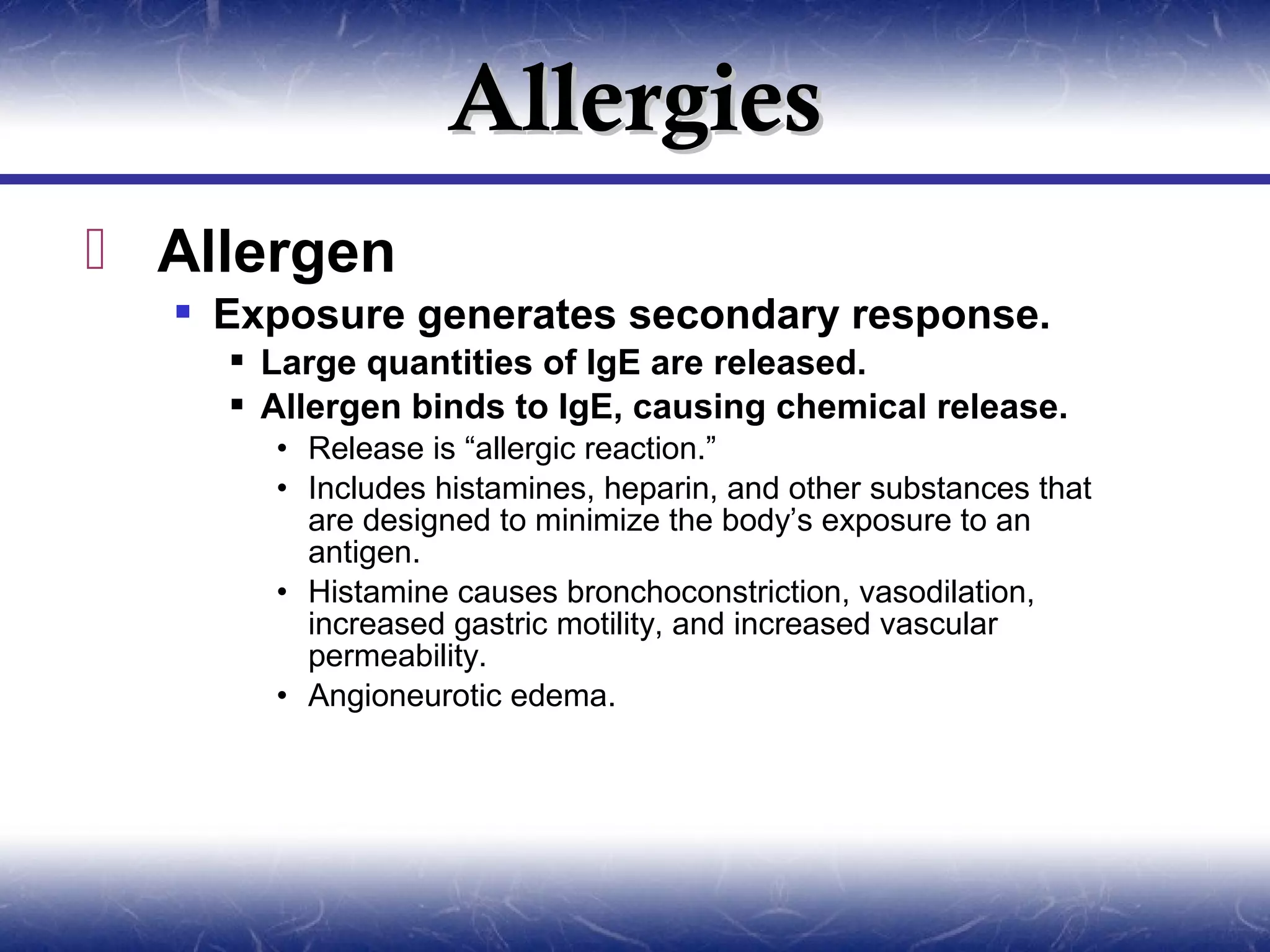
 Allergen
   Exposure generates secondary response.
     Large quantities of IgE are released.
     Allergen binds to IgE, causing chemical release.
      • Release is “allergic reaction.”
      • Includes histamines, heparin, and other substances that
        are designed to minimize the body’s exposure to an
        antigen.
      • Histamine causes bronchoconstriction, vasodilation,
        increased gastric motility, and increased vascular
        permeability.
      • Angioneurotic edema.
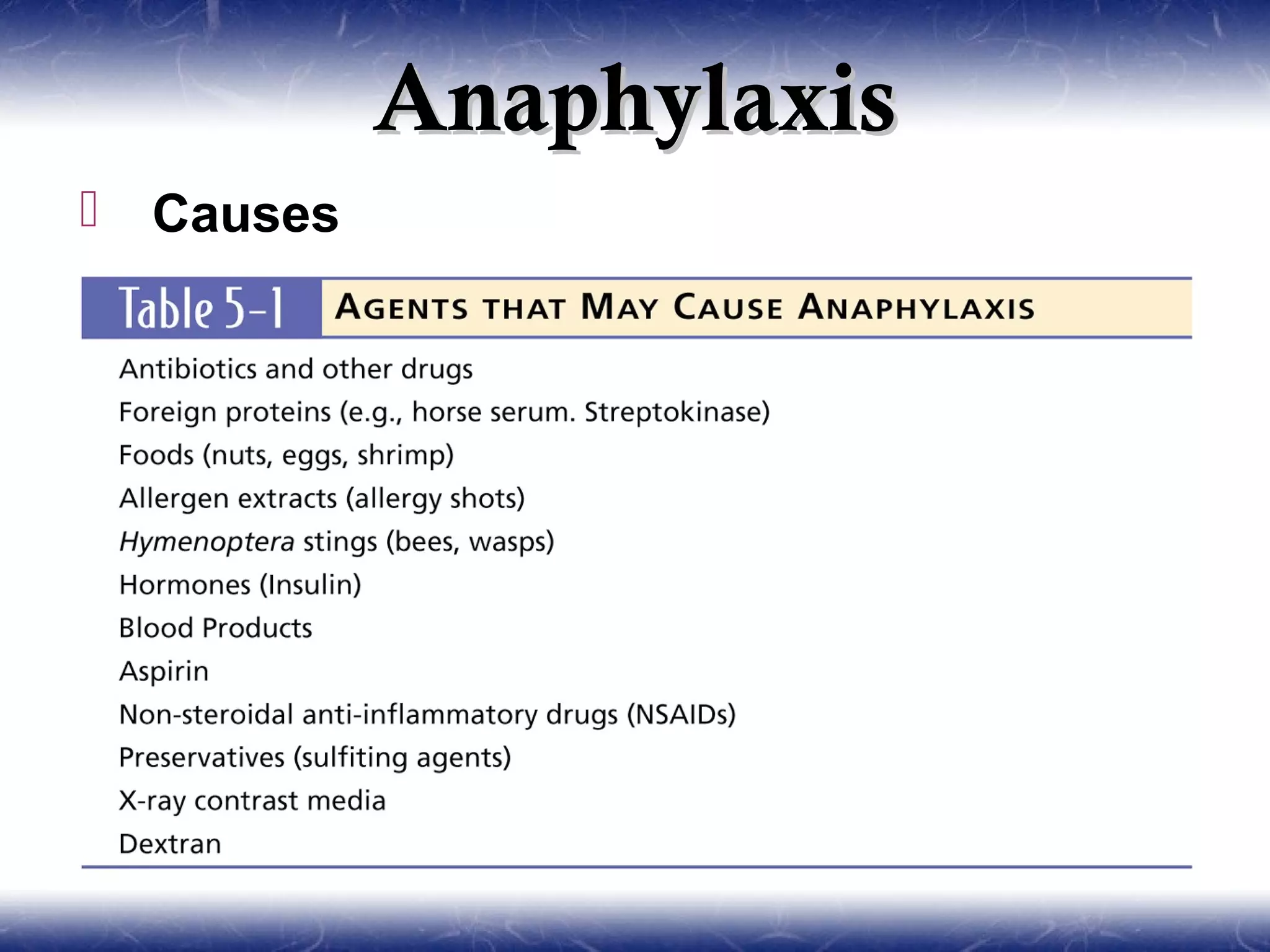
Anaphylaxis
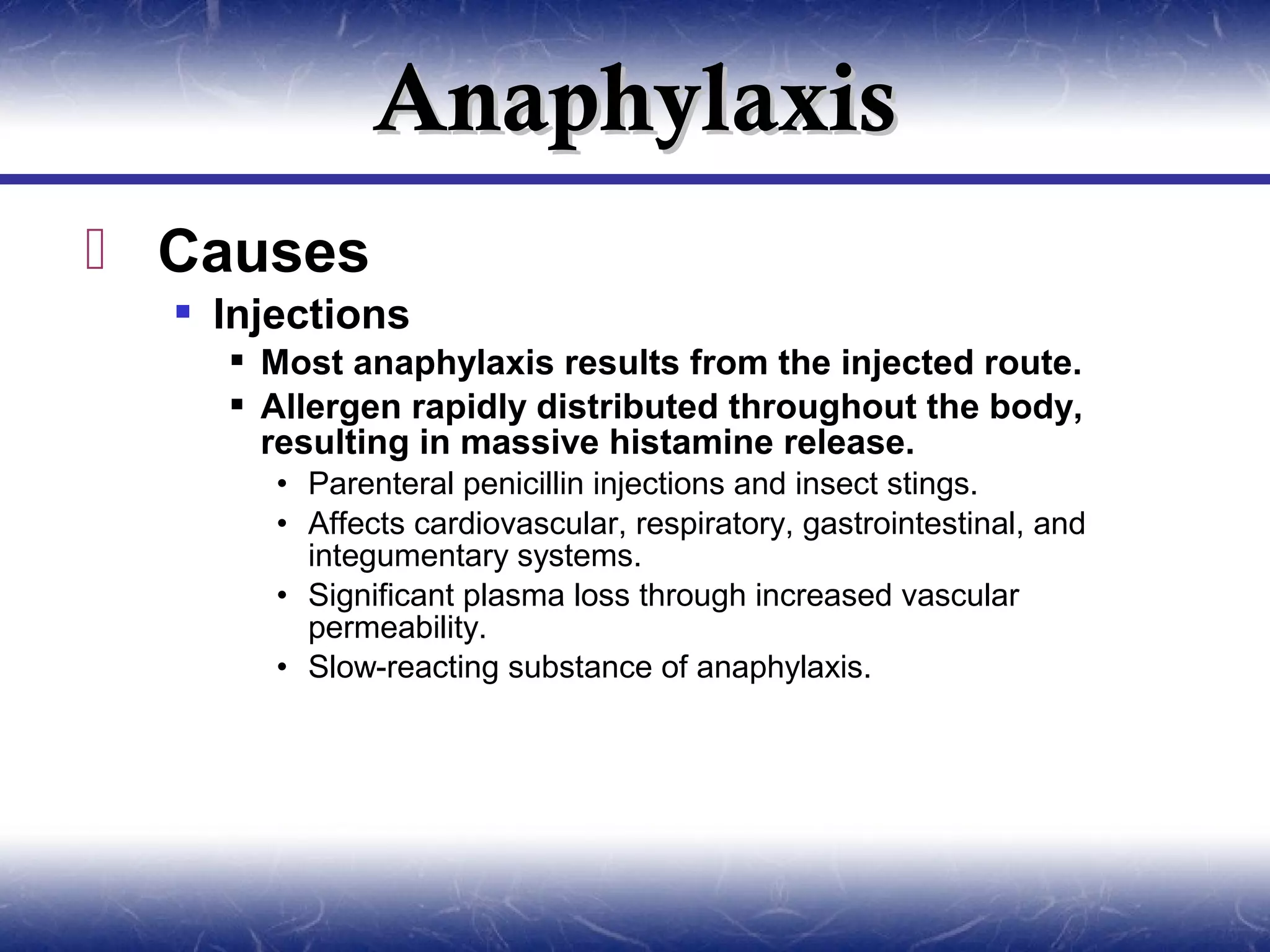
   Causes
Anaphylaxis
 Causes
   Injections
     Most anaphylaxis results from the injected route.
     Allergen rapidly distributed throughout the body,
      resulting in massive histamine release.
       • Parenteral penicillin injections and insect stings.
       • Affects cardiovascular, respiratory, gastrointestinal, and
         integumentary systems.
       • Significant plasma loss through increased vascular
         permeability.
       • Slow-reacting substance of anaphylaxis.
Assessment Findings
      in Anaphylaxis
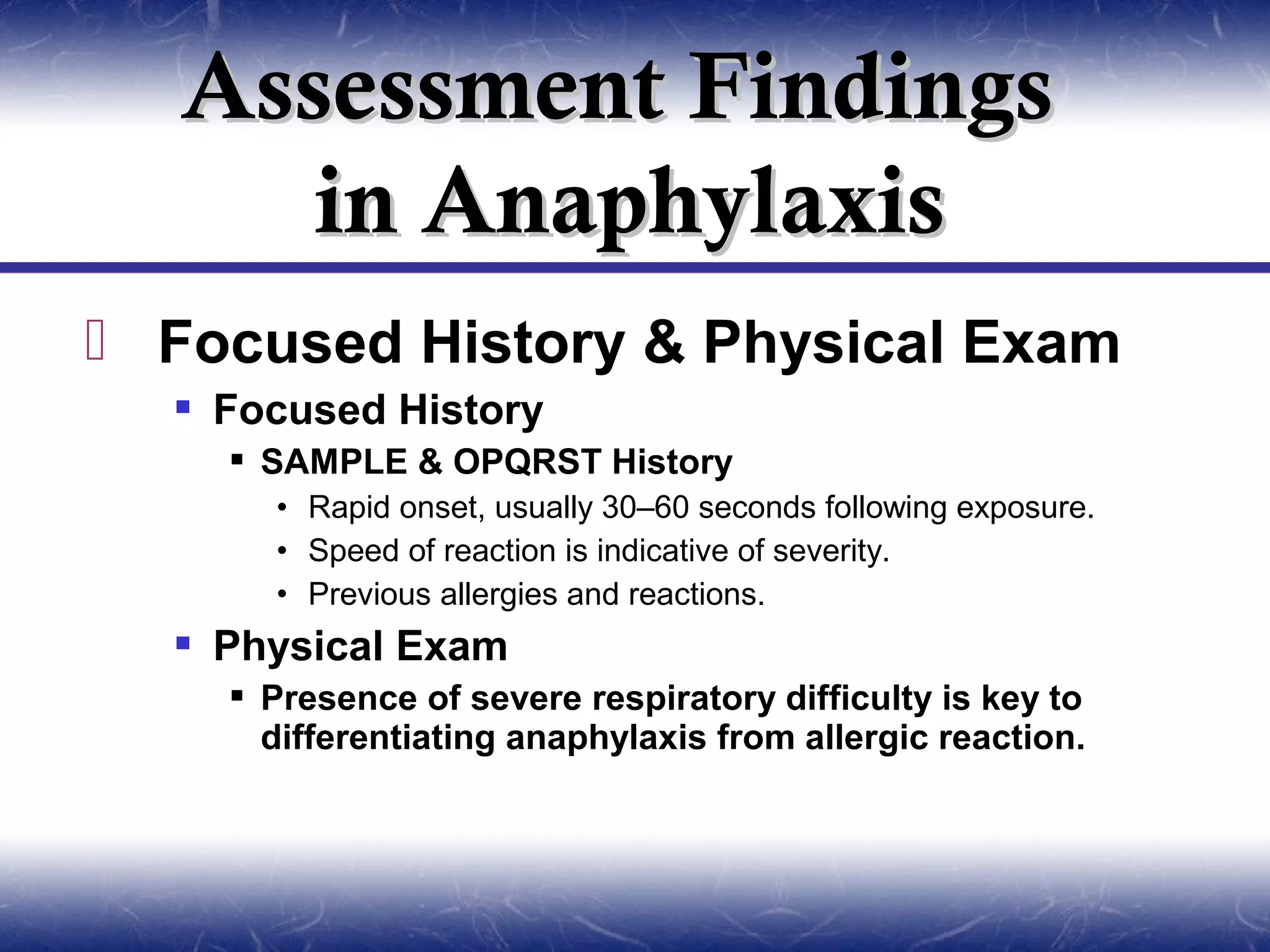
 Focused History & Physical Exam
   Focused History
     SAMPLE & OPQRST History
      • Rapid onset, usually 30–60 seconds following exposure.
      • Speed of reaction is indicative of severity.
      • Previous allergies and reactions.
   Physical Exam
     Presence of severe respiratory difficulty is key to
      differentiating anaphylaxis from allergic reaction.
Assessment
Findings in
Anaphylaxis
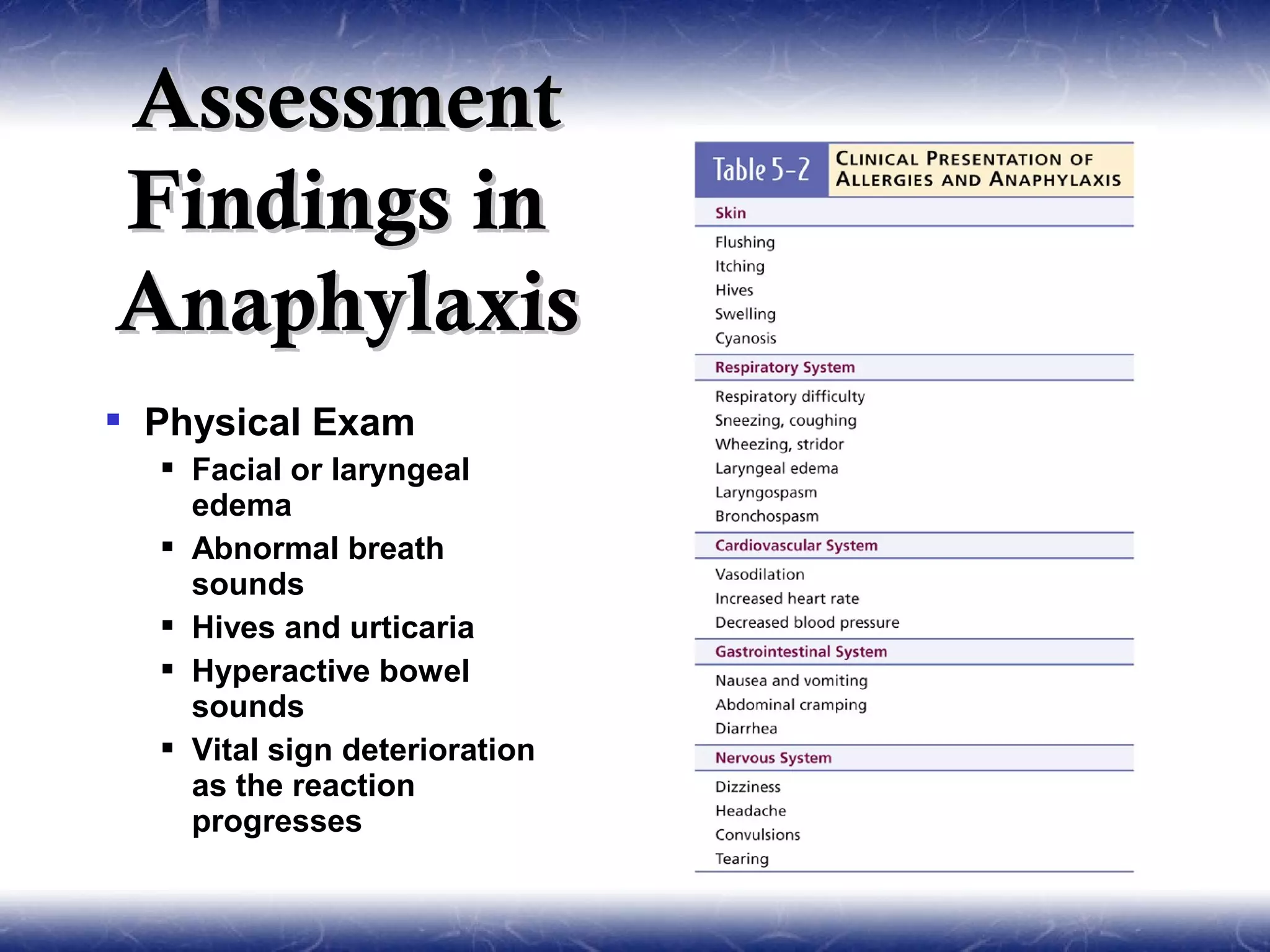
 Physical Exam
   Facial or laryngeal
    edema
   Abnormal breath
    sounds
   Hives and urticaria
   Hyperactive bowel
    sounds
   Vital sign deterioration
    as the reaction
    progresses
Management of
          Anaphylaxis
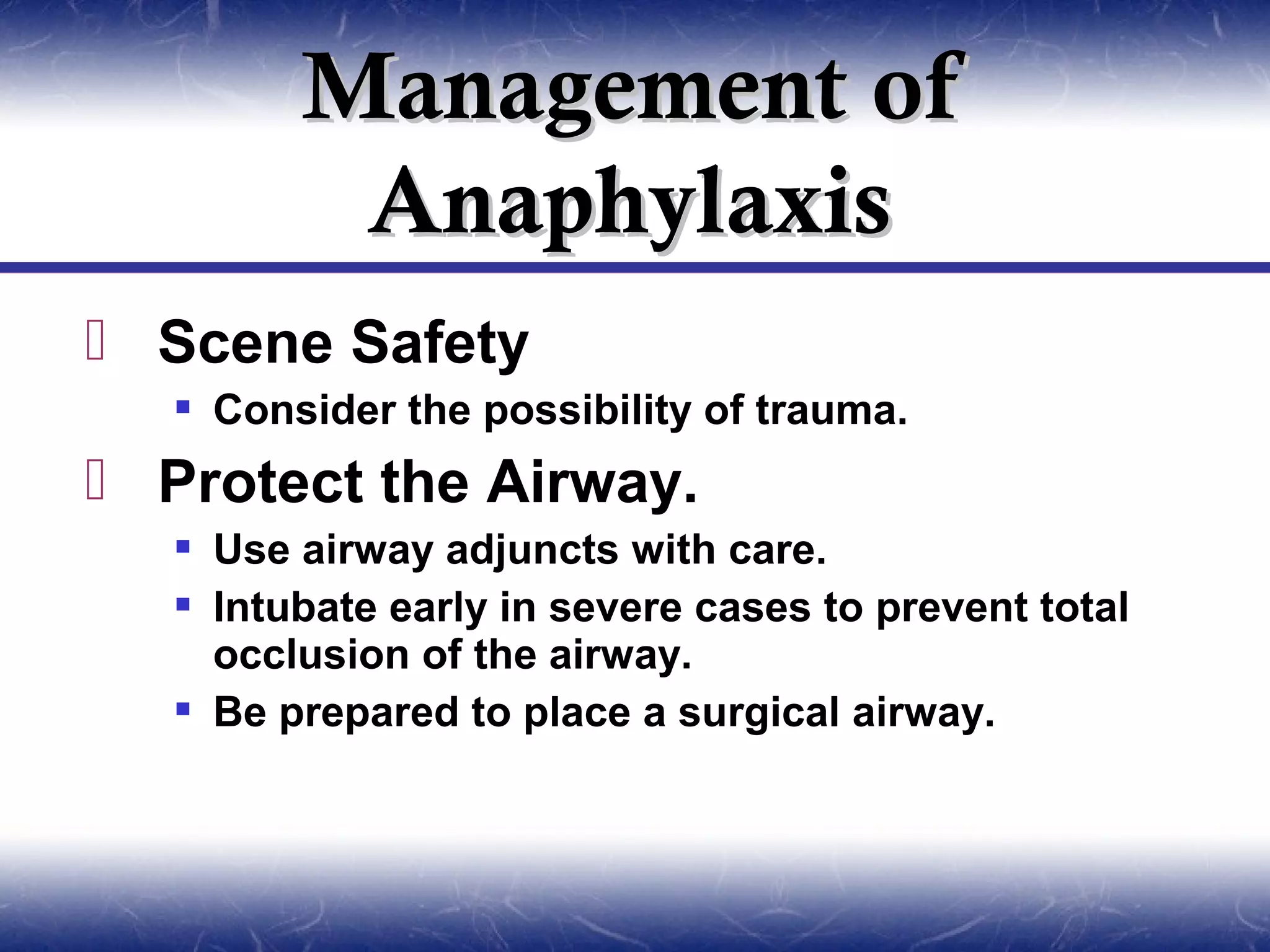
 Scene Safety
    Consider the possibility of trauma.
 Protect the Airway.
    Use airway adjuncts with care.
    Intubate early in severe cases to prevent total
     occlusion of the airway.
    Be prepared to place a surgical airway.
Management of
         Anaphylaxis
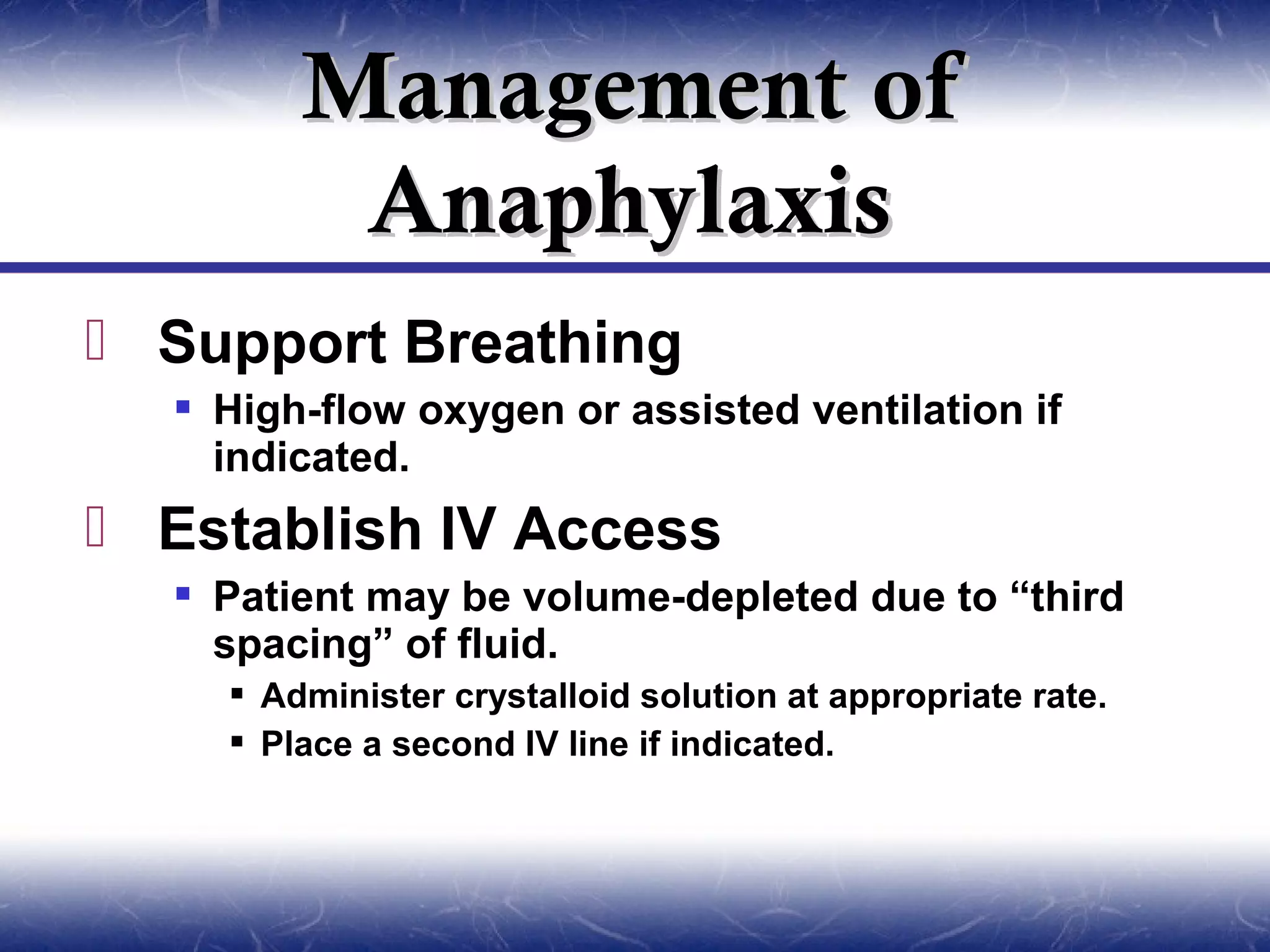
 Support Breathing
   High-flow oxygen or assisted ventilation if
    indicated.
 Establish IV Access
   Patient may be volume-depleted due to “third
    spacing” of fluid.
     Administer crystalloid solution at appropriate rate.
     Place a second IV line if indicated.
Management of
              Anaphylaxis
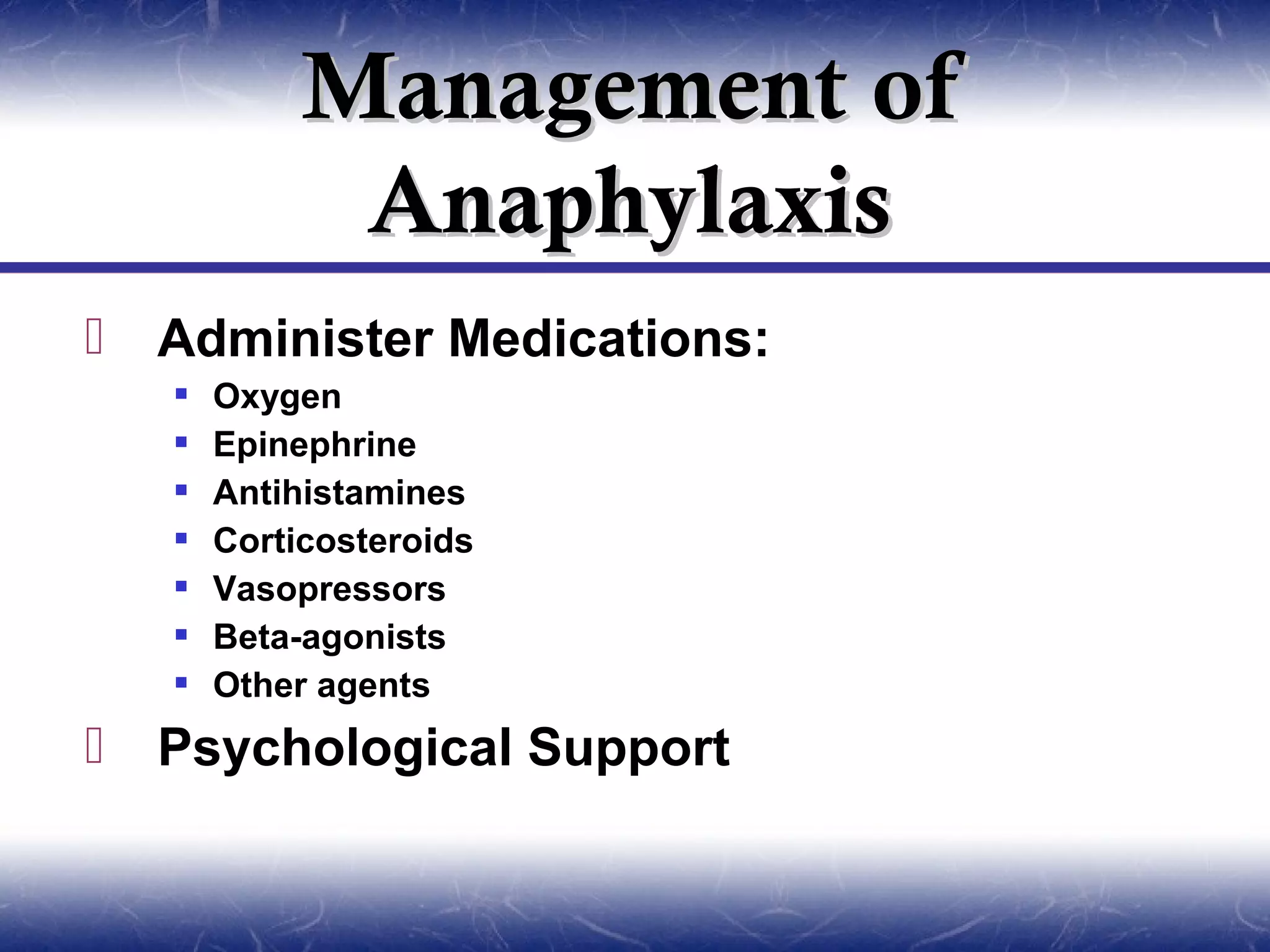
   Administer Medications:
       Oxygen
       Epinephrine
       Antihistamines
       Corticosteroids
       Vasopressors
       Beta-agonists
       Other agents
   Psychological Support
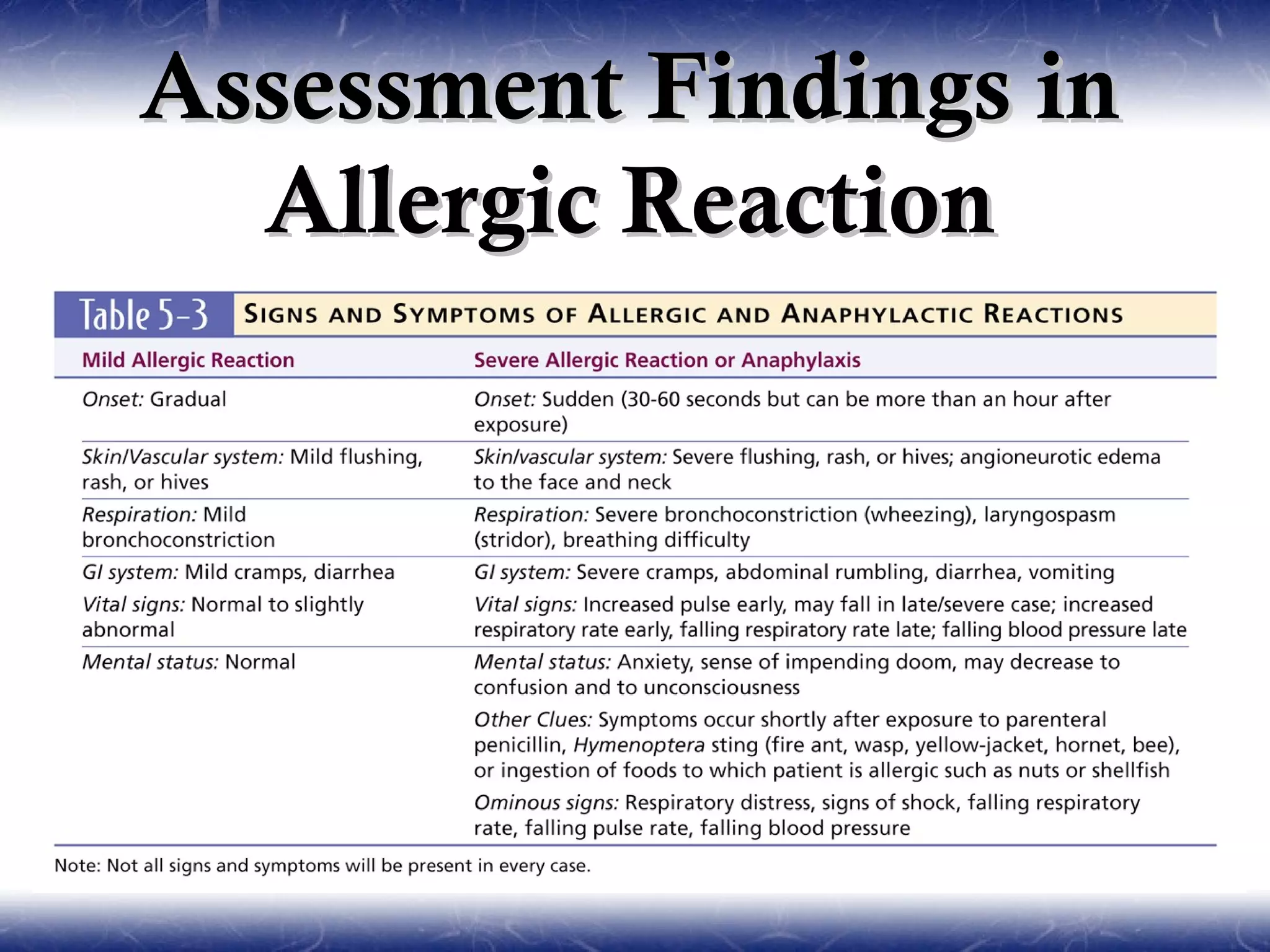
Assessment Findings in
  Allergic Reaction
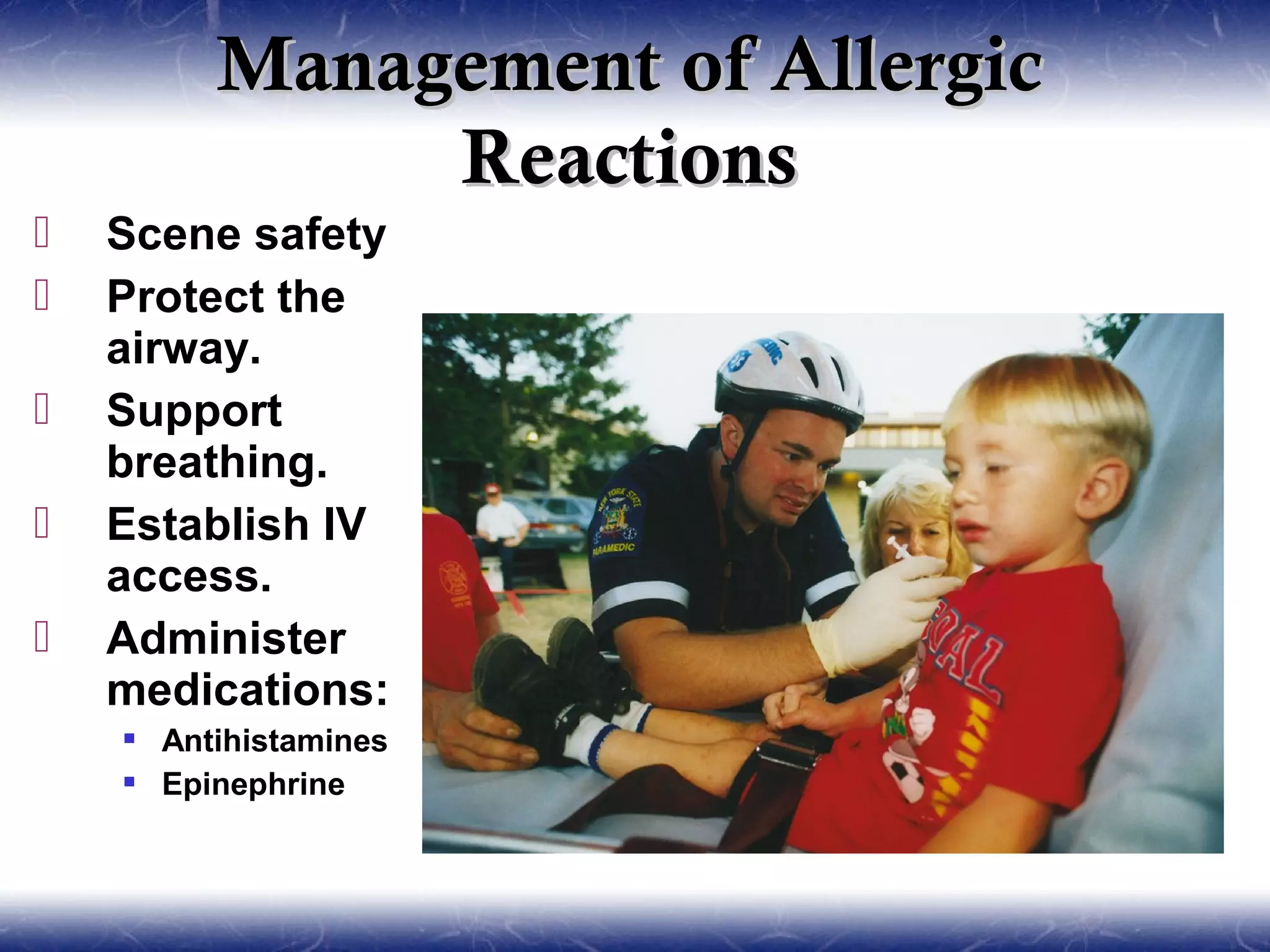
Management of Allergic
              Reactions
   Scene safety
   Protect the
    airway.
   Support
    breathing.
   Establish IV
    access.
   Administer
    medications:
     Antihistamines
     Epinephrine
Patient Education
 Prevention of Reactions
 Recognition of Signs/Symptoms
   Patient-initiated treatment
     Epinephrine auto-injectors

 Desensitization
Summary
 Pathophysiology
 Assessment Findings in
  Anaphylaxis
 Management of Anaphylaxis
 Assessment Findings in Allergic
  Reaction
 Management of Allergic Reactions
 Patient Education

Anaphylaxis

  • 1.
  • 2.
    Sections  Pathophysiology  AssessmentFindings in Anaphylaxis  Management of Anaphylaxis  Assessment Findings in Allergic Reaction  Management of Allergic Reactions  Patient Education
  • 3.
    Allergies and Anaphylaxis Allergic Reaction  An exaggerated response by the immune system to a foreign substance  Anaphylaxis  An unusual or exaggerated allergic reaction  A life-threatening emergency
  • 4.
    Pathophysiology  The ImmuneSystem  Pathogens  Toxins  Cellular Immunity  Humoral Immunity  Antibodies (Immunoglobulins) • IgA, IgD, IgE, IgG, IgM
  • 5.
    Pathophysiology  Immune Response  Exposure to antigen produces primary response with general antibodies.  Immune system develops antigen-specific antibodies and memory.  Future exposures generate a faster secondary response.  Natural and Acquired Immunity  Induced Active Immunity  Active and Passive Immunity
  • 6.
    Allergies  Sensitization  Hypersensitivity  Delayed  Results from cellular immunity and does not involve antibodies.  Commonly results in skin rash.  Results from exposure to certain drugs or chemicals.  Immediate  Exposure quickly results in secondary response.  More severe than delayed hypersensitivity.
  • 7.
    Allergies  Allergen  Exposure generates secondary response.  Large quantities of IgE are released.  Allergen binds to IgE, causing chemical release. • Release is “allergic reaction.” • Includes histamines, heparin, and other substances that are designed to minimize the body’s exposure to an antigen. • Histamine causes bronchoconstriction, vasodilation, increased gastric motility, and increased vascular permeability. • Angioneurotic edema.
  • 8.
  • 9.
    Anaphylaxis  Causes  Injections  Most anaphylaxis results from the injected route.  Allergen rapidly distributed throughout the body, resulting in massive histamine release. • Parenteral penicillin injections and insect stings. • Affects cardiovascular, respiratory, gastrointestinal, and integumentary systems. • Significant plasma loss through increased vascular permeability. • Slow-reacting substance of anaphylaxis.
  • 10.
    Assessment Findings in Anaphylaxis  Focused History & Physical Exam  Focused History  SAMPLE & OPQRST History • Rapid onset, usually 30–60 seconds following exposure. • Speed of reaction is indicative of severity. • Previous allergies and reactions.  Physical Exam  Presence of severe respiratory difficulty is key to differentiating anaphylaxis from allergic reaction.
  • 11.
    Assessment Findings in Anaphylaxis  PhysicalExam  Facial or laryngeal edema  Abnormal breath sounds  Hives and urticaria  Hyperactive bowel sounds  Vital sign deterioration as the reaction progresses
  • 12.
    Management of Anaphylaxis  Scene Safety  Consider the possibility of trauma.  Protect the Airway.  Use airway adjuncts with care.  Intubate early in severe cases to prevent total occlusion of the airway.  Be prepared to place a surgical airway.
  • 13.
    Management of Anaphylaxis  Support Breathing  High-flow oxygen or assisted ventilation if indicated.  Establish IV Access  Patient may be volume-depleted due to “third spacing” of fluid.  Administer crystalloid solution at appropriate rate.  Place a second IV line if indicated.
  • 14.
    Management of Anaphylaxis  Administer Medications:  Oxygen  Epinephrine  Antihistamines  Corticosteroids  Vasopressors  Beta-agonists  Other agents  Psychological Support
  • 15.
    Assessment Findings in Allergic Reaction
  • 16.
    Management of Allergic Reactions  Scene safety  Protect the airway.  Support breathing.  Establish IV access.  Administer medications:  Antihistamines  Epinephrine
  • 17.
    Patient Education  Preventionof Reactions  Recognition of Signs/Symptoms  Patient-initiated treatment  Epinephrine auto-injectors  Desensitization
  • 18.
    Summary  Pathophysiology  AssessmentFindings in Anaphylaxis  Management of Anaphylaxis  Assessment Findings in Allergic Reaction  Management of Allergic Reactions  Patient Education

Editor's Notes

  • #5 Pathogen – a disease producing agent or invading substance that causes an immune response. Anitgen – any substance capable of producing an immune response. Including toxins released by bacteria. The body has 2 mschanisma to destroy and illiminate these antigens Cellular immunity – results from a direct attack by specialized cells of the immune system Humoral immunity – reults from the attack of antibodies (immunoglobins) IgA, Igd, IgE, IgM. Manufactured by B cells.
  • #6 Primary response – initial response to an antigen Secondary response – If the body is exposed a second time, antibodies specific to the antigen are released. Natural Immunity – present at birht Aquired immunity – developed over time resulting from an exposure Active immunity – aquired following exposeure, results in production of antibodies Induced active immunity – vacination Passive Immunity – administration of immunity Natural passive – placental barrier from mother to child Induced passive – tetanus
  • #7 Sensitization is the initial exposure of a person to an antigen that results in an immune response. Subsequent exposures result in a much stronger secondary response. Hypersensitivity or Allergy Delayed hypersensitivity – result of cellular immunity, days and hours following exposure, skin rash ie poison ivy Immediate hypersenitivity – ex hay fever, drug allergies, asthma,
  • #8 Allergen, a substance capable of inducing allergic reaction ie drugs, food, animals, insects, fungi molds IgE is released following exposure – IgE binds to basophil (special white blood cells) and mast cells (granulocytes), these cells release histamine and heparin , which are stored in granules, into the sourounding tissues. This process is called degranulation or allergic reaction. Histamine caues bronhoconstriction, vasodilation, increased vascular permeability, increased intestinal motility. Angioedema – swelling of hands and face and upper airway from increased vascular permeability. Histamine receptors (H1 and H2) – the goal of histamine response is to limit bodies exposure to antigens. Broncoconstriction reduses antigens entering resiratory track, vascular permiability removes antigens from circulatory system etc.
  • #15 epi – sympathetic agonist, causes increased heart rate inotropic peripheral vasoconstriction reverse bronchospasm reverse capilary permebility .3 to .5 1:1,000 subQ, .3 - .5 mg 1:10,000 IV, peds .01 mg/kg, antihistamines – benadryl non selective H1 H2 blocker 25 – 50 mg IV, zantac ex selective H2 used for ulcers but also effects vascular syst corticosteroids – of little benefit in the intial stages but help suppress the inflammatory response ie solu-medrol vasopressors – dopamine beta agonist – albuterol to reduce bronchospasm and laryngeal edema