AMYGDALA
Done by Sara Seif
What is the amygdala
• Amygdala is an almond shape set of neurons located
deep in the brains medical temporal lobe.
• There are 2 amygdalae per person.
• Forms part of the limbic system( a complex set of
nerves and networks in the brain concerned with
instinct and mood. It controls the basic emotions such
as fear, pleasure and anger, and drives the desire of
hunger, sex, dominance, and care of an offspring.)
Function of the amygdala
• Plays a key role in detecting fear and preparation for emergency
events, in addition to controlling aggression.
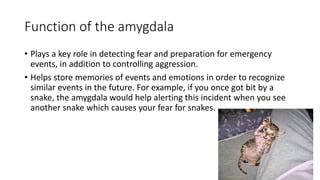
• Helps store memories of events and emotions in order to recognize
similar events in the future. For example, if you once got bit by a
snake, the amygdala would help alerting this incident when you see
another snake which causes your fear for snakes.
• It plays another role in sexual activity and libido(sex drive).
• It changes in size based on age, hormonal activity, and gender of an
individual. For example, males who have low levels of testosterone or
may have had their testicles removed (transgender) tend to have a
smaller amygdalae and as a result could have a lower sex drive.
• The main function of the amygdala is whenever our bodies sense a
change in our surroundings that could be harmful, the amygdala is
responsible for preparing the body either to fight or flight.
• This part of the body is known as the startle circuit of the brain which
controls our response to being startled😓.
• Our response involves the activation of the
sympathetic division of the peripheral nervous
system which results in accelerated heart rate,
dilated pupils, and increase in blood flow.
• Amygdala is only able to process sensory information and initiate
behavior responses before the information reaches awareness in the
center of the brain.
• It revives sensory information from 2 separate pathways:
• Short route: when the message is first sent to the thalamus then
directly to the amygdala. (fast reaction)
• Long route: when the message travels from the cortex where it is
evaluated then sent to the thalamus then the amygdala. ( slow
reaction)
• The amygdala also gets input from the medial prefrontal cortex,
which is involved in the planning phase of the response, after the
initial reflexive reactions, when you have to choose the best course of
action to get you out of danger. While the amygdala is fully developed
at birth, the prefrontal cortex does not mature until early adulthood.
Because of this, children and adolescents do not always make rational
decisions and cannot always control their emotions.
Importance of the amygdala
• A case study performed in the late 90's by John Downer at university collage
London demonstrated the importance of the amygdala in aggressive behavior.
• Downer removed one amygdalae in rhesus (used in experimental medicine)
monkeys, at the same time he transected the optic chasm and commissures
that link the 2 hemispheres. So he basically produced an animal with a single
amygdalae that has access only to visual inputs from the same side of the head.
• He found that the animals behavior depended on which eye was used to view
the world. When the eye that the inspected amygdala views from was covered
the monkey would behave with some respect; however, if the eye that the
amygdala views from would be covered the monkey would act aggressive.
Results
• In the absence of an amygdalae, a monkey doesn‘t interpret the
significance of the visual stimulus presented by an approaching
human in the same way as a normal animal.
• Thus if the animal was touched on either side, a full aggressive
reaction occurred, implying somatic sensory information about both
sides had access to the remaining amygdalae.
• The amygdala processes that invest sensory experience with
emotional significance.
A brain without an amygdala
• It is said that a brain without amygdala could still sense panic and fear
as there other regions provide input to the amygdala therefor it is not
the center of fear. (hippocampus)
• However, a case study published by neuroscience news on December
17,2010 states that a women SM with bilateral damage to the
amygdala seems to be able to experience emotions such as happiness
and sadness normally, but shows no sign of fear.
Case study of SM
the emotional life of a unique individual who completely lacks the
function of an almond-shaped structure in the brain known as the
amygdala. Studies over the last 50 years have shown that the amygdala
plays a central role in generating fear reactions in animals from rats to
monkeys. Based on the detailed case study of the woman identified
only as SM, it now appears that the same is true of humans. The
finding offers a powerful take on the connection between the brain and
behavior, specifically in the context of situations that would normally
evoke fear, the researchers say.
refer to handout.
http://neurosciencenews.com/sm-fearless-woman-missing-amygdala/
THANK YOUUU!!!!😚❤

Amygdala

  • 1.
  • 2.
    What is theamygdala • Amygdala is an almond shape set of neurons located deep in the brains medical temporal lobe. • There are 2 amygdalae per person. • Forms part of the limbic system( a complex set of nerves and networks in the brain concerned with instinct and mood. It controls the basic emotions such as fear, pleasure and anger, and drives the desire of hunger, sex, dominance, and care of an offspring.)
  • 4.
    Function of theamygdala • Plays a key role in detecting fear and preparation for emergency events, in addition to controlling aggression. • Helps store memories of events and emotions in order to recognize similar events in the future. For example, if you once got bit by a snake, the amygdala would help alerting this incident when you see another snake which causes your fear for snakes.
  • 5.
    • It playsanother role in sexual activity and libido(sex drive). • It changes in size based on age, hormonal activity, and gender of an individual. For example, males who have low levels of testosterone or may have had their testicles removed (transgender) tend to have a smaller amygdalae and as a result could have a lower sex drive.
  • 6.
    • The mainfunction of the amygdala is whenever our bodies sense a change in our surroundings that could be harmful, the amygdala is responsible for preparing the body either to fight or flight. • This part of the body is known as the startle circuit of the brain which controls our response to being startled😓. • Our response involves the activation of the sympathetic division of the peripheral nervous system which results in accelerated heart rate, dilated pupils, and increase in blood flow.
  • 7.
    • Amygdala isonly able to process sensory information and initiate behavior responses before the information reaches awareness in the center of the brain. • It revives sensory information from 2 separate pathways: • Short route: when the message is first sent to the thalamus then directly to the amygdala. (fast reaction) • Long route: when the message travels from the cortex where it is evaluated then sent to the thalamus then the amygdala. ( slow reaction)
  • 10.
    • The amygdalaalso gets input from the medial prefrontal cortex, which is involved in the planning phase of the response, after the initial reflexive reactions, when you have to choose the best course of action to get you out of danger. While the amygdala is fully developed at birth, the prefrontal cortex does not mature until early adulthood. Because of this, children and adolescents do not always make rational decisions and cannot always control their emotions.
  • 12.
    Importance of theamygdala • A case study performed in the late 90's by John Downer at university collage London demonstrated the importance of the amygdala in aggressive behavior. • Downer removed one amygdalae in rhesus (used in experimental medicine) monkeys, at the same time he transected the optic chasm and commissures that link the 2 hemispheres. So he basically produced an animal with a single amygdalae that has access only to visual inputs from the same side of the head. • He found that the animals behavior depended on which eye was used to view the world. When the eye that the inspected amygdala views from was covered the monkey would behave with some respect; however, if the eye that the amygdala views from would be covered the monkey would act aggressive.
  • 13.
    Results • In theabsence of an amygdalae, a monkey doesn‘t interpret the significance of the visual stimulus presented by an approaching human in the same way as a normal animal. • Thus if the animal was touched on either side, a full aggressive reaction occurred, implying somatic sensory information about both sides had access to the remaining amygdalae. • The amygdala processes that invest sensory experience with emotional significance.
  • 14.
    A brain withoutan amygdala • It is said that a brain without amygdala could still sense panic and fear as there other regions provide input to the amygdala therefor it is not the center of fear. (hippocampus) • However, a case study published by neuroscience news on December 17,2010 states that a women SM with bilateral damage to the amygdala seems to be able to experience emotions such as happiness and sadness normally, but shows no sign of fear.
  • 15.
    Case study ofSM the emotional life of a unique individual who completely lacks the function of an almond-shaped structure in the brain known as the amygdala. Studies over the last 50 years have shown that the amygdala plays a central role in generating fear reactions in animals from rats to monkeys. Based on the detailed case study of the woman identified only as SM, it now appears that the same is true of humans. The finding offers a powerful take on the connection between the brain and behavior, specifically in the context of situations that would normally evoke fear, the researchers say. refer to handout. http://neurosciencenews.com/sm-fearless-woman-missing-amygdala/
  • 16.