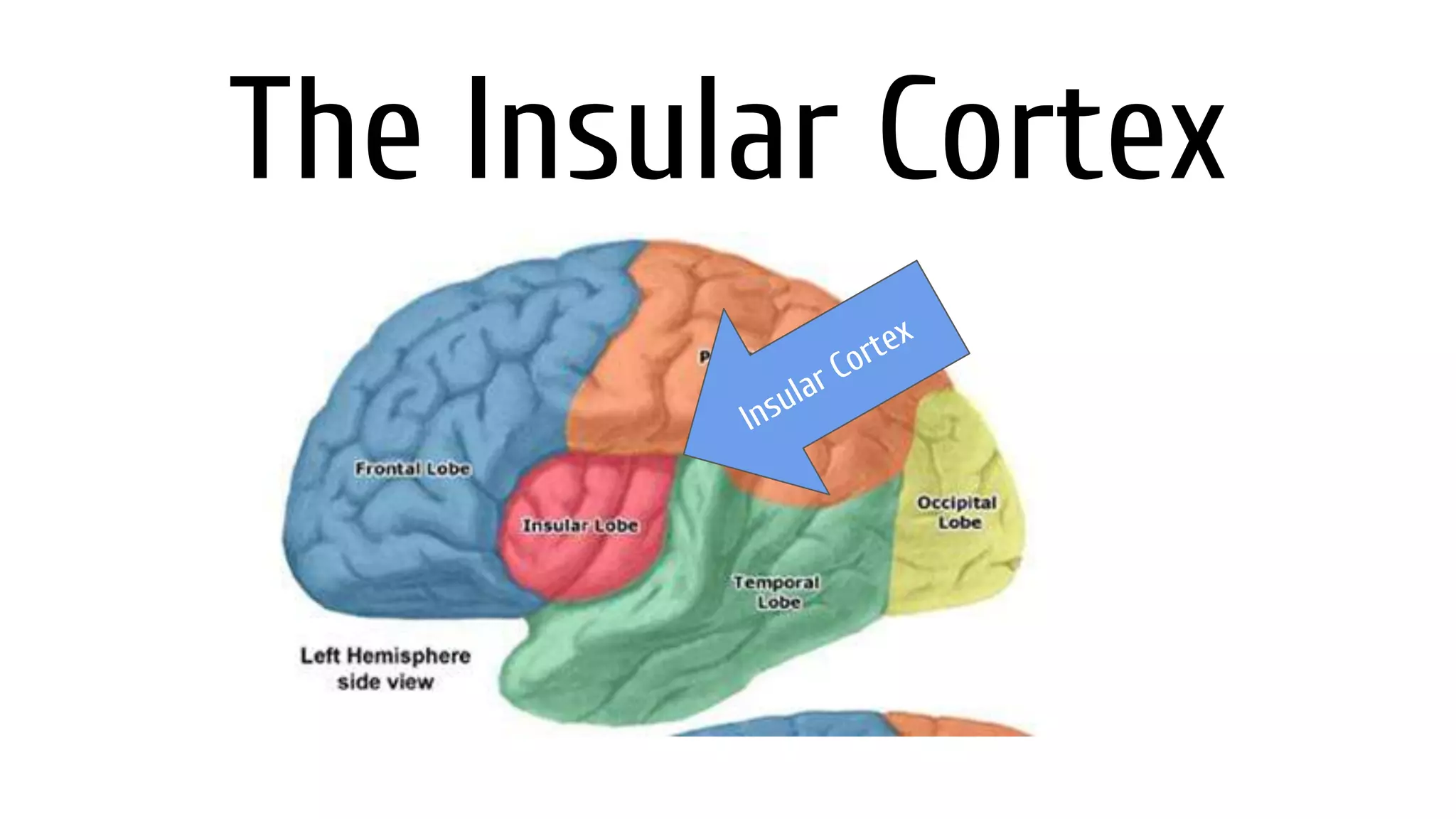
The Insular Cortex
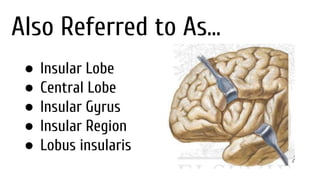
Also Referred to As...
● Insular Lobe
● Central Lobe
● Insular Gyrus
● Insular Region
● Lobus insularis
Location
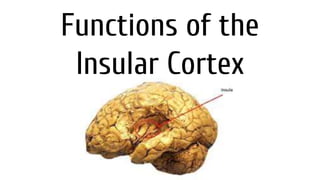
It is part of the cerebral cortex and is found deep in the groove that
separates the frontal lobe from the temporal lobe.
Adjacent to the Thalamus (receives all sensory input data).
The proximity of the insular cortex to the thalamus is important
because the insular cortex is what processes information
related to sensation.
Divided into two parts: the larger anterior insula and the smaller
Functions of the
Insular Cortex
Risky Decision Making: It is involved in decision making, especially
in decisions with uncertain outcomes.
Moral Decision Making: When individuals must decide between two
alternatives, the insular cortex is involved.
Anxiety and Neuroticism: Insular activation may be elevated in
some individuals. The elevated action may coincide with
neuroticism and other anxiety orders. It is shown that insular
activation is associated with a person's sensitivity to punishment
and adversity.
Bodily Awareness: It is involved in the awareness of bodily states
which modulates physiological responses. The insula is involved in
the awareness and sensation of pain. When one imagines pain in
their body, the insula is activated. Warmth and stomach distension
also activate the insula. A full bladder also activates the insula.
Motor Control: The Insular Cortex is involved in bodily sensations like
eye movement, swallowing, the cardiac system, and speech. The
insular cortex is necessary for people to articulate long and
complex sentences.
Triggers Disgust: The organ becomes activated when you smell,
taste, see, or touch rotten food. When the insula recognizes these
signals it sends signals to the hypothalamus which then sets off a
bodily rejection cycle...which makes you want to throw up
Empathy: The insular cortex becomes active when you experience
bodily sensation or when you are viewing such bodily experiences
in other people. This is why when you look at an image of a painful
event, you feel sensations of pain as if you were the one who
experienced the sensations. The insula also responds to others
joyful experiences.
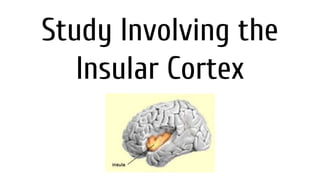
Study Involving the
Insular Cortex
Because the sensations that are experienced by the insular cortex influence social decisions...a study was
performed to see what factors affect the decisions people make
Lawrence Williams gathered a group of volunteers and had them rate an individual only from a brief and
personal description
The volunteers were told to hold either a warm or cold cup of coffee before giving their ratings
The subjects holding the warm coffee tended to rate the individuals as having warmer
personalities than the subjects holding the cold cups of coffee
A similar experiment was conducted where subjects held either warming pads or cooling pads
The subjects holding the warming pads acted in much more generous ways than the subjects
holding the cooling pads
Another experiment known as “seat of the pants” shows that people who are sitting in soft seats tend
to be more cooperative than people sitting in hard seats.
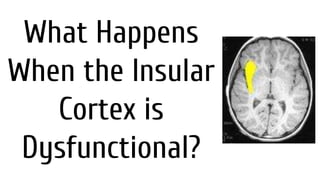
What Happens
When the Insular
Cortex is
Dysfunctional?
Mood Disorders
PTSD
Obsessive Compulsive Disorders
Eating Disorders
Schizophrenia
Panic Disorders

The Insular Cortex-Elodi Bodamer GOA Class

  • 1.
  • 2.
    Also Referred toAs... ● Insular Lobe ● Central Lobe ● Insular Gyrus ● Insular Region ● Lobus insularis
  • 3.
    Location It is partof the cerebral cortex and is found deep in the groove that separates the frontal lobe from the temporal lobe. Adjacent to the Thalamus (receives all sensory input data). The proximity of the insular cortex to the thalamus is important because the insular cortex is what processes information related to sensation. Divided into two parts: the larger anterior insula and the smaller
  • 4.
  • 5.
    Risky Decision Making:It is involved in decision making, especially in decisions with uncertain outcomes. Moral Decision Making: When individuals must decide between two alternatives, the insular cortex is involved. Anxiety and Neuroticism: Insular activation may be elevated in some individuals. The elevated action may coincide with neuroticism and other anxiety orders. It is shown that insular activation is associated with a person's sensitivity to punishment and adversity.
  • 6.
    Bodily Awareness: Itis involved in the awareness of bodily states which modulates physiological responses. The insula is involved in the awareness and sensation of pain. When one imagines pain in their body, the insula is activated. Warmth and stomach distension also activate the insula. A full bladder also activates the insula. Motor Control: The Insular Cortex is involved in bodily sensations like eye movement, swallowing, the cardiac system, and speech. The insular cortex is necessary for people to articulate long and complex sentences.
  • 7.
    Triggers Disgust: Theorgan becomes activated when you smell, taste, see, or touch rotten food. When the insula recognizes these signals it sends signals to the hypothalamus which then sets off a bodily rejection cycle...which makes you want to throw up Empathy: The insular cortex becomes active when you experience bodily sensation or when you are viewing such bodily experiences in other people. This is why when you look at an image of a painful event, you feel sensations of pain as if you were the one who experienced the sensations. The insula also responds to others joyful experiences.
  • 8.
  • 9.
    Because the sensationsthat are experienced by the insular cortex influence social decisions...a study was performed to see what factors affect the decisions people make Lawrence Williams gathered a group of volunteers and had them rate an individual only from a brief and personal description The volunteers were told to hold either a warm or cold cup of coffee before giving their ratings The subjects holding the warm coffee tended to rate the individuals as having warmer personalities than the subjects holding the cold cups of coffee A similar experiment was conducted where subjects held either warming pads or cooling pads The subjects holding the warming pads acted in much more generous ways than the subjects holding the cooling pads Another experiment known as “seat of the pants” shows that people who are sitting in soft seats tend to be more cooperative than people sitting in hard seats.
  • 10.
    What Happens When theInsular Cortex is Dysfunctional?
  • 11.
    Mood Disorders PTSD Obsessive CompulsiveDisorders Eating Disorders Schizophrenia Panic Disorders