Amlodipine Overdose
Kimberly M. Treier
Internal Medicine APPE
May 3, 2016
Patient Case
4/15/16
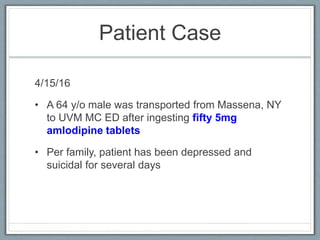
• A 64 y/o male was transported from Massena, NY
to UVM MC ED after ingesting fifty 5mg
amlodipine tablets
• Per family, patient has been depressed and
suicidal for several days
AMLODIPINE
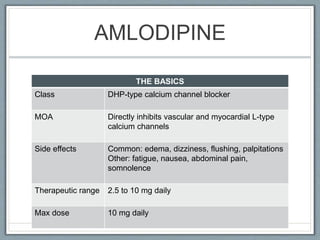
THE BASICS
Class DHP-type calcium channel blocker
MOA Directly inhibits vascular and myocardial L-type
calcium channels
Side effects Common: edema, dizziness, flushing, palpitations
Other: fatigue, nausea, abdominal pain,
somnolence
Therapeutic range 2.5 to 10 mg daily
Max dose 10 mg daily
Why Is This Important?
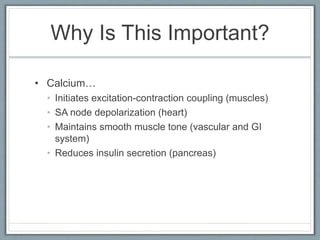
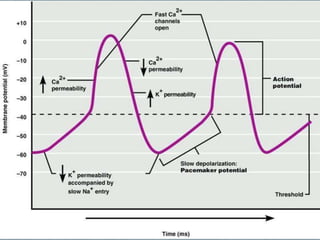
• Calcium…
• Initiates excitation-contraction coupling (muscles)
• SA node depolarization (heart)
• Maintains smooth muscle tone (vascular and GI
system)
• Reduces insulin secretion (pancreas)
Harris NS. N Engl J Med 2006;355:602-611
Methods of Toxicity
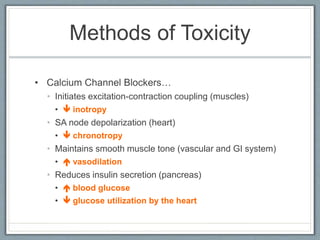
• Calcium Channel Blockers…
• Initiates excitation-contraction coupling (muscles)
•  inotropy
• SA node depolarization (heart)
•  chronotropy
• Maintains smooth muscle tone (vascular and GI system)
•  vasodilation
• Reduces insulin secretion (pancreas)
•  blood glucose
•  glucose utilization by the heart
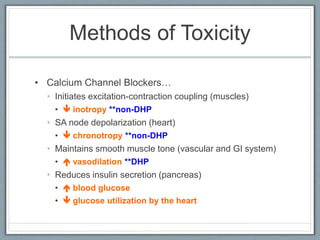
Methods of Toxicity
• Calcium Channel Blockers…
• Initiates excitation-contraction coupling (muscles)
•  inotropy **non-DHP
• SA node depolarization (heart)
•  chronotropy **non-DHP
• Maintains smooth muscle tone (vascular and GI system)
•  vasodilation **DHP
• Reduces insulin secretion (pancreas)
•  blood glucose
•  glucose utilization by the heart
Harris NS. N Engl J Med 2006;355:602-611
Early Symptoms
• Fatigue, dizziness and lightheadedness
• Severe poisoning: syncope, altered mental status,
coma, sudden death
• DHP CCBs:
• Primarily peripheral vasodilation  reflex
tachycardia
• Loss of selectivity during severe poisoning 
bradycardia
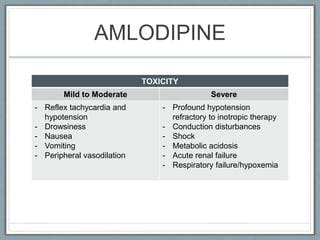
AMLODIPINE
TOXICITY
Mild to Moderate Severe
- Reflex tachycardia and
hypotension
- Drowsiness
- Nausea
- Vomiting
- Peripheral vasodilation
- Profound hypotension
refractory to inotropic therapy
- Conduction disturbances
- Shock
- Metabolic acidosis
- Acute renal failure
- Respiratory failure/hypoxemia
Interventions
• General
• Goal: supportive
• Cardiogenic shock
• Goal: improve contractility and bradycardia
• Vasodilatory shock
• Goal: improve vascular tone
Initial
• GI decontamination
• Immediate release: activated charcoal
• Within 4 hours of ingestion
• Extended release: whole bowel irrigation
• Only if asymptomatic
• Airway and respiratory support
• IV isotonic crystalloid
• 1-2 L max
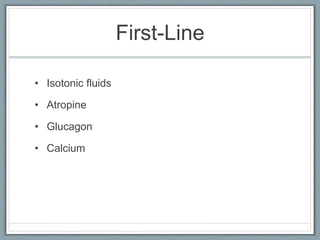
First-Line
• Isotonic fluids
• Atropine
• Glucagon
• Calcium
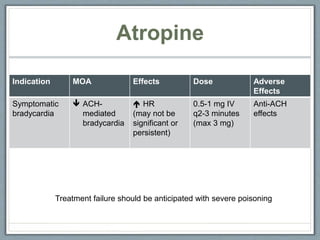
Atropine
Indication MOA Effects Dose Adverse
Effects
Symptomatic
bradycardia
 ACH-
mediated
bradycardia
 HR
(may not be
significant or
persistent)
0.5-1 mg IV
q2-3 minutes
(max 3 mg)
Anti-ACH
effects
Treatment failure should be anticipated with severe poisoning
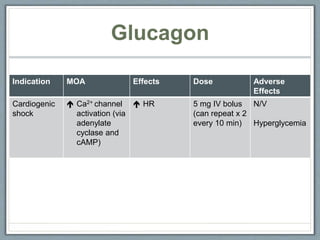
Glucagon
Indication MOA Effects Dose Adverse
Effects
Cardiogenic
shock
 Ca2+ channel
activation (via
adenylate
cyclase and
cAMP)
 HR 5 mg IV bolus
(can repeat x 2
every 10 min)
N/V
Hyperglycemia
Harris NS. N Engl J Med 2006;355:602-611
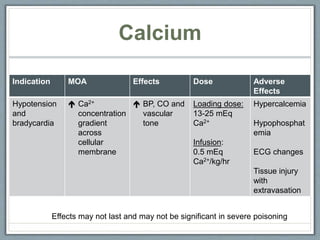
Calcium
Indication MOA Effects Dose Adverse
Effects
Hypotension
and
bradycardia
 Ca2+
concentration
gradient
across
cellular
membrane
 BP, CO and
vascular
tone
Loading dose:
13-25 mEq
Ca2+
Infusion:
0.5 mEq
Ca2+/kg/hr
Hypercalcemia
Hypophosphat
emia
ECG changes
Tissue injury
with
extravasation
Effects may not last and may not be significant in severe poisoning
Harris NS. N Engl J Med 2006;355:602-611
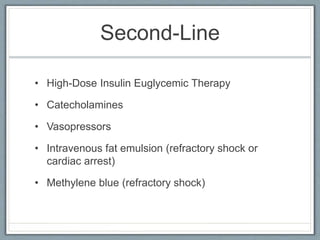
Second-Line
• High-Dose Insulin Euglycemic Therapy
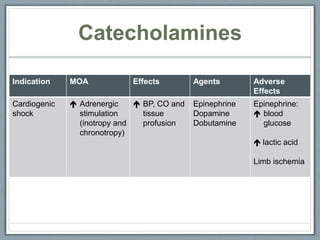
• Catecholamines
• Vasopressors
• Intravenous fat emulsion (refractory shock or
cardiac arrest)
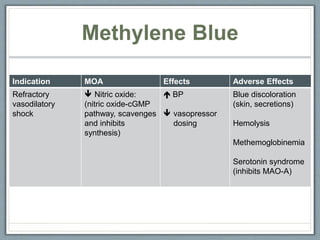
• Methylene blue (refractory shock)
Indication MOA Effects Dose Adverse
Effects
Cardiogenic
shock
 Myocardial
energy
 Inotropy
 Arterial
vasodilation
(endothelial
nitric oxide)
 CO and BP Loading dose:
1 unit/kg
Infusion:
1-10
units/kg/hr +
D50W
Hypoglycemia
Hypokalemia
Vasodilation
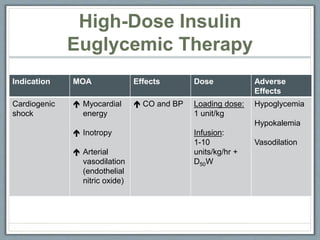
High-Dose Insulin
Euglycemic Therapy
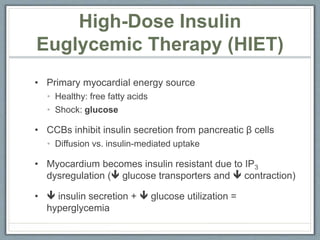
• Primary myocardial energy source
• Healthy: free fatty acids
• Shock: glucose
• CCBs inhibit insulin secretion from pancreatic β cells
• Diffusion vs. insulin-mediated uptake
• Myocardium becomes insulin resistant due to IP3
dysregulation ( glucose transporters and  contraction)
•  insulin secretion +  glucose utilization =
hyperglycemia
High-Dose Insulin
Euglycemic Therapy (HIET)
Indication MOA Effects Agents Adverse
Effects
Cardiogenic
shock
 Adrenergic
stimulation
(inotropy and
chronotropy)
 BP, CO and
tissue
profusion
Epinephrine
Dopamine
Dobutamine
Epinephrine:
 blood
glucose
 lactic acid
Limb ischemia
Catecholamines
Harris NS. N Engl J Med 2006;355:602-611
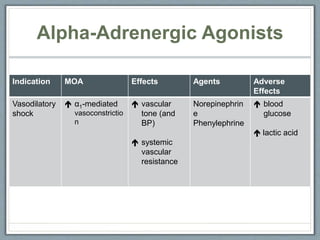
Indication MOA Effects Agents Adverse
Effects
Vasodilatory
shock
 α1-mediated
vasoconstrictio
n
 vascular
tone (and
BP)
 systemic
vascular
resistance
Norepinephrin
e
Phenylephrine
 blood
glucose
 lactic acid
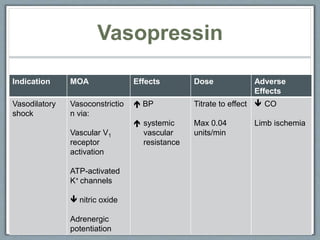
Alpha-Adrenergic Agonists
Indication MOA Effects Dose Adverse
Effects
Vasodilatory
shock
Vasoconstrictio
n via:
Vascular V1
receptor
activation
ATP-activated
K+ channels
 nitric oxide
Adrenergic
potentiation
 BP
 systemic
vascular
resistance
Titrate to effect
Max 0.04
units/min
 CO
Limb ischemia
Vasopressin
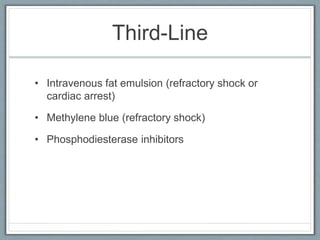
Third-Line
• Intravenous fat emulsion (refractory shock or
cardiac arrest)
• Methylene blue (refractory shock)
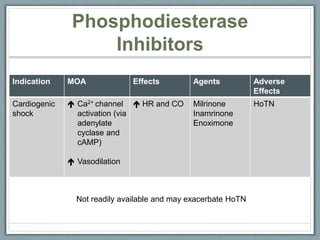
• Phosphodiesterase inhibitors
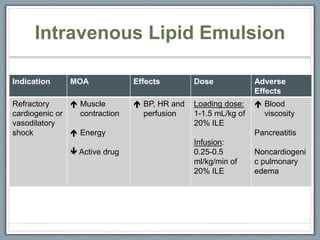
Indication MOA Effects Dose Adverse
Effects
Refractory
cardiogenic or
vasodilatory
shock
 Muscle
contraction
 Energy
 Active drug
 BP, HR and
perfusion
Loading dose:
1-1.5 mL/kg of
20% ILE
Infusion:
0.25-0.5
ml/kg/min of
20% ILE
 Blood
viscosity
Pancreatitis
Noncardiogeni
c pulmonary
edema
Intravenous Lipid Emulsion
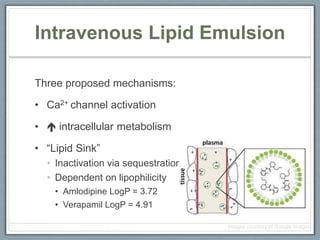
Three proposed mechanisms:
• Ca2+ channel activation
•  intracellular metabolism
• “Lipid Sink”
• Inactivation via sequestration
• Dependent on lipophilicity
• Amlodipine LogP = 3.72
• Verapamil LogP = 4.91
Intravenous Lipid Emulsion
Images courtesy of Google Images
Indication MOA Effects Adverse Effects
Refractory
vasodilatory
shock
 Nitric oxide:
(nitric oxide-cGMP
pathway, scavenges
and inhibits
synthesis)
 BP
 vasopressor
dosing
Blue discoloration
(skin, secretions)
Hemolysis
Methemoglobinemia
Serotonin syndrome
(inhibits MAO-A)
Methylene Blue
Indication MOA Effects Agents Adverse
Effects
Cardiogenic
shock
 Ca2+ channel
activation (via
adenylate
cyclase and
cAMP)
 Vasodilation
 HR and CO Milrinone
Inamrinone
Enoximone
HoTN
Phosphodiesterase
Inhibitors
Not readily available and may exacerbate HoTN
Harris NS. N Engl J Med 2006;355:602-611
Other
• Cardiac transvenous/cutaneous pacing
• Indication: bradycardia, heart block
• Effect:  HR
• Extracorporeal cardiac assist devices
• Indication: cardiogenic shock
• Effect:  CO
• Not effective in vasodilatory shock
What Happened to the
Patient?
• Respiratory failure
• Refractory cardiogenic
and vasodilatory shock
• Atrial fibrillation and
other conduction
abnormalities
• Metabolic acidosis
• AKI
• Peripheral and
pulmonary edema
• Pneumonia/septic
shock
• Limb ischemia
(nonviable right leg)
• Ileus
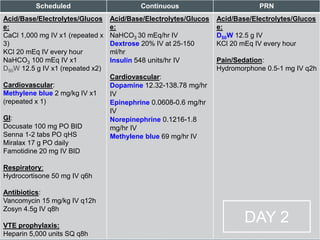
DAY 2
Scheduled Continuous PRN
Acid/Base/Electrolytes/Gl
ucose:
KCl 20 mEq IV x1
MgSO4 2 g in D5W IV x1
(repeated x1)
Insulin R 70 units IV x1
Cardiovascular:
Fat emulsion 275 mg/kg x1
GI:
Famotidine 20 mg IV BID
Pain/Neuromuscular
Blockade:
Ketamine 20 mg IV x1
Vecuronium 10 mg IV x1
VTE prophylaxis:
Heparin 5,000 units SQ q8h
Glucose:
D10W IV at 100 ml/hr
Dextrose 20% IV at 25-150
ml/hr
Insulin R 548 units/hr IV
Insulin R 70 units/hr IV
Cardiovascular:
Dopamine 12.32-138.78
mg/hr IV
Epinephrine 0.0608-0.6
mg/hr IV
Norepinephrine 0.1216-1.8
mg/hr IV
Cardiovascular:
Atropine 0.5-1 mg IV
DAY 1
DAY 2
Scheduled Continuous PRN
Acid/Base/Electrolytes/Glucos
e:
CaCl 1,000 mg IV x1 (repeated x
3)
KCl 20 mEq IV every hour
NaHCO3 100 mEq IV x1
D50W 12.5 g IV x1 (repeated x2)
Cardiovascular:
Methylene blue 2 mg/kg IV x1
(repeated x 1)
GI:
Docusate 100 mg PO BID
Senna 1-2 tabs PO qHS
Miralax 17 g PO daily
Famotidine 20 mg IV BID
Respiratory:
Hydrocortisone 50 mg IV q6h
Antibiotics:
Vancomycin 15 mg/kg IV q12h
Zosyn 4.5g IV q8h
VTE prophylaxis:
Heparin 5,000 units SQ q8h
Acid/Base/Electrolytes/Glucos
e:
NaHCO3 30 mEq/hr IV
Dextrose 20% IV at 25-150
ml/hr
Insulin 548 units/hr IV
Cardiovascular:
Dopamine 12.32-138.78 mg/hr
IV
Epinephrine 0.0608-0.6 mg/hr
IV
Norepinephrine 0.1216-1.8
mg/hr IV
Methylene blue 69 mg/hr IV
Acid/Base/Electrolytes/Glucos
e:
D50W 12.5 g IV
KCl 20 mEq IV every hour
Pain/Sedation:
Hydromorphone 0.5-1 mg IV q2h
DAY 2
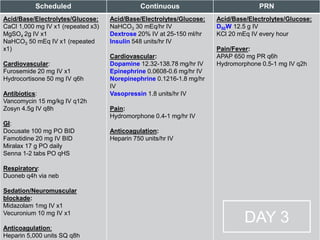
DAY 3
Scheduled Continuous PRN
Acid/Base/Electrolytes/Glucose:
CaCl 1,000 mg IV x1 (repeated x3)
MgSO4 2g IV x1
NaHCO3 50 mEq IV x1 (repeated
x1)
Cardiovascular:
Furosemide 20 mg IV x1
Hydrocortisone 50 mg IV q6h
Antibiotics:
Vancomycin 15 mg/kg IV q12h
Zosyn 4.5g IV q8h
GI:
Docusate 100 mg PO BID
Famotidine 20 mg IV BID
Miralax 17 g PO daily
Senna 1-2 tabs PO qHS
Respiratory:
Duoneb q4h via neb
Sedation/Neuromuscular
blockade:
Midazolam 1mg IV x1
Vecuronium 10 mg IV x1
Anticoagulation:
Heparin 5,000 units SQ q8h
Acid/Base/Electrolytes/Glucose:
NaHCO3 30 mEq/hr IV
Dextrose 20% IV at 25-150 ml/hr
Insulin 548 units/hr IV
Cardiovascular:
Dopamine 12.32-138.78 mg/hr IV
Epinephrine 0.0608-0.6 mg/hr IV
Norepinephrine 0.1216-1.8 mg/hr
IV
Vasopressin 1.8 units/hr IV
Pain:
Hydromorphone 0.4-1 mg/hr IV
Anticoagulation:
Heparin 750 units/hr IV
Acid/Base/Electrolytes/Glucose:
D50W 12.5 g IV
KCl 20 mEq IV every hour
Pain/Fever:
APAP 650 mg PR q6h
Hydromorphone 0.5-1 mg IV q2h
DAY 3
DAY 3
Scheduled Continuous PRN
Acid/Base/Electrolytes/Glu
cose:
NaHCO3 50 mEq IV x1
(repeated x1)
Cardiovascular:
Hydrocortisone 50 mg IV q6h
Antibiotics:
Zosyn 4.5g IV q8h
Respiratory:
Duoneb q4h via neb
Acid/Base/Electrolytes/Glu
cose:
NaHCO3 30 mEq/hr IV
Dextrose 20% IV at 25-150
ml/hr
Insulin 548 units/hr IV
Cardiovascular:
Dopamine 12.32-138.78
mg/hr IV
Epinephrine 0.0608-0.6
mg/hr IV
Norepinephrine 0.1216-1.8
mg/hr IV
Vasopressin 20 units/100 ml
IV at 9 ml/hr
Pain:
Hydromorphone 1 mg/ml IV
at 0.4-1 ml/hr
Anticoagulation:
Heparin 750 units/hr IV
Acid/Base/Electrolytes/Glu
cose:
D50W 12.5 g IV
KCl 20 mEq IV every hour
Pain/Sedation/Anxiety:
Hydromorphone 0.5-1 mg IV
q2h
Lorazepam 1-4 mg IV q30
min
DAY 4
What Happened to the
Patient?
Pronounced deceased on 4/18/16
Case Report
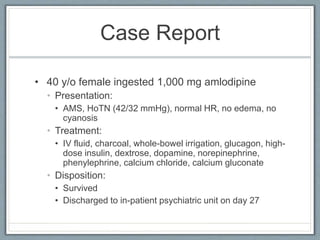
• 40 y/o female ingested 1,000 mg amlodipine
• Presentation:
• AMS, HoTN (42/32 mmHg), normal HR, no edema, no
cyanosis
• Treatment:
• IV fluid, charcoal, whole-bowel irrigation, glucagon, high-
dose insulin, dextrose, dopamine, norepinephrine,
phenylephrine, calcium chloride, calcium gluconate
• Disposition:
• Survived
• Discharged to in-patient psychiatric unit on day 27
References
• Graudins A, Lee HM, Druda D. Calcium Channel Antagonists And Beta-Blocker Overdose: Antidotes and
Adjunct Therapies. British Journal of Clinical Pharmacology, 2015;81(3):453-461. doi: 10.111/bcp.12763
• Barrueto F. Calcium channel blocker poisoning. In: UpToDate, Post TW (Ed), UpToDate, Waltham, MA.
Accessed 01 May 2016.
• Hoffman RS, Howland MA, Lewin NA, et al. (2015) Goldfrank’s Toxocologic Emergencies, 10th Edition.
McGraw-Hill.
• Harris NS. Case 24-2006: A 40-Year-Old Woman with Hypotension after an Overdose of Amlodipine. N Engl J
Med 2006;355:602-611
• Nasa P, Singh A, Juneja D, et al. Continuous venovenous hemodiafiltration along with charcoal
hemoperfusion for the management of life-threatening lercanidipine and amlodipine overdose. Saudi Journal
of Kidney Diseases and Transplantation. 2014; 25(6):1255-1258.
• Kamp TJ, Hell JW. Regulation of Cardiac L-Type Calcium Channels by Protein Kinase A and Protein Kinase
C. Circulation Research. 2000;87:1095-1102.
• Clinical Pharmacology [database online]. Tampa, FL: Gold Standard, Inc.; 2016. URL:
http://www.clinicalpharmacology.com.
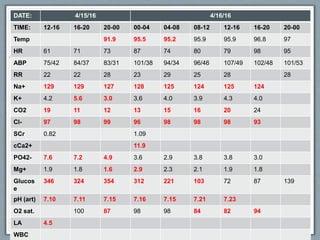
VITALS/LABS
DATE: 4/15/16 4/16/16
TIME: 12-16 16-20 20-00 00-04 04-08 08-12 12-16 16-20 20-00
Temp 91.9 95.5 95.2 95.9 95.9 96.8 97
HR 61 71 73 87 74 80 79 98 95
ABP 75/42 84/37 83/31 101/38 94/34 96/46 107/49 102/48 101/53
RR 22 22 28 23 29 25 28 28
Na+ 129 129 127 128 125 124 125 124
K+ 4.2 5.6 3.0 3.6 4.0 3.9 4.3 4.0
CO2 19 11 12 13 15 16 20 24
Cl- 97 98 99 96 98 98 98 93
SCr 0.82 1.09
cCa2+ 11.9
PO42- 7.6 7.2 4.9 3.6 2.9 3.8 3.8 3.0
Mg+ 1.9 1.8 1.6 2.9 2.3 2.1 1.9 1.8
Glucos
e
346 324 354 312 221 103 72 87 139
pH (art) 7.10 7.11 7.15 7.16 7.15 7.21 7.23
O2 sat. 100 87 98 98 84 82 94
LA 4.5
WBC
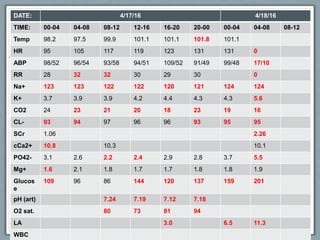
VITALS/LABS
DATE: 4/17/16 4/18/16
TIME: 00-04 04-08 08-12 12-16 16-20 20-00 00-04 04-08 08-12
Temp 98.2 97.5 99.9 101.1 101.1 101.8 101.1
HR 95 105 117 119 123 131 131 0
ABP 98/52 96/54 93/58 94/51 109/52 91/49 99/48 17/10
RR 28 32 32 30 29 30 0
Na+ 123 123 122 122 120 121 124 124
K+ 3.7 3.9 3.9 4.2 4.4 4.3 4.3 5.6
CO2 24 23 21 20 18 23 19 16
CL- 93 94 97 96 96 93 95 95
SCr 1.06 2.26
cCa2+ 10.8 10.3 10.1
PO42- 3.1 2.6 2.2 2.4 2.9 2.8 3.7 5.5
Mg+ 1.6 2.1 1.8 1.7 1.7 1.8 1.8 1.9
Glucos
e
109 96 86 144 120 137 159 201
pH (art) 7.24 7.19 7.12 7.18
O2 sat. 80 73 81 94
LA 3.0 6.5 11.3
WBC
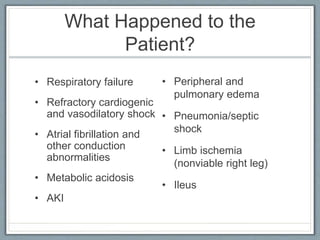
Case Report
• 69 y/o male ingested 300 mg lercandipine + 50 mg
amlodipine
• Presentation:
• HoTN, right BBB, metabolic acidosis, respiratory and
cardiac arrest
• Treatment:
• IV fluid, calcium gluconate, charcoal gastric lavage, WBI,
dopamine, norepinephrine, epinephrine, terlipressin,
pacemaker, glucagon, sodium bicarbonate, intra-aoritc
balloon pump, charcoal hemoperfusion
• Disposition:
• Survived, discharged day 7

Amlodipine Overdose

  • 1.
    Amlodipine Overdose Kimberly M.Treier Internal Medicine APPE May 3, 2016
  • 2.
    Patient Case 4/15/16 • A64 y/o male was transported from Massena, NY to UVM MC ED after ingesting fifty 5mg amlodipine tablets • Per family, patient has been depressed and suicidal for several days
  • 3.
    AMLODIPINE THE BASICS Class DHP-typecalcium channel blocker MOA Directly inhibits vascular and myocardial L-type calcium channels Side effects Common: edema, dizziness, flushing, palpitations Other: fatigue, nausea, abdominal pain, somnolence Therapeutic range 2.5 to 10 mg daily Max dose 10 mg daily
  • 4.
    Why Is ThisImportant? • Calcium… • Initiates excitation-contraction coupling (muscles) • SA node depolarization (heart) • Maintains smooth muscle tone (vascular and GI system) • Reduces insulin secretion (pancreas)
  • 6.
    Harris NS. NEngl J Med 2006;355:602-611
  • 7.
    Methods of Toxicity •Calcium Channel Blockers… • Initiates excitation-contraction coupling (muscles) •  inotropy • SA node depolarization (heart) •  chronotropy • Maintains smooth muscle tone (vascular and GI system) •  vasodilation • Reduces insulin secretion (pancreas) •  blood glucose •  glucose utilization by the heart
  • 8.
    Methods of Toxicity •Calcium Channel Blockers… • Initiates excitation-contraction coupling (muscles) •  inotropy **non-DHP • SA node depolarization (heart) •  chronotropy **non-DHP • Maintains smooth muscle tone (vascular and GI system) •  vasodilation **DHP • Reduces insulin secretion (pancreas) •  blood glucose •  glucose utilization by the heart
  • 9.
    Harris NS. NEngl J Med 2006;355:602-611
  • 10.
    Early Symptoms • Fatigue,dizziness and lightheadedness • Severe poisoning: syncope, altered mental status, coma, sudden death • DHP CCBs: • Primarily peripheral vasodilation  reflex tachycardia • Loss of selectivity during severe poisoning  bradycardia
  • 11.
    AMLODIPINE TOXICITY Mild to ModerateSevere - Reflex tachycardia and hypotension - Drowsiness - Nausea - Vomiting - Peripheral vasodilation - Profound hypotension refractory to inotropic therapy - Conduction disturbances - Shock - Metabolic acidosis - Acute renal failure - Respiratory failure/hypoxemia
  • 12.
    Interventions • General • Goal:supportive • Cardiogenic shock • Goal: improve contractility and bradycardia • Vasodilatory shock • Goal: improve vascular tone
  • 13.
    Initial • GI decontamination •Immediate release: activated charcoal • Within 4 hours of ingestion • Extended release: whole bowel irrigation • Only if asymptomatic • Airway and respiratory support • IV isotonic crystalloid • 1-2 L max
  • 14.
    First-Line • Isotonic fluids •Atropine • Glucagon • Calcium
  • 15.
    Atropine Indication MOA EffectsDose Adverse Effects Symptomatic bradycardia  ACH- mediated bradycardia  HR (may not be significant or persistent) 0.5-1 mg IV q2-3 minutes (max 3 mg) Anti-ACH effects Treatment failure should be anticipated with severe poisoning
  • 16.
    Glucagon Indication MOA EffectsDose Adverse Effects Cardiogenic shock  Ca2+ channel activation (via adenylate cyclase and cAMP)  HR 5 mg IV bolus (can repeat x 2 every 10 min) N/V Hyperglycemia
  • 17.
    Harris NS. NEngl J Med 2006;355:602-611
  • 18.
    Calcium Indication MOA EffectsDose Adverse Effects Hypotension and bradycardia  Ca2+ concentration gradient across cellular membrane  BP, CO and vascular tone Loading dose: 13-25 mEq Ca2+ Infusion: 0.5 mEq Ca2+/kg/hr Hypercalcemia Hypophosphat emia ECG changes Tissue injury with extravasation Effects may not last and may not be significant in severe poisoning
  • 19.
    Harris NS. NEngl J Med 2006;355:602-611
  • 20.
    Second-Line • High-Dose InsulinEuglycemic Therapy • Catecholamines • Vasopressors • Intravenous fat emulsion (refractory shock or cardiac arrest) • Methylene blue (refractory shock)
  • 21.
    Indication MOA EffectsDose Adverse Effects Cardiogenic shock  Myocardial energy  Inotropy  Arterial vasodilation (endothelial nitric oxide)  CO and BP Loading dose: 1 unit/kg Infusion: 1-10 units/kg/hr + D50W Hypoglycemia Hypokalemia Vasodilation High-Dose Insulin Euglycemic Therapy
  • 22.
    • Primary myocardialenergy source • Healthy: free fatty acids • Shock: glucose • CCBs inhibit insulin secretion from pancreatic β cells • Diffusion vs. insulin-mediated uptake • Myocardium becomes insulin resistant due to IP3 dysregulation ( glucose transporters and  contraction) •  insulin secretion +  glucose utilization = hyperglycemia High-Dose Insulin Euglycemic Therapy (HIET)
  • 23.
    Indication MOA EffectsAgents Adverse Effects Cardiogenic shock  Adrenergic stimulation (inotropy and chronotropy)  BP, CO and tissue profusion Epinephrine Dopamine Dobutamine Epinephrine:  blood glucose  lactic acid Limb ischemia Catecholamines
  • 24.
    Harris NS. NEngl J Med 2006;355:602-611
  • 25.
    Indication MOA EffectsAgents Adverse Effects Vasodilatory shock  α1-mediated vasoconstrictio n  vascular tone (and BP)  systemic vascular resistance Norepinephrin e Phenylephrine  blood glucose  lactic acid Alpha-Adrenergic Agonists
  • 26.
    Indication MOA EffectsDose Adverse Effects Vasodilatory shock Vasoconstrictio n via: Vascular V1 receptor activation ATP-activated K+ channels  nitric oxide Adrenergic potentiation  BP  systemic vascular resistance Titrate to effect Max 0.04 units/min  CO Limb ischemia Vasopressin
  • 27.
    Third-Line • Intravenous fatemulsion (refractory shock or cardiac arrest) • Methylene blue (refractory shock) • Phosphodiesterase inhibitors
  • 28.
    Indication MOA EffectsDose Adverse Effects Refractory cardiogenic or vasodilatory shock  Muscle contraction  Energy  Active drug  BP, HR and perfusion Loading dose: 1-1.5 mL/kg of 20% ILE Infusion: 0.25-0.5 ml/kg/min of 20% ILE  Blood viscosity Pancreatitis Noncardiogeni c pulmonary edema Intravenous Lipid Emulsion
  • 29.
    Three proposed mechanisms: •Ca2+ channel activation •  intracellular metabolism • “Lipid Sink” • Inactivation via sequestration • Dependent on lipophilicity • Amlodipine LogP = 3.72 • Verapamil LogP = 4.91 Intravenous Lipid Emulsion Images courtesy of Google Images
  • 30.
    Indication MOA EffectsAdverse Effects Refractory vasodilatory shock  Nitric oxide: (nitric oxide-cGMP pathway, scavenges and inhibits synthesis)  BP  vasopressor dosing Blue discoloration (skin, secretions) Hemolysis Methemoglobinemia Serotonin syndrome (inhibits MAO-A) Methylene Blue
  • 31.
    Indication MOA EffectsAgents Adverse Effects Cardiogenic shock  Ca2+ channel activation (via adenylate cyclase and cAMP)  Vasodilation  HR and CO Milrinone Inamrinone Enoximone HoTN Phosphodiesterase Inhibitors Not readily available and may exacerbate HoTN
  • 32.
    Harris NS. NEngl J Med 2006;355:602-611
  • 33.
    Other • Cardiac transvenous/cutaneouspacing • Indication: bradycardia, heart block • Effect:  HR • Extracorporeal cardiac assist devices • Indication: cardiogenic shock • Effect:  CO • Not effective in vasodilatory shock
  • 34.
    What Happened tothe Patient? • Respiratory failure • Refractory cardiogenic and vasodilatory shock • Atrial fibrillation and other conduction abnormalities • Metabolic acidosis • AKI • Peripheral and pulmonary edema • Pneumonia/septic shock • Limb ischemia (nonviable right leg) • Ileus
  • 35.
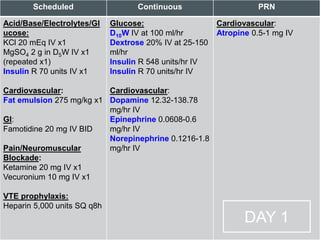
    DAY 2 Scheduled ContinuousPRN Acid/Base/Electrolytes/Gl ucose: KCl 20 mEq IV x1 MgSO4 2 g in D5W IV x1 (repeated x1) Insulin R 70 units IV x1 Cardiovascular: Fat emulsion 275 mg/kg x1 GI: Famotidine 20 mg IV BID Pain/Neuromuscular Blockade: Ketamine 20 mg IV x1 Vecuronium 10 mg IV x1 VTE prophylaxis: Heparin 5,000 units SQ q8h Glucose: D10W IV at 100 ml/hr Dextrose 20% IV at 25-150 ml/hr Insulin R 548 units/hr IV Insulin R 70 units/hr IV Cardiovascular: Dopamine 12.32-138.78 mg/hr IV Epinephrine 0.0608-0.6 mg/hr IV Norepinephrine 0.1216-1.8 mg/hr IV Cardiovascular: Atropine 0.5-1 mg IV DAY 1
  • 36.
    DAY 2 Scheduled ContinuousPRN Acid/Base/Electrolytes/Glucos e: CaCl 1,000 mg IV x1 (repeated x 3) KCl 20 mEq IV every hour NaHCO3 100 mEq IV x1 D50W 12.5 g IV x1 (repeated x2) Cardiovascular: Methylene blue 2 mg/kg IV x1 (repeated x 1) GI: Docusate 100 mg PO BID Senna 1-2 tabs PO qHS Miralax 17 g PO daily Famotidine 20 mg IV BID Respiratory: Hydrocortisone 50 mg IV q6h Antibiotics: Vancomycin 15 mg/kg IV q12h Zosyn 4.5g IV q8h VTE prophylaxis: Heparin 5,000 units SQ q8h Acid/Base/Electrolytes/Glucos e: NaHCO3 30 mEq/hr IV Dextrose 20% IV at 25-150 ml/hr Insulin 548 units/hr IV Cardiovascular: Dopamine 12.32-138.78 mg/hr IV Epinephrine 0.0608-0.6 mg/hr IV Norepinephrine 0.1216-1.8 mg/hr IV Methylene blue 69 mg/hr IV Acid/Base/Electrolytes/Glucos e: D50W 12.5 g IV KCl 20 mEq IV every hour Pain/Sedation: Hydromorphone 0.5-1 mg IV q2h DAY 2
  • 37.
    DAY 3 Scheduled ContinuousPRN Acid/Base/Electrolytes/Glucose: CaCl 1,000 mg IV x1 (repeated x3) MgSO4 2g IV x1 NaHCO3 50 mEq IV x1 (repeated x1) Cardiovascular: Furosemide 20 mg IV x1 Hydrocortisone 50 mg IV q6h Antibiotics: Vancomycin 15 mg/kg IV q12h Zosyn 4.5g IV q8h GI: Docusate 100 mg PO BID Famotidine 20 mg IV BID Miralax 17 g PO daily Senna 1-2 tabs PO qHS Respiratory: Duoneb q4h via neb Sedation/Neuromuscular blockade: Midazolam 1mg IV x1 Vecuronium 10 mg IV x1 Anticoagulation: Heparin 5,000 units SQ q8h Acid/Base/Electrolytes/Glucose: NaHCO3 30 mEq/hr IV Dextrose 20% IV at 25-150 ml/hr Insulin 548 units/hr IV Cardiovascular: Dopamine 12.32-138.78 mg/hr IV Epinephrine 0.0608-0.6 mg/hr IV Norepinephrine 0.1216-1.8 mg/hr IV Vasopressin 1.8 units/hr IV Pain: Hydromorphone 0.4-1 mg/hr IV Anticoagulation: Heparin 750 units/hr IV Acid/Base/Electrolytes/Glucose: D50W 12.5 g IV KCl 20 mEq IV every hour Pain/Fever: APAP 650 mg PR q6h Hydromorphone 0.5-1 mg IV q2h DAY 3
  • 38.
    DAY 3 Scheduled ContinuousPRN Acid/Base/Electrolytes/Glu cose: NaHCO3 50 mEq IV x1 (repeated x1) Cardiovascular: Hydrocortisone 50 mg IV q6h Antibiotics: Zosyn 4.5g IV q8h Respiratory: Duoneb q4h via neb Acid/Base/Electrolytes/Glu cose: NaHCO3 30 mEq/hr IV Dextrose 20% IV at 25-150 ml/hr Insulin 548 units/hr IV Cardiovascular: Dopamine 12.32-138.78 mg/hr IV Epinephrine 0.0608-0.6 mg/hr IV Norepinephrine 0.1216-1.8 mg/hr IV Vasopressin 20 units/100 ml IV at 9 ml/hr Pain: Hydromorphone 1 mg/ml IV at 0.4-1 ml/hr Anticoagulation: Heparin 750 units/hr IV Acid/Base/Electrolytes/Glu cose: D50W 12.5 g IV KCl 20 mEq IV every hour Pain/Sedation/Anxiety: Hydromorphone 0.5-1 mg IV q2h Lorazepam 1-4 mg IV q30 min DAY 4
  • 39.
    What Happened tothe Patient? Pronounced deceased on 4/18/16
  • 40.
    Case Report • 40y/o female ingested 1,000 mg amlodipine • Presentation: • AMS, HoTN (42/32 mmHg), normal HR, no edema, no cyanosis • Treatment: • IV fluid, charcoal, whole-bowel irrigation, glucagon, high- dose insulin, dextrose, dopamine, norepinephrine, phenylephrine, calcium chloride, calcium gluconate • Disposition: • Survived • Discharged to in-patient psychiatric unit on day 27
  • 41.
    References • Graudins A,Lee HM, Druda D. Calcium Channel Antagonists And Beta-Blocker Overdose: Antidotes and Adjunct Therapies. British Journal of Clinical Pharmacology, 2015;81(3):453-461. doi: 10.111/bcp.12763 • Barrueto F. Calcium channel blocker poisoning. In: UpToDate, Post TW (Ed), UpToDate, Waltham, MA. Accessed 01 May 2016. • Hoffman RS, Howland MA, Lewin NA, et al. (2015) Goldfrank’s Toxocologic Emergencies, 10th Edition. McGraw-Hill. • Harris NS. Case 24-2006: A 40-Year-Old Woman with Hypotension after an Overdose of Amlodipine. N Engl J Med 2006;355:602-611 • Nasa P, Singh A, Juneja D, et al. Continuous venovenous hemodiafiltration along with charcoal hemoperfusion for the management of life-threatening lercanidipine and amlodipine overdose. Saudi Journal of Kidney Diseases and Transplantation. 2014; 25(6):1255-1258. • Kamp TJ, Hell JW. Regulation of Cardiac L-Type Calcium Channels by Protein Kinase A and Protein Kinase C. Circulation Research. 2000;87:1095-1102. • Clinical Pharmacology [database online]. Tampa, FL: Gold Standard, Inc.; 2016. URL: http://www.clinicalpharmacology.com.
  • 43.
    VITALS/LABS DATE: 4/15/16 4/16/16 TIME:12-16 16-20 20-00 00-04 04-08 08-12 12-16 16-20 20-00 Temp 91.9 95.5 95.2 95.9 95.9 96.8 97 HR 61 71 73 87 74 80 79 98 95 ABP 75/42 84/37 83/31 101/38 94/34 96/46 107/49 102/48 101/53 RR 22 22 28 23 29 25 28 28 Na+ 129 129 127 128 125 124 125 124 K+ 4.2 5.6 3.0 3.6 4.0 3.9 4.3 4.0 CO2 19 11 12 13 15 16 20 24 Cl- 97 98 99 96 98 98 98 93 SCr 0.82 1.09 cCa2+ 11.9 PO42- 7.6 7.2 4.9 3.6 2.9 3.8 3.8 3.0 Mg+ 1.9 1.8 1.6 2.9 2.3 2.1 1.9 1.8 Glucos e 346 324 354 312 221 103 72 87 139 pH (art) 7.10 7.11 7.15 7.16 7.15 7.21 7.23 O2 sat. 100 87 98 98 84 82 94 LA 4.5 WBC
  • 44.
    VITALS/LABS DATE: 4/17/16 4/18/16 TIME:00-04 04-08 08-12 12-16 16-20 20-00 00-04 04-08 08-12 Temp 98.2 97.5 99.9 101.1 101.1 101.8 101.1 HR 95 105 117 119 123 131 131 0 ABP 98/52 96/54 93/58 94/51 109/52 91/49 99/48 17/10 RR 28 32 32 30 29 30 0 Na+ 123 123 122 122 120 121 124 124 K+ 3.7 3.9 3.9 4.2 4.4 4.3 4.3 5.6 CO2 24 23 21 20 18 23 19 16 CL- 93 94 97 96 96 93 95 95 SCr 1.06 2.26 cCa2+ 10.8 10.3 10.1 PO42- 3.1 2.6 2.2 2.4 2.9 2.8 3.7 5.5 Mg+ 1.6 2.1 1.8 1.7 1.7 1.8 1.8 1.9 Glucos e 109 96 86 144 120 137 159 201 pH (art) 7.24 7.19 7.12 7.18 O2 sat. 80 73 81 94 LA 3.0 6.5 11.3 WBC
  • 45.
    Case Report • 69y/o male ingested 300 mg lercandipine + 50 mg amlodipine • Presentation: • HoTN, right BBB, metabolic acidosis, respiratory and cardiac arrest • Treatment: • IV fluid, calcium gluconate, charcoal gastric lavage, WBI, dopamine, norepinephrine, epinephrine, terlipressin, pacemaker, glucagon, sodium bicarbonate, intra-aoritc balloon pump, charcoal hemoperfusion • Disposition: • Survived, discharged day 7

Editor's Notes

  • #2 0003299955
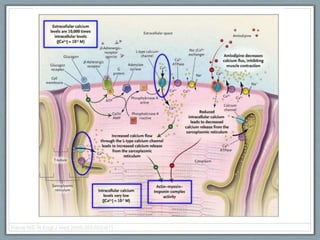
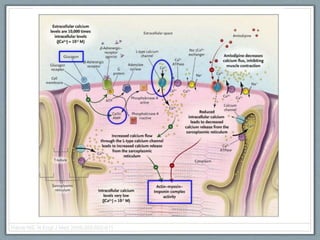
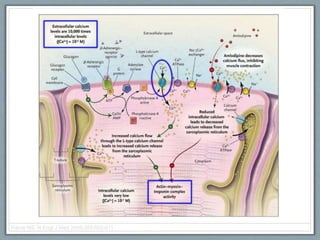
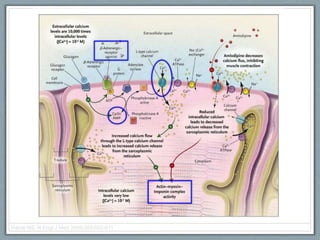
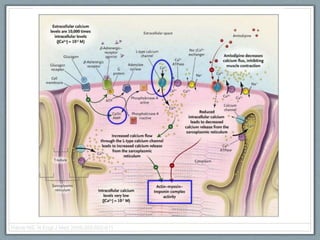
  • #7 Harris NS. N Engl J Med 2006;355:602-611 Figure 2. Role of L-Type Calcium Channels and Amlodipine Activity in Myocytes. The extracellular concentration of calcium is 10,000 times the intracellular concentration. The gradient is maintained by the impermeability of the cell membrane to calcium and through pumps that excrete intracellular calcium ions into the extracellular space (Ca2+/H+-ATPase and Na+/Ca2+ exchanger), as well as by the active uptake and release of calcium by intracellular organelles (endoplasmic reticulum and mitochondria). Calcium flows into the cell through a voltage-gated calcium channel in response to a variety of stimuli, including β-adrenergic receptors. The influx of calcium into the cell and from the endoplasmic reticulum ultimately increases the activity of the actin–myosin–troponin complex. Amlodipine binds the α1c subunit of voltage-gated L-type calcium channels on the myocyte membrane, blocking the flow of calcium and reducing the activity of the actin–myosin–troponin complex.
  • #8 Hallmark of CCB poisoning = depressed myocardial contraction and peripheral vasodilation
  • #9 Hallmark of CCB poisoning = depressed myocardial contraction and peripheral vasodilation Hypotension most common and life-threatening finding d/t decreased inotropy bradycardia, and peripheral vasodilation
  • #10 Harris NS. N Engl J Med 2006;355:602-611 Figure 2. Role of L-Type Calcium Channels and Amlodipine Activity in Myocytes. The extracellular concentration of calcium is 10,000 times the intracellular concentration. The gradient is maintained by the impermeability of the cell membrane to calcium and through pumps that excrete intracellular calcium ions into the extracellular space (Ca2+/H+-ATPase and Na+/Ca2+ exchanger), as well as by the active uptake and release of calcium by intracellular organelles (endoplasmic reticulum and mitochondria). Calcium flows into the cell through a voltage-gated calcium channel in response to a variety of stimuli, including β-adrenergic receptors. The influx of calcium into the cell and from the endoplasmic reticulum ultimately increases the activity of the actin–myosin–troponin complex. Amlodipine binds the α1c subunit of voltage-gated L-type calcium channels on the myocyte membrane, blocking the flow of calcium and reducing the activity of the actin–myosin–troponin complex.
  • #14 d/c WBI at onset of bradycardia and HoTN b/c reduced GI function and ileus
  • #18 Harris NS. N Engl J Med 2006;355:602-611 Figure 2. Role of L-Type Calcium Channels and Amlodipine Activity in Myocytes. The extracellular concentration of calcium is 10,000 times the intracellular concentration. The gradient is maintained by the impermeability of the cell membrane to calcium and through pumps that excrete intracellular calcium ions into the extracellular space (Ca2+/H+-ATPase and Na+/Ca2+ exchanger), as well as by the active uptake and release of calcium by intracellular organelles (endoplasmic reticulum and mitochondria). Calcium flows into the cell through a voltage-gated calcium channel in response to a variety of stimuli, including β-adrenergic receptors. The influx of calcium into the cell and from the endoplasmic reticulum ultimately increases the activity of the actin–myosin–troponin complex. Amlodipine binds the α1c subunit of voltage-gated L-type calcium channels on the myocyte membrane, blocking the flow of calcium and reducing the activity of the actin–myosin–troponin complex.
  • #20 Harris NS. N Engl J Med 2006;355:602-611 Figure 2. Role of L-Type Calcium Channels and Amlodipine Activity in Myocytes. The extracellular concentration of calcium is 10,000 times the intracellular concentration. The gradient is maintained by the impermeability of the cell membrane to calcium and through pumps that excrete intracellular calcium ions into the extracellular space (Ca2+/H+-ATPase and Na+/Ca2+ exchanger), as well as by the active uptake and release of calcium by intracellular organelles (endoplasmic reticulum and mitochondria). Calcium flows into the cell through a voltage-gated calcium channel in response to a variety of stimuli, including β-adrenergic receptors. The influx of calcium into the cell and from the endoplasmic reticulum ultimately increases the activity of the actin–myosin–troponin complex. Amlodipine binds the α1c subunit of voltage-gated L-type calcium channels on the myocyte membrane, blocking the flow of calcium and reducing the activity of the actin–myosin–troponin complex.
  • #23 Inhibited insulin secretion and impaired glucose utilization
  • #25 Harris NS. N Engl J Med 2006;355:602-611 Figure 2. Role of L-Type Calcium Channels and Amlodipine Activity in Myocytes. The extracellular concentration of calcium is 10,000 times the intracellular concentration. The gradient is maintained by the impermeability of the cell membrane to calcium and through pumps that excrete intracellular calcium ions into the extracellular space (Ca2+/H+-ATPase and Na+/Ca2+ exchanger), as well as by the active uptake and release of calcium by intracellular organelles (endoplasmic reticulum and mitochondria). Calcium flows into the cell through a voltage-gated calcium channel in response to a variety of stimuli, including β-adrenergic receptors. The influx of calcium into the cell and from the endoplasmic reticulum ultimately increases the activity of the actin–myosin–troponin complex. Amlodipine binds the α1c subunit of voltage-gated L-type calcium channels on the myocyte membrane, blocking the flow of calcium and reducing the activity of the actin–myosin–troponin complex.
  • #30 Most often used for anesthesia (e.g. bupivocaine)
  • #33 Harris NS. N Engl J Med 2006;355:602-611 Figure 2. Role of L-Type Calcium Channels and Amlodipine Activity in Myocytes. The extracellular concentration of calcium is 10,000 times the intracellular concentration. The gradient is maintained by the impermeability of the cell membrane to calcium and through pumps that excrete intracellular calcium ions into the extracellular space (Ca2+/H+-ATPase and Na+/Ca2+ exchanger), as well as by the active uptake and release of calcium by intracellular organelles (endoplasmic reticulum and mitochondria). Calcium flows into the cell through a voltage-gated calcium channel in response to a variety of stimuli, including β-adrenergic receptors. The influx of calcium into the cell and from the endoplasmic reticulum ultimately increases the activity of the actin–myosin–troponin complex. Amlodipine binds the α1c subunit of voltage-gated L-type calcium channels on the myocyte membrane, blocking the flow of calcium and reducing the activity of the actin–myosin–troponin complex.
  • #41 Harris NS. Case 24-2006: A 40-Year-Old Woman with Hypotension after an Overdose of Amlodipine. N Engl J Med 2006;355:602-611 No third-line interventions
  • #46 Nasa P, Singh A, Juneja D, et al. Continuous venovenous hemodiafiltration along with charcoal hemoperfusion for the management of life-threatening lercanidipine and amlodipine overdose. Saudi Journal of Kidney Diseases and Transplantation. 2014; 25(6):1255-1258.