CCB & BB
POISONING
Dr KTD Priyadarshani
Registrar in Emergency Medicine
Teaching Hospital Peradeniya
2023/03/28
CALCIUM CHANNEL
BLOCKERS
OVERVIEW
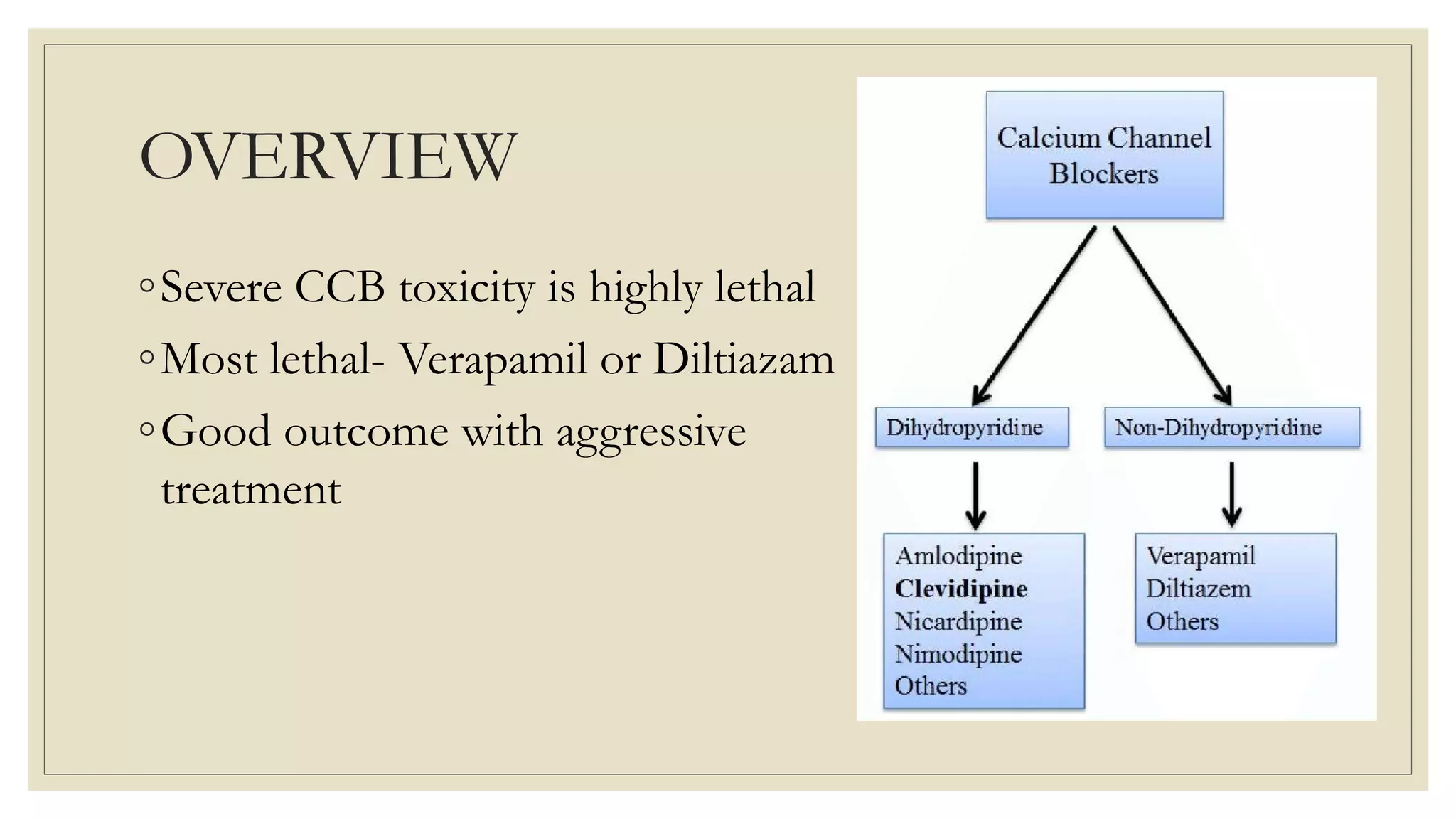
◦Severe CCB toxicity is highly lethal
◦Most lethal- Verapamil or Diltiazam
◦Good outcome with aggressive
treatment
TOXIC MECHANISM
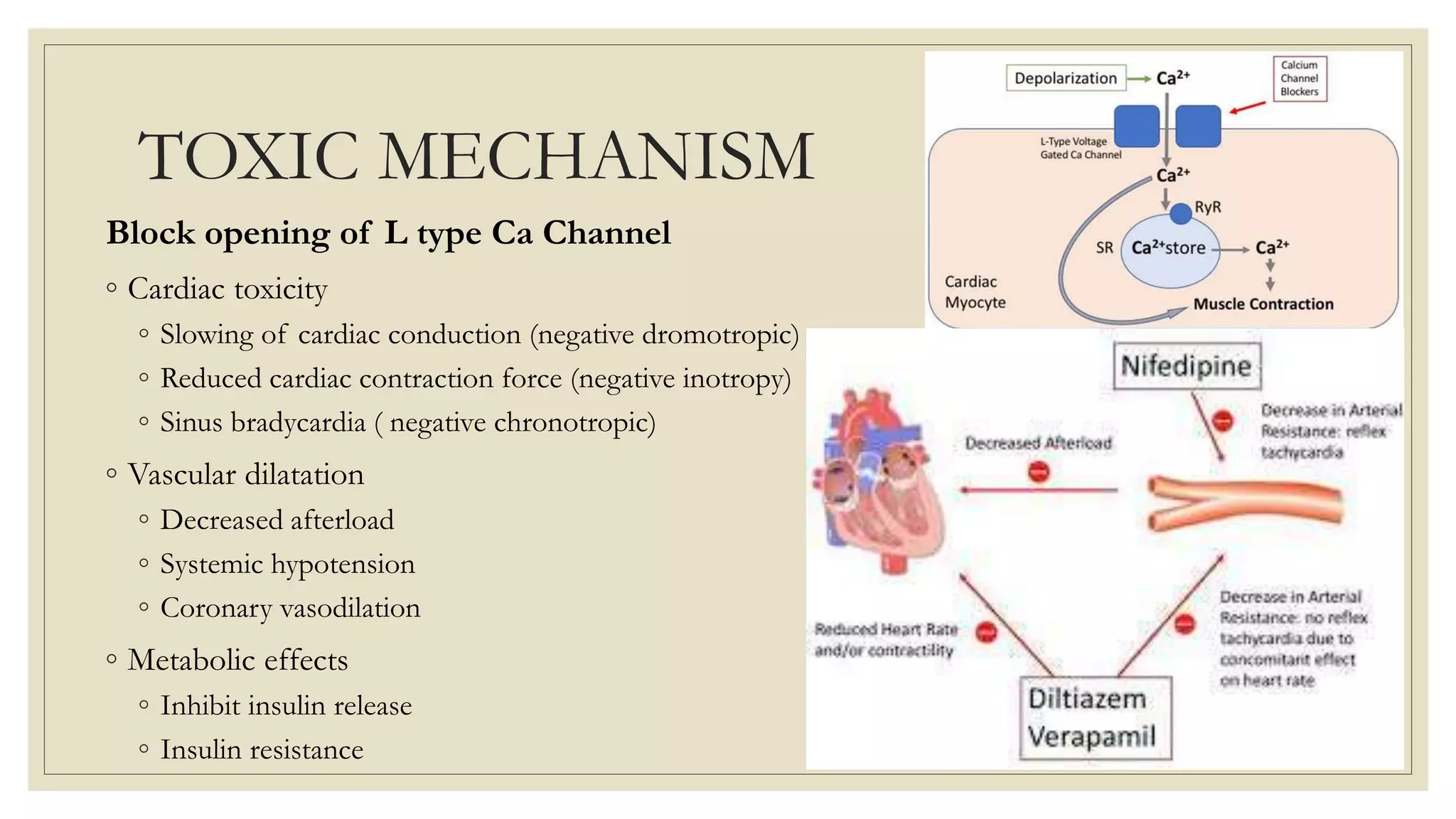
Block opening of L type Ca Channel
◦ Cardiac toxicity
◦ Slowing of cardiac conduction (negative dromotropic)
◦ Reduced cardiac contraction force (negative inotropy)
◦ Sinus bradycardia ( negative chronotropic)
◦ Vascular dilatation
◦ Decreased afterload
◦ Systemic hypotension
◦ Coronary vasodilation
◦ Metabolic effects
◦ Inhibit insulin release
◦ Insulin resistance
CLINICAL FEATURES
◦ CVS
◦ Bradycardia, 1st degree heart block
◦ Hypotension
◦ Myocardial, non occlusive mesenteric
ischemia or stroke
◦ CNS
◦ Coma
◦ Seizures
◦ Cardiogenic pulmonary edema
◦ Metabolic
◦ Hyperglycemia
◦ Metabolic/lactic acidosis
◦ GI
◦ Bowel necrosis & ischemia
MANAGEMENT
RESUSCITATION
◦ A- Oxygen
◦ B- Early intubation
◦ C
◦ Fluid bolus 10-20 ml/kg crystalloid
◦ Arterial line
◦ Catecholamine infusion- Dopamine, Adrenaline or NE
◦ ECG
RISK ASSESSMENT
◦Drug – IR or ER
◦Co ingestion of BB or Digoxin
◦Elderly
◦Co morbidities
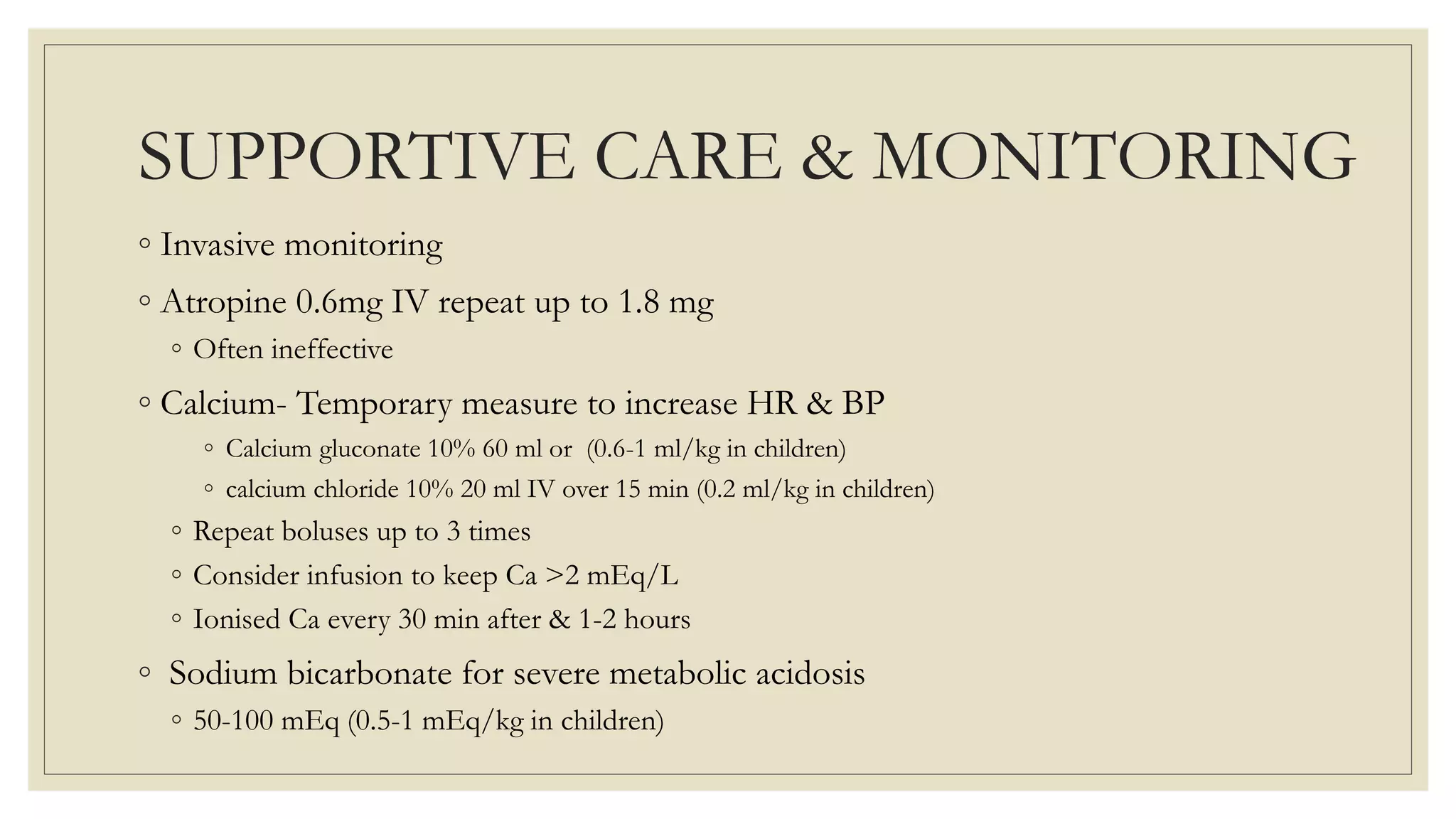
SUPPORTIVE CARE & MONITORING
◦ Invasive monitoring
◦ Atropine 0.6mg IV repeat up to 1.8 mg
◦ Often ineffective
◦ Calcium- Temporary measure to increase HR & BP
◦ Calcium gluconate 10% 60 ml or (0.6-1 ml/kg in children)
◦ calcium chloride 10% 20 ml IV over 15 min (0.2 ml/kg in children)
◦ Repeat boluses up to 3 times
◦ Consider infusion to keep Ca >2 mEq/L
◦ Ionised Ca every 30 min after & 1-2 hours
◦ Sodium bicarbonate for severe metabolic acidosis
◦ 50-100 mEq (0.5-1 mEq/kg in children)
INVESTIGATIONS
Bedside
◦ ECG- sinus bradycardia, varying degrees of AV block & slowing of intraventricular conduction, junctional &
ventricular escape rhythm
◦ ABG- lactatic acidosis+ high anion gap+low HCO3
◦ Blood sugar (hyperglycemia is a marker of severity)
Laboratory
◦ Serum Ca
◦ SE- hypokalemia
◦ S Creatinine
Imaging
◦ CXR- Pulmonary edema
◦ Echo- impaired contractility
DECONTAMINATION
◦ Gastric lavage- with in 1 hour
◦ Activated charcoal
◦ if <1 hr – for standard release or
◦ <4hr- for SR preparations
◦ Whole bowel irrigation if
◦ Patient is cooperative
◦ Present with in 4 hrs of ingestion of >10 tabs of Verapamil or Diltiazem SR
◦ No evidence of established toxicity
ANTIDOTE
◦ High dose insulin-euglycemic
therapy HEIT
◦ Vasoactive infusions
◦ IV lipid emulsion
◦ Cardiac pacing
◦ Circulatory support devices
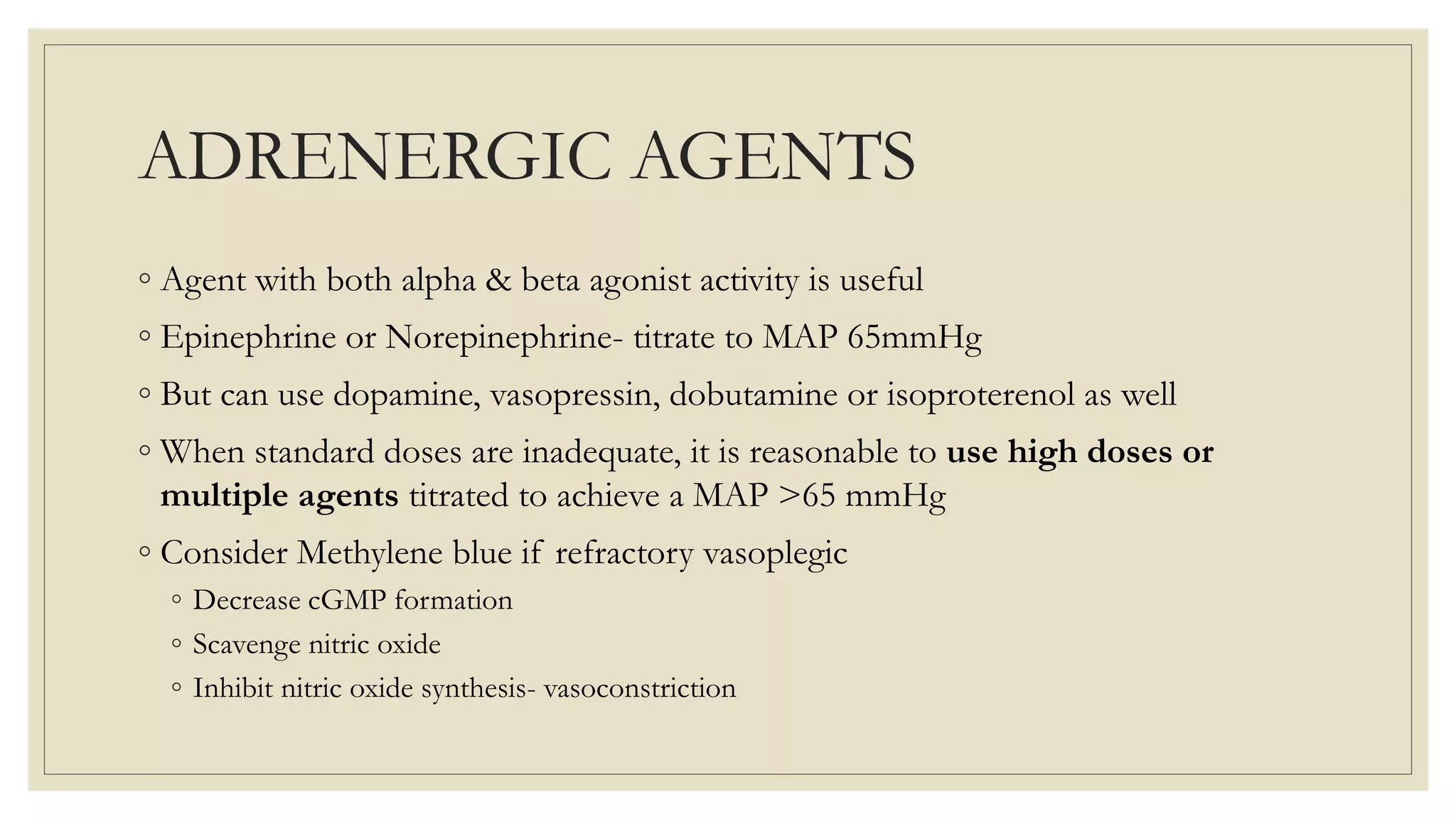
ADRENERGIC AGENTS
◦ Agent with both alpha & beta agonist activity is useful
◦ Epinephrine or Norepinephrine- titrate to MAP 65mmHg
◦ But can use dopamine, vasopressin, dobutamine or isoproterenol as well
◦ When standard doses are inadequate, it is reasonable to use high doses or
multiple agents titrated to achieve a MAP >65 mmHg
◦ Consider Methylene blue if refractory vasoplegic
◦ Decrease cGMP formation
◦ Scavenge nitric oxide
◦ Inhibit nitric oxide synthesis- vasoconstriction
HEIT THERAPY
◦ Commence
◦ Glucose 25 g (50% 50 mL) IV bolus (if RBS <200 mg/dL)
◦ Short acting insulin 1 U/kg bolus to maximally saturate insulin receptors
◦ Continue
◦ Short acting insulin 0.5IU/kg/h & titrate every 30 min to a max 5 IU/kg/hr
◦ Dextrose 25g/h infusion titrated to maintain euglycemia (100-200mg/dL)
◦ Monitor
◦ Glucose- every 20 min for 1st hour, then every 1 h
◦ Potassium- replace only if <2.5 mmol/L & there is a source of potassium loss
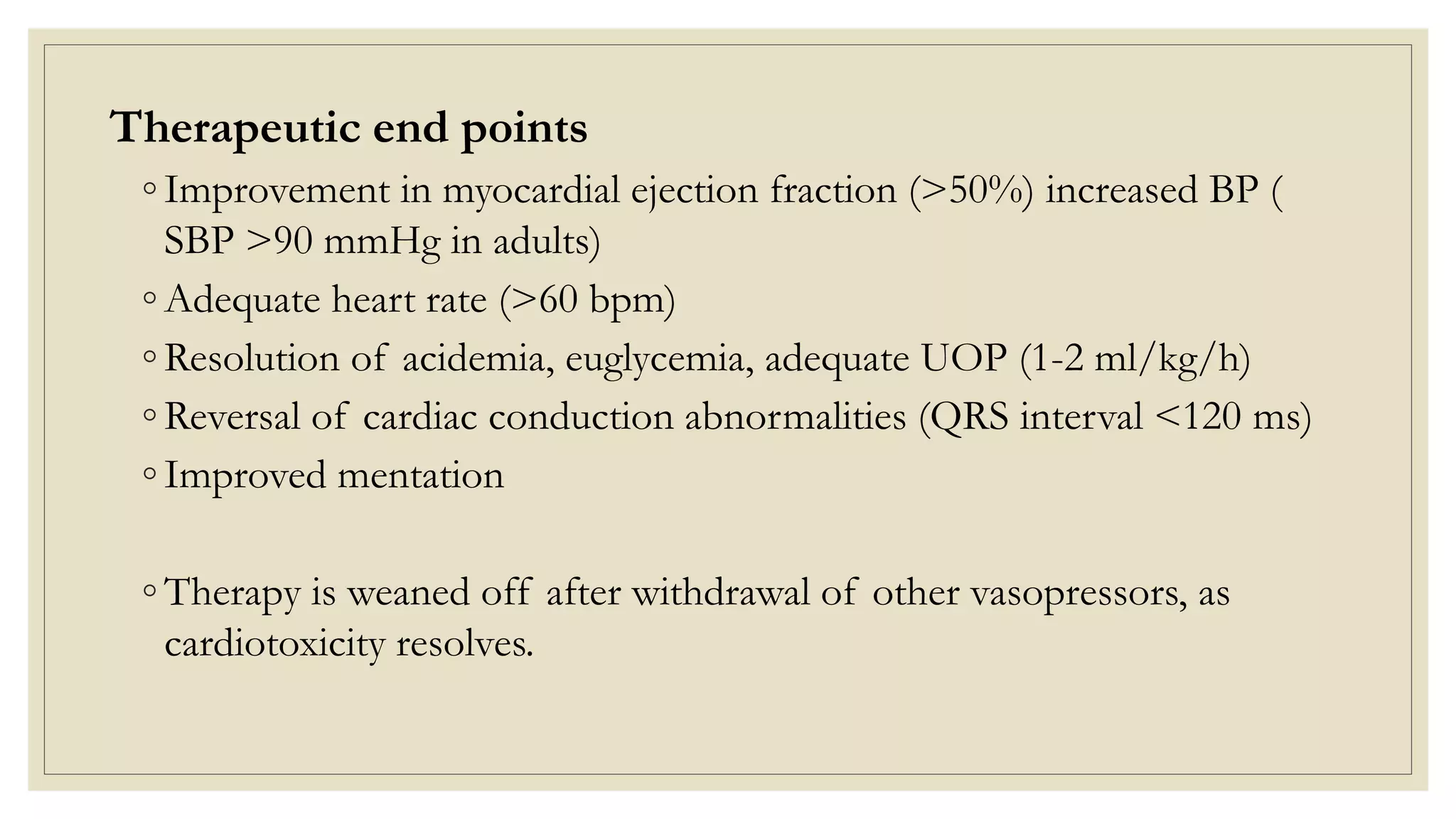
Therapeutic end points
◦ Improvement in myocardial ejection fraction (>50%) increased BP (
SBP >90 mmHg in adults)
◦ Adequate heart rate (>60 bpm)
◦ Resolution of acidemia, euglycemia, adequate UOP (1-2 ml/kg/h)
◦ Reversal of cardiac conduction abnormalities (QRS interval <120 ms)
◦ Improved mentation
◦ Therapy is weaned off after withdrawal of other vasopressors, as
cardiotoxicity resolves.
GLUCAGON
◦ Bypass the beta receptor and stimulate cardiac activity via activation
of adenylate cyclase
◦ IV bolus 5mg in adult and 0.03 mg/kg in children given over 1-2 min
◦ A response is usually seen with in 15 min
◦ If no response – repeat a bolus
◦ If there is a hemodynamic improvement- maintenance infusion
5mg/kg/hr in adult 0.05 mg/kg/hr in children
IV LIPID EMULSION THERAPY
◦Create a pharmacological sink for fat soluble drugs, provide
fatty acid substrate for cardiac energy supply and improve
myocyte function by increasing intracellular calcium levels.
◦20% lipid emulsion 1.5ml/kg bolus over 2-3 minutes
followed by a 0.25 ml/Kg per min infusion
◦Can increase dose if blood pressure remain low
◦Upper limit- 10ml/kg over the initial 30 min
DISPOSITION
◦Clinical features – needs HDU/ICU care
◦Asymptomatic
◦ Cardiac monitoring for
◦ 4 hrs if standard release verapamil or Diltiazem
◦ 16 hrs if SR verapamil or Diltiazem
◦ Psychiatric assessment if possible
BETA BLOCKERS
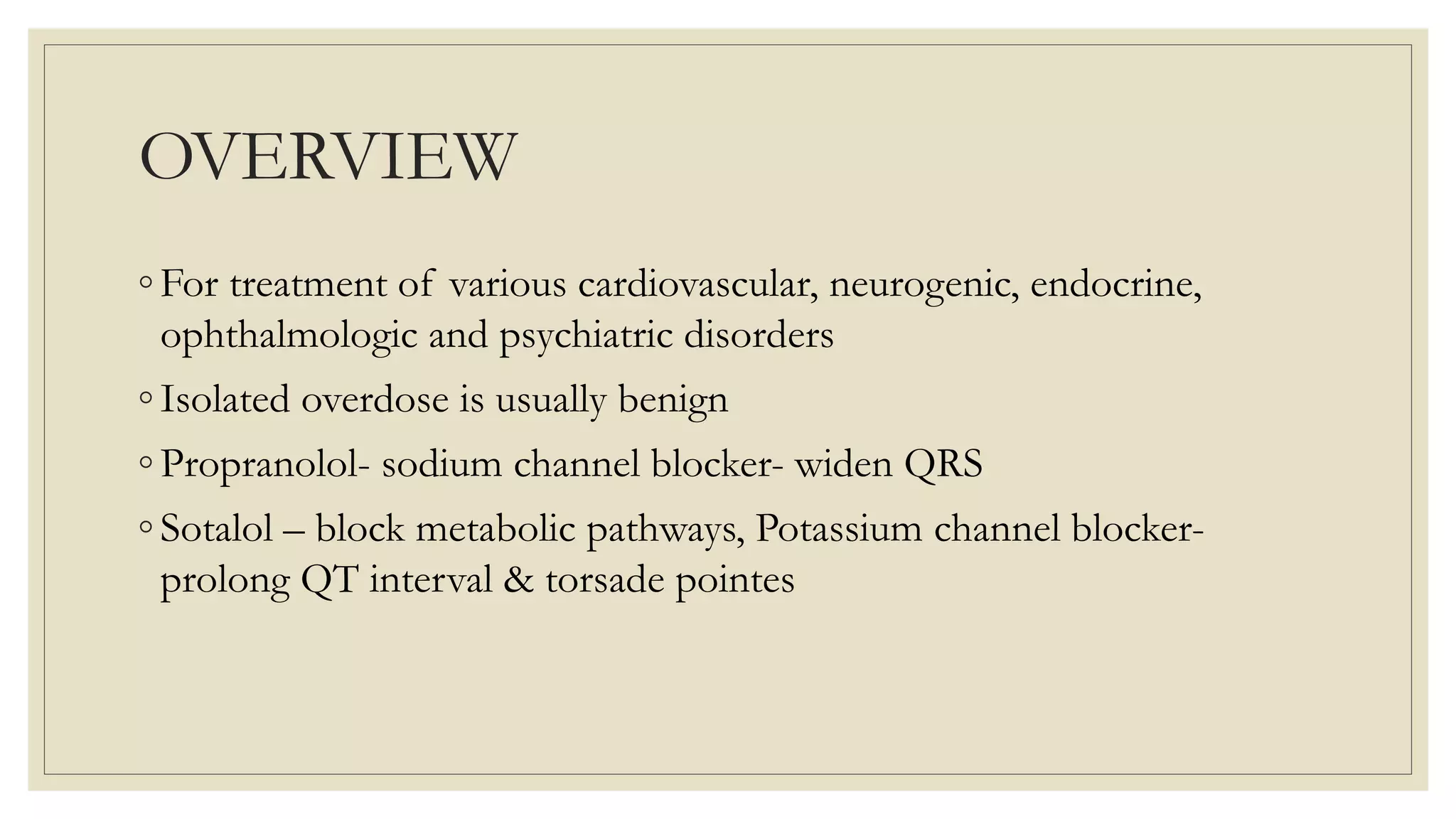
OVERVIEW
◦ For treatment of various cardiovascular, neurogenic, endocrine,
ophthalmologic and psychiatric disorders
◦ Isolated overdose is usually benign
◦ Propranolol- sodium channel blocker- widen QRS
◦ Sotalol – block metabolic pathways, Potassium channel blocker-
prolong QT interval & torsade pointes
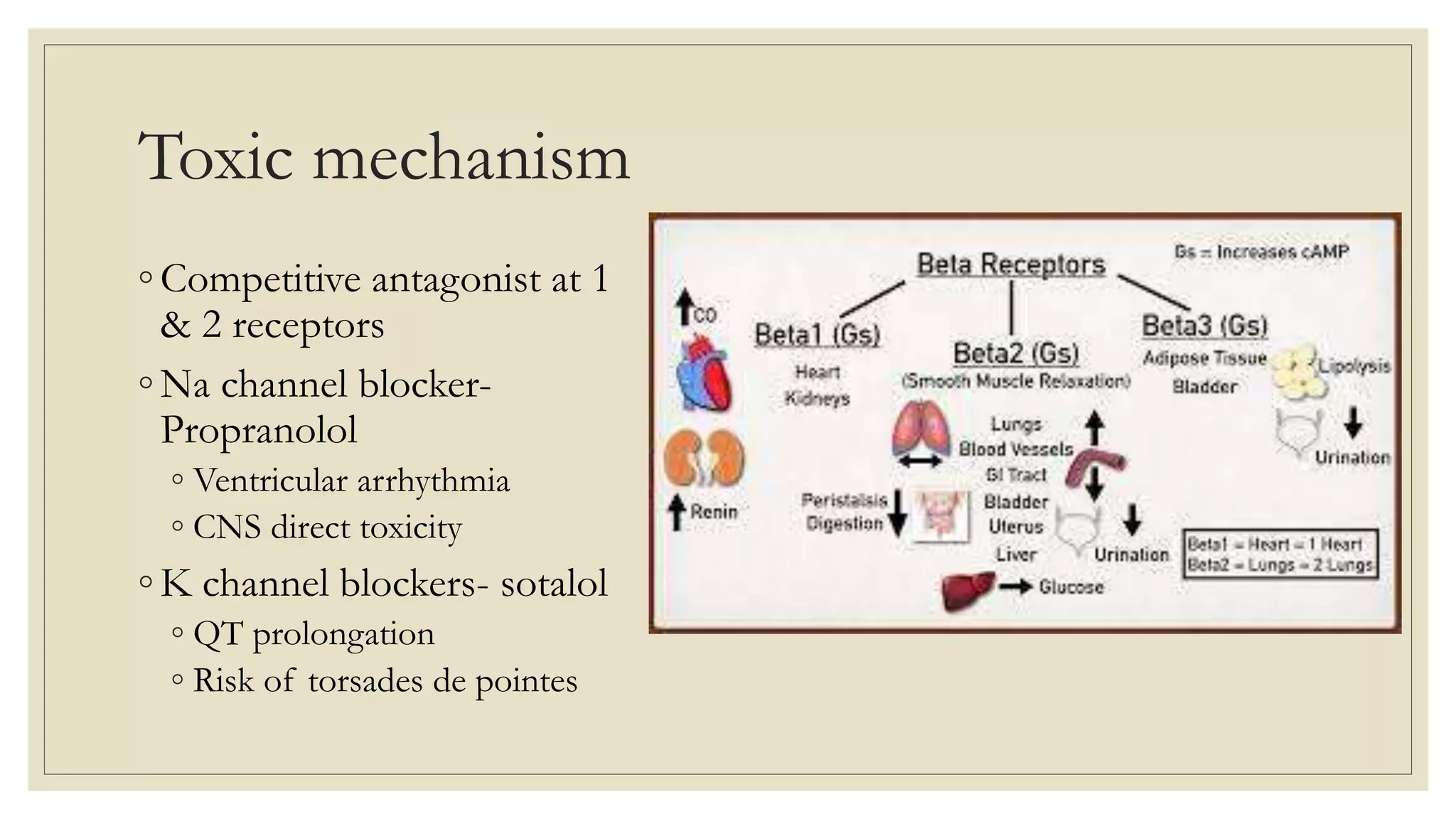
Toxic mechanism
◦ Competitive antagonist at 1
& 2 receptors
◦ Na channel blocker-
Propranolol
◦ Ventricular arrhythmia
◦ CNS direct toxicity
◦ K channel blockers- sotalol
◦ QT prolongation
◦ Risk of torsades de pointes
CLINICAL FEATURES
Onset by 4 hrs
◦ CVS
◦ Bradycardia – 60 bpm(sinus,
1st,2nd,3rd degree block, junctional or
ventricular),
◦ Hypotension
◦ Increased QRS (propanalol)
◦ Increased QTc (Sotalol)
◦ CNS
◦ Delirium, Coma
◦ Seizures (propanalol )
◦ Other
◦ Bronchospasm
◦ Pulmonary edema
◦ Hypokalemia
◦ Hypoglycemia
INVESTIGATIONS
Bedside
◦ ECG- serial monitoring
◦ Blood sugar
Laboratory
◦ SE
◦ RFT
Imaging
◦ Echo- impaired contractility
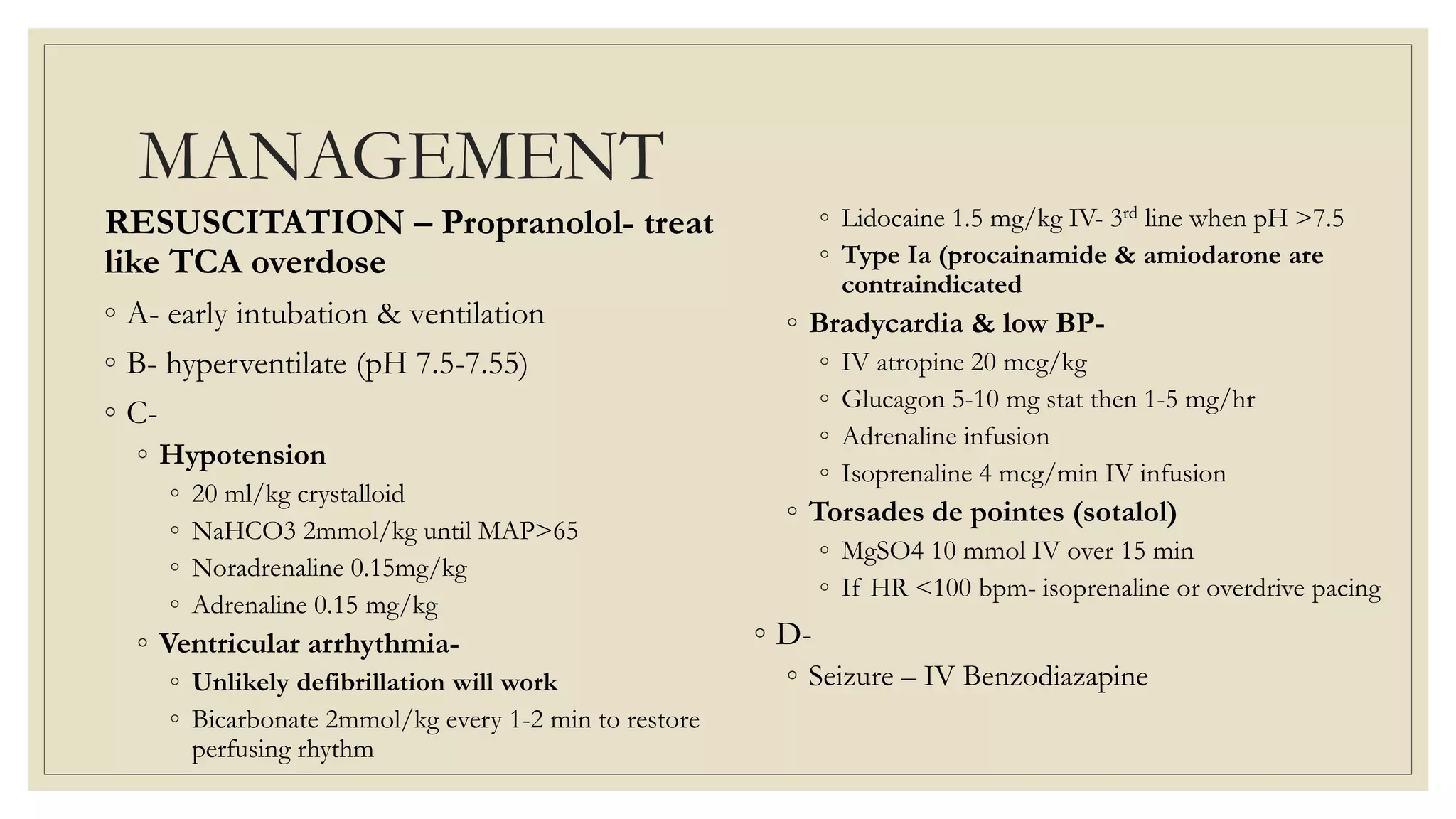
MANAGEMENT
RESUSCITATION – Propranolol- treat
like TCA overdose
◦ A- early intubation & ventilation
◦ B- hyperventilate (pH 7.5-7.55)
◦ C-
◦ Hypotension
◦ 20 ml/kg crystalloid
◦ NaHCO3 2mmol/kg until MAP>65
◦ Noradrenaline 0.15mg/kg
◦ Adrenaline 0.15 mg/kg
◦ Ventricular arrhythmia-
◦ Unlikely defibrillation will work
◦ Bicarbonate 2mmol/kg every 1-2 min to restore
perfusing rhythm
◦ Lidocaine 1.5 mg/kg IV- 3rd line when pH >7.5
◦ Type Ia (procainamide & amiodarone are
contraindicated
◦ Bradycardia & low BP-
◦ IV atropine 20 mcg/kg
◦ Glucagon 5-10 mg stat then 1-5 mg/hr
◦ Adrenaline infusion
◦ Isoprenaline 4 mcg/min IV infusion
◦ Torsades de pointes (sotalol)
◦ MgSO4 10 mmol IV over 15 min
◦ If HR <100 bpm- isoprenaline or overdrive pacing
◦ D-
◦ Seizure – IV Benzodiazapine
DECONTAMINATION
◦Activated charcoal- beneficial if given with in 1 hour
SUPPORTIVE MANAGEMENT
◦ Monitoring
◦ Cardiac Monitoring
◦ Monitor Blood pressure
◦ Invasive monitoring & central access
ANTIDOTE- HEIT THERAPY
◦ High dose insulin euglycemic therapy- as above
DISPOSITION
◦ Asymptomatic, normal ECG at 6 hours
◦ Medically cleared
◦ Clinical or ECG manifestations
◦ Admit to HDU or ICU
REFERENCES
◦ Tintinali Emergency Medicine- 9th Edition
◦ Life in the fast lane
◦ Murray L et al. Toxicology Handbook 3rd Edition. Elsevier Australia 2015. ISBN 9780729542241
Calcium channel blocker & Beta blocker Poisoning.pptx

Calcium channel blocker & Beta blocker Poisoning.pptx

  • 1.
    CCB & BB POISONING DrKTD Priyadarshani Registrar in Emergency Medicine Teaching Hospital Peradeniya 2023/03/28
  • 2.
  • 3.
    OVERVIEW ◦Severe CCB toxicityis highly lethal ◦Most lethal- Verapamil or Diltiazam ◦Good outcome with aggressive treatment
  • 4.
    TOXIC MECHANISM Block openingof L type Ca Channel ◦ Cardiac toxicity ◦ Slowing of cardiac conduction (negative dromotropic) ◦ Reduced cardiac contraction force (negative inotropy) ◦ Sinus bradycardia ( negative chronotropic) ◦ Vascular dilatation ◦ Decreased afterload ◦ Systemic hypotension ◦ Coronary vasodilation ◦ Metabolic effects ◦ Inhibit insulin release ◦ Insulin resistance
  • 5.
    CLINICAL FEATURES ◦ CVS ◦Bradycardia, 1st degree heart block ◦ Hypotension ◦ Myocardial, non occlusive mesenteric ischemia or stroke ◦ CNS ◦ Coma ◦ Seizures ◦ Cardiogenic pulmonary edema ◦ Metabolic ◦ Hyperglycemia ◦ Metabolic/lactic acidosis ◦ GI ◦ Bowel necrosis & ischemia
  • 6.
    MANAGEMENT RESUSCITATION ◦ A- Oxygen ◦B- Early intubation ◦ C ◦ Fluid bolus 10-20 ml/kg crystalloid ◦ Arterial line ◦ Catecholamine infusion- Dopamine, Adrenaline or NE ◦ ECG
  • 7.
    RISK ASSESSMENT ◦Drug –IR or ER ◦Co ingestion of BB or Digoxin ◦Elderly ◦Co morbidities
  • 8.
    SUPPORTIVE CARE &MONITORING ◦ Invasive monitoring ◦ Atropine 0.6mg IV repeat up to 1.8 mg ◦ Often ineffective ◦ Calcium- Temporary measure to increase HR & BP ◦ Calcium gluconate 10% 60 ml or (0.6-1 ml/kg in children) ◦ calcium chloride 10% 20 ml IV over 15 min (0.2 ml/kg in children) ◦ Repeat boluses up to 3 times ◦ Consider infusion to keep Ca >2 mEq/L ◦ Ionised Ca every 30 min after & 1-2 hours ◦ Sodium bicarbonate for severe metabolic acidosis ◦ 50-100 mEq (0.5-1 mEq/kg in children)
  • 9.
    INVESTIGATIONS Bedside ◦ ECG- sinusbradycardia, varying degrees of AV block & slowing of intraventricular conduction, junctional & ventricular escape rhythm ◦ ABG- lactatic acidosis+ high anion gap+low HCO3 ◦ Blood sugar (hyperglycemia is a marker of severity) Laboratory ◦ Serum Ca ◦ SE- hypokalemia ◦ S Creatinine Imaging ◦ CXR- Pulmonary edema ◦ Echo- impaired contractility
  • 10.
    DECONTAMINATION ◦ Gastric lavage-with in 1 hour ◦ Activated charcoal ◦ if <1 hr – for standard release or ◦ <4hr- for SR preparations ◦ Whole bowel irrigation if ◦ Patient is cooperative ◦ Present with in 4 hrs of ingestion of >10 tabs of Verapamil or Diltiazem SR ◦ No evidence of established toxicity
  • 11.
    ANTIDOTE ◦ High doseinsulin-euglycemic therapy HEIT ◦ Vasoactive infusions ◦ IV lipid emulsion ◦ Cardiac pacing ◦ Circulatory support devices
  • 12.
    ADRENERGIC AGENTS ◦ Agentwith both alpha & beta agonist activity is useful ◦ Epinephrine or Norepinephrine- titrate to MAP 65mmHg ◦ But can use dopamine, vasopressin, dobutamine or isoproterenol as well ◦ When standard doses are inadequate, it is reasonable to use high doses or multiple agents titrated to achieve a MAP >65 mmHg ◦ Consider Methylene blue if refractory vasoplegic ◦ Decrease cGMP formation ◦ Scavenge nitric oxide ◦ Inhibit nitric oxide synthesis- vasoconstriction
  • 13.
    HEIT THERAPY ◦ Commence ◦Glucose 25 g (50% 50 mL) IV bolus (if RBS <200 mg/dL) ◦ Short acting insulin 1 U/kg bolus to maximally saturate insulin receptors ◦ Continue ◦ Short acting insulin 0.5IU/kg/h & titrate every 30 min to a max 5 IU/kg/hr ◦ Dextrose 25g/h infusion titrated to maintain euglycemia (100-200mg/dL) ◦ Monitor ◦ Glucose- every 20 min for 1st hour, then every 1 h ◦ Potassium- replace only if <2.5 mmol/L & there is a source of potassium loss
  • 14.
    Therapeutic end points ◦Improvement in myocardial ejection fraction (>50%) increased BP ( SBP >90 mmHg in adults) ◦ Adequate heart rate (>60 bpm) ◦ Resolution of acidemia, euglycemia, adequate UOP (1-2 ml/kg/h) ◦ Reversal of cardiac conduction abnormalities (QRS interval <120 ms) ◦ Improved mentation ◦ Therapy is weaned off after withdrawal of other vasopressors, as cardiotoxicity resolves.
  • 15.
    GLUCAGON ◦ Bypass thebeta receptor and stimulate cardiac activity via activation of adenylate cyclase ◦ IV bolus 5mg in adult and 0.03 mg/kg in children given over 1-2 min ◦ A response is usually seen with in 15 min ◦ If no response – repeat a bolus ◦ If there is a hemodynamic improvement- maintenance infusion 5mg/kg/hr in adult 0.05 mg/kg/hr in children
  • 16.
    IV LIPID EMULSIONTHERAPY ◦Create a pharmacological sink for fat soluble drugs, provide fatty acid substrate for cardiac energy supply and improve myocyte function by increasing intracellular calcium levels. ◦20% lipid emulsion 1.5ml/kg bolus over 2-3 minutes followed by a 0.25 ml/Kg per min infusion ◦Can increase dose if blood pressure remain low ◦Upper limit- 10ml/kg over the initial 30 min
  • 17.
    DISPOSITION ◦Clinical features –needs HDU/ICU care ◦Asymptomatic ◦ Cardiac monitoring for ◦ 4 hrs if standard release verapamil or Diltiazem ◦ 16 hrs if SR verapamil or Diltiazem ◦ Psychiatric assessment if possible
  • 18.
  • 19.
    OVERVIEW ◦ For treatmentof various cardiovascular, neurogenic, endocrine, ophthalmologic and psychiatric disorders ◦ Isolated overdose is usually benign ◦ Propranolol- sodium channel blocker- widen QRS ◦ Sotalol – block metabolic pathways, Potassium channel blocker- prolong QT interval & torsade pointes
  • 20.
    Toxic mechanism ◦ Competitiveantagonist at 1 & 2 receptors ◦ Na channel blocker- Propranolol ◦ Ventricular arrhythmia ◦ CNS direct toxicity ◦ K channel blockers- sotalol ◦ QT prolongation ◦ Risk of torsades de pointes
  • 21.
    CLINICAL FEATURES Onset by4 hrs ◦ CVS ◦ Bradycardia – 60 bpm(sinus, 1st,2nd,3rd degree block, junctional or ventricular), ◦ Hypotension ◦ Increased QRS (propanalol) ◦ Increased QTc (Sotalol) ◦ CNS ◦ Delirium, Coma ◦ Seizures (propanalol ) ◦ Other ◦ Bronchospasm ◦ Pulmonary edema ◦ Hypokalemia ◦ Hypoglycemia
  • 22.
    INVESTIGATIONS Bedside ◦ ECG- serialmonitoring ◦ Blood sugar Laboratory ◦ SE ◦ RFT Imaging ◦ Echo- impaired contractility
  • 23.
    MANAGEMENT RESUSCITATION – Propranolol-treat like TCA overdose ◦ A- early intubation & ventilation ◦ B- hyperventilate (pH 7.5-7.55) ◦ C- ◦ Hypotension ◦ 20 ml/kg crystalloid ◦ NaHCO3 2mmol/kg until MAP>65 ◦ Noradrenaline 0.15mg/kg ◦ Adrenaline 0.15 mg/kg ◦ Ventricular arrhythmia- ◦ Unlikely defibrillation will work ◦ Bicarbonate 2mmol/kg every 1-2 min to restore perfusing rhythm ◦ Lidocaine 1.5 mg/kg IV- 3rd line when pH >7.5 ◦ Type Ia (procainamide & amiodarone are contraindicated ◦ Bradycardia & low BP- ◦ IV atropine 20 mcg/kg ◦ Glucagon 5-10 mg stat then 1-5 mg/hr ◦ Adrenaline infusion ◦ Isoprenaline 4 mcg/min IV infusion ◦ Torsades de pointes (sotalol) ◦ MgSO4 10 mmol IV over 15 min ◦ If HR <100 bpm- isoprenaline or overdrive pacing ◦ D- ◦ Seizure – IV Benzodiazapine
  • 24.
  • 25.
    SUPPORTIVE MANAGEMENT ◦ Monitoring ◦Cardiac Monitoring ◦ Monitor Blood pressure ◦ Invasive monitoring & central access
  • 26.
    ANTIDOTE- HEIT THERAPY ◦High dose insulin euglycemic therapy- as above
  • 27.
    DISPOSITION ◦ Asymptomatic, normalECG at 6 hours ◦ Medically cleared ◦ Clinical or ECG manifestations ◦ Admit to HDU or ICU
  • 28.
    REFERENCES ◦ Tintinali EmergencyMedicine- 9th Edition ◦ Life in the fast lane ◦ Murray L et al. Toxicology Handbook 3rd Edition. Elsevier Australia 2015. ISBN 9780729542241