Assistive Devices / Supportive Devices
For Mobility
By
M. Shivanandha Reddy
Assistive Devices
• Assistive devices are basically helpful
products that improve a person’s ability to
function independently.
• They are used by people with disabilities and
older adults who want to remain
independent as long as possible
Indications for Ambulatory
Assistive Devices
• Structural deformity, amputation, injury, or
disease resulting in decreased ability of
Lower extremities.
• Muscle weakness or paralysis of the trunk or
Lower extremities
• Inadequate balance
Assistive devices
• Commonly used Assistive devices for mobility
includes :
Cane
Walkers
Crutches
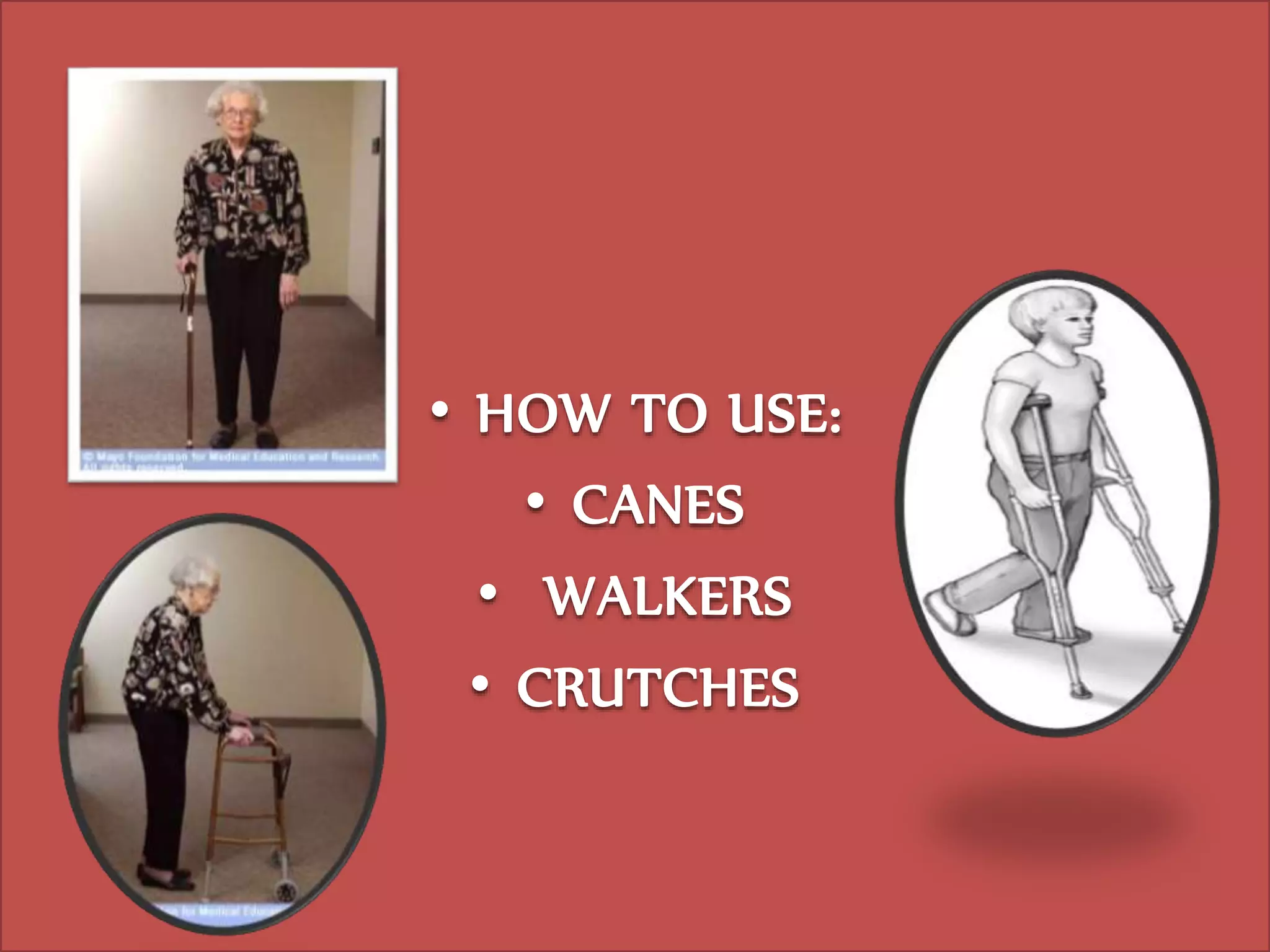
• HOW TO USE:
• CANES
• WALKERS
• CRUTCHES
Cane
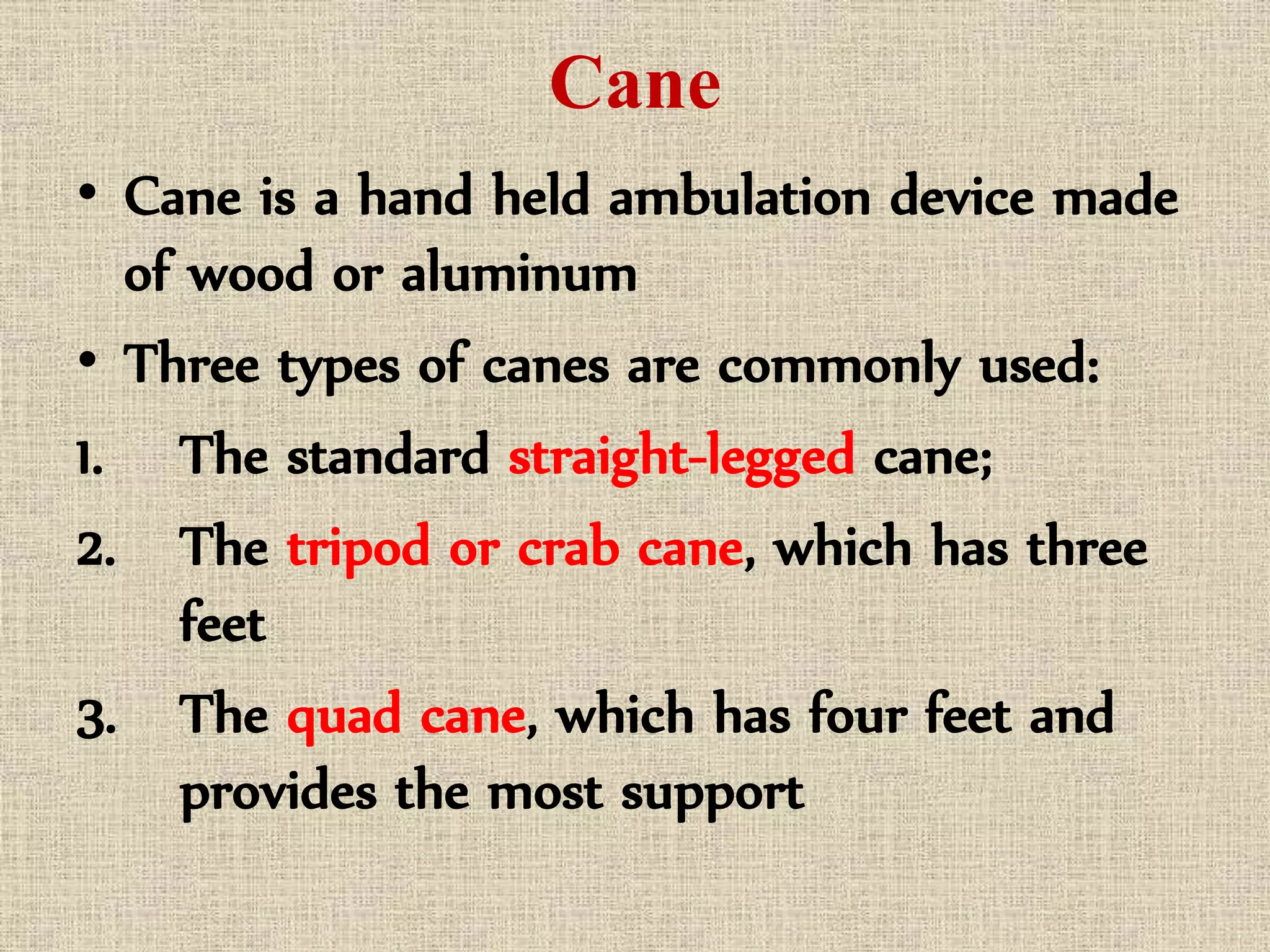
• Cane is a hand held ambulation device made
of wood or aluminum
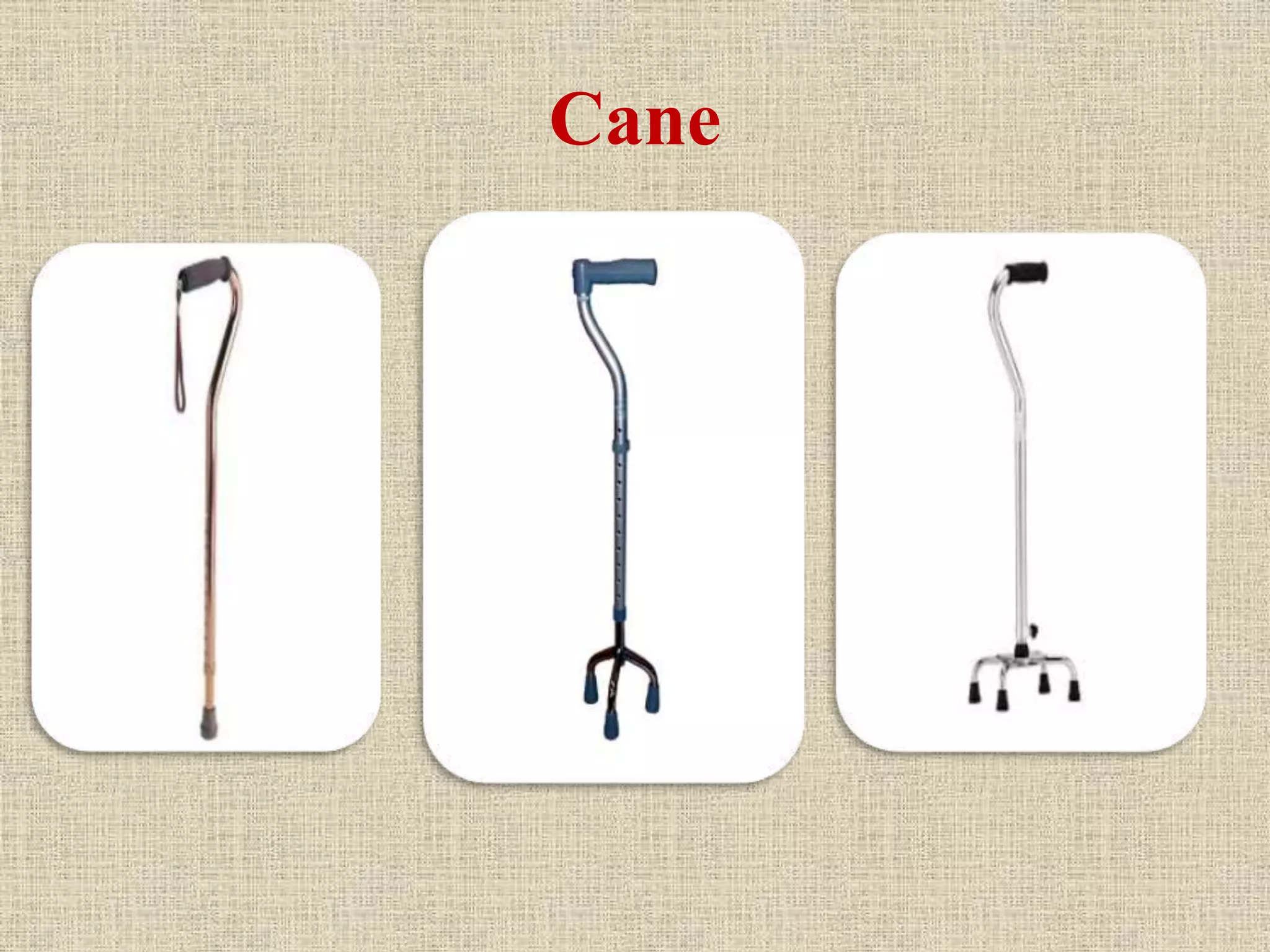
• Three types of canes are commonly used:
1. The standard straight-legged cane;
2. The tripod or crab cane, which has three
feet
3. The quad cane, which has four feet and
provides the most support
Cane
Cane
• Cane tips should have rubber caps to
prevent slipping
• The standard cane is 91 cm long; some
aluminum canes can be adjusted from 56 to
97 cm
Walking with a Cane
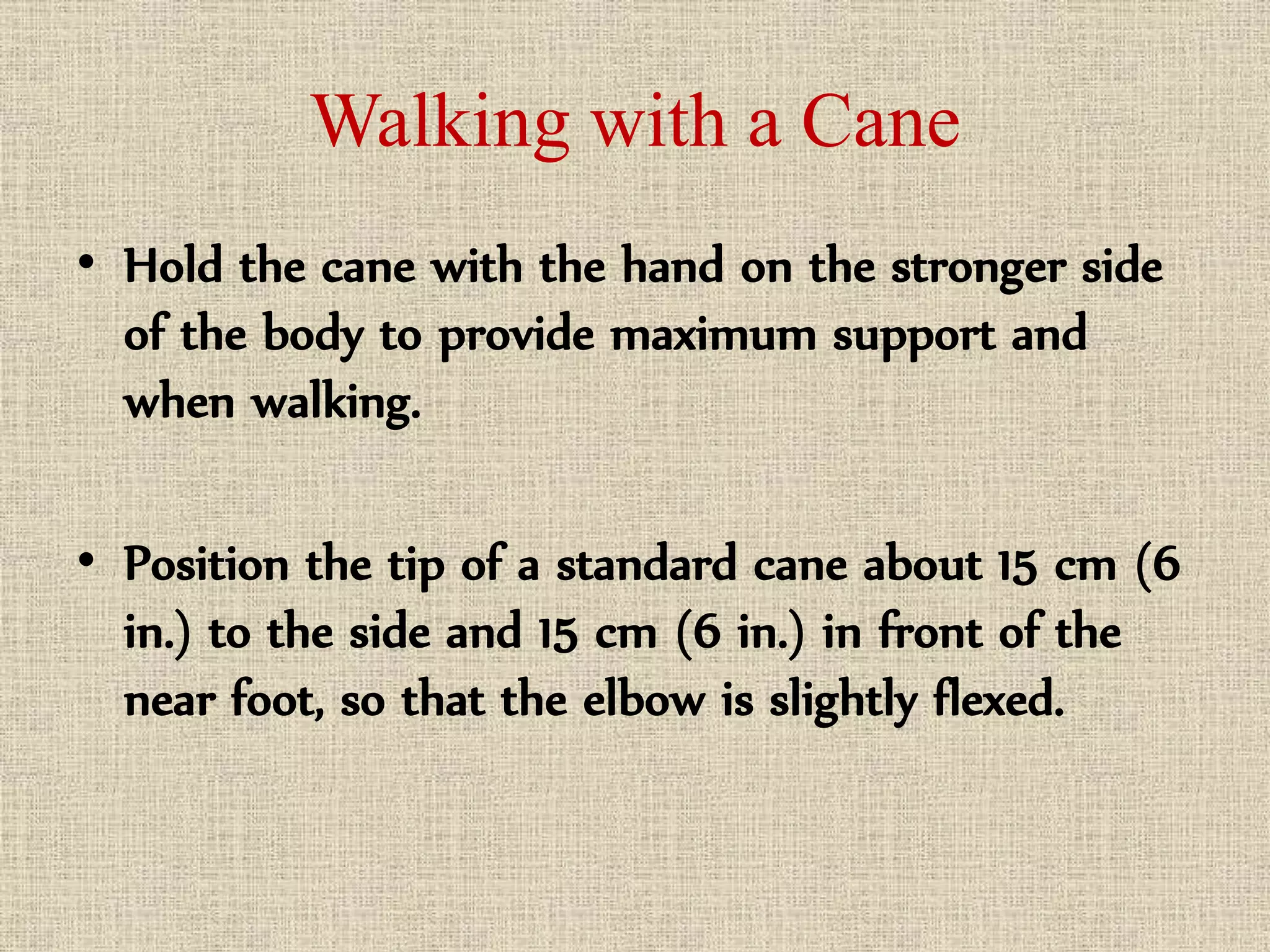
• Hold the cane with the hand on the stronger side
of the body to provide maximum support and
when walking.
• Position the tip of a standard cane about 15 cm (6
in.) to the side and 15 cm (6 in.) in front of the
near foot, so that the elbow is slightly flexed.
Walking with a Cane
• Move the cane and weak leg forward at the same
time, while the weight is borne by the stronger
leg.
• Move the stronger leg forward, while the weight is
borne by the cane and the weak leg
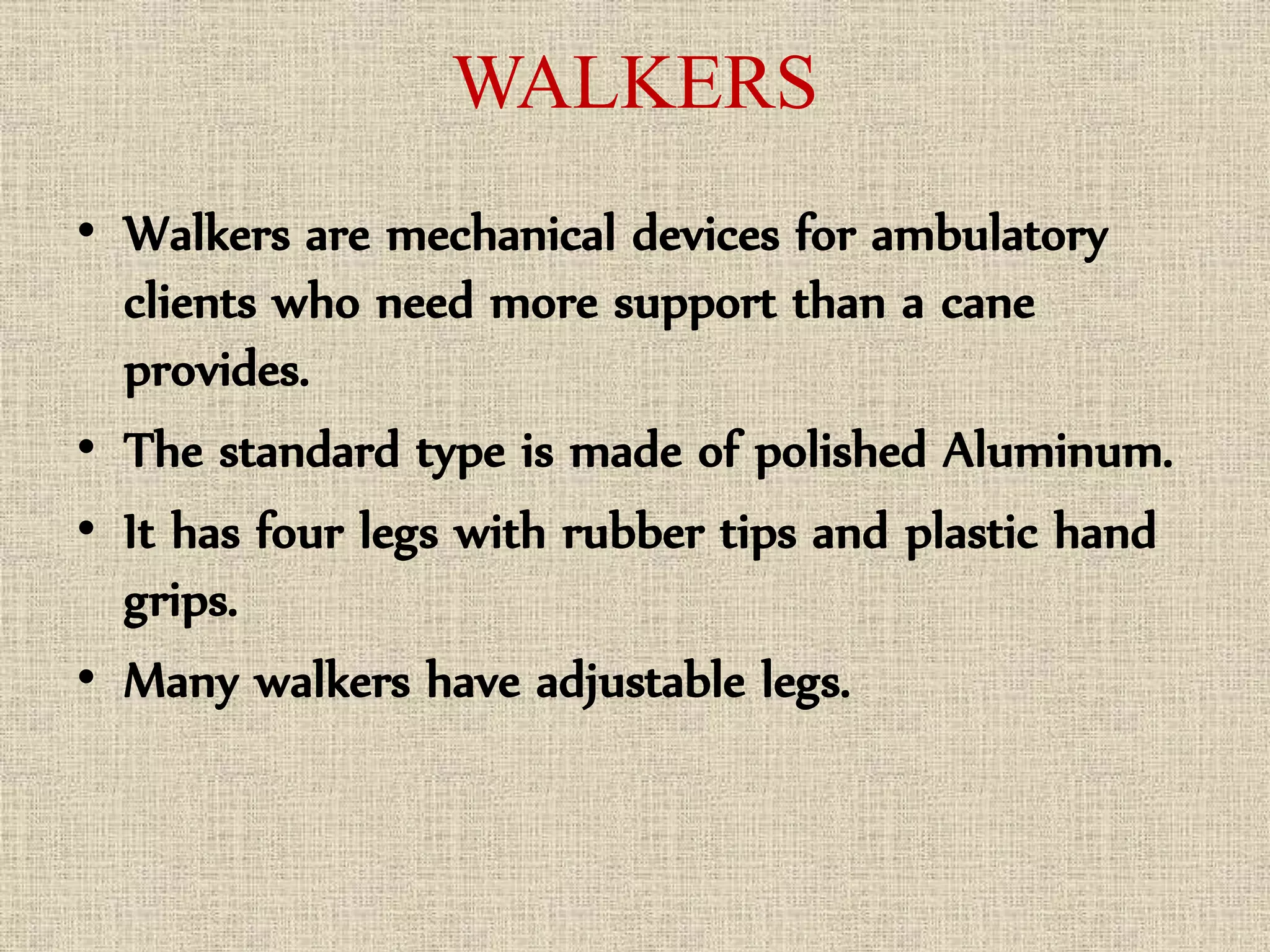
WALKERS
• Walkers are mechanical devices for ambulatory
clients who need more support than a cane
provides.
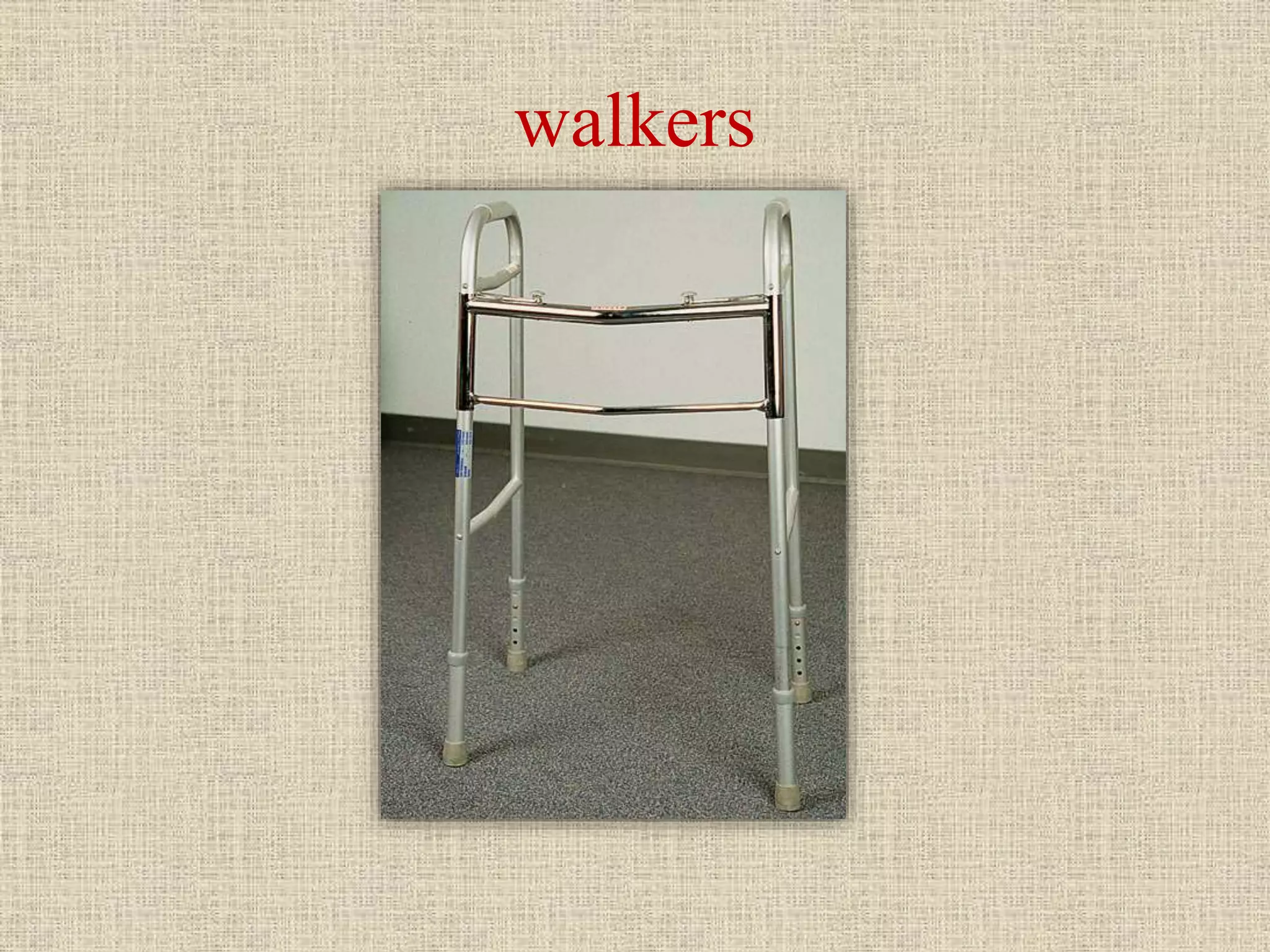
• The standard type is made of polished Aluminum.
• It has four legs with rubber tips and plastic hand
grips.
• Many walkers have adjustable legs.
walkers
Walking With Walkers
• Move the walker ahead about 15 cm (6 in.) while
your body weight is borne by both legs.
• Then move the right foot up to the walker while
your body weight is borne by the left leg and both
arms.
• Next, move the left foot up to the right foot while
your body weight is borne by the right leg and
both arms.
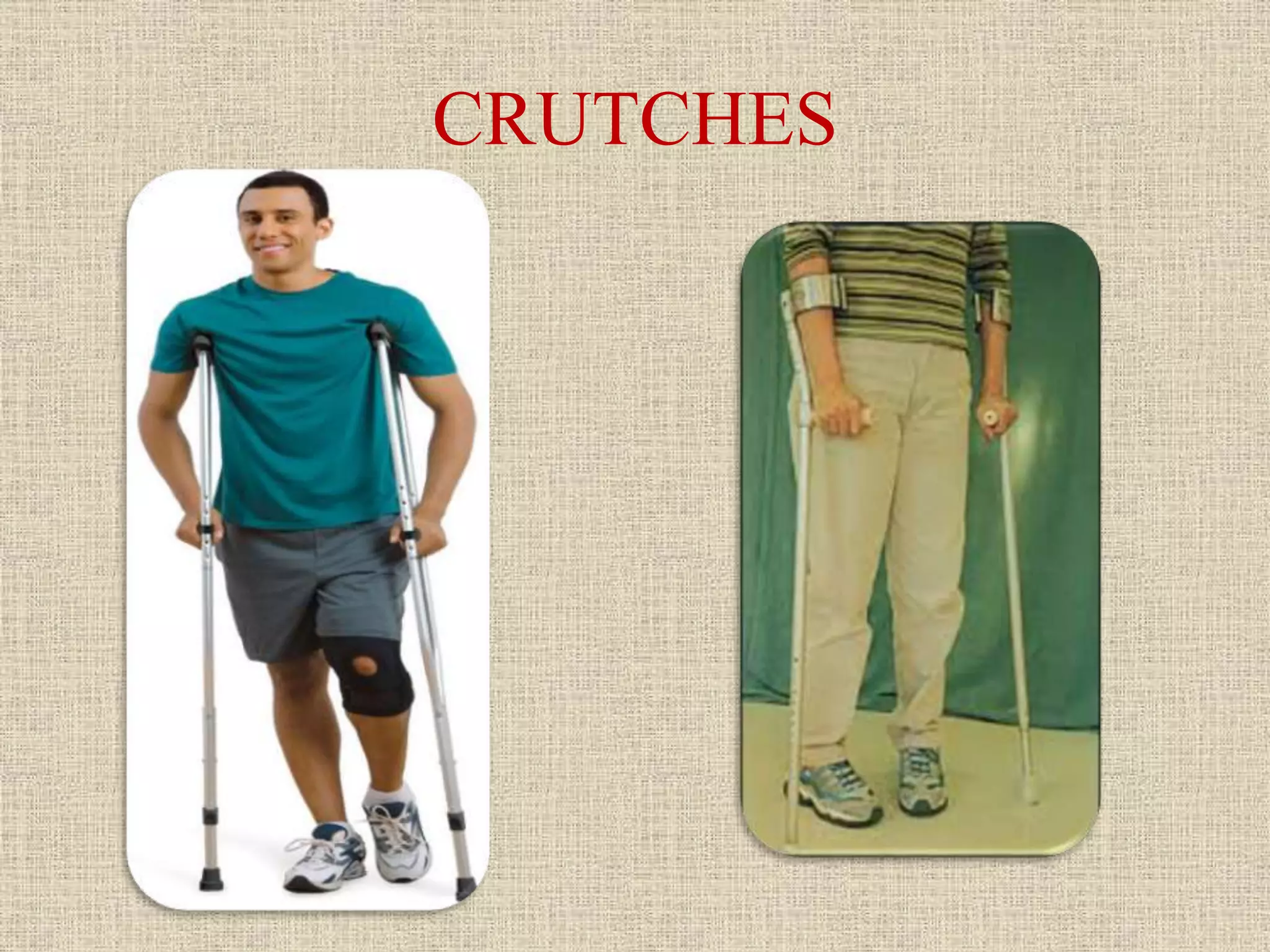
CRUTCHES
• Crutches may be a temporary need for some
clients and a permanent one for others.
• The most frequently used kinds of crutches
are the Underarm Crutch, Or Axillary Crutch
with hand bars, and the Lofstrand Crutch,
which extends only to the forearm.
• In crutch walking, the client’s weight is
borne by the muscles of the shoulder girdle
and the upper extremities.
CRUTCHES
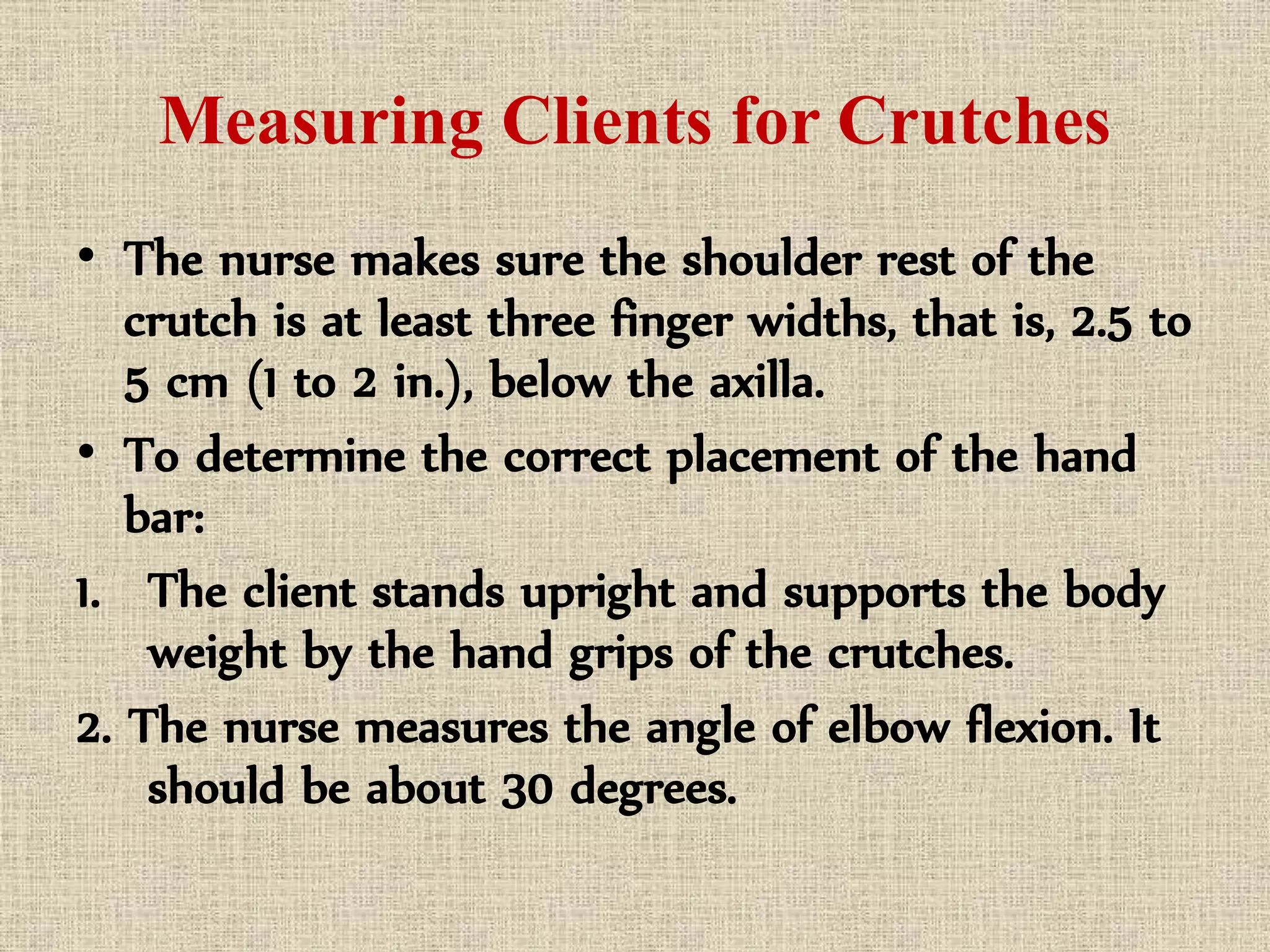
Measuring Clients for Crutches
• The nurse makes sure the shoulder rest of the
crutch is at least three finger widths, that is, 2.5 to
5 cm (1 to 2 in.), below the axilla.
• To determine the correct placement of the hand
bar:
1. The client stands upright and supports the body
weight by the hand grips of the crutches.
2. The nurse measures the angle of elbow flexion. It
should be about 30 degrees.
Crutch Gaits
• The crutch gait is the gait a person assumes
on crutches by alternating body weight on
one or both legs and the crutches.
• Five standard crutch gaits are the:
1. Four-point Gait
2. Three Point Gait
3. Two-point Gait
4. Swing-to Gait
5. Swing-through Gait
Four-point Gait
• This is the most elementary and safest gait,
providing at least three points of support at
all times, but it requires coordination.
• Clients can use it when walking in crowds
because it does not require much space.
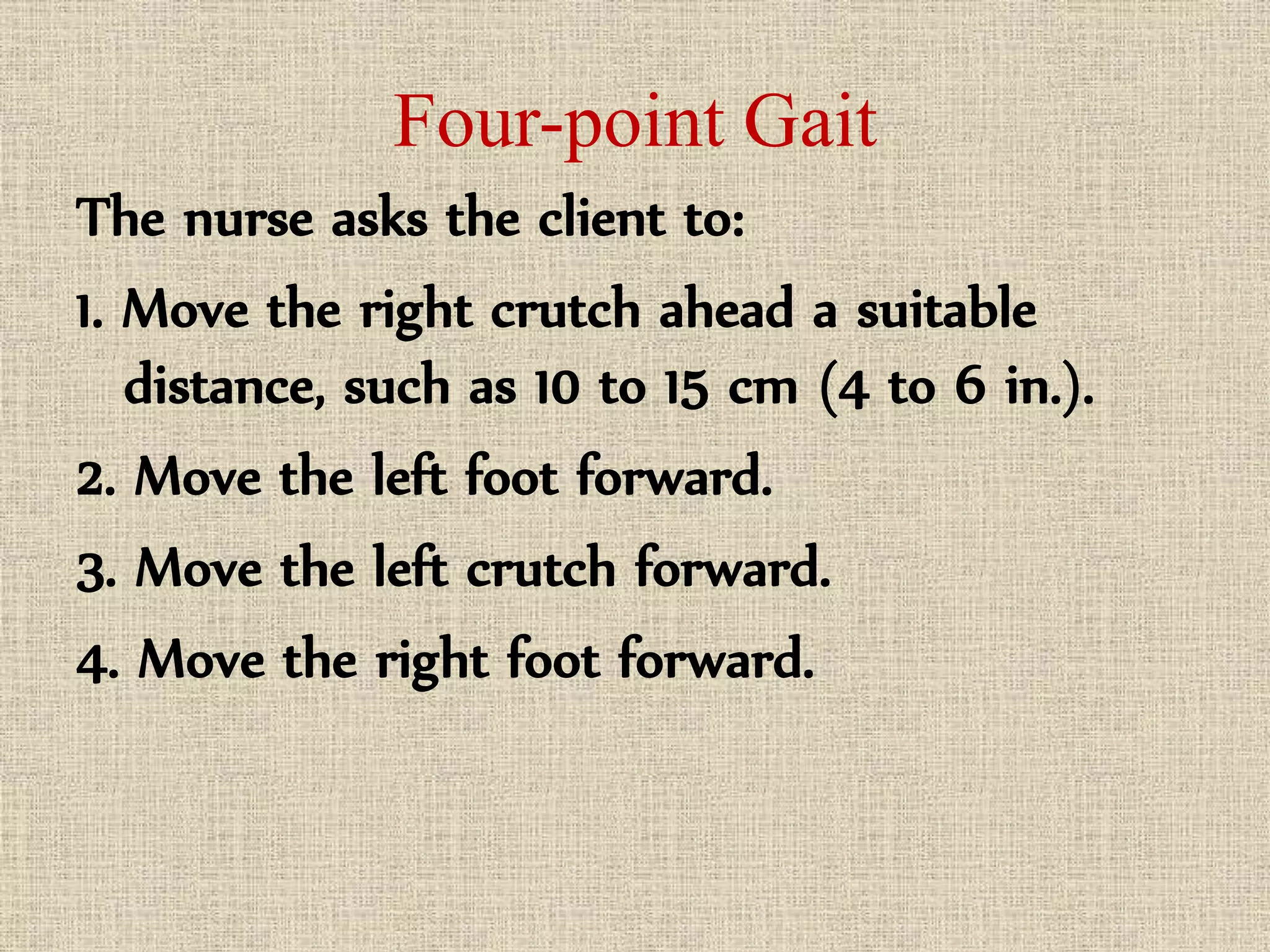
Four-point Gait
The nurse asks the client to:
1. Move the right crutch ahead a suitable
distance, such as 10 to 15 cm (4 to 6 in.).
2. Move the left foot forward.
3. Move the left crutch forward.
4. Move the right foot forward.
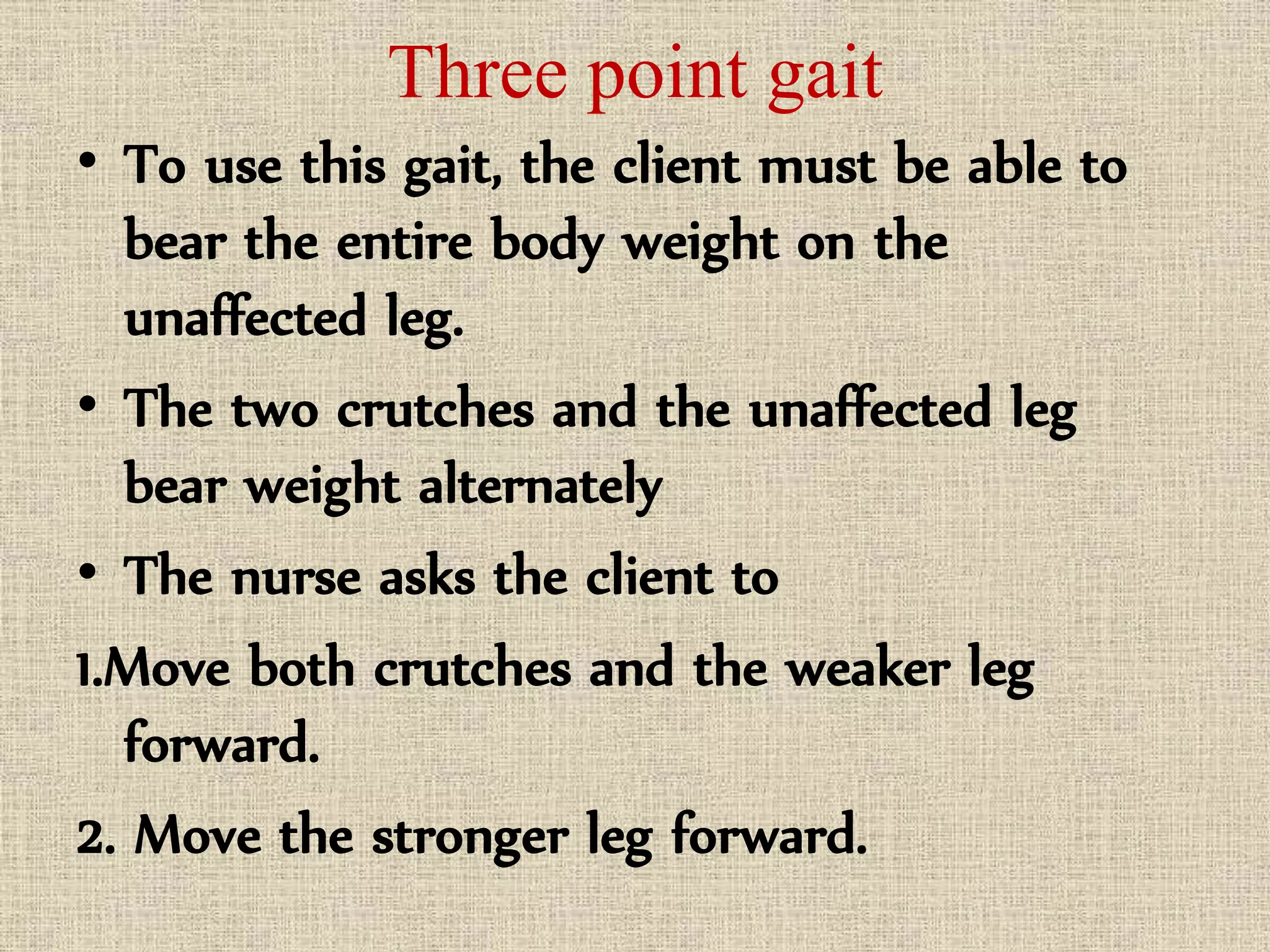
Three point gait
• To use this gait, the client must be able to
bear the entire body weight on the
unaffected leg.
• The two crutches and the unaffected leg
bear weight alternately
• The nurse asks the client to
1.Move both crutches and the weaker leg
forward.
2. Move the stronger leg forward.
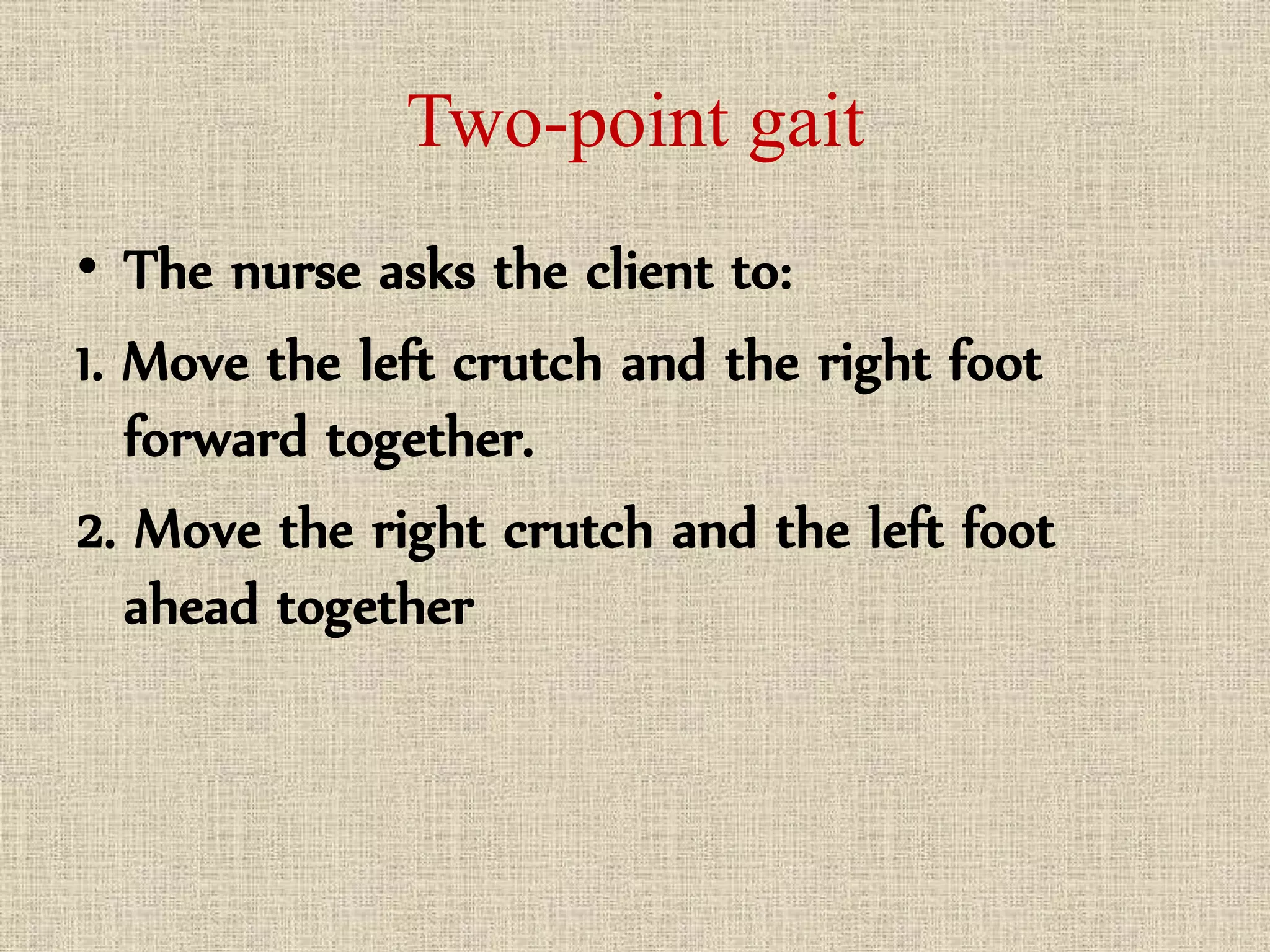
Two-point gait
• The nurse asks the client to:
1. Move the left crutch and the right foot
forward together.
2. Move the right crutch and the left foot
ahead together
Swing-to gait
• The swing gaits are used by clients with
paralysis of the legs and hips
1. Move both crutches ahead together.
2. Lift body weight by the arms and swing to
the crutches.
Swing-Through Gait
• The nurse asks the client to:
1. Move both crutches forward together
2. Lift body weight by the arms and swing
through and beyond the crutch
ambulatory devices- crutches, walker, cane

ambulatory devices- crutches, walker, cane

  • 1.
    Assistive Devices /Supportive Devices For Mobility By M. Shivanandha Reddy
  • 2.
    Assistive Devices • Assistivedevices are basically helpful products that improve a person’s ability to function independently. • They are used by people with disabilities and older adults who want to remain independent as long as possible
  • 3.
    Indications for Ambulatory AssistiveDevices • Structural deformity, amputation, injury, or disease resulting in decreased ability of Lower extremities. • Muscle weakness or paralysis of the trunk or Lower extremities • Inadequate balance
  • 4.
    Assistive devices • Commonlyused Assistive devices for mobility includes : Cane Walkers Crutches
  • 5.
    • HOW TOUSE: • CANES • WALKERS • CRUTCHES
  • 6.
    Cane • Cane isa hand held ambulation device made of wood or aluminum • Three types of canes are commonly used: 1. The standard straight-legged cane; 2. The tripod or crab cane, which has three feet 3. The quad cane, which has four feet and provides the most support
  • 7.
  • 8.
    Cane • Cane tipsshould have rubber caps to prevent slipping • The standard cane is 91 cm long; some aluminum canes can be adjusted from 56 to 97 cm
  • 9.
    Walking with aCane • Hold the cane with the hand on the stronger side of the body to provide maximum support and when walking. • Position the tip of a standard cane about 15 cm (6 in.) to the side and 15 cm (6 in.) in front of the near foot, so that the elbow is slightly flexed.
  • 10.
    Walking with aCane • Move the cane and weak leg forward at the same time, while the weight is borne by the stronger leg. • Move the stronger leg forward, while the weight is borne by the cane and the weak leg
  • 11.
    WALKERS • Walkers aremechanical devices for ambulatory clients who need more support than a cane provides. • The standard type is made of polished Aluminum. • It has four legs with rubber tips and plastic hand grips. • Many walkers have adjustable legs.
  • 12.
  • 13.
    Walking With Walkers •Move the walker ahead about 15 cm (6 in.) while your body weight is borne by both legs. • Then move the right foot up to the walker while your body weight is borne by the left leg and both arms. • Next, move the left foot up to the right foot while your body weight is borne by the right leg and both arms.
  • 14.
    CRUTCHES • Crutches maybe a temporary need for some clients and a permanent one for others. • The most frequently used kinds of crutches are the Underarm Crutch, Or Axillary Crutch with hand bars, and the Lofstrand Crutch, which extends only to the forearm. • In crutch walking, the client’s weight is borne by the muscles of the shoulder girdle and the upper extremities.
  • 15.
  • 16.
    Measuring Clients forCrutches • The nurse makes sure the shoulder rest of the crutch is at least three finger widths, that is, 2.5 to 5 cm (1 to 2 in.), below the axilla. • To determine the correct placement of the hand bar: 1. The client stands upright and supports the body weight by the hand grips of the crutches. 2. The nurse measures the angle of elbow flexion. It should be about 30 degrees.
  • 17.
    Crutch Gaits • Thecrutch gait is the gait a person assumes on crutches by alternating body weight on one or both legs and the crutches. • Five standard crutch gaits are the: 1. Four-point Gait 2. Three Point Gait 3. Two-point Gait 4. Swing-to Gait 5. Swing-through Gait
  • 18.
    Four-point Gait • Thisis the most elementary and safest gait, providing at least three points of support at all times, but it requires coordination. • Clients can use it when walking in crowds because it does not require much space.
  • 19.
    Four-point Gait The nurseasks the client to: 1. Move the right crutch ahead a suitable distance, such as 10 to 15 cm (4 to 6 in.). 2. Move the left foot forward. 3. Move the left crutch forward. 4. Move the right foot forward.
  • 20.
    Three point gait •To use this gait, the client must be able to bear the entire body weight on the unaffected leg. • The two crutches and the unaffected leg bear weight alternately • The nurse asks the client to 1.Move both crutches and the weaker leg forward. 2. Move the stronger leg forward.
  • 21.
    Two-point gait • Thenurse asks the client to: 1. Move the left crutch and the right foot forward together. 2. Move the right crutch and the left foot ahead together
  • 22.
    Swing-to gait • Theswing gaits are used by clients with paralysis of the legs and hips 1. Move both crutches ahead together. 2. Lift body weight by the arms and swing to the crutches.
  • 23.
    Swing-Through Gait • Thenurse asks the client to: 1. Move both crutches forward together 2. Lift body weight by the arms and swing through and beyond the crutch