What are alternative teaching tools? 
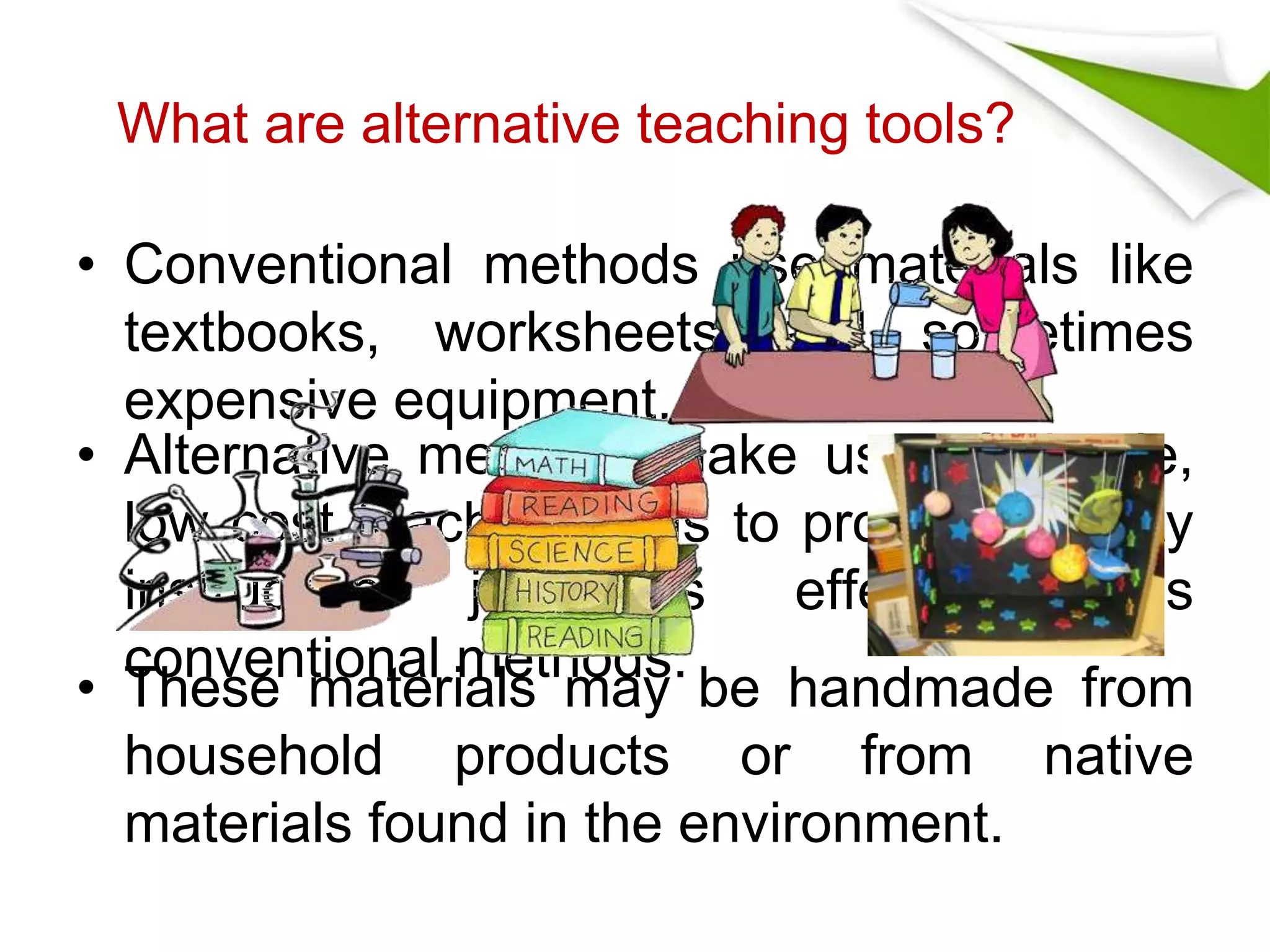
• Conventional methods use materials like 
textbooks, worksheets and sometimes 
expensive equipment. 
• Alternative methods make use of simple, 
low cost teaching tools to promote quality 
instruction just as effectively as 
conventional methods. 
• These materials may be handmade from 
household products or from native 
materials found in the environment.
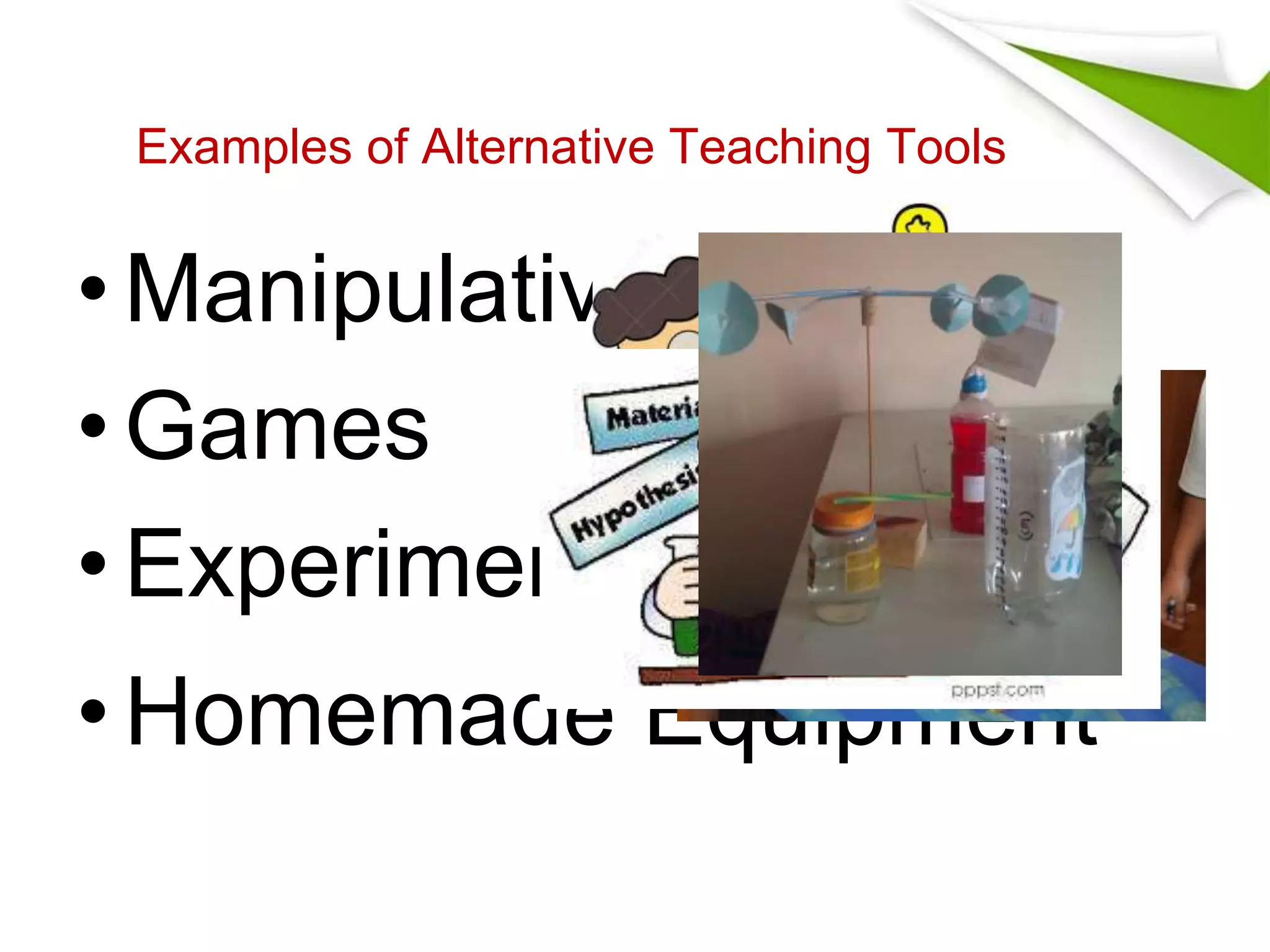
Examples of Alternative Teaching Tools 
• Manipulative 
•Games 
• Experiments 
•Homemade Equipment
What resources can be used? 
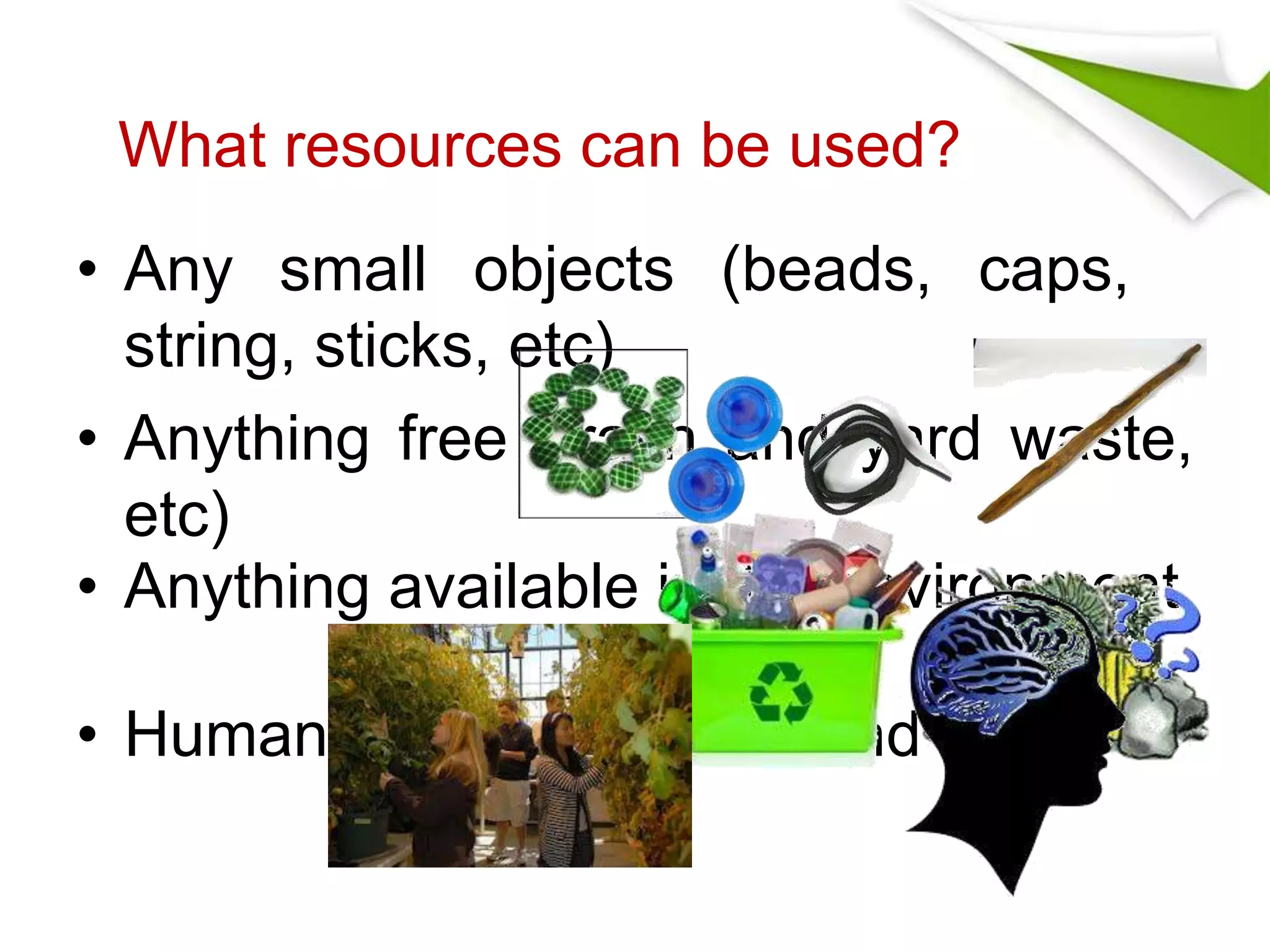
• Any small objects (beads, caps, 
string, sticks, etc) 
• Anything free (trash and yard waste, 
etc) 
• Anything available in the environment 
• Human resources, skills and brain
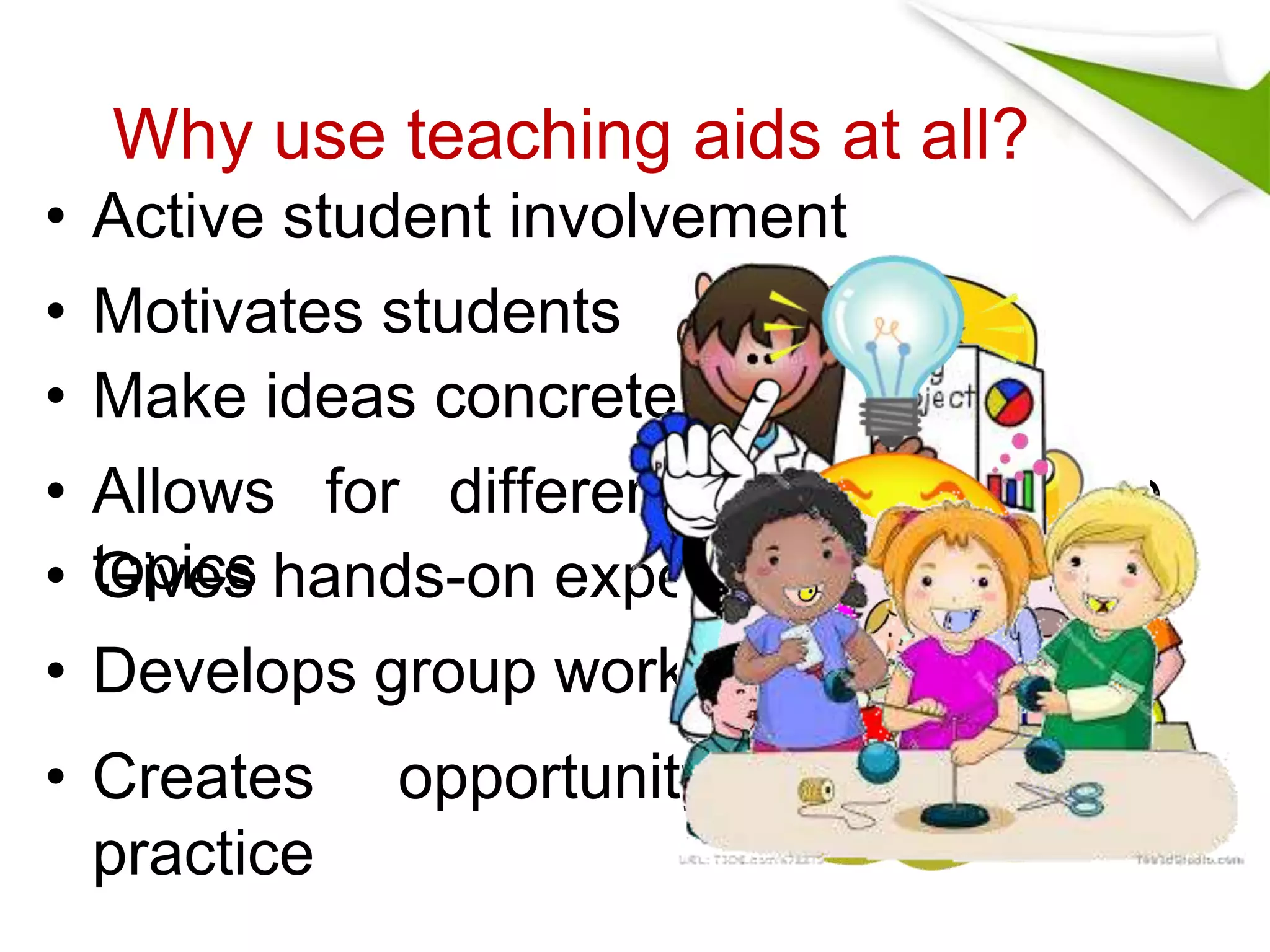
Why use teaching aids at all? 
• Active student involvement 
• Motivates students 
• Make ideas concrete 
• Allows for different approaches to 
• tGoipviecss hands-on experience 
• Develops group work skills) 
• Creates opportunity for English 
practice
How are alternative tools beneficial? 
• They are a good substitute when 
conventional methods are not 
available. 
• They are simple enough for even 
children to create and use. 
• They can be made with locally 
available materials found in your 
home, backyard or at the market. 
• These materials are often 
inexpensive and easy to obtain.
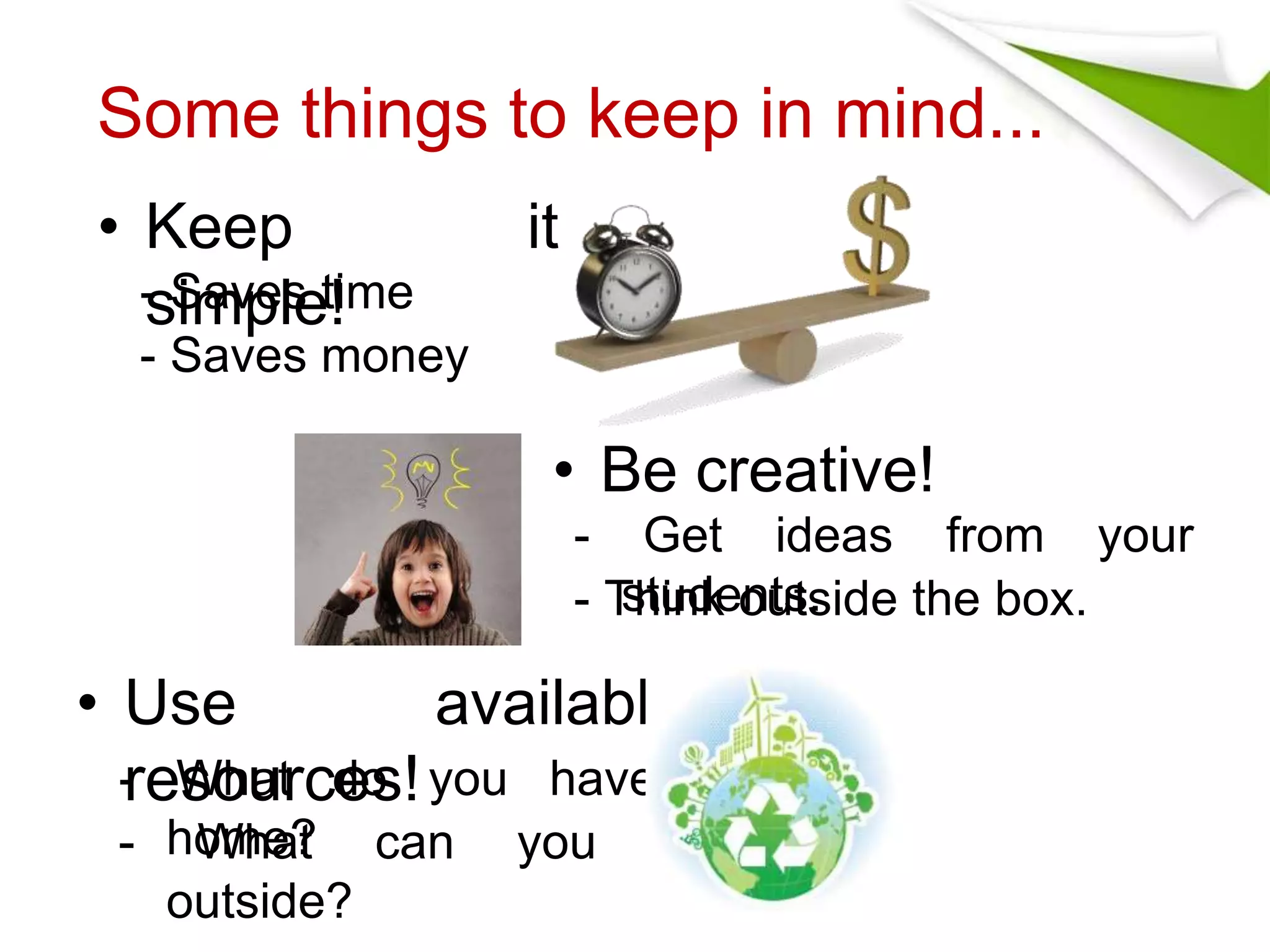
Some things to keep in mind... 
• Keep it 
simple! 
• Be creative! 
- Saves time 
- Saves money 
- Get ideas from your 
- Tshtuindkeonutsts. ide the box. 
• Use available 
resources! 
- What do you have at 
- hoWmhea?t can you find 
outside?
Alternative Teaching Tools

Alternative Teaching Tools

  • 2.
    What are alternativeteaching tools? • Conventional methods use materials like textbooks, worksheets and sometimes expensive equipment. • Alternative methods make use of simple, low cost teaching tools to promote quality instruction just as effectively as conventional methods. • These materials may be handmade from household products or from native materials found in the environment.
  • 3.
    Examples of AlternativeTeaching Tools • Manipulative •Games • Experiments •Homemade Equipment
  • 4.
    What resources canbe used? • Any small objects (beads, caps, string, sticks, etc) • Anything free (trash and yard waste, etc) • Anything available in the environment • Human resources, skills and brain
  • 5.
    Why use teachingaids at all? • Active student involvement • Motivates students • Make ideas concrete • Allows for different approaches to • tGoipviecss hands-on experience • Develops group work skills) • Creates opportunity for English practice
  • 6.
    How are alternativetools beneficial? • They are a good substitute when conventional methods are not available. • They are simple enough for even children to create and use. • They can be made with locally available materials found in your home, backyard or at the market. • These materials are often inexpensive and easy to obtain.
  • 7.
    Some things tokeep in mind... • Keep it simple! • Be creative! - Saves time - Saves money - Get ideas from your - Tshtuindkeonutsts. ide the box. • Use available resources! - What do you have at - hoWmhea?t can you find outside?