WELCOME
ENZYME-CATALYZED INTERCONVERSION
OF
I. ETHANOL and ACETALDEHYDE
II. ESTER and CARBOXYLIC ACID
AL MAMUN
13024508
M.Sc
Session:2016-2017
ENZYME-CATALYZED INTERCONVERSION
OF
Ethanol and Acetaldehyde
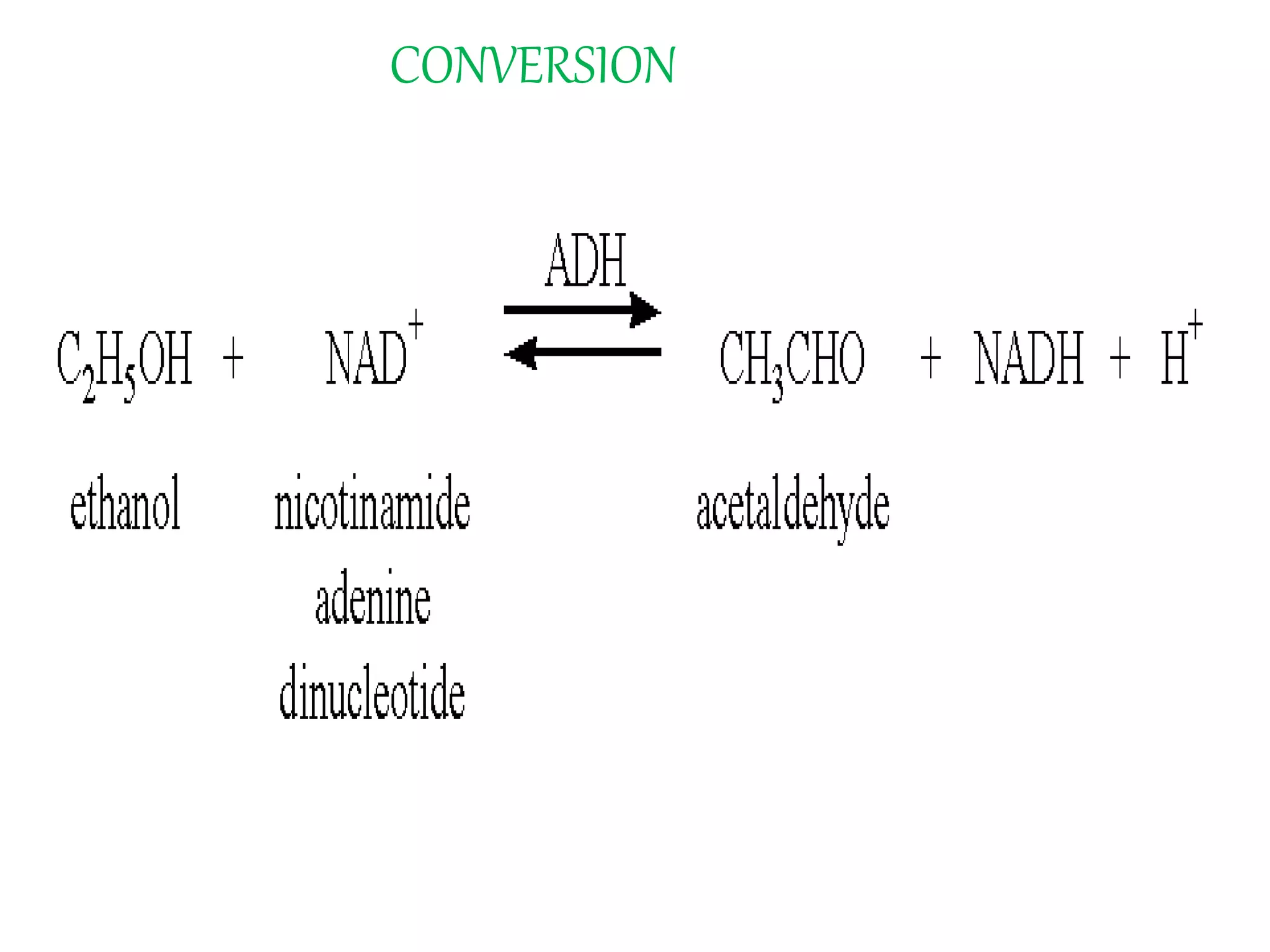
CONVERSION
Alcohol dehydrogenase(ADH)
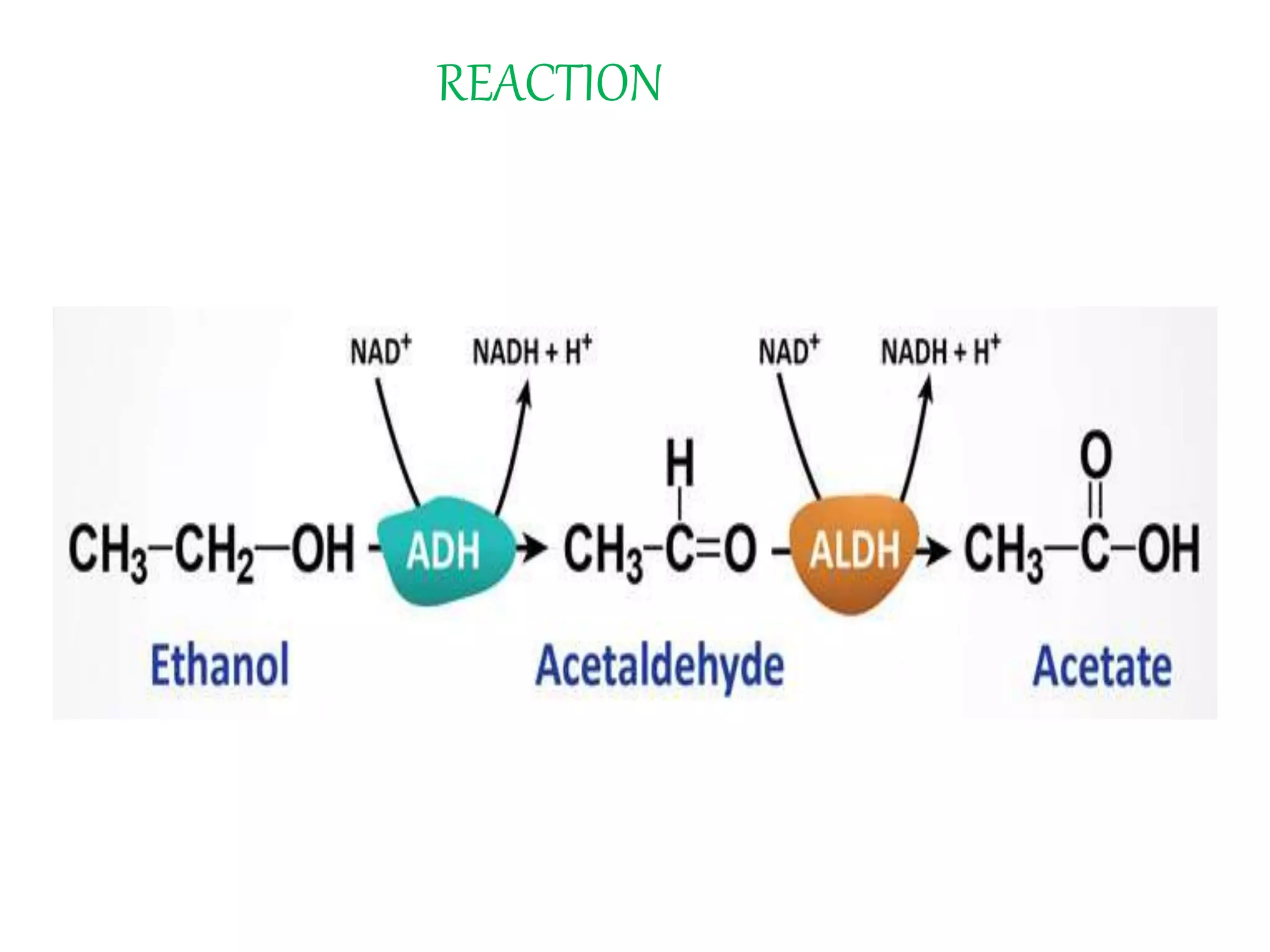
Alcohol dehydrogenases (ADH) are a group of
dehydrogenase enzymes that occur in many organisms
and facilitate the interconversion between alcohols and
aldehydes or ketones with the reduction of nicotinamide
adenine dinucleotide (NAD+ to NADH).
In humans and many other animals, they serve to break
down alcohols that otherwise are toxic
In yeast, plants, and many bacteria, some alcohol
dehydrogenases catalyze the opposite reaction as part
of fermentation to ensure a constant supply of NAD+
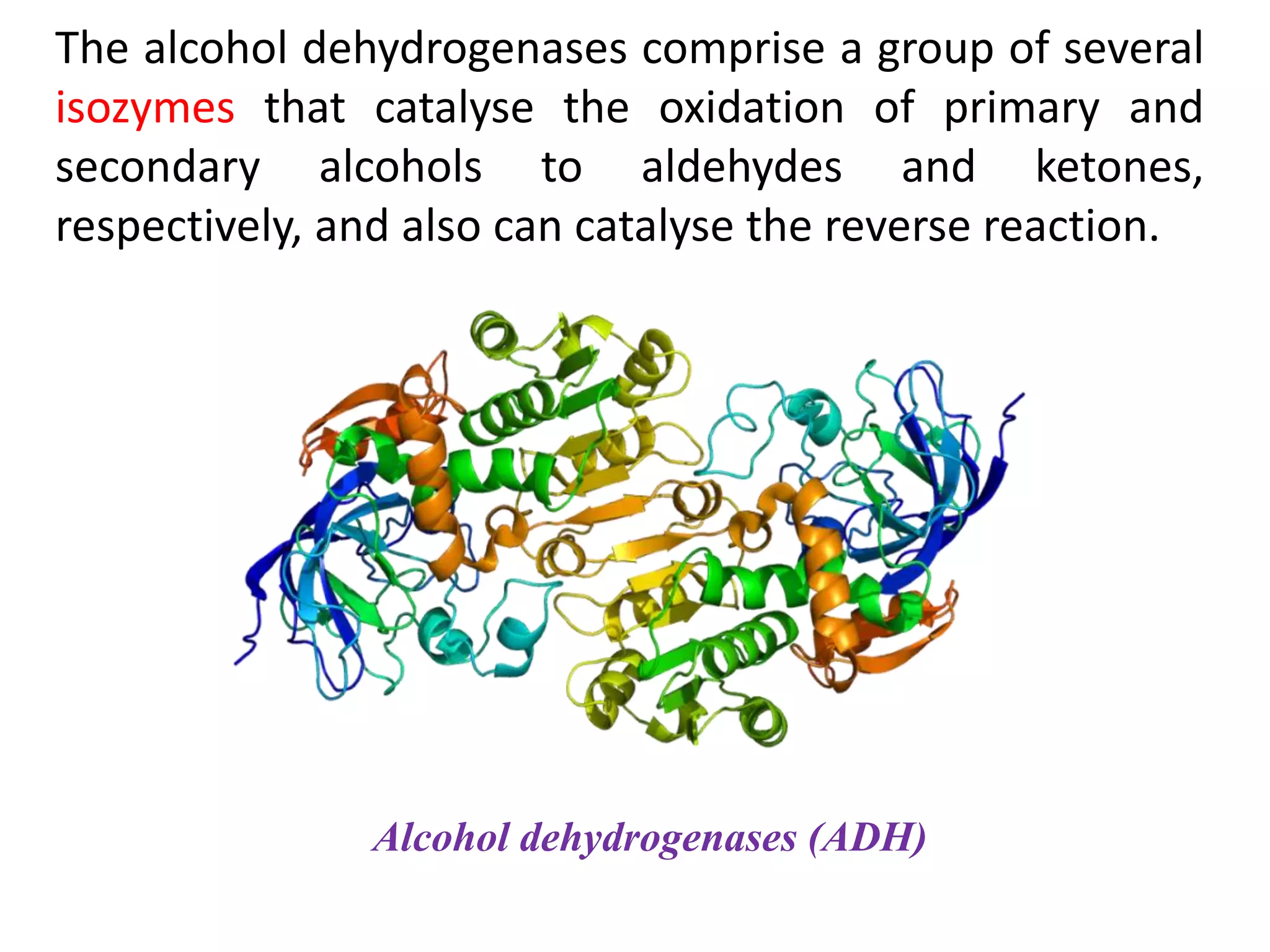
The alcohol dehydrogenases comprise a group of several
isozymes that catalyse the oxidation of primary and
secondary alcohols to aldehydes and ketones,
respectively, and also can catalyse the reverse reaction.
Alcohol dehydrogenases (ADH)
PROPERTIES OF ADH
ADH is a dimeric protein.
ADH is activated by glutathione and EDTA and
inhibited by heavy metals.
Optimum is pH 8.6 though pH closer to 7 considered
optimum for acetaldehyde reduction. ADH becomes
increasingly unstable with higher pH values.
The specific configuration of the active site makes it
stereospecific and ADH will only remove the pro-R
hydrogen from the alcohol group.
All animal ADH enzymes are active as dimers and
therefore two sub-units come together to form a
functioning enzyme
Active site of ADH
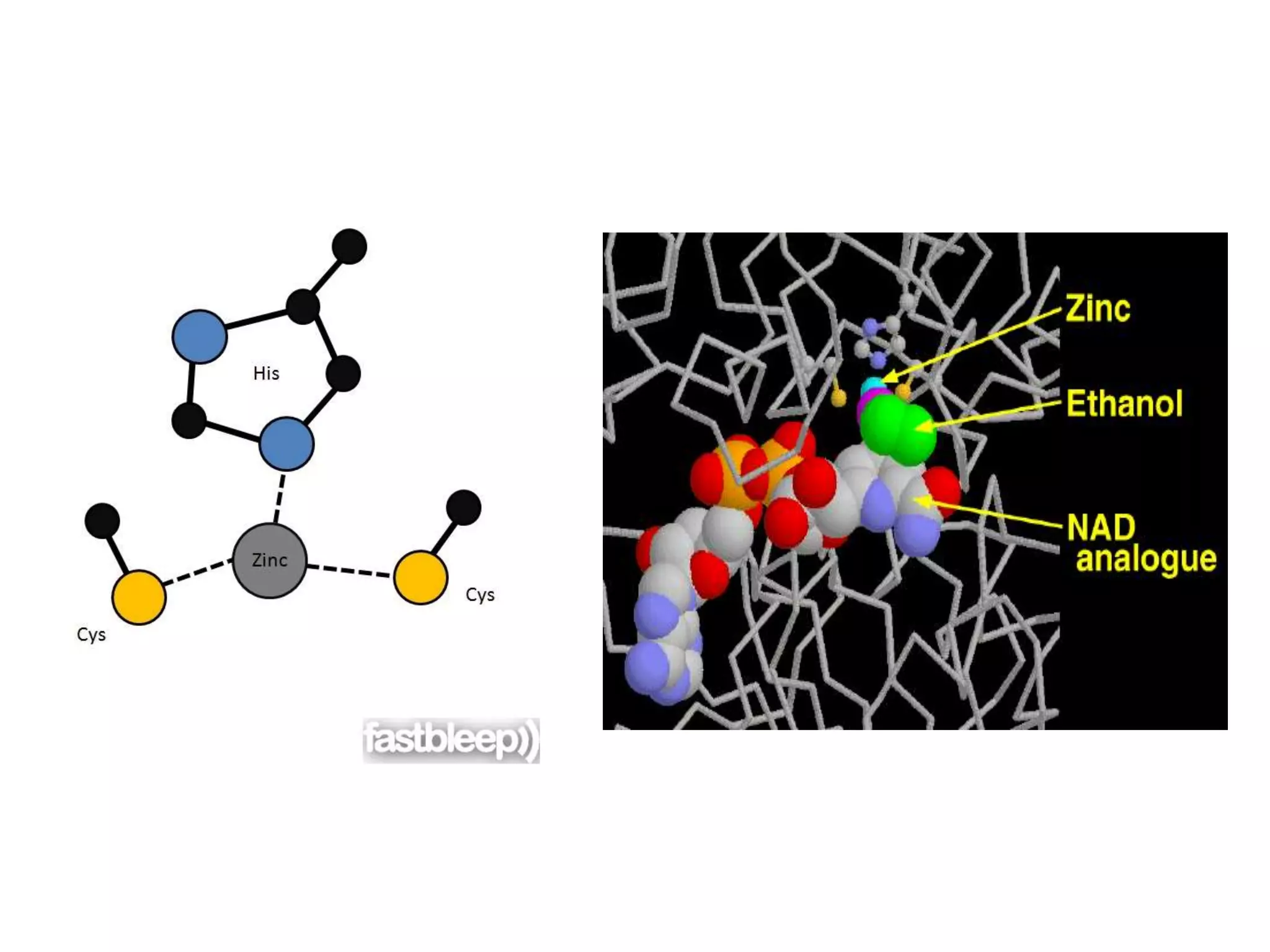
All forms of ADH have a common zinc domain per sub-
unit formed from specific amino acid residues
The zinc ion is co-ordinated to the sulphur atoms of two
cysteine residues and the nitrogen atom of a histidine
residue.
It serves to electrostatically stabilise the oxygen
molecule of the alcohol group of ethanol.
Nicotinamide adenine dinucleotide
(NAD+)
Nicotinamide adenine dinucleotide (NAD+) is a coenzyme
found in all living cells.
Nicotinamide adenine dinucleotide exists in two forms: an
oxidized and reduced form abbreviated as NAD+ and
NADH respectively.
In metabolism, nicotinamide adenine dinucleotide is
involved in redox reactions, carrying electrons from one
reaction to another.
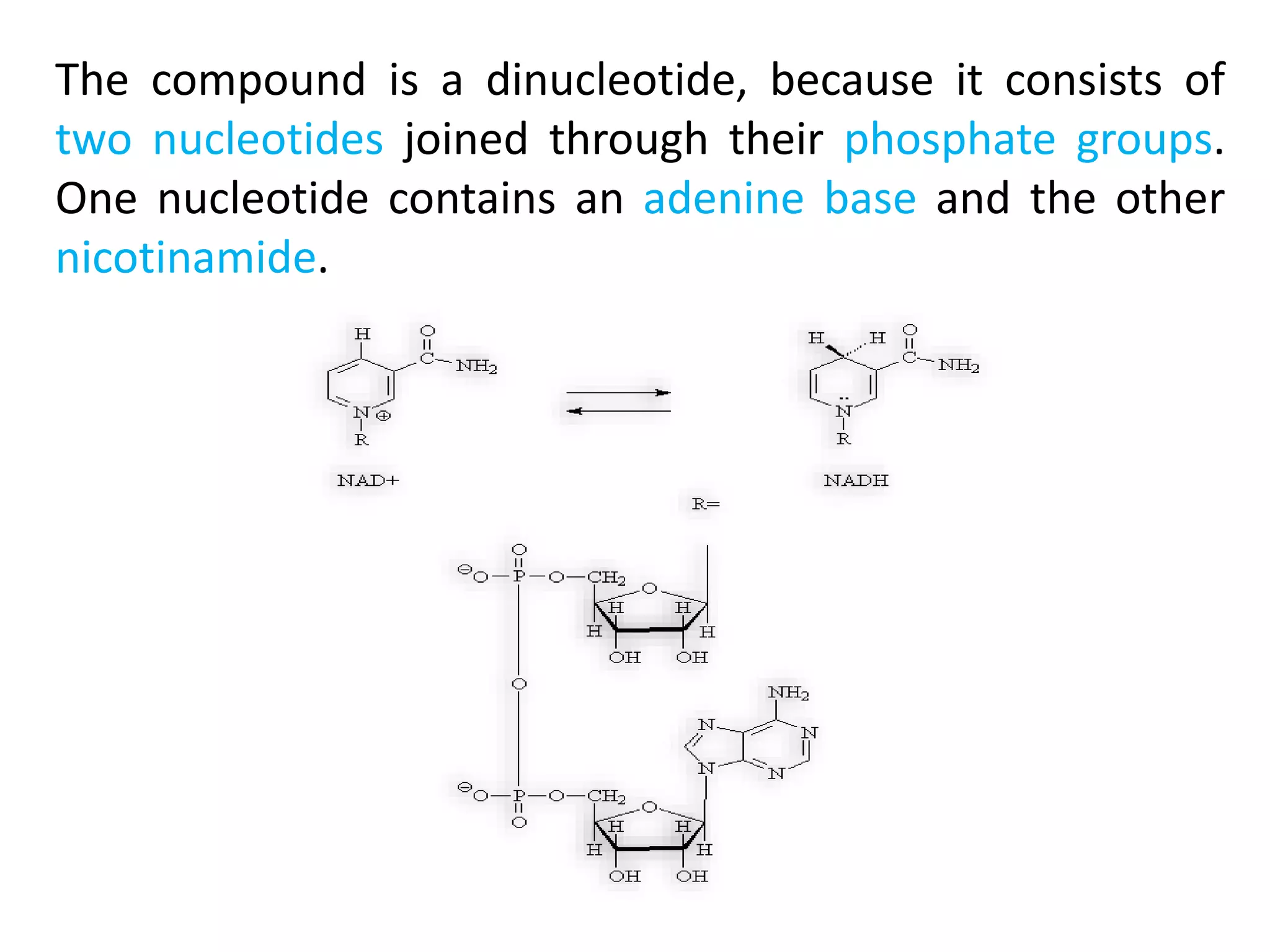
The compound is a dinucleotide, because it consists of
two nucleotides joined through their phosphate groups.
One nucleotide contains an adenine base and the other
nicotinamide.
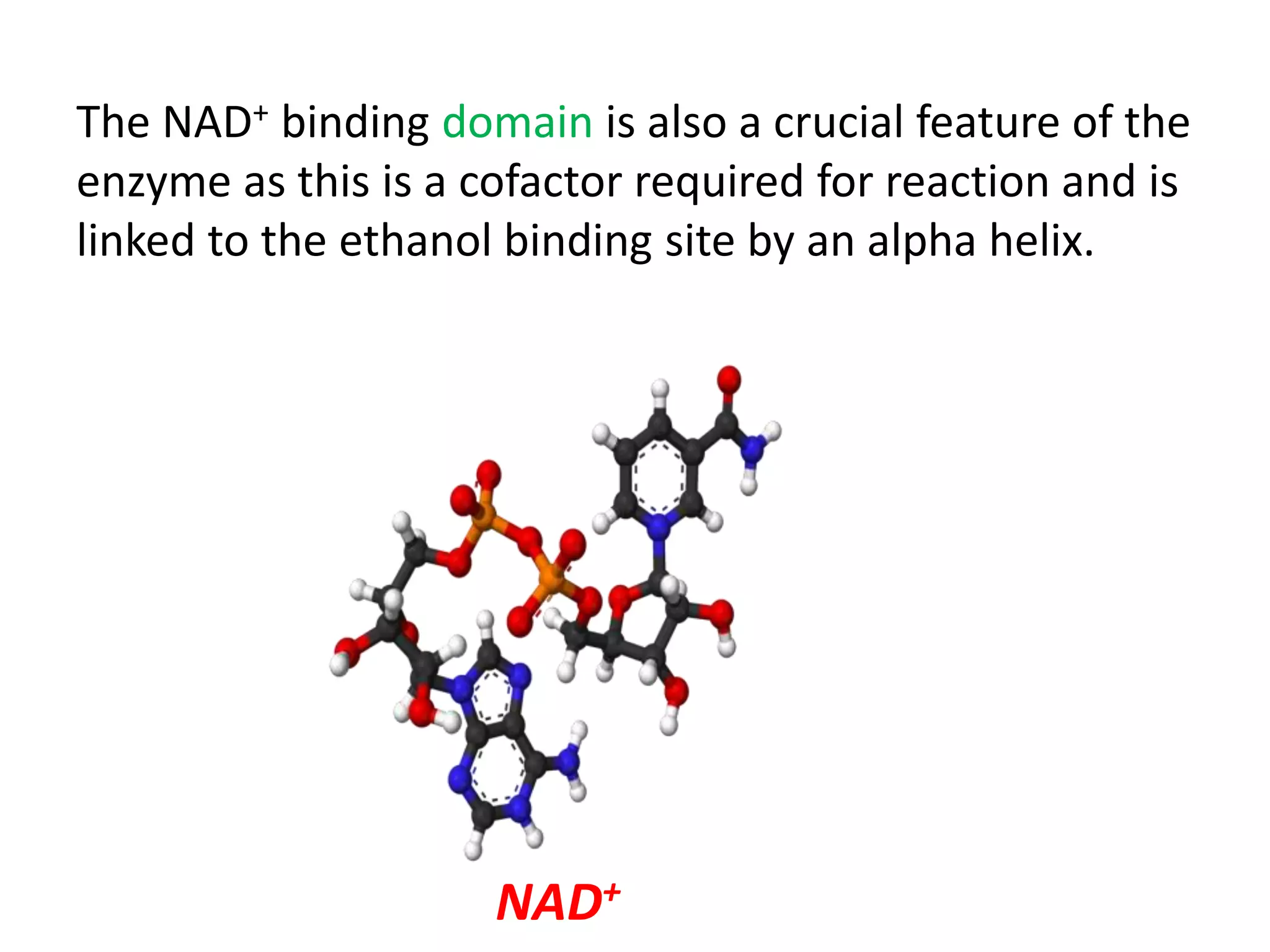
The NAD+ binding domain is also a crucial feature of the
enzyme as this is a cofactor required for reaction and is
linked to the ethanol binding site by an alpha helix.
NAD+
REACTION
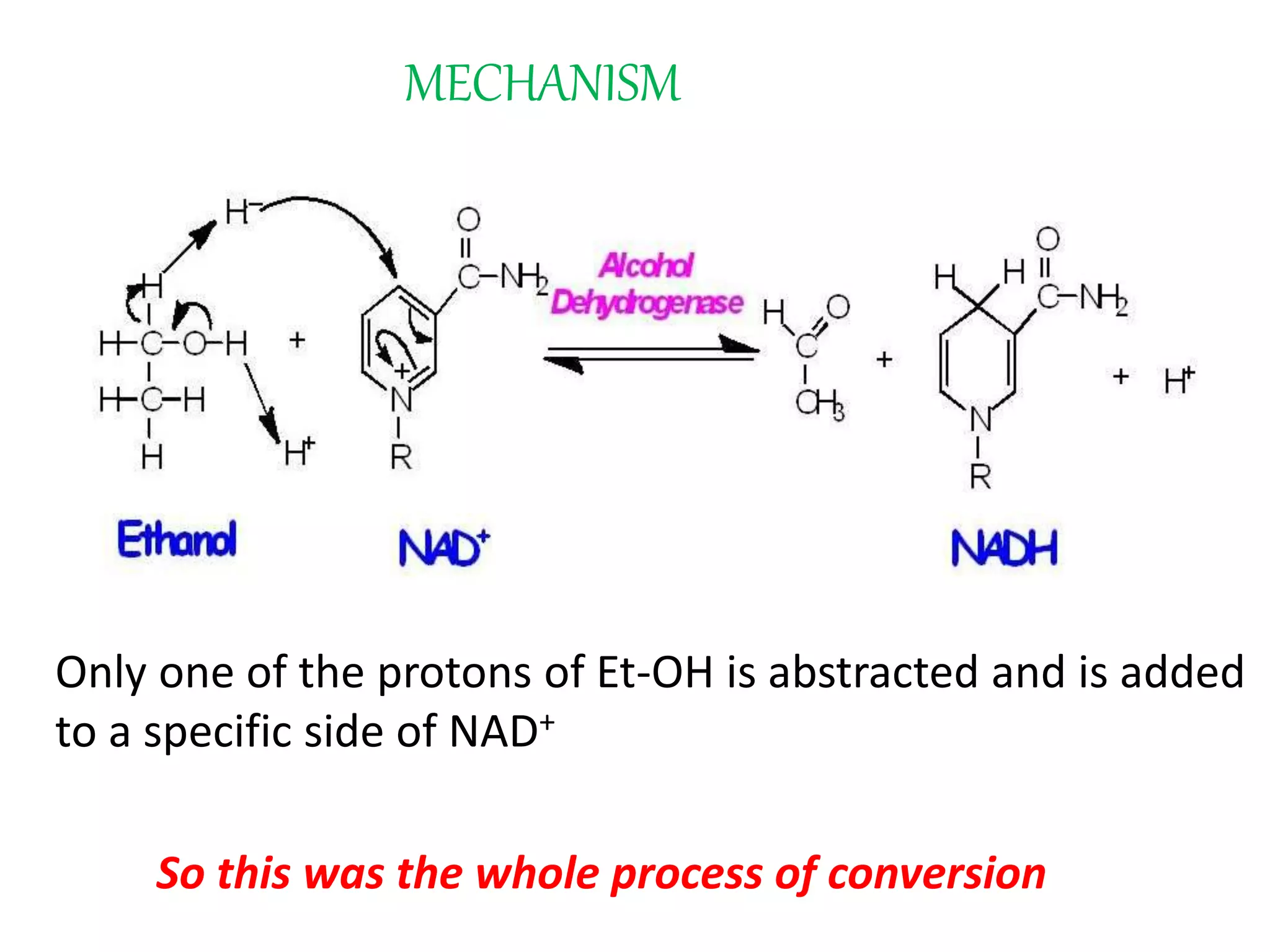
MECHANISM
Only one of the protons of Et-OH is abstracted and is added
to a specific side of NAD+
So this was the whole process of conversion
ENZYME-CATALYZED INTERCONVERSION
OF
ester and carboxylic acid
CONVERSION
H2O
Acetylcholinesterase(AChE)
Acetylcholinesterase also known as AChE or
acetylhydrolase, is the primary cholinesterase in the body.
This is an enzyme present in the synapses between
neurons, catalyzes the hydrolysis of acetylcholine, a
neurotransmitter that triggers muscle contraction.
It is an enzyme that catalyzes the breakdown of
acetylcholine and of some other choline esters.
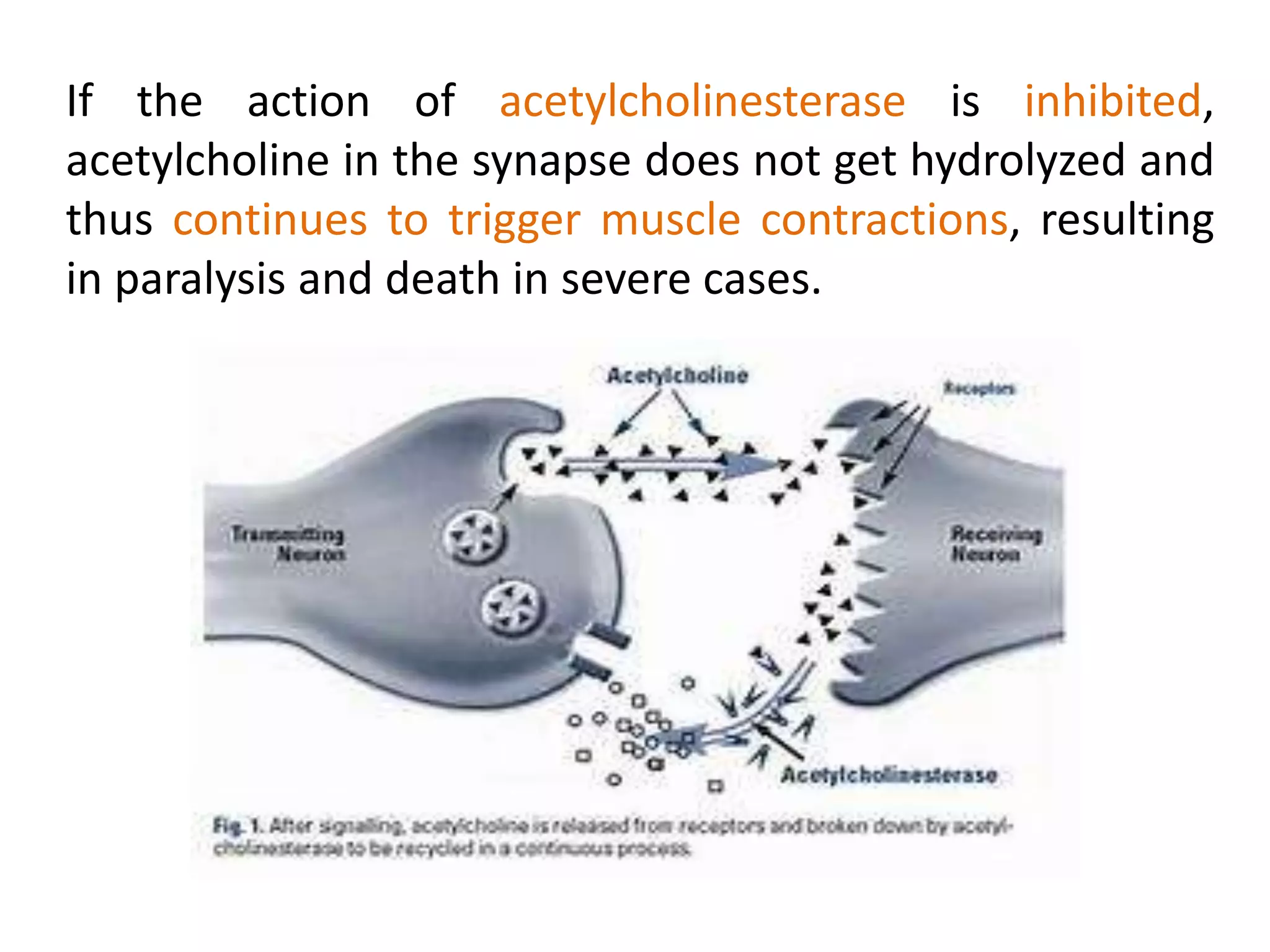
If the action of acetylcholinesterase is inhibited,
acetylcholine in the synapse does not get hydrolyzed and
thus continues to trigger muscle contractions, resulting
in paralysis and death in severe cases.
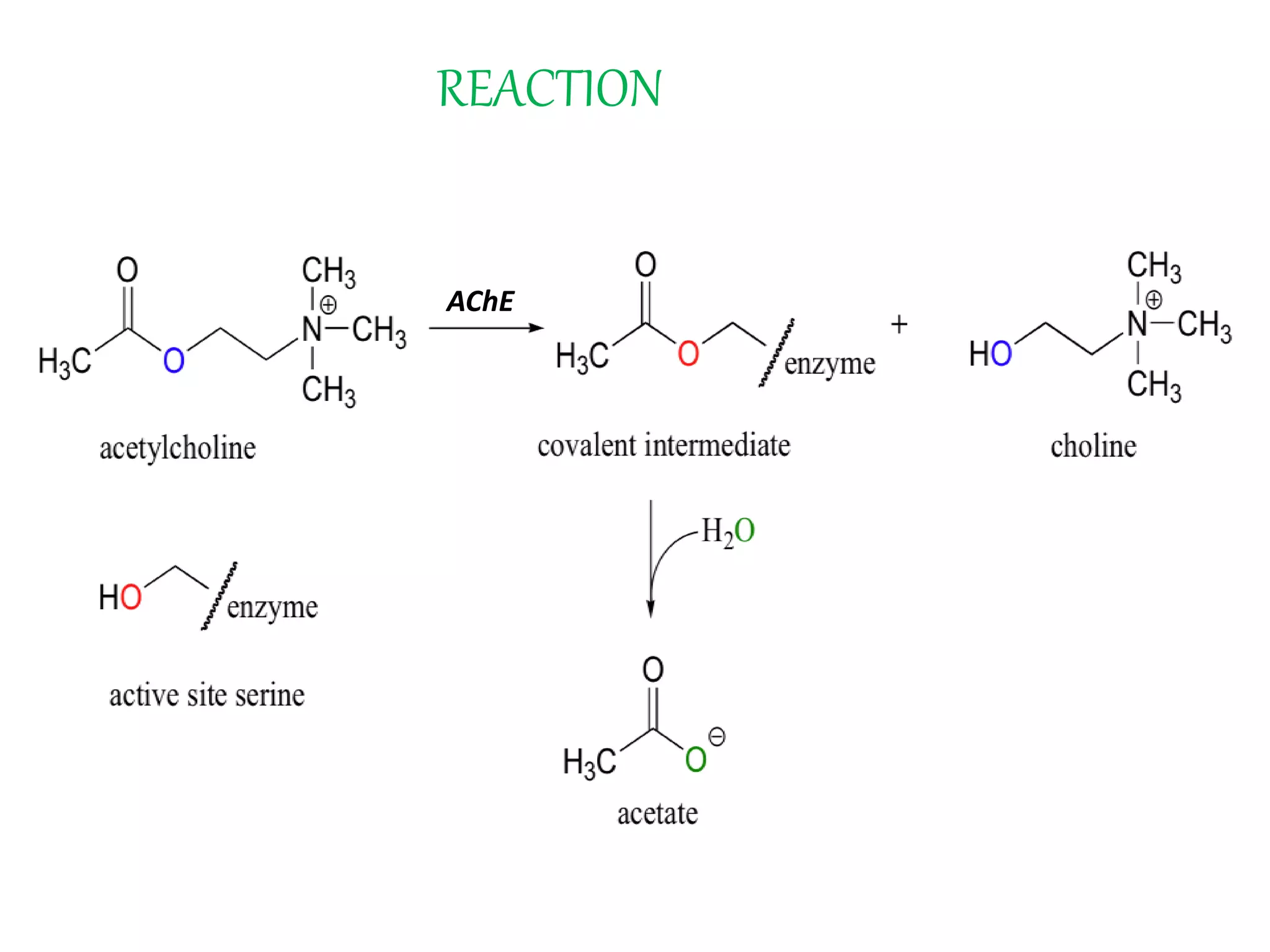
REACTION
AChE
MECHANISM
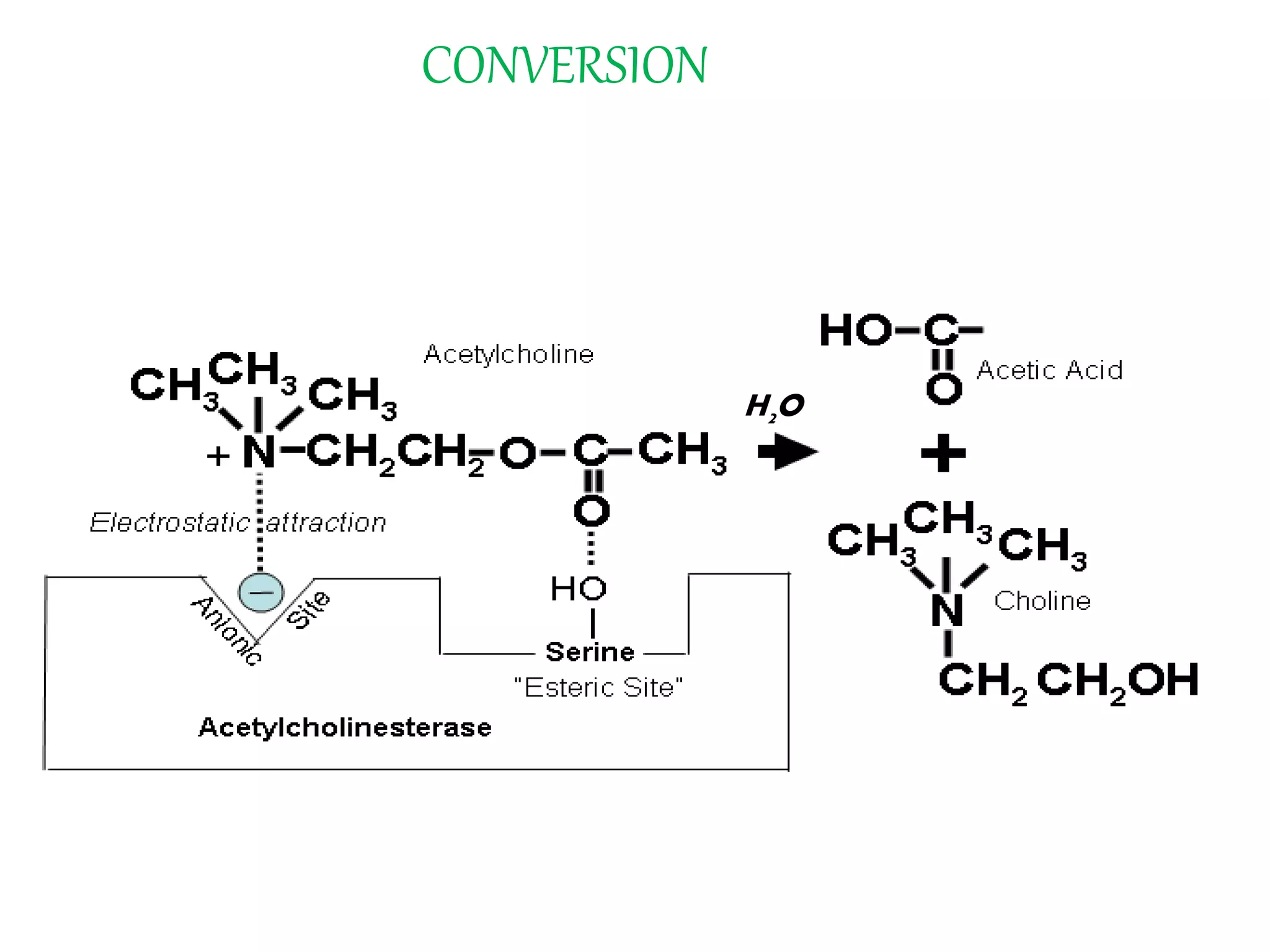
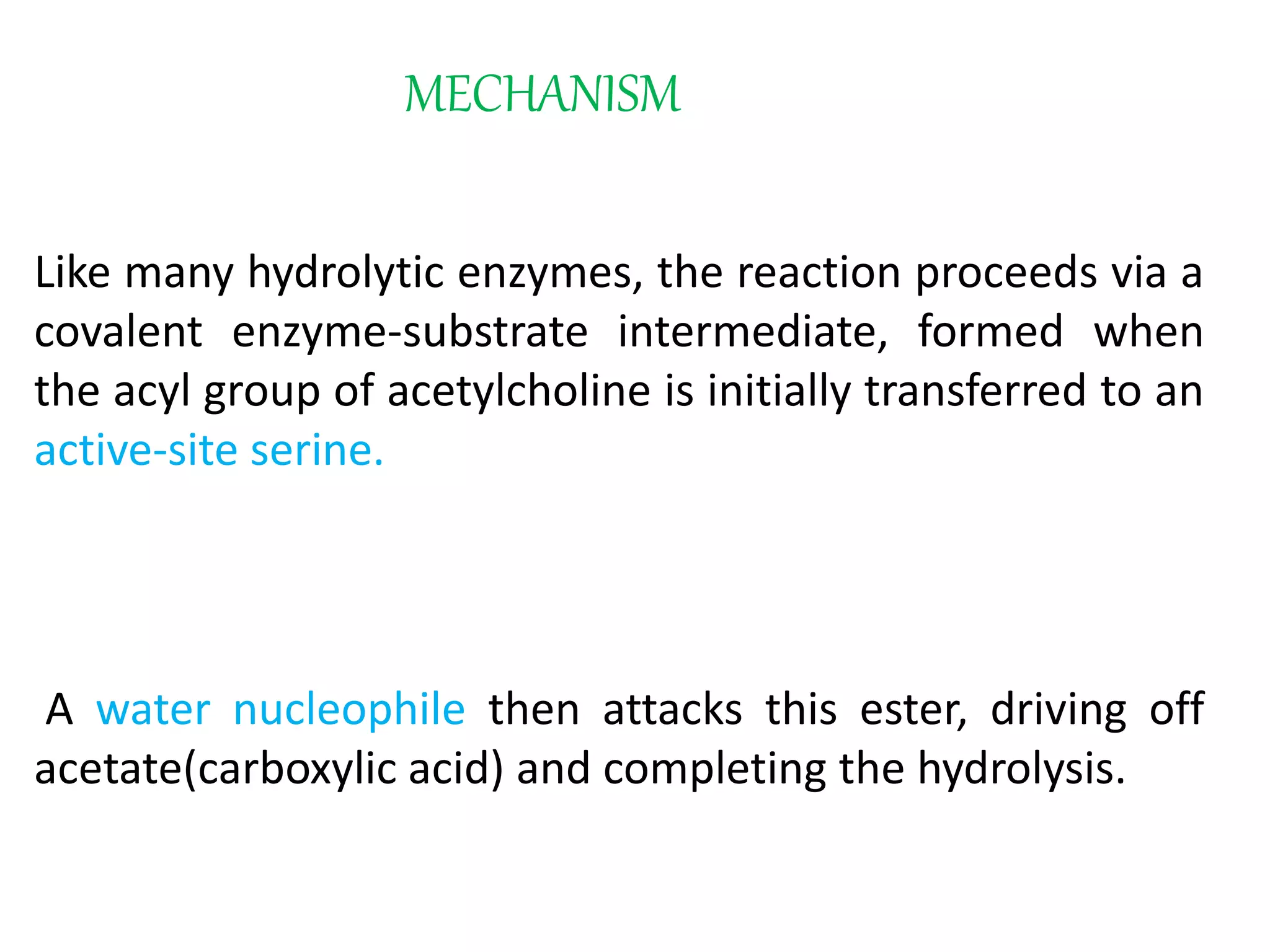
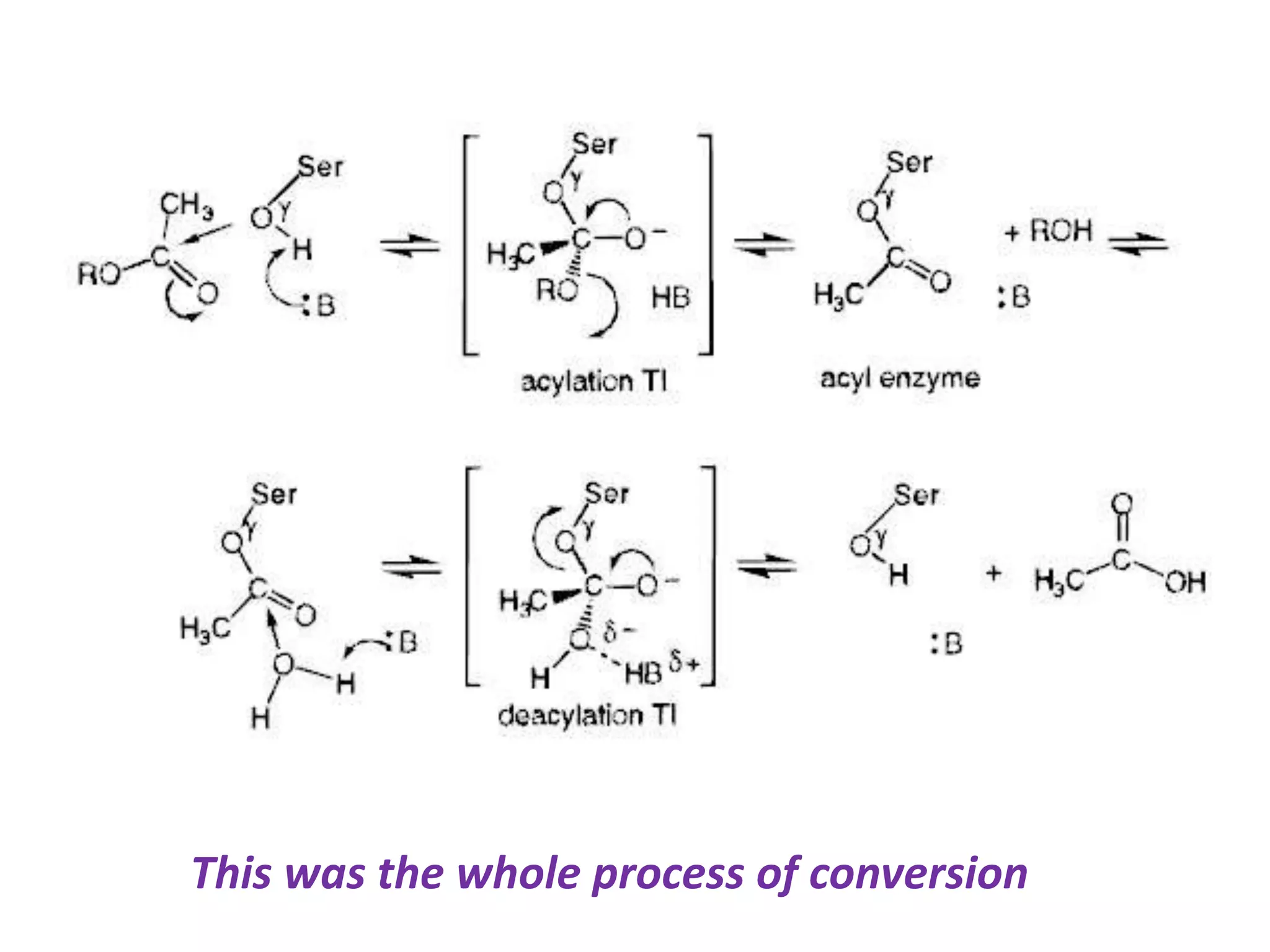
Like many hydrolytic enzymes, the reaction proceeds via a
covalent enzyme-substrate intermediate, formed when
the acyl group of acetylcholine is initially transferred to an
active-site serine.
A water nucleophile then attacks this ester, driving off
acetate(carboxylic acid) and completing the hydrolysis.
This was the whole process of conversion
THANKS ALL OF
YOU

Enzyme catalysed interconversion

  • 1.
    WELCOME ENZYME-CATALYZED INTERCONVERSION OF I. ETHANOLand ACETALDEHYDE II. ESTER and CARBOXYLIC ACID AL MAMUN 13024508 M.Sc Session:2016-2017
  • 2.
  • 3.
  • 4.
    Alcohol dehydrogenase(ADH) Alcohol dehydrogenases(ADH) are a group of dehydrogenase enzymes that occur in many organisms and facilitate the interconversion between alcohols and aldehydes or ketones with the reduction of nicotinamide adenine dinucleotide (NAD+ to NADH). In humans and many other animals, they serve to break down alcohols that otherwise are toxic In yeast, plants, and many bacteria, some alcohol dehydrogenases catalyze the opposite reaction as part of fermentation to ensure a constant supply of NAD+
  • 5.
    The alcohol dehydrogenasescomprise a group of several isozymes that catalyse the oxidation of primary and secondary alcohols to aldehydes and ketones, respectively, and also can catalyse the reverse reaction. Alcohol dehydrogenases (ADH)
  • 6.
    PROPERTIES OF ADH ADHis a dimeric protein. ADH is activated by glutathione and EDTA and inhibited by heavy metals. Optimum is pH 8.6 though pH closer to 7 considered optimum for acetaldehyde reduction. ADH becomes increasingly unstable with higher pH values. The specific configuration of the active site makes it stereospecific and ADH will only remove the pro-R hydrogen from the alcohol group. All animal ADH enzymes are active as dimers and therefore two sub-units come together to form a functioning enzyme
  • 7.
    Active site ofADH All forms of ADH have a common zinc domain per sub- unit formed from specific amino acid residues The zinc ion is co-ordinated to the sulphur atoms of two cysteine residues and the nitrogen atom of a histidine residue. It serves to electrostatically stabilise the oxygen molecule of the alcohol group of ethanol.
  • 9.
    Nicotinamide adenine dinucleotide (NAD+) Nicotinamideadenine dinucleotide (NAD+) is a coenzyme found in all living cells. Nicotinamide adenine dinucleotide exists in two forms: an oxidized and reduced form abbreviated as NAD+ and NADH respectively. In metabolism, nicotinamide adenine dinucleotide is involved in redox reactions, carrying electrons from one reaction to another.
  • 10.
    The compound isa dinucleotide, because it consists of two nucleotides joined through their phosphate groups. One nucleotide contains an adenine base and the other nicotinamide.
  • 11.
    The NAD+ bindingdomain is also a crucial feature of the enzyme as this is a cofactor required for reaction and is linked to the ethanol binding site by an alpha helix. NAD+
  • 12.
  • 13.
    MECHANISM Only one ofthe protons of Et-OH is abstracted and is added to a specific side of NAD+ So this was the whole process of conversion
  • 14.
  • 15.
  • 16.
    Acetylcholinesterase(AChE) Acetylcholinesterase also knownas AChE or acetylhydrolase, is the primary cholinesterase in the body. This is an enzyme present in the synapses between neurons, catalyzes the hydrolysis of acetylcholine, a neurotransmitter that triggers muscle contraction. It is an enzyme that catalyzes the breakdown of acetylcholine and of some other choline esters.
  • 17.
    If the actionof acetylcholinesterase is inhibited, acetylcholine in the synapse does not get hydrolyzed and thus continues to trigger muscle contractions, resulting in paralysis and death in severe cases.
  • 18.
  • 19.
    MECHANISM Like many hydrolyticenzymes, the reaction proceeds via a covalent enzyme-substrate intermediate, formed when the acyl group of acetylcholine is initially transferred to an active-site serine. A water nucleophile then attacks this ester, driving off acetate(carboxylic acid) and completing the hydrolysis.
  • 20.
    This was thewhole process of conversion
  • 21.