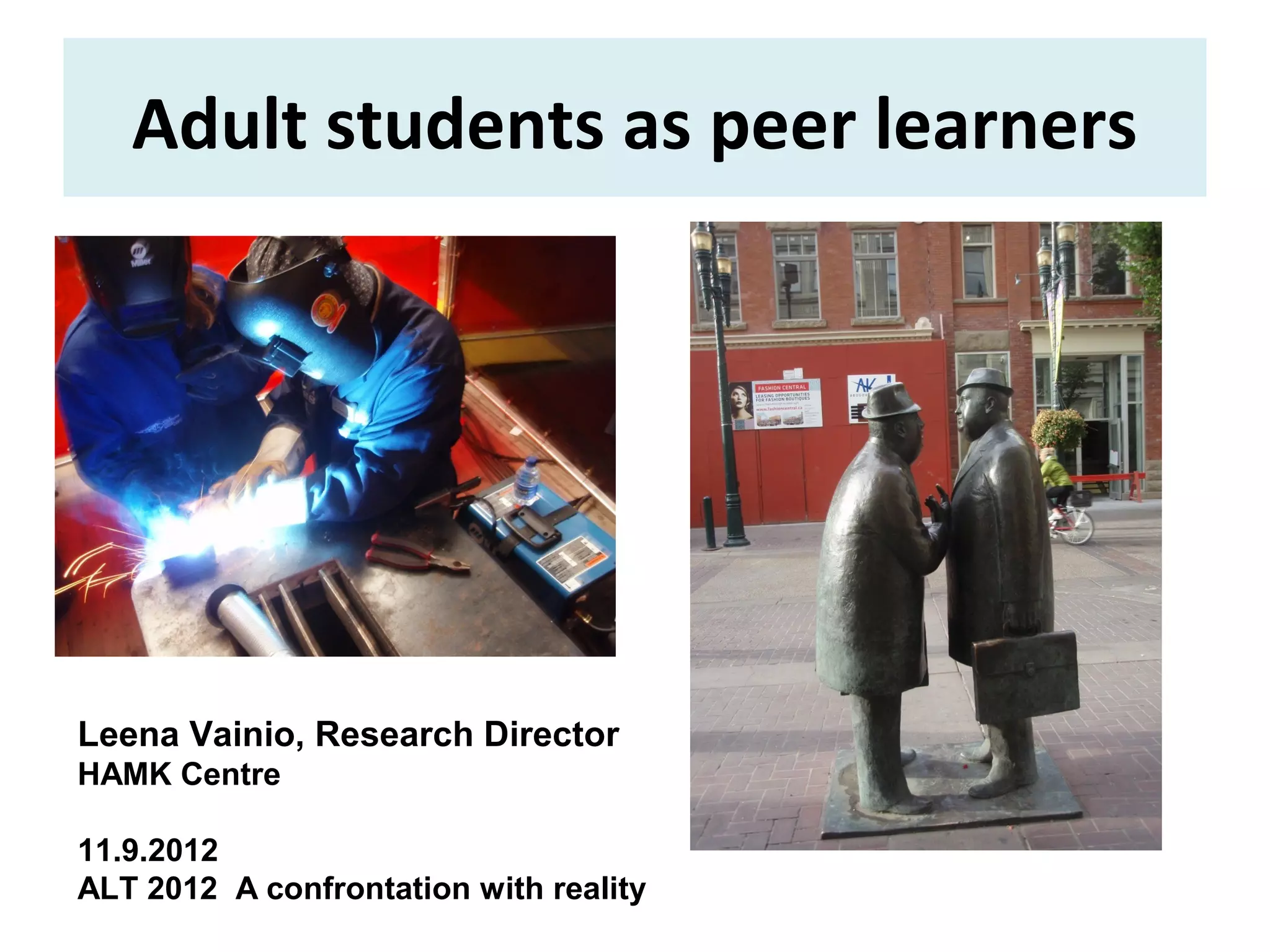
Adult students as peer learners


Leena Vainio, Research Director
HAMK Centre

11.9.2012
ALT 2012 A confrontation with reality
HAMK University of Applied Sciences


    Education – Research - Development
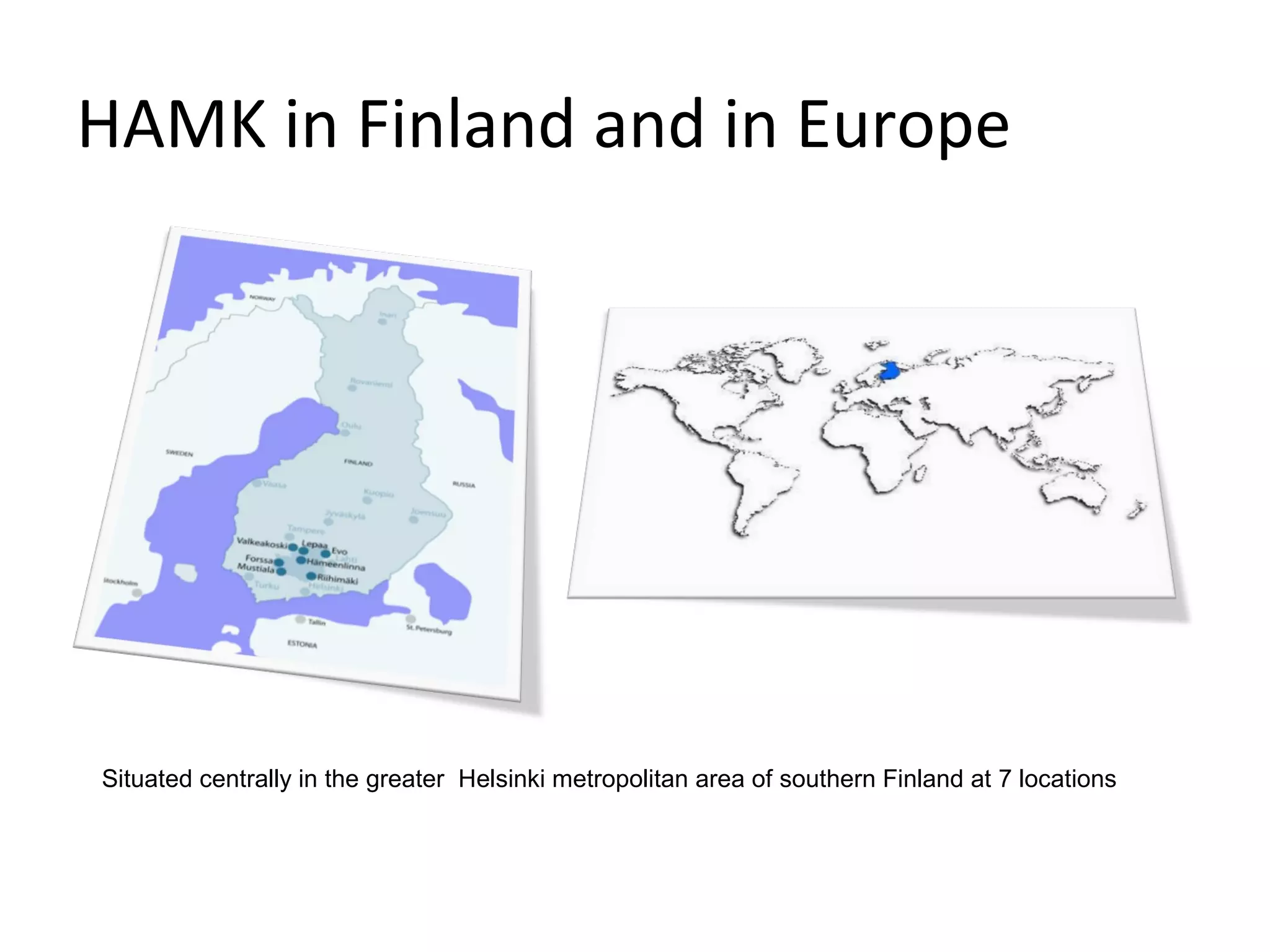
HAMK in Finland and in Europe


Situated centrally in the greater Helsinki metropolitan area of southern Finland at 7 locations
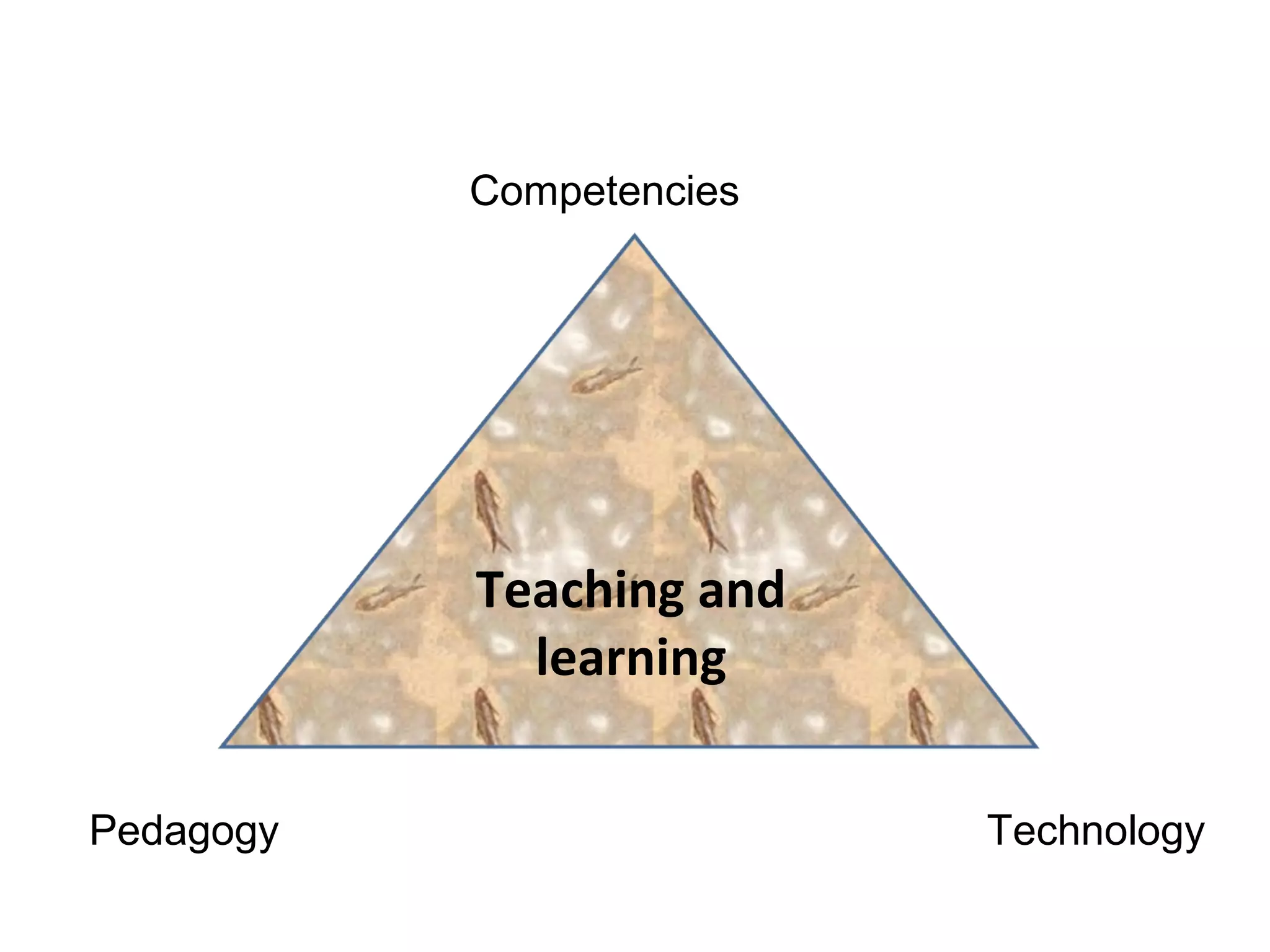
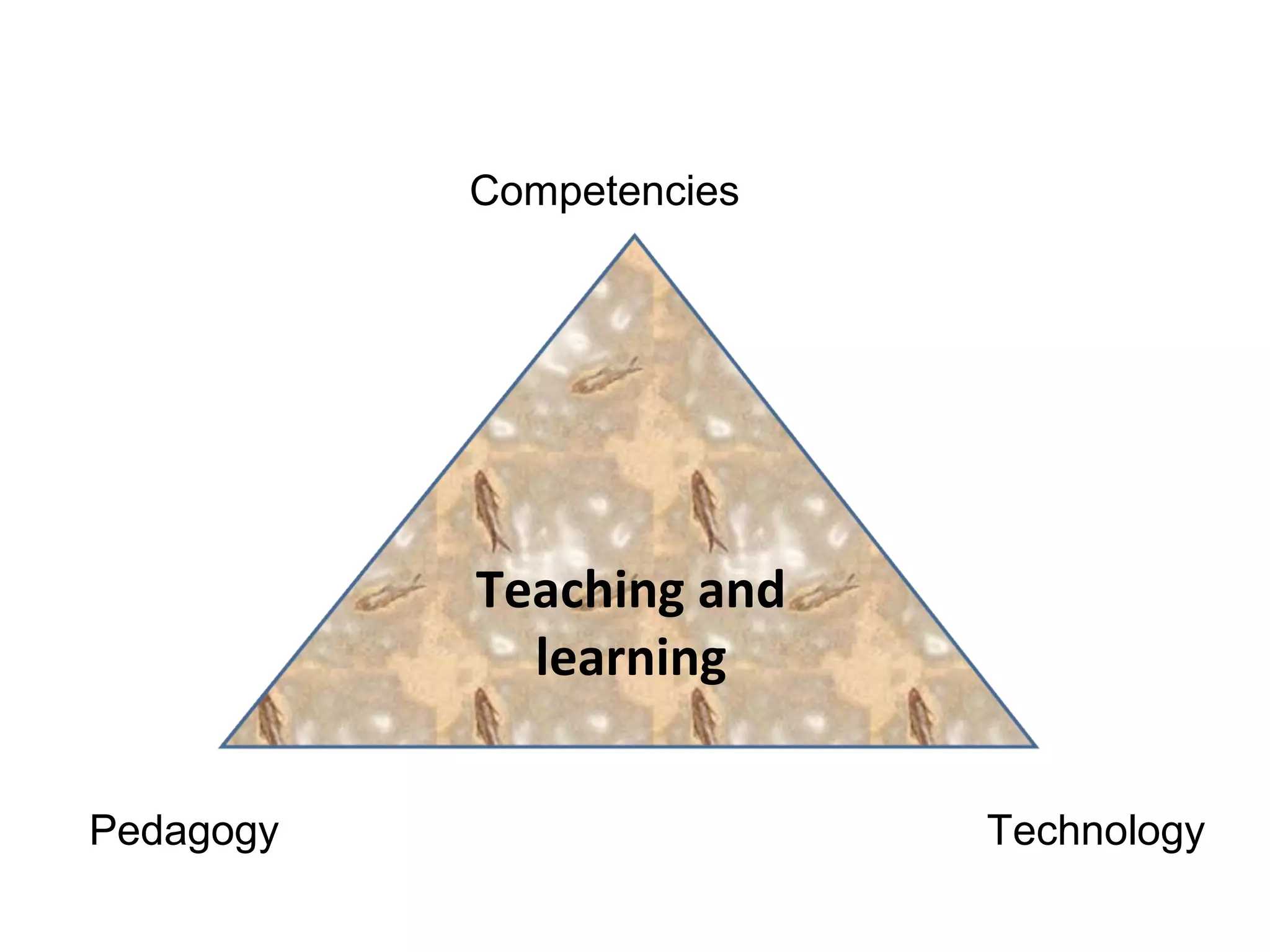
Competencies


           Teaching and
             learning


Pedagogy                  Technology
Content
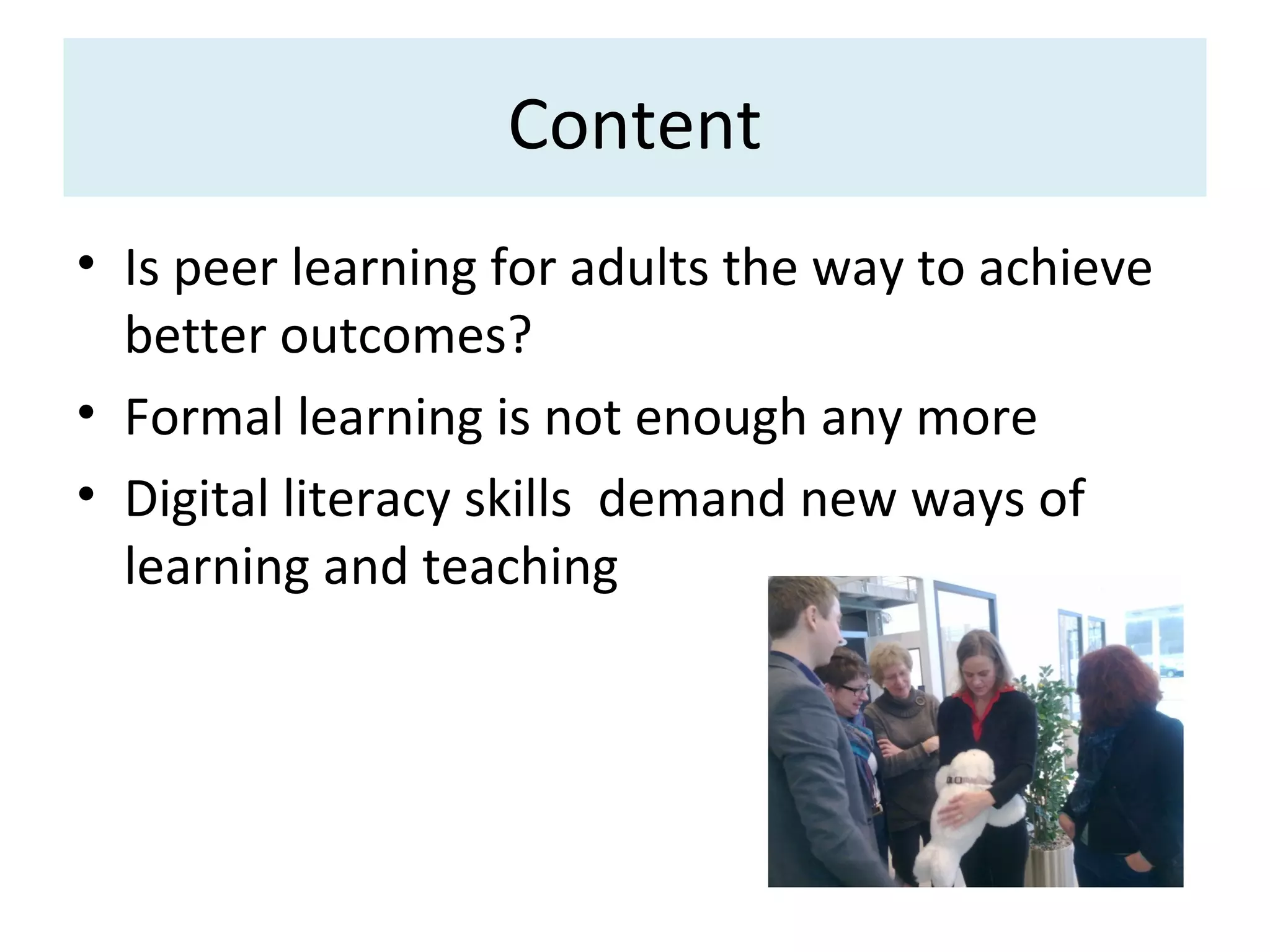
• Is peer learning for adults the way to achieve
  better outcomes?
• Formal learning is not enough any more
• Digital literacy skills demand new ways of
  learning and teaching
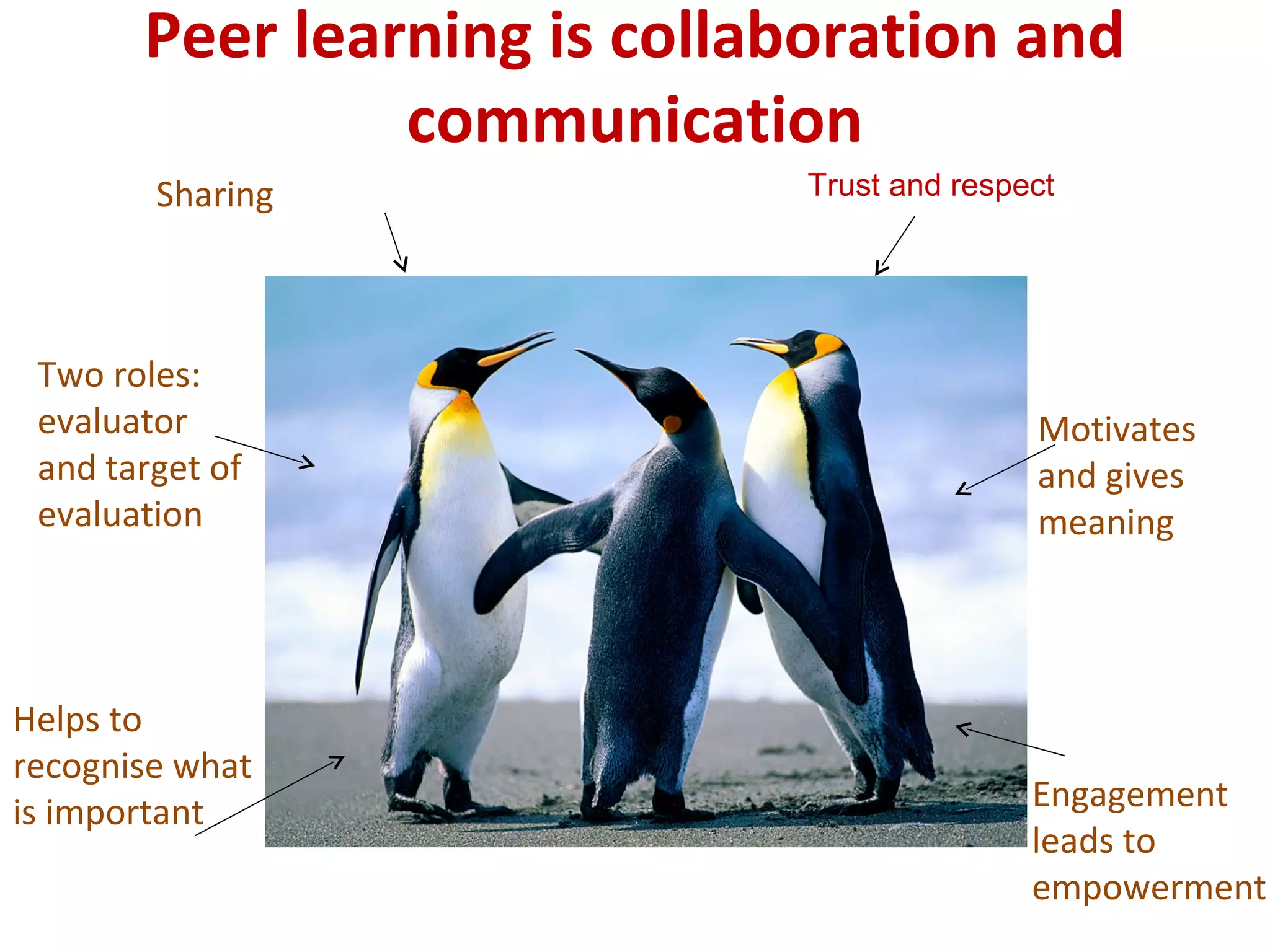
Peer learning is collaboration and
                communication
        Sharing              Trust and respect


 Two roles:
 evaluator                                  Motivates
 and target of                              and gives
 evaluation                                 meaning


Helps to
recognise what
is important                                Engagement
                                            leads to
                                            empowerment
Recognising the quality and using that
in your own practice
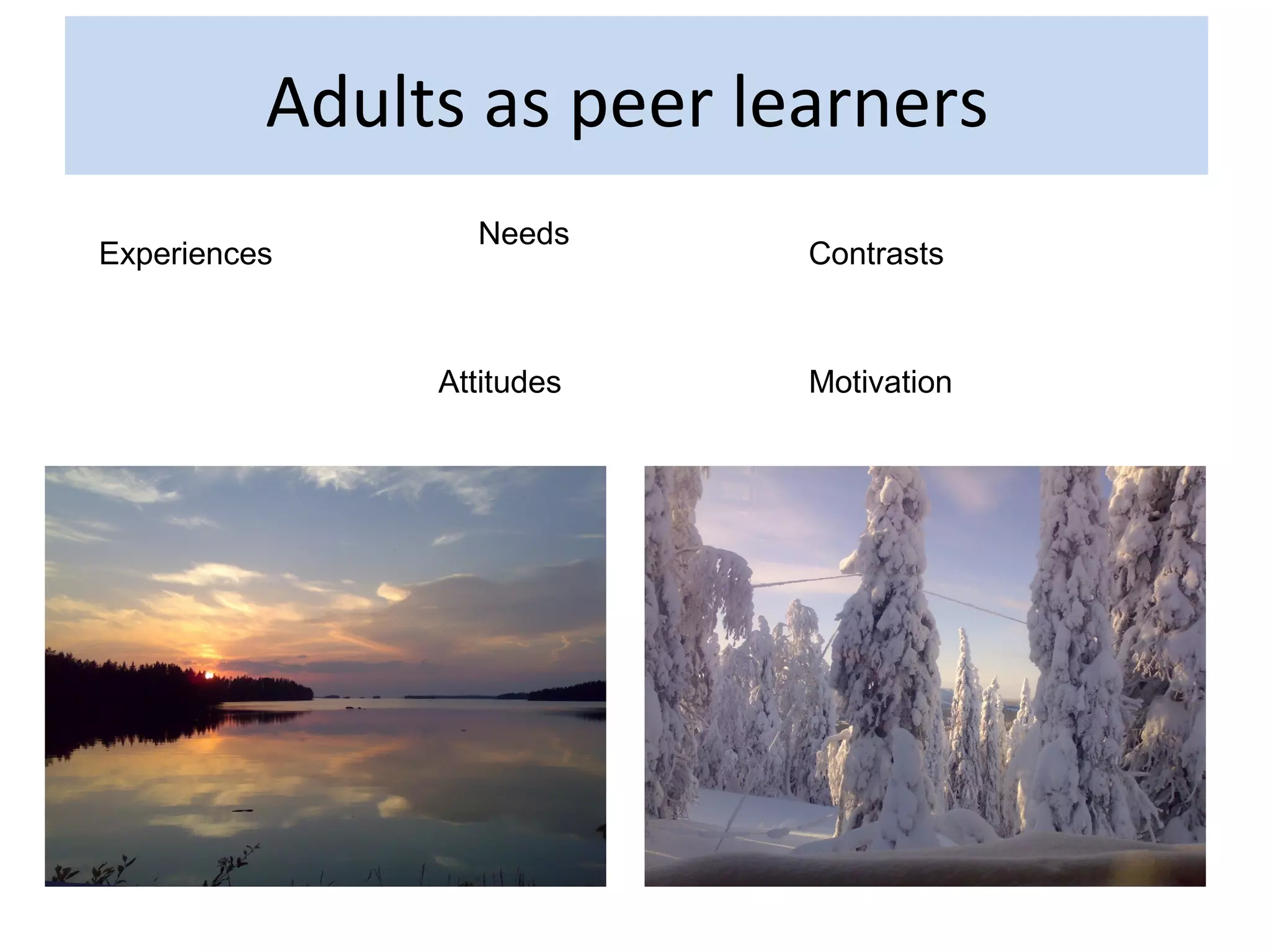
Adults as peer learners
                 Needs
Experiences                Contrasts


               Attitudes   Motivation
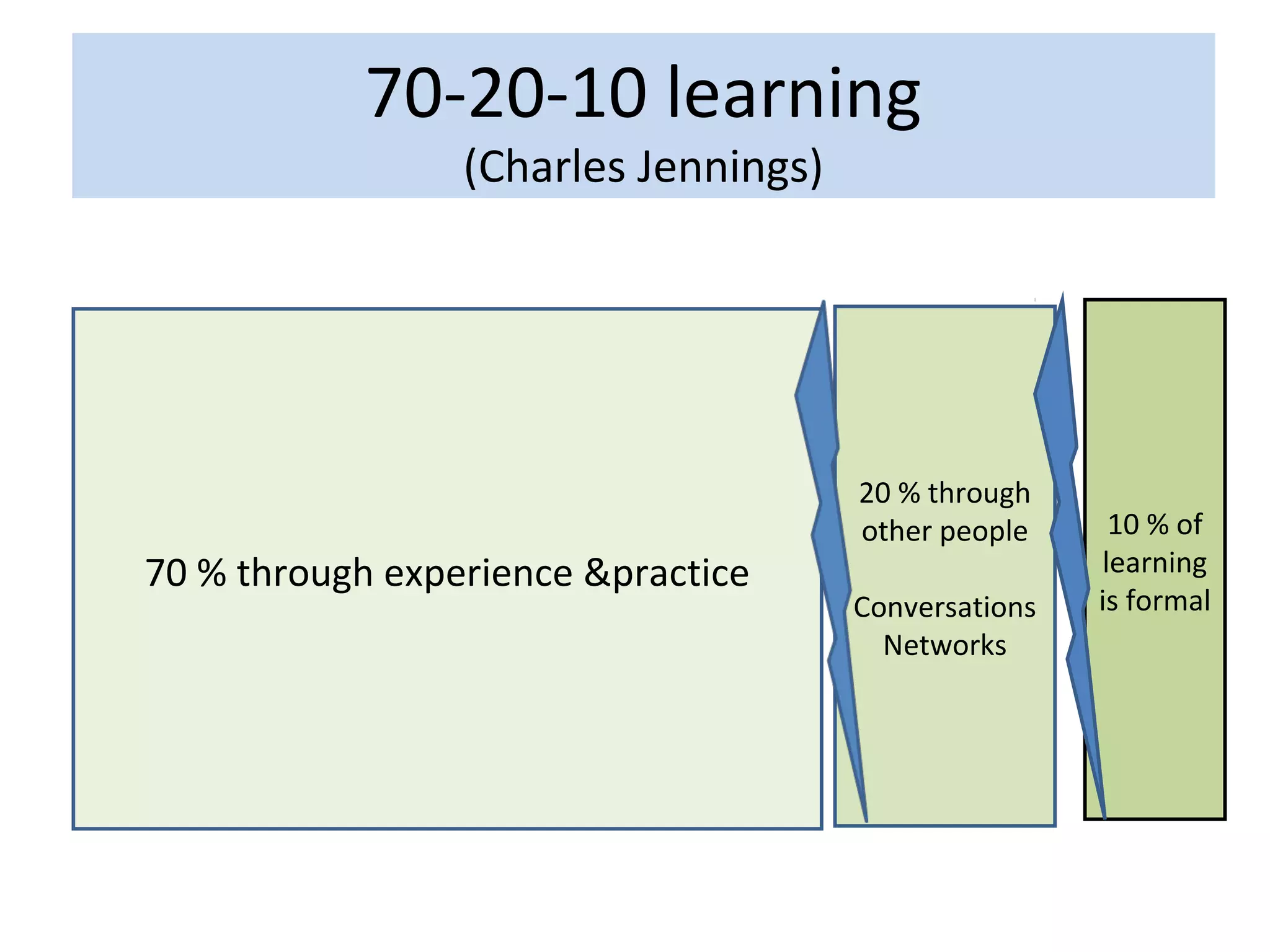
70-20-10 learning
                 (Charles Jennings)


                                      20 % through
                                      other people     10 % of
70 % through experience &practice                     learning
                                      Conversations   is formal
                                        Networks
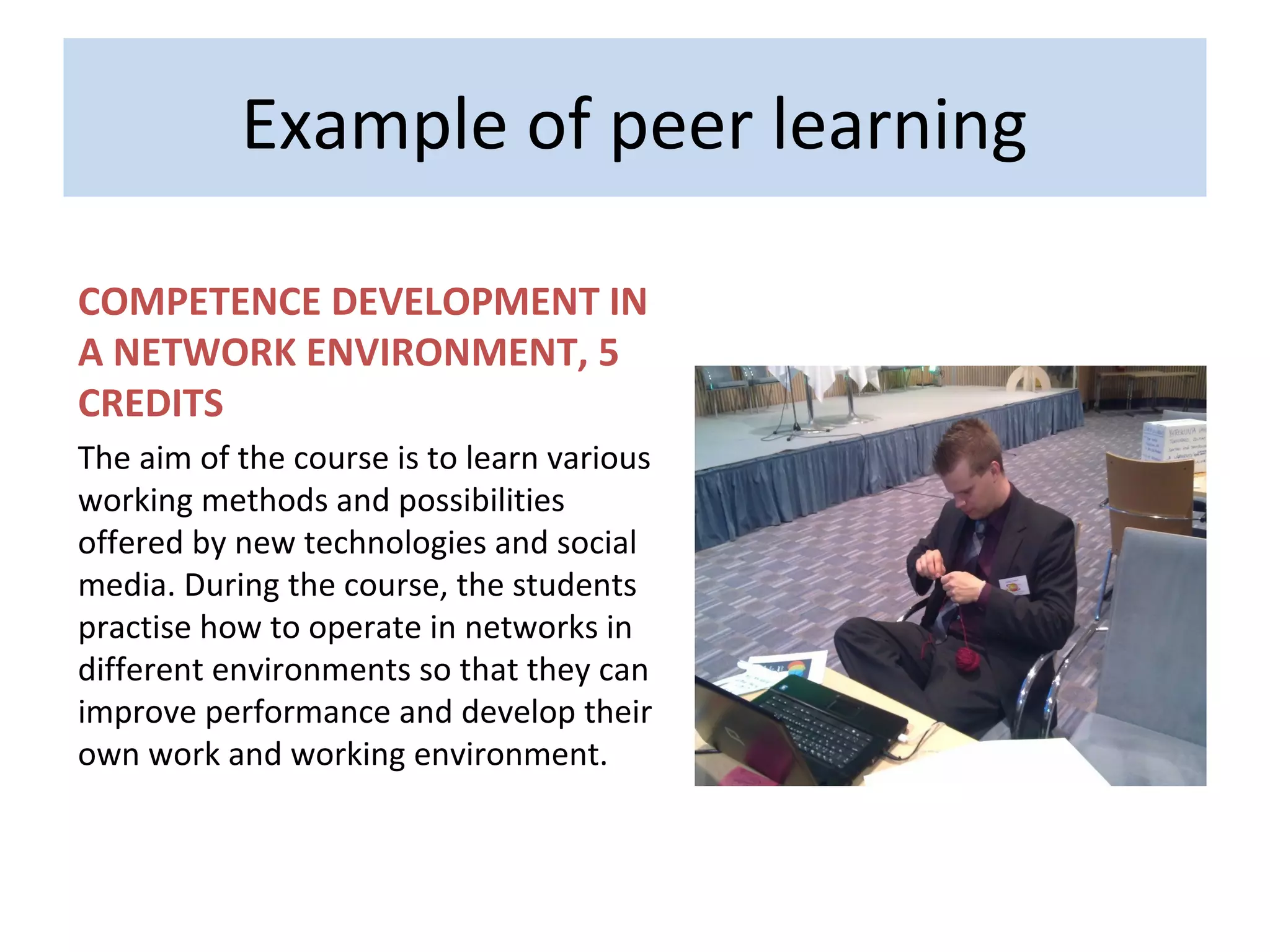
Example of peer learning

COMPETENCE DEVELOPMENT IN
A NETWORK ENVIRONMENT, 5
CREDITS
The aim of the course is to learn various
working methods and possibilities
offered by new technologies and social
media. During the course, the students
practise how to operate in networks in
different environments so that they can
improve performance and develop their
own work and working environment.
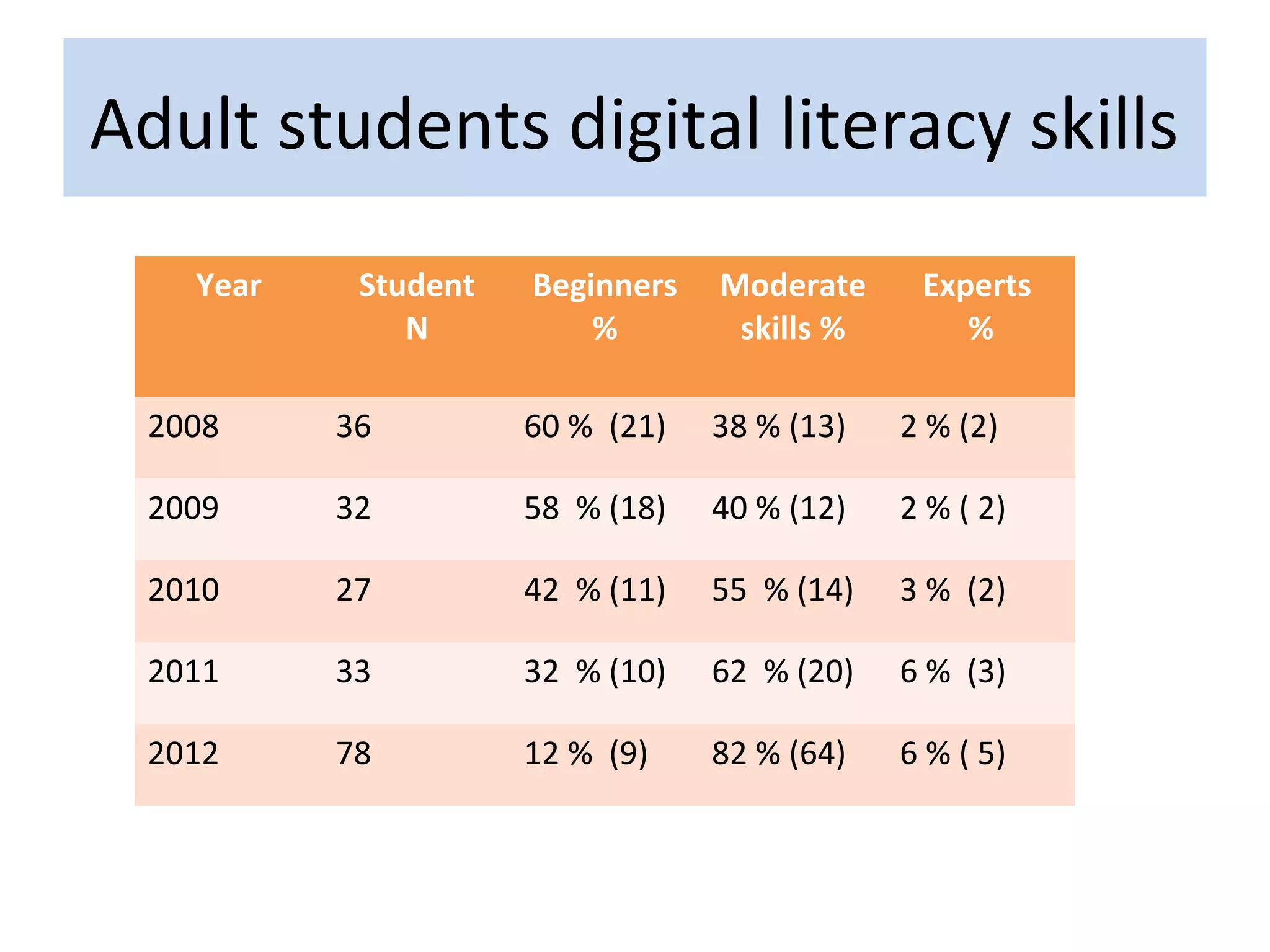
Adult students digital literacy skills
    Year    Student   Beginners   Moderate     Experts
               N          %        skills %       %

  2008     36         60 % (21)   38 % (13)   2 % (2)

  2009     32         58 % (18)   40 % (12)   2 % ( 2)

  2010     27         42 % (11)   55 % (14)   3 % (2)

  2011     33         32 % (10)   62 % (20)   6 % (3)

  2012     78         12 % (9)    82 % (64)   6 % ( 5)
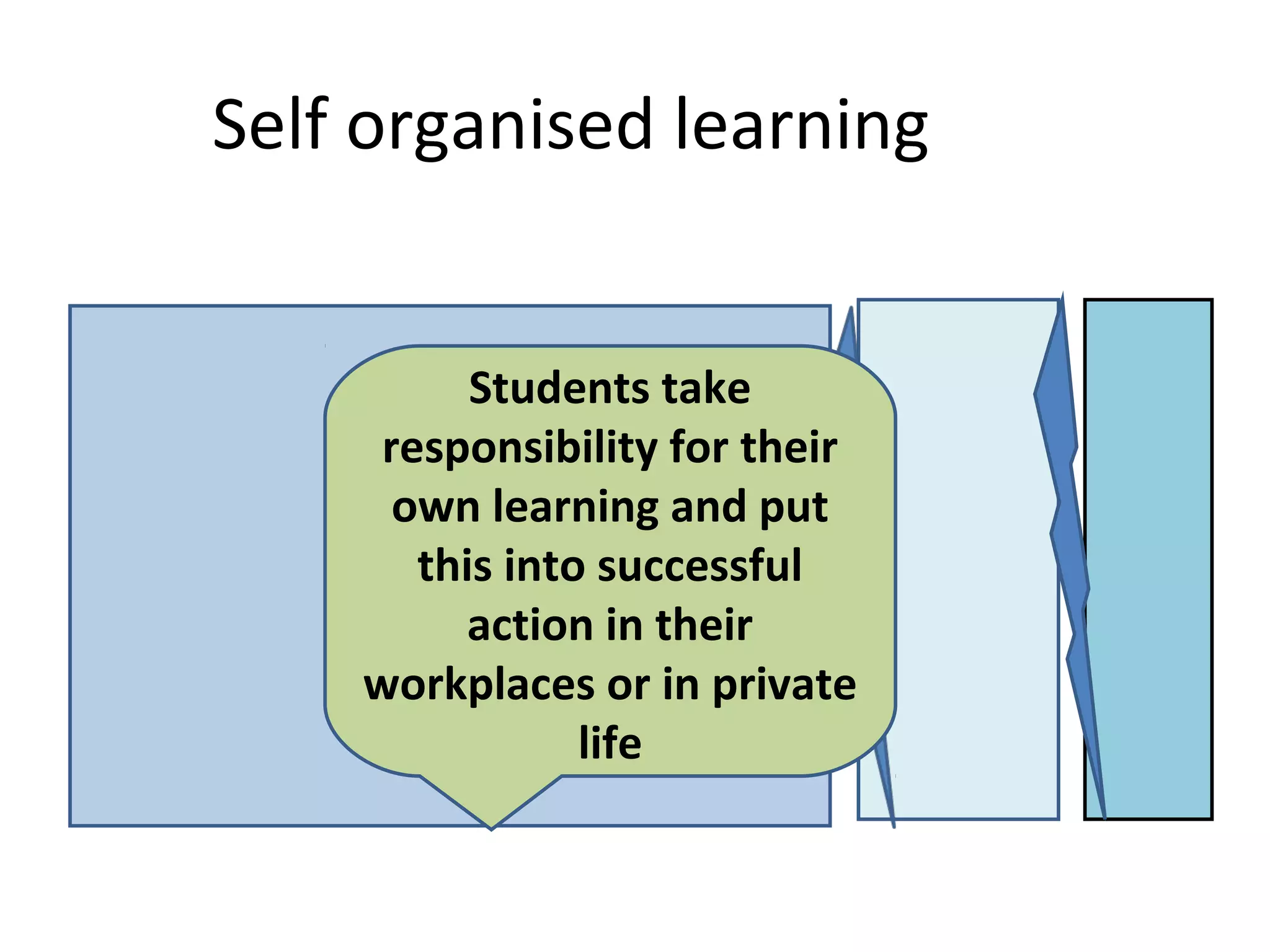
Self organised learning


          Students take
     responsibility for their
      own learning and put
       this into successful
          action in their
    workplaces or in private
                life
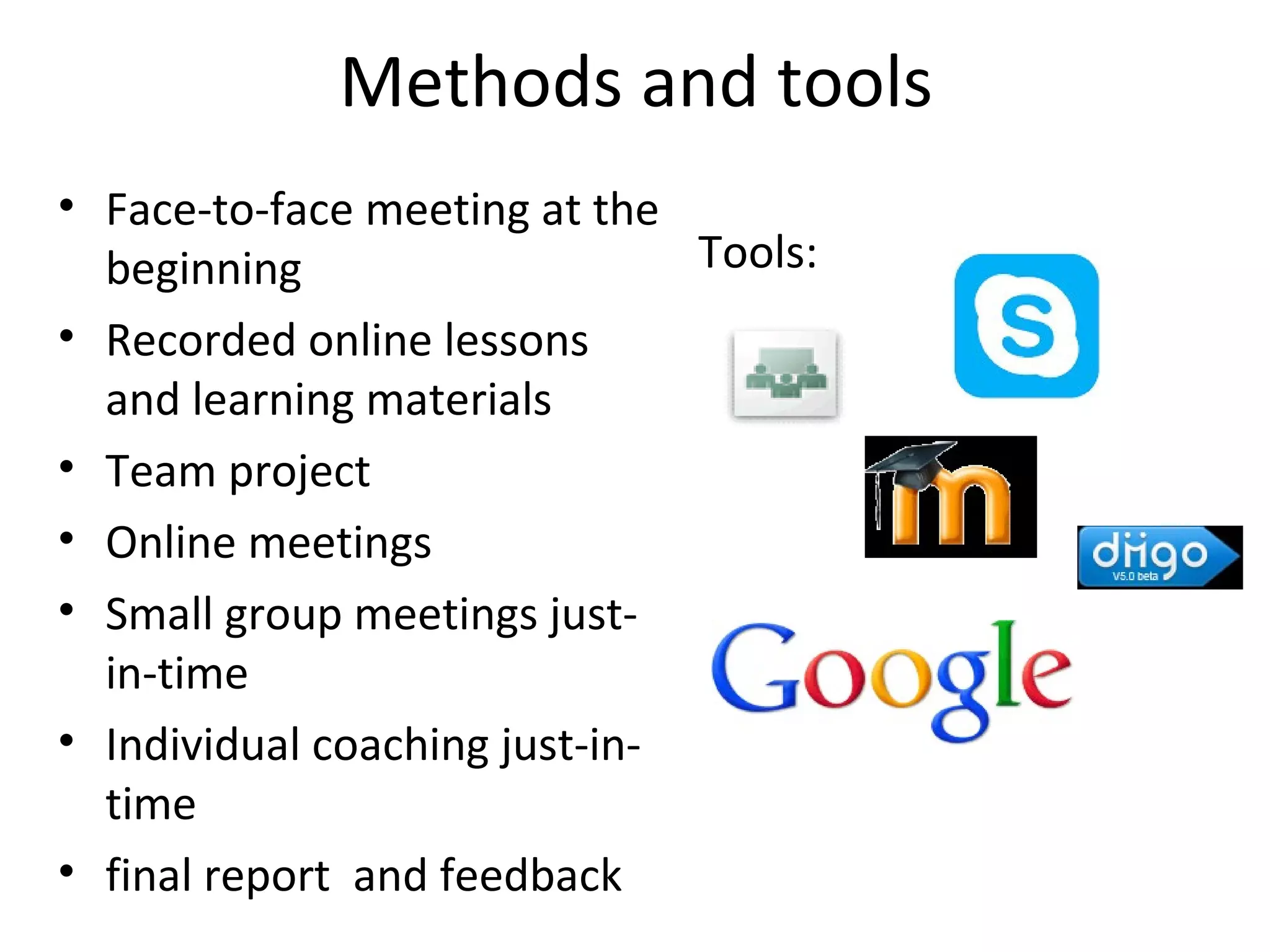
Methods and tools
• Face-to-face meeting at the
  beginning                    Tools:
• Recorded online lessons
  and learning materials
• Team project
• Online meetings
• Small group meetings just-
  in-time
• Individual coaching just-in-
  time
• final report and feedback
Competencies


           Teaching and
             learning


Pedagogy                  Technology
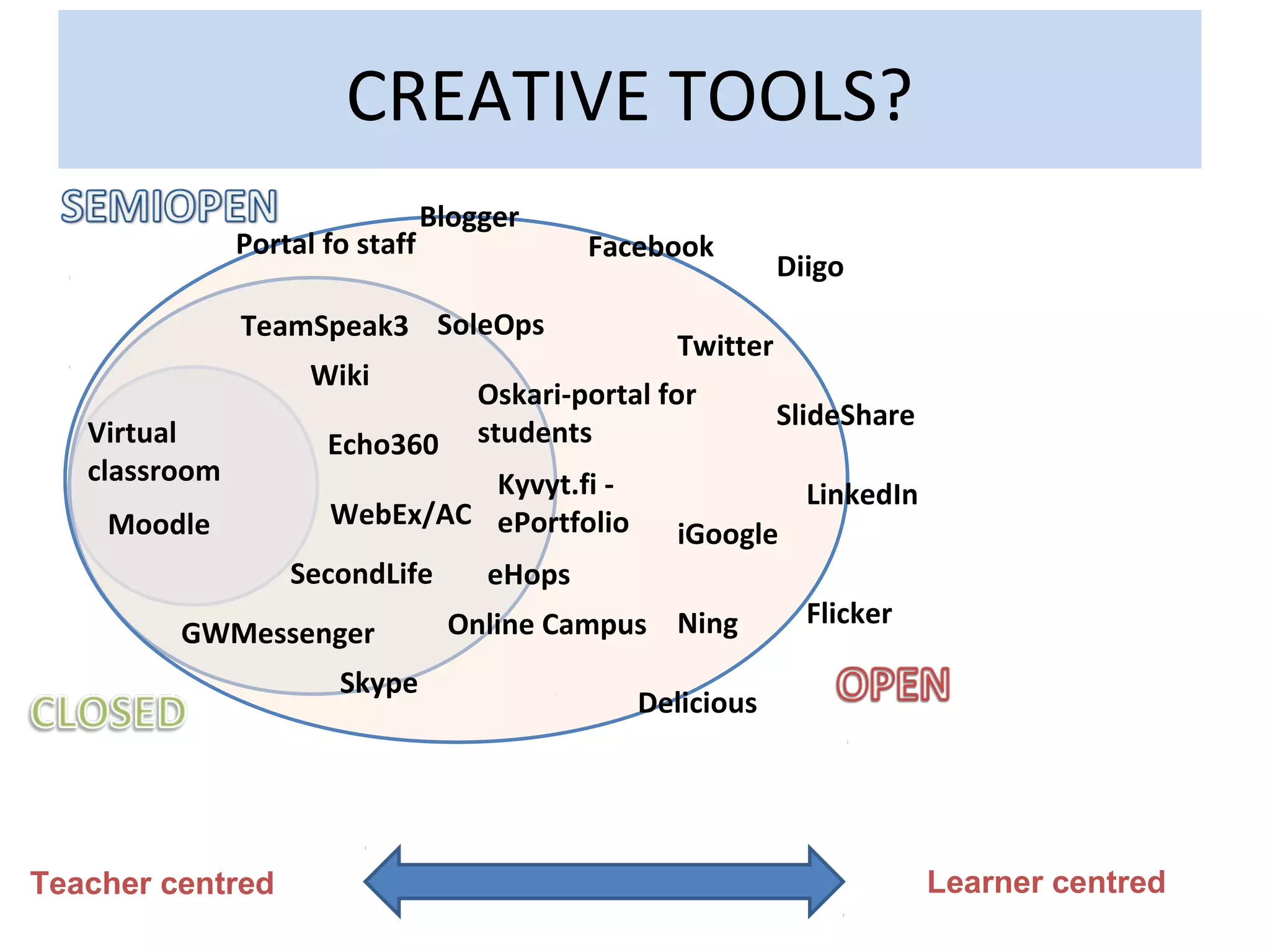
CREATIVE TOOLS?
                                 Blogger
               Portal fo staff               Facebook
                                                              Diigo
               TeamSpeak3 SoleOps
                                                    Twitter
                     Wiki
                                     Oskari-portal for
                                                              SlideShare
   Virtual            Echo360        students
   classroom                   Kyvyt.fi -                       LinkedIn
    Moodle            WebEx/AC ePortfolio
                                                    iGoogle
                   SecondLife        eHops
                                  Online Campus Ning            Flicker
         GWMessenger
                       Skype
                                                 Delicious


Teacher centred                                                            Learner centred
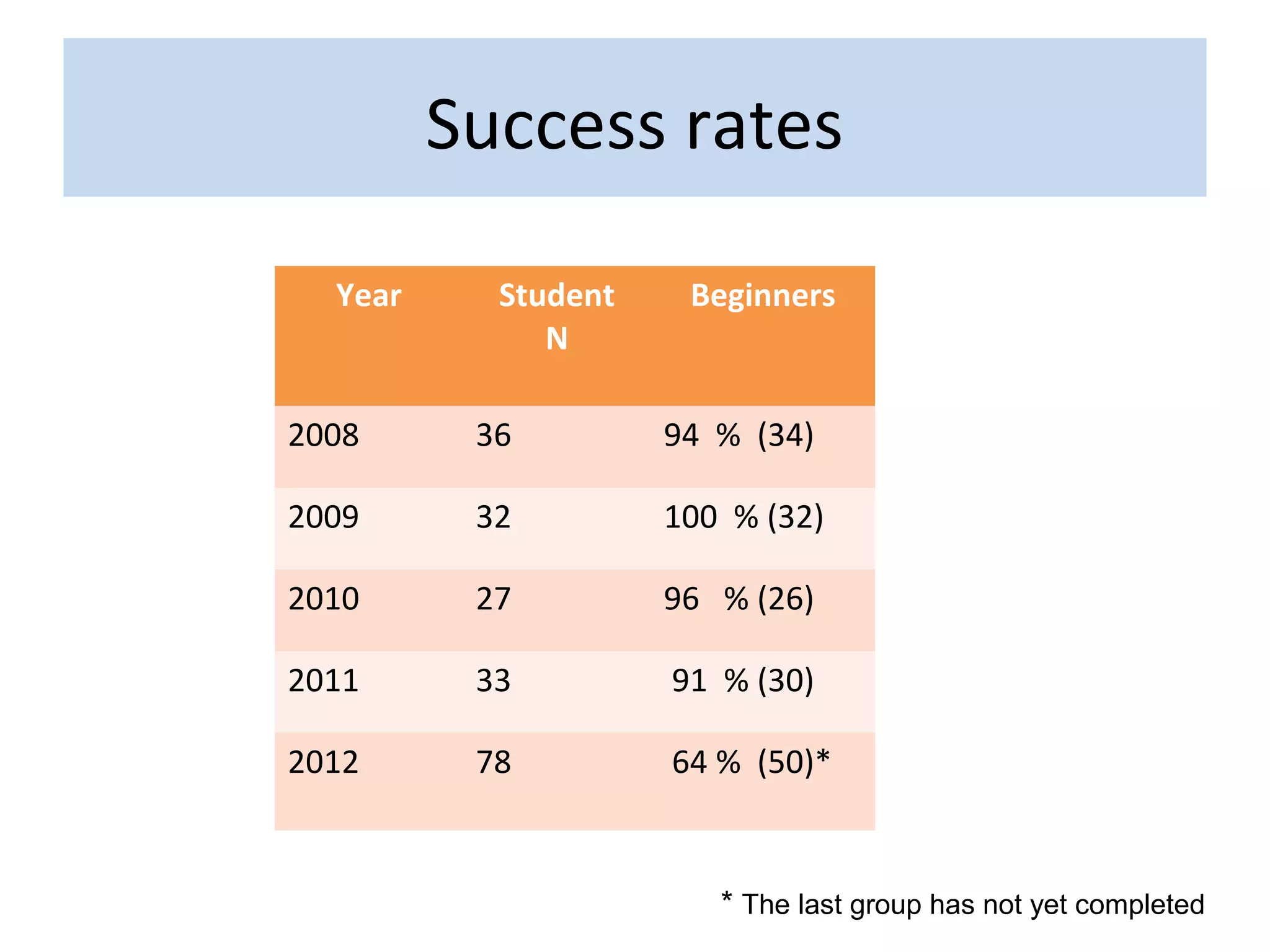
Success rates

  Year     Student    Beginners
              N

2008      36         94 % (34)

2009      32         100 % (32)

2010      27         96 % (26)

2011      33         91 % (30)

2012      78         64 % (50)*


                        * The last group has not yet completed
Feedback

   “Despite my deficient personal       “I was a bit confused in the
skills I’ve always been interested in   beginning but step by step I
 learning more about social media       started to realize, what is going
and online working, just have been      on. Maybe the confusion in the
  too shy to try them on my own.        beginning was due of the fact
  That leads us to the best part of     that teachers gave us “free
   this process: learning together      hands” nothing too structured. I
   with our group and supporting        think the learning process is the
   each other in everyone’s’ own        key point of this course. “
   learning process. It was also a
 pleasant experience to be able to
advice the other team members at
          least in some ways.”
Conclusions
• Peer learning works
• New practices,
  channels, networks
• Connections,
  collaboration
• Leading


"From the errors of others a wise man corrects his own." -Pubilius Syrus
•Leena.vainio@hamk.fi
•Skype: leena.vainio
•Twitter: @lvainio
•LinkedIn: Leena Vainio

Al tpresentation

  • 1.
    Adult students aspeer learners Leena Vainio, Research Director HAMK Centre 11.9.2012 ALT 2012 A confrontation with reality
  • 2.
    HAMK University ofApplied Sciences Education – Research - Development
  • 3.
    HAMK in Finlandand in Europe Situated centrally in the greater Helsinki metropolitan area of southern Finland at 7 locations
  • 4.
    Competencies Teaching and learning Pedagogy Technology
  • 5.
    Content • Is peerlearning for adults the way to achieve better outcomes? • Formal learning is not enough any more • Digital literacy skills demand new ways of learning and teaching
  • 6.
    Peer learning iscollaboration and communication Sharing Trust and respect Two roles: evaluator Motivates and target of and gives evaluation meaning Helps to recognise what is important Engagement leads to empowerment
  • 7.
    Recognising the qualityand using that in your own practice
  • 8.
    Adults as peerlearners Needs Experiences Contrasts Attitudes Motivation
  • 9.
    70-20-10 learning (Charles Jennings) 20 % through other people 10 % of 70 % through experience &practice learning Conversations is formal Networks
  • 10.
    Example of peerlearning COMPETENCE DEVELOPMENT IN A NETWORK ENVIRONMENT, 5 CREDITS The aim of the course is to learn various working methods and possibilities offered by new technologies and social media. During the course, the students practise how to operate in networks in different environments so that they can improve performance and develop their own work and working environment.
  • 11.
    Adult students digitalliteracy skills Year Student Beginners Moderate Experts N % skills % % 2008 36 60 % (21) 38 % (13) 2 % (2) 2009 32 58 % (18) 40 % (12) 2 % ( 2) 2010 27 42 % (11) 55 % (14) 3 % (2) 2011 33 32 % (10) 62 % (20) 6 % (3) 2012 78 12 % (9) 82 % (64) 6 % ( 5)
  • 12.
    Self organised learning Students take responsibility for their own learning and put this into successful action in their workplaces or in private life
  • 13.
    Methods and tools •Face-to-face meeting at the beginning Tools: • Recorded online lessons and learning materials • Team project • Online meetings • Small group meetings just- in-time • Individual coaching just-in- time • final report and feedback
  • 14.
    Competencies Teaching and learning Pedagogy Technology
  • 15.
    CREATIVE TOOLS? Blogger Portal fo staff Facebook Diigo TeamSpeak3 SoleOps Twitter Wiki Oskari-portal for SlideShare Virtual Echo360 students classroom Kyvyt.fi - LinkedIn Moodle WebEx/AC ePortfolio iGoogle SecondLife eHops Online Campus Ning Flicker GWMessenger Skype Delicious Teacher centred Learner centred
  • 16.
    Success rates Year Student Beginners N 2008 36 94 % (34) 2009 32 100 % (32) 2010 27 96 % (26) 2011 33 91 % (30) 2012 78 64 % (50)* * The last group has not yet completed
  • 17.
    Feedback “Despite my deficient personal “I was a bit confused in the skills I’ve always been interested in beginning but step by step I learning more about social media started to realize, what is going and online working, just have been on. Maybe the confusion in the too shy to try them on my own. beginning was due of the fact That leads us to the best part of that teachers gave us “free this process: learning together hands” nothing too structured. I with our group and supporting think the learning process is the each other in everyone’s’ own key point of this course. “ learning process. It was also a pleasant experience to be able to advice the other team members at least in some ways.”
  • 18.
    Conclusions • Peer learningworks • New practices, channels, networks • Connections, collaboration • Leading "From the errors of others a wise man corrects his own." -Pubilius Syrus
  • 19.

Editor's Notes

  • #2 Digital litercy skills??
  • #7 Learn from myself and from others - systematically Seeking of new aspects, methods to improve own practises and own learning  Benchlearning vastavuoroista, internal and externat näkökulmat käytössä Yhteiset arviointikohteet / avaintekijät helpottavat oppimista vertaisten kanssa - ei ole satunnaista – perustuu dialogiin, toisen osaamisen arvostamiseen ja toisen osapuolen kuuntelemiseen
  • #8 Avoin vuorovaikutus toisten kanssa – luottamus Vaihtuvat roolit : Arvioitsijana ja arvioitavana oleminen auttaa näkemään 'toisen' kannalta Ei ole paremmuuteen asettamista tai asioiden selvittämistä ilman parantamista. Se on 'erityisen hyvän' tunnistamista ja sen ymmärtämistä, miten se on saavutettu Menestyksellisen toiminnan soveltamista omassa kontekstissa Parhaiksi todettujen toimintatapojen hyödyntäminen ja seuranta