

Leading to autonomy:
the essential role of
teachers in online learning
Brian Holmes
Interim Director
Education, Audiovisual & Culture
Executive Agency
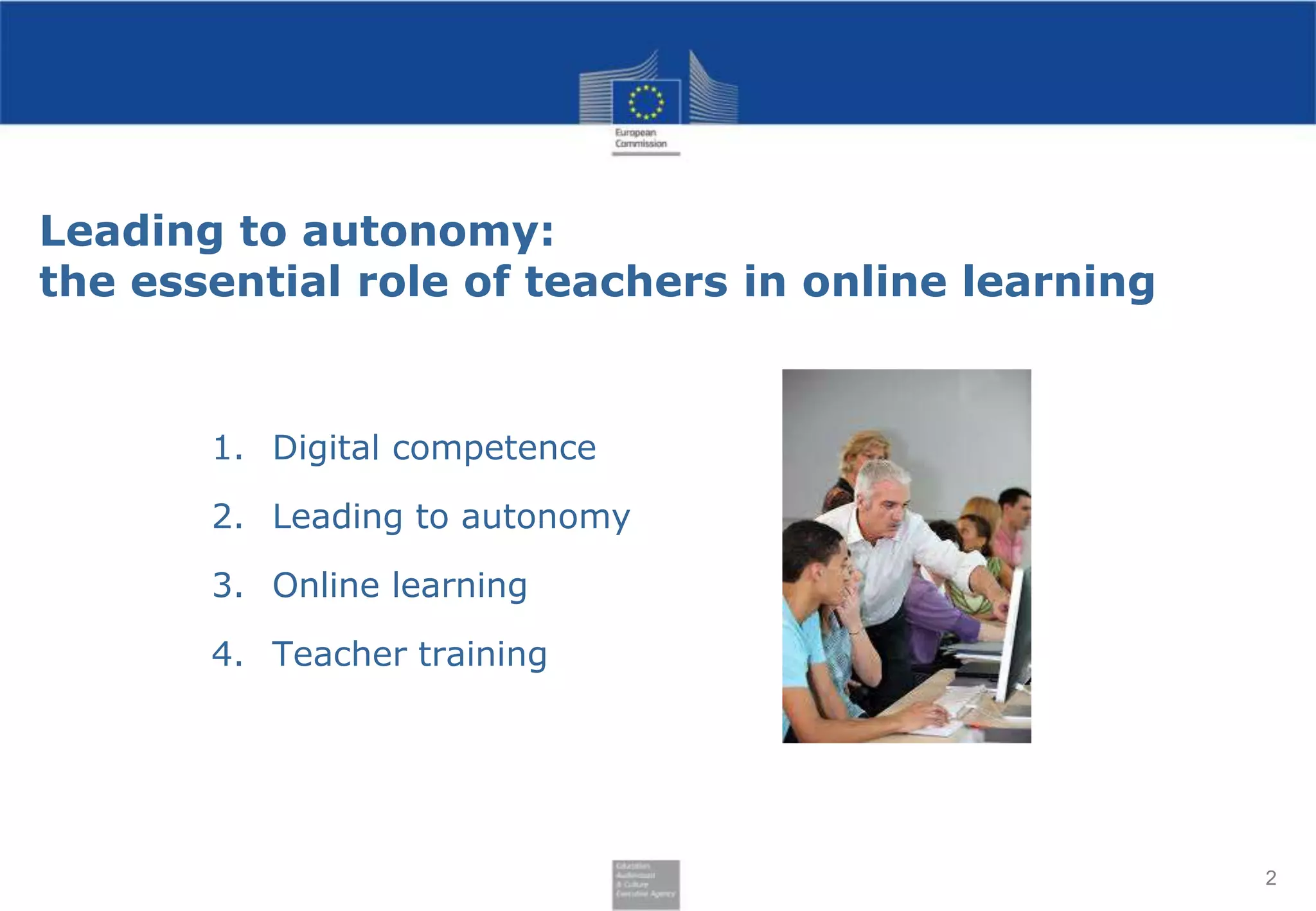
Leading to autonomy:
the essential role of teachers in online learning

1. Digital competence
2. Leading to autonomy

3. Online learning
4. Teacher training

2
1.

Digital competence

Beyond ICT skills
 Digital competence involves the confident and critical use of
Information Society Technology (IST) for work, leisure and
communication.
(EU, 2006)
 Framework for developing digital competence:
1. Information

⬅ Can critically evaluate information

2. Communication

⬅ Participates in online collaboration, team work

3. Content creation ⬅ Can use and create online content
4. Safety

⬅ Understands personal identity, netiquette

5. Problem solving

⬅ Knows how to use ICT for innovation
(Ferrari, Punie & Brečko, 2013)

3
2.

Leading to autonomy

Developing professional intellect
Know what: cognitive knowledge

Basic skills acquired through
training

Know why: advanced skills

Ability to apply skills to complex
problems

Know how: systems understanding

Ability to apply knowledge and
skills to new problems

Care why: self-motivated creativity

Will, motivation and adaptability
(Quinn, Anderson & Finkelstein, 1996)
2.

Leading to autonomy

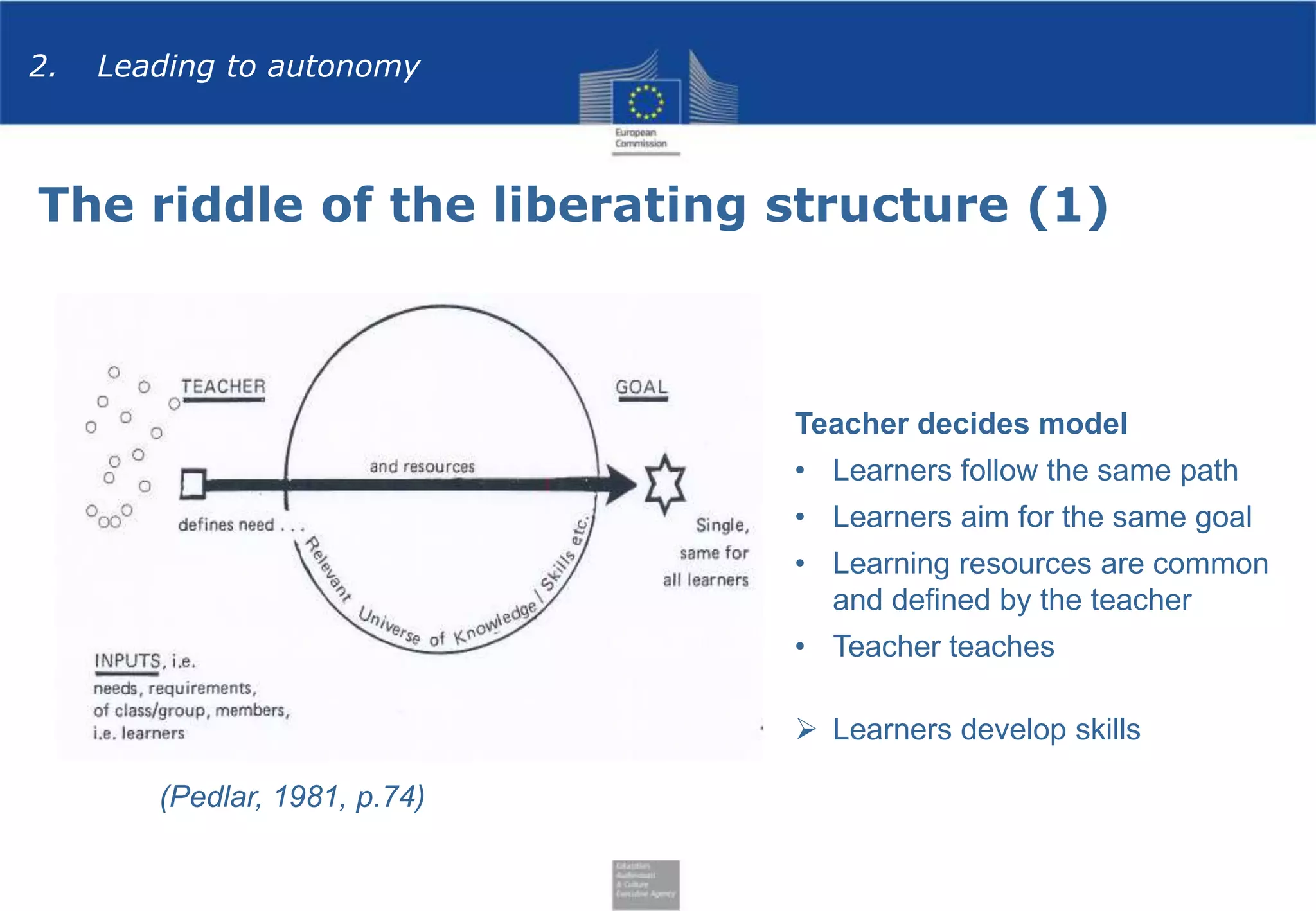
The riddle of the liberating structure (1)

Teacher decides model
• Learners follow the same path
• Learners aim for the same goal
• Learning resources are common
and defined by the teacher
• Teacher teaches
 Learners develop skills
(Pedlar, 1981, p.74)
2.

Leading to autonomy

The riddle of the liberating structure (2)

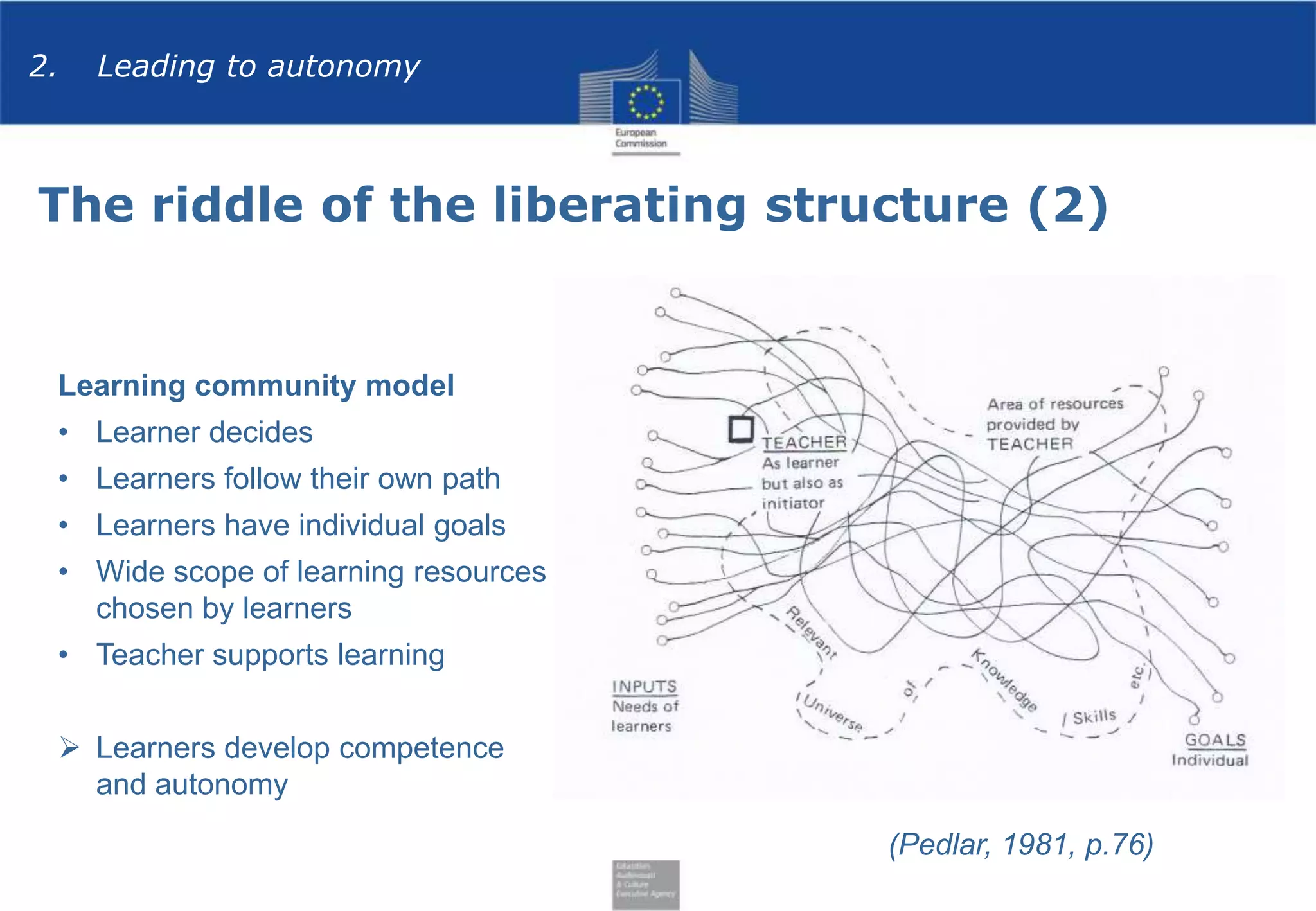
Learning community model
• Learner decides
• Learners follow their own path
• Learners have individual goals
• Wide scope of learning resources
chosen by learners
• Teacher supports learning
 Learners develop competence
and autonomy

(Pedlar, 1981, p.76)
3.

Online learning

Action research: an online learning community

www.eTwinning.net

• eTwinning supports teachers across Europe
° Joint pedagogical projects
° Continuous professional development
° Thriving community of teachers
•‘Learning Events’
° Short, intensive online sessions, in groups
° Focused on a theme, led by a subject expert
° Involve teachers in hands-on, non-formal learning
with peers
• My research, a Learning Event on Web 2.0
http://holmesbrian.blogspot.com/
7
3.

Online learning

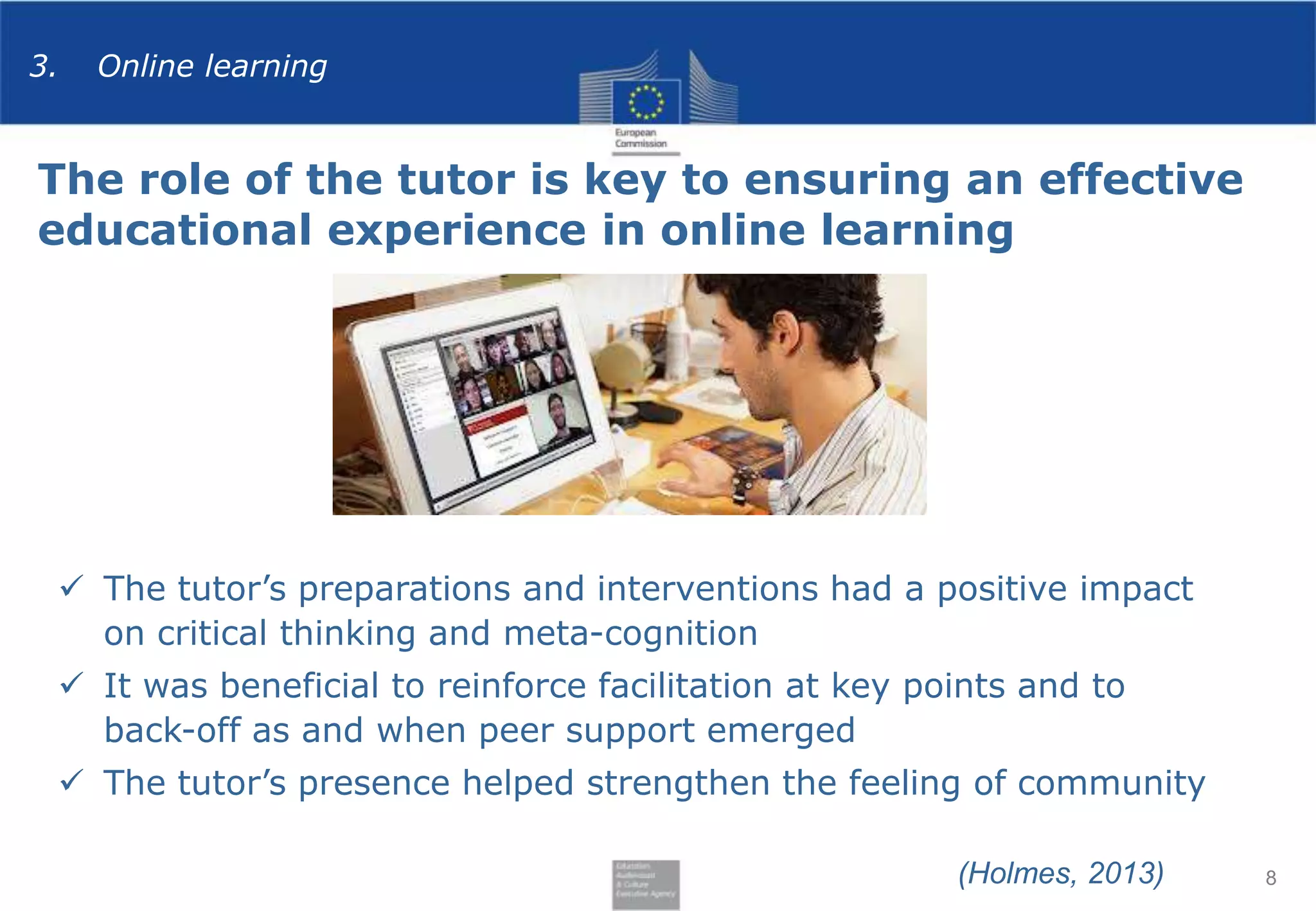
The role of the tutor is key to ensuring an effective
educational experience in online learning

 The tutor’s preparations and interventions had a positive impact
on critical thinking and meta-cognition
 It was beneficial to reinforce facilitation at key points and to
back-off as and when peer support emerged

 The tutor’s presence helped strengthen the feeling of community
(Holmes, 2013)

8
3.

Online learning

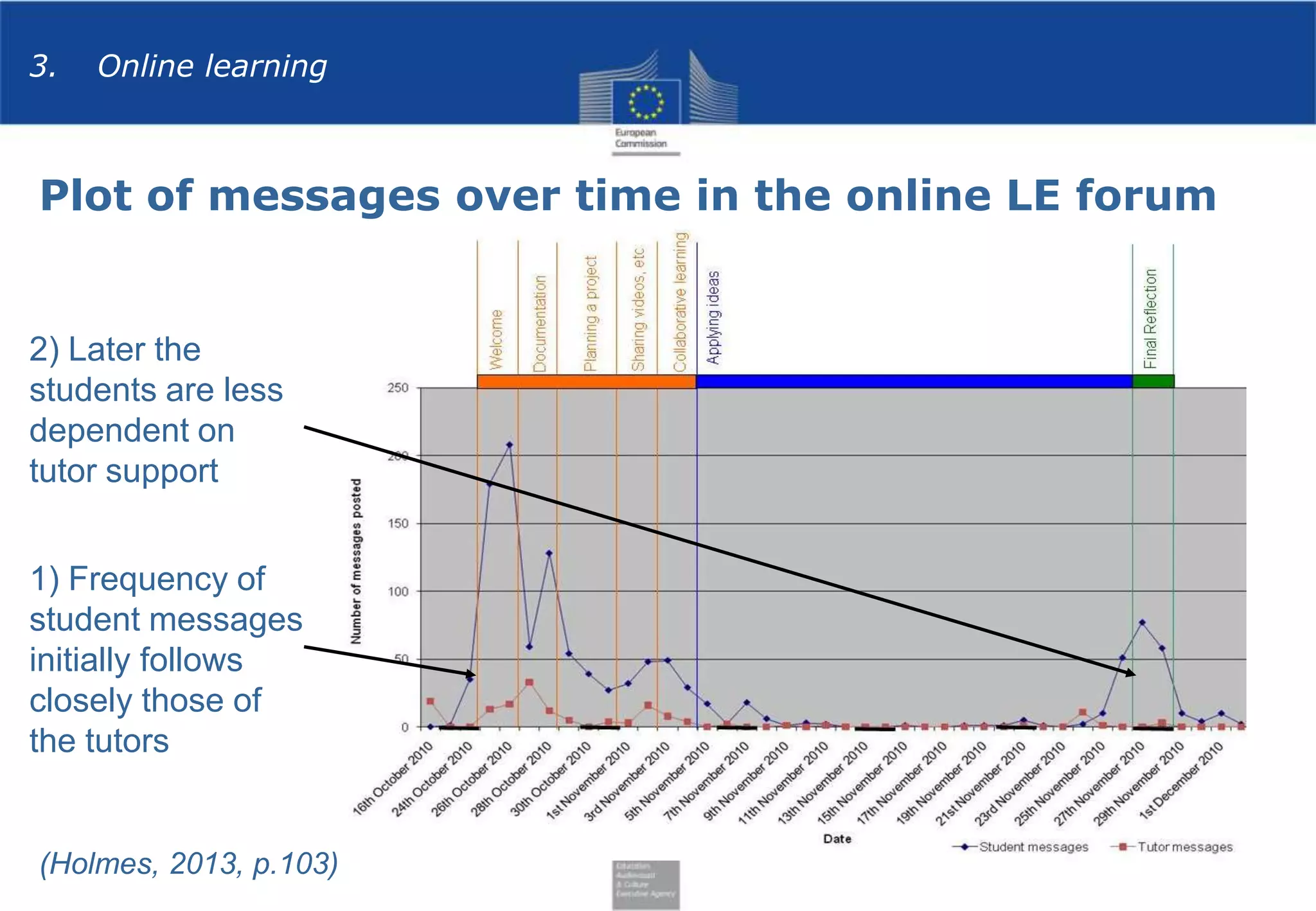
Plot of messages over time in the online LE forum

2) Later the
students are less
dependent on
tutor support
1) Frequency of
student messages
initially follows
closely those of
the tutors

(Holmes, 2013, p.103)
4.

Teacher training

Online learning communities for teachers’
continuous professional development
 Online learning communities are an attractive alternative to
traditional face-to-face training courses
 They enable teachers to try out what they are learning in the context
of their everyday practice, thereby increasing confidence and
motivation
 They provide an opportunity for mutual support, exchange of
experience and reflection
 They are fostered by social interaction which also facilitates learning
 They are useful for as long as they support purposeful learning
(Holmes, 2013)

10
References
EU (2006). Recommendation of the European Parliament and of the Council of 18
December 2006 on key competences for lifelong learning. Official Journal of the
European Union, L394/310.
Ferrari, A., Punie, Y., & Brečko, B. N. (2013). DIGCOMP: A Framework for Developing
and Understanding Digital Competence in Europe: Institute for Prospective
Technological Studies (IPTS), JRC, European Commission
Holmes, B. (2013). School Teachers' Continuous Professional Development in an
Online Learning Community: lessons from a case study of an eTwinning Learning
Event. European Journal of Education, 48(1), 97-112. Retrieved 03.03.2013, from
http://dx.doi.org/10.1111/ejed.12015.
Pedler, M. (1981). Chapter 5: Developing the learning community. In T. Boydell & M.
Pedler (Eds.), Management Self-development: Concepts and Practices (pp. 68-84).
Aldershot: Gower Publishing Company Ltd.
Quinn, J. B., Anderson, P., & Finkelstein, S. (1996). Managing professional intellect:
making the most of the best. Harvard Business Review, 74(2), 71-80.
http://eacea.ec.europa.eu
eacea-info@ec.europa.eu
12

Oeb2013

  • 1.
    Leading to autonomy: theessential role of teachers in online learning Brian Holmes Interim Director Education, Audiovisual & Culture Executive Agency
  • 2.
    Leading to autonomy: theessential role of teachers in online learning 1. Digital competence 2. Leading to autonomy 3. Online learning 4. Teacher training 2
  • 3.
    1. Digital competence Beyond ICTskills  Digital competence involves the confident and critical use of Information Society Technology (IST) for work, leisure and communication. (EU, 2006)  Framework for developing digital competence: 1. Information ⬅ Can critically evaluate information 2. Communication ⬅ Participates in online collaboration, team work 3. Content creation ⬅ Can use and create online content 4. Safety ⬅ Understands personal identity, netiquette 5. Problem solving ⬅ Knows how to use ICT for innovation (Ferrari, Punie & Brečko, 2013) 3
  • 4.
    2. Leading to autonomy Developingprofessional intellect Know what: cognitive knowledge Basic skills acquired through training Know why: advanced skills Ability to apply skills to complex problems Know how: systems understanding Ability to apply knowledge and skills to new problems Care why: self-motivated creativity Will, motivation and adaptability (Quinn, Anderson & Finkelstein, 1996)
  • 5.
    2. Leading to autonomy Theriddle of the liberating structure (1) Teacher decides model • Learners follow the same path • Learners aim for the same goal • Learning resources are common and defined by the teacher • Teacher teaches  Learners develop skills (Pedlar, 1981, p.74)
  • 6.
    2. Leading to autonomy Theriddle of the liberating structure (2) Learning community model • Learner decides • Learners follow their own path • Learners have individual goals • Wide scope of learning resources chosen by learners • Teacher supports learning  Learners develop competence and autonomy (Pedlar, 1981, p.76)
  • 7.
    3. Online learning Action research:an online learning community www.eTwinning.net • eTwinning supports teachers across Europe ° Joint pedagogical projects ° Continuous professional development ° Thriving community of teachers •‘Learning Events’ ° Short, intensive online sessions, in groups ° Focused on a theme, led by a subject expert ° Involve teachers in hands-on, non-formal learning with peers • My research, a Learning Event on Web 2.0 http://holmesbrian.blogspot.com/ 7
  • 8.
    3. Online learning The roleof the tutor is key to ensuring an effective educational experience in online learning  The tutor’s preparations and interventions had a positive impact on critical thinking and meta-cognition  It was beneficial to reinforce facilitation at key points and to back-off as and when peer support emerged  The tutor’s presence helped strengthen the feeling of community (Holmes, 2013) 8
  • 9.
    3. Online learning Plot ofmessages over time in the online LE forum 2) Later the students are less dependent on tutor support 1) Frequency of student messages initially follows closely those of the tutors (Holmes, 2013, p.103)
  • 10.
    4. Teacher training Online learningcommunities for teachers’ continuous professional development  Online learning communities are an attractive alternative to traditional face-to-face training courses  They enable teachers to try out what they are learning in the context of their everyday practice, thereby increasing confidence and motivation  They provide an opportunity for mutual support, exchange of experience and reflection  They are fostered by social interaction which also facilitates learning  They are useful for as long as they support purposeful learning (Holmes, 2013) 10
  • 11.
    References EU (2006). Recommendationof the European Parliament and of the Council of 18 December 2006 on key competences for lifelong learning. Official Journal of the European Union, L394/310. Ferrari, A., Punie, Y., & Brečko, B. N. (2013). DIGCOMP: A Framework for Developing and Understanding Digital Competence in Europe: Institute for Prospective Technological Studies (IPTS), JRC, European Commission Holmes, B. (2013). School Teachers' Continuous Professional Development in an Online Learning Community: lessons from a case study of an eTwinning Learning Event. European Journal of Education, 48(1), 97-112. Retrieved 03.03.2013, from http://dx.doi.org/10.1111/ejed.12015. Pedler, M. (1981). Chapter 5: Developing the learning community. In T. Boydell & M. Pedler (Eds.), Management Self-development: Concepts and Practices (pp. 68-84). Aldershot: Gower Publishing Company Ltd. Quinn, J. B., Anderson, P., & Finkelstein, S. (1996). Managing professional intellect: making the most of the best. Harvard Business Review, 74(2), 71-80.
  • 12.

Editor's Notes