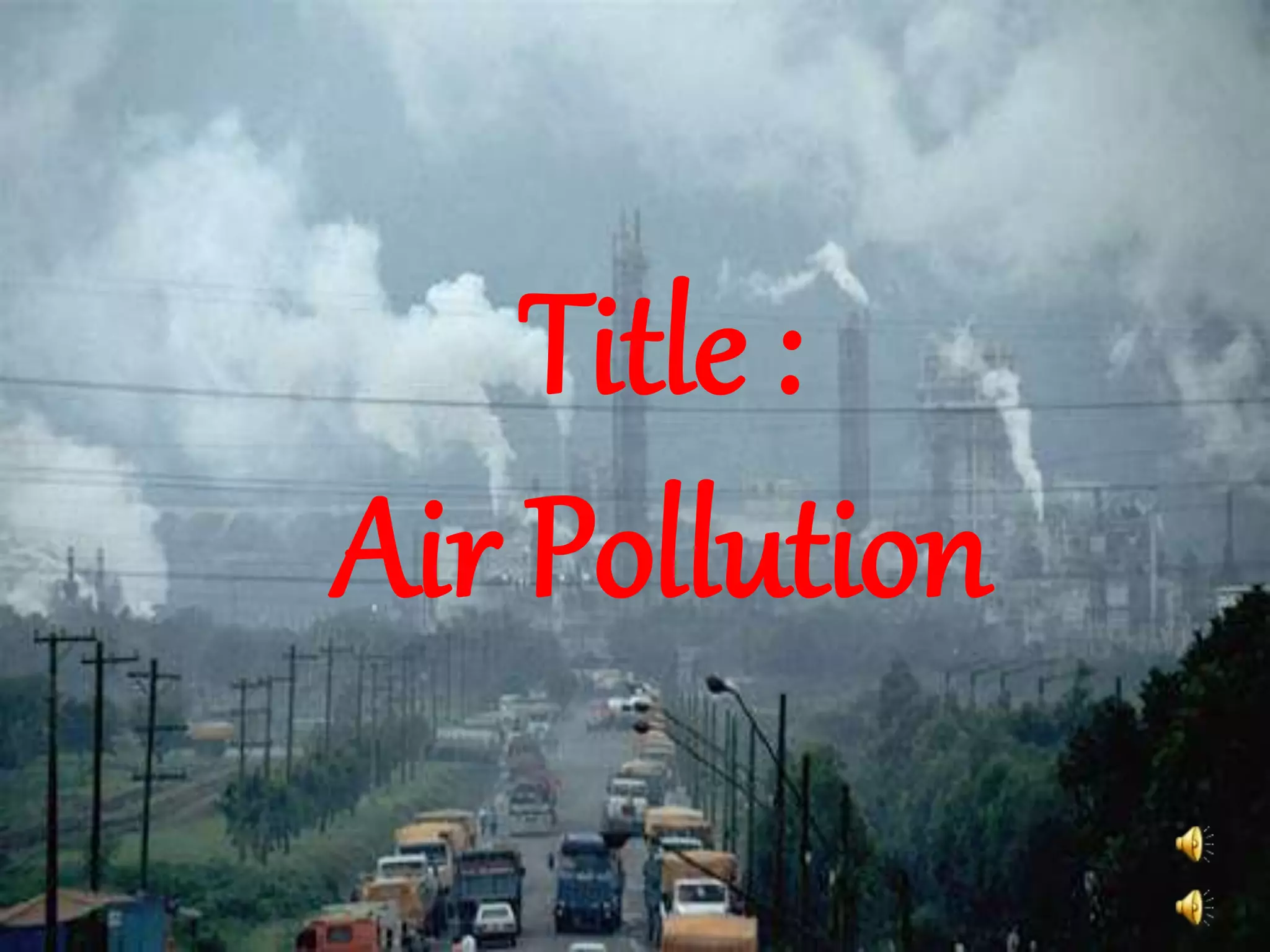
Title : 
Air Pollution
 Air pollution occurs when gases, dust 
particles, fumes (or smoke) or odour 
are introduced into the atmosphere in a 
way that makes it harmful to humans, 
animals and plant. This is because the 
air becomes dirty .
Examples of air pollutants 
Carbon Monoxide (CO) 
Fuel combustion from vehicles and engines. 
Ground-level Ozone (O3) 
Secondary pollutant formed by chemical reaction 
of volatile organic compounds (VOCs) and NOx in 
the presence of sunlight. 
Lead (Pb) 
Smelters (metal refineries) and 
other metal industries; 
combustion of leaded 
gasoline in piston engine aircraft; waste 
incinerators (waste burners), and battery 
manufacturing.
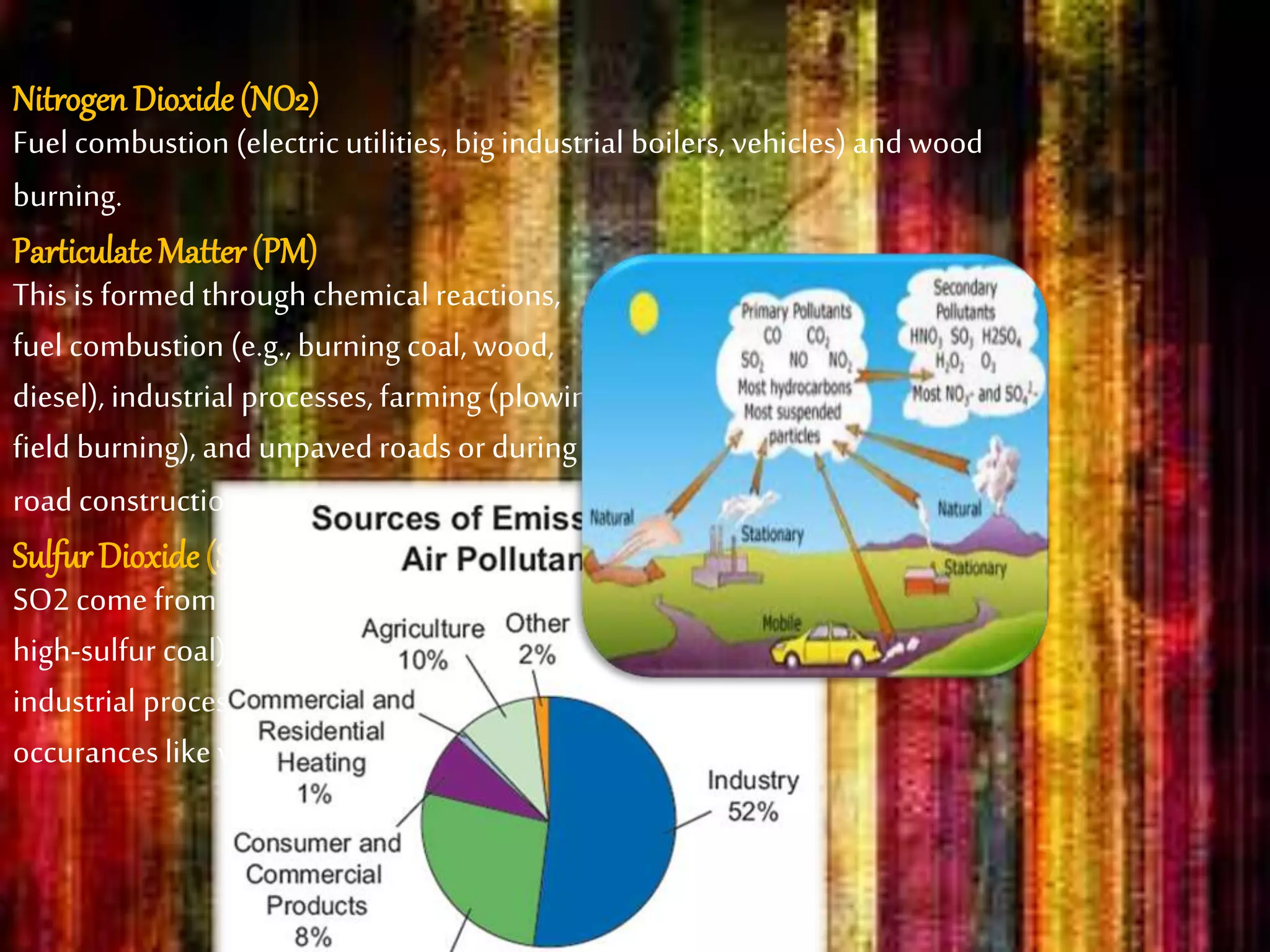
Nitrogen Dioxide (NO2) 
Fuel combustion (electric utilities, big industrial boilers, vehicles) and wood 
burning. 
Particulate Matter (PM) 
This is formed through chemical reactions, 
fuel combustion (e.g., burning coal, wood, 
diesel), industrial processes, farming (plowing, 
field burning), and unpaved roads or during 
road constructions. 
Sulfur Dioxide (SO2) 
SO2 come from fuel combustion(especially 
high-sulfur coal); electric utilities and 
industrial processes as well as and natural 
occurances like volcanoes.
Sources of air pollutants 
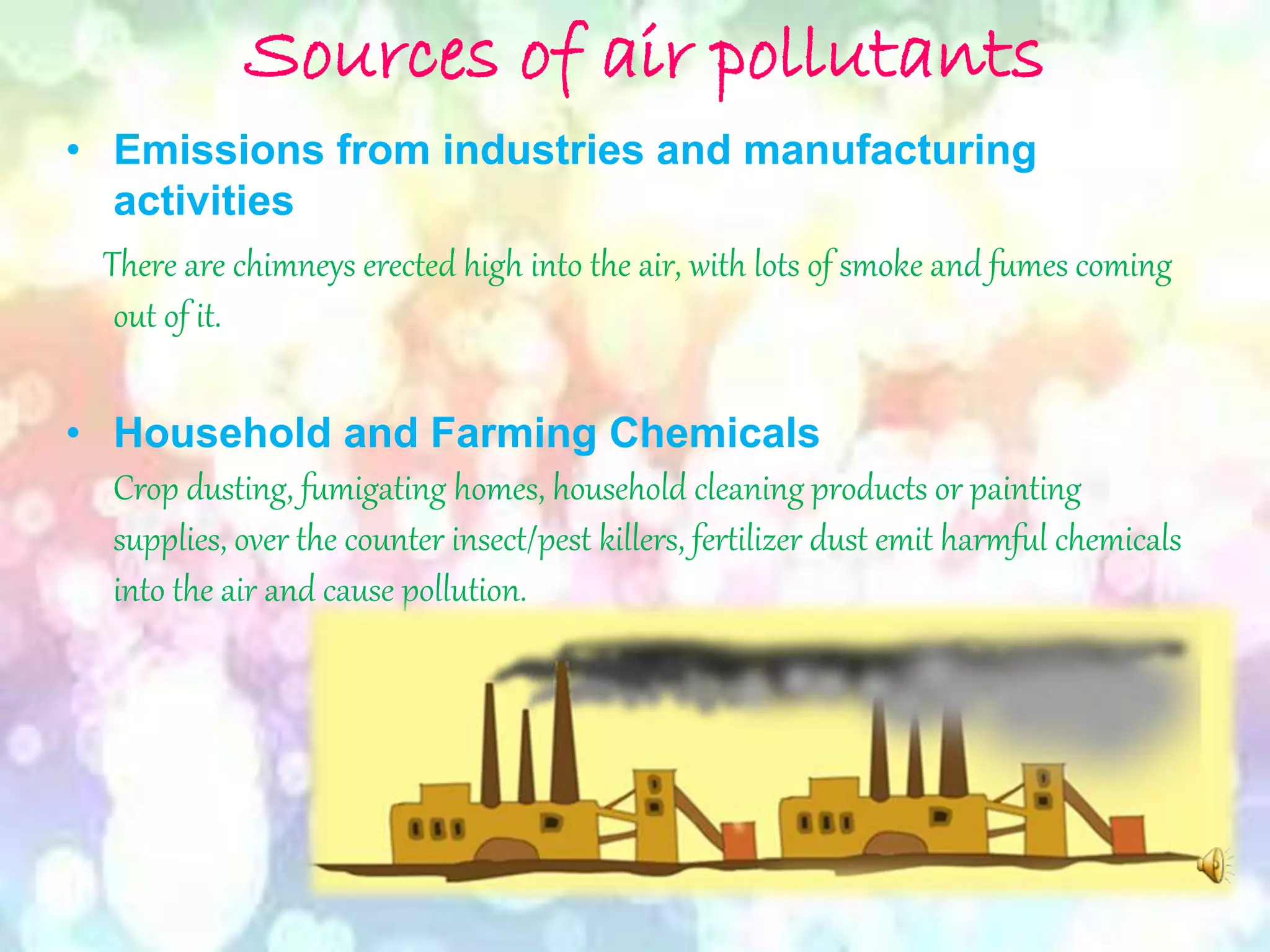
• Emissions from industries and manufacturing 
activities 
There are chimneys erected high into the air, with lots of smoke and fumes coming 
out of it. 
• Household and Farming Chemicals 
Crop dusting, fumigating homes, household cleaning products or painting 
supplies, over the counter insect/pest killers, fertilizer dust emit harmful chemicals 
into the air and cause pollution.
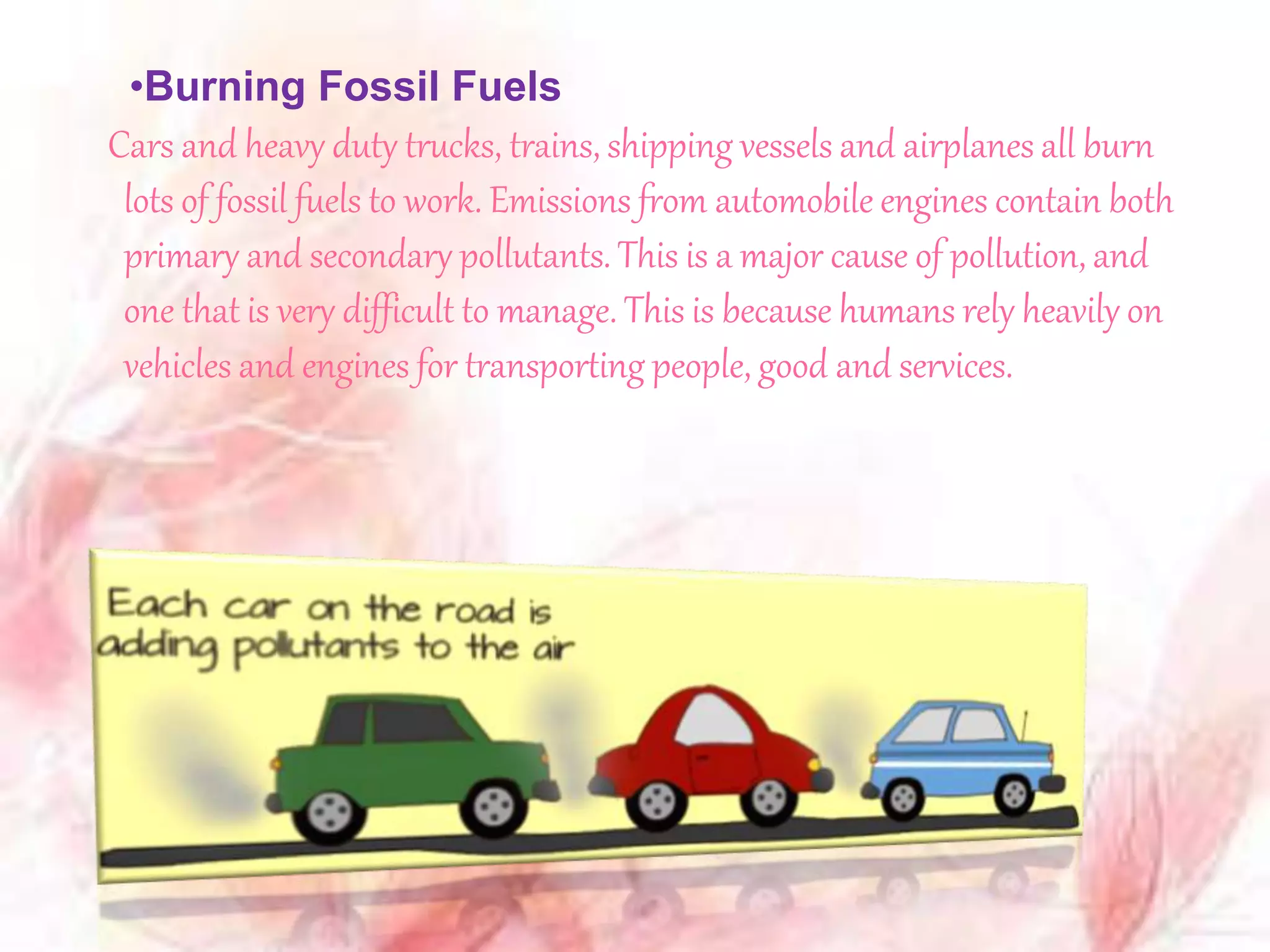
•Burning Fossil Fuels 
Cars and heavy duty trucks, trains, shipping vessels and airplanes all burn 
lots of fossil fuels to work. Emissions from automobile engines contain both 
primary and secondary pollutants. This is a major cause of pollution, and 
one that is very difficult to manage. This is because humans rely heavily on 
vehicles and engines for transporting people, good and services.
Effects of Air Pollution 
Effects of air pollution can 
be on human body , 
environment and living 
things . 
•Acidification: when an air pollutant, such as sulfuric acid 
combines with the water droplets that make up clouds, the 
water droplets become acidic, forming acid rain. Acid rain 
also changes the chemistry of the lakes and streams that 
the rainwater flows into, harming fish and other aquatic 
life. 
•Ground-level ozone: 
Gas Ozone can affect people’s health and can damage 
vegetation types and some animal life too.
•Particulate matter: 
Short-term effects 
include irritation to the eyes, nose and throat, 
and upper respiratory infections such as 
bronchitis and pneumonia. Others include 
headaches, nausea, and allergic reactions. 
Long-term health effects 
can include chronic respiratory disease, lung 
cancer, heart disease, and even damage to the 
brain, nerves, liver, or kidneys.
Steps to prevent air pollution 
• Prevention methods can either come from 
government (laws)or by individual actions. 
•Government (or community) level prevention 
Governments have already taken action against air pollution by introducing 
green energy. Some governments are investing in wind energy and solar energy, 
as well as other renewable energy, to minimize burning of fossil fuels . 
Use energy (light, water, boiler, kettle and fire woods) wisely. 
things. This will minimize the dependence of producing new things. 
Manufacturing industries create a lot of pollution, so if we can re-use things like shopping 
plastic bags, clothing, paper and bottles, it can help.
Steps to control air pollution 
Vehicles can’t be stopped plying on the roads just for 
the sake of controlling the air pollution. Some of the main 
environment steps are : 
• Maintain air pressure in tubes properly 
• Avoid using adulterated fuel 
• Never use or apply pressure horn 
• Use vehicle when very necessary 
• If convenient rely mostly on public transport 
Every Industry usually has a health and environment manager to develop 
environmental management plan. Steps given below to keep its 
emissions and effluents up to the prescribed limits: 
• Must follow a well designed environment management plan 
• For all development activities must conduct environmental impact 
assessment 
• Keep machinery and tools in good working condition 
• If available apply tools of self monitoring and reporting to check pollution 
• Remain in touch with the concerned environmental regulator to get 
familiar with laws and regulations 
• Avoid following short-cuts to minimize pollution for the time being.
Simple actions you can take to reduce air pollution and to 
keep the air cleaner and healthier for everyone to breathe: 
• Walk, bike, carpool, or take public transit. 
• Reduce your heating needs by making your house more energy 
efficient . 
• Don't burn wood or trash. Instead of burning debris, start a compost pile in 
your backyard for organic materials. 
• Use hand-powered garden tools. Avoid using gasoline or diesel-powered 
equipment such as lawnmowers and leaf-blowers. 
• Reduce, reuse and recycle. 
• Avoid idling. Turn off your car’s engine while waiting for someone and try 
to avoid drive-through lines. 
• Garden without pesticides. There are many healthy and safe alternatives to 
harmful cosmetic pesticides. 
• Get involved. Support national and local efforts to clean up the air. 
Ways to maintain clean air
Practice to maintain clean air 
1. Use Your Appliances Less Often 
2. Use Your Car Less Often 
3. We can grow more trees. 
4. Higher chimneys helps the emission to be released 
higher up in the atmosphere. 
5. Mining places should have more trees grown . 
6. Industries should be away from residential areas. 
7. Railway tracks must be electrified. 
8. Recycling paper, plastic, glass bottles, and aluminum 
cans.
Presenter : 
Karmun 
Ily 
Indra 
Crista 
Puteri 
Mahirah 
Adibah 
Thank You !!!

Air pollution presentation

  • 1.
    Title : AirPollution
  • 2.
     Air pollutionoccurs when gases, dust particles, fumes (or smoke) or odour are introduced into the atmosphere in a way that makes it harmful to humans, animals and plant. This is because the air becomes dirty .
  • 3.
    Examples of airpollutants Carbon Monoxide (CO) Fuel combustion from vehicles and engines. Ground-level Ozone (O3) Secondary pollutant formed by chemical reaction of volatile organic compounds (VOCs) and NOx in the presence of sunlight. Lead (Pb) Smelters (metal refineries) and other metal industries; combustion of leaded gasoline in piston engine aircraft; waste incinerators (waste burners), and battery manufacturing.
  • 4.
    Nitrogen Dioxide (NO2) Fuel combustion (electric utilities, big industrial boilers, vehicles) and wood burning. Particulate Matter (PM) This is formed through chemical reactions, fuel combustion (e.g., burning coal, wood, diesel), industrial processes, farming (plowing, field burning), and unpaved roads or during road constructions. Sulfur Dioxide (SO2) SO2 come from fuel combustion(especially high-sulfur coal); electric utilities and industrial processes as well as and natural occurances like volcanoes.
  • 5.
    Sources of airpollutants • Emissions from industries and manufacturing activities There are chimneys erected high into the air, with lots of smoke and fumes coming out of it. • Household and Farming Chemicals Crop dusting, fumigating homes, household cleaning products or painting supplies, over the counter insect/pest killers, fertilizer dust emit harmful chemicals into the air and cause pollution.
  • 6.
    •Burning Fossil Fuels Cars and heavy duty trucks, trains, shipping vessels and airplanes all burn lots of fossil fuels to work. Emissions from automobile engines contain both primary and secondary pollutants. This is a major cause of pollution, and one that is very difficult to manage. This is because humans rely heavily on vehicles and engines for transporting people, good and services.
  • 7.
    Effects of AirPollution Effects of air pollution can be on human body , environment and living things . •Acidification: when an air pollutant, such as sulfuric acid combines with the water droplets that make up clouds, the water droplets become acidic, forming acid rain. Acid rain also changes the chemistry of the lakes and streams that the rainwater flows into, harming fish and other aquatic life. •Ground-level ozone: Gas Ozone can affect people’s health and can damage vegetation types and some animal life too.
  • 8.
    •Particulate matter: Short-termeffects include irritation to the eyes, nose and throat, and upper respiratory infections such as bronchitis and pneumonia. Others include headaches, nausea, and allergic reactions. Long-term health effects can include chronic respiratory disease, lung cancer, heart disease, and even damage to the brain, nerves, liver, or kidneys.
  • 9.
    Steps to preventair pollution • Prevention methods can either come from government (laws)or by individual actions. •Government (or community) level prevention Governments have already taken action against air pollution by introducing green energy. Some governments are investing in wind energy and solar energy, as well as other renewable energy, to minimize burning of fossil fuels . Use energy (light, water, boiler, kettle and fire woods) wisely. things. This will minimize the dependence of producing new things. Manufacturing industries create a lot of pollution, so if we can re-use things like shopping plastic bags, clothing, paper and bottles, it can help.
  • 10.
    Steps to controlair pollution Vehicles can’t be stopped plying on the roads just for the sake of controlling the air pollution. Some of the main environment steps are : • Maintain air pressure in tubes properly • Avoid using adulterated fuel • Never use or apply pressure horn • Use vehicle when very necessary • If convenient rely mostly on public transport Every Industry usually has a health and environment manager to develop environmental management plan. Steps given below to keep its emissions and effluents up to the prescribed limits: • Must follow a well designed environment management plan • For all development activities must conduct environmental impact assessment • Keep machinery and tools in good working condition • If available apply tools of self monitoring and reporting to check pollution • Remain in touch with the concerned environmental regulator to get familiar with laws and regulations • Avoid following short-cuts to minimize pollution for the time being.
  • 11.
    Simple actions youcan take to reduce air pollution and to keep the air cleaner and healthier for everyone to breathe: • Walk, bike, carpool, or take public transit. • Reduce your heating needs by making your house more energy efficient . • Don't burn wood or trash. Instead of burning debris, start a compost pile in your backyard for organic materials. • Use hand-powered garden tools. Avoid using gasoline or diesel-powered equipment such as lawnmowers and leaf-blowers. • Reduce, reuse and recycle. • Avoid idling. Turn off your car’s engine while waiting for someone and try to avoid drive-through lines. • Garden without pesticides. There are many healthy and safe alternatives to harmful cosmetic pesticides. • Get involved. Support national and local efforts to clean up the air. Ways to maintain clean air
  • 12.
    Practice to maintainclean air 1. Use Your Appliances Less Often 2. Use Your Car Less Often 3. We can grow more trees. 4. Higher chimneys helps the emission to be released higher up in the atmosphere. 5. Mining places should have more trees grown . 6. Industries should be away from residential areas. 7. Railway tracks must be electrified. 8. Recycling paper, plastic, glass bottles, and aluminum cans.
  • 13.
    Presenter : Karmun Ily Indra Crista Puteri Mahirah Adibah Thank You !!!