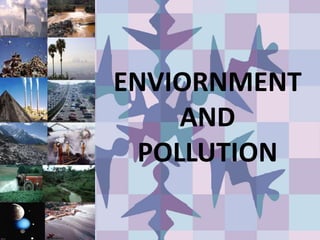
ENVIORNMENT
AND
POLLUTION
CONTENTS
• Environment
• Ecosystem
• Pollution
• Impacts of pollution
• Types of pollution
• Air pollution
• Soil pollution
• Water pollution
Environment
• The term environment refers to all the
components of the earth such as land, water
and air, all living and non-living organisms
and interactions among them.
Ecosystem
• An ecosystem is all the living and nonliving
things in a certain area. All the plants and
animals, even the microorganisms that live in
the soil, are living parts of an ecosystem. Air,
water, and rocks are nonliving parts of an
ecosystem.
• Ecosystems are smaller parts of all the living
environments on Earth. Earth’s entire living
environment is called the biosphere.
Pollution
• Pollution, contamination of Earth’s
environment with materials that interfere
with human health, the quality of life, or the
natural functioning of ecosystems . Although
some environmental pollution is a result of
natural causes such as volcanic eruptions,
most is caused by human activities.
Impacts of pollution
• Pollution can kill or sicken plants, animals, and
people. Pollution can change the environment.
Things that cause pollution are called pollutants.
• Pollution can get into the air. Air pollution can
irritate people’s lungs. Polluted air can mix with rain
to make acid rain. Acid rain kills trees and harms
fish in lakes.
• Pollution can also get into soil and water. From
there, pollutants can get into the food chain. Plants
take in the pollution from the ground. Animals that
eat the plants can be harmed, too. Bigger animals
and even people might eat the damaged animals.
Types of pollution
• Pollution is basically categorized into three
types that are:
• Air pollution
• Soil pollution
• Water pollution
Air pollution
• Air pollution is the contamination of air by
the pollutants which comes from factories
and power plants that burn coal and oil.
Smoke from factories and power plants can
mix with water in the air to make acid rain.
Air pollution also comes from cars and other
vehicles that burn gasoline.
Contd…
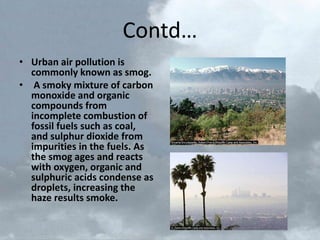
• Urban air pollution is
commonly known as smog.
• A smoky mixture of carbon
monoxide and organic
compounds from
incomplete combustion of
fossil fuels such as coal,
and sulphur dioxide from
impurities in the fuels. As
the smog ages and reacts
with oxygen, organic and
sulphuric acids condense as
droplets, increasing the
haze results smoke.
Greenhouse gas
• Many scientists think that pollution is
changing Earth’s climate. They think the
change is coming from gases in the air called
greenhouse gases. Carbon dioxide and other
gases trap heat from the Sun. They trap heat
the way glass walls and ceilings in
greenhouses trap heat. It stays warm inside a
greenhouse even when it is cold outside.
Its effect
• Greenhouse gases in the air make Earth warm enough for
life.
• But scientists think that people are putting too much carbon
dioxide and other greenhouse gases into the air.
• These extra greenhouse gases come from burning coal and
oil in factories and power plants.
• They come from burning gasoline in cars. Too much of them
will make Earth warmer.
• This warming could cause disastrous changes on the planet.
Soil pollution
• The pollutants which
contaminate the
soil come from chemicals
used on farms to kill
insects and other pests.
Pollutants can also seep
from garbage dumps into
the nearby soil and
water.
• Unhealthy soil
management methods
have seriously degraded
soil quality, caused soil
pollution, and enhanced
erosion.
Soil erosion
• Why is river water sometimes brown? The water
turns brown when it’s full of mud. A brown river is
an example of erosion in action. Flowing water
carries away, or erodes, tiny bits of dirt and rock
from the ground it passes over. Erosion moves rock
and dirt from place to place. Earth’s surface can be
greatly changed by erosion. Over tremendously
long periods of time, erosion can carry whole
mountains into the sea!
• Erosion can cause by water, wind, or ice.
Contd…
• Erosion cause by water: Rainwater runs down hillsides and carries
dirt with it. Over time, flowing water can carry away so much rock and dirt
that it cuts into the ground and forms a channel.
• Erosion cause by wind:Wind is the main cause of erosion in deserts.
There are few plants to hold the dry dirt in place. Wind blows away loose
sand and dry dirt.
• Erosion cause by ice:Glaciers are huge sheets of ice. Glaciers move
slowly across the land. Ice underneath the glacier picks up and carries away
sand, dirt, and pebbles. The sand, dirt, and pebbles grind away more rock as
the glacier moves.
Water pollution
• The pollutants which contaminate the
water comes from factories that dump
poisonous chemicals into lakes and
rivers. Water pollution can also come
from farms. Farmers put chemicals on
the ground to help crops grow and to
kill insects. Rain can wash these
chemicals into lakes and rivers.
Contd…
• Sewage, industrial wastes, and agricultural
chemicals such as fertilizers and pesticides
are the main causes of water pollution
• In developing nations, more than 95 percent
of urban sewage is discharged untreated into
rivers and bays, creating a major human
health hazard.
MADE BY:
NIHARIKA S PANDE

Environment and pollution

  • 1.
  • 2.
    CONTENTS • Environment • Ecosystem •Pollution • Impacts of pollution • Types of pollution • Air pollution • Soil pollution • Water pollution
  • 3.
    Environment • The termenvironment refers to all the components of the earth such as land, water and air, all living and non-living organisms and interactions among them.
  • 4.
    Ecosystem • An ecosystemis all the living and nonliving things in a certain area. All the plants and animals, even the microorganisms that live in the soil, are living parts of an ecosystem. Air, water, and rocks are nonliving parts of an ecosystem. • Ecosystems are smaller parts of all the living environments on Earth. Earth’s entire living environment is called the biosphere.
  • 5.
    Pollution • Pollution, contaminationof Earth’s environment with materials that interfere with human health, the quality of life, or the natural functioning of ecosystems . Although some environmental pollution is a result of natural causes such as volcanic eruptions, most is caused by human activities.
  • 6.
    Impacts of pollution •Pollution can kill or sicken plants, animals, and people. Pollution can change the environment. Things that cause pollution are called pollutants. • Pollution can get into the air. Air pollution can irritate people’s lungs. Polluted air can mix with rain to make acid rain. Acid rain kills trees and harms fish in lakes. • Pollution can also get into soil and water. From there, pollutants can get into the food chain. Plants take in the pollution from the ground. Animals that eat the plants can be harmed, too. Bigger animals and even people might eat the damaged animals.
  • 7.
    Types of pollution •Pollution is basically categorized into three types that are: • Air pollution • Soil pollution • Water pollution
  • 8.
    Air pollution • Airpollution is the contamination of air by the pollutants which comes from factories and power plants that burn coal and oil. Smoke from factories and power plants can mix with water in the air to make acid rain. Air pollution also comes from cars and other vehicles that burn gasoline.
  • 9.
    Contd… • Urban airpollution is commonly known as smog. • A smoky mixture of carbon monoxide and organic compounds from incomplete combustion of fossil fuels such as coal, and sulphur dioxide from impurities in the fuels. As the smog ages and reacts with oxygen, organic and sulphuric acids condense as droplets, increasing the haze results smoke.
  • 10.
    Greenhouse gas • Manyscientists think that pollution is changing Earth’s climate. They think the change is coming from gases in the air called greenhouse gases. Carbon dioxide and other gases trap heat from the Sun. They trap heat the way glass walls and ceilings in greenhouses trap heat. It stays warm inside a greenhouse even when it is cold outside.
  • 11.
    Its effect • Greenhousegases in the air make Earth warm enough for life. • But scientists think that people are putting too much carbon dioxide and other greenhouse gases into the air. • These extra greenhouse gases come from burning coal and oil in factories and power plants. • They come from burning gasoline in cars. Too much of them will make Earth warmer. • This warming could cause disastrous changes on the planet.
  • 12.
    Soil pollution • Thepollutants which contaminate the soil come from chemicals used on farms to kill insects and other pests. Pollutants can also seep from garbage dumps into the nearby soil and water. • Unhealthy soil management methods have seriously degraded soil quality, caused soil pollution, and enhanced erosion.
  • 13.
    Soil erosion • Whyis river water sometimes brown? The water turns brown when it’s full of mud. A brown river is an example of erosion in action. Flowing water carries away, or erodes, tiny bits of dirt and rock from the ground it passes over. Erosion moves rock and dirt from place to place. Earth’s surface can be greatly changed by erosion. Over tremendously long periods of time, erosion can carry whole mountains into the sea! • Erosion can cause by water, wind, or ice.
  • 14.
    Contd… • Erosion causeby water: Rainwater runs down hillsides and carries dirt with it. Over time, flowing water can carry away so much rock and dirt that it cuts into the ground and forms a channel. • Erosion cause by wind:Wind is the main cause of erosion in deserts. There are few plants to hold the dry dirt in place. Wind blows away loose sand and dry dirt. • Erosion cause by ice:Glaciers are huge sheets of ice. Glaciers move slowly across the land. Ice underneath the glacier picks up and carries away sand, dirt, and pebbles. The sand, dirt, and pebbles grind away more rock as the glacier moves.
  • 15.
    Water pollution • Thepollutants which contaminate the water comes from factories that dump poisonous chemicals into lakes and rivers. Water pollution can also come from farms. Farmers put chemicals on the ground to help crops grow and to kill insects. Rain can wash these chemicals into lakes and rivers.
  • 16.
    Contd… • Sewage, industrialwastes, and agricultural chemicals such as fertilizers and pesticides are the main causes of water pollution • In developing nations, more than 95 percent of urban sewage is discharged untreated into rivers and bays, creating a major human health hazard.
  • 17.