ENVIRONMENTAL POLLUTION Effects
Air pollution
Human health
Environment
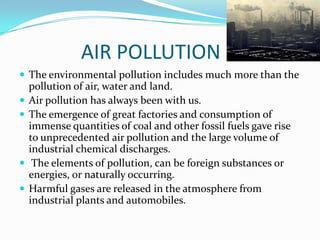
Environmental regulation             AIR POLLUTION The environmental pollution includes much more than the pollution of air, water and land.Air pollution has always been with us.The emergence of great factories and consumption of immense quantities of coal and other fossil fuels gave rise to unprecedented air pollution and the large volume of industrial chemical discharges. The elements of pollution, can be foreign substances or energies, or naturally occurring.Harmful gases are released in the atmosphere from industrial plants and automobiles.
           FORMS OF POLLUTIONThe major forms of pollution are listed below along with the particular pollutants relevant to each of them:Air pollution, the release of chemicals and particulates into the atmosphere. Common gaseous air pollutants include carbon monoxide, sulfur dioxide, chlorofluorocarbons (CFCs) and nitrogen oxides produced by industry and motor vehicles. Photochemical ozone and smog are created as nitrogen oxides and hydrocarbons react to sunlight.Light pollution, includes light trespass, over-illumination and astronomical interference.Littering
VARIOUS TYPES OF POLLUTIONNoise pollution, which encompasses roadway noise, aircraft noise, industrial noise as well as high-intensity sonar. Soil contamination occurs when chemicals are released by spill or underground leakage.Thermal pollution, is a temperature change in natural water bodies caused by human influence, such as use of water as coolant in a power plant.Visual pollution, which can refer to the presence of overhead power lines, motorway billboards, scarred landforms (as from strip mining), open storage of trash or municipal solid waste.Water pollution, by the discharge of wastewater from commercial and industrial waste into surface waters.
CAUSES   OF        ONMENTAL POLLUTIONAir pollution produced by ships may alter clouds, affecting global temperatures.Air pollution comes from both natural and man made sources.  Motor vehicle emissions are one of the leading causes of air pollution.Metals production factories, plastics factories, and other heavy industry. Agricultural air pollution comes from contemporary practices which include clear felling and burning of natural vegetation as well as spraying of pesticides and herbicides.
EFFECTS OF ENVIRONMENT POLLUTION ON HUMANSHuman healthAdverse air quality can kill many organisms including humansOzone pollution can cause respiratory disease, cardiovascular disease, throat inflammation, chest pain, and congestionWater pollution causes approximately 14,000 deaths per day, mostly due to contamination of drinking water by untreated sewage in developing countriesOil spills can cause skin irritations and rashes
HUMAN HEALTHNoise pollution induces hearing loss, high blood pressure, stress, and sleep disturbance.People with heart or lung disorders are under additional risk.Children and infants are also at serious riskLead and other heavy metals have been shown to cause neurological problems.Chemical and radioactive substances can cause cancer and as well as birth defects.
EFFECTS OF ENVIRONMENTAL POLLUTIONWater pollutionGlobal warmingBiomagnifications describes situations where toxins may pass through trophic levels, becoming exponentially more concentrated in the process.Carbon dioxide emissions cause ocean acidificationThe emission of greenhouse gases leads to global warming which affects ecosystems in many ways.

Environmental pollution

  • 1.
  • 2.
  • 3.
  • 4.
  • 5.
    Environmental regulation AIR POLLUTION The environmental pollution includes much more than the pollution of air, water and land.Air pollution has always been with us.The emergence of great factories and consumption of immense quantities of coal and other fossil fuels gave rise to unprecedented air pollution and the large volume of industrial chemical discharges. The elements of pollution, can be foreign substances or energies, or naturally occurring.Harmful gases are released in the atmosphere from industrial plants and automobiles.
  • 6.
    FORMS OF POLLUTIONThe major forms of pollution are listed below along with the particular pollutants relevant to each of them:Air pollution, the release of chemicals and particulates into the atmosphere. Common gaseous air pollutants include carbon monoxide, sulfur dioxide, chlorofluorocarbons (CFCs) and nitrogen oxides produced by industry and motor vehicles. Photochemical ozone and smog are created as nitrogen oxides and hydrocarbons react to sunlight.Light pollution, includes light trespass, over-illumination and astronomical interference.Littering
  • 7.
    VARIOUS TYPES OFPOLLUTIONNoise pollution, which encompasses roadway noise, aircraft noise, industrial noise as well as high-intensity sonar. Soil contamination occurs when chemicals are released by spill or underground leakage.Thermal pollution, is a temperature change in natural water bodies caused by human influence, such as use of water as coolant in a power plant.Visual pollution, which can refer to the presence of overhead power lines, motorway billboards, scarred landforms (as from strip mining), open storage of trash or municipal solid waste.Water pollution, by the discharge of wastewater from commercial and industrial waste into surface waters.
  • 8.
    CAUSES OF ONMENTAL POLLUTIONAir pollution produced by ships may alter clouds, affecting global temperatures.Air pollution comes from both natural and man made sources.  Motor vehicle emissions are one of the leading causes of air pollution.Metals production factories, plastics factories, and other heavy industry. Agricultural air pollution comes from contemporary practices which include clear felling and burning of natural vegetation as well as spraying of pesticides and herbicides.
  • 9.
    EFFECTS OF ENVIRONMENTPOLLUTION ON HUMANSHuman healthAdverse air quality can kill many organisms including humansOzone pollution can cause respiratory disease, cardiovascular disease, throat inflammation, chest pain, and congestionWater pollution causes approximately 14,000 deaths per day, mostly due to contamination of drinking water by untreated sewage in developing countriesOil spills can cause skin irritations and rashes
  • 10.
    HUMAN HEALTHNoise pollutioninduces hearing loss, high blood pressure, stress, and sleep disturbance.People with heart or lung disorders are under additional risk.Children and infants are also at serious riskLead and other heavy metals have been shown to cause neurological problems.Chemical and radioactive substances can cause cancer and as well as birth defects.
  • 11.
    EFFECTS OF ENVIRONMENTALPOLLUTIONWater pollutionGlobal warmingBiomagnifications describes situations where toxins may pass through trophic levels, becoming exponentially more concentrated in the process.Carbon dioxide emissions cause ocean acidificationThe emission of greenhouse gases leads to global warming which affects ecosystems in many ways.