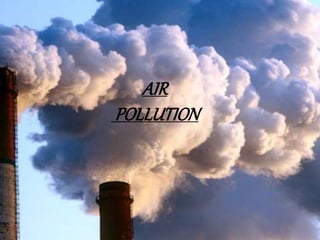
AIR
POLLUTION
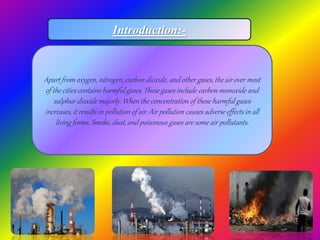
Introduction:-
Apart from oxygen, nitrogen, carbon dioxide, and other gases, the air over most
of the cities contains harmful gases. These gases include carbon monoxide and
sulphur dioxide majorly. When the concentration of these harmful gases
increases, it results in pollution of air. Air pollution causes adverse effects in all
living forms. Smoke, dust, and poisonous gases are some air pollutants.
Causes of Air Pollution
Any Substance in the air that can
cause harm to living things and the
physical environment is known as
an air pollutant. Industries,
vehicles, increase in the population
and urbanization are some of the
major causes for air pollution.
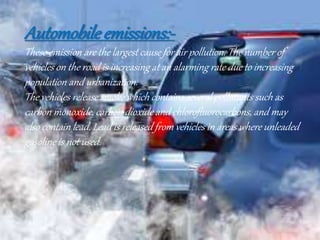
Automobile emissions:-
These emission are the largest cause for air pollution. The number of
vehicles on the road is increasing at an alarming rate due to increasing
population and urbanization.
The vehicles release smoke which contains several pollutants such as
carbon monoxide, carbon dioxide and chlorofluorocarbons, and may
also contain lead. Lead is released from vehicles in areas where unleaded
gasoline is not used.
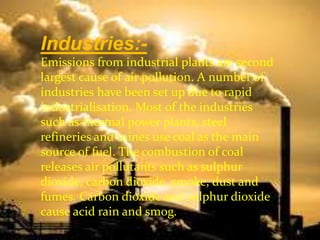
Industries:-
Emissions from industrial plants are second
largest cause of air pollution. A number of
industries have been set up due to rapid
industrialisation. Most of the industries
such as thermal power plants, steel
refineries and mines use coal as the main
source of fuel. The combustion of coal
releases air pollutants such as sulphur
dioxide, carbon dioxide, smoke, dust and
fumes. Carbon dioxide and sulphur dioxide
cause acid rain and smog.
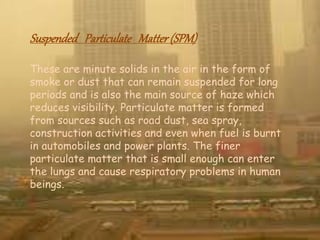
Suspended Particulate Matter(SPM)
These are minute solids in the air in the form of
smoke or dust that can remain suspended for long
periods and is also the main source of haze which
reduces visibility. Particulate matter is formed
from sources such as road dust, sea spray,
construction activities and even when fuel is burnt
in automobiles and power plants. The finer
particulate matter that is small enough can enter
the lungs and cause respiratory problems in human
beings.
Carbonmonoxide:-
This is produced during combustion. Any
combustion process, produces carbon monoxide
gas due to incomplete combustion. When carbon
monoxide is inhaled, it combines with the oxygen
present in the haemoglobin of the blood to form
carboxyhaemoglobin (COHb). After this
combination, the trapped haemoglobin is no
longer available for transporting oxygen. This
leads to suffocation and can also cause death.
Carbondioxide:-
Air contains 0.03% of carbon dioxide and it is
normally not considered a pollutant. However, excess
of carbon dioxide is considered a pollutant because it
leads to adverse effects on the environment. The
concentration of atmospheric carbon dioxide has
increased by about 35%. This happened due to
industrialisation which leads to deforestation and
combustion of fossil fuels. The excess of carbon
dioxide in the atmosphere also increases the acidity
of sea water. This adversely affects organisms living
in the water as the availability of carbonates for
forming shells decreases. The higher concentration of
carbon dioxide in the atmosphere also increases the
temperature of the atmosphere causing greenhouse
effect.
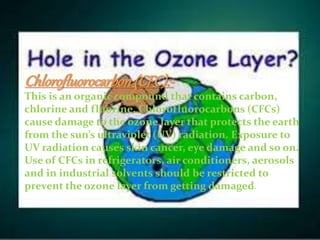
Chlorofluorocarbon(CFC):-
This is an organic compound that contains carbon,
chlorine and fluorine. Chlorofluorocarbons (CFCs)
cause damage to the ozone layer that protects the earth
from the sun’s ultraviolet (UV) radiation. Exposure to
UV radiation causes skin cancer, eye damage and so on.
Use of CFCs in refrigerators, air conditioners, aerosols
and in industrial solvents should be restricted to
prevent the ozone layer from getting damaged.
Sulphur dioxide:-
This gas normally released from thermal power
plants, petroleum industry and oil refineries
causes heart and respiratory diseases in
humans and animals. It also affects growth and
reproduction of plants. It combines with oxygen
and forms sulphur trioxide, which on
combination with water in the clouds results in
acid rain.
Lead:-
Lead compounds are emitted in the atmosphere from the automobile exhausts. Lead can be dangerous
for small children ad can lead to lower IQs and kidney problems. For adults, exposure to lead can
increase the chance of having heart attacks or strokes.
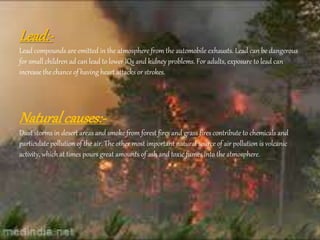
Natural causes:-
Dust storms in desert areas and smoke from forest fires and grass fires contribute to chemicals and
particulate pollution of the air. The other most important natural source of air pollution is volcanic
activity, which at times pours great amounts of ash and toxic fumes into the atmosphere.
Effectsof Air Pollution
Air pollution affects plants, animals and also the climatic
conditions. Some effects of air pollution are discussed in the
following section.
Smog:-
The word smog has been coined from a combination of the words
smoke and fog. It decreases the capacity of the lungs, causes
shortness of breath, pain when inhaling deeply, wheezing and
coughing. It can cause eye and nose irritation as it dries out the
protective membranes of the nose and throat and interferes with
the body’s ability to fight infection, thus increasing the
susceptibility to illness.
Acidrain:-
Acid rain causes extensive damage to water, forest, soil
resources and human health. It can react with marble and so
affects all buildings, monuments and statues made of marble. The
beautiful marble structure of Taj Mahal is slowly getting eroded
by sulphur dioxide fumes released into the atmosphere.
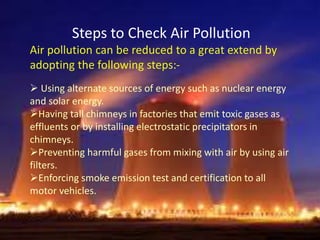
Steps to Check Air Pollution
Air pollution can be reduced to a great extend by
adopting the following steps:-
 Using alternate sources of energy such as nuclear energy
and solar energy.
Having tall chimneys in factories that emit toxic gases as
effluents or by installing electrostatic precipitators in
chimneys.
Preventing harmful gases from mixing with air by using air
filters.
Enforcing smoke emission test and certification to all
motor vehicles.
 Using unleaded petrol that minimises
air pollution.
Using cleaner fuels, improved stoves
and better ventilation to reduce
indoor air pollution.
Building factories away from cities.
Growing more trees to absorb carbon
dioxide.
ThankYou
Submitted By:-
Harshpreet Kaur
Class – VIII A
Roll No.- 8
Submitted To:-
Ms. Aparna
Science teacher

Air Pollution

  • 2.
  • 3.
    Introduction:- Apart from oxygen,nitrogen, carbon dioxide, and other gases, the air over most of the cities contains harmful gases. These gases include carbon monoxide and sulphur dioxide majorly. When the concentration of these harmful gases increases, it results in pollution of air. Air pollution causes adverse effects in all living forms. Smoke, dust, and poisonous gases are some air pollutants.
  • 4.
    Causes of AirPollution Any Substance in the air that can cause harm to living things and the physical environment is known as an air pollutant. Industries, vehicles, increase in the population and urbanization are some of the major causes for air pollution.
  • 5.
    Automobile emissions:- These emissionare the largest cause for air pollution. The number of vehicles on the road is increasing at an alarming rate due to increasing population and urbanization. The vehicles release smoke which contains several pollutants such as carbon monoxide, carbon dioxide and chlorofluorocarbons, and may also contain lead. Lead is released from vehicles in areas where unleaded gasoline is not used.
  • 6.
    Industries:- Emissions from industrialplants are second largest cause of air pollution. A number of industries have been set up due to rapid industrialisation. Most of the industries such as thermal power plants, steel refineries and mines use coal as the main source of fuel. The combustion of coal releases air pollutants such as sulphur dioxide, carbon dioxide, smoke, dust and fumes. Carbon dioxide and sulphur dioxide cause acid rain and smog.
  • 7.
    Suspended Particulate Matter(SPM) Theseare minute solids in the air in the form of smoke or dust that can remain suspended for long periods and is also the main source of haze which reduces visibility. Particulate matter is formed from sources such as road dust, sea spray, construction activities and even when fuel is burnt in automobiles and power plants. The finer particulate matter that is small enough can enter the lungs and cause respiratory problems in human beings.
  • 8.
    Carbonmonoxide:- This is producedduring combustion. Any combustion process, produces carbon monoxide gas due to incomplete combustion. When carbon monoxide is inhaled, it combines with the oxygen present in the haemoglobin of the blood to form carboxyhaemoglobin (COHb). After this combination, the trapped haemoglobin is no longer available for transporting oxygen. This leads to suffocation and can also cause death.
  • 9.
    Carbondioxide:- Air contains 0.03%of carbon dioxide and it is normally not considered a pollutant. However, excess of carbon dioxide is considered a pollutant because it leads to adverse effects on the environment. The concentration of atmospheric carbon dioxide has increased by about 35%. This happened due to industrialisation which leads to deforestation and combustion of fossil fuels. The excess of carbon dioxide in the atmosphere also increases the acidity of sea water. This adversely affects organisms living in the water as the availability of carbonates for forming shells decreases. The higher concentration of carbon dioxide in the atmosphere also increases the temperature of the atmosphere causing greenhouse effect.
  • 10.
    Chlorofluorocarbon(CFC):- This is anorganic compound that contains carbon, chlorine and fluorine. Chlorofluorocarbons (CFCs) cause damage to the ozone layer that protects the earth from the sun’s ultraviolet (UV) radiation. Exposure to UV radiation causes skin cancer, eye damage and so on. Use of CFCs in refrigerators, air conditioners, aerosols and in industrial solvents should be restricted to prevent the ozone layer from getting damaged.
  • 11.
    Sulphur dioxide:- This gasnormally released from thermal power plants, petroleum industry and oil refineries causes heart and respiratory diseases in humans and animals. It also affects growth and reproduction of plants. It combines with oxygen and forms sulphur trioxide, which on combination with water in the clouds results in acid rain.
  • 12.
    Lead:- Lead compounds areemitted in the atmosphere from the automobile exhausts. Lead can be dangerous for small children ad can lead to lower IQs and kidney problems. For adults, exposure to lead can increase the chance of having heart attacks or strokes. Natural causes:- Dust storms in desert areas and smoke from forest fires and grass fires contribute to chemicals and particulate pollution of the air. The other most important natural source of air pollution is volcanic activity, which at times pours great amounts of ash and toxic fumes into the atmosphere.
  • 13.
    Effectsof Air Pollution Airpollution affects plants, animals and also the climatic conditions. Some effects of air pollution are discussed in the following section. Smog:- The word smog has been coined from a combination of the words smoke and fog. It decreases the capacity of the lungs, causes shortness of breath, pain when inhaling deeply, wheezing and coughing. It can cause eye and nose irritation as it dries out the protective membranes of the nose and throat and interferes with the body’s ability to fight infection, thus increasing the susceptibility to illness. Acidrain:- Acid rain causes extensive damage to water, forest, soil resources and human health. It can react with marble and so affects all buildings, monuments and statues made of marble. The beautiful marble structure of Taj Mahal is slowly getting eroded by sulphur dioxide fumes released into the atmosphere.
  • 14.
    Steps to CheckAir Pollution Air pollution can be reduced to a great extend by adopting the following steps:-  Using alternate sources of energy such as nuclear energy and solar energy. Having tall chimneys in factories that emit toxic gases as effluents or by installing electrostatic precipitators in chimneys. Preventing harmful gases from mixing with air by using air filters. Enforcing smoke emission test and certification to all motor vehicles.
  • 15.
     Using unleadedpetrol that minimises air pollution. Using cleaner fuels, improved stoves and better ventilation to reduce indoor air pollution. Building factories away from cities. Growing more trees to absorb carbon dioxide.
  • 16.
    ThankYou Submitted By:- Harshpreet Kaur Class– VIII A Roll No.- 8 Submitted To:- Ms. Aparna Science teacher