Presenting By
Ahmad Ali (42)
6th Semester
IBGE
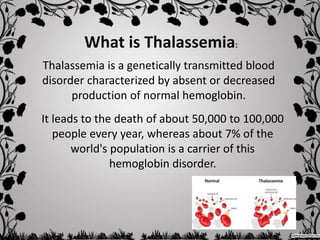
Thalassemia is a genetically transmitted blood
disorder characterized by absent or decreased
production of normal hemoglobin.
What is Thalassemia:
It leads to the death of about 50,000 to 100,000
people every year, whereas about 7% of the
world's population is a carrier of this
hemoglobin disorder.
• Thalassemia, was first described in 1925
by a Dr Thomas Cooley while studing italian
childrens with severe anemia (low levels of red
blood cells), poor growth, huge abdominal organs,
and early childhood death.
• In 1946, the cause of thalassemia was found
to be an abnormal hemoglobin structure.
History:
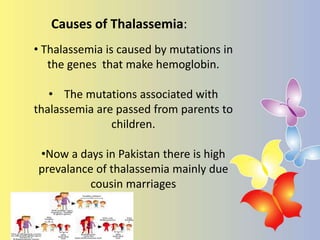
• Thalassemia is caused by mutations in
the genes that make hemoglobin.
• The mutations associated with
thalassemia are passed from parents to
children.
•Now a days in Pakistan there is high
prevalance of thalassemia mainly due
cousin marriages
Causes of Thalassemia:
•There are two primary types of Thalassemia
disease:
•Hemoglobin consist of two protein chain.
1. Alpha chain
2. Beta chain
So , type of thalassemia depends on
whether mutation is there in Alpha chain
or Beta chain.
•Alpha Thalassemia
• Beta Thalassemia
Types of Thalassemia:
Alpha thalassemia occurs when a
gene or genes related to the
alpha globin protein are missing
or changed
(Galanello & Cao, 2011).
Alpha Thalassemia:
Beta thalassemia occurs when
a gene or genes related to the
beta globin protein are
missing or changed
(Galanello & Origa, 2010).
Beta Thalassemia:
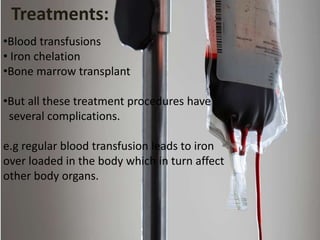
•Blood transfusions
• Iron chelation
•Bone marrow transplant
•But all these treatment procedures have
several complications.
e.g regular blood transfusion leads to iron
over loaded in the body which in turn affect
other body organs.
Treatments:
GENE THERAPY
A HOPE TO CURE
THALASSEMIA
Gene therapy:
• Gene therapy is a treatment that
involves altering the genes inside your
body's cells.
• Gene therapy holds promise for
treating a wide range of diseases
including thalassemia, SCA,
hemophilia .
• Scientists pioneering a new gene transfer treatment for
the blood disorder thalassemia, claiming they can
correct the lack of globin in patients' blood
cells which causes the disease.
• The technology is based on delivery of a lentiviral
vector carrying the normal human
globin gene into HSCs.
Lentiviral vectors belong to retroviridae family
e.g Human immunodeficiency virus type 1, the
representative lentivirus.
Gene Therapy to treat Thalassemia:
• In 2007, a patient in France receive
gene therapy for severe beta-Thalassemia
(Fucharoen & Winichagoon, 2012).
• Nine years after the procedure,
he was still doing well without blood
transfusions means that he don’t need his
monthly blood trasfusion.
Clinical Trials:
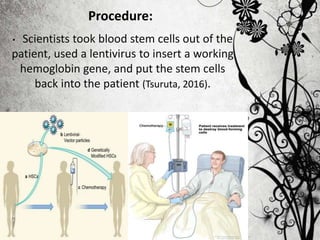
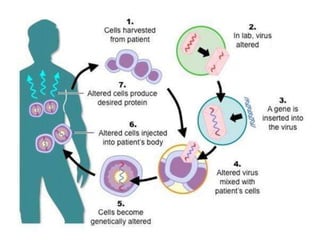
• Scientists took blood stem cells out of the
patient, used a lentivirus to insert a working
hemoglobin gene, and put the stem cells
back into the patient (Tsuruta, 2016).
Procedure:
Complications:
• There is only one patient in this study, but
the technique needs to go through a lot
more testing before it is commonly used in
hospitals.
• Also, scientists still don't know how to control
where the virus inserts the working
hemoglobin gene.
References:
Fucharoen, S., & Winichagoon, P. (2012). New updating into
hemoglobinopathies. Int J Lab Hematol, 34(6), 559-565.
doi:10.1111/j.1751-553X.2012.01446.x
Galanello, R., & Cao, A. (2011). Gene test review. Alpha-thalassemia.
Genet Med, 13(2), 83-88. doi:10.1097/GIM.0b013e3181fcb468
Galanello, R., & Origa, R. (2010). Beta-thalassemia. Orphanet J Rare
Dis, 5, 11. doi:10.1186/1750-1172-5-11
Tsuruta, T. ( 2016). Recent Advances in Hematopoietic Stem Cell Gene
Therapy
http://www.intechopen.com/books/innovations-in-stem-cell-
transplantation/recent-advances-in-hematopoietic-stem-cell-gene
therapy doi: 10.5772/53587
Ahmadali

Ahmadali

  • 2.
    Presenting By Ahmad Ali(42) 6th Semester IBGE
  • 4.
    Thalassemia is agenetically transmitted blood disorder characterized by absent or decreased production of normal hemoglobin. What is Thalassemia: It leads to the death of about 50,000 to 100,000 people every year, whereas about 7% of the world's population is a carrier of this hemoglobin disorder.
  • 5.
    • Thalassemia, wasfirst described in 1925 by a Dr Thomas Cooley while studing italian childrens with severe anemia (low levels of red blood cells), poor growth, huge abdominal organs, and early childhood death. • In 1946, the cause of thalassemia was found to be an abnormal hemoglobin structure. History:
  • 6.
    • Thalassemia iscaused by mutations in the genes that make hemoglobin. • The mutations associated with thalassemia are passed from parents to children. •Now a days in Pakistan there is high prevalance of thalassemia mainly due cousin marriages Causes of Thalassemia:
  • 7.
    •There are twoprimary types of Thalassemia disease: •Hemoglobin consist of two protein chain. 1. Alpha chain 2. Beta chain So , type of thalassemia depends on whether mutation is there in Alpha chain or Beta chain. •Alpha Thalassemia • Beta Thalassemia Types of Thalassemia:
  • 8.
    Alpha thalassemia occurswhen a gene or genes related to the alpha globin protein are missing or changed (Galanello & Cao, 2011). Alpha Thalassemia:
  • 9.
    Beta thalassemia occurswhen a gene or genes related to the beta globin protein are missing or changed (Galanello & Origa, 2010). Beta Thalassemia:
  • 10.
    •Blood transfusions • Ironchelation •Bone marrow transplant •But all these treatment procedures have several complications. e.g regular blood transfusion leads to iron over loaded in the body which in turn affect other body organs. Treatments:
  • 11.
    GENE THERAPY A HOPETO CURE THALASSEMIA
  • 12.
    Gene therapy: • Genetherapy is a treatment that involves altering the genes inside your body's cells. • Gene therapy holds promise for treating a wide range of diseases including thalassemia, SCA, hemophilia .
  • 13.
    • Scientists pioneeringa new gene transfer treatment for the blood disorder thalassemia, claiming they can correct the lack of globin in patients' blood cells which causes the disease. • The technology is based on delivery of a lentiviral vector carrying the normal human globin gene into HSCs. Lentiviral vectors belong to retroviridae family e.g Human immunodeficiency virus type 1, the representative lentivirus. Gene Therapy to treat Thalassemia:
  • 14.
    • In 2007,a patient in France receive gene therapy for severe beta-Thalassemia (Fucharoen & Winichagoon, 2012). • Nine years after the procedure, he was still doing well without blood transfusions means that he don’t need his monthly blood trasfusion. Clinical Trials:
  • 15.
    • Scientists tookblood stem cells out of the patient, used a lentivirus to insert a working hemoglobin gene, and put the stem cells back into the patient (Tsuruta, 2016). Procedure:
  • 17.
    Complications: • There isonly one patient in this study, but the technique needs to go through a lot more testing before it is commonly used in hospitals. • Also, scientists still don't know how to control where the virus inserts the working hemoglobin gene.
  • 18.
    References: Fucharoen, S., &Winichagoon, P. (2012). New updating into hemoglobinopathies. Int J Lab Hematol, 34(6), 559-565. doi:10.1111/j.1751-553X.2012.01446.x Galanello, R., & Cao, A. (2011). Gene test review. Alpha-thalassemia. Genet Med, 13(2), 83-88. doi:10.1097/GIM.0b013e3181fcb468 Galanello, R., & Origa, R. (2010). Beta-thalassemia. Orphanet J Rare Dis, 5, 11. doi:10.1186/1750-1172-5-11 Tsuruta, T. ( 2016). Recent Advances in Hematopoietic Stem Cell Gene Therapy http://www.intechopen.com/books/innovations-in-stem-cell- transplantation/recent-advances-in-hematopoietic-stem-cell-gene therapy doi: 10.5772/53587