


Advanced Peroxide Forming Webinar: 
Hazards and Handling 
Presented by: 
Ted Dubiel, Quality Manager
About Ted Dubiel 
• Over 16 years 
peroxide former and 
high haz management 
experience 
• Head of New England 
Technical Lab 
Services Division and 
company reactives 
program
Managing Your Program 
• Overview 
• Regulations 
• Program Implementation 
• Program Management
Overview 
• Chemicals may form explosive peroxides for a variety of 
reasons becoming shock sensitive 
• Can pose a threat to the health and safety 
• In most cases not currently managed under a structured 
program
Overview 
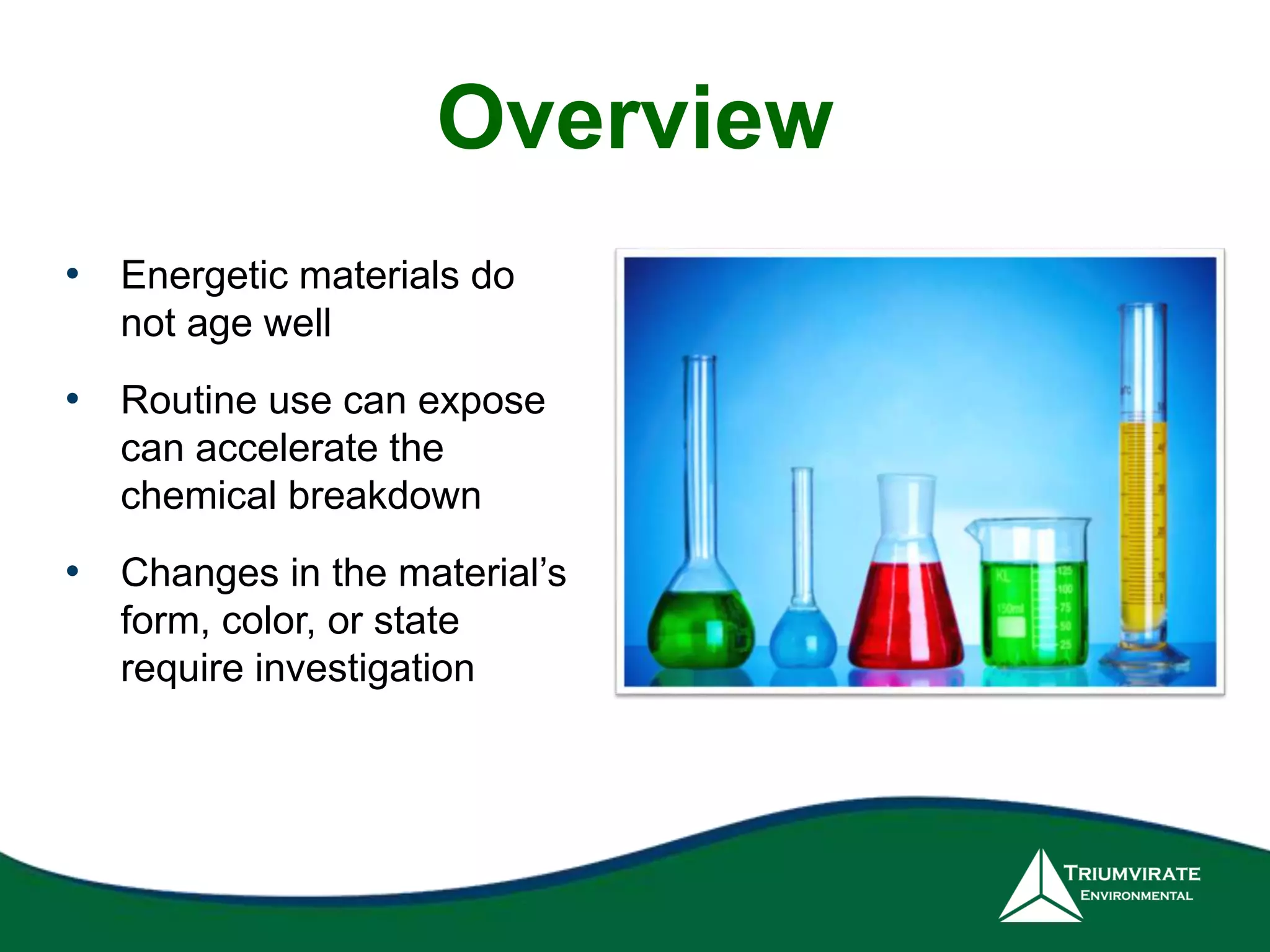
• Energetic materials do 
not age well 
• Routine use can expose 
can accelerate the 
chemical breakdown 
• Changes in the material’s 
form, color, or state 
require investigation
The Chemicals 
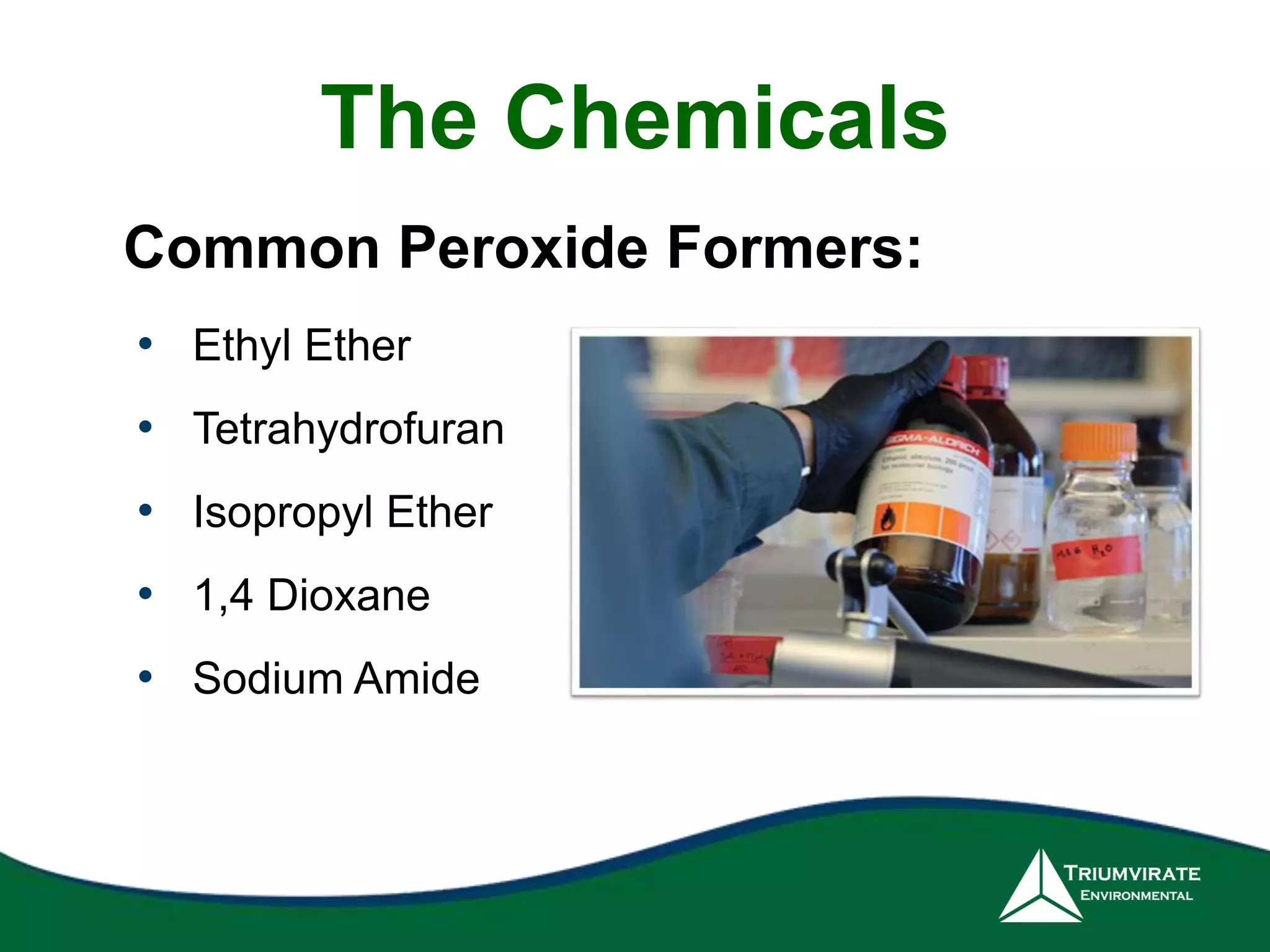
Common Peroxide Formers: 
• Ethyl Ether 
• Tetrahydrofuran 
• Isopropyl Ether 
• 1,4 Dioxane 
• Sodium Amide
Overview 
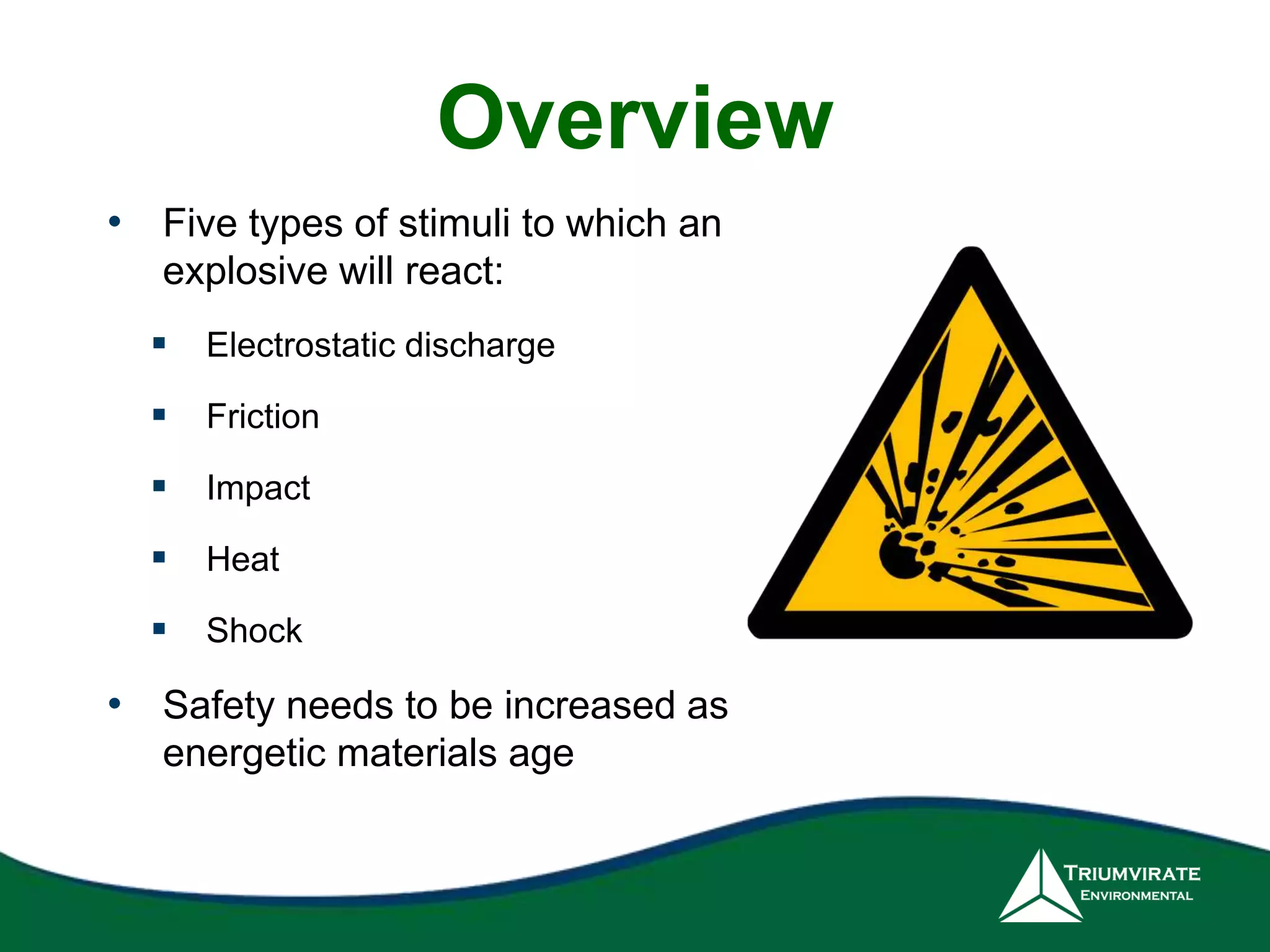
• Five types of stimuli to which an 
explosive will react: 
 Electrostatic discharge 
 Friction 
 Impact 
 Heat 
 Shock 
• Safety needs to be increased as 
energetic materials age
Regulation/Guidelines 
• OSHA- General Duty Clause 
• NFPA- Peroxide former storage, Fire 
Department enforcement 
• State Department of Environmental Protection - 
Treatment permits (if necessary)
Regulation/Guidelines 
• Perform the work off-hours 
• Have a secure location to move to 
• Isolate areas that you will pass through with the 
material
Stabilization of High 
Hazard Material 
• Information is the key: 
 Commercial products are relatively easy to stabilize 
because of the availability of information. 
 MSDS’s usually (but not always) have solubility information 
on them. 
 Chemical intermediates are more difficult. 
 Must use trade journals or “recipes” with general chemistry 
knowledge to determine appropriate solvent.
How Do You Avoid 
All This?
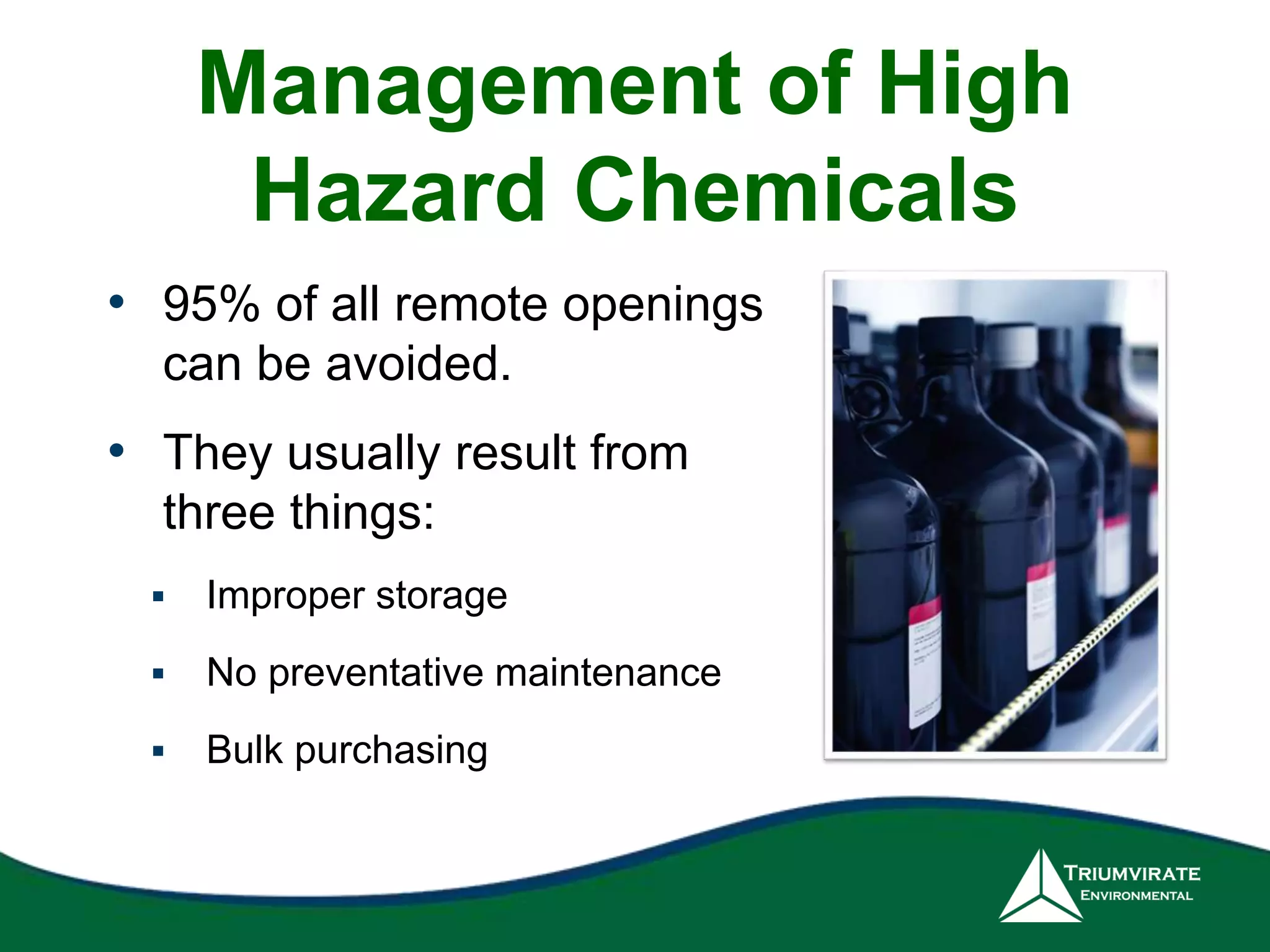
Management of High 
Hazard Chemicals 
• 95% of all remote openings 
can be avoided. 
• They usually result from 
three things: 
 Improper storage 
 No preventative maintenance 
 Bulk purchasing
Management of High 
Hazard Chemicals 
The Challenge: Develop a standard 
operating procedure (SOP) that collects the 
information you want and prevents small 
bottles from becoming budget shattering 
events.
High Hazard SOP’s 
• Find easy ways to collect 
information. 
• Work with Researchers 
• Make tracking/labeling easy 
• Give staff a reason why these 
things must be done (Ex. Fire 
dept. requires inventory).
Management of High 
Hazard Chemicals 
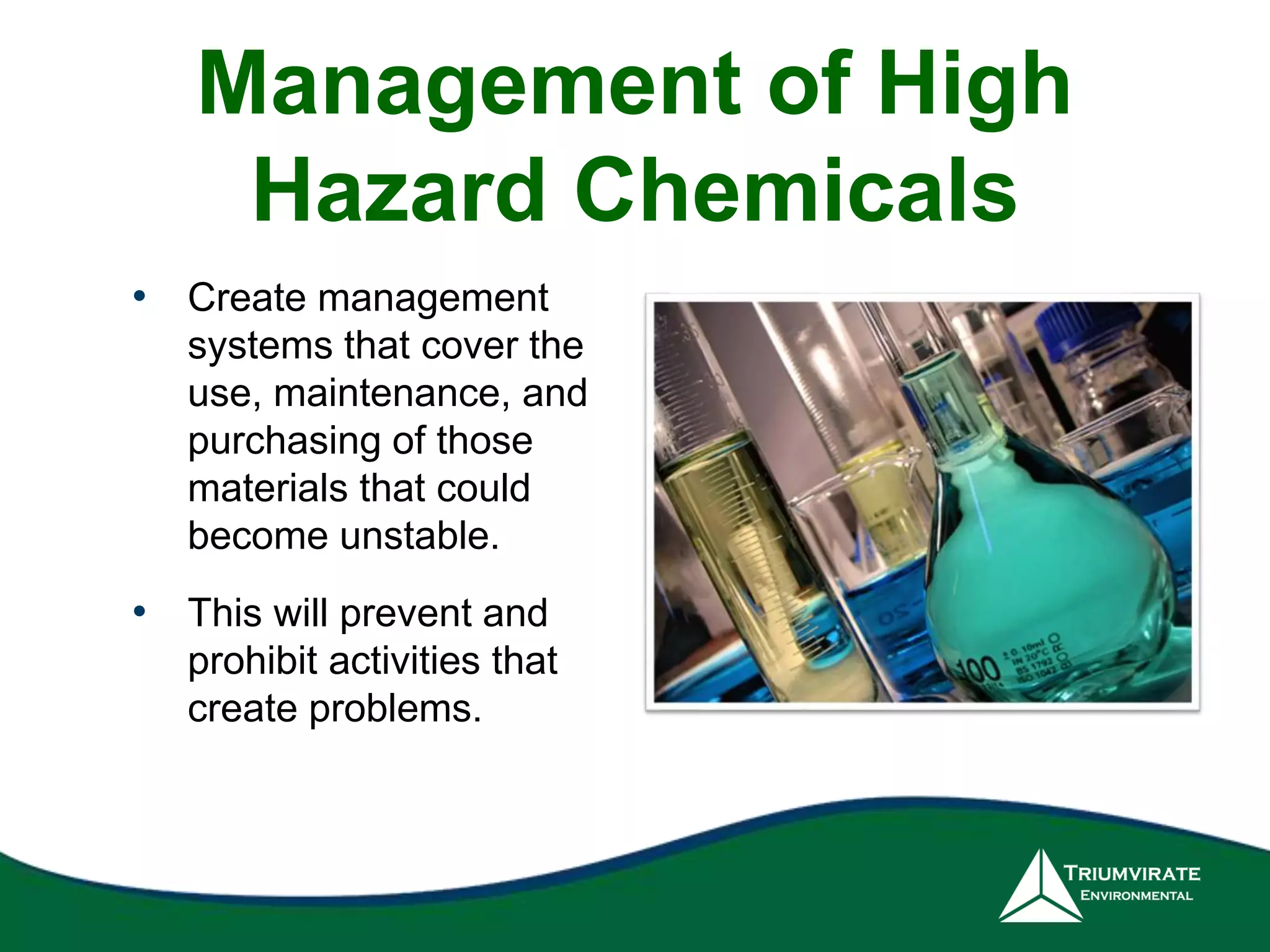
• Create management 
systems that cover the 
use, maintenance, and 
purchasing of those 
materials that could 
become unstable. 
• This will prevent and 
prohibit activities that 
create problems.
Management of High 
Hazard Chemicals 
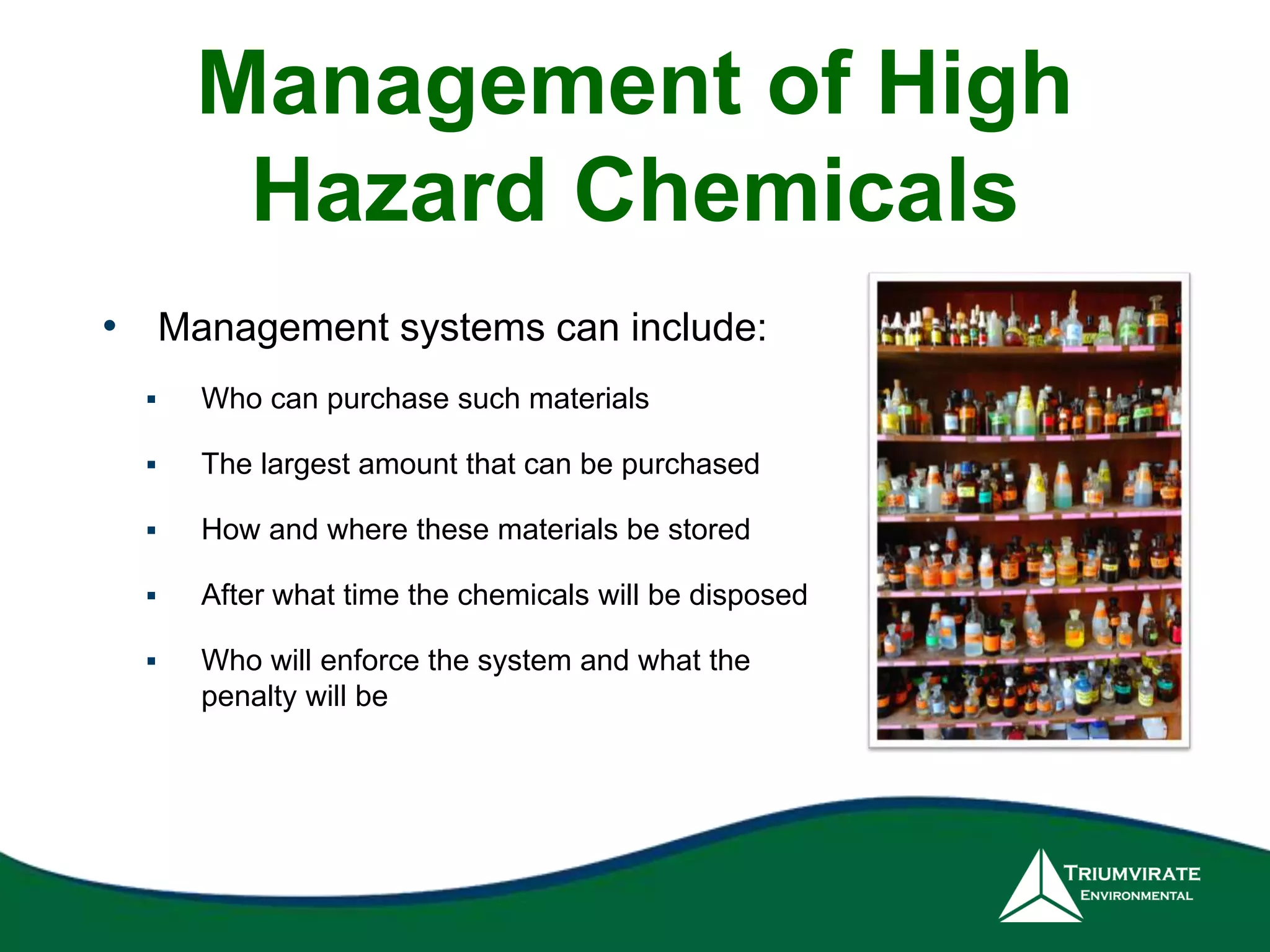
• Management systems can include: 
 Who can purchase such materials 
 The largest amount that can be purchased 
 How and where these materials be stored 
 After what time the chemicals will be disposed 
 Who will enforce the system and what the 
penalty will be
Management of Peroxide 
Forming Chemicals 
• Many of the goals of the system can be accomplished 
with the existing staff. 
• Use people at key points in the process of ordering and 
receiving chemicals. 
 Purchasing and Receiving - This covers who is using 
the material and how much. 
 Chemical Hygiene Plan - This will cover authorized 
procedures.
Management of High 
Hazard Chemicals 
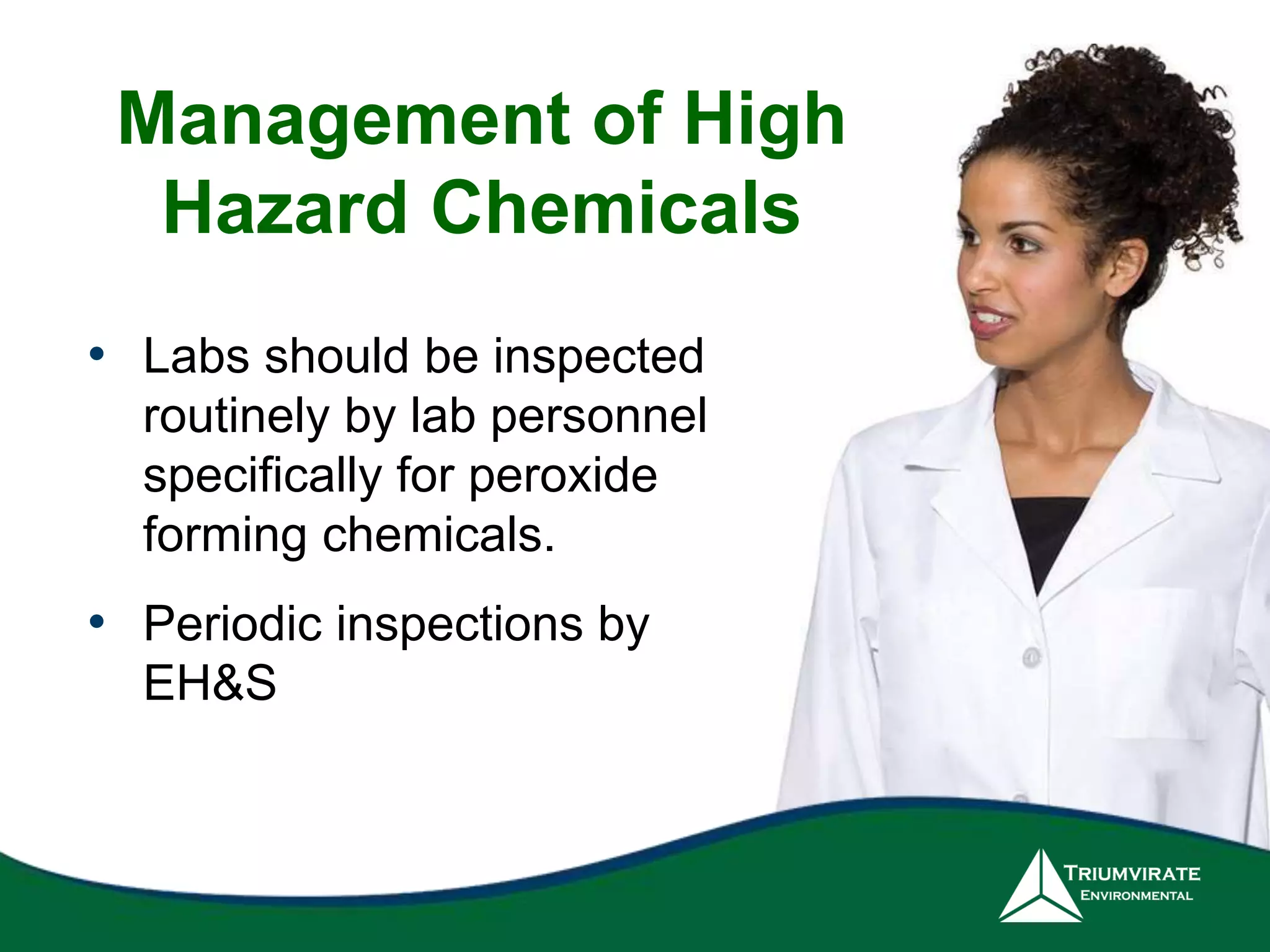
• Labs should be inspected 
routinely by lab personnel 
specifically for peroxide 
forming chemicals. 
• Periodic inspections by 
EH&S
High Hazard SOP’s 
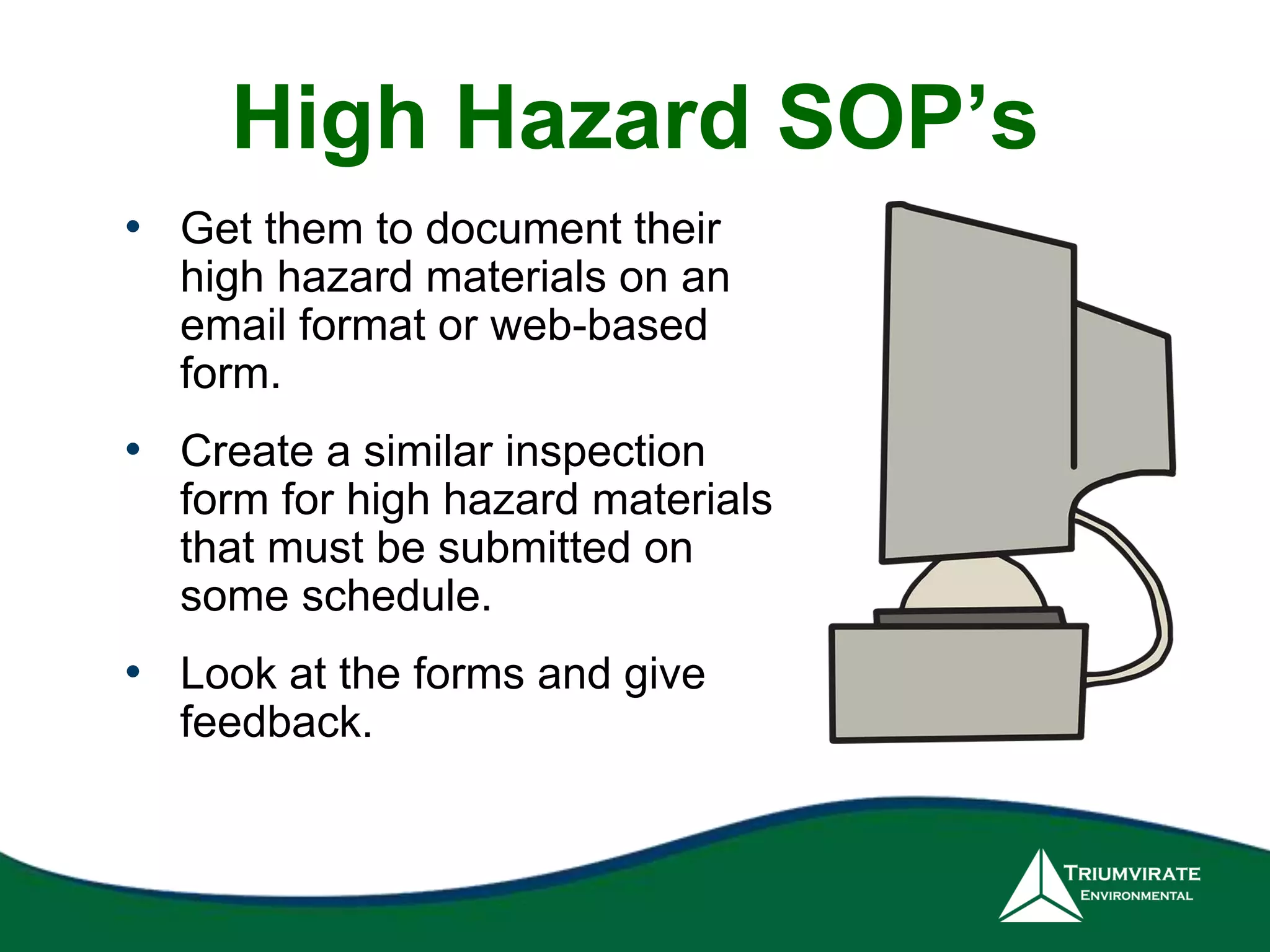
• Get them to document their 
high hazard materials on an 
email format or web-based 
form. 
• Create a similar inspection 
form for high hazard materials 
that must be submitted on 
some schedule. 
• Look at the forms and give 
feedback.
High Hazard SOP’s 
• You can never provide too much 
information to the lab. 
 All lab staff know of peroxides in ether. Not 
many know what causes this to happen 
(conditions and use). 
• Attempt to get into lab meetings at least 
monthly with this type of information. 
• Let them know the potential safety issues 
to the individual.
• Large University in Boston Area 
 Biannual lab evaluations 
• Entire campus walk through 
 Report created 
 Material evaluated for disposal
• Large Biotech in Boston Area 
 Entered received date upon receipt into 
Chemical inventory 
 Report created showing material at or over 
1 year 
 Annual walk through 
 Material removed for disposal
QUESTIONS? 
Ted Dubiel 
tdubiel@triumvirate.com 
617-839-4033
Thank You! 
1-888-TEI-WOWS www.triumvirate.com

Advanced Peroxide Forming Webinar: Hazards and Handling

  • 1.
    Advanced Peroxide FormingWebinar: Hazards and Handling Presented by: Ted Dubiel, Quality Manager
  • 2.
    About Ted Dubiel • Over 16 years peroxide former and high haz management experience • Head of New England Technical Lab Services Division and company reactives program
  • 3.
    Managing Your Program • Overview • Regulations • Program Implementation • Program Management
  • 4.
    Overview • Chemicalsmay form explosive peroxides for a variety of reasons becoming shock sensitive • Can pose a threat to the health and safety • In most cases not currently managed under a structured program
  • 5.
    Overview • Energeticmaterials do not age well • Routine use can expose can accelerate the chemical breakdown • Changes in the material’s form, color, or state require investigation
  • 6.
    The Chemicals CommonPeroxide Formers: • Ethyl Ether • Tetrahydrofuran • Isopropyl Ether • 1,4 Dioxane • Sodium Amide
  • 7.
    Overview • Fivetypes of stimuli to which an explosive will react:  Electrostatic discharge  Friction  Impact  Heat  Shock • Safety needs to be increased as energetic materials age
  • 11.
    Regulation/Guidelines • OSHA-General Duty Clause • NFPA- Peroxide former storage, Fire Department enforcement • State Department of Environmental Protection - Treatment permits (if necessary)
  • 12.
    Regulation/Guidelines • Performthe work off-hours • Have a secure location to move to • Isolate areas that you will pass through with the material
  • 13.
    Stabilization of High Hazard Material • Information is the key:  Commercial products are relatively easy to stabilize because of the availability of information.  MSDS’s usually (but not always) have solubility information on them.  Chemical intermediates are more difficult.  Must use trade journals or “recipes” with general chemistry knowledge to determine appropriate solvent.
  • 14.
    How Do YouAvoid All This?
  • 15.
    Management of High Hazard Chemicals • 95% of all remote openings can be avoided. • They usually result from three things:  Improper storage  No preventative maintenance  Bulk purchasing
  • 16.
    Management of High Hazard Chemicals The Challenge: Develop a standard operating procedure (SOP) that collects the information you want and prevents small bottles from becoming budget shattering events.
  • 17.
    High Hazard SOP’s • Find easy ways to collect information. • Work with Researchers • Make tracking/labeling easy • Give staff a reason why these things must be done (Ex. Fire dept. requires inventory).
  • 18.
    Management of High Hazard Chemicals • Create management systems that cover the use, maintenance, and purchasing of those materials that could become unstable. • This will prevent and prohibit activities that create problems.
  • 19.
    Management of High Hazard Chemicals • Management systems can include:  Who can purchase such materials  The largest amount that can be purchased  How and where these materials be stored  After what time the chemicals will be disposed  Who will enforce the system and what the penalty will be
  • 20.
    Management of Peroxide Forming Chemicals • Many of the goals of the system can be accomplished with the existing staff. • Use people at key points in the process of ordering and receiving chemicals.  Purchasing and Receiving - This covers who is using the material and how much.  Chemical Hygiene Plan - This will cover authorized procedures.
  • 21.
    Management of High Hazard Chemicals • Labs should be inspected routinely by lab personnel specifically for peroxide forming chemicals. • Periodic inspections by EH&S
  • 22.
    High Hazard SOP’s • Get them to document their high hazard materials on an email format or web-based form. • Create a similar inspection form for high hazard materials that must be submitted on some schedule. • Look at the forms and give feedback.
  • 23.
    High Hazard SOP’s • You can never provide too much information to the lab.  All lab staff know of peroxides in ether. Not many know what causes this to happen (conditions and use). • Attempt to get into lab meetings at least monthly with this type of information. • Let them know the potential safety issues to the individual.
  • 24.
    • Large Universityin Boston Area  Biannual lab evaluations • Entire campus walk through  Report created  Material evaluated for disposal
  • 25.
    • Large Biotechin Boston Area  Entered received date upon receipt into Chemical inventory  Report created showing material at or over 1 year  Annual walk through  Material removed for disposal
  • 26.
    QUESTIONS? Ted Dubiel tdubiel@triumvirate.com 617-839-4033
  • 27.
    Thank You! 1-888-TEI-WOWSwww.triumvirate.com

Editor's Notes

  • #2 In 5 Steps to managing peroxide forming chemicals we discussed -What are the most common peroxide formers Some the do’s and don’t for handling these Training Discarding Planning giving a brief outline. Today we are going to build upon that and discuss implementing a management plan
  • #5 Energetic materials: A material which can undergo exothermal chemical reactions, releasing a considerable amount of energy. Deflagration: Burning. The rapid chemical reaction between a fuel and an oxidizer which produces heat, light and gaseous products
  • #6 Some peroxide formers come with inhibitors (hydroquinone, BHT) but over time and depending on conditions the inhibitors can break down. With researchers using the inhibitor free for research a management plan is even more important now
  • #8 If you have peroxides or other potential energetic materials these stimuli can set the material off.
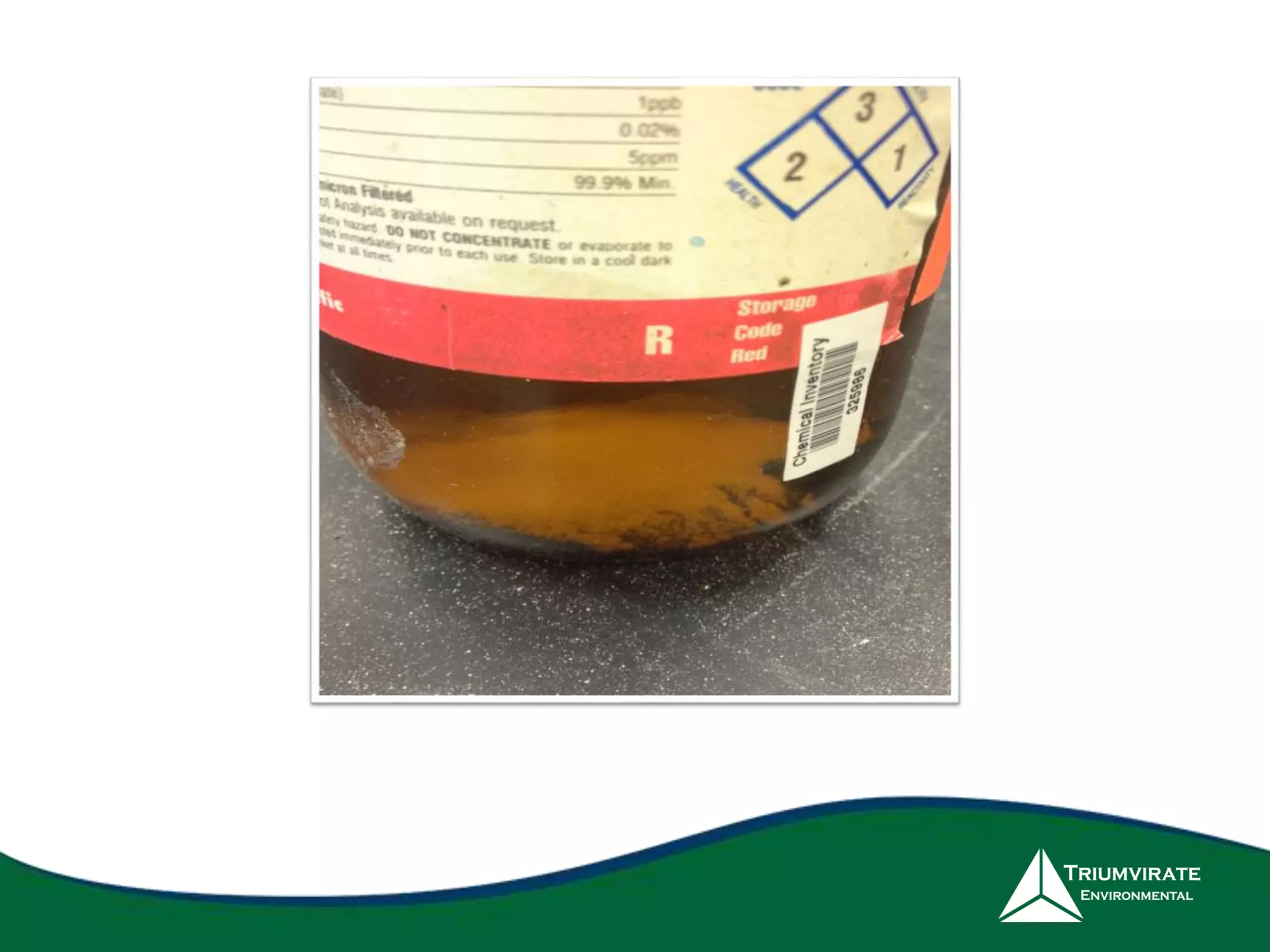
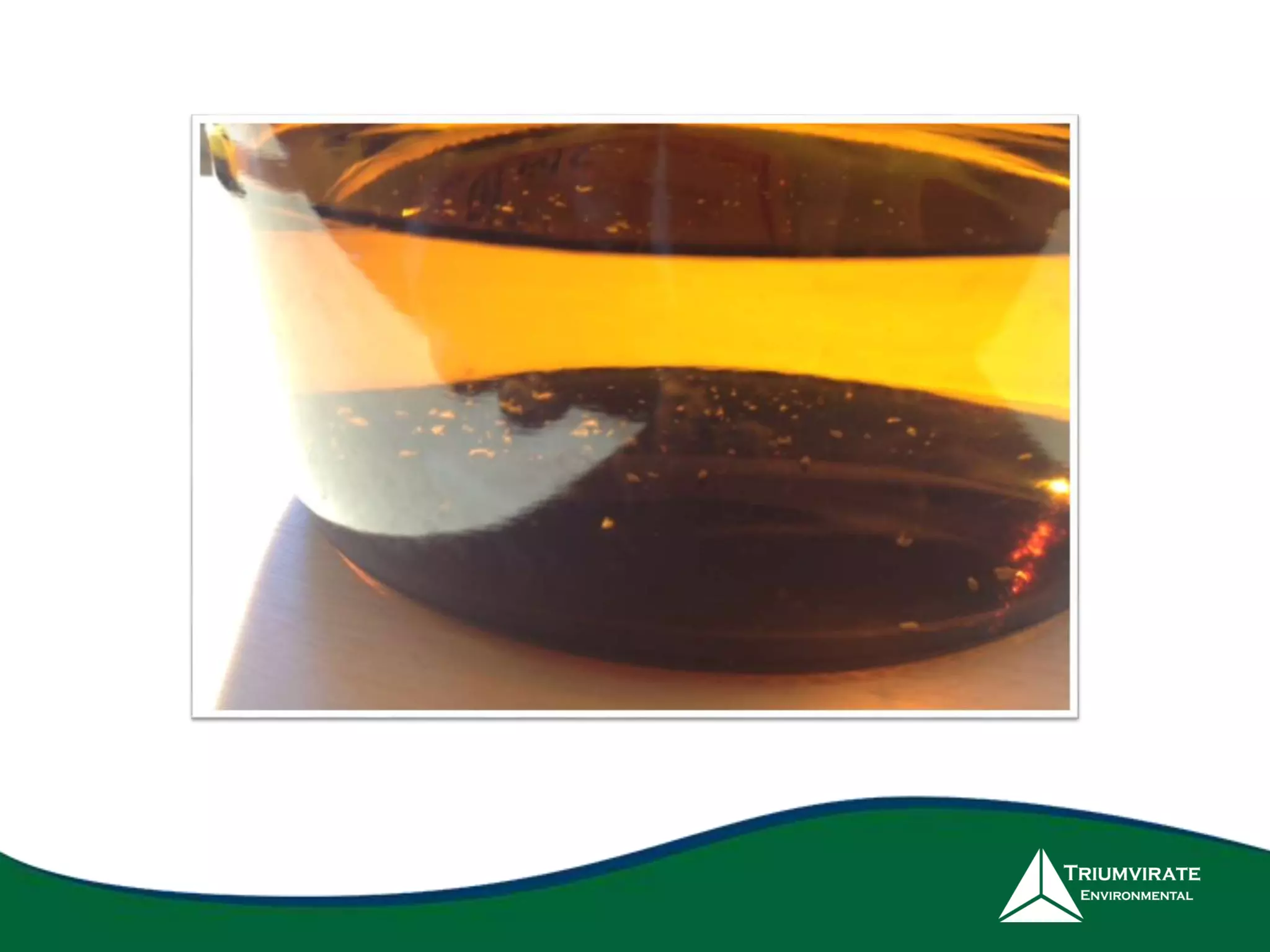
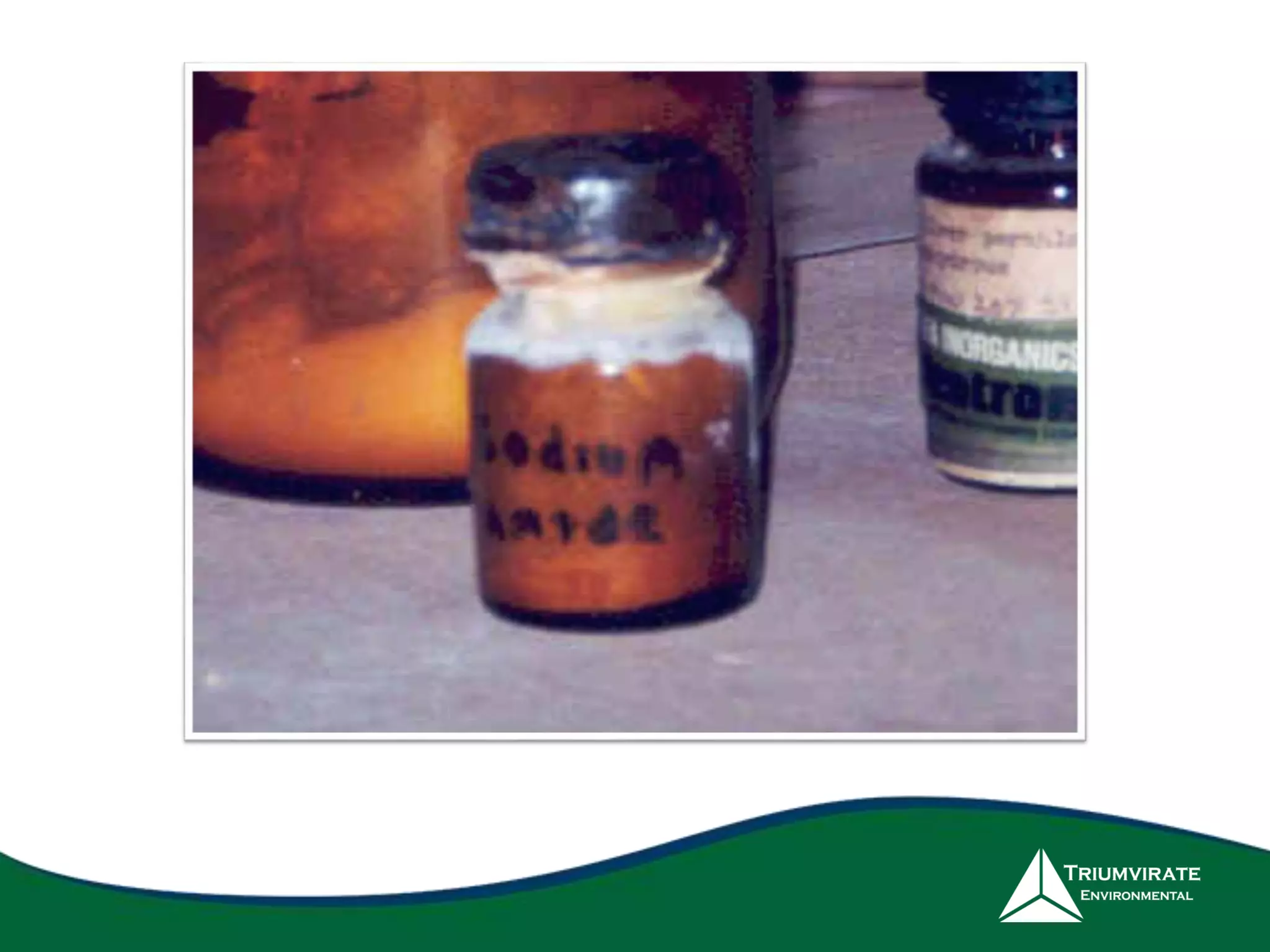
  • #11 I mentioned age before this sodium amide was in a lab for 30yrs. And started to oxidize
  • #12 There have been incidence with peroxide formers but there is very little regulations. the safety falls under OSHA. The majority of the guidance out there is from the NFPA. The fire department is the most active in inspecting facilites for these materials. the fire dept. has the come into many facilites, required removal and in some cases cited the generator The states primarily come into play when the solvents have peroxdies and need to be treated prior to disposal. ds
  • #17 A SOP or BMP is the
  • #18 Every site will be different If you have an
  • #19 Each management program is site specific- it is ideal if you are able to control the purchasing or have the material tagged upon receipt. More cases than not that is not th