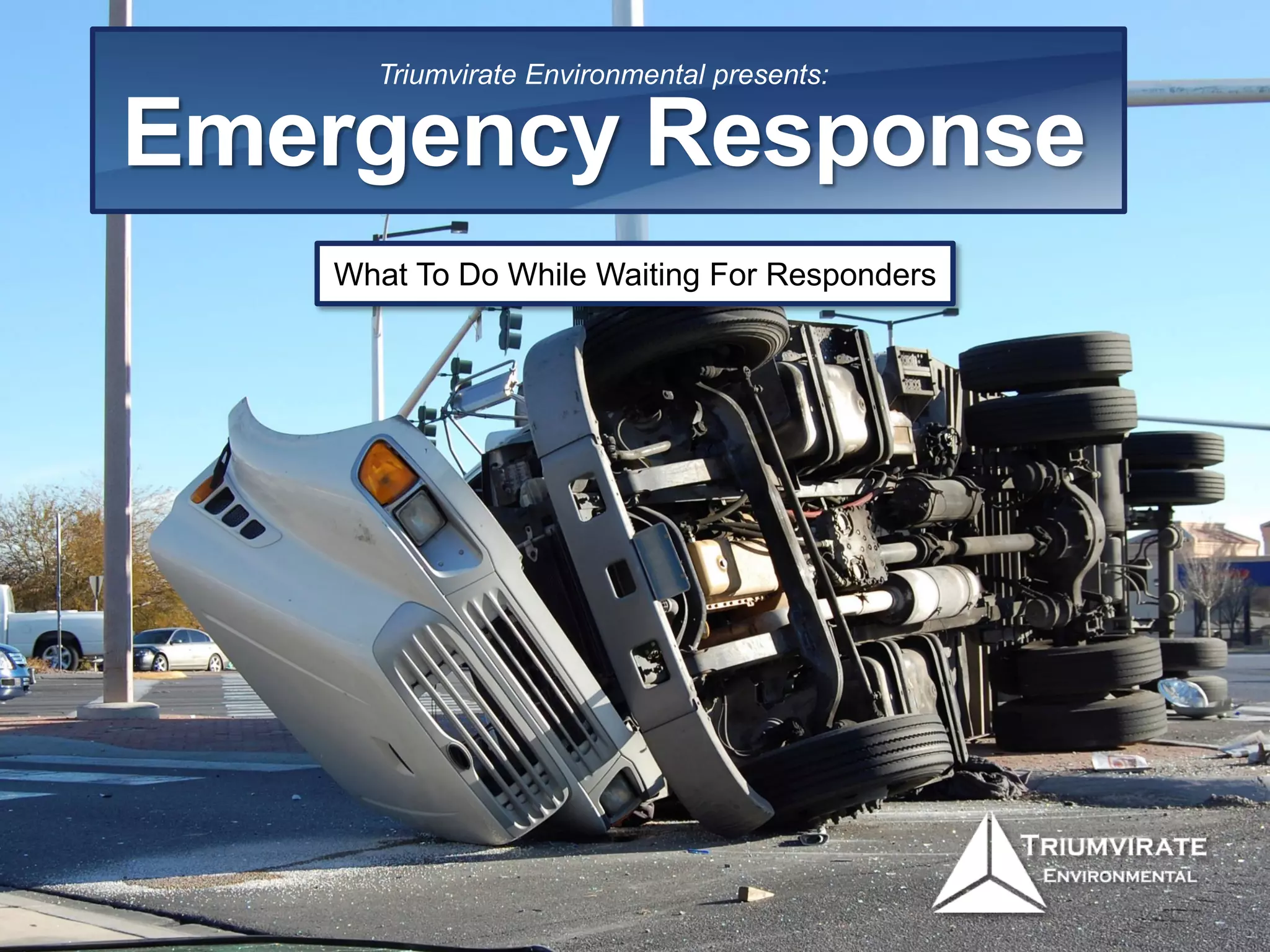


Emergency Response
Triumvirate Environmental presents:
What To Do While Waiting For Responders
Meet Your Presenter
Kevin Coulon
Preventative Maintenance &
Emergency Response Manager
kcoulon@triumvirate.com
• BS in Georgraphy
• Started with Triumvirate in 2005
• Previously – Environmental Specialist,
Operations Specialist, and Branch
Manager
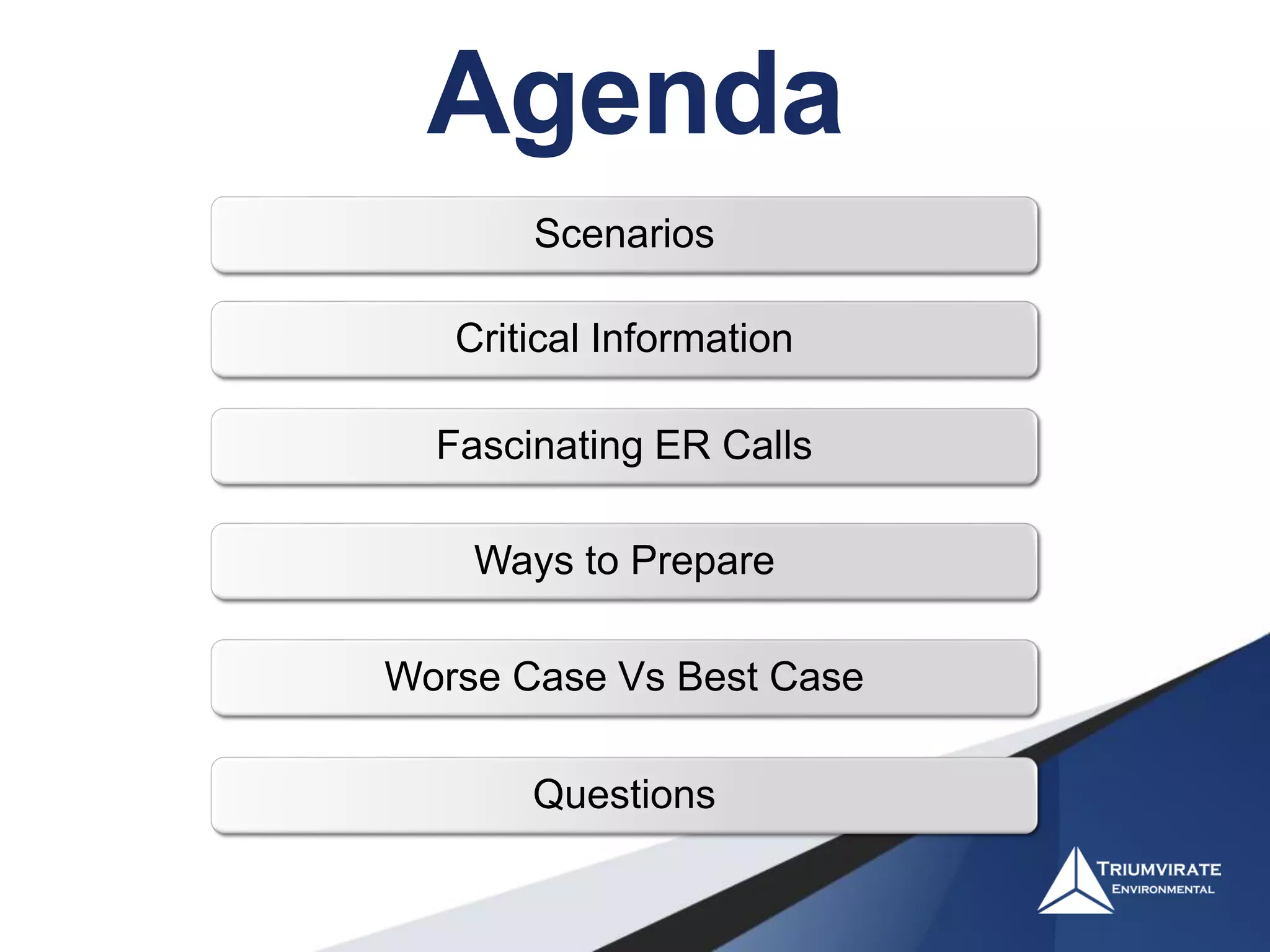
Agenda
Scenarios
Critical Information
Fascinating ER Calls
Ways to Prepare
Worse Case Vs Best Case
Questions
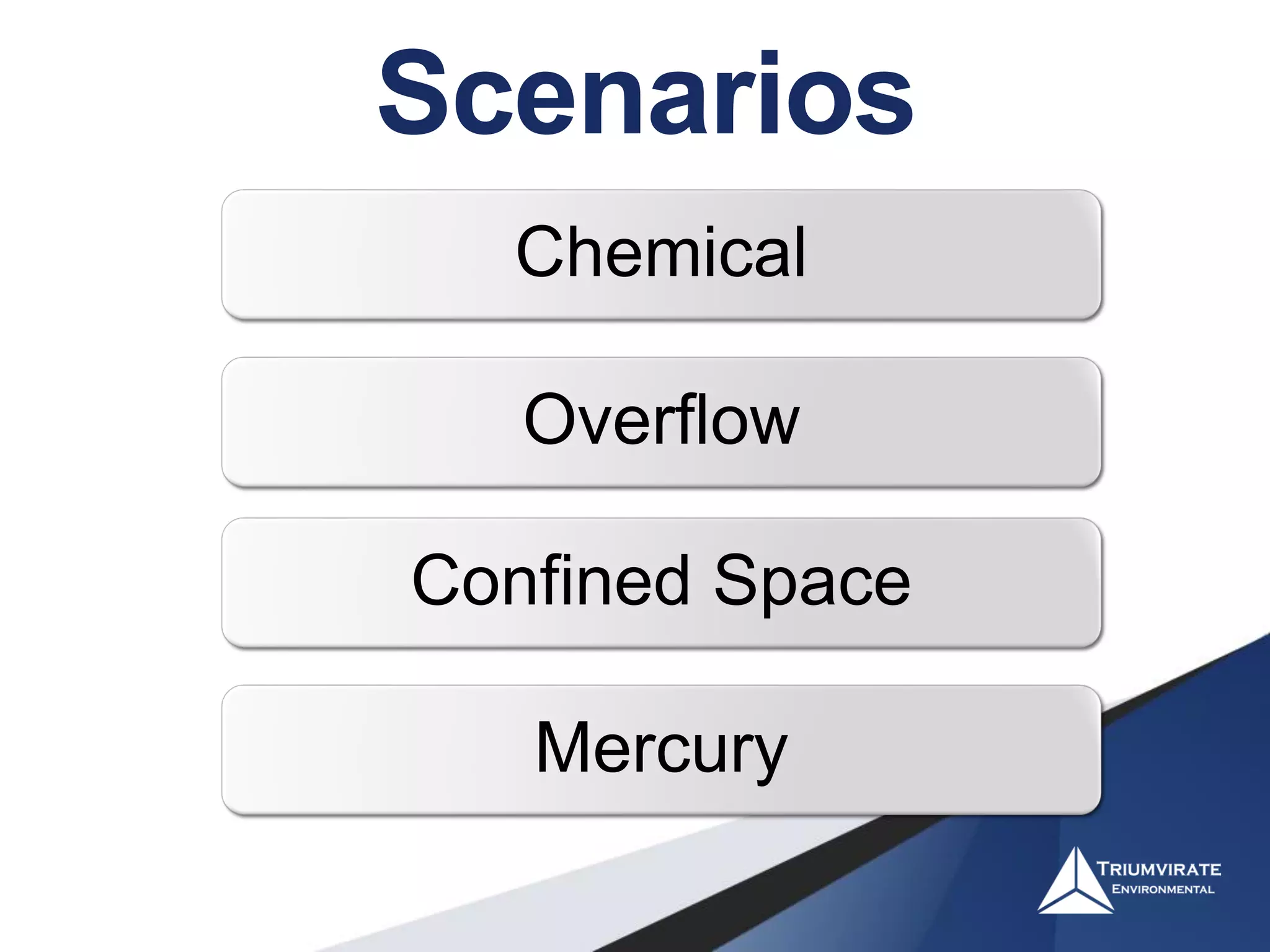
Scenarios
Chemical
Overflow
Confined Space
Mercury
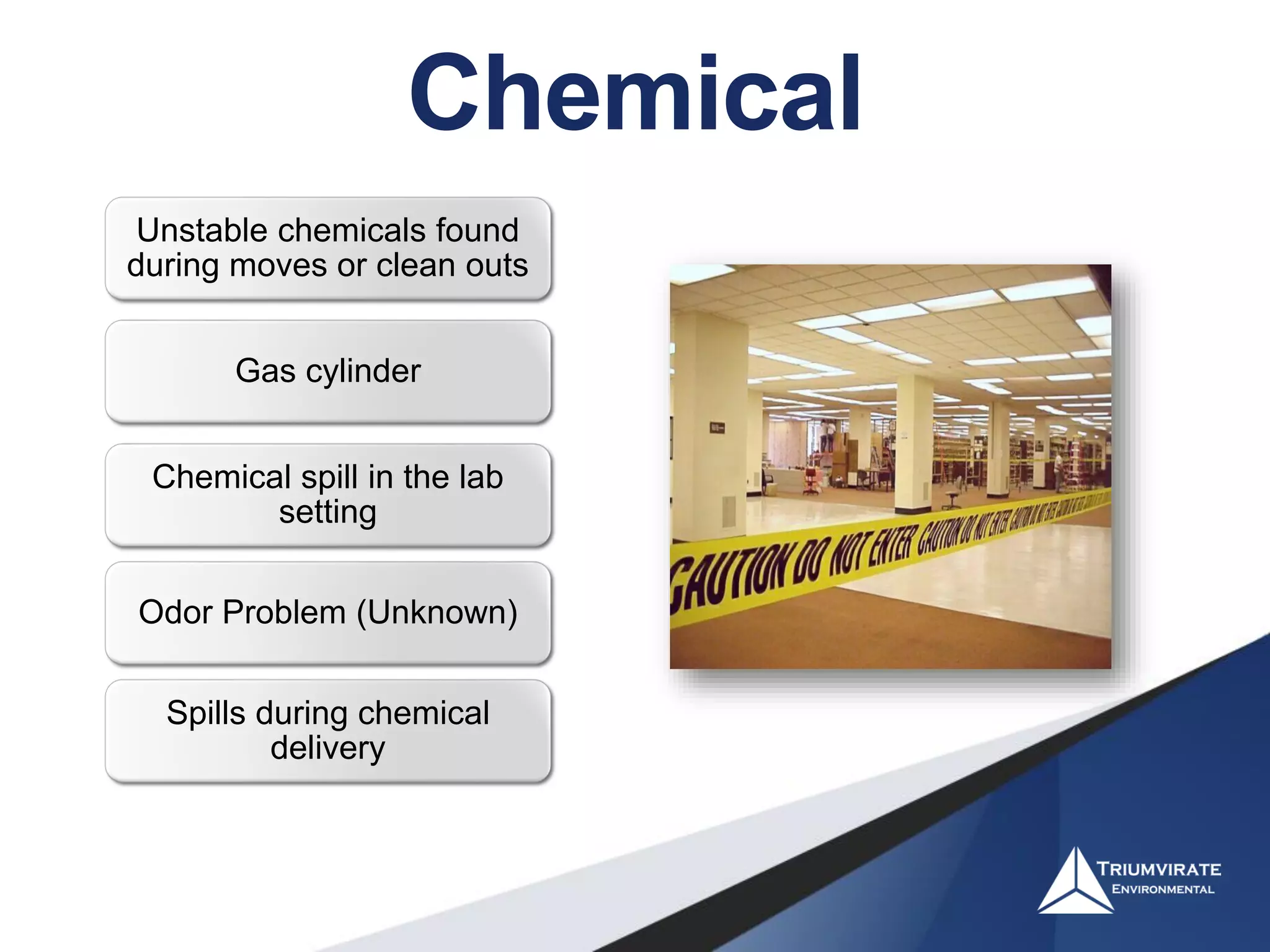
Chemical
Unstable chemicals found
during moves or clean outs
Gas cylinder
Chemical spill in the lab
setting
Odor Problem (Unknown)
Spills during chemical
delivery
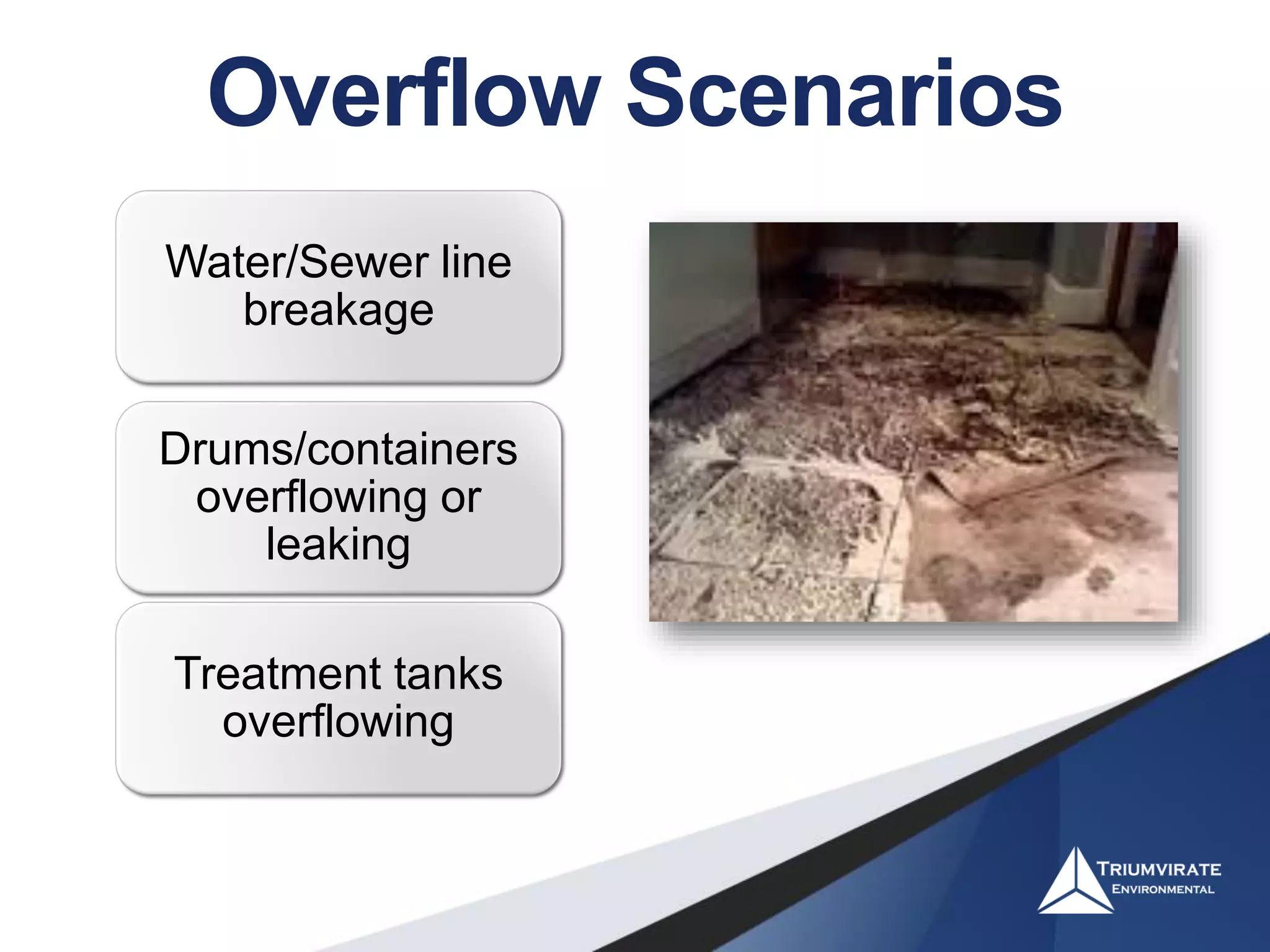
Overflow Scenarios
Water/Sewer line
breakage
Drums/containers
overflowing or
leaking
Treatment tanks
overflowing
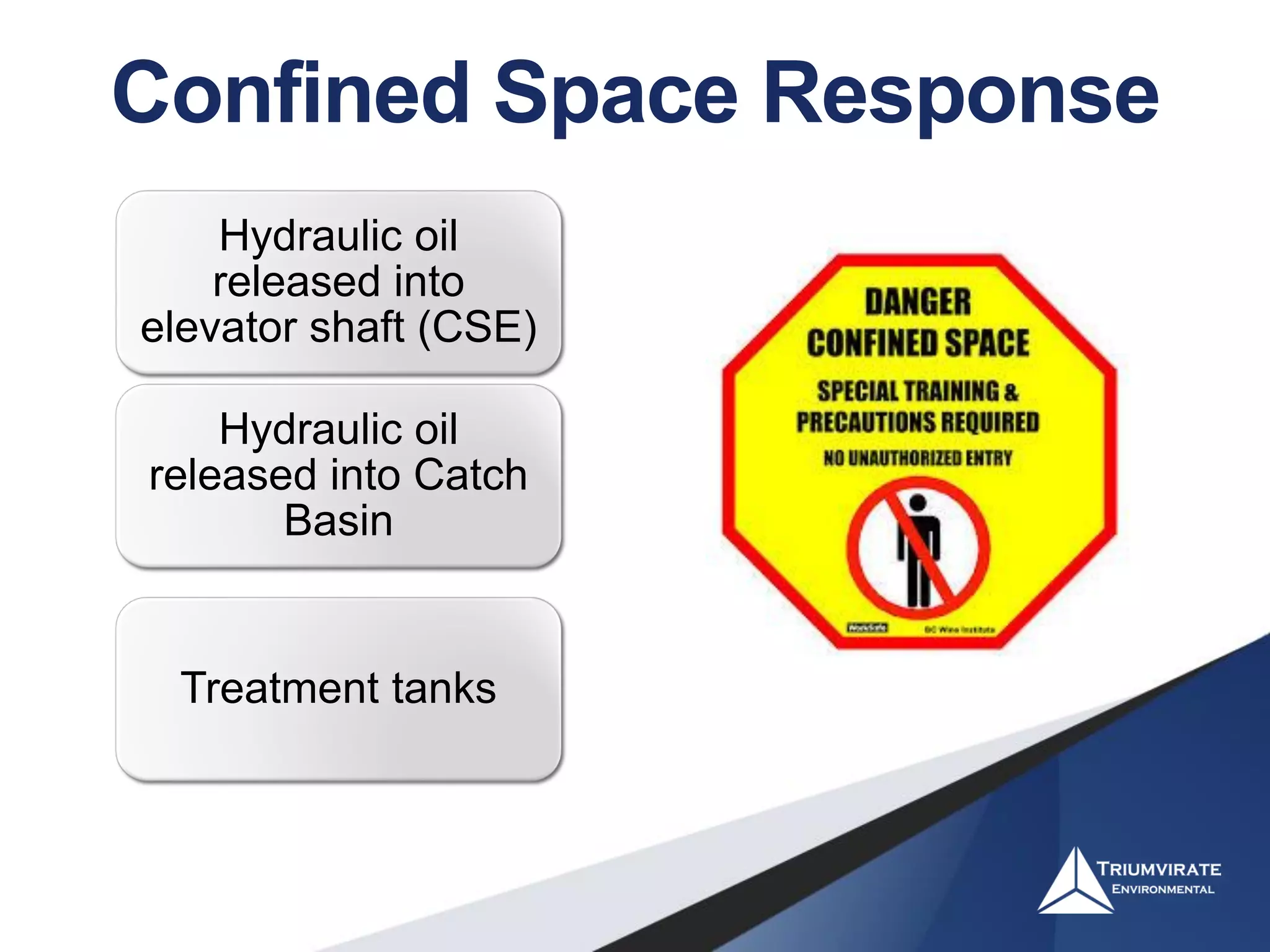
Confined Space Response
Hydraulic oil
released into
elevator shaft (CSE)
Hydraulic oil
released into Catch
Basin
Treatment tanks
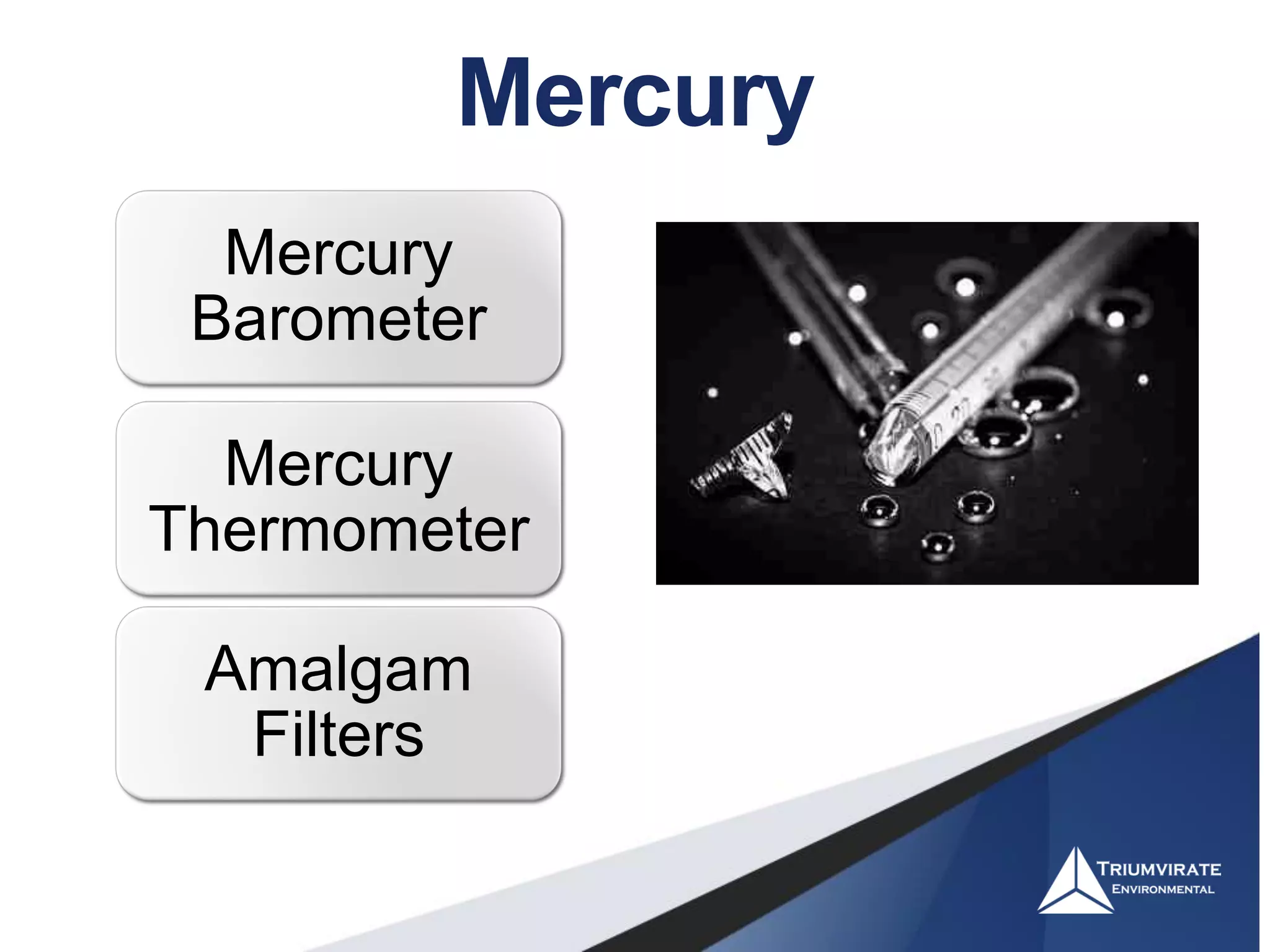
Mercury
Mercury
Barometer
Mercury
Thermometer
Amalgam
Filters
Critical Information
The Where
The What
The Who
The When
The How
Behavioral Incidents
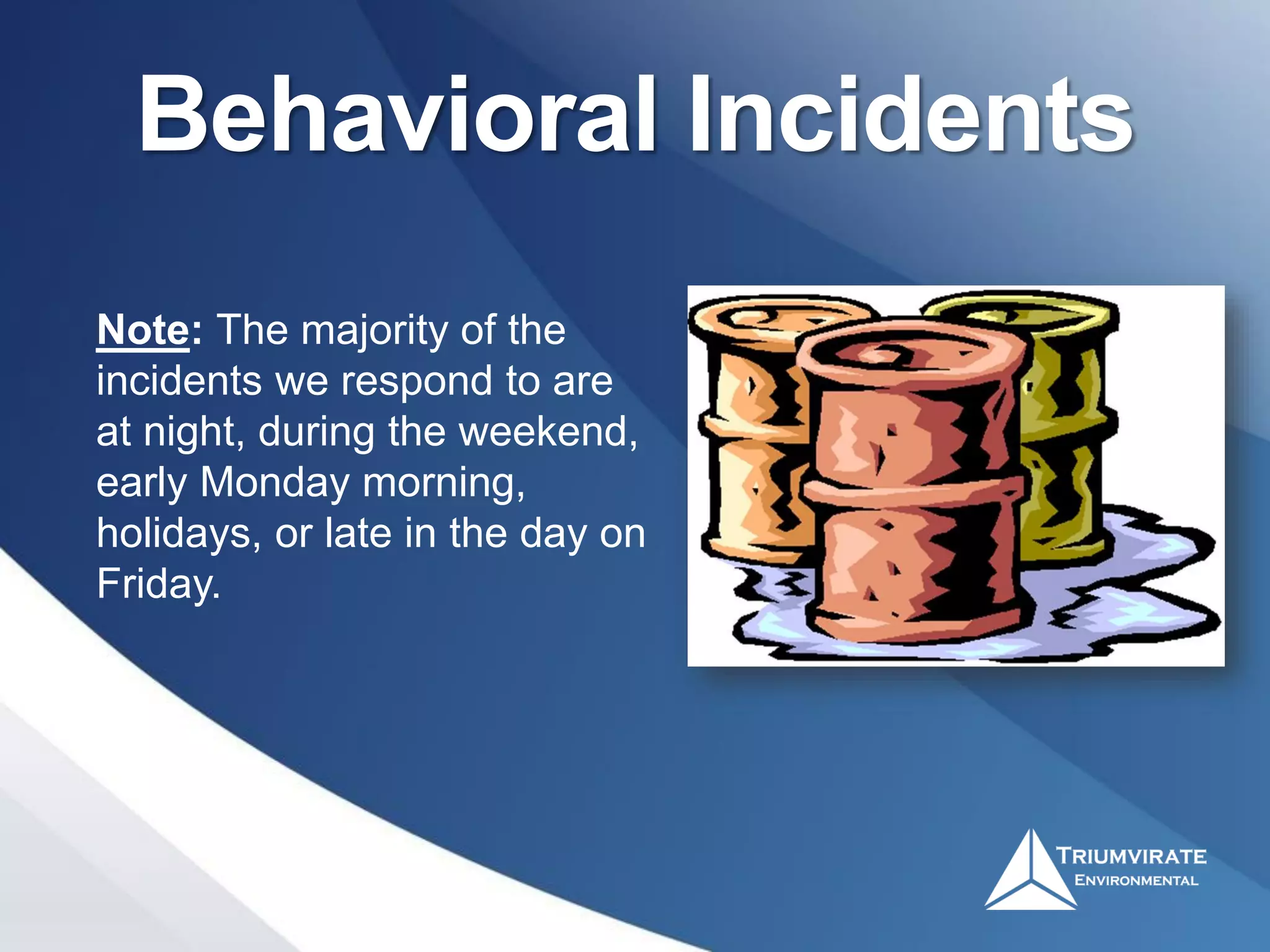
Note: The majority of the
incidents we respond to are
at night, during the weekend,
early Monday morning,
holidays, or late in the day on
Friday.
Critical Information to Provide to
Responding Contractor
• Recognize this information exchange will
shape the emergency contractors decisions
(people/equipment)
• This will also help your contractor with providing
recommendations as next step while waiting for
responder
• Your name and phone number of the person
who will be onsite
• The chemical(s) involved, and whether
MSDS’s are available.
• The site address, building number/name,
room number, or area that has the problem.
Critical Information to Provide to
Responding Contractor (Cont.)
• Has there been a release to the environment or is it
contained within the building?
• If released to environment, define the media affected (soil,
groundwater, surface water, concrete, asphalt, etc.)
• If released down a drain, define where the drain goes
(treatment system, direct to sewer, etc.)
• The quantity released
• Helpful tip – There are 7.48 gallons per cubic foot
• Cause of release
• What other agencies have
been contacted?
• What actions have you
taken prior to making the
call?
• Your expectations for
clean-up.
Critical Information to Provide to
Responding Contractor (Cont.)
Fascinating ER Statements
• If I call in a spill smaller than it really is, I will be charged less?
• Information? I don’t have time right now to get you more information. Just get
here now!
• I will not be there but knock on the door and someone there will let you in
• Can you give me a quote before dispatching the response crew?
• Please call me back at XXX-XXX-XXXX. “The number you have
dialed is disconnected”
• “This is Joe. I have a spill call me.”
• I don’t know what it is or how much of it spilled, but I need it cleaned up in 1
hour.
• I realize it is midnight, but can you have a crew here in five minutes?
Fascinating ER Statements (Cont.)
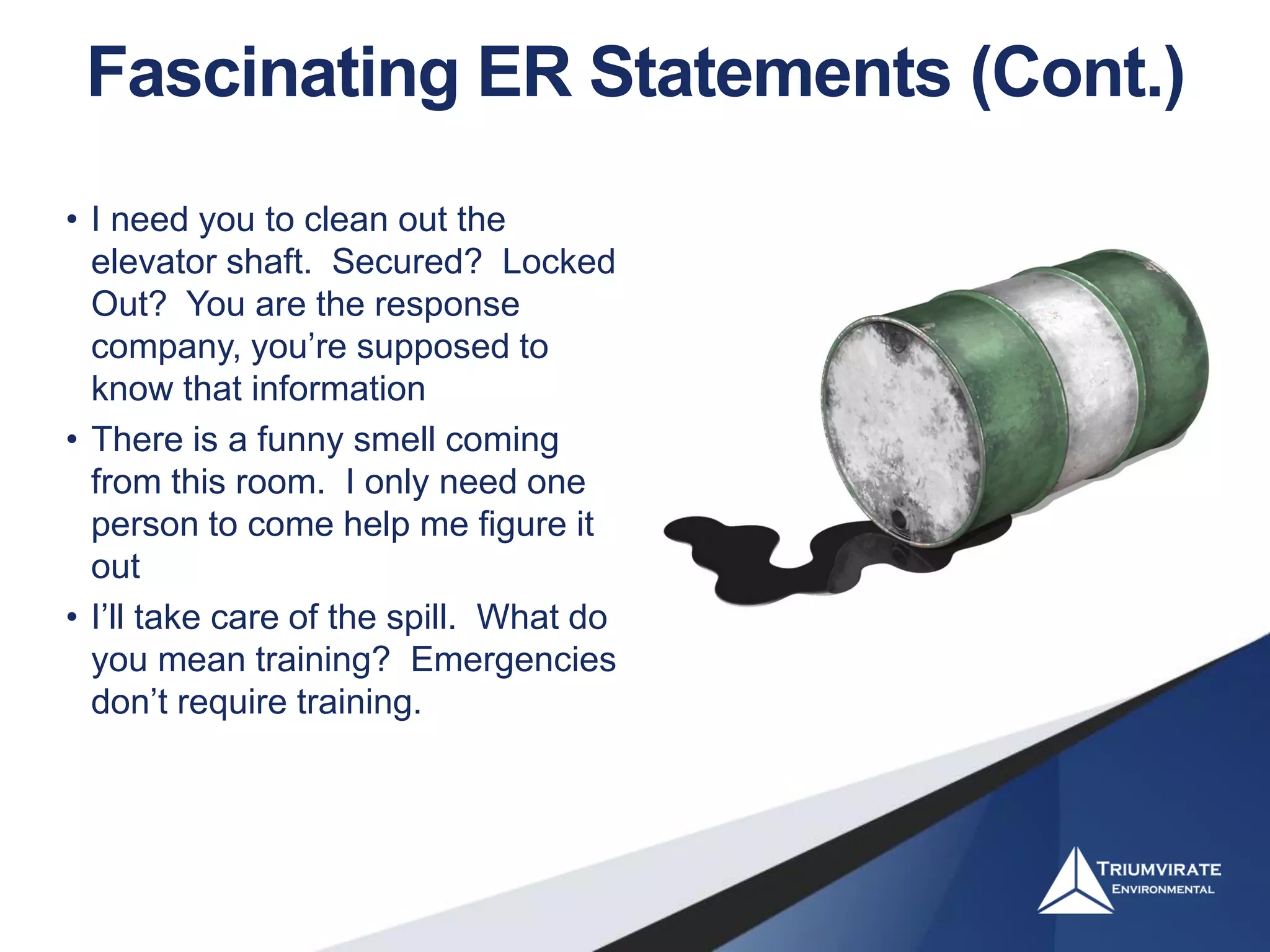
• I need you to clean out the
elevator shaft. Secured? Locked
Out? You are the response
company, you’re supposed to
know that information
• There is a funny smell coming
from this room. I only need one
person to come help me figure it
out
• I’ll take care of the spill. What do
you mean training? Emergencies
don’t require training.
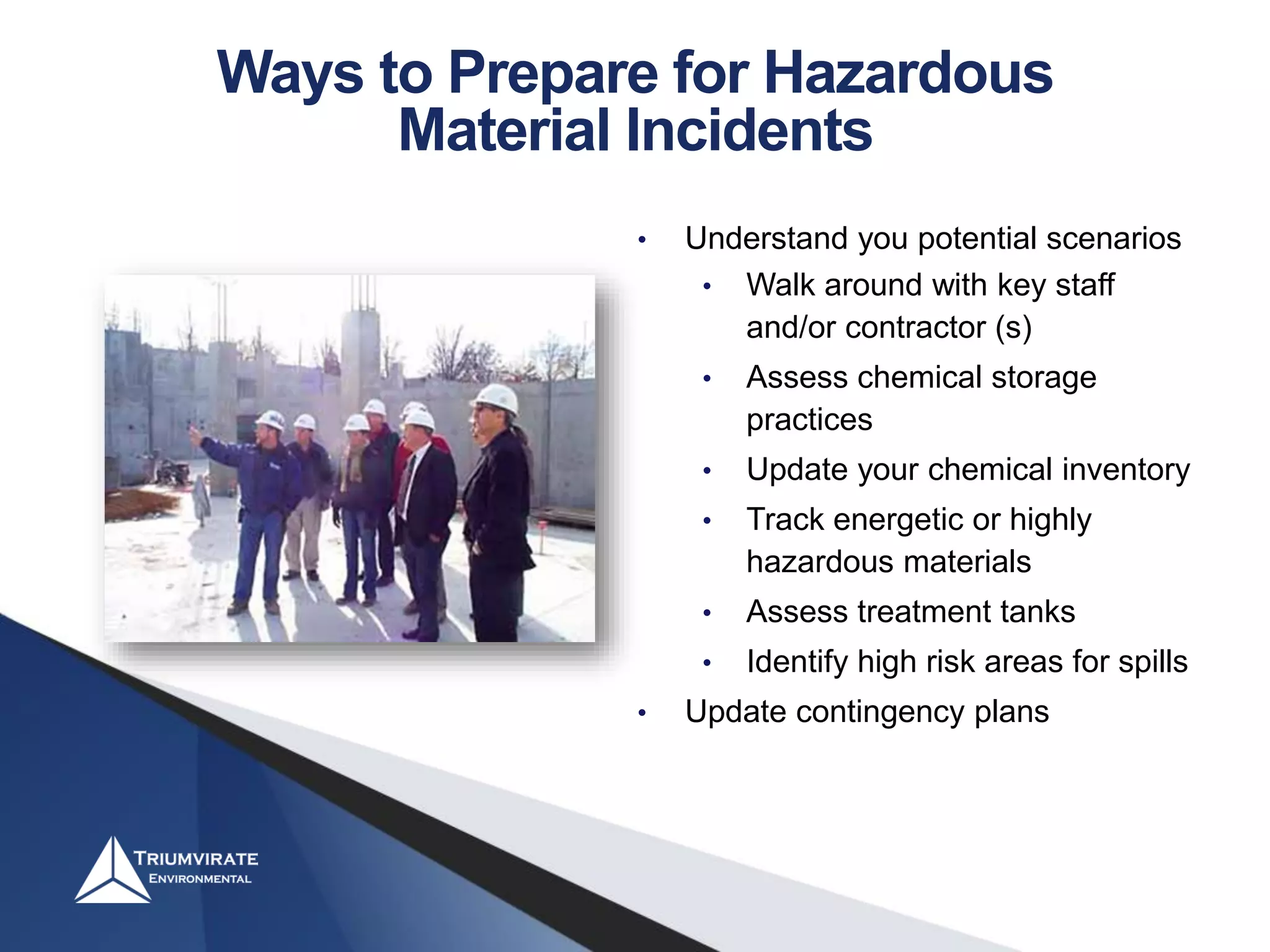
• Understand you potential scenarios
• Walk around with key staff
and/or contractor (s)
• Assess chemical storage
practices
• Update your chemical inventory
• Track energetic or highly
hazardous materials
• Assess treatment tanks
• Identify high risk areas for spills
• Update contingency plans
Ways to Prepare for Hazardous
Material Incidents
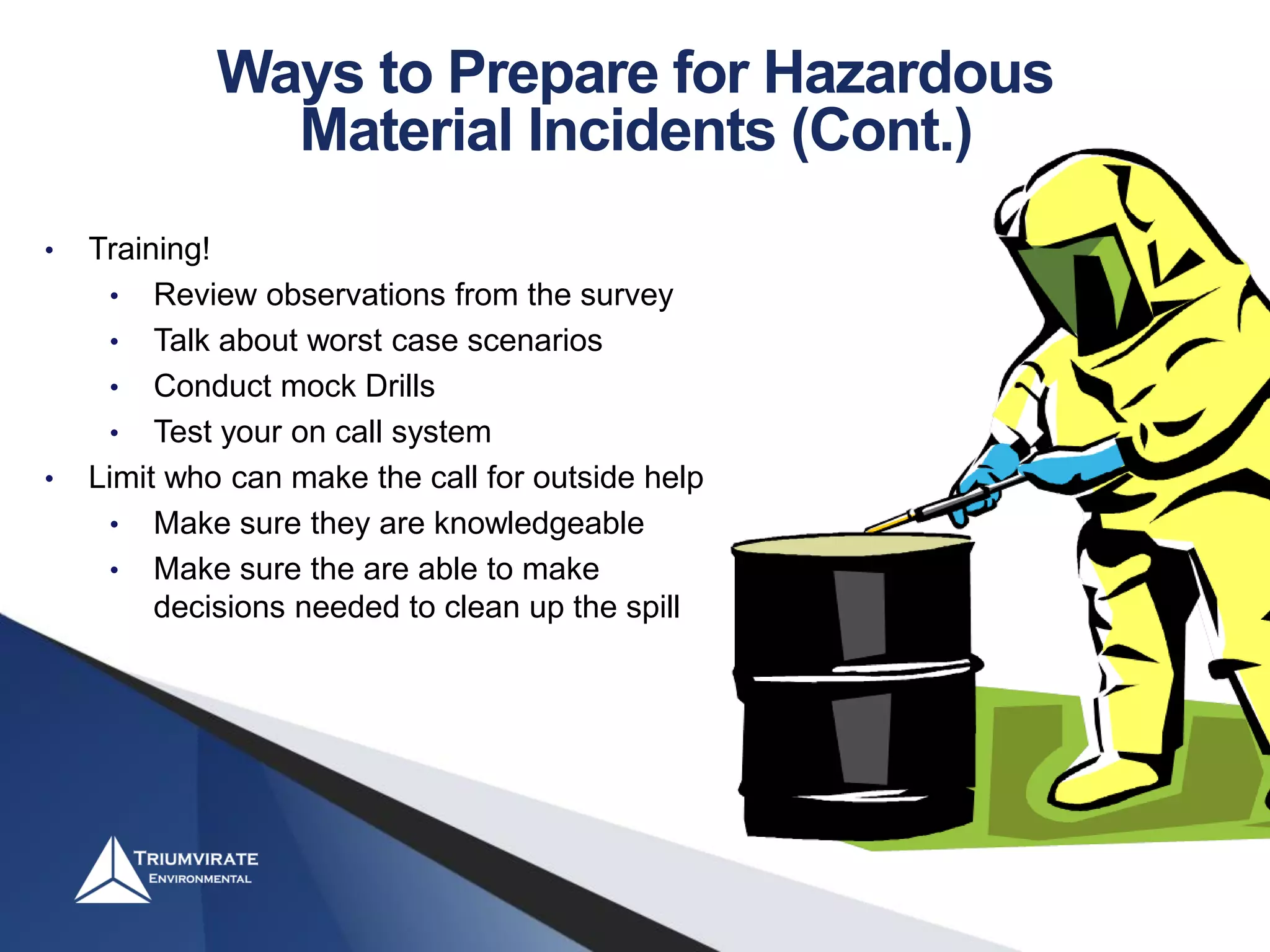
• Training!
• Review observations from the survey
• Talk about worst case scenarios
• Conduct mock Drills
• Test your on call system
• Limit who can make the call for outside help
• Make sure they are knowledgeable
• Make sure the are able to make
decisions needed to clean up the spill
Ways to Prepare for Hazardous
Material Incidents (Cont.)
• Make sure you know when outside contractors will be on site and what they will be
working on
• Ask for an ETA and for updates if the time changes
• How clean do you want the area (only remove the hazard, full decon, etc)
• Prepare a simplified ER binder
• Copy of your internal communication plan
• Phone numbers & pagers for key staff
• Phone numbers for outside contractors
• Site Map
• Information on your most dangerous materials
Ways to Prepare for Hazardous
Material Incidents (Cont.)
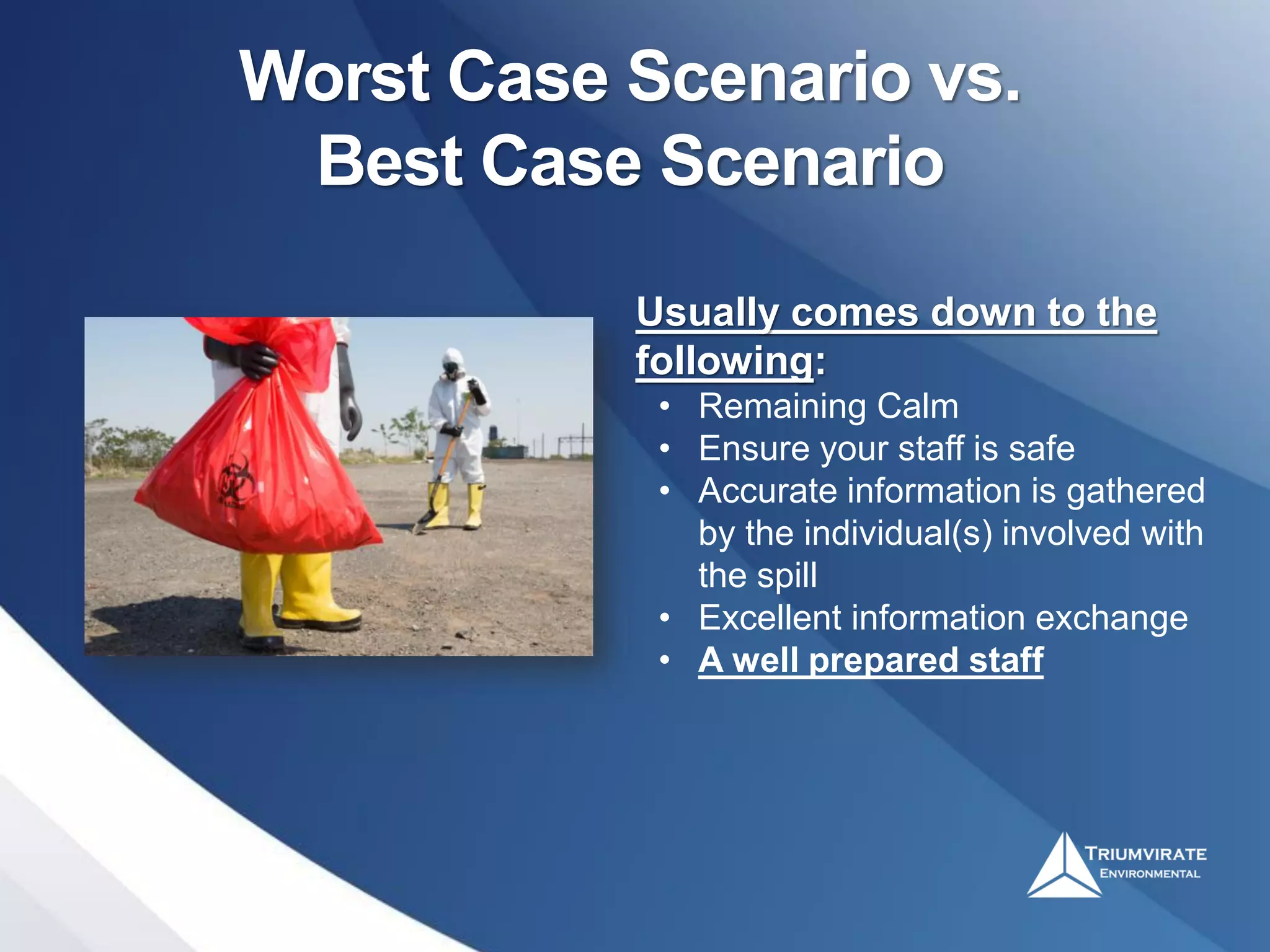
Worst Case Scenario vs.
Best Case Scenario
Usually comes down to the
following:
• Remaining Calm
• Ensure your staff is safe
• Accurate information is gathered
by the individual(s) involved with
the spill
• Excellent information exchange
• A well prepared staff
Client Education
• Extensive Roundtable
Program
• E-Newsletters
• Client Training
Program
• www.triumvirate.com
QUESTIONS?

Emergency Response: What To Do While Waiting For Responders

  • 1.
    Emergency Response Triumvirate Environmentalpresents: What To Do While Waiting For Responders
  • 2.
    Meet Your Presenter KevinCoulon Preventative Maintenance & Emergency Response Manager kcoulon@triumvirate.com • BS in Georgraphy • Started with Triumvirate in 2005 • Previously – Environmental Specialist, Operations Specialist, and Branch Manager
  • 3.
    Agenda Scenarios Critical Information Fascinating ERCalls Ways to Prepare Worse Case Vs Best Case Questions
  • 4.
  • 5.
    Chemical Unstable chemicals found duringmoves or clean outs Gas cylinder Chemical spill in the lab setting Odor Problem (Unknown) Spills during chemical delivery
  • 6.
  • 7.
    Confined Space Response Hydraulicoil released into elevator shaft (CSE) Hydraulic oil released into Catch Basin Treatment tanks
  • 8.
  • 9.
    Critical Information The Where TheWhat The Who The When The How
  • 10.
    Behavioral Incidents Note: Themajority of the incidents we respond to are at night, during the weekend, early Monday morning, holidays, or late in the day on Friday.
  • 11.
    Critical Information toProvide to Responding Contractor • Recognize this information exchange will shape the emergency contractors decisions (people/equipment) • This will also help your contractor with providing recommendations as next step while waiting for responder • Your name and phone number of the person who will be onsite • The chemical(s) involved, and whether MSDS’s are available. • The site address, building number/name, room number, or area that has the problem.
  • 12.
    Critical Information toProvide to Responding Contractor (Cont.) • Has there been a release to the environment or is it contained within the building? • If released to environment, define the media affected (soil, groundwater, surface water, concrete, asphalt, etc.) • If released down a drain, define where the drain goes (treatment system, direct to sewer, etc.) • The quantity released • Helpful tip – There are 7.48 gallons per cubic foot • Cause of release
  • 13.
    • What otheragencies have been contacted? • What actions have you taken prior to making the call? • Your expectations for clean-up. Critical Information to Provide to Responding Contractor (Cont.)
  • 14.
    Fascinating ER Statements •If I call in a spill smaller than it really is, I will be charged less? • Information? I don’t have time right now to get you more information. Just get here now! • I will not be there but knock on the door and someone there will let you in • Can you give me a quote before dispatching the response crew? • Please call me back at XXX-XXX-XXXX. “The number you have dialed is disconnected” • “This is Joe. I have a spill call me.” • I don’t know what it is or how much of it spilled, but I need it cleaned up in 1 hour. • I realize it is midnight, but can you have a crew here in five minutes?
  • 15.
    Fascinating ER Statements(Cont.) • I need you to clean out the elevator shaft. Secured? Locked Out? You are the response company, you’re supposed to know that information • There is a funny smell coming from this room. I only need one person to come help me figure it out • I’ll take care of the spill. What do you mean training? Emergencies don’t require training.
  • 16.
    • Understand youpotential scenarios • Walk around with key staff and/or contractor (s) • Assess chemical storage practices • Update your chemical inventory • Track energetic or highly hazardous materials • Assess treatment tanks • Identify high risk areas for spills • Update contingency plans Ways to Prepare for Hazardous Material Incidents
  • 17.
    • Training! • Reviewobservations from the survey • Talk about worst case scenarios • Conduct mock Drills • Test your on call system • Limit who can make the call for outside help • Make sure they are knowledgeable • Make sure the are able to make decisions needed to clean up the spill Ways to Prepare for Hazardous Material Incidents (Cont.)
  • 18.
    • Make sureyou know when outside contractors will be on site and what they will be working on • Ask for an ETA and for updates if the time changes • How clean do you want the area (only remove the hazard, full decon, etc) • Prepare a simplified ER binder • Copy of your internal communication plan • Phone numbers & pagers for key staff • Phone numbers for outside contractors • Site Map • Information on your most dangerous materials Ways to Prepare for Hazardous Material Incidents (Cont.)
  • 19.
    Worst Case Scenariovs. Best Case Scenario Usually comes down to the following: • Remaining Calm • Ensure your staff is safe • Accurate information is gathered by the individual(s) involved with the spill • Excellent information exchange • A well prepared staff
  • 20.
    Client Education • ExtensiveRoundtable Program • E-Newsletters • Client Training Program • www.triumvirate.com
  • 21.