Performance
Measurement-
Canada’s Chemicals
Management Plan
Daren Kelland
Heath Canada
Source: GreenIupac2016
Helsinki Chemicals Forum
May 23-24, 2019
Canada’s Chemicals Management Plan (CMP)
• A comprehensive plan aimed at reducing the risks
posed by chemicals to Canadians and their
environment.
• Under the CMP, substances are assessed to
determine if they are harmful (toxic), and actions
are implemented to prevent or control the risks they
pose.
• The Government of Canada has committed to
developing a strategy that will establish a long-term
approach to systematically assess the effectiveness
of actions to control toxic substances.
2
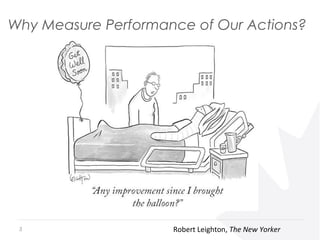
Why Measure Performance of Our Actions?
3 Robert Leighton, The New Yorker
• Establish key performance indicators and collect
relevant data
• e.g., levels in surface water, levels in human milk
• Evaluate current state over the pre-action baseline
conditions, consider trends and potential emerging
concerns
• Identify outcomes and critical data needs to ensure
long-term monitoring where needed, as well as other
important follow up actions
• May require some course-correction
How do we Measure Performance ofHow do we Measure Performance of
Actions for Toxic Substances?Actions for Toxic Substances?
4
Performance Measurement - Challenges
• Data Challenges
• Data compatibility issues (e.g., lack of harmonisation of
indicators with baselines and inconsistent data
collection methods)
• Appropriate representation of population in monitoring
activities (targeted vs. country-wide)
• Timing of data availability with risk management actions
• Logistical Challenges
• Resource requirements for data generation (e.g.,
financial and personnel resources, as well as time)
• Identification of new tools to analyze various data sets
• Aligning priorities between groups and jurisdictions
5
Performance Measurement –
A socioeconomic perspective
• Ensuring performance could result in improvements
to public health and the environment
• Costs savings related to health care and increased
quality of life
• Measuring and evaluating performance will inform
where adjustments could better align resources
towards making more significant impacts for
protection from toxic substances
• Improving performance can minimize future costs if
concerns are recognized sooner rather than later
6
Performance Measurement –
A socioeconomic perspective
• Ensuring performance could result in improvements
to public health and the environment
• Costs savings related to health care and increased
quality of life
• Measuring and evaluating performance will inform
where adjustments could better align resources
towards making more significant impacts for
protection from toxic substances
• Improving performance can minimize future costs if
concerns are recognized sooner rather than later
6

HCF 2019 Panel 3: Daren Kelland

  • 1.
    Performance Measurement- Canada’s Chemicals Management Plan DarenKelland Heath Canada Source: GreenIupac2016 Helsinki Chemicals Forum May 23-24, 2019
  • 2.
    Canada’s Chemicals ManagementPlan (CMP) • A comprehensive plan aimed at reducing the risks posed by chemicals to Canadians and their environment. • Under the CMP, substances are assessed to determine if they are harmful (toxic), and actions are implemented to prevent or control the risks they pose. • The Government of Canada has committed to developing a strategy that will establish a long-term approach to systematically assess the effectiveness of actions to control toxic substances. 2
  • 3.
    Why Measure Performanceof Our Actions? 3 Robert Leighton, The New Yorker
  • 4.
    • Establish keyperformance indicators and collect relevant data • e.g., levels in surface water, levels in human milk • Evaluate current state over the pre-action baseline conditions, consider trends and potential emerging concerns • Identify outcomes and critical data needs to ensure long-term monitoring where needed, as well as other important follow up actions • May require some course-correction How do we Measure Performance ofHow do we Measure Performance of Actions for Toxic Substances?Actions for Toxic Substances? 4
  • 5.
    Performance Measurement -Challenges • Data Challenges • Data compatibility issues (e.g., lack of harmonisation of indicators with baselines and inconsistent data collection methods) • Appropriate representation of population in monitoring activities (targeted vs. country-wide) • Timing of data availability with risk management actions • Logistical Challenges • Resource requirements for data generation (e.g., financial and personnel resources, as well as time) • Identification of new tools to analyze various data sets • Aligning priorities between groups and jurisdictions 5
  • 6.
    Performance Measurement – Asocioeconomic perspective • Ensuring performance could result in improvements to public health and the environment • Costs savings related to health care and increased quality of life • Measuring and evaluating performance will inform where adjustments could better align resources towards making more significant impacts for protection from toxic substances • Improving performance can minimize future costs if concerns are recognized sooner rather than later 6
  • 7.
    Performance Measurement – Asocioeconomic perspective • Ensuring performance could result in improvements to public health and the environment • Costs savings related to health care and increased quality of life • Measuring and evaluating performance will inform where adjustments could better align resources towards making more significant impacts for protection from toxic substances • Improving performance can minimize future costs if concerns are recognized sooner rather than later 6

Editor's Notes

  • #4 Evaluates the ongoing relevance of indicators and effectiveness of the actions taken to protect Canadians from risks from chemical substances Informs whether risk management adjustments are required to achieve objectives or if new objectives or actions need to be set Provides Canadians with an overview of progress relative to environmental and/or human health impacts