
How to Measure the Performance of
Different Chemical Management Systems
Helsinki Chemicals Forum 2019
Marco Camboni
22-23 May 2019
Importance of Measuring Performance
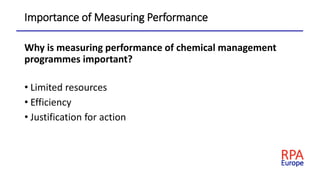
Why is measuring performance of chemical management
programmes important?
• Limited resources
• Efficiency
• Justification for action
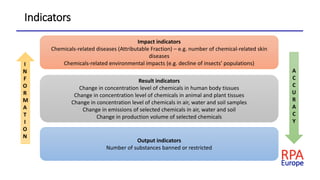
Indicators
A
C
C
U
R
A
C
Y
Impact indicators
Chemicals-related diseases (Attributable Fraction) – e.g. number of chemical-related skin
diseases
Chemicals-related environmental impacts (e.g. decline of insects’ populations)
Result indicators
Change in concentration level of chemicals in human body tissues
Change in concentration level of chemicals in animal and plant tissues
Change in concentration level of chemicals in air, water and soil samples
Change in emissions of selected chemicals in air, water and soil
Change in production volume of selected chemicals
Output indicators
Number of substances banned or restricted
Challenges
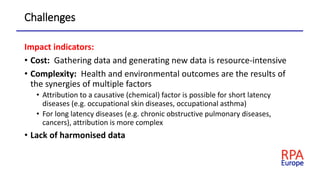
Impact indicators:
• Cost: Gathering data and generating new data is resource-intensive
• Complexity: Health and environmental outcomes are the results of
the synergies of multiple factors
• Attribution to a causative (chemical) factor is possible for short latency
diseases (e.g. occupational skin diseases, occupational asthma)
• For long latency diseases (e.g. chronic obstructive pulmonary diseases,
cancers), attribution is more complex
• Lack of harmonised data
Challenges
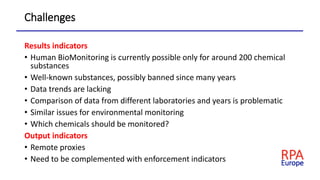
Results indicators
• Human BioMonitoring is currently possible only for around 200 chemical
substances
• Well-known substances, possibly banned since many years
• Data trends are lacking
• Comparison of data from different laboratories and years is problematic
• Similar issues for environmental monitoring
• Which chemicals should be monitored?
Output indicators
• Remote proxies
• Need to be complemented with enforcement indicators
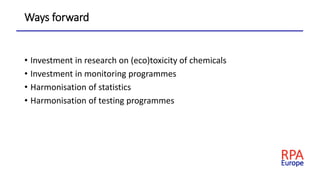
Ways forward
• Investment in research on (eco)toxicity of chemicals
• Investment in monitoring programmes
• Harmonisation of statistics
• Harmonisation of testing programmes
Thank you
marco.camboni@rpa-europe.eu

HCF 2019 Panel 3: Marco Camboni

  • 1.
    How to Measurethe Performance of Different Chemical Management Systems Helsinki Chemicals Forum 2019 Marco Camboni 22-23 May 2019
  • 2.
    Importance of MeasuringPerformance Why is measuring performance of chemical management programmes important? • Limited resources • Efficiency • Justification for action
  • 3.
    Indicators A C C U R A C Y Impact indicators Chemicals-related diseases(Attributable Fraction) – e.g. number of chemical-related skin diseases Chemicals-related environmental impacts (e.g. decline of insects’ populations) Result indicators Change in concentration level of chemicals in human body tissues Change in concentration level of chemicals in animal and plant tissues Change in concentration level of chemicals in air, water and soil samples Change in emissions of selected chemicals in air, water and soil Change in production volume of selected chemicals Output indicators Number of substances banned or restricted
  • 4.
    Challenges Impact indicators: • Cost:Gathering data and generating new data is resource-intensive • Complexity: Health and environmental outcomes are the results of the synergies of multiple factors • Attribution to a causative (chemical) factor is possible for short latency diseases (e.g. occupational skin diseases, occupational asthma) • For long latency diseases (e.g. chronic obstructive pulmonary diseases, cancers), attribution is more complex • Lack of harmonised data
  • 5.
    Challenges Results indicators • HumanBioMonitoring is currently possible only for around 200 chemical substances • Well-known substances, possibly banned since many years • Data trends are lacking • Comparison of data from different laboratories and years is problematic • Similar issues for environmental monitoring • Which chemicals should be monitored? Output indicators • Remote proxies • Need to be complemented with enforcement indicators
  • 6.
    Ways forward • Investmentin research on (eco)toxicity of chemicals • Investment in monitoring programmes • Harmonisation of statistics • Harmonisation of testing programmes
  • 7.