DESIGN OF IC ENGINE COMPPONENTS
DR.MAHALINGAM COLLEGE OF ENGINEERING AND TECHNOLOGY, POLLACHI.
P.KARUPPUSAMY AP / AUTO
R.VISHNURAMESHKUMAR AP / AUTO
DEPARTMENT OF AUTOMOBILE ENGINEERING
Reference:
1. A text book of MACHINE DESIGN – R.S. KHURMI
2. Design of MACHINE ELEMENTS – V.B. BHANDARI
Year / Sem : III / VI
AY : 2018 – 19
UNIT – I
DESIGN OF CYLINDER
Principal Parts of an Engine
ENGINE CYLINDER
Function of a cylinder:
 To retain the working fluid
 To guide the piston.
Materials Requirements:
 To withstand high temperature due to the combustion of fuel
 To withstand high pressure and impact load generated during combustion
Material:
The cylinders are usually made of
 cast iron
 cast steel
Cooling Requirements:
 Single cylinder engines (such as scooters and motorcycles) - air cooled - fins
around the cylinder.
 The multi-cylinder engines (such as of cars) - water jackets around the cylinders to
cool it.
CYLINDER LINER
Function of a Cylinder Liner:
 The cylinders are provided with cylinder liners so that in case of wear, they can be
easily replaced.
Types :
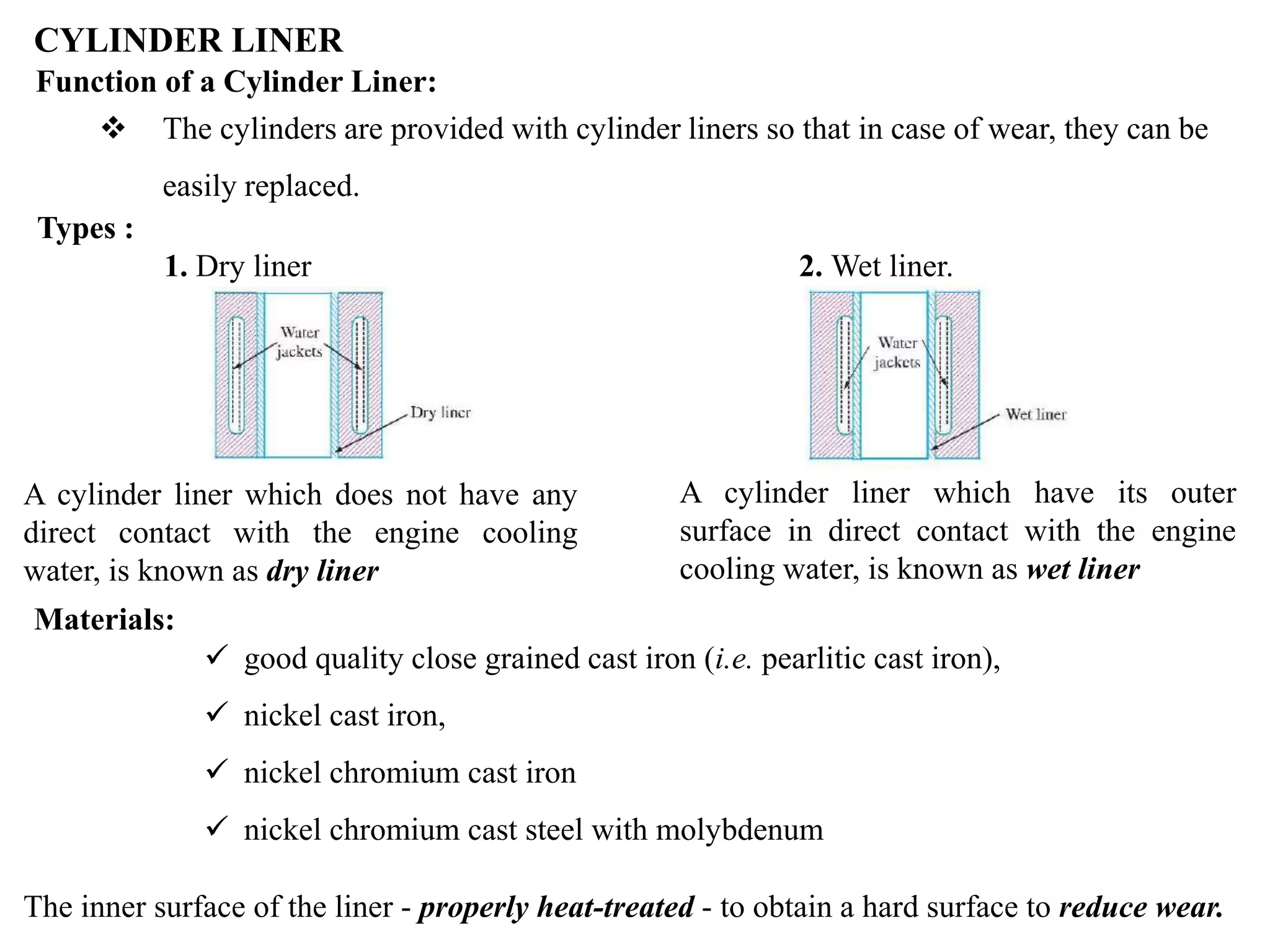
1. Dry liner 2. Wet liner.
A cylinder liner which does not have any
direct contact with the engine cooling
water, is known as dry liner
A cylinder liner which have its outer
surface in direct contact with the engine
cooling water, is known as wet liner
Materials:
 good quality close grained cast iron (i.e. pearlitic cast iron),
 nickel cast iron,
 nickel chromium cast iron
 nickel chromium cast steel with molybdenum
The inner surface of the liner - properly heat-treated - to obtain a hard surface to reduce wear.
Design of a Cylinder
In designing a cylinder for an I. C. engine, it is required to determine the following:
1) Thickness of the cylinder wall
2) Bore and length of the cylinder
3) Cylinder flange and studs
4) Cylinder Head
1. Thickness of the cylinder wall.
The cylinder wall is subjected to
 gas pressure
 the piston side thrust.
The gas pressure produces the following two types of stresses :
(a) Longitudinal stress, and
(b) Circumferential stress.
Since these two stresses act at right angles to each other, therefore, the net
stress in each direction is reduced.
The piston side thrust tends to bend the cylinder wall, but the stress in the wall due to
side thrust is very small and hence it may be neglected
(a)
(b)
Gas pressure
D0 = Outside diameter of the cylinder in mm,
D = Inside diameter of the cylinder in mm,
p = Maximum pressure inside the engine
cylinder in N/mm2,
t = Thickness of the cylinder wall in mm
1/m = Poisson’s ratio. It is usually taken as 0.25.
l =is the length of the cylinder
Apparent longitudinal stress
Apparent circumferential stress
Net longitudinal stress
Net circumferential stress
The thickness of a cylinder wall (t)
σc = Permissible circumferential or hoop stress for the cylinder material (MPa)
(35 MPa to 100 MP)a depending upon the size and material of the cylinder.
C = Allowance for reboring.
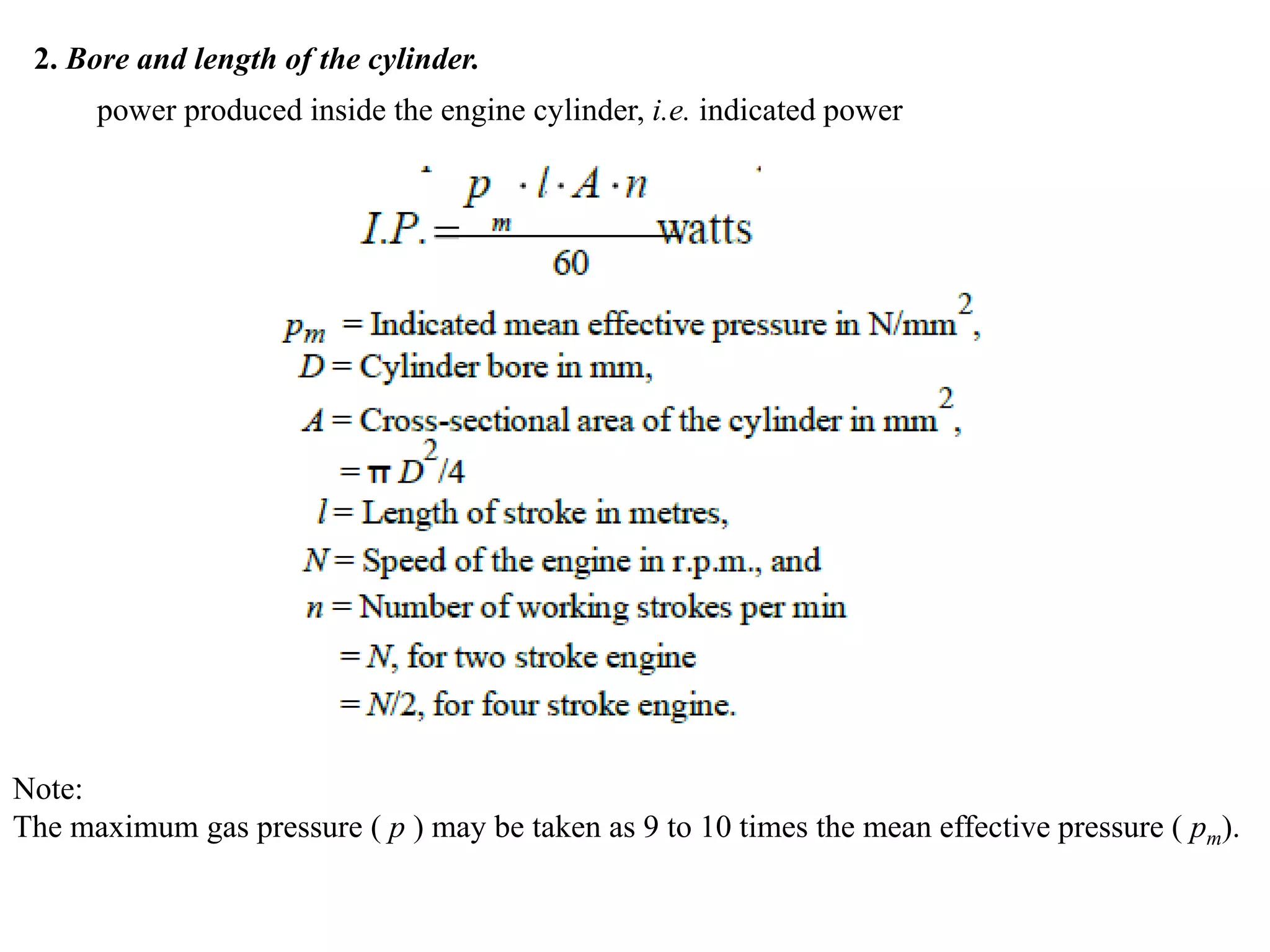
2. Bore and length of the cylinder.
power produced inside the engine cylinder, i.e. indicated power
Note:
The maximum gas pressure ( p ) may be taken as 9 to 10 times the mean effective pressure ( pm).
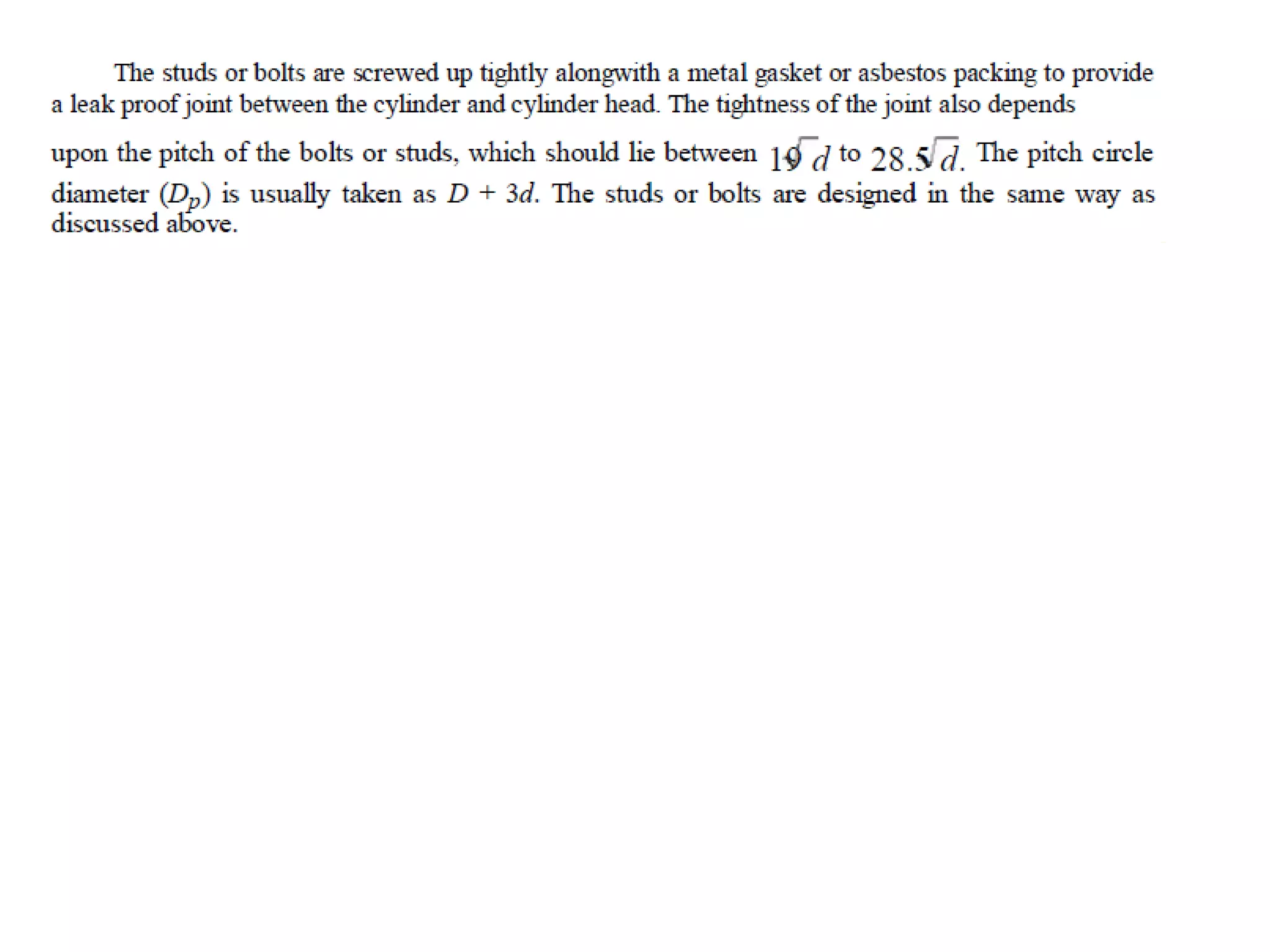
3. Cylinder flange and studs
 The nominal or major diameter of the stud or bolt (d ) usually lies between 0.75 tf to
tf, where tf is the thickness of flange.
 In no case, a stud or bolt less than 16 mm diameter should be used.
4. Cylinder head.
 Usually, a separate cylinder head or cover is provided with most of the engines.
 It is, usually, made of box type section of considerable depth to accommodate ports for
air and gas passages, inlet valve, exhaust valve and spark plug (in case of petrol engines)
or atomiser at the centre of the cover (in case of diesel engines).
The cylinder head may be approximately taken as a flat circular plate whose thickness (th)
U1 Design of cylinder

U1 Design of cylinder

  • 1.
    DESIGN OF ICENGINE COMPPONENTS DR.MAHALINGAM COLLEGE OF ENGINEERING AND TECHNOLOGY, POLLACHI. P.KARUPPUSAMY AP / AUTO R.VISHNURAMESHKUMAR AP / AUTO DEPARTMENT OF AUTOMOBILE ENGINEERING Reference: 1. A text book of MACHINE DESIGN – R.S. KHURMI 2. Design of MACHINE ELEMENTS – V.B. BHANDARI Year / Sem : III / VI AY : 2018 – 19
  • 2.
    UNIT – I DESIGNOF CYLINDER
  • 3.
  • 4.
    ENGINE CYLINDER Function ofa cylinder:  To retain the working fluid  To guide the piston. Materials Requirements:  To withstand high temperature due to the combustion of fuel  To withstand high pressure and impact load generated during combustion Material: The cylinders are usually made of  cast iron  cast steel Cooling Requirements:  Single cylinder engines (such as scooters and motorcycles) - air cooled - fins around the cylinder.  The multi-cylinder engines (such as of cars) - water jackets around the cylinders to cool it.
  • 5.
    CYLINDER LINER Function ofa Cylinder Liner:  The cylinders are provided with cylinder liners so that in case of wear, they can be easily replaced. Types : 1. Dry liner 2. Wet liner. A cylinder liner which does not have any direct contact with the engine cooling water, is known as dry liner A cylinder liner which have its outer surface in direct contact with the engine cooling water, is known as wet liner Materials:  good quality close grained cast iron (i.e. pearlitic cast iron),  nickel cast iron,  nickel chromium cast iron  nickel chromium cast steel with molybdenum The inner surface of the liner - properly heat-treated - to obtain a hard surface to reduce wear.
  • 6.
    Design of aCylinder In designing a cylinder for an I. C. engine, it is required to determine the following: 1) Thickness of the cylinder wall 2) Bore and length of the cylinder 3) Cylinder flange and studs 4) Cylinder Head
  • 7.
    1. Thickness ofthe cylinder wall. The cylinder wall is subjected to  gas pressure  the piston side thrust. The gas pressure produces the following two types of stresses : (a) Longitudinal stress, and (b) Circumferential stress. Since these two stresses act at right angles to each other, therefore, the net stress in each direction is reduced. The piston side thrust tends to bend the cylinder wall, but the stress in the wall due to side thrust is very small and hence it may be neglected (a) (b)
  • 8.
    Gas pressure D0 =Outside diameter of the cylinder in mm, D = Inside diameter of the cylinder in mm, p = Maximum pressure inside the engine cylinder in N/mm2, t = Thickness of the cylinder wall in mm 1/m = Poisson’s ratio. It is usually taken as 0.25. l =is the length of the cylinder Apparent longitudinal stress Apparent circumferential stress Net longitudinal stress Net circumferential stress
  • 9.
    The thickness ofa cylinder wall (t) σc = Permissible circumferential or hoop stress for the cylinder material (MPa) (35 MPa to 100 MP)a depending upon the size and material of the cylinder. C = Allowance for reboring.
  • 10.
    2. Bore andlength of the cylinder. power produced inside the engine cylinder, i.e. indicated power Note: The maximum gas pressure ( p ) may be taken as 9 to 10 times the mean effective pressure ( pm).
  • 11.
    3. Cylinder flangeand studs  The nominal or major diameter of the stud or bolt (d ) usually lies between 0.75 tf to tf, where tf is the thickness of flange.  In no case, a stud or bolt less than 16 mm diameter should be used.
  • 12.
    4. Cylinder head. Usually, a separate cylinder head or cover is provided with most of the engines.  It is, usually, made of box type section of considerable depth to accommodate ports for air and gas passages, inlet valve, exhaust valve and spark plug (in case of petrol engines) or atomiser at the centre of the cover (in case of diesel engines). The cylinder head may be approximately taken as a flat circular plate whose thickness (th)