ADVANCED CARDIAC LIFE
SUPPORT-- ACLS
T. USHAKIRAN
MSC N PHD RESEARCH SCHOLLER
OBG DEPARTMENT
NARAYANA COLLEGE OF NURSING
ACLS
• ACLS stands for Advanced Cardiovascular Life
Support. It is often mixed up with BLS, which stands
for Basic Life Support. While there are similarities
between the two, Advanced Cardiovascular Life
Support makes use of extensive and advanced
techniques of providing life support to patients.
ACLS
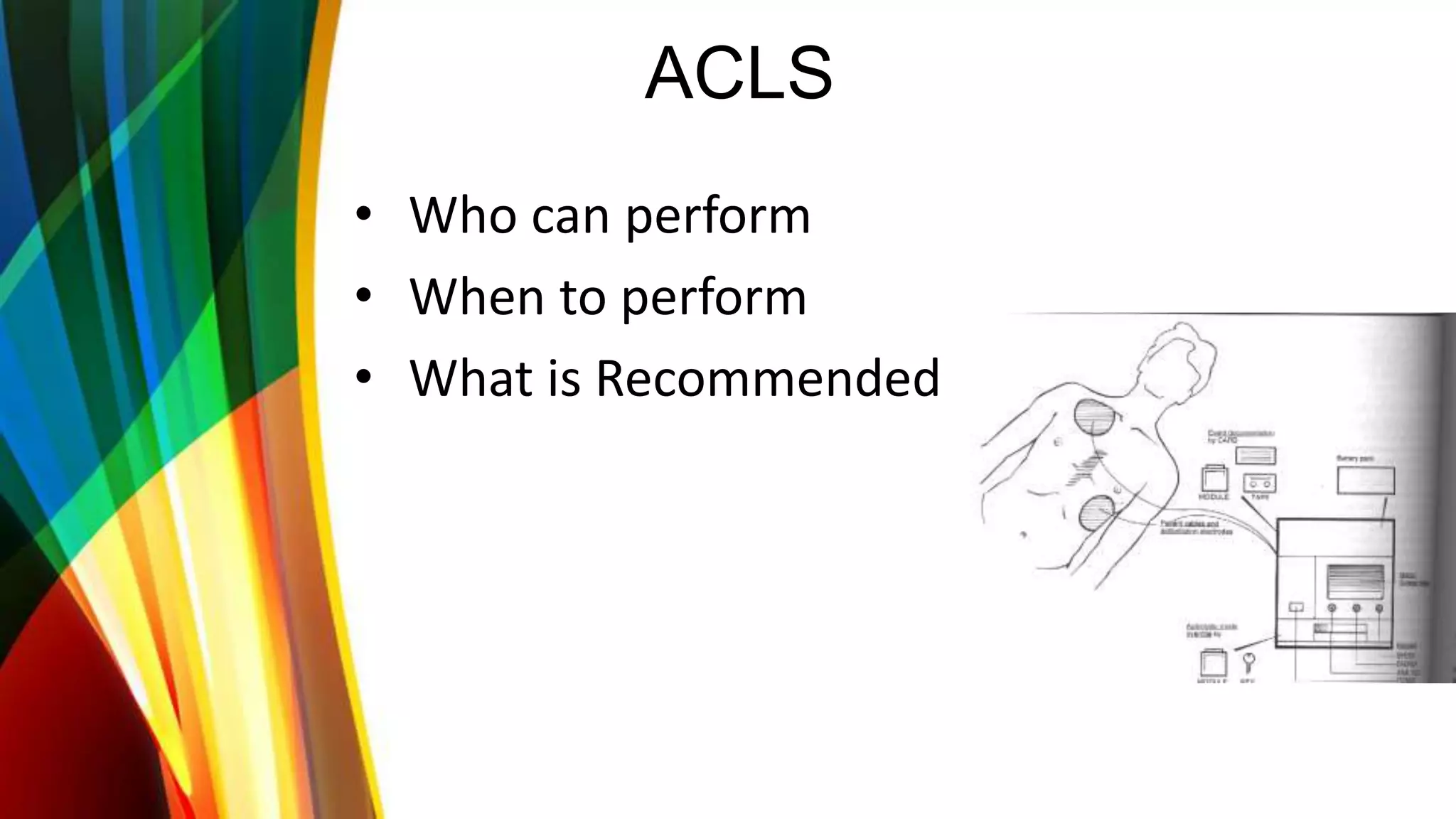
• Who can perform
• When to perform
• What is Recommended
Who can perform ACLS
• Basic life support (BLS) is the medical
care given to patients with life-
threatening illnesses or injuries. All
medical professionals are trained to
provide BLS.
• BLS is administered with the absence
of any medical equipment.
Who can ……
• In Advanced Cardiovascular Life
Support ,Performing intubation, IV
insertion, cardiac monitoring,
electrocardiogram interpretation, the
use of defibrillator and other medical
supplies and equipment is what sets
ACLS apart from BLS.
Who can…….
• Medical professionals who have
obtained the certification are skilled in
advanced life-saving techniques and
are licensed to do resuscitation.
APPROACHES:
When to Perform ACLS
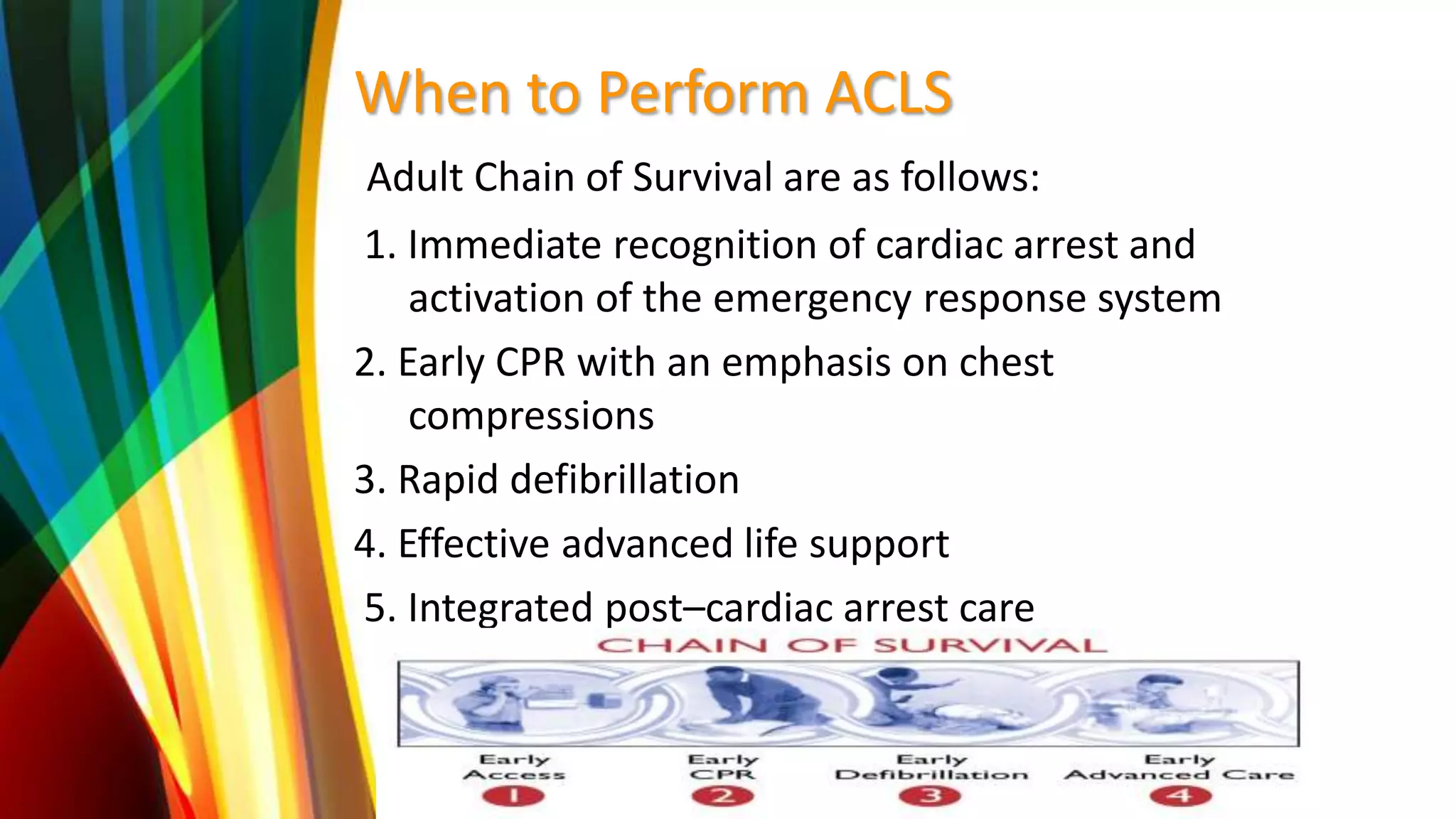
Adult Chain of Survival are as follows:
1. Immediate recognition of cardiac arrest and
activation of the emergency response system
2. Early CPR with an emphasis on chest
compressions
3. Rapid defibrillation
4. Effective advanced life support
5. Integrated post–cardiac arrest care
When to……..
• Bradycardia — Bradycardia is defined
conservatively as a heart rate below
60 beats per minute
• Tachycardia — Tachycardia is defined
as a heart rate above 100 beats per
minute, but symptomatic tachycardia
generally involves rates over 150 beats
per minute,
When to…….
• Ventricular fibrillation and pulseless
ventricular tachycardia — Ventricular
fibrillation (VF) and pulseless
ventricular tachycardia (VT) are non-
perfusing rhythms emanating from
the ventricles, for which early rhythm
identification and defibrillation, are
the mainstays of treatment.
When to……
• Regular narrow complex — Sinus
tachycardia and supraventricular
tachycardia are the major causes of a
regular narrow complex arrhythmia
Sinus tachycardia is a common
response to fever, anemia, shock,
sepsis, pain, heart failure, or any other
physiologic stress.
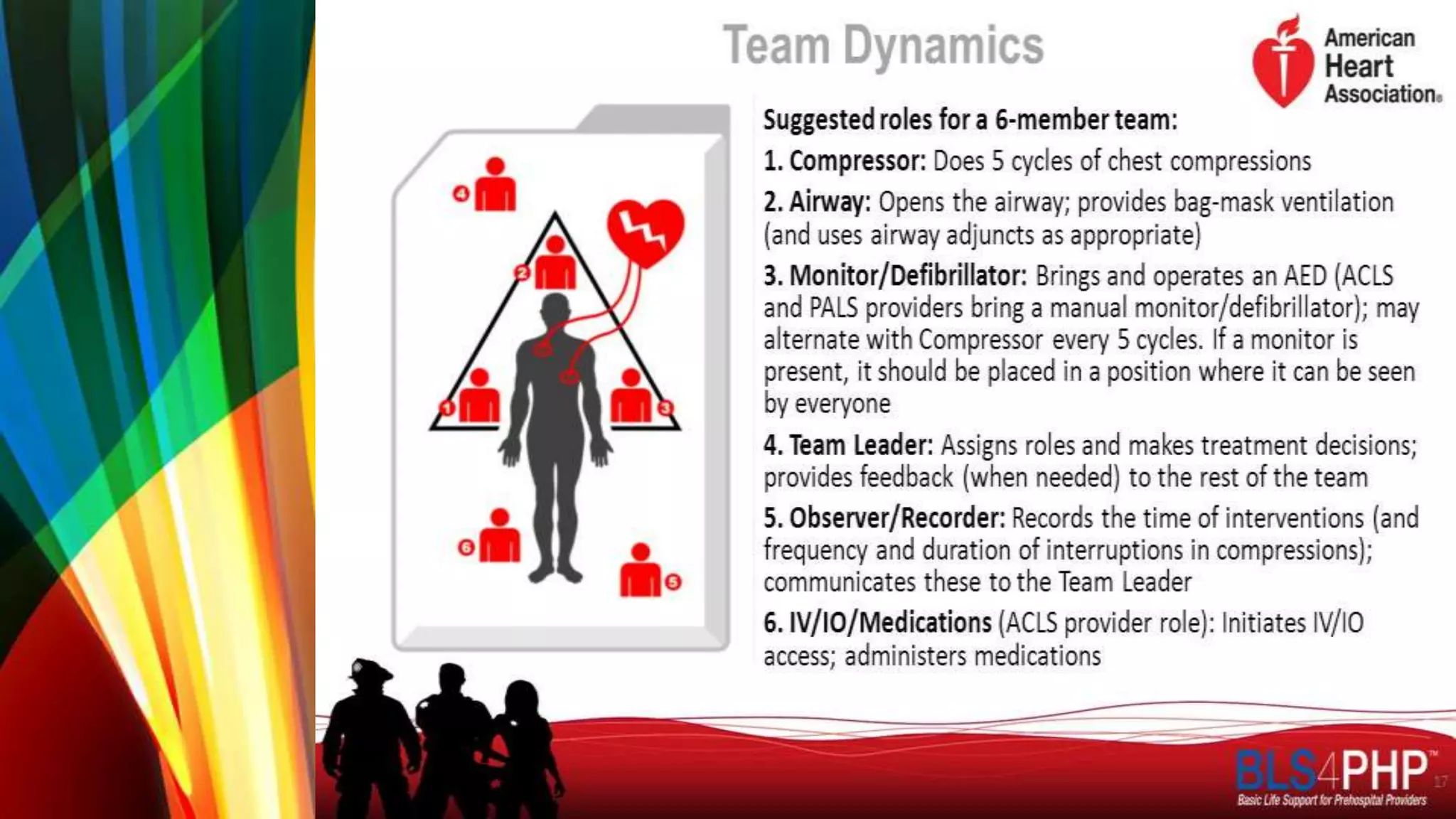
Team for ACLS
What is recommended
• Chest Compressions are the cornerstone of resuscitation
– Rate
– Depth
– Recoil,100% O2
– Minimizing Interruptions
– ECG findings:
• Is the rhythm fast or slow?
• Are the QRS complexes wide or narrow?
• Is the rhythm regular or irregular?
– Feedback is probably helpful
THANK YOU

CARDIAC LIFE SUPPORT ACLS

  • 1.
    ADVANCED CARDIAC LIFE SUPPORT--ACLS T. USHAKIRAN MSC N PHD RESEARCH SCHOLLER OBG DEPARTMENT NARAYANA COLLEGE OF NURSING
  • 2.
    ACLS • ACLS standsfor Advanced Cardiovascular Life Support. It is often mixed up with BLS, which stands for Basic Life Support. While there are similarities between the two, Advanced Cardiovascular Life Support makes use of extensive and advanced techniques of providing life support to patients.
  • 4.
    ACLS • Who canperform • When to perform • What is Recommended
  • 5.
    Who can performACLS • Basic life support (BLS) is the medical care given to patients with life- threatening illnesses or injuries. All medical professionals are trained to provide BLS. • BLS is administered with the absence of any medical equipment.
  • 6.
    Who can …… •In Advanced Cardiovascular Life Support ,Performing intubation, IV insertion, cardiac monitoring, electrocardiogram interpretation, the use of defibrillator and other medical supplies and equipment is what sets ACLS apart from BLS.
  • 7.
    Who can……. • Medicalprofessionals who have obtained the certification are skilled in advanced life-saving techniques and are licensed to do resuscitation.
  • 9.
  • 10.
    When to PerformACLS Adult Chain of Survival are as follows: 1. Immediate recognition of cardiac arrest and activation of the emergency response system 2. Early CPR with an emphasis on chest compressions 3. Rapid defibrillation 4. Effective advanced life support 5. Integrated post–cardiac arrest care
  • 12.
    When to…….. • Bradycardia— Bradycardia is defined conservatively as a heart rate below 60 beats per minute • Tachycardia — Tachycardia is defined as a heart rate above 100 beats per minute, but symptomatic tachycardia generally involves rates over 150 beats per minute,
  • 13.
    When to……. • Ventricularfibrillation and pulseless ventricular tachycardia — Ventricular fibrillation (VF) and pulseless ventricular tachycardia (VT) are non- perfusing rhythms emanating from the ventricles, for which early rhythm identification and defibrillation, are the mainstays of treatment.
  • 14.
    When to…… • Regularnarrow complex — Sinus tachycardia and supraventricular tachycardia are the major causes of a regular narrow complex arrhythmia Sinus tachycardia is a common response to fever, anemia, shock, sepsis, pain, heart failure, or any other physiologic stress.
  • 17.
  • 21.
    What is recommended •Chest Compressions are the cornerstone of resuscitation – Rate – Depth – Recoil,100% O2 – Minimizing Interruptions – ECG findings: • Is the rhythm fast or slow? • Are the QRS complexes wide or narrow? • Is the rhythm regular or irregular? – Feedback is probably helpful
  • 22.