ADULT LEARNING
THEORY AND
PRINCIPLES
17 February, 2016
Adult Learning Theory and Principles
 Adult Learning Theory
 Part of being an effective educator involves
understanding how adults learn best (Lieb,1991).
 Andragogy (adult learning) is a theory that holds a
set of assumptions about how adults learn.
 Andragogy emphasizes the value of the process
of learning. It uses approaches to learning that
are problem-based and collaborative rather
than didactic, and also emphasizes more equality
between the teacher and learner.
Adult Learning Principles
 Adults are internally motivated and self-
directed
 Adults bring life experiences and
knowledge to learning experiences
 Adults are goal oriented
 Adults are relevancy oriented
 Adults are practical
 Adult learners like to be respected
Other Factors
 Another aspect of adult learning is motivation.
At least six factors serve as sources of
motivation for adult learning:
 Social relationships:
 External expectations:
 Social welfare:
 Personal advancement:
 Escape/Stimulation:
 Cognitive interest:
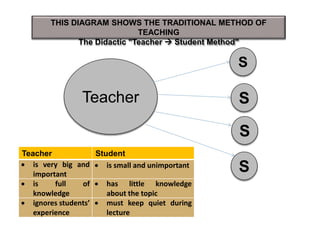
Teacher
S
S
S
S
THIS DIAGRAM SHOWS THE TRADITIONAL METHOD OF
TEACHING
The Didactic "Teacher  Student Method"
Teacher Student
 is very big and
important
 is small and unimportant
 is full of
knowledge
 has little knowledge
about the topic
 ignores students’
experience
 must keep quiet during
lecture
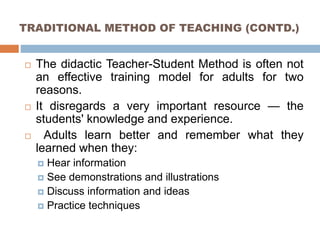
TRADITIONAL METHOD OF TEACHING (CONTD.)
 The didactic Teacher-Student Method is often not
an effective training model for adults for two
reasons.
 It disregards a very important resource — the
students' knowledge and experience.
 Adults learn better and remember what they
learned when they:
 Hear information
 See demonstrations and illustrations
 Discuss information and ideas
 Practice techniques
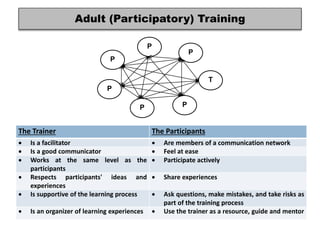
P
P
P
P
P
P
T
Adult (Participatory) Training
The Trainer The Participants
 Is a facilitator  Are members of a communication network
 Is a good communicator  Feel at ease
 Works at the same level as the
participants
 Participate actively
 Respects participants' ideas and
experiences
 Share experiences
 Is supportive of the learning process  Ask questions, make mistakes, and take risks as
part of the training process
 Is an organizer of learning experiences  Use the trainer as a resource, guide and mentor
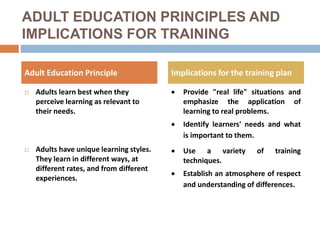
ADULT EDUCATION PRINCIPLES AND
IMPLICATIONS FOR TRAINING
Adult Education Principle
 Adults learn best when they
perceive learning as relevant to
their needs.
 Adults have unique learning styles.
They learn in different ways, at
different rates, and from different
experiences.
Implications for the training plan
 Provide "real life" situations and
emphasize the application of
learning to real problems.
 Identify learners' needs and what
is important to them.
 Use a variety of training
techniques.
 Establish an atmosphere of respect
and understanding of differences.
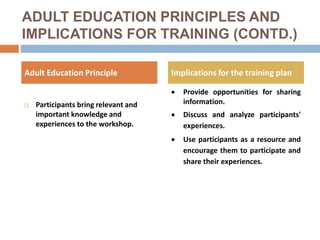
ADULT EDUCATION PRINCIPLES AND
IMPLICATIONS FOR TRAINING (CONTD.)
Adult Education Principle
 Participants bring relevant and
important knowledge and
experiences to the workshop.
Implications for the training plan
 Provide opportunities for sharing
information.
 Discuss and analyze participants'
experiences.
 Use participants as a resource and
encourage them to participate and
share their experiences.

Adult Learning Theory and Principles.ppt

  • 1.
  • 2.
    Adult Learning Theoryand Principles  Adult Learning Theory  Part of being an effective educator involves understanding how adults learn best (Lieb,1991).  Andragogy (adult learning) is a theory that holds a set of assumptions about how adults learn.  Andragogy emphasizes the value of the process of learning. It uses approaches to learning that are problem-based and collaborative rather than didactic, and also emphasizes more equality between the teacher and learner.
  • 3.
    Adult Learning Principles Adults are internally motivated and self- directed  Adults bring life experiences and knowledge to learning experiences  Adults are goal oriented  Adults are relevancy oriented  Adults are practical  Adult learners like to be respected
  • 4.
    Other Factors  Anotheraspect of adult learning is motivation. At least six factors serve as sources of motivation for adult learning:  Social relationships:  External expectations:  Social welfare:  Personal advancement:  Escape/Stimulation:  Cognitive interest:
  • 5.
    Teacher S S S S THIS DIAGRAM SHOWSTHE TRADITIONAL METHOD OF TEACHING The Didactic "Teacher  Student Method" Teacher Student  is very big and important  is small and unimportant  is full of knowledge  has little knowledge about the topic  ignores students’ experience  must keep quiet during lecture
  • 6.
    TRADITIONAL METHOD OFTEACHING (CONTD.)  The didactic Teacher-Student Method is often not an effective training model for adults for two reasons.  It disregards a very important resource — the students' knowledge and experience.  Adults learn better and remember what they learned when they:  Hear information  See demonstrations and illustrations  Discuss information and ideas  Practice techniques
  • 7.
    P P P P P P T Adult (Participatory) Training TheTrainer The Participants  Is a facilitator  Are members of a communication network  Is a good communicator  Feel at ease  Works at the same level as the participants  Participate actively  Respects participants' ideas and experiences  Share experiences  Is supportive of the learning process  Ask questions, make mistakes, and take risks as part of the training process  Is an organizer of learning experiences  Use the trainer as a resource, guide and mentor
  • 8.
    ADULT EDUCATION PRINCIPLESAND IMPLICATIONS FOR TRAINING Adult Education Principle  Adults learn best when they perceive learning as relevant to their needs.  Adults have unique learning styles. They learn in different ways, at different rates, and from different experiences. Implications for the training plan  Provide "real life" situations and emphasize the application of learning to real problems.  Identify learners' needs and what is important to them.  Use a variety of training techniques.  Establish an atmosphere of respect and understanding of differences.
  • 9.
    ADULT EDUCATION PRINCIPLESAND IMPLICATIONS FOR TRAINING (CONTD.) Adult Education Principle  Participants bring relevant and important knowledge and experiences to the workshop. Implications for the training plan  Provide opportunities for sharing information.  Discuss and analyze participants' experiences.  Use participants as a resource and encourage them to participate and share their experiences.