Principles of adult learning
Learning
1. Learning is a modification in behavior.
2. Learning is the organization of behavior.
3. Learning is the confirmation of a new process.
4. Motivation has a significant role & place in
learning
Teaching
Teaching is one of the instruments of education
and is a special function is to impart
understanding and skill.
The main function of teaching is to make
learning effective
In learning you will teach, and in
teaching you will learn.
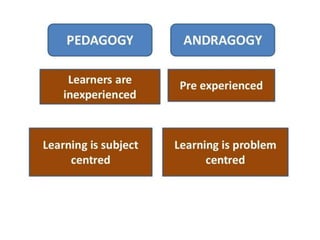
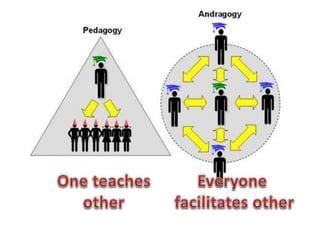
• Androgogy: The learner has a lot of
experience, is able to assess the gap between
existing and new knowledge and is self directed
to learn as to be able to perform a task or solve
a problem.
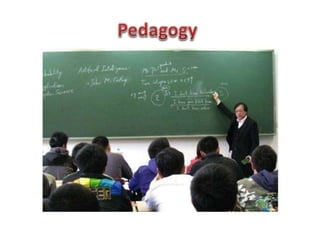
• Pedogogy: The learner, who comes with little
experience, is dependent on the instructor and is
told what to do.
Characteristics of Adult Learning
• Problem-centric
Adults are not there just to get more
information. If your presentation doesn’t
help them solve their pressing issues, it
will be forgotten.
• Relevance
If the information being presented is not
relevant to the listener’s life and work, it
will not get their attention.
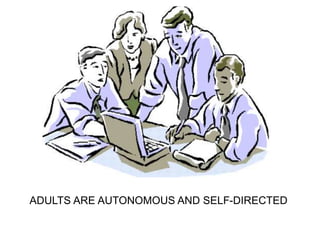
ADULTS ARE AUTONOMOUS AND SELF-DIRECTED
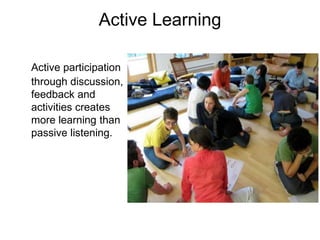
Active Learning
Active participation
through discussion,
feedback and
activities creates
more learning than
passive listening.
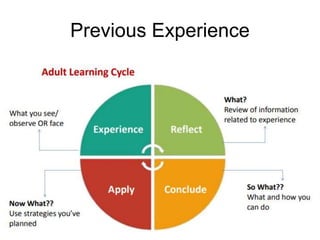
Previous Experience
• Fun
Learning should be fun! As a presenter, if
you are not having fun presenting your
information and facilitating learning, then
you should stop.
Adult learning is
• Autonomous and self directed
• Goal oriented and relevant
• Life experiences
Create a supportive environment
Adults need to be shown respect.
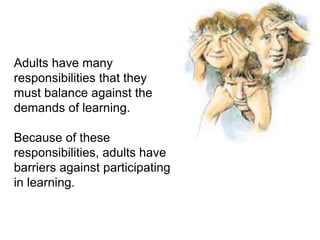
Adults have many
responsibilities that they
must balance against the
demands of learning.
Because of these
responsibilities, adults have
barriers against participating
in learning.
Effective Adult learning
Reinforcement – instructors can also
motivate adult learners through
reinforcement.
• Positive Reinforcement
When instructors are trying to change
behaviors (old practices), they should apply
positive reinforcement.
• Grab their attention and persuade them more easily
• Motivate the students
• Make course content relevant and coherent.
• Use different training methods
• Choose a few critical benefits of taking the course and
refer to these often.
• Encourage exploration.
• Provide immediate feedback on practice.
• Meet trainee’s individual learning needs.
• Evidence and examples
• Experiential learning
Principles_of_adult_learning_-_final.pptx

Principles_of_adult_learning_-_final.pptx

  • 1.
  • 2.
    Learning 1. Learning isa modification in behavior. 2. Learning is the organization of behavior. 3. Learning is the confirmation of a new process. 4. Motivation has a significant role & place in learning
  • 3.
    Teaching Teaching is oneof the instruments of education and is a special function is to impart understanding and skill. The main function of teaching is to make learning effective
  • 4.
    In learning youwill teach, and in teaching you will learn.
  • 8.
    • Androgogy: Thelearner has a lot of experience, is able to assess the gap between existing and new knowledge and is self directed to learn as to be able to perform a task or solve a problem. • Pedogogy: The learner, who comes with little experience, is dependent on the instructor and is told what to do.
  • 9.
    Characteristics of AdultLearning • Problem-centric Adults are not there just to get more information. If your presentation doesn’t help them solve their pressing issues, it will be forgotten.
  • 10.
    • Relevance If theinformation being presented is not relevant to the listener’s life and work, it will not get their attention.
  • 12.
    ADULTS ARE AUTONOMOUSAND SELF-DIRECTED
  • 13.
    Active Learning Active participation throughdiscussion, feedback and activities creates more learning than passive listening.
  • 14.
  • 15.
    • Fun Learning shouldbe fun! As a presenter, if you are not having fun presenting your information and facilitating learning, then you should stop.
  • 16.
    Adult learning is •Autonomous and self directed • Goal oriented and relevant • Life experiences
  • 17.
    Create a supportiveenvironment Adults need to be shown respect.
  • 18.
    Adults have many responsibilitiesthat they must balance against the demands of learning. Because of these responsibilities, adults have barriers against participating in learning.
  • 22.
    Effective Adult learning Reinforcement– instructors can also motivate adult learners through reinforcement. • Positive Reinforcement When instructors are trying to change behaviors (old practices), they should apply positive reinforcement.
  • 23.
    • Grab theirattention and persuade them more easily • Motivate the students • Make course content relevant and coherent. • Use different training methods • Choose a few critical benefits of taking the course and refer to these often.
  • 24.
    • Encourage exploration. •Provide immediate feedback on practice. • Meet trainee’s individual learning needs. • Evidence and examples • Experiential learning