ADAPTIVE TECHNOLOGY
               By Yuri Collins
ADAPTIVE TECHNOLOGY..!
WHAT DOES IT MEANS?


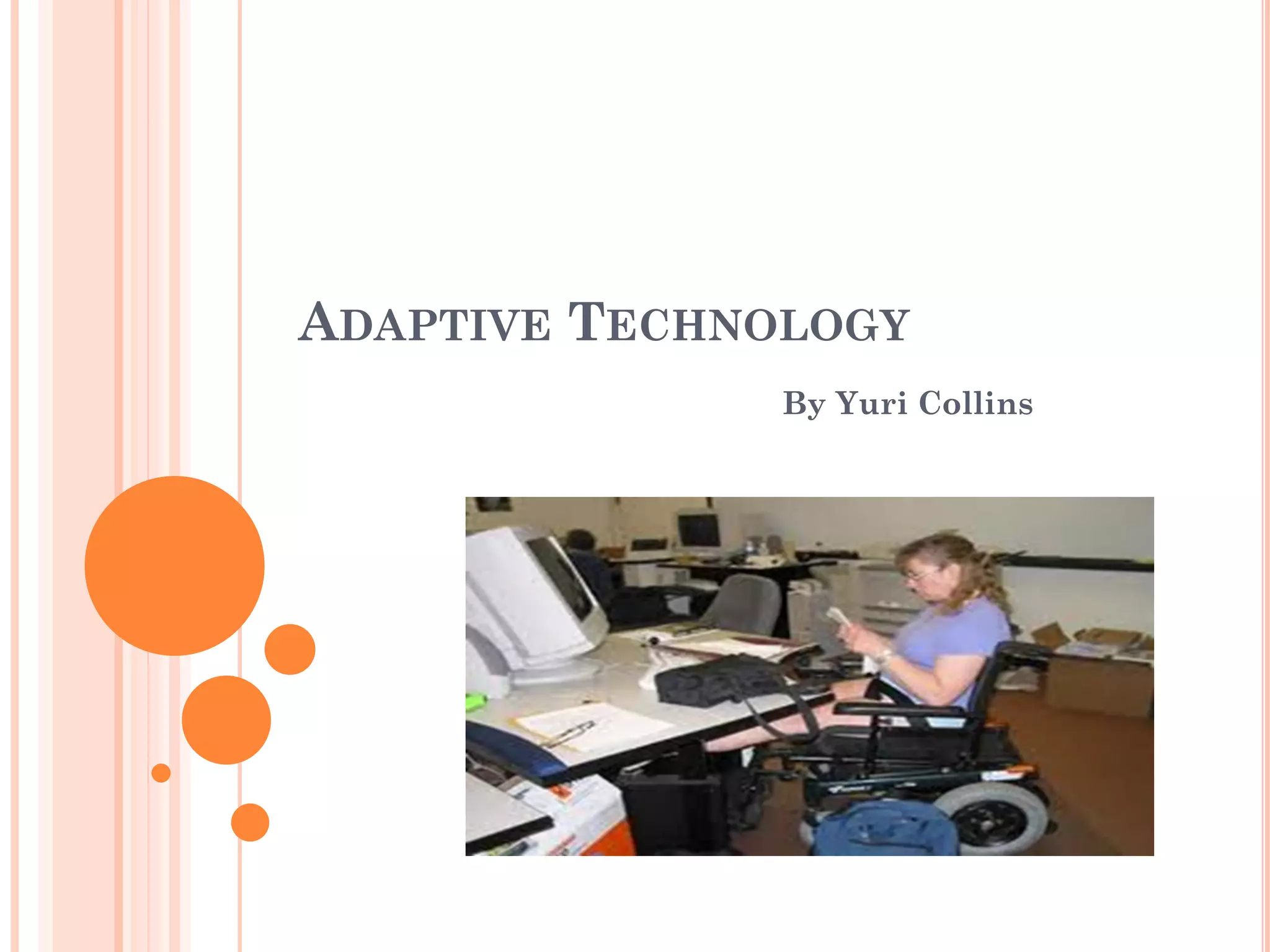
   Adaptive technology is the name of products that
      help people who cannot use regular version of
products, primarily people with physical disabilities
      such as limited vision, hearing, and mobility.
ADAPTIVE TECHNOLOGY


Can be in the form of :

   Low tech or

   High tech equipment

  And Is anything give to a person to help
increase their independence
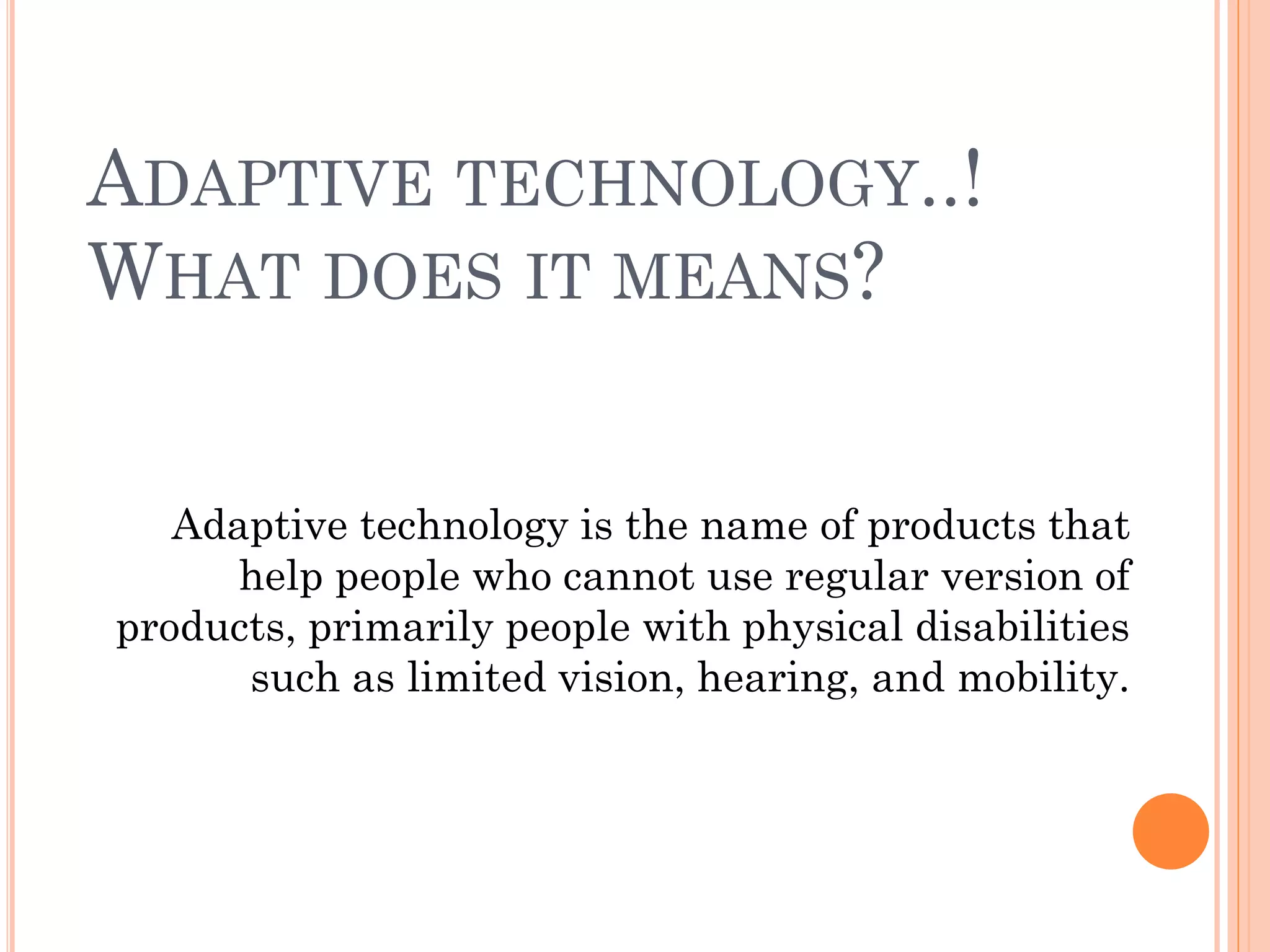
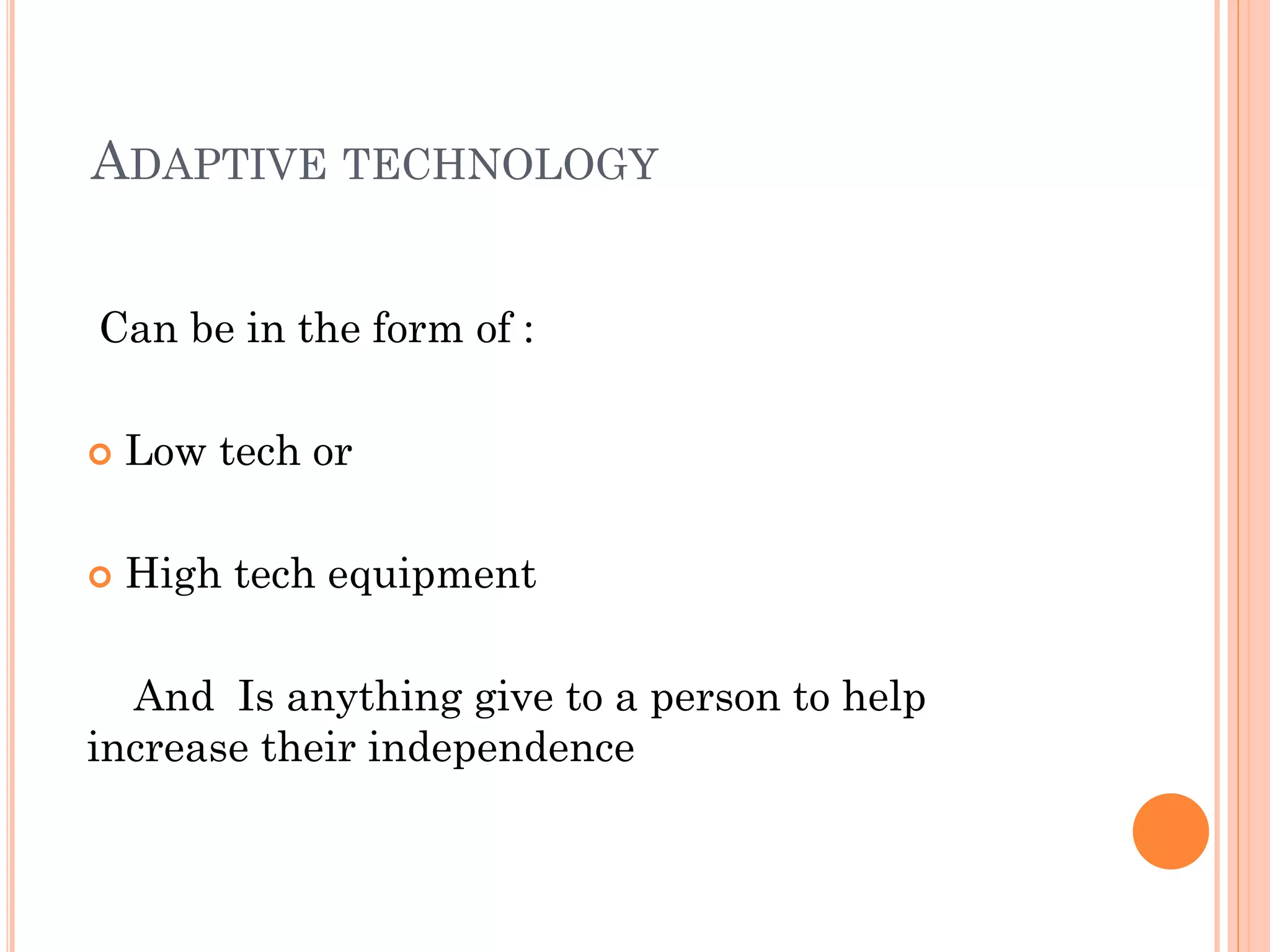
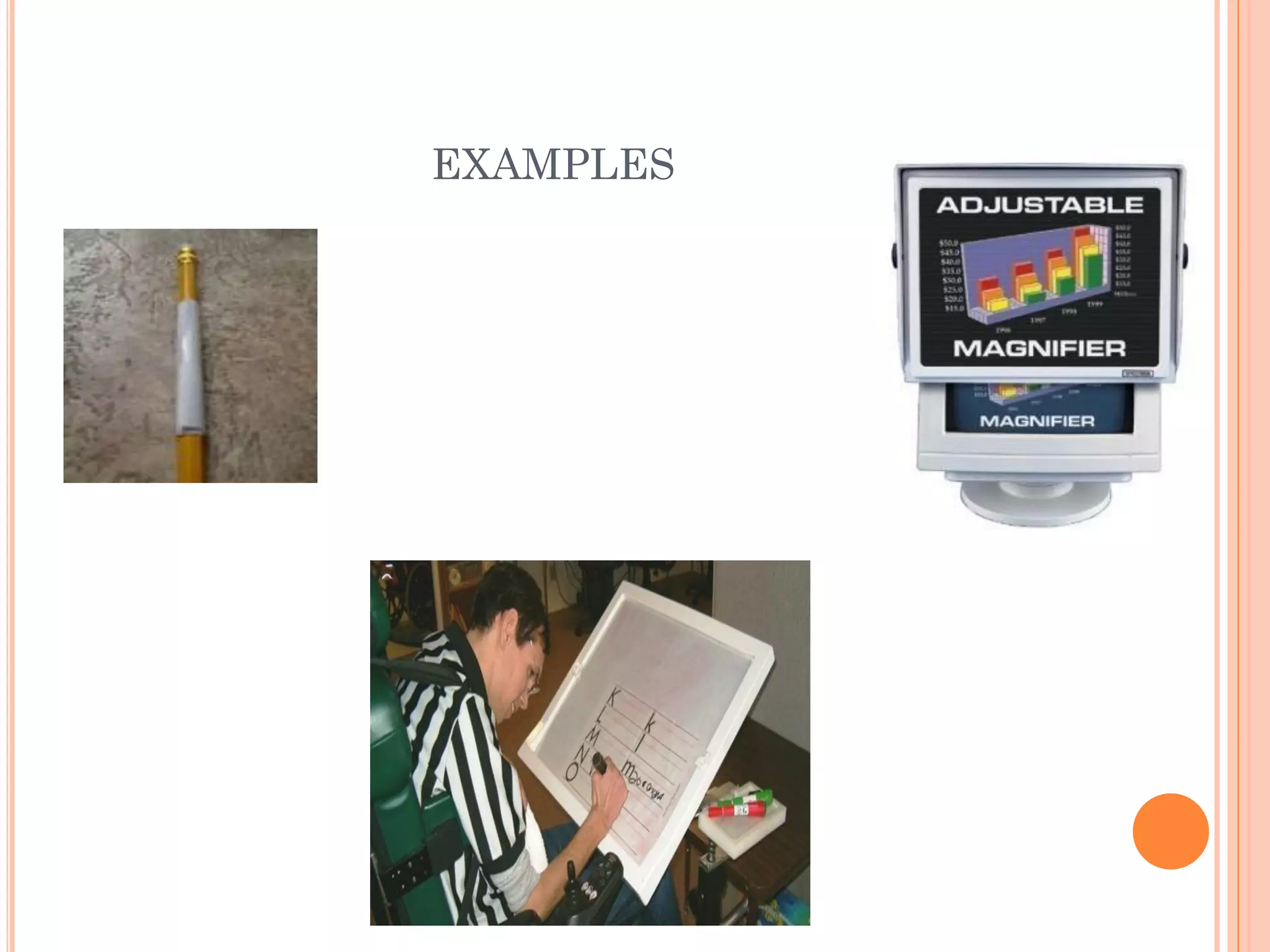
EXAMPLES
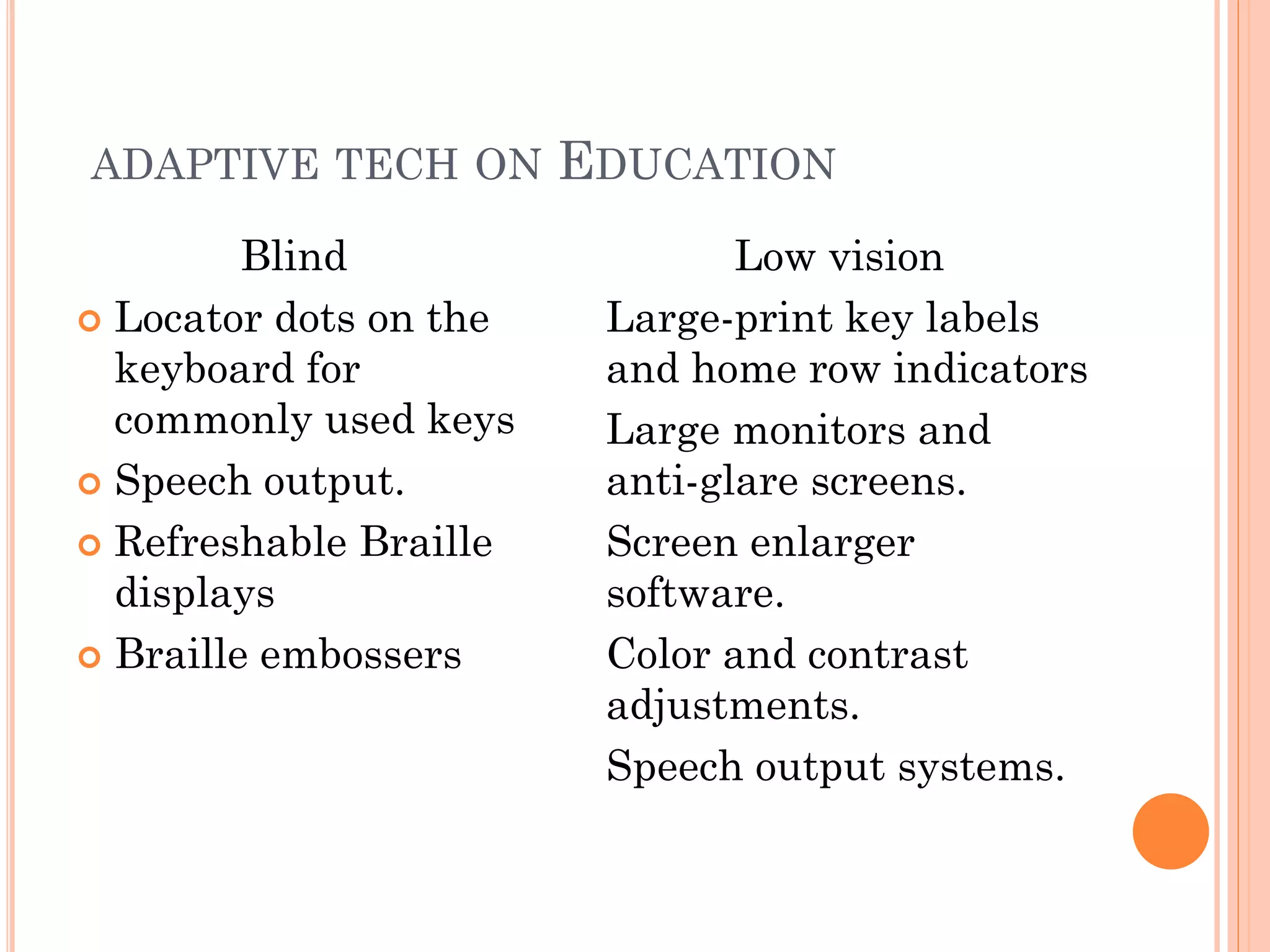
ADAPTIVE TECH ON        EDUCATION
         Blind                  Low vision
 Locator dots on the    Large-print key labels
  keyboard for           and home row indicators
  commonly used keys     Large monitors and
 Speech output.         anti-glare screens.
 Refreshable Braille    Screen enlarger
  displays               software.
 Braille embossers      Color and contrast
                         adjustments.
                         Speech output systems.
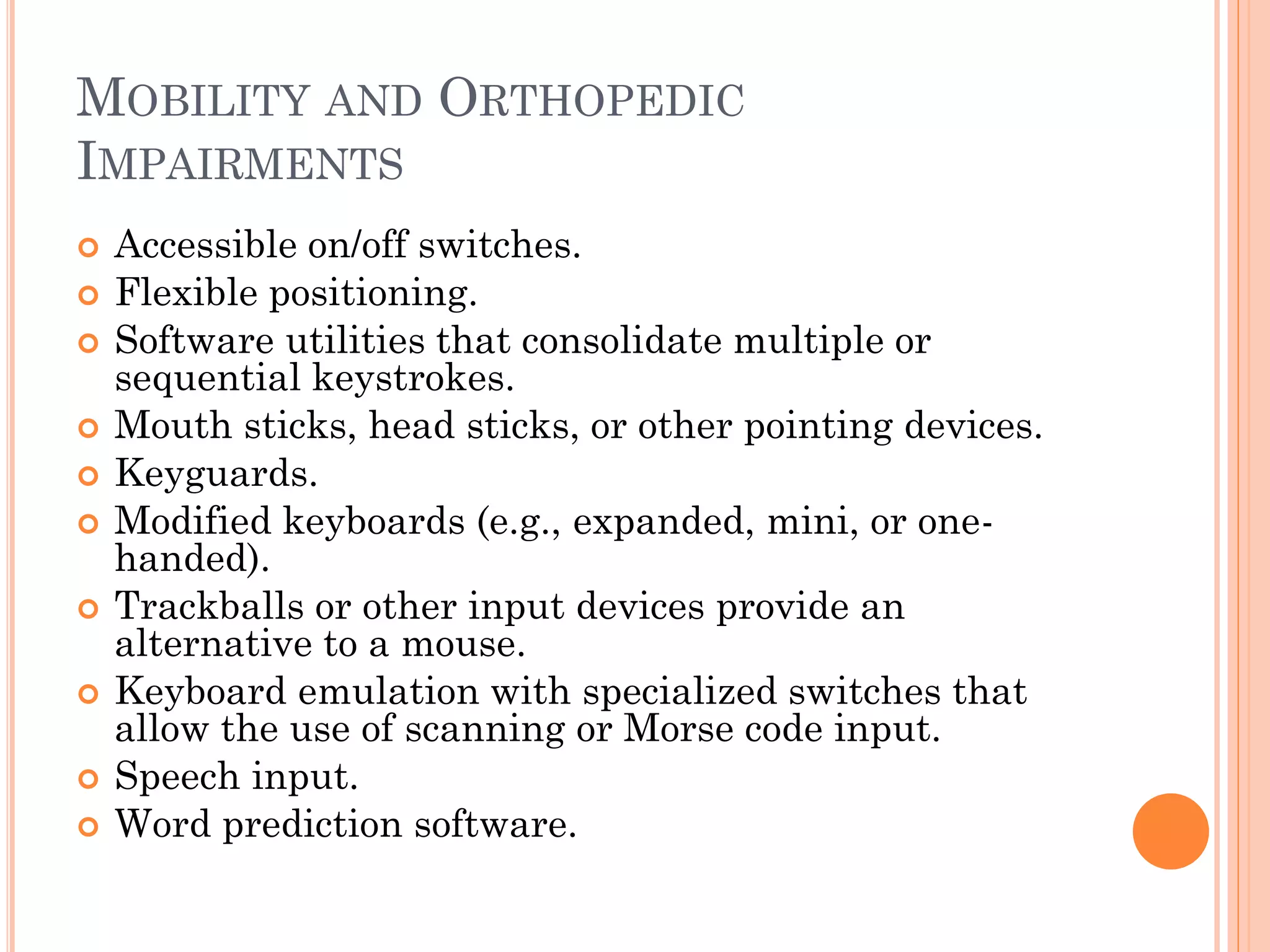
MOBILITY AND ORTHOPEDIC
IMPAIRMENTS
   Accessible on/off switches.
   Flexible positioning.
   Software utilities that consolidate multiple or
    sequential keystrokes.
   Mouth sticks, head sticks, or other pointing devices.
   Keyguards.
   Modified keyboards (e.g., expanded, mini, or one-
    handed).
   Trackballs or other input devices provide an
    alternative to a mouse.
   Keyboard emulation with specialized switches that
    allow the use of scanning or Morse code input.
   Speech input.
   Word prediction software.
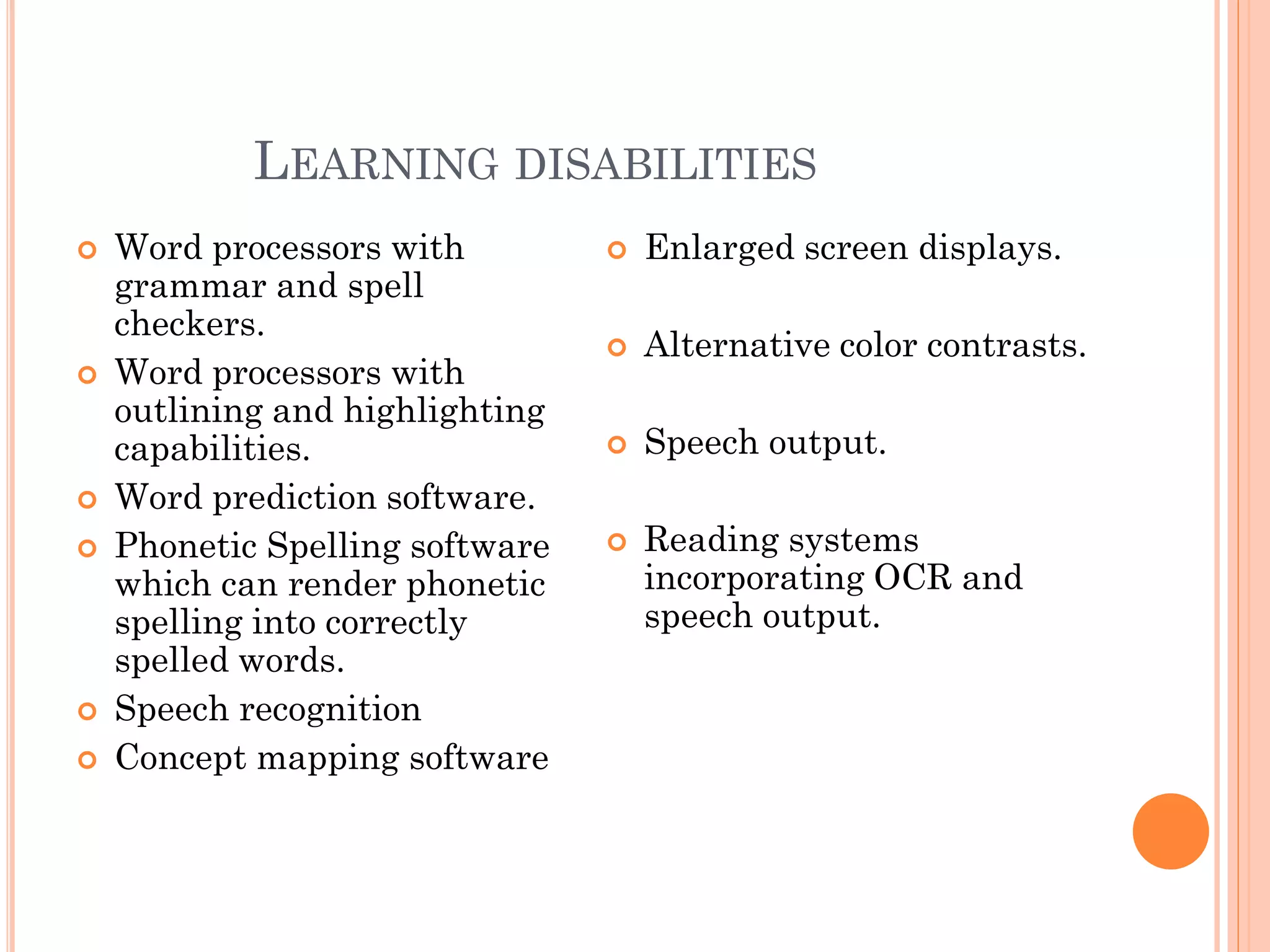
LEARNING DISABILITIES
   Word processors with            Enlarged screen displays.
    grammar and spell
    checkers.
                                    Alternative color contrasts.
   Word processors with
    outlining and highlighting
    capabilities.                   Speech output.
   Word prediction software.
   Phonetic Spelling software      Reading systems
    which can render phonetic        incorporating OCR and
    spelling into correctly          speech output.
    spelled words.
   Speech recognition
   Concept mapping software
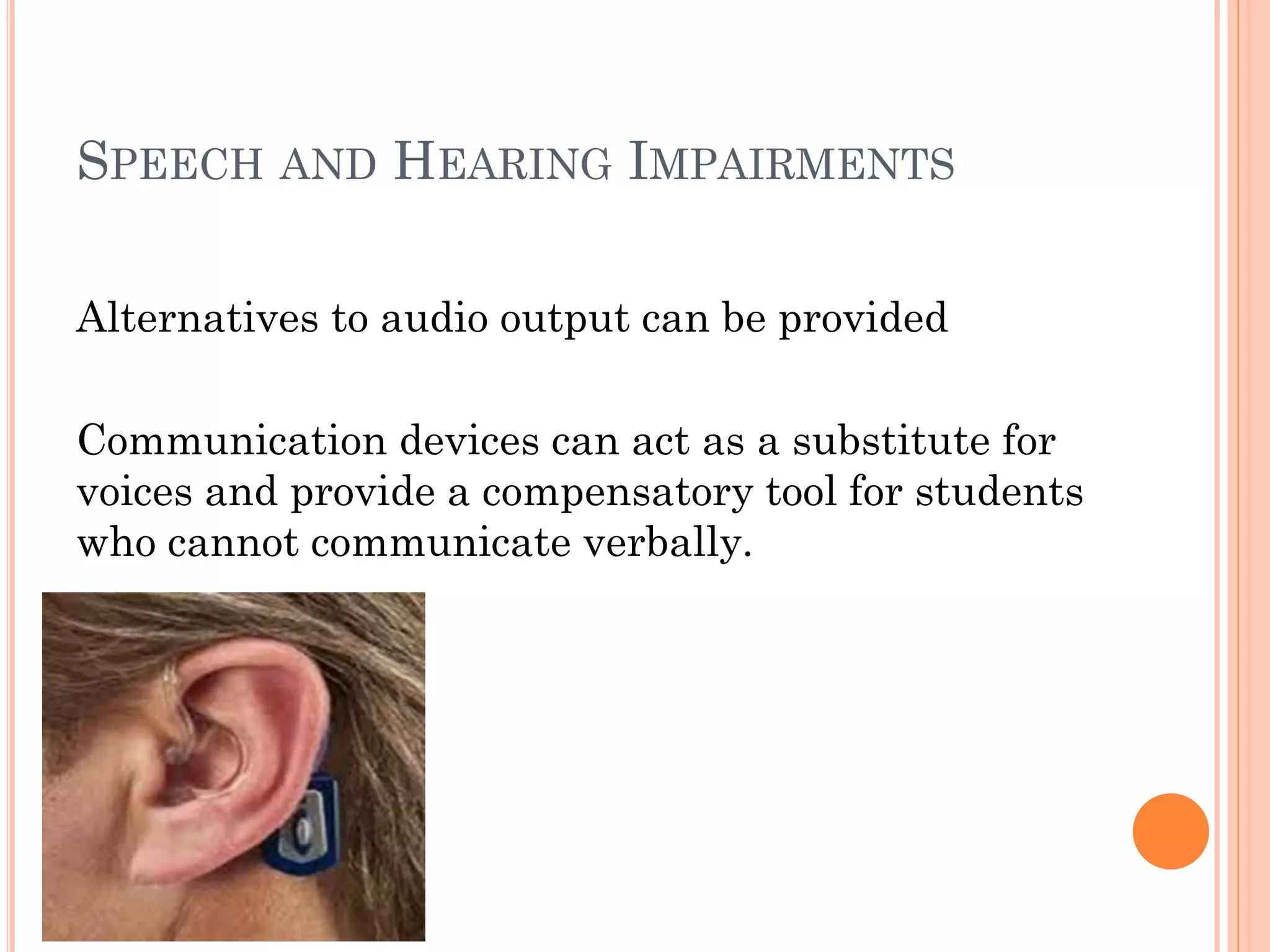
SPEECH AND HEARING IMPAIRMENTS

Alternatives to audio output can be provided

Communication devices can act as a substitute for
voices and provide a compensatory tool for students
who cannot communicate verbally.
   Psychiatric and Mental Health Impairments


   Health Impairments
The Archimedes Project

"Give me a lever long enough and
a place to stand, and I will move
the world."
-Archimedes, 230 BC

"Technology gives individuals the
power to move their world."
-The Archimedes Project, 2002 AD
RESOURCES
   Adaptive technology. University of Washington - washington.edu.
    Retrieved from
    http://www.washington.edu/doit/Faculty/Strategies/Academic/Adaptive


   Center. Adaptive and assistive technology @ rehabtool.com. Adaptive and
    Assistive Technology @ RehabTool.com. Retrieved from
    http://www.rehabtool.com


   2003). The archimedes project. The Archimedes Project. Retrieved from
    http://archimedes.stanford.edu/


   Pulsifer, L. Assistive and adaptive technology devices. eHow | How to
    Videos, Articles & More - Discover the expert in you. | eHow.com.
    Retrieved from http://www.ehow.com/facts_6016717_assistive-
    adaptive-technology-devices.html
   Redirect notice. Google. Retrieved from
    http://www.google.com/imgres?
Adaptive technology

Adaptive technology

  • 1.
    ADAPTIVE TECHNOLOGY By Yuri Collins
  • 2.
    ADAPTIVE TECHNOLOGY..! WHAT DOESIT MEANS? Adaptive technology is the name of products that help people who cannot use regular version of products, primarily people with physical disabilities such as limited vision, hearing, and mobility.
  • 3.
    ADAPTIVE TECHNOLOGY Can bein the form of :  Low tech or  High tech equipment And Is anything give to a person to help increase their independence
  • 4.
  • 5.
    ADAPTIVE TECH ON EDUCATION Blind Low vision  Locator dots on the Large-print key labels keyboard for and home row indicators commonly used keys Large monitors and  Speech output. anti-glare screens.  Refreshable Braille Screen enlarger displays software.  Braille embossers Color and contrast adjustments. Speech output systems.
  • 6.
    MOBILITY AND ORTHOPEDIC IMPAIRMENTS  Accessible on/off switches.  Flexible positioning.  Software utilities that consolidate multiple or sequential keystrokes.  Mouth sticks, head sticks, or other pointing devices.  Keyguards.  Modified keyboards (e.g., expanded, mini, or one- handed).  Trackballs or other input devices provide an alternative to a mouse.  Keyboard emulation with specialized switches that allow the use of scanning or Morse code input.  Speech input.  Word prediction software.
  • 7.
    LEARNING DISABILITIES  Word processors with  Enlarged screen displays. grammar and spell checkers.  Alternative color contrasts.  Word processors with outlining and highlighting capabilities.  Speech output.  Word prediction software.  Phonetic Spelling software  Reading systems which can render phonetic incorporating OCR and spelling into correctly speech output. spelled words.  Speech recognition  Concept mapping software
  • 8.
    SPEECH AND HEARINGIMPAIRMENTS Alternatives to audio output can be provided Communication devices can act as a substitute for voices and provide a compensatory tool for students who cannot communicate verbally.
  • 9.
    Psychiatric and Mental Health Impairments  Health Impairments
  • 10.
    The Archimedes Project "Giveme a lever long enough and a place to stand, and I will move the world." -Archimedes, 230 BC "Technology gives individuals the power to move their world." -The Archimedes Project, 2002 AD
  • 11.
    RESOURCES  Adaptive technology. University of Washington - washington.edu. Retrieved from http://www.washington.edu/doit/Faculty/Strategies/Academic/Adaptive  Center. Adaptive and assistive technology @ rehabtool.com. Adaptive and Assistive Technology @ RehabTool.com. Retrieved from http://www.rehabtool.com  2003). The archimedes project. The Archimedes Project. Retrieved from http://archimedes.stanford.edu/  Pulsifer, L. Assistive and adaptive technology devices. eHow | How to Videos, Articles & More - Discover the expert in you. | eHow.com. Retrieved from http://www.ehow.com/facts_6016717_assistive- adaptive-technology-devices.html  Redirect notice. Google. Retrieved from http://www.google.com/imgres?