Webquest Assistive
   Technology
       Nikki Gay
      ITEC 7130
Overview

• This presentation will give a brief description of
  assistive technologies.

• Please note that reference to individualized
  education plan’s can also refer to accommodation
  letters at the college level.
What is Assistive Technology?

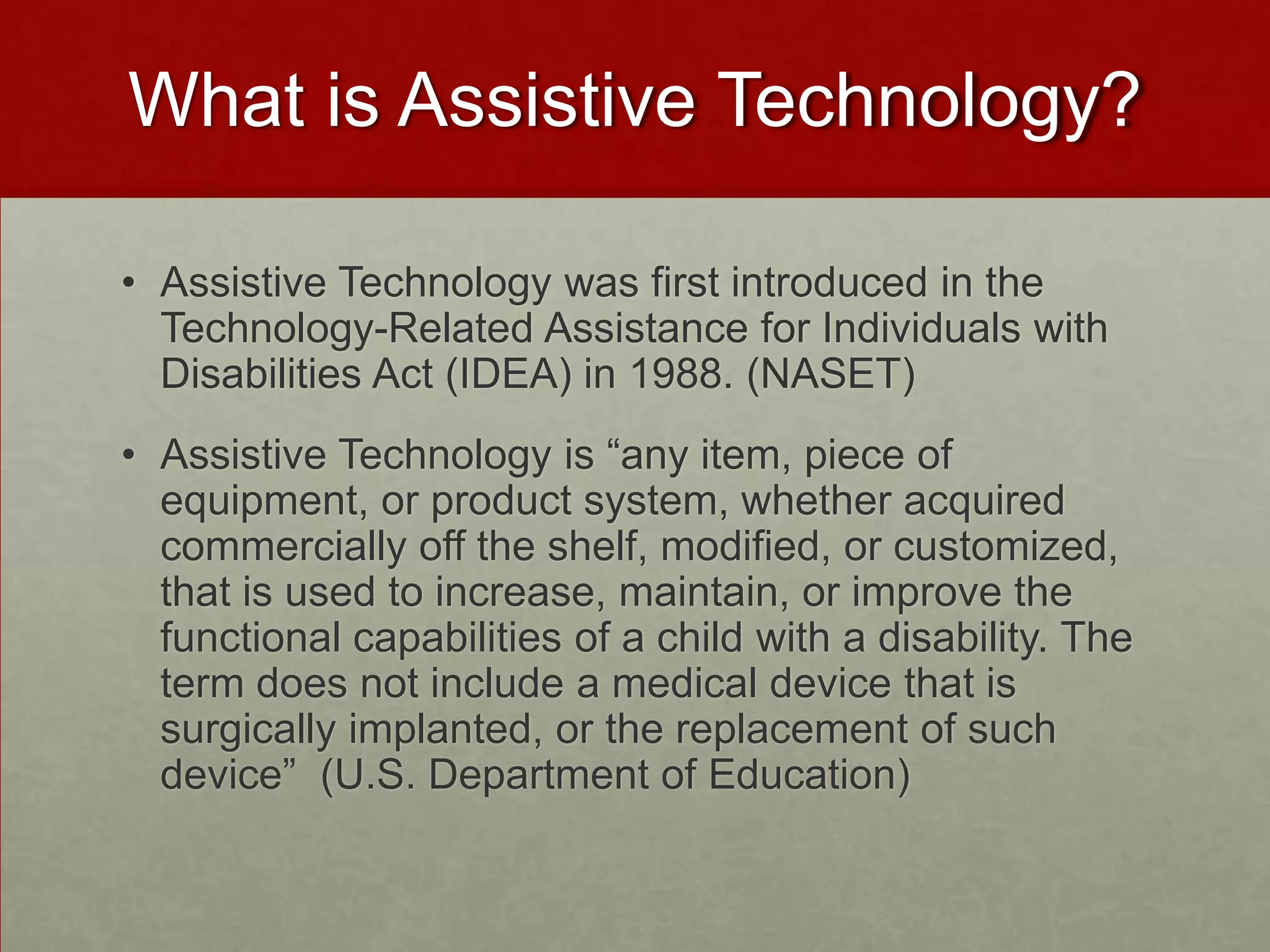
• Assistive Technology was first introduced in the
  Technology-Related Assistance for Individuals with
  Disabilities Act (IDEA) in 1988. (NASET)
• Assistive Technology is “any item, piece of
  equipment, or product system, whether acquired
  commercially off the shelf, modified, or customized,
  that is used to increase, maintain, or improve the
  functional capabilities of a child with a disability. The
  term does not include a medical device that is
  surgically implanted, or the replacement of such
  device” (U.S. Department of Education)
How to Choose Technology to
          Use?
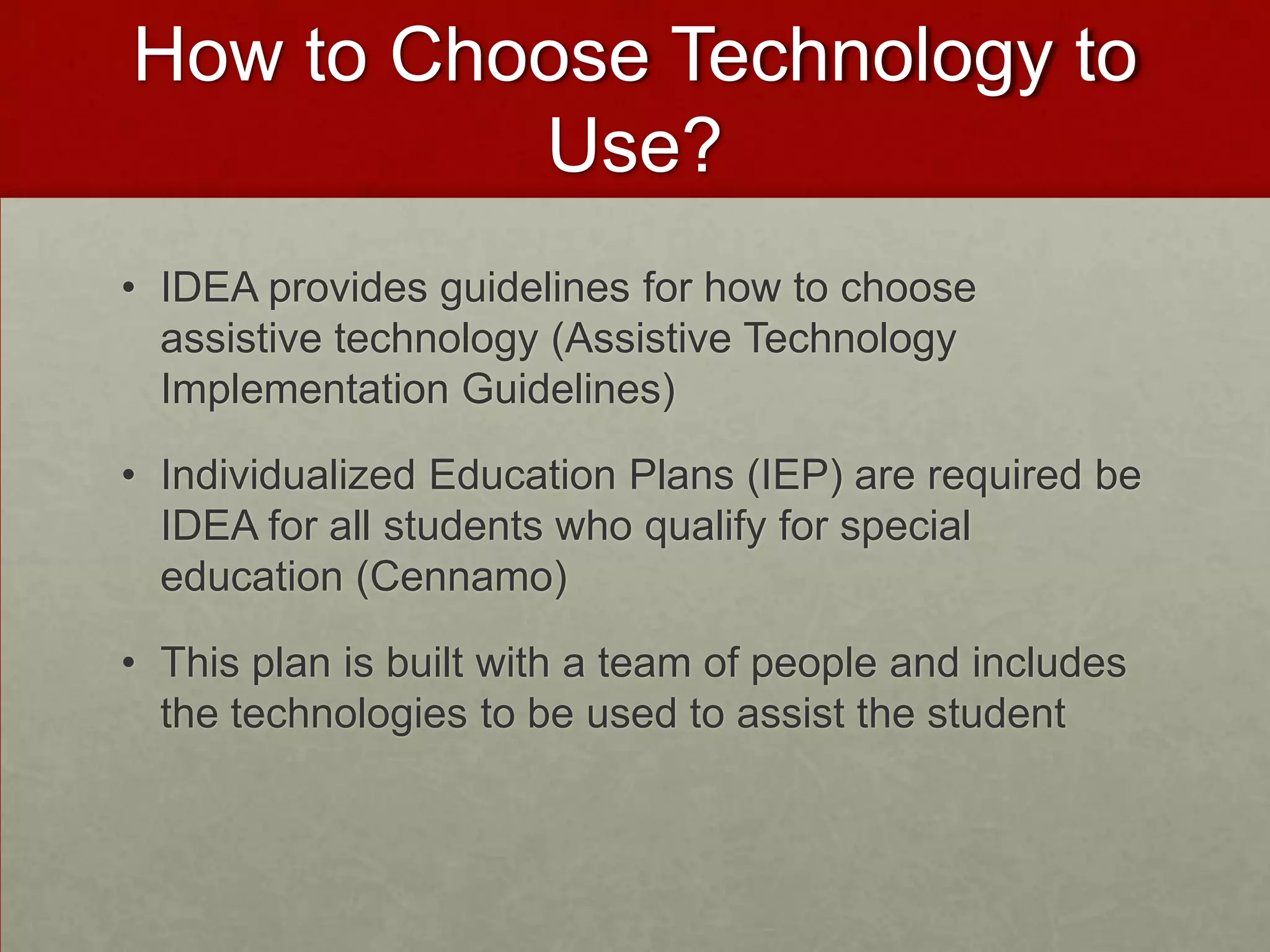
• IDEA provides guidelines for how to choose
  assistive technology (Assistive Technology
  Implementation Guidelines)

• Individualized Education Plans (IEP) are required be
  IDEA for all students who qualify for special
  education (Cennamo)

• This plan is built with a team of people and includes
  the technologies to be used to assist the student
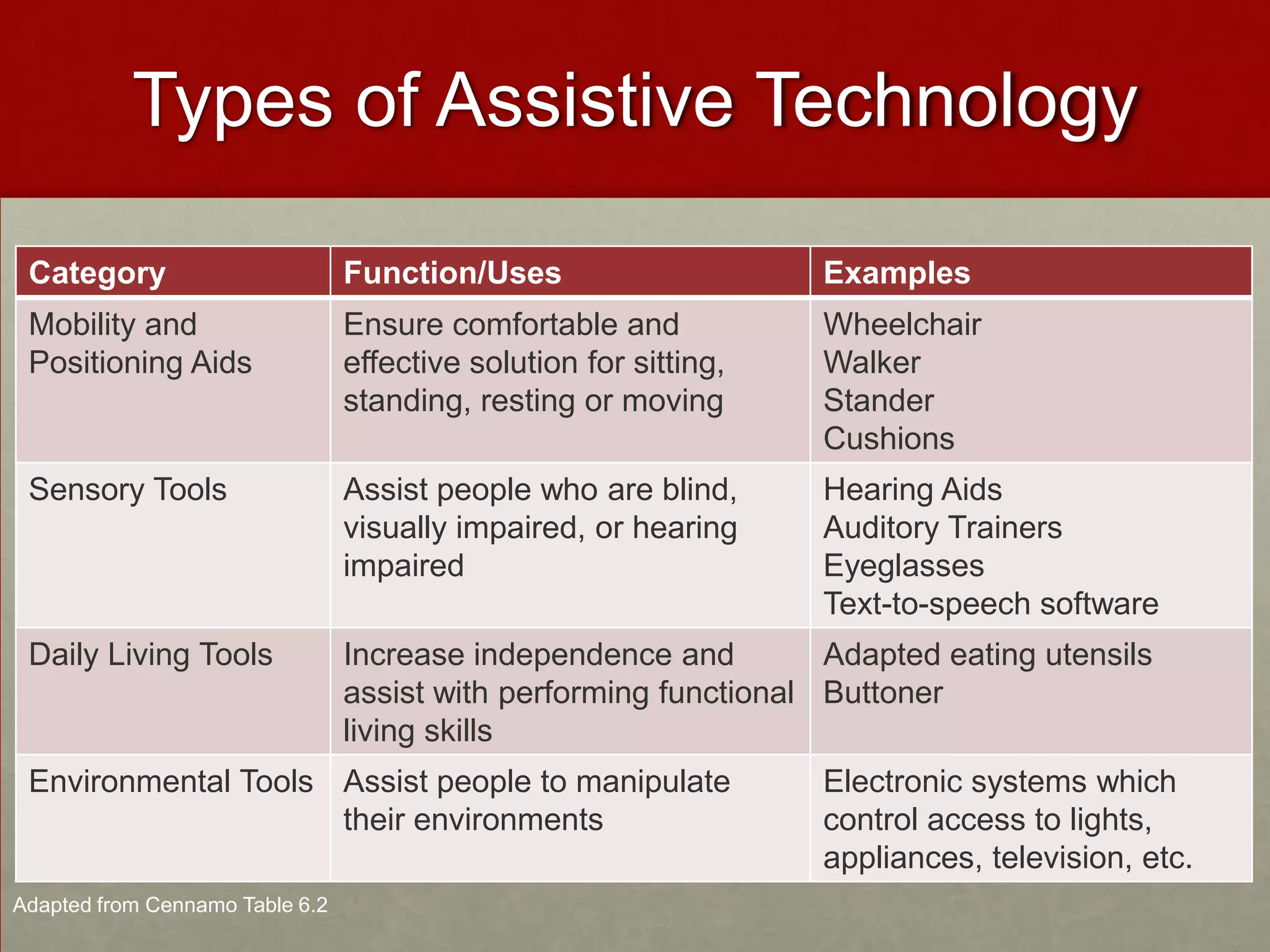
Types of Assistive Technology

 Category                        Function/Uses                     Examples
 Mobility and                    Ensure comfortable and            Wheelchair
 Positioning Aids                effective solution for sitting,   Walker
                                 standing, resting or moving       Stander
                                                                   Cushions
 Sensory Tools                   Assist people who are blind,      Hearing Aids
                                 visually impaired, or hearing     Auditory Trainers
                                 impaired                          Eyeglasses
                                                                   Text-to-speech software
 Daily Living Tools              Increase independence and         Adapted eating utensils
                                 assist with performing functional Buttoner
                                 living skills
 Environmental Tools Assist people to manipulate                   Electronic systems which
                     their environments                            control access to lights,
                                                                   appliances, television, etc.
Adapted from Cennamo Table 6.2
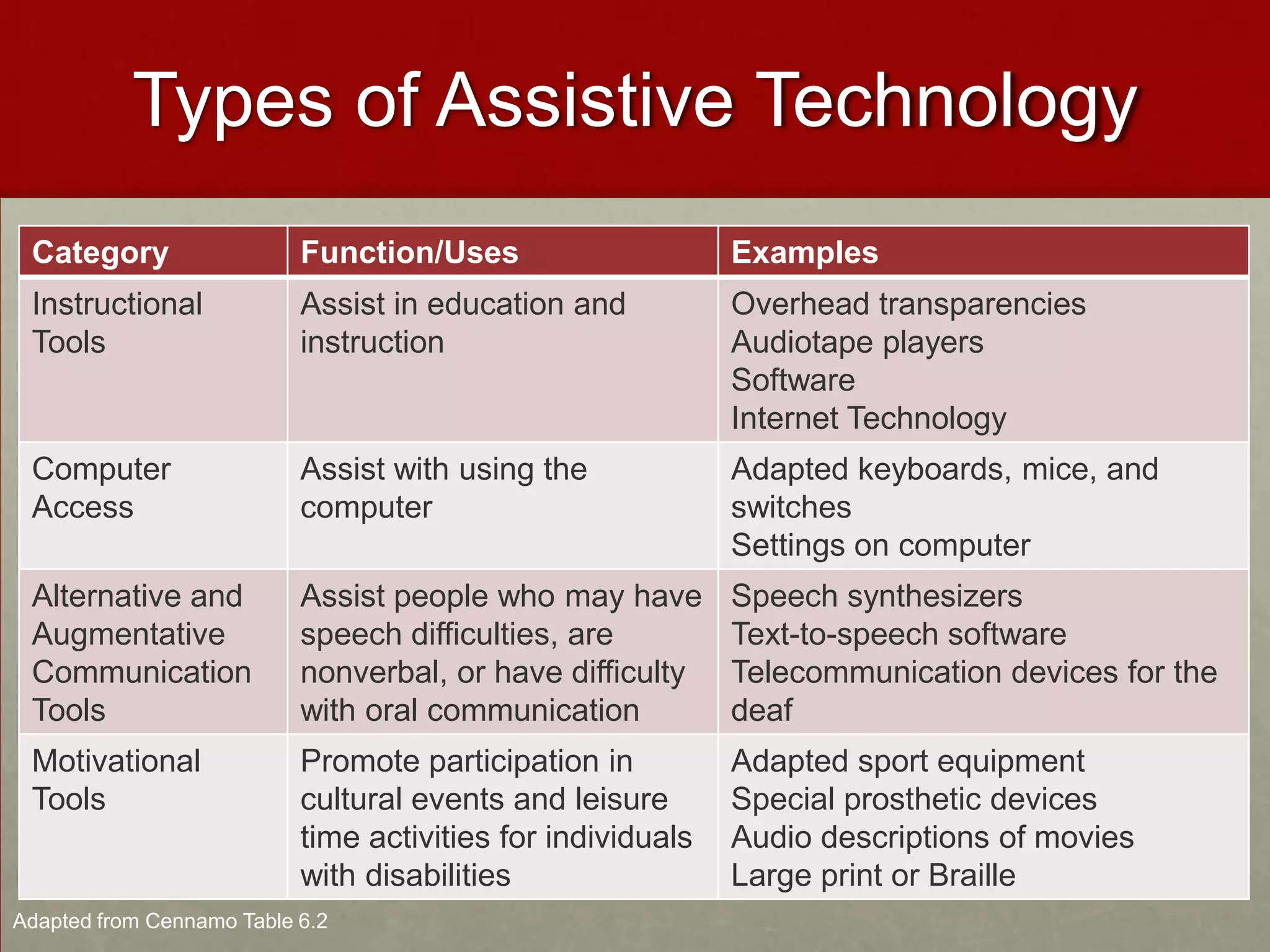
Types of Assistive Technology
 Category                  Function/Uses                     Examples
 Instructional             Assist in education and           Overhead transparencies
 Tools                     instruction                       Audiotape players
                                                             Software
                                                             Internet Technology
 Computer                  Assist with using the             Adapted keyboards, mice, and
 Access                    computer                          switches
                                                             Settings on computer
 Alternative and           Assist people who may have        Speech synthesizers
 Augmentative              speech difficulties, are          Text-to-speech software
 Communication             nonverbal, or have difficulty     Telecommunication devices for the
 Tools                     with oral communication           deaf
 Motivational              Promote participation in          Adapted sport equipment
 Tools                     cultural events and leisure       Special prosthetic devices
                           time activities for individuals   Audio descriptions of movies
                           with disabilities                 Large print or Braille
Adapted from Cennamo Table 6.2
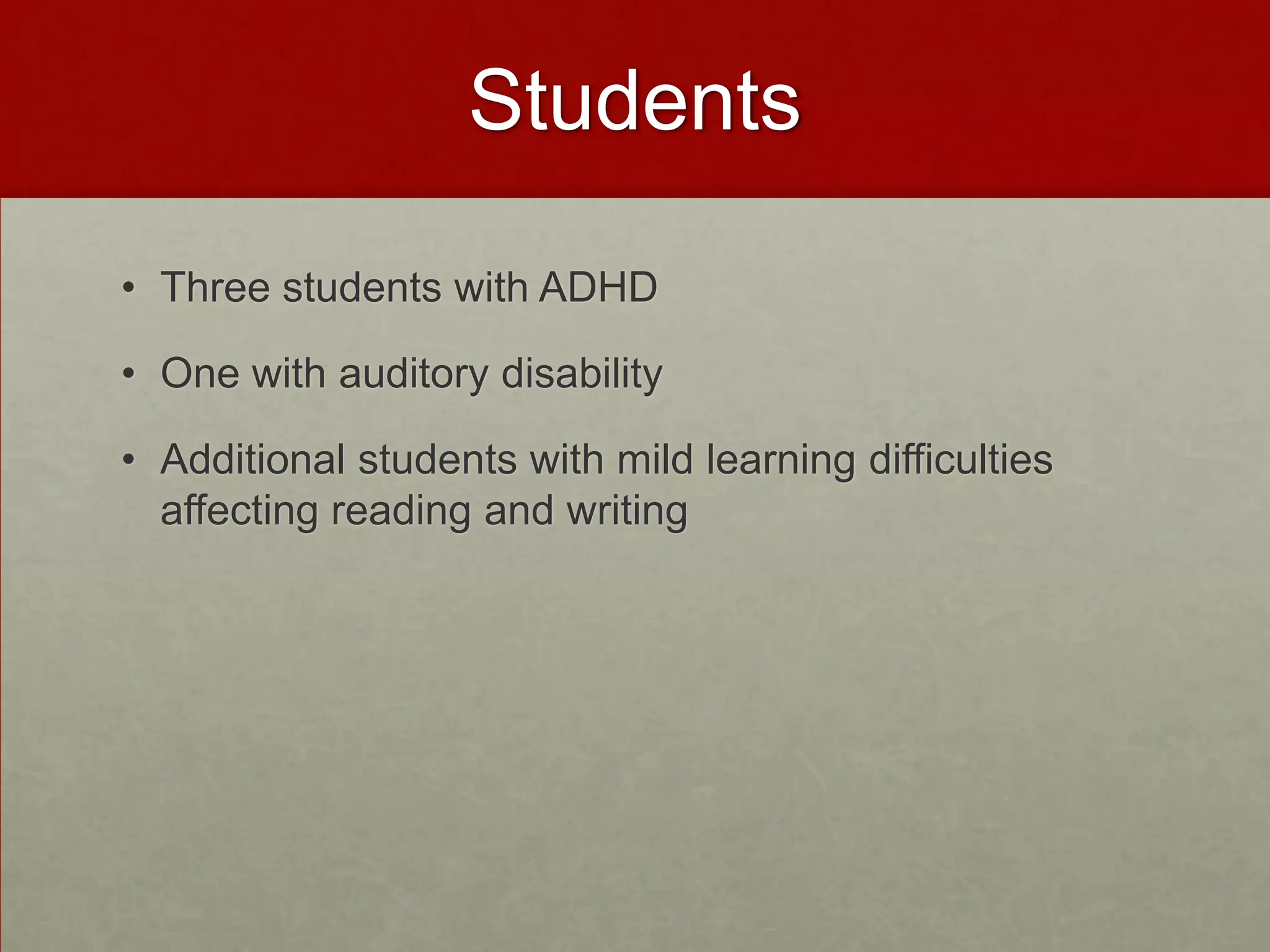
Students

• Three students with ADHD

• One with auditory disability

• Additional students with mild learning difficulties
  affecting reading and writing
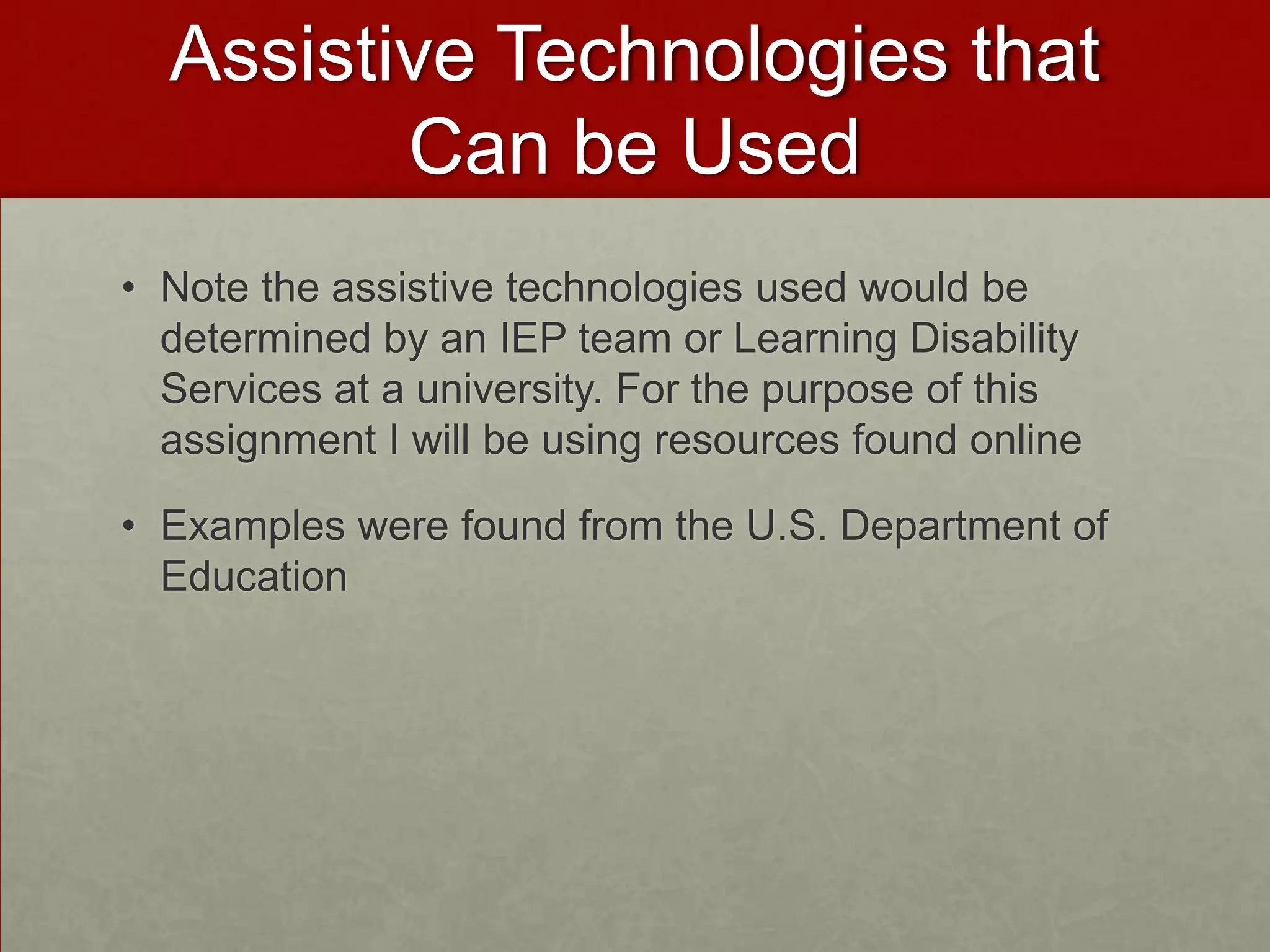
Assistive Technologies that
         Can be Used
• Note the assistive technologies used would be
  determined by an IEP team or Learning Disability
  Services at a university. For the purpose of this
  assignment I will be using resources found online

• Examples were found from the U.S. Department of
  Education
Assistive Technologies that
        Can be Used
• ADHD
 • Evaluate individual needs and strengths
 • Select appropriate practices
 • Examples vary greatly by student need. Technologies used
   can fall into these categories:
   • Academic Instruction
     • Using lecture slides to make instruction visual
     • Clocks to help with time management
   • Behavioral Intervention
     • Give praise
     • Remove nuisance items
   • Classroom Accommodations
     • Make sure chairs are good fit to help with fidgeting
     • Pointers to keep attention on task
Assistive Technologies that
         Can be Used
• Auditory Disability
  •   Presenting information visually (lecture slides)
  •   Class notes
  •   Seating near front of class
  •   Telecommunication devices
Assistive Technologies that
         Can be Used
• Mild Learning Disabilities
  • It is very difficult to determine AT without know the
    individual student
  • Examples could include writing assistance, note takers
    and extended test time.
Conclusion
• I would like to close with the following quote from
  Michael-Jermoe Behrmann and Marci Kinas


“Special educators are familiar with the need to create
or customize instructional materials to meet the varied
needs of students with disabilities. Today, assistive
technology can be more specifically targeted to
address an individual's needs through the emergent
power and flexibility of electronic tools and the ways in
which they are combined and used. These innovations
affect teaching and learning as well as individual
capabilities.”
References
Assistive Technology Implementation Guidelines (n.d.). Retrieved from
    http://www.state.tn.us/education/speced/doc/21710atsupervisor.pdf

Behrmann, M.J, & Kinas, Marci. (2002) Assistive technology for students with mild
    disabilites: Update 2002. Retrieved from http://www.ericdigests.org/2003-
    1/assistive.htm

Cennamo, K.S., Ross, J. D., & Ertmer, P. A. (2010). Technology intergration for meaningful
   classroom use: A standards-based approach. Belmont, CA: Wadsworth.

National Association of Special Education Teachers. (2006). Technology related
     assistance for individuals with disabilities act. Retrieved from
     http://www.naset.org/techassist2.0.html.

U.S. Department of Education. (n.d.). Sec. 300.5 Assistive technology device. Retrieved
     from
     http://idea.ed.gov/explore/view/p/%2Croot%2Cregs%2C300%2CA%2C300%252E5%
     2C

U.S. Department of Education. (2004). Teaching children with attention deficit hyperactivity
     disorder: Instructional strategies and practices. Retrieved from
     http://www.ldonline.org/article/8797/

Assistive Presentation

  • 1.
    Webquest Assistive Technology Nikki Gay ITEC 7130
  • 2.
    Overview • This presentationwill give a brief description of assistive technologies. • Please note that reference to individualized education plan’s can also refer to accommodation letters at the college level.
  • 3.
    What is AssistiveTechnology? • Assistive Technology was first introduced in the Technology-Related Assistance for Individuals with Disabilities Act (IDEA) in 1988. (NASET) • Assistive Technology is “any item, piece of equipment, or product system, whether acquired commercially off the shelf, modified, or customized, that is used to increase, maintain, or improve the functional capabilities of a child with a disability. The term does not include a medical device that is surgically implanted, or the replacement of such device” (U.S. Department of Education)
  • 4.
    How to ChooseTechnology to Use? • IDEA provides guidelines for how to choose assistive technology (Assistive Technology Implementation Guidelines) • Individualized Education Plans (IEP) are required be IDEA for all students who qualify for special education (Cennamo) • This plan is built with a team of people and includes the technologies to be used to assist the student
  • 5.
    Types of AssistiveTechnology Category Function/Uses Examples Mobility and Ensure comfortable and Wheelchair Positioning Aids effective solution for sitting, Walker standing, resting or moving Stander Cushions Sensory Tools Assist people who are blind, Hearing Aids visually impaired, or hearing Auditory Trainers impaired Eyeglasses Text-to-speech software Daily Living Tools Increase independence and Adapted eating utensils assist with performing functional Buttoner living skills Environmental Tools Assist people to manipulate Electronic systems which their environments control access to lights, appliances, television, etc. Adapted from Cennamo Table 6.2
  • 6.
    Types of AssistiveTechnology Category Function/Uses Examples Instructional Assist in education and Overhead transparencies Tools instruction Audiotape players Software Internet Technology Computer Assist with using the Adapted keyboards, mice, and Access computer switches Settings on computer Alternative and Assist people who may have Speech synthesizers Augmentative speech difficulties, are Text-to-speech software Communication nonverbal, or have difficulty Telecommunication devices for the Tools with oral communication deaf Motivational Promote participation in Adapted sport equipment Tools cultural events and leisure Special prosthetic devices time activities for individuals Audio descriptions of movies with disabilities Large print or Braille Adapted from Cennamo Table 6.2
  • 7.
    Students • Three studentswith ADHD • One with auditory disability • Additional students with mild learning difficulties affecting reading and writing
  • 8.
    Assistive Technologies that Can be Used • Note the assistive technologies used would be determined by an IEP team or Learning Disability Services at a university. For the purpose of this assignment I will be using resources found online • Examples were found from the U.S. Department of Education
  • 9.
    Assistive Technologies that Can be Used • ADHD • Evaluate individual needs and strengths • Select appropriate practices • Examples vary greatly by student need. Technologies used can fall into these categories: • Academic Instruction • Using lecture slides to make instruction visual • Clocks to help with time management • Behavioral Intervention • Give praise • Remove nuisance items • Classroom Accommodations • Make sure chairs are good fit to help with fidgeting • Pointers to keep attention on task
  • 10.
    Assistive Technologies that Can be Used • Auditory Disability • Presenting information visually (lecture slides) • Class notes • Seating near front of class • Telecommunication devices
  • 11.
    Assistive Technologies that Can be Used • Mild Learning Disabilities • It is very difficult to determine AT without know the individual student • Examples could include writing assistance, note takers and extended test time.
  • 12.
    Conclusion • I wouldlike to close with the following quote from Michael-Jermoe Behrmann and Marci Kinas “Special educators are familiar with the need to create or customize instructional materials to meet the varied needs of students with disabilities. Today, assistive technology can be more specifically targeted to address an individual's needs through the emergent power and flexibility of electronic tools and the ways in which they are combined and used. These innovations affect teaching and learning as well as individual capabilities.”
  • 13.
    References Assistive Technology ImplementationGuidelines (n.d.). Retrieved from http://www.state.tn.us/education/speced/doc/21710atsupervisor.pdf Behrmann, M.J, & Kinas, Marci. (2002) Assistive technology for students with mild disabilites: Update 2002. Retrieved from http://www.ericdigests.org/2003- 1/assistive.htm Cennamo, K.S., Ross, J. D., & Ertmer, P. A. (2010). Technology intergration for meaningful classroom use: A standards-based approach. Belmont, CA: Wadsworth. National Association of Special Education Teachers. (2006). Technology related assistance for individuals with disabilities act. Retrieved from http://www.naset.org/techassist2.0.html. U.S. Department of Education. (n.d.). Sec. 300.5 Assistive technology device. Retrieved from http://idea.ed.gov/explore/view/p/%2Croot%2Cregs%2C300%2CA%2C300%252E5% 2C U.S. Department of Education. (2004). Teaching children with attention deficit hyperactivity disorder: Instructional strategies and practices. Retrieved from http://www.ldonline.org/article/8797/