Adaptive Control for Laser Transmitter
Feedforward Linearization System
Volume 6, Number 4, August 2014
Y. S. Neo
S. M. Idrus
M. F. Rahmat
S. E. Alavi
I. S. Amiri
DOI: 10.1109/JPHOT.2014.2335711
1943-0655 Ó 2014 IEEE
Adaptive Control for Laser Transmitter
Feedforward Linearization System
Y. S. Neo,1
S. M. Idrus,1
M. F. Rahmat,2
S. E. Alavi,1
and I. S. Amiri3
1
Photonic Research Laboratory, Faculty of Electrical Engineering, Universiti Teknologi Malaysia,
81310 Johor, Malaysia
2
Control & Instrumentation Engineering Department, Faculty of ElectricalEngineering,
Universiti Teknologi Malaysia, 81310 Johor, Malaysia
3
Photonics Research Centre, Department of Physics, Faculty ofScience, University of Malaya,
50603 Kuala Lumpur, Malaysia
DOI: 10.1109/JPHOT.2014.2335711
1943-0655 Ó 2014 IEEE. Translations and content mining are permitted for academic research only.
Personal use is also permitted, but republication/redistribution requires IEEE permission.
See http://www.ieee.org/publications_standards/publications/rights/index.html for more information.
Manuscript received April 16, 2014; revised June 22, 2014; accepted June 25, 2014. Date of publica-
tion July 8, 2014; date of current version July 14, 2014. This work was supported in part by the Min-
istry of Science, Technology and Innovation through the eScienceFund and in part by the
Administration of the Universiti Teknologi Malaysia (UTM), in particular the Research Management
Centre (RMC), through vote number 06-01-06-SF1148. The work of I. S. Amiri was supported by the
University of Malaya/MOHE under Grant UM.C/625/1/HIR/MOHE/SCI/29. Corresponding author:
S. M. Idrus (e-mail: sevia@fke.utm.my).
Abstract: In this paper, an adaptive control system is employed in a novel implementa-
tion technique of the feed forward linearization system for optical analog communication
systems’ laser transmitter. The adaptive control system applies the Newton trust-region
dogleg algorithm, which is a numerical optimization algorithm, to automatically tune the
adjustment parameters in the feedforward loops to optimize the feed forward system per-
formance and adapt to process variations. At the end of this paper, significant reductions
of over 20 dBm in the third-order inter modulation distortion products have been
achieved for operating frequencies from 5.0 to 5.8 GHz.
Index Terms: Adaptive control system, feedforward linearization, laser transmitter, numerical
optimization, Newton trust-region dogleg.
1. Introduction
While the current researches of Radio over fiber (RoF) technology is focusing on the millimeter
wave frequency range,meaning that external intensity modulation is more prevalent nowadays,
direct modulation of laser diode at lower frequencies such as the ISM band is still an interested
subject because of its simplicity and cost effectiveness [1], [2]. However, in the direct modula-
tion of a laser diode, the dynamic range of the optical fiber links is limited by the nonlinear dis-
tortions generated by laser nonlinearities [3]–[5]. Feedforward linearization is an effective
technique for laser nonlinearity compensation system because of its ability to provide broad-
band distortion reduction at high frequencies, and reductionin all order of distortions regardless
of the laser nonlinear characteristics [6]–[11]. However, feedforward is also a complicated and
sensitive scheme as itinvolves cancellation between 2 signals of almost equal in magnitude and
phase. In order to achieve optimumcancellation, optimizations are needed for the control param-
eters in the feedforward loops. Furthermore, changing operating conditions or process variations
may disrupt the path matching and loop balance [12], [13], which causes the system perfor-
mance to degrade in real time applications. Hence, the feedforward linearization system needs
Vol. 6, No. 4, August 2014 7901910
IEEE Photonics Journal Adaptive Feedforward Linearization System
to be incorporated with adaptive properties in order to maintain its performance for more practi-
cal implementations. This work demonstrates a novel design of feedforward linearization system
for optical analog communication systems’ laser transmitter equipped with an adaptive control
system. Pilot signals are used to guide the adaptation process and the quadrature detection
method is used to detect the pilot signal levels at the output of the feedforward loops. The adap-
tive controller performs the Newton trust region dogleg algorithm, which is a robust algorithm for
equation solving, to simultaneously minimize the in-phase and quadrature signal levels at the
quadrature detector output. The Newton method provides rapid convergence to the solution
point, butthis method is dependent on the initial guess [14]. The trust region method enhances
the Newton method to become more globally convergent by defining a region where the Newton
model is trusted to be a good enough representation of the objective function [15]. Furthermore,
the dogleg method ensures the reduction in objective function for each iteration by using the
combination of the steepest descent step and Newton step to approximate the optimal trajectory
within the trust region [16].
This paper proceeds as follows. Section 2 discusses the feedforward system and the archi-
tecture of adaptive feedforward system. The mathematical analysis of the feedforward loops are
done in Section 3 and the adaptive control algorithm is discussed in Section 4. Sections 5 and 6
show the system setup and results of the developed model, respectively. Finally, Section 7 con-
cludes this paper.
2. Architecture of the Designed System
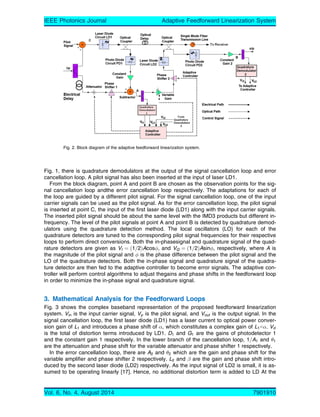
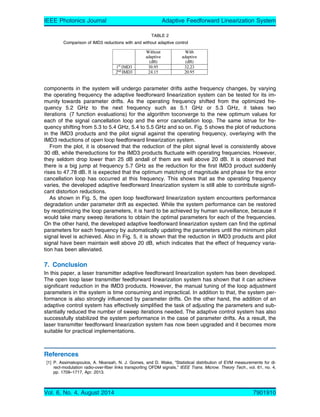
Fig. 1 shows the block diagram of a laser transmitter feedforward linearization system. The sys-
tem consists of 2 loops, where the inner loop is signal cancellation loop and the outerloop is er-
ror cancellation loop. The role of the signal cancellation loop is to acquire the distortions from
the primary laser diode (LD1). On the other hand, the role of the error cancellation loop is to
cancel the distortions from LD1 with the distortion signal obtained from the signal cancellation
loop. As the system involves cancellation between 2 signals of almost equal in terms of magni-
tude and phase, the magnitude and phase parameters in both loops have to be well adjusted so
that the 2 signal match each other. In both the signal cancellation and error cancellation loop,
there are variable attenuator/amplifier and phase shifters which are responsible for amplitude
matching and phase matching, respectively.
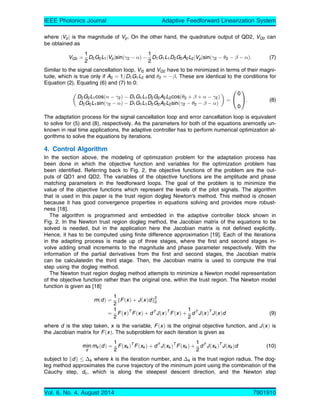
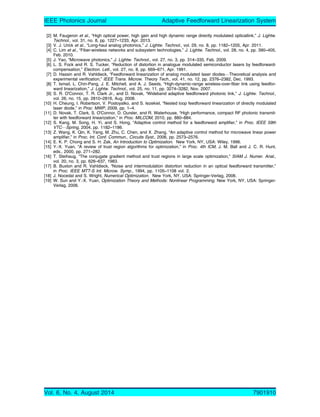
In an adaptive feedforward system, the signals from the chosen observation points in the
open loop feedforward system are used to extract the error signals. The error signals are then
minimized by iteratively updating the amplitude and phase adjustment parameters of the system
in order to achieve adaptation. The architecture of the proposed adaptive feedforward system of
this project is shown in Fig. 2 Compared to the open loop feedforward linearization system in
Fig. 1. Block diagram of feedforward linearization system.
Vol. 6, No. 4, August 2014 7901910
IEEE Photonics Journal Adaptive Feedforward Linearization System
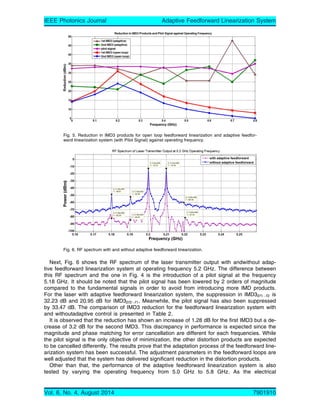
Fig. 1, there is quadrature demodulators at the output of the signal cancellation loop and error
cancellation loop. A pilot signal has also been inserted at the input of laser LD1.
From the block diagram, point A and point B are chosen as the observation points for the sig-
nal cancellation loop andthe error cancellation loop respectively. The adaptations for each of
the loop are guided by a different pilot signal. For the signal cancellation loop, one of the input
carrier signals can be used as the pilot signal. As for the error cancellation loop, the pilot signal
is inserted at point C, the input of the first laser diode (LD1) along with the input carrier signals.
The inserted pilot signal should be about the same level with the IMD3 products but different in-
frequency. The level of the pilot signals at point A and point B is detected by quadrature demod-
ulators using the quadrature detection method. The local oscillators (LO) for each of the
quadrature detectors are tuned to the corresponding pilot signal frequencies for their respective
loops to perform direct conversions. Both the in-phasesignal and quadrature signal of the quad-
rature detectors are given as VI ¼ ð1=2ÞAcos, and VQ ¼ ð1=2ÞAsin, respectively, where A is
the magnitude of the pilot signal and  is the phase difference between the pilot signal and the
LO of the quadrature detectors. Both the in-phase signal and quadrature signal of the quadra-
ture detector are then fed to the adaptive controller to become error signals. The adaptive con-
troller will perform control algorithms to adjust thegains and phase shifts in the feedforward loop
in order to minimize the in-phase signal and quadrature signal.
3. Mathematical Analysis for the Feedforward Loops
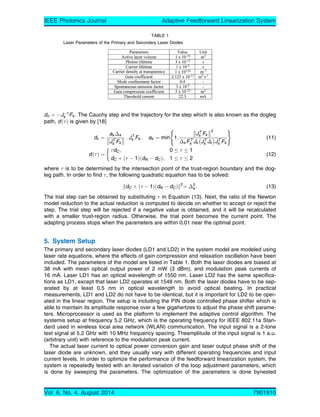
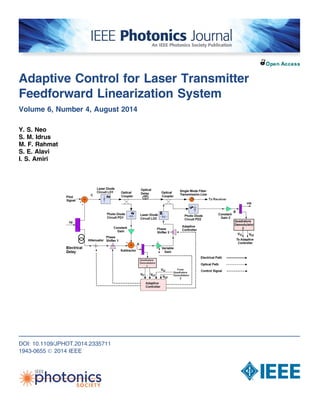
Fig. 3 shows the complex baseband representation of the proposed feedforward linearization
system. Vin is the input carrier signal, Vp is the pilot signal, and Vout is the output signal. In the
signal cancellation loop, the first laser diode (LD1) has a laser current to optical power conver-
sion gain of L1 and introduces a phase shift of , which constitutes a complex gain of L1G. Vd
is the total of distortion terms introduced by LD1. D1 and G1 are the gains of photodetector 1
and the constant gain 1 respectively. In the lower branch of the cancellation loop, 1=A1 and 1
are the attenuation and phase shift for the variable attenuator and phase shifter 1 respectively.
In the error cancellation loop, there are A2 and 2 which are the gain and phase shift for the
variable amplifier and phase shifter 2 respectively. L2 and
are the gain and phase shift intro-
duced by the second laser diode (LD2) respectively. As the input signal of LD2 is small, it is as-
sumed to be operating linearly [17]. Hence, no additional distortion term is added to LD At the
Fig. 2. Block diagram of the adaptive feedforward linearization system.
Vol. 6, No. 4, August 2014 7901910
IEEE Photonics Journal Adaptive Feedforward Linearization System
output of the error cancellation loop, there are D2 and G2 which represent the gains for photode-
tector 2 and constant gain 2, respectively.
If A1 and 1 are well adjusted such that A1 ¼ D1G1L1 and 1 ¼ , the output of the signal can-
cellation loop, SA will contain only the distortion and the pilot signal
SA ¼ ÀD1G1L1ffp À D1G1Vd : (1)
On the other hand, if A2 and 2 are well adjusted such that A2 ¼ 1=D1G1L2 and 2 ¼ À
, the pi-
lot signal and the distortion term from LD1 will be cancelled all together, leaving only the desired
input carrier signal at the output of the system, SB, which is given by
SB ¼ D2G2L1ff  Vin: (2)
Now, the output of the quadrature demodulators located at point A and B are being seen. The
first quadrature detector (QD1) will be taking the signal from point A, SA. The input carrier signal
itself is chosen as the pilot signal to guide the adaptation of the signal cancellation loop. If we
let the phase of the LO in QD1 be 
1 the in-phase output signal of QD1, VI1 is given by
VI1 ¼
1
2
jVinjA1cosð1 À 
1Þ þ
1
2
jVinjD1G1L1cosð À 
1Þ: (3)
where jVinj is the magnitude of Vin. On the other hand, the quadrature output signal of QD1, VQ1
is given by
VQ1 ¼
1
2
jVinjA1sinð
1 À 1Þ þ
1
2
jVinjD1G1L1sinð
1 À Þ: (4)
In order to achieve adaptation, both VI1 and VQ1 have to be minimized in terms of their magni-
tude. This is true only if A1 ¼ D1G1L1 and 1 ¼ , which is identical to the conditions for (1).
Equating (3) and (4) to 0:
A1cosð1 À 
1Þ þ D1G1L1cosð À 
1Þ
A1sinð
1 À 1Þ þ D1G1L1sinð
1 À Þ
0
@
1
A ¼
0
0
0
@
1
A: (5)
As for the error cancellation loop, the second quadrature detector (QD2) will be taking the signal
from point B, SB. The pilot signal, Vp is the signal to be detected. Let the phase of the LO in
Q0D2 be 
2. The in-phase output of QD2, VI2 is given by
VI2 ¼
1
2
D2G2L1jVpjcosð À 
2Þ À
1
2
D1G1L1D2G2A2L2jVpjcosð2 þ
þ  À 
2Þ (6)
Fig. 3. Simplified schematic diagram of the feedforward linearization system.
Vol. 6, No. 4, August 2014 7901910
IEEE Photonics Journal Adaptive Feedforward Linearization System
where jVpj is the magnitude of Vp. On the other hand, the quadrature output of QD2, VQ2 can
be obtained as
VQ2 ¼
1
2
D2G2L1jVpjsinð
2 À Þ À
1
2
D1G1L1D2G2A2L2jVpjsinð
2 À 2 À
À Þ: (7)
Similar to the signal cancellation loop, VI2 and VQ2 have to be minimized in terms of their magni-
tude, which is true only if A2 ¼ 1=D1G1L2 and 2 ¼ À
. These are identical to the conditions for
Equation (2). Equating (6) and (7) to 0:
D2G2L1cosð À 
2Þ À D1G1L1D2G2A2L2cosð2 þ

Adaptive Control for Laser Transmitter Feedforward Linearization System

  • 1.
    Adaptive Control forLaser Transmitter Feedforward Linearization System Volume 6, Number 4, August 2014 Y. S. Neo S. M. Idrus M. F. Rahmat S. E. Alavi I. S. Amiri DOI: 10.1109/JPHOT.2014.2335711 1943-0655 Ó 2014 IEEE
  • 2.
    Adaptive Control forLaser Transmitter Feedforward Linearization System Y. S. Neo,1 S. M. Idrus,1 M. F. Rahmat,2 S. E. Alavi,1 and I. S. Amiri3 1 Photonic Research Laboratory, Faculty of Electrical Engineering, Universiti Teknologi Malaysia, 81310 Johor, Malaysia 2 Control & Instrumentation Engineering Department, Faculty of ElectricalEngineering, Universiti Teknologi Malaysia, 81310 Johor, Malaysia 3 Photonics Research Centre, Department of Physics, Faculty ofScience, University of Malaya, 50603 Kuala Lumpur, Malaysia DOI: 10.1109/JPHOT.2014.2335711 1943-0655 Ó 2014 IEEE. Translations and content mining are permitted for academic research only. Personal use is also permitted, but republication/redistribution requires IEEE permission. See http://www.ieee.org/publications_standards/publications/rights/index.html for more information. Manuscript received April 16, 2014; revised June 22, 2014; accepted June 25, 2014. Date of publica- tion July 8, 2014; date of current version July 14, 2014. This work was supported in part by the Min- istry of Science, Technology and Innovation through the eScienceFund and in part by the Administration of the Universiti Teknologi Malaysia (UTM), in particular the Research Management Centre (RMC), through vote number 06-01-06-SF1148. The work of I. S. Amiri was supported by the University of Malaya/MOHE under Grant UM.C/625/1/HIR/MOHE/SCI/29. Corresponding author: S. M. Idrus (e-mail: sevia@fke.utm.my). Abstract: In this paper, an adaptive control system is employed in a novel implementa- tion technique of the feed forward linearization system for optical analog communication systems’ laser transmitter. The adaptive control system applies the Newton trust-region dogleg algorithm, which is a numerical optimization algorithm, to automatically tune the adjustment parameters in the feedforward loops to optimize the feed forward system per- formance and adapt to process variations. At the end of this paper, significant reductions of over 20 dBm in the third-order inter modulation distortion products have been achieved for operating frequencies from 5.0 to 5.8 GHz. Index Terms: Adaptive control system, feedforward linearization, laser transmitter, numerical optimization, Newton trust-region dogleg. 1. Introduction While the current researches of Radio over fiber (RoF) technology is focusing on the millimeter wave frequency range,meaning that external intensity modulation is more prevalent nowadays, direct modulation of laser diode at lower frequencies such as the ISM band is still an interested subject because of its simplicity and cost effectiveness [1], [2]. However, in the direct modula- tion of a laser diode, the dynamic range of the optical fiber links is limited by the nonlinear dis- tortions generated by laser nonlinearities [3]–[5]. Feedforward linearization is an effective technique for laser nonlinearity compensation system because of its ability to provide broad- band distortion reduction at high frequencies, and reductionin all order of distortions regardless of the laser nonlinear characteristics [6]–[11]. However, feedforward is also a complicated and sensitive scheme as itinvolves cancellation between 2 signals of almost equal in magnitude and phase. In order to achieve optimumcancellation, optimizations are needed for the control param- eters in the feedforward loops. Furthermore, changing operating conditions or process variations may disrupt the path matching and loop balance [12], [13], which causes the system perfor- mance to degrade in real time applications. Hence, the feedforward linearization system needs Vol. 6, No. 4, August 2014 7901910 IEEE Photonics Journal Adaptive Feedforward Linearization System
  • 3.
    to be incorporatedwith adaptive properties in order to maintain its performance for more practi- cal implementations. This work demonstrates a novel design of feedforward linearization system for optical analog communication systems’ laser transmitter equipped with an adaptive control system. Pilot signals are used to guide the adaptation process and the quadrature detection method is used to detect the pilot signal levels at the output of the feedforward loops. The adap- tive controller performs the Newton trust region dogleg algorithm, which is a robust algorithm for equation solving, to simultaneously minimize the in-phase and quadrature signal levels at the quadrature detector output. The Newton method provides rapid convergence to the solution point, butthis method is dependent on the initial guess [14]. The trust region method enhances the Newton method to become more globally convergent by defining a region where the Newton model is trusted to be a good enough representation of the objective function [15]. Furthermore, the dogleg method ensures the reduction in objective function for each iteration by using the combination of the steepest descent step and Newton step to approximate the optimal trajectory within the trust region [16]. This paper proceeds as follows. Section 2 discusses the feedforward system and the archi- tecture of adaptive feedforward system. The mathematical analysis of the feedforward loops are done in Section 3 and the adaptive control algorithm is discussed in Section 4. Sections 5 and 6 show the system setup and results of the developed model, respectively. Finally, Section 7 con- cludes this paper. 2. Architecture of the Designed System Fig. 1 shows the block diagram of a laser transmitter feedforward linearization system. The sys- tem consists of 2 loops, where the inner loop is signal cancellation loop and the outerloop is er- ror cancellation loop. The role of the signal cancellation loop is to acquire the distortions from the primary laser diode (LD1). On the other hand, the role of the error cancellation loop is to cancel the distortions from LD1 with the distortion signal obtained from the signal cancellation loop. As the system involves cancellation between 2 signals of almost equal in terms of magni- tude and phase, the magnitude and phase parameters in both loops have to be well adjusted so that the 2 signal match each other. In both the signal cancellation and error cancellation loop, there are variable attenuator/amplifier and phase shifters which are responsible for amplitude matching and phase matching, respectively. In an adaptive feedforward system, the signals from the chosen observation points in the open loop feedforward system are used to extract the error signals. The error signals are then minimized by iteratively updating the amplitude and phase adjustment parameters of the system in order to achieve adaptation. The architecture of the proposed adaptive feedforward system of this project is shown in Fig. 2 Compared to the open loop feedforward linearization system in Fig. 1. Block diagram of feedforward linearization system. Vol. 6, No. 4, August 2014 7901910 IEEE Photonics Journal Adaptive Feedforward Linearization System
  • 4.
    Fig. 1, thereis quadrature demodulators at the output of the signal cancellation loop and error cancellation loop. A pilot signal has also been inserted at the input of laser LD1. From the block diagram, point A and point B are chosen as the observation points for the sig- nal cancellation loop andthe error cancellation loop respectively. The adaptations for each of the loop are guided by a different pilot signal. For the signal cancellation loop, one of the input carrier signals can be used as the pilot signal. As for the error cancellation loop, the pilot signal is inserted at point C, the input of the first laser diode (LD1) along with the input carrier signals. The inserted pilot signal should be about the same level with the IMD3 products but different in- frequency. The level of the pilot signals at point A and point B is detected by quadrature demod- ulators using the quadrature detection method. The local oscillators (LO) for each of the quadrature detectors are tuned to the corresponding pilot signal frequencies for their respective loops to perform direct conversions. Both the in-phasesignal and quadrature signal of the quad- rature detectors are given as VI ¼ ð1=2ÞAcos, and VQ ¼ ð1=2ÞAsin, respectively, where A is the magnitude of the pilot signal and is the phase difference between the pilot signal and the LO of the quadrature detectors. Both the in-phase signal and quadrature signal of the quadra- ture detector are then fed to the adaptive controller to become error signals. The adaptive con- troller will perform control algorithms to adjust thegains and phase shifts in the feedforward loop in order to minimize the in-phase signal and quadrature signal. 3. Mathematical Analysis for the Feedforward Loops Fig. 3 shows the complex baseband representation of the proposed feedforward linearization system. Vin is the input carrier signal, Vp is the pilot signal, and Vout is the output signal. In the signal cancellation loop, the first laser diode (LD1) has a laser current to optical power conver- sion gain of L1 and introduces a phase shift of , which constitutes a complex gain of L1G. Vd is the total of distortion terms introduced by LD1. D1 and G1 are the gains of photodetector 1 and the constant gain 1 respectively. In the lower branch of the cancellation loop, 1=A1 and 1 are the attenuation and phase shift for the variable attenuator and phase shifter 1 respectively. In the error cancellation loop, there are A2 and 2 which are the gain and phase shift for the variable amplifier and phase shifter 2 respectively. L2 and
  • 5.
    are the gainand phase shift intro- duced by the second laser diode (LD2) respectively. As the input signal of LD2 is small, it is as- sumed to be operating linearly [17]. Hence, no additional distortion term is added to LD At the Fig. 2. Block diagram of the adaptive feedforward linearization system. Vol. 6, No. 4, August 2014 7901910 IEEE Photonics Journal Adaptive Feedforward Linearization System
  • 6.
    output of theerror cancellation loop, there are D2 and G2 which represent the gains for photode- tector 2 and constant gain 2, respectively. If A1 and 1 are well adjusted such that A1 ¼ D1G1L1 and 1 ¼ , the output of the signal can- cellation loop, SA will contain only the distortion and the pilot signal SA ¼ ÀD1G1L1ffp À D1G1Vd : (1) On the other hand, if A2 and 2 are well adjusted such that A2 ¼ 1=D1G1L2 and 2 ¼ À
  • 7.
    , the pi- lotsignal and the distortion term from LD1 will be cancelled all together, leaving only the desired input carrier signal at the output of the system, SB, which is given by SB ¼ D2G2L1ff  Vin: (2) Now, the output of the quadrature demodulators located at point A and B are being seen. The first quadrature detector (QD1) will be taking the signal from point A, SA. The input carrier signal itself is chosen as the pilot signal to guide the adaptation of the signal cancellation loop. If we let the phase of the LO in QD1 be 1 the in-phase output signal of QD1, VI1 is given by VI1 ¼ 1 2 jVinjA1cosð1 À 1Þ þ 1 2 jVinjD1G1L1cosð À 1Þ: (3) where jVinj is the magnitude of Vin. On the other hand, the quadrature output signal of QD1, VQ1 is given by VQ1 ¼ 1 2 jVinjA1sinð 1 À 1Þ þ 1 2 jVinjD1G1L1sinð 1 À Þ: (4) In order to achieve adaptation, both VI1 and VQ1 have to be minimized in terms of their magni- tude. This is true only if A1 ¼ D1G1L1 and 1 ¼ , which is identical to the conditions for (1). Equating (3) and (4) to 0: A1cosð1 À 1Þ þ D1G1L1cosð À 1Þ A1sinð 1 À 1Þ þ D1G1L1sinð 1 À Þ 0 @ 1 A ¼ 0 0 0 @ 1 A: (5) As for the error cancellation loop, the second quadrature detector (QD2) will be taking the signal from point B, SB. The pilot signal, Vp is the signal to be detected. Let the phase of the LO in Q0D2 be 2. The in-phase output of QD2, VI2 is given by VI2 ¼ 1 2 D2G2L1jVpjcosð À 2Þ À 1 2 D1G1L1D2G2A2L2jVpjcosð2 þ
  • 8.
    þ À 2Þ (6) Fig. 3. Simplified schematic diagram of the feedforward linearization system. Vol. 6, No. 4, August 2014 7901910 IEEE Photonics Journal Adaptive Feedforward Linearization System
  • 9.
    where jVpj isthe magnitude of Vp. On the other hand, the quadrature output of QD2, VQ2 can be obtained as VQ2 ¼ 1 2 D2G2L1jVpjsinð 2 À Þ À 1 2 D1G1L1D2G2A2L2jVpjsinð 2 À 2 À
  • 10.
    À Þ: (7) Similarto the signal cancellation loop, VI2 and VQ2 have to be minimized in terms of their magni- tude, which is true only if A2 ¼ 1=D1G1L2 and 2 ¼ À
  • 11.
    . These areidentical to the conditions for Equation (2). Equating (6) and (7) to 0: D2G2L1cosð À 2Þ À D1G1L1D2G2A2L2cosð2 þ