ACUTE KIDNEY INJURY
DR LALIT AGARWAL
CONS. NEPHROLOGIST
What is AKI?
An abrupt (within 7 days) &
sustained (>6 hours)
decrease in renal function/GFR
(usually reversible)
resulting in accumulation of waste
products
associated with increased morbidity and
mortality.
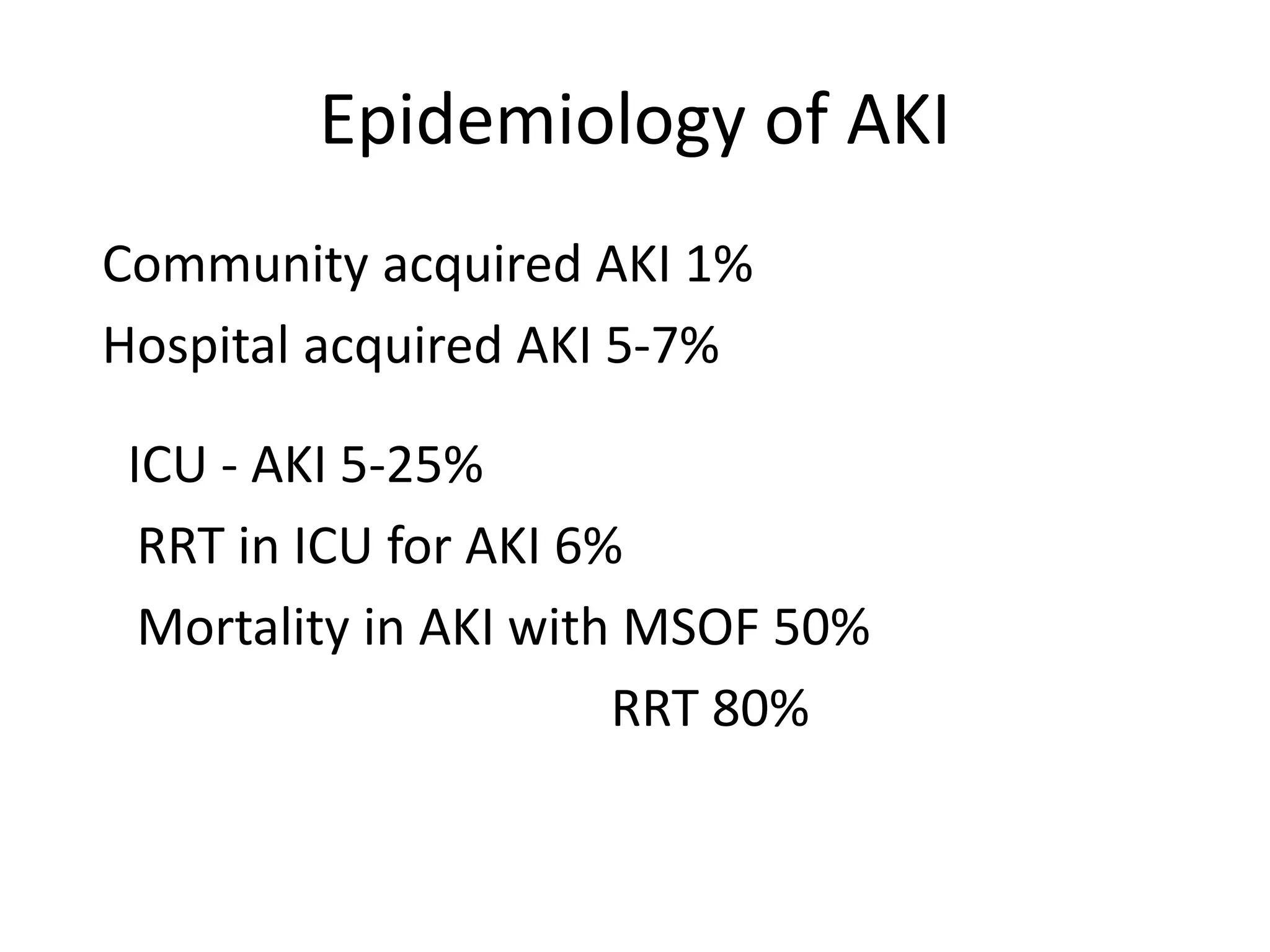
Epidemiology of AKI
Community acquired AKI 1%
Hospital acquired AKI 5-7%
ICU - AKI 5-25%
RRT in ICU for AKI 6%
Mortality in AKI with MSOF 50%
RRT 80%
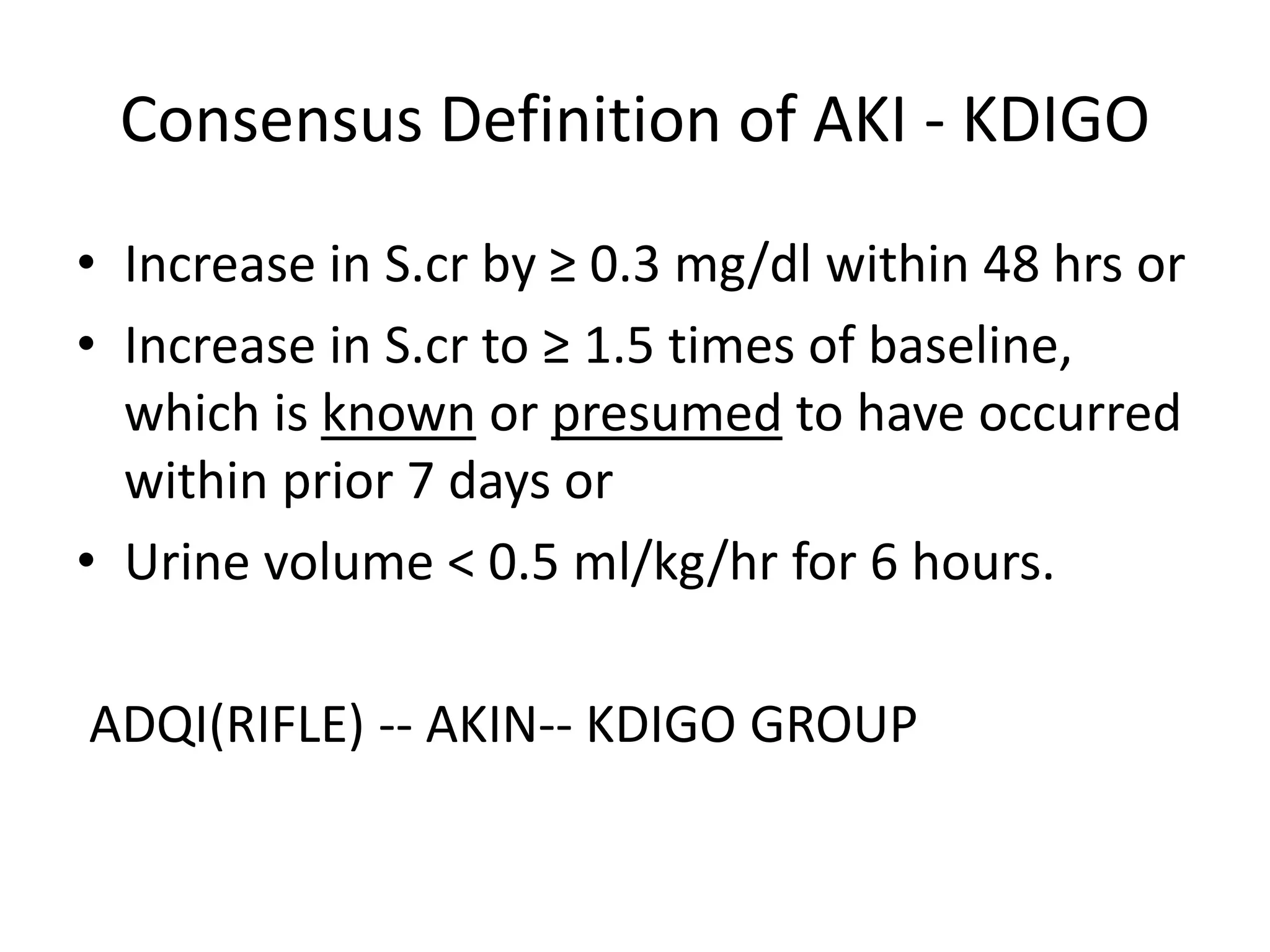
Consensus Definition of AKI - KDIGO
• Increase in S.cr by ≥ 0.3 mg/dl within 48 hrs or
• Increase in S.cr to ≥ 1.5 times of baseline,
which is known or presumed to have occurred
within prior 7 days or
• Urine volume < 0.5 ml/kg/hr for 6 hours.
ADQI(RIFLE) -- AKIN-- KDIGO GROUP
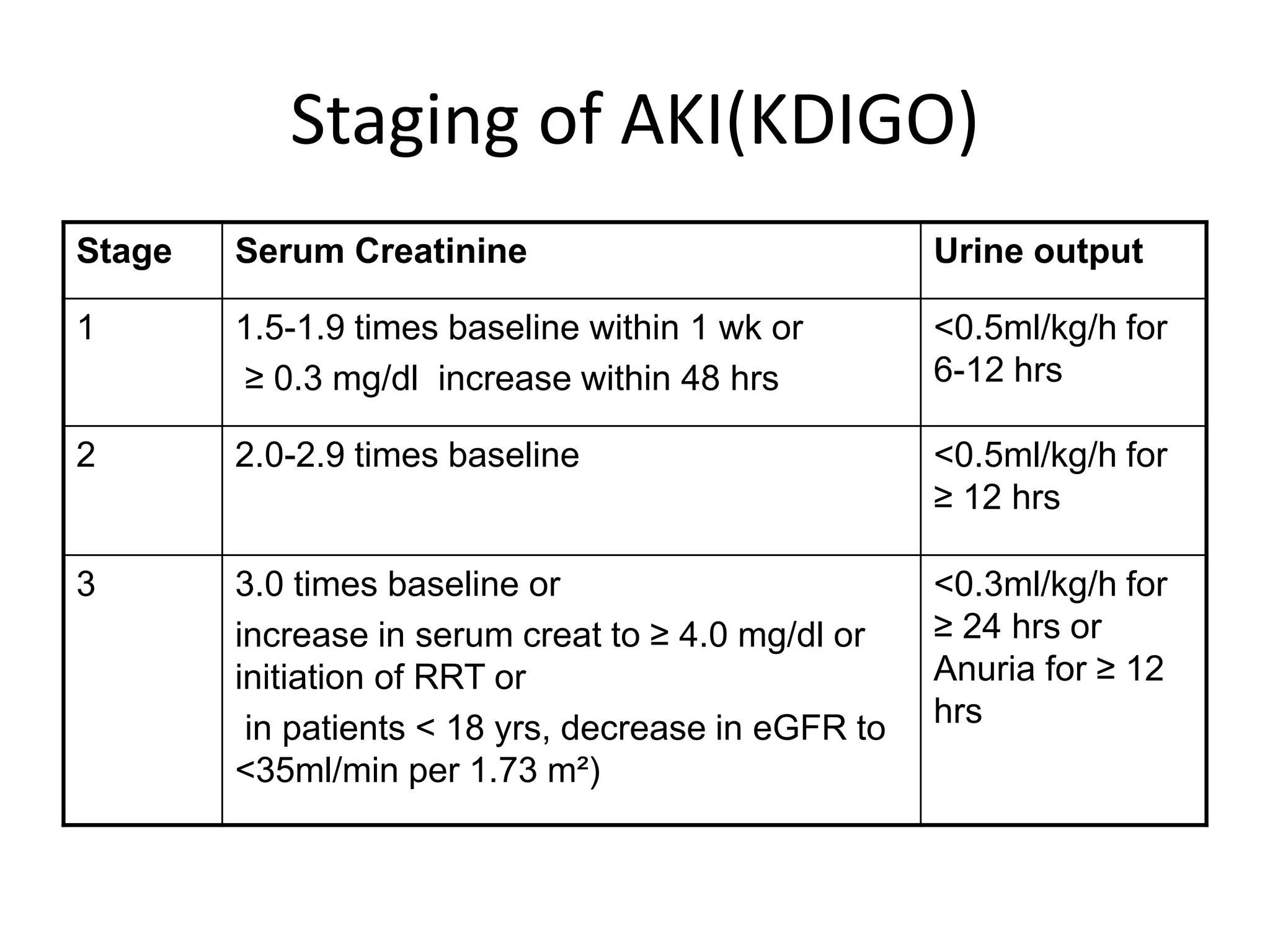
Staging of AKI(KDIGO)
Stage Serum Creatinine Urine output
1 1.5-1.9 times baseline within 1 wk or
≥ 0.3 mg/dl increase within 48 hrs
<0.5ml/kg/h for
6-12 hrs
2 2.0-2.9 times baseline <0.5ml/kg/h for
≥ 12 hrs
3 3.0 times baseline or
increase in serum creat to ≥ 4.0 mg/dl or
initiation of RRT or
in patients < 18 yrs, decrease in eGFR to
<35ml/min per 1.73 m²)
<0.3ml/kg/h for
≥ 24 hrs or
Anuria for ≥ 12
hrs
KI
AKI
Lags behind the change in GFR
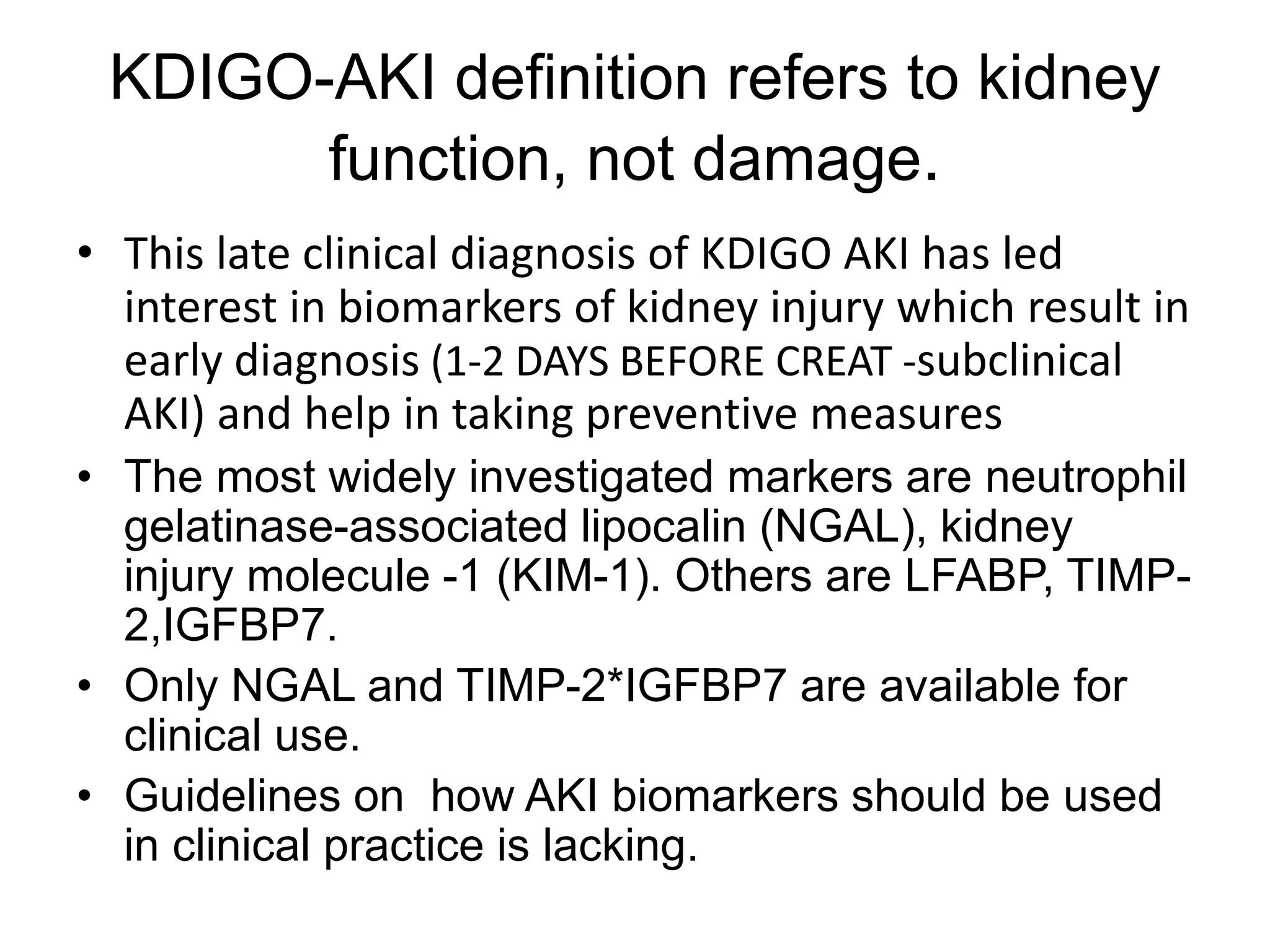
KDIGO-AKI definition refers to kidney
function, not damage.
• This late clinical diagnosis of KDIGO AKI has led
interest in biomarkers of kidney injury which result in
early diagnosis (1-2 DAYS BEFORE CREAT -subclinical
AKI) and help in taking preventive measures
• The most widely investigated markers are neutrophil
gelatinase-associated lipocalin (NGAL), kidney
injury molecule -1 (KIM-1). Others are LFABP, TIMP-
2,IGFBP7.
• Only NGAL and TIMP-2*IGFBP7 are available for
clinical use.
• Guidelines on how AKI biomarkers should be used
in clinical practice is lacking.
SPECTRUM OF KIDNEY INJURY
AKD – Acute kidney disease
• Acute kidney disease: a recent entity
• Acute kidney disease (AKD) defined as an
AKI episode that lasts longer than 7 days
but less than 90 days has recently been
proposed as a concept.
• It aims at closing the gap between AKI and
CKD (which requires 3 months to be
diagnosed).
• AKD uses the creatinine criteria of the
KDIGO definition.
Key causes of AKI
• Prerenal AKI
Functional or minimal cellular damage with
treatment rapid recovery
• Intrinsic AKI
Glomerular, Tubular , Interestitial and Vascular
• Postrenal AKI
COMMON CAUSES OF AKI IN ICU
• SEPSIS
• MAJOR SURGERY
• LOW CARDIAC OUTPUT
• HYPOVOLEMIA
• MEDICATIONS (20%)
• HEPATORENAL
SYNDROME
• TRAUMA
• CARDIOPULMONARY
BYPASS
• ABDOMINAL
COMPARTMENT
SYNDROME
• RHABDOMYOLYSIS
• OBSTRUCTION
Pathophysiology of AKI
• AKI : ATN (Ischemic / Nephrotoxic injury)
• ICU-AKI : Multifactorial(sepsis, decreased
perfusion & Nephrotoxic drugs)
• Decrease in GFR :
• Vascular component: loss of renal
autoregulation (Pgs / N2O and ANG II)
• Tubular component: obstruction, backleak and
inflammation
Course of Ischemic ATN
• Initiation – direct injury to TEC & endothelial cells
• Extension – activation of inflammatory mediators amplify
cellular injury & result in extension
• Maintenance - (1-2 weeks)
• Recovery/diuretic phase (10-25 days) – TEC repair &
regeneration & improvement in GFR
MAJOR COMPLICATIONS OF AKI
• Volume overload
• Hyperkalemia
• Metabolic acidosis
• Hypocalcemia
• Hyperphosphatemia
• Hyperuricemia and hypermagnesemia
• Signs of uremia
Distinguishing AKI from CKD
• Review h/o kidney disease and old records
• Ultrasonography
• Anemia (GFR < 30ml/min , absence of anemia
suggests AKI( exception HUS/TTP)
Prevention of AKI
• Identify patients at increased risks
advanced age,low eGFR,proteinuria,low
albumin, DM, previous AKI
• Avoidance of renal insults
Volume depletion, nephrotoxic drugs (NSAIDS,
ACEI/ARB, contrast, TLS, amphotericin,
aminoglycosides etc.)
• Prophylactic treatments
Good hydration, ?NAC, IV Sodabicarbonate
TREATMENT OF AKI
• Determine cause of AKI with special attention
to reversible causes
• Stage severity of AKI according to creatinine
and urine output
• Manage as per AKI stage and specific cause
• Management of complications of AKI
Treatment of AKI
• No specific Pharmacologic treatment
• Correct reversible causes
stop toxins, treat sepsis, volume resuscitation and
maintain kidney perfusion in non fluid responsive
by vasopressor/ inotropes (noradrenaline).
• Avoid in AKI
High dose diuretics, renal dose dopamine,
nephrotoxics, contrasts, volume overload
• General supportive management
Drug dosages, Correct hyperglycemia, Nutritional
support
RRT in AKI-1
• Conservative vs RRT?
• When to start RRT?
• Early vs late? (no survival benefit of early
start, concern of harm exists)
• What modality (IHD vs CRRT) of RRT to use
• What dose of RRT to give?
RRT in AKI-2
• What type of temporary dialysis access to
use?
• What type of dialysis membranes to use?
• What choice of anticoagulation?
• When to stop RRT in AKI? ( CRRT to IHD,
recovery of kidney function)
Modality of dialysis in ITU
• IHD (rapid removal of solute & water)
• SLED
• Hemofiltration
• Hemodiafiltration
• UF (Aquapharesis)
• Approx. 10% pts with AKI cannot be treated with IHD
because of hemodynamic instability
• SLED and CRRT meta-analysis: no difference in
outcome (Zhang et al AJKD Aug 2015)
Initiation of RRT in AKI
• Extremely variable and empirical on clinical
situation, if no improvement to optimal
medical/supportive interventions.
• RRT indicated in severe (stage 3) kidney injury.
• Absolute/urgent (objective) and
relative/elective (subjective) indications
• ICU:(early/low threshold to start in MOF)
• Renal ward:(single organ AKI)
Timing and indications of CRRT in ICU
• Optimal timing and indications for CRRT initiation(no
consensus, wide variation)
1.Start electively before the development of overt
complications of AKI.
2.Observational studies - early initiation prevent other
organ dysfunction ?
• 3 large RCT have not demonstrated benefit with earlier
initiation of dialysis.
Akiki study group NEJM MAY 2016,Jamale et al AJKD
DEC 2013,Canadian critical care trial KI OCT 2015
IHD vs CRRT – which patients
• Ideal method of treatment in unstable patients in
icu : IHD vs. CRRT- no survival benefit/recovery of
renal function as in Hemodiafe study or other RCT.
• In Hemodynamic stable pts CRRT not superior to
IHD.
• When IHD is unable to control volume or metabolic
derangement in catabolic/septic pts switch to
CRRT.
• Current literature support no differences in
mortality among the 3 RRT modalities.
Dialysis method and dose
• Controversy between CVVD (diffusion) vs. CVVHF
(convection) benefits. Convection removes
inflammatory cytokines as well.
• Most appropriate dialysis intensity/dose and
patient outcome -
Recent study suggests intensive renal support in
critically ill pts with AKI does not decrease
mortality or accelerate recovery or alter rate of
non renal organ failure c/w usual care (kt/v 3.9
and 20-25ml/kg/hour)
(Renal study and VA/NIH ARF trial network)
Anticoagulation
(risk and benefits)
• For IHD : Unfractionated heparin or use LMWH.
• For CRRT : Use of regional citrate anticoagul. if no C/I
to citrate, otherwise use unfractionated or LMWH.
• HIT: Argatroban, Fondaparinux or danaparoid
• For bleeding risk: proceed without
anticoagulation or use RCA.
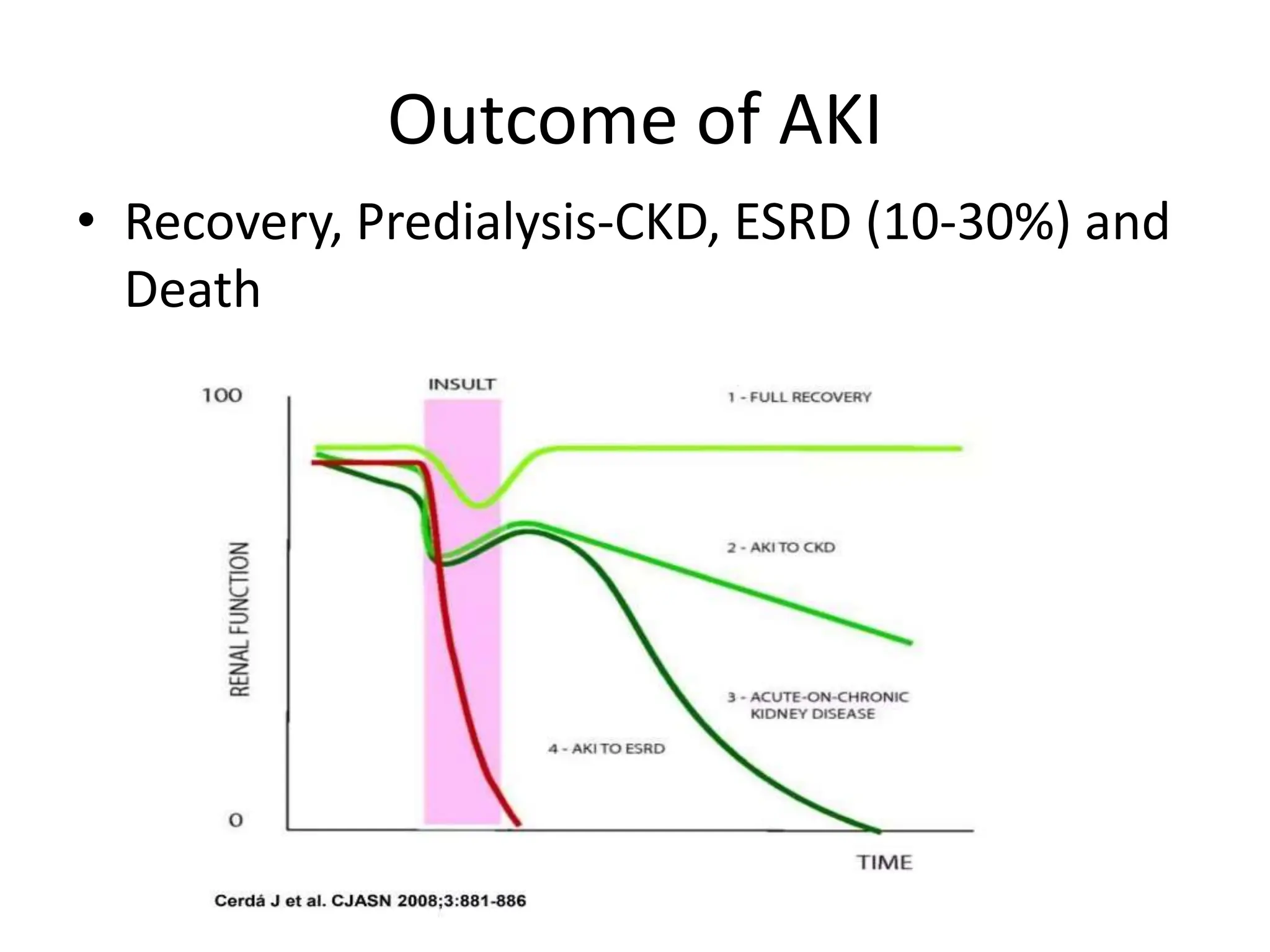
Outcome of AKI
• Recovery, Predialysis-CKD, ESRD (10-30%) and
Death
How does AKI progress to CKD
• Host predisposition: genetics/co-morbidities
• Nephron loss followed by glomerular
hypertrophy
• Fibrosis and maladaptive repair
• Vascular drop out as a consequence of
endothelial injury
Conclusion
• AKI is a multisystem disease that affects lung,
brain, liver, metabolic function and immune
function.
• These multisystem effects likely contribute to
increased mortality observed in patients with
AKI
Thank you for kind attention!!

aki acute kidney injury causes pathogenesis clinical features and treatment

  • 1.
    ACUTE KIDNEY INJURY DRLALIT AGARWAL CONS. NEPHROLOGIST
  • 2.
    What is AKI? Anabrupt (within 7 days) & sustained (>6 hours) decrease in renal function/GFR (usually reversible) resulting in accumulation of waste products associated with increased morbidity and mortality.
  • 3.
    Epidemiology of AKI Communityacquired AKI 1% Hospital acquired AKI 5-7% ICU - AKI 5-25% RRT in ICU for AKI 6% Mortality in AKI with MSOF 50% RRT 80%
  • 4.
    Consensus Definition ofAKI - KDIGO • Increase in S.cr by ≥ 0.3 mg/dl within 48 hrs or • Increase in S.cr to ≥ 1.5 times of baseline, which is known or presumed to have occurred within prior 7 days or • Urine volume < 0.5 ml/kg/hr for 6 hours. ADQI(RIFLE) -- AKIN-- KDIGO GROUP
  • 5.
    Staging of AKI(KDIGO) StageSerum Creatinine Urine output 1 1.5-1.9 times baseline within 1 wk or ≥ 0.3 mg/dl increase within 48 hrs <0.5ml/kg/h for 6-12 hrs 2 2.0-2.9 times baseline <0.5ml/kg/h for ≥ 12 hrs 3 3.0 times baseline or increase in serum creat to ≥ 4.0 mg/dl or initiation of RRT or in patients < 18 yrs, decrease in eGFR to <35ml/min per 1.73 m²) <0.3ml/kg/h for ≥ 24 hrs or Anuria for ≥ 12 hrs
  • 6.
  • 7.
    KDIGO-AKI definition refersto kidney function, not damage. • This late clinical diagnosis of KDIGO AKI has led interest in biomarkers of kidney injury which result in early diagnosis (1-2 DAYS BEFORE CREAT -subclinical AKI) and help in taking preventive measures • The most widely investigated markers are neutrophil gelatinase-associated lipocalin (NGAL), kidney injury molecule -1 (KIM-1). Others are LFABP, TIMP- 2,IGFBP7. • Only NGAL and TIMP-2*IGFBP7 are available for clinical use. • Guidelines on how AKI biomarkers should be used in clinical practice is lacking.
  • 8.
  • 9.
    AKD – Acutekidney disease • Acute kidney disease: a recent entity • Acute kidney disease (AKD) defined as an AKI episode that lasts longer than 7 days but less than 90 days has recently been proposed as a concept. • It aims at closing the gap between AKI and CKD (which requires 3 months to be diagnosed). • AKD uses the creatinine criteria of the KDIGO definition.
  • 10.
    Key causes ofAKI • Prerenal AKI Functional or minimal cellular damage with treatment rapid recovery • Intrinsic AKI Glomerular, Tubular , Interestitial and Vascular • Postrenal AKI
  • 11.
    COMMON CAUSES OFAKI IN ICU • SEPSIS • MAJOR SURGERY • LOW CARDIAC OUTPUT • HYPOVOLEMIA • MEDICATIONS (20%) • HEPATORENAL SYNDROME • TRAUMA • CARDIOPULMONARY BYPASS • ABDOMINAL COMPARTMENT SYNDROME • RHABDOMYOLYSIS • OBSTRUCTION
  • 12.
    Pathophysiology of AKI •AKI : ATN (Ischemic / Nephrotoxic injury) • ICU-AKI : Multifactorial(sepsis, decreased perfusion & Nephrotoxic drugs) • Decrease in GFR : • Vascular component: loss of renal autoregulation (Pgs / N2O and ANG II) • Tubular component: obstruction, backleak and inflammation
  • 13.
    Course of IschemicATN • Initiation – direct injury to TEC & endothelial cells • Extension – activation of inflammatory mediators amplify cellular injury & result in extension • Maintenance - (1-2 weeks) • Recovery/diuretic phase (10-25 days) – TEC repair & regeneration & improvement in GFR
  • 14.
    MAJOR COMPLICATIONS OFAKI • Volume overload • Hyperkalemia • Metabolic acidosis • Hypocalcemia • Hyperphosphatemia • Hyperuricemia and hypermagnesemia • Signs of uremia
  • 15.
    Distinguishing AKI fromCKD • Review h/o kidney disease and old records • Ultrasonography • Anemia (GFR < 30ml/min , absence of anemia suggests AKI( exception HUS/TTP)
  • 16.
    Prevention of AKI •Identify patients at increased risks advanced age,low eGFR,proteinuria,low albumin, DM, previous AKI • Avoidance of renal insults Volume depletion, nephrotoxic drugs (NSAIDS, ACEI/ARB, contrast, TLS, amphotericin, aminoglycosides etc.) • Prophylactic treatments Good hydration, ?NAC, IV Sodabicarbonate
  • 17.
    TREATMENT OF AKI •Determine cause of AKI with special attention to reversible causes • Stage severity of AKI according to creatinine and urine output • Manage as per AKI stage and specific cause • Management of complications of AKI
  • 18.
    Treatment of AKI •No specific Pharmacologic treatment • Correct reversible causes stop toxins, treat sepsis, volume resuscitation and maintain kidney perfusion in non fluid responsive by vasopressor/ inotropes (noradrenaline). • Avoid in AKI High dose diuretics, renal dose dopamine, nephrotoxics, contrasts, volume overload • General supportive management Drug dosages, Correct hyperglycemia, Nutritional support
  • 19.
    RRT in AKI-1 •Conservative vs RRT? • When to start RRT? • Early vs late? (no survival benefit of early start, concern of harm exists) • What modality (IHD vs CRRT) of RRT to use • What dose of RRT to give?
  • 20.
    RRT in AKI-2 •What type of temporary dialysis access to use? • What type of dialysis membranes to use? • What choice of anticoagulation? • When to stop RRT in AKI? ( CRRT to IHD, recovery of kidney function)
  • 21.
    Modality of dialysisin ITU • IHD (rapid removal of solute & water) • SLED • Hemofiltration • Hemodiafiltration • UF (Aquapharesis) • Approx. 10% pts with AKI cannot be treated with IHD because of hemodynamic instability • SLED and CRRT meta-analysis: no difference in outcome (Zhang et al AJKD Aug 2015)
  • 22.
    Initiation of RRTin AKI • Extremely variable and empirical on clinical situation, if no improvement to optimal medical/supportive interventions. • RRT indicated in severe (stage 3) kidney injury. • Absolute/urgent (objective) and relative/elective (subjective) indications • ICU:(early/low threshold to start in MOF) • Renal ward:(single organ AKI)
  • 23.
    Timing and indicationsof CRRT in ICU • Optimal timing and indications for CRRT initiation(no consensus, wide variation) 1.Start electively before the development of overt complications of AKI. 2.Observational studies - early initiation prevent other organ dysfunction ? • 3 large RCT have not demonstrated benefit with earlier initiation of dialysis. Akiki study group NEJM MAY 2016,Jamale et al AJKD DEC 2013,Canadian critical care trial KI OCT 2015
  • 24.
    IHD vs CRRT– which patients • Ideal method of treatment in unstable patients in icu : IHD vs. CRRT- no survival benefit/recovery of renal function as in Hemodiafe study or other RCT. • In Hemodynamic stable pts CRRT not superior to IHD. • When IHD is unable to control volume or metabolic derangement in catabolic/septic pts switch to CRRT. • Current literature support no differences in mortality among the 3 RRT modalities.
  • 25.
    Dialysis method anddose • Controversy between CVVD (diffusion) vs. CVVHF (convection) benefits. Convection removes inflammatory cytokines as well. • Most appropriate dialysis intensity/dose and patient outcome - Recent study suggests intensive renal support in critically ill pts with AKI does not decrease mortality or accelerate recovery or alter rate of non renal organ failure c/w usual care (kt/v 3.9 and 20-25ml/kg/hour) (Renal study and VA/NIH ARF trial network)
  • 26.
    Anticoagulation (risk and benefits) •For IHD : Unfractionated heparin or use LMWH. • For CRRT : Use of regional citrate anticoagul. if no C/I to citrate, otherwise use unfractionated or LMWH. • HIT: Argatroban, Fondaparinux or danaparoid • For bleeding risk: proceed without anticoagulation or use RCA.
  • 27.
    Outcome of AKI •Recovery, Predialysis-CKD, ESRD (10-30%) and Death
  • 28.
    How does AKIprogress to CKD • Host predisposition: genetics/co-morbidities • Nephron loss followed by glomerular hypertrophy • Fibrosis and maladaptive repair • Vascular drop out as a consequence of endothelial injury
  • 29.
    Conclusion • AKI isa multisystem disease that affects lung, brain, liver, metabolic function and immune function. • These multisystem effects likely contribute to increased mortality observed in patients with AKI
  • 30.
    Thank you forkind attention!!