Downloaded 1,075 times


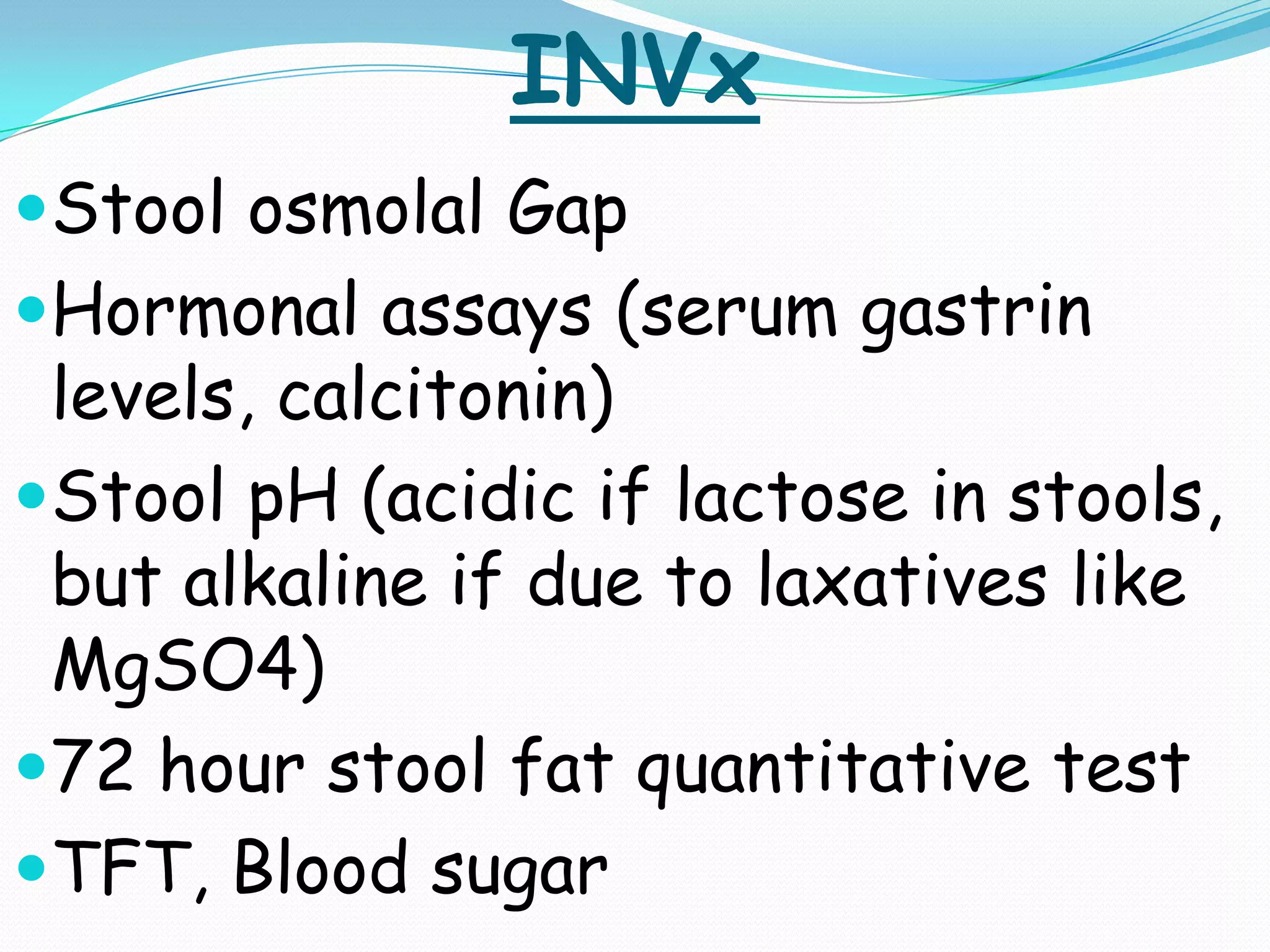


1. Diarrhoea can be acute (<2 weeks), persistent (2-4 weeks), or chronic (>4 weeks). Acute diarrhoea is usually infectious and caused by toxins or intestinal inflammation. 2. Chronic diarrhoea is usually non-infectious and can be secretory, osmotic, inflammatory, due to dysmotility, or factitious. Common causes include infections, medications, lactose intolerance, IBD, thyroid disorders, and laxative abuse. 3. Evaluation involves stool tests to identify infectious causes or evaluate for malabsorption, and blood tests to check for hormonal or metabolic abnormalities underlying chronic diarrhoea.


