1. Passive movement involves moving a joint through its range of motion without active contraction of the muscles around the joint. It is done by a therapist or machine when a patient cannot actively move on their own or has a reduced range of motion.
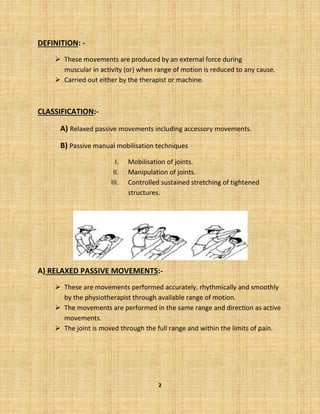
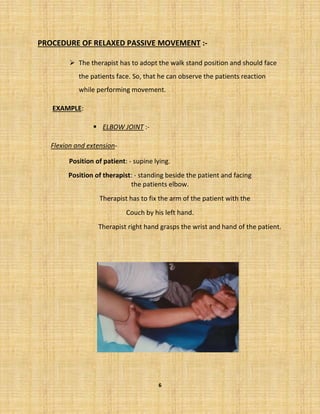
2. There are two main types of passive movement - relaxed passive movements and passive manual mobilization techniques. Relaxed passive movements are smooth movements done by a therapist through a patient's full available range, while manual techniques include joint mobilization, manipulation, and controlled stretching.
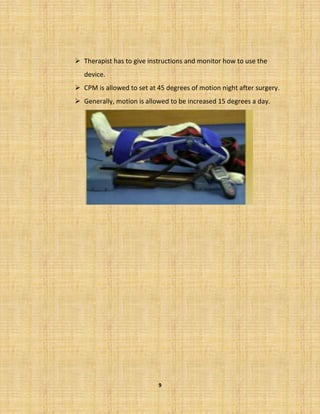
3. Continued passive motion devices are used after limb or joint surgery to maintain movement and limit stiffness and pain. They move the joint through its full range while the patient is in bed to prevent immobil