“There can be no learning without action
and no sober and deliberate action without
learning” Reg Revans
Prepared By:
Muhammad Sajeel Bhatti
Prepared For:
Sulman Hameed
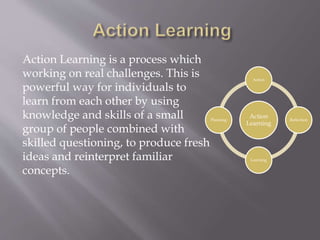
Action Learning is a process which
working on real challenges. This is
powerful way for individuals to
learn from each other by using
knowledge and skills of a small
group of people combined with
skilled questioning, to produce fresh
ideas and reinterpret familiar
concepts.
Action
Learning
Action
Reflection
Learning
Planning
Action Learning core elements of Common
Ground Initiative (Peer Learning Programme
(PLP). The PLP, groups of 3-7 people will meet
every 4-6 weeks to reflect on practical issues. It is
structured half-day sessions, participants will take
it in turns to present a significant challenge facing
them in their day to day work.
Key Features:
 People Challenge and support to each other
 A climate of confidentiality and openness is create
with in group
 People seek solution to read work issues and use
real experience
 People are encourage to be explicit
 Identification of the sponsors of action learning,
including CEO’s and top managers
 Identification of the problem or issues
 Identification of selection of the group who can
address the problem
 Identification of coaches who can help the group;
reframe problem, improve problem.
 Presentation of the problem to group
 Group discussion for reframing
 Date gathering and analysis
 Group presentation for problem solving
 Self-reflection and debriefing
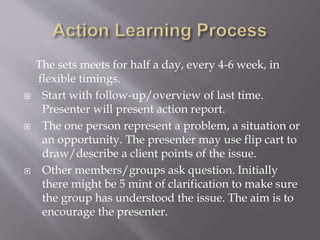
The sets meets for half a day, every 4-6 week, in
flexible timings.
 Start with follow-up/overview of last time.
Presenter will present action report.
 The one person represent a problem, a situation or
an opportunity. The presenter may use flip cart to
draw/describe a client points of the issue.
 Other members/groups ask question. Initially
there might be 5 mint of clarification to make sure
the group has understood the issue. The aim is to
encourage the presenter.
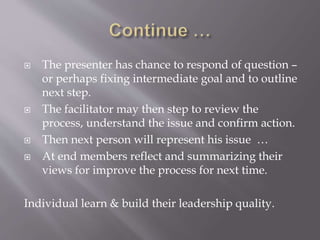
 The presenter has chance to respond of question –
or perhaps fixing intermediate goal and to outline
next step.
 The facilitator may then step to review the
process, understand the issue and confirm action.
 Then next person will represent his issue …
 At end members reflect and summarizing their
views for improve the process for next time.
Individual learn & build their leadership quality.
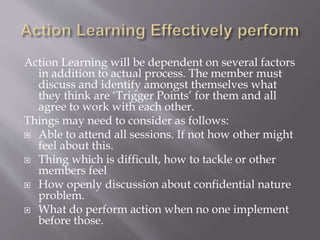
Action Learning will be dependent on several factors
in addition to actual process. The member must
discuss and identify amongst themselves what
they think are ‘Trigger Points’ for them and all
agree to work with each other.
Things may need to consider as follows:
 Able to attend all sessions. If not how other might
feel about this.
 Thing which is difficult, how to tackle or other
members feel
 How openly discussion about confidential nature
problem.
 What do perform action when no one implement
before those.
Action learning

Action learning

  • 1.
    “There can beno learning without action and no sober and deliberate action without learning” Reg Revans Prepared By: Muhammad Sajeel Bhatti Prepared For: Sulman Hameed
  • 2.
    Action Learning isa process which working on real challenges. This is powerful way for individuals to learn from each other by using knowledge and skills of a small group of people combined with skilled questioning, to produce fresh ideas and reinterpret familiar concepts. Action Learning Action Reflection Learning Planning
  • 3.
    Action Learning coreelements of Common Ground Initiative (Peer Learning Programme (PLP). The PLP, groups of 3-7 people will meet every 4-6 weeks to reflect on practical issues. It is structured half-day sessions, participants will take it in turns to present a significant challenge facing them in their day to day work. Key Features:  People Challenge and support to each other  A climate of confidentiality and openness is create with in group  People seek solution to read work issues and use real experience  People are encourage to be explicit
  • 4.
     Identification ofthe sponsors of action learning, including CEO’s and top managers  Identification of the problem or issues  Identification of selection of the group who can address the problem  Identification of coaches who can help the group; reframe problem, improve problem.  Presentation of the problem to group  Group discussion for reframing  Date gathering and analysis  Group presentation for problem solving  Self-reflection and debriefing
  • 5.
    The sets meetsfor half a day, every 4-6 week, in flexible timings.  Start with follow-up/overview of last time. Presenter will present action report.  The one person represent a problem, a situation or an opportunity. The presenter may use flip cart to draw/describe a client points of the issue.  Other members/groups ask question. Initially there might be 5 mint of clarification to make sure the group has understood the issue. The aim is to encourage the presenter.
  • 6.
     The presenterhas chance to respond of question – or perhaps fixing intermediate goal and to outline next step.  The facilitator may then step to review the process, understand the issue and confirm action.  Then next person will represent his issue …  At end members reflect and summarizing their views for improve the process for next time. Individual learn & build their leadership quality.
  • 7.
    Action Learning willbe dependent on several factors in addition to actual process. The member must discuss and identify amongst themselves what they think are ‘Trigger Points’ for them and all agree to work with each other. Things may need to consider as follows:  Able to attend all sessions. If not how other might feel about this.  Thing which is difficult, how to tackle or other members feel  How openly discussion about confidential nature problem.  What do perform action when no one implement before those.