Module 1: Coaching Skills

“A word of praise
 after a success is
 worth more than a
 line of encouragement
 during a failure.”
 Focus on our Strengths!
            -R.H. Hill
1. What is coaching?
A. Coaching is normally associated with
   sports.
   - In business, coaching means
   turning potential into achievement
   or excellence in your career
B. Defined: A Process by which an
   individual works to facilitate a
   higher level performance in a
   meaningful life region.
   - Coaching is directly linked to
   leadership.
   - Uncovering the best in individuals.
   - Not merely directing.
2. Coaching vs. other helping professions?

A. Coaching is one of the most modern
   approaches in developing potential.
   - Focuses on positive aspects of
   behavior compared to “problem-
   based” or pathological approaches.
B. Pathological approaches (problem
   based):
   - Can be seen in psychiatry;
C. In contrast, coaching is a more
   positive and experience based
   approach.
   – A new way of thinking.
3. A great model for coaching

A. First, coaching is a multipart process
   yet is executed in simple steps.

B. We Use Four steps:
  - Setting Goals.
  - Understand the person’s Reality
  - Generate Options.
  - Organizing a Way forward.

This is known as the          Model
4. Great coaching model cont.

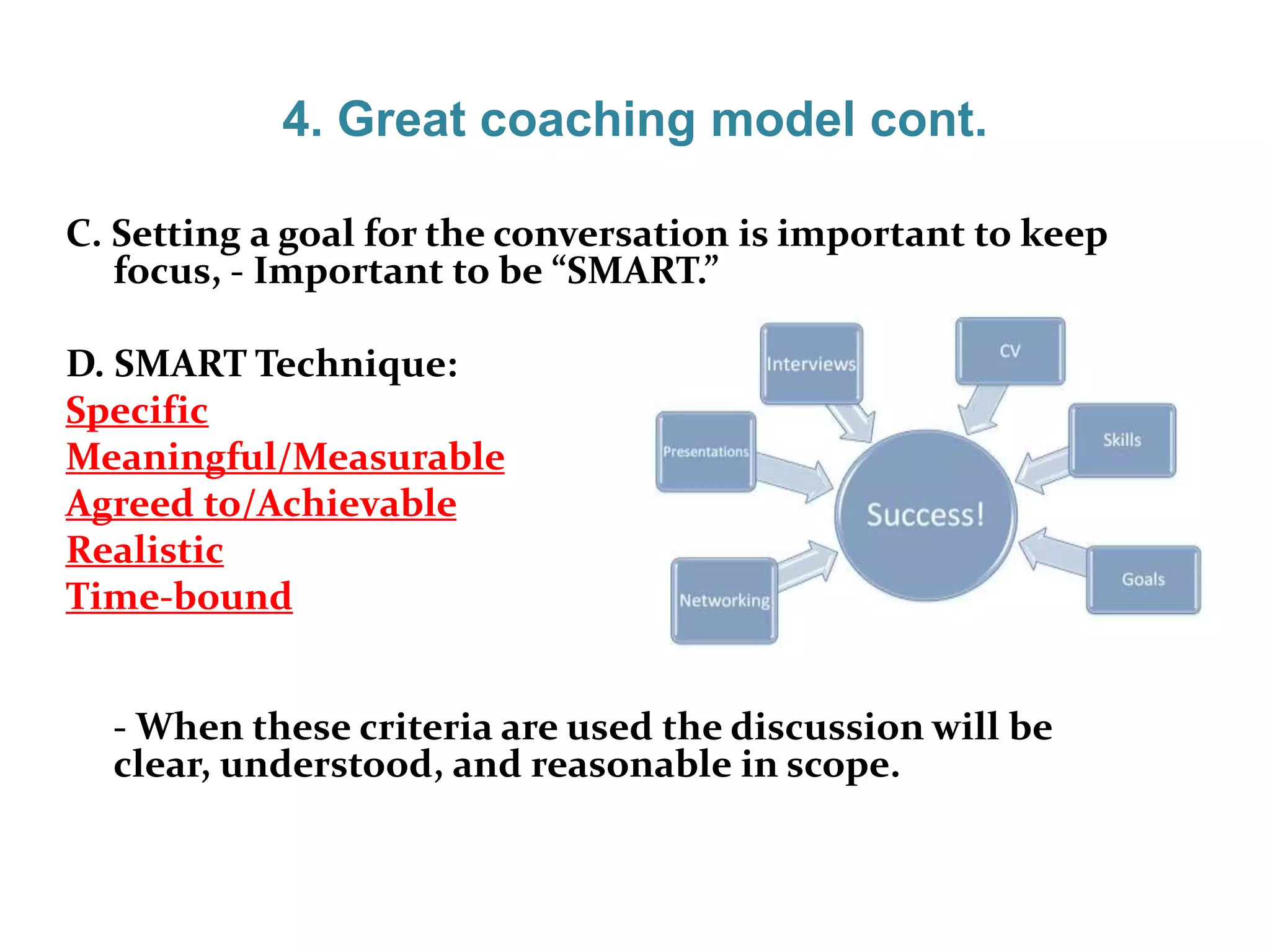
C. Setting a goal for the conversation is important to keep
   focus, - Important to be “SMART.”

D. SMART Technique:
Specific
Meaningful/Measurable
Agreed to/Achievable
Realistic
Time-bound


  - When these criteria are used the discussion will be
  clear, understood, and reasonable in scope.
5. great coaching model cont.

E. After setting the SMART goal, it is essential to understand your
   group’s REALITY.
*who, what, when and how often? (The problem or challenge)
    - This is NOT about solving problems, rather it is helping
   them think more clearly and how to solve their own
   issues, problems, or dilemmas.

  - Practice active listening. Which is taking an “active” role
  when hearing the issue.

  - Repeat back what you heard and do so to their satisfaction.

  - Improving the client’s motivation as well strengthening the
  relationship with client is the result of proper active listening.
6. great coaching model cont.
F. Listening helps generate options.
   - During this phase you should try to identify potential
   actions to solve their problems.

  - First seek out the client’s best thinking.

  - After pulling out or eliciting options you begin to offer
  additional insights.
  1. This keeps client accountable for their own changes.
  2. Clients usually come up with own answers, which
  gives a sense of empowerment.
   3. Sets stage for client wanting to hear you.
7. great coaching modelcont.

Having a client generate their
 own options gives client
 intrinsic motivation &
 ownership to take action.
 - Once you have pulled all of
 your clients options then you
 may ask permission to give
 suggestions.
 - At this point, you have them
 choose from many options
 that have been given and
 identify which to take action
 on.
  - This leads to design a way
 forward.
8. great coaching model cont.
G. At this point SMART goals are being
   identified.

  - You have listened and discussed their
  current reality and generated options.

  - A plan of action or “way forward” is
  setting goals that are most important, and
  most motivating.

  - These are considered “critical variables”
  of performance.

  - You then can create an action plan and
  SMART goal(s).
9. great coaching model cont.

H. By doing these 4 phases of coaching it helps increase the
  “decision speed” of the client.
   - Helping to focus their actions and make decisions that
  maximize performance.

I. Conducting G.R.O.W. sessions gives the leader confidence in
   his or her skills.
   - Coaches offer their life experience and focuses more on
   uncovering potential
   *Coaching is to help the client Focus, generate ideas, and act
   on skills they already know; just need a little push
Do you have the skill set to coach?
A. YES You Do! Coaching is universal
   in application.
B. We are all coaches & mentors.
   - Opportunity to coach are in all
   aspects of life.
   - Mostly in areas we are passionate
   about or our profession.
C. Look where can you help facilitate
   performance of others.
   - Most answers to problems lie
   within themselves.
D. Practice your skill of coaching!
   YOU will become a better
   leader, and plant seeds of growth
   around you!

Coaching Model

  • 1.
    Module 1: CoachingSkills “A word of praise after a success is worth more than a line of encouragement during a failure.” Focus on our Strengths! -R.H. Hill
  • 2.
    1. What iscoaching? A. Coaching is normally associated with sports. - In business, coaching means turning potential into achievement or excellence in your career B. Defined: A Process by which an individual works to facilitate a higher level performance in a meaningful life region. - Coaching is directly linked to leadership. - Uncovering the best in individuals. - Not merely directing.
  • 3.
    2. Coaching vs.other helping professions? A. Coaching is one of the most modern approaches in developing potential. - Focuses on positive aspects of behavior compared to “problem- based” or pathological approaches. B. Pathological approaches (problem based): - Can be seen in psychiatry; C. In contrast, coaching is a more positive and experience based approach. – A new way of thinking.
  • 4.
    3. A greatmodel for coaching A. First, coaching is a multipart process yet is executed in simple steps. B. We Use Four steps: - Setting Goals. - Understand the person’s Reality - Generate Options. - Organizing a Way forward. This is known as the Model
  • 5.
    4. Great coachingmodel cont. C. Setting a goal for the conversation is important to keep focus, - Important to be “SMART.” D. SMART Technique: Specific Meaningful/Measurable Agreed to/Achievable Realistic Time-bound - When these criteria are used the discussion will be clear, understood, and reasonable in scope.
  • 6.
    5. great coachingmodel cont. E. After setting the SMART goal, it is essential to understand your group’s REALITY. *who, what, when and how often? (The problem or challenge) - This is NOT about solving problems, rather it is helping them think more clearly and how to solve their own issues, problems, or dilemmas. - Practice active listening. Which is taking an “active” role when hearing the issue. - Repeat back what you heard and do so to their satisfaction. - Improving the client’s motivation as well strengthening the relationship with client is the result of proper active listening.
  • 7.
    6. great coachingmodel cont. F. Listening helps generate options. - During this phase you should try to identify potential actions to solve their problems. - First seek out the client’s best thinking. - After pulling out or eliciting options you begin to offer additional insights. 1. This keeps client accountable for their own changes. 2. Clients usually come up with own answers, which gives a sense of empowerment. 3. Sets stage for client wanting to hear you.
  • 8.
    7. great coachingmodelcont. Having a client generate their own options gives client intrinsic motivation & ownership to take action. - Once you have pulled all of your clients options then you may ask permission to give suggestions. - At this point, you have them choose from many options that have been given and identify which to take action on. - This leads to design a way forward.
  • 9.
    8. great coachingmodel cont. G. At this point SMART goals are being identified. - You have listened and discussed their current reality and generated options. - A plan of action or “way forward” is setting goals that are most important, and most motivating. - These are considered “critical variables” of performance. - You then can create an action plan and SMART goal(s).
  • 10.
    9. great coachingmodel cont. H. By doing these 4 phases of coaching it helps increase the “decision speed” of the client. - Helping to focus their actions and make decisions that maximize performance. I. Conducting G.R.O.W. sessions gives the leader confidence in his or her skills. - Coaches offer their life experience and focuses more on uncovering potential *Coaching is to help the client Focus, generate ideas, and act on skills they already know; just need a little push
  • 11.
    Do you havethe skill set to coach? A. YES You Do! Coaching is universal in application. B. We are all coaches & mentors. - Opportunity to coach are in all aspects of life. - Mostly in areas we are passionate about or our profession. C. Look where can you help facilitate performance of others. - Most answers to problems lie within themselves. D. Practice your skill of coaching! YOU will become a better leader, and plant seeds of growth around you!