
ACID RAIN
CHEMISTRY
PRESENTATION
What is Acid Rain ?????

 Acid rain is a rain or any other form of
precipitation that is unusually acidic,
meaning that it possesses elevated levels
of hydrogen ions (low pH). It can have
harmful effects on plants, aquatic animals
and infrastructure.
How Acid Rains are formed
?????
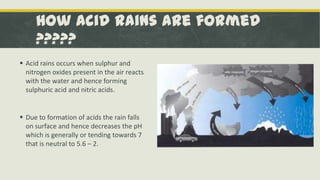
 Acid rains occurs when sulphur and
nitrogen oxides present in the air reacts
with the water and hence forming
sulphuric acid and nitric acids.

 Due to formation of acids the rain falls
on surface and hence decreases the pH
which is generally or tending towards 7
that is neutral to 5.6 – 2.
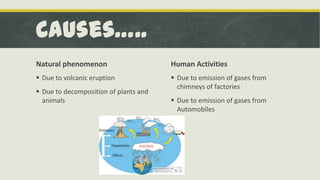
Causes…..
Natural phenomenon

Human Activities

 Due to volcanic eruption

 Due to emission of gases from
chimneys of factories

 Due to decomposition of plants and
animals

 Due to emission of gases from
Automobiles
Adverse effects
 Surface waters and aquatic animals :
Both the lower pH and higher aluminium concentrations in surface water that occur as a result of
acid rain can cause damage to fish and other aquatic animals. At pHs lower than 5 most fish eggs
will not hatch and lower pHs can kill adult fish. As lakes and rivers become more acidic biodiversity is
reduced. Acid rain has eliminated insect life and some fish species
 Soils :
Soil biology and chemistry can be seriously damaged by acid rain. Some microbes are unable to
tolerate changes to low pH and are killed.[28] The enzymes of these microbes are denatured
(changed in shape so they no longer function) by the acid
 Forests and other vegetation :
Adverse effects may be indirectly related to acid rain, like the acid's effects on soil (see above) or high concentration of
gaseous precursors to acid rain. High altitude forests are especially vulnerable as they are often surrounded by clouds
and fog which are more acidic than rain.
 Ocean acidification :
Coral's limestone skeletal is sensitive to pH drop, because the calcium carbonate, core component of the limestone
dissolves in acidic (low pH) solutions.
 Human health effects :
Acid rain does not directly affect human health. The acid in the rainwater is too dilute to have direct adverse effects.
However, the particulates responsible for acid rain (sulfur dioxide and nitrogen oxides) do have an adverse effect.
Increased amounts of fine particulate matter in the air do contribute to heart and lung problems including asthma and
bronchitis
 Other adverse effects :
Acid rain can damage buildings, historic monuments, and statues, especially those made of rocks, such as limestone and
marble, that contain large amounts of calcium carbonate. Acids in the rain react with the calcium compounds in the
stones to create gypsum, which then flakes off.
Preventions….
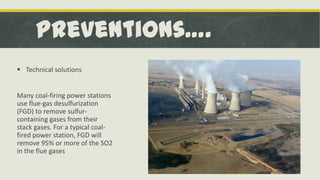
 Technical solutions

Many coal-firing power stations
use flue-gas desulfurization
(FGD) to remove sulfurcontaining gases from their
stack gases. For a typical coalfired power station, FGD will
remove 95% or more of the SO2
in the flue gases
 International treaties
A number of international treaties on
the long range transport of
atmospheric pollutants have been
agreed for example, Sulphur
Emissions Reduction Protocol under
the Convention on Long-Range Trans
boundary Air Pollution. Canada and
the US signed the Air Quality
Agreement in 1991. Most European
countries and Canada have signed the
treaties.
Acid  rain
Acid  rain

Acid rain

  • 1.
  • 2.
    What is AcidRain ?????  Acid rain is a rain or any other form of precipitation that is unusually acidic, meaning that it possesses elevated levels of hydrogen ions (low pH). It can have harmful effects on plants, aquatic animals and infrastructure.
  • 3.
    How Acid Rainsare formed ?????  Acid rains occurs when sulphur and nitrogen oxides present in the air reacts with the water and hence forming sulphuric acid and nitric acids.  Due to formation of acids the rain falls on surface and hence decreases the pH which is generally or tending towards 7 that is neutral to 5.6 – 2.
  • 5.
    Causes….. Natural phenomenon Human Activities Due to volcanic eruption  Due to emission of gases from chimneys of factories  Due to decomposition of plants and animals  Due to emission of gases from Automobiles
  • 6.
    Adverse effects  Surfacewaters and aquatic animals : Both the lower pH and higher aluminium concentrations in surface water that occur as a result of acid rain can cause damage to fish and other aquatic animals. At pHs lower than 5 most fish eggs will not hatch and lower pHs can kill adult fish. As lakes and rivers become more acidic biodiversity is reduced. Acid rain has eliminated insect life and some fish species  Soils : Soil biology and chemistry can be seriously damaged by acid rain. Some microbes are unable to tolerate changes to low pH and are killed.[28] The enzymes of these microbes are denatured (changed in shape so they no longer function) by the acid
  • 7.
     Forests andother vegetation : Adverse effects may be indirectly related to acid rain, like the acid's effects on soil (see above) or high concentration of gaseous precursors to acid rain. High altitude forests are especially vulnerable as they are often surrounded by clouds and fog which are more acidic than rain.  Ocean acidification : Coral's limestone skeletal is sensitive to pH drop, because the calcium carbonate, core component of the limestone dissolves in acidic (low pH) solutions.  Human health effects : Acid rain does not directly affect human health. The acid in the rainwater is too dilute to have direct adverse effects. However, the particulates responsible for acid rain (sulfur dioxide and nitrogen oxides) do have an adverse effect. Increased amounts of fine particulate matter in the air do contribute to heart and lung problems including asthma and bronchitis  Other adverse effects : Acid rain can damage buildings, historic monuments, and statues, especially those made of rocks, such as limestone and marble, that contain large amounts of calcium carbonate. Acids in the rain react with the calcium compounds in the stones to create gypsum, which then flakes off.
  • 8.
    Preventions….  Technical solutions Manycoal-firing power stations use flue-gas desulfurization (FGD) to remove sulfurcontaining gases from their stack gases. For a typical coalfired power station, FGD will remove 95% or more of the SO2 in the flue gases
  • 9.
     International treaties Anumber of international treaties on the long range transport of atmospheric pollutants have been agreed for example, Sulphur Emissions Reduction Protocol under the Convention on Long-Range Trans boundary Air Pollution. Canada and the US signed the Air Quality Agreement in 1991. Most European countries and Canada have signed the treaties.