WELCOME
RANI DURGAVATI VISHVAVIDYALAY
JABALPUR M.P.
A home Assignment presentation Based on environment chemistry
Session - 2020-21
Topic- Acid rain
SUBMITTED TO :
Dr. Garima Pravin panday
Dr. Deepak rajak
Dept. Of. P.G. Studies &
Research in chemistry and
Pharmacy
SUBMITTED BY :
SURENDRA KUMAR KACHHI
M.Sc. 2nd semester
Dept.of P.G.Studies &Research
in Chemistry and Pharmacy
CONTENTS :
 INDRODUCTIOND
WHAT IS ACID RAIN ?
DEFINITION
HOW DO WE MEASURE THE LEVEL OF ACID IN THE
PRECIPITATION?
CAUSES OF ACID RAIN
CHEMICAL EQUATIONS
FORMATION OF ACID RAIN
EFFECTS OF ACID RAIN ON TRESS , AQUATIC LIFE, BUILDINGS ,
VEGETATION AND HUMAN HEALTH
PREVENTION OF ACID RAIN
According to the Royal Society of Chemistry, which
considers him the “father of acid rain,” the word acid
rain was invented in 1852 by Scottish chemist Robert
Angus Smith. Smith decided on the word while
studying rainwater chemistry near industrial towns in
England and Scotland.
INTRODUCTION
WHAT IS ACID RAIN ?
Acid Rain is the Precipitation that has a pH of
less than that of natural rainwater (which is
about 5.6due to dissolved carbon dioxide).
It is formed when sulphur dioxides and
nitrogenoxides, as gases or fine particles in the
atmosphere,combine with water vapour and
precipitate as sulphuric acid or nitric acid in
rain, snow, or fog.
DEFINITION
• Precipitation, as rain, snow, orsleet, containing
relatively high concentrations of acid-forming
chemicals, as the pollutants from coal smoke,
chemical manufacturing, and smelting,that have
been released into theatmosphere and combined
with water vapour harmful to the environment.
• Acid rain" is a broad term referring to a mixture of
wet and dry deposition (deposited material) from
the atmosphere containing higher than normal
amounts of nitric and sulphuric acids.
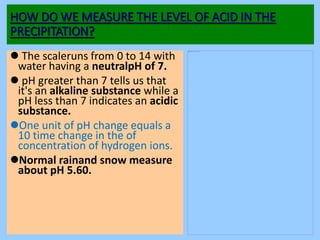
HOW DO WE MEASURE THE LEVEL OF ACID IN THE
PRECIPITATION?
 The scaleruns from 0 to 14 with
water having a neutralpH of 7.
 pH greater than 7 tells us that
it's an alkaline substance while a
pH less than 7 indicates an acidic
substance.
One unit of pH change equals a
10 time change in the of
concentration of hydrogen ions.
Normal rainand snow measure
about pH 5.60.
CAUSES OF ACID RAIN
NATURAL SOURCES : Emissions from volcanoes and from
biological processes that occur on the land, in wetlands,
and in the oceans contribute acid-producing gases to the
atmosphere Effects of acidic deposits have been detected
in glacial ice thousands of years old in remote parts of the
globe.
HUMAN SOURCES: The principal cause of acid rain is
from human sources Industrial factories, power-
generating plantsand vehicles Sulphur dioxide and oxides
of nitrogen are released during the fuel burning process.
CHEMICAL EQUATIONS
Both sulphuric acid and nitric acid are soluble in water and
are the major acids present in acid rain. As this forms and
falls onto the Earths surface, these strong acids are
alsobrought to the surface causing harmful effects on the
built and the natural environment.
.Sulfur dioxide reacts with water to form sulfurous acid.
 SO2(g) + H2O(l) →H2SO3(aq)
 Substances in the upper atmosphere then catalyze the
reaction between sulfurous acidand oxygen to form
sulfuric acid.
 2H2SO3(aq) + O2(g) →2H2SO4(aq)
CHEMICAL EQUATIONS
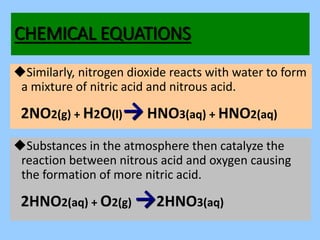
Similarly, nitrogen dioxide reacts with water to form
a mixture of nitric acid and nitrous acid.
2NO2(g) + H2O(l)→HNO3(aq) + HNO2(aq)
Substances in the atmosphere then catalyze the
reaction between nitrous acid and oxygen causing
the formation of more nitric acid.
2HNO2(aq) + O2(g) →2HNO3(aq)
FORMATION OF ACID RAIN
When water vapour
condenses, or as the rain
falls, they dissolve in the
water to form sulphuric
acid (H2SO4) and nitric
acid (HNO3).
While the air in cleaned
of the pollutants in this
way, it also causes
precipitation to become
acidic, forming acid rain.
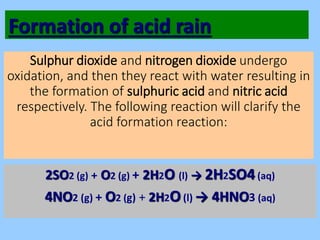
Sulphur dioxide and nitrogen dioxide undergo
oxidation, and then they react with water resulting in
the formation of sulphuric acid and nitric acid
respectively. The following reaction will clarify the
acid formation reaction:
2SO2 (g) + O2 (g) + 2H2O (l) → 2H2SO4 (aq)
4NO2 (g) + O2 (g) + 2H2O(l) → 4HNO3 (aq)
Formation of acid rain
EFFECTS OF ACID RAIN
• Trees : The needles and leaves
of the trees turnbrown and fall
off.
• Trees can also suffer
fromstunted growth; and have
damaged bark andleaves, which
makes them vulnerable
toweather, disease, and insects.
• The soil poisons the tree with
toxic substances that the rain
has deposited into it.
• Acid rain is an extremely destructive form of pollution, and
the environment suffers from its effects Forests, trees,
lakes, animals, and plantssuffer from acid rain.
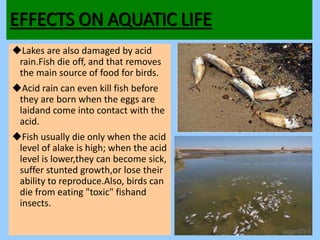
EFFECTS ON AQUATIC LIFE
Lakes are also damaged by acid
rain.Fish die off, and that removes
the main source of food for birds.
Acid rain can even kill fish before
they are born when the eggs are
laidand come into contact with the
acid.
Fish usually die only when the acid
level of alake is high; when the acid
level is lower,they can become sick,
suffer stunted growth,or lose their
ability to reproduce.Also, birds can
die from eating "toxic" fishand
insects.
EFFECTS ON BUILDINGS
• Acid rain dissolves the
stonework and mortar of
buildings(especially those
made out ofsandstone or
limestone).
• It reactswith the minerals in
the stone toform a powdery
substance thatcan be
washed away by rain.
• Accelerates weathering in
metaland stones structures .
• Eg.Taj Mahal in Agra , India .
CaCO3 + H2SO4 →
CaSO4 + H2O+ CO2
 Statue of Liberty : which is made of
copper has also been damaged by the
cumulative action of acid rain & oxidation for
over 30 years and is, therefore, becoming
green.
HARMFUL TO VEGETATION
Increased acidity in soil
.Leeches nutrients from
soil, slowing plant growth .
Leeches toxins from soil,
poisoning plants .
Creates brown spots in
leaves of trees, impeding
photosynthesis .
Allows organisms to infect
through broken leaves.
Eg. Effect on citrus fruits.
AFFECTS HUMAN HEALTH
Respiratory problems, asthma, dry coughs,headaches and
throat irritations.
Leeching of toxins from the soil by acid rain canbe absorbed
by plants and animals.
When consumed, these toxins affect humans severely.
Brain damage, kidney problems, and Alzheimers disease has
been linked to people eating "toxic"animals/plants.
Research carried out inNorth America in 1982,revealed that
sulphur pollution killed 51,000people and about 200,000
people become ill as a result of the pollution.
1. The only precaution that we can take against acid rain
is having a check at the emission of oxides of nitrogen
and sulphur.
2. We have so far seen the details of acid rain and its
harmful effect on animals, plants and the monuments.
3. Being responsible citizens, one should be aware of the
harmful effects they cause and of the industries which
give out nitrogen and sulphur compound wastes
unethically.
Prevention of Acid Rain
Thank you

acid rain.pptx

  • 1.
  • 2.
    RANI DURGAVATI VISHVAVIDYALAY JABALPURM.P. A home Assignment presentation Based on environment chemistry Session - 2020-21 Topic- Acid rain SUBMITTED TO : Dr. Garima Pravin panday Dr. Deepak rajak Dept. Of. P.G. Studies & Research in chemistry and Pharmacy SUBMITTED BY : SURENDRA KUMAR KACHHI M.Sc. 2nd semester Dept.of P.G.Studies &Research in Chemistry and Pharmacy
  • 3.
    CONTENTS :  INDRODUCTIOND WHATIS ACID RAIN ? DEFINITION HOW DO WE MEASURE THE LEVEL OF ACID IN THE PRECIPITATION? CAUSES OF ACID RAIN CHEMICAL EQUATIONS FORMATION OF ACID RAIN EFFECTS OF ACID RAIN ON TRESS , AQUATIC LIFE, BUILDINGS , VEGETATION AND HUMAN HEALTH PREVENTION OF ACID RAIN
  • 4.
    According to theRoyal Society of Chemistry, which considers him the “father of acid rain,” the word acid rain was invented in 1852 by Scottish chemist Robert Angus Smith. Smith decided on the word while studying rainwater chemistry near industrial towns in England and Scotland. INTRODUCTION
  • 5.
    WHAT IS ACIDRAIN ? Acid Rain is the Precipitation that has a pH of less than that of natural rainwater (which is about 5.6due to dissolved carbon dioxide). It is formed when sulphur dioxides and nitrogenoxides, as gases or fine particles in the atmosphere,combine with water vapour and precipitate as sulphuric acid or nitric acid in rain, snow, or fog.
  • 6.
    DEFINITION • Precipitation, asrain, snow, orsleet, containing relatively high concentrations of acid-forming chemicals, as the pollutants from coal smoke, chemical manufacturing, and smelting,that have been released into theatmosphere and combined with water vapour harmful to the environment. • Acid rain" is a broad term referring to a mixture of wet and dry deposition (deposited material) from the atmosphere containing higher than normal amounts of nitric and sulphuric acids.
  • 7.
    HOW DO WEMEASURE THE LEVEL OF ACID IN THE PRECIPITATION?  The scaleruns from 0 to 14 with water having a neutralpH of 7.  pH greater than 7 tells us that it's an alkaline substance while a pH less than 7 indicates an acidic substance. One unit of pH change equals a 10 time change in the of concentration of hydrogen ions. Normal rainand snow measure about pH 5.60.
  • 8.
    CAUSES OF ACIDRAIN NATURAL SOURCES : Emissions from volcanoes and from biological processes that occur on the land, in wetlands, and in the oceans contribute acid-producing gases to the atmosphere Effects of acidic deposits have been detected in glacial ice thousands of years old in remote parts of the globe. HUMAN SOURCES: The principal cause of acid rain is from human sources Industrial factories, power- generating plantsand vehicles Sulphur dioxide and oxides of nitrogen are released during the fuel burning process.
  • 9.
    CHEMICAL EQUATIONS Both sulphuricacid and nitric acid are soluble in water and are the major acids present in acid rain. As this forms and falls onto the Earths surface, these strong acids are alsobrought to the surface causing harmful effects on the built and the natural environment. .Sulfur dioxide reacts with water to form sulfurous acid.  SO2(g) + H2O(l) →H2SO3(aq)  Substances in the upper atmosphere then catalyze the reaction between sulfurous acidand oxygen to form sulfuric acid.  2H2SO3(aq) + O2(g) →2H2SO4(aq)
  • 10.
    CHEMICAL EQUATIONS Similarly, nitrogendioxide reacts with water to form a mixture of nitric acid and nitrous acid. 2NO2(g) + H2O(l)→HNO3(aq) + HNO2(aq) Substances in the atmosphere then catalyze the reaction between nitrous acid and oxygen causing the formation of more nitric acid. 2HNO2(aq) + O2(g) →2HNO3(aq)
  • 11.
    FORMATION OF ACIDRAIN When water vapour condenses, or as the rain falls, they dissolve in the water to form sulphuric acid (H2SO4) and nitric acid (HNO3). While the air in cleaned of the pollutants in this way, it also causes precipitation to become acidic, forming acid rain.
  • 12.
    Sulphur dioxide andnitrogen dioxide undergo oxidation, and then they react with water resulting in the formation of sulphuric acid and nitric acid respectively. The following reaction will clarify the acid formation reaction: 2SO2 (g) + O2 (g) + 2H2O (l) → 2H2SO4 (aq) 4NO2 (g) + O2 (g) + 2H2O(l) → 4HNO3 (aq) Formation of acid rain
  • 13.
    EFFECTS OF ACIDRAIN • Trees : The needles and leaves of the trees turnbrown and fall off. • Trees can also suffer fromstunted growth; and have damaged bark andleaves, which makes them vulnerable toweather, disease, and insects. • The soil poisons the tree with toxic substances that the rain has deposited into it. • Acid rain is an extremely destructive form of pollution, and the environment suffers from its effects Forests, trees, lakes, animals, and plantssuffer from acid rain.
  • 14.
    EFFECTS ON AQUATICLIFE Lakes are also damaged by acid rain.Fish die off, and that removes the main source of food for birds. Acid rain can even kill fish before they are born when the eggs are laidand come into contact with the acid. Fish usually die only when the acid level of alake is high; when the acid level is lower,they can become sick, suffer stunted growth,or lose their ability to reproduce.Also, birds can die from eating "toxic" fishand insects.
  • 15.
    EFFECTS ON BUILDINGS •Acid rain dissolves the stonework and mortar of buildings(especially those made out ofsandstone or limestone). • It reactswith the minerals in the stone toform a powdery substance thatcan be washed away by rain. • Accelerates weathering in metaland stones structures . • Eg.Taj Mahal in Agra , India . CaCO3 + H2SO4 → CaSO4 + H2O+ CO2
  • 16.
     Statue ofLiberty : which is made of copper has also been damaged by the cumulative action of acid rain & oxidation for over 30 years and is, therefore, becoming green.
  • 17.
    HARMFUL TO VEGETATION Increasedacidity in soil .Leeches nutrients from soil, slowing plant growth . Leeches toxins from soil, poisoning plants . Creates brown spots in leaves of trees, impeding photosynthesis . Allows organisms to infect through broken leaves. Eg. Effect on citrus fruits.
  • 18.
    AFFECTS HUMAN HEALTH Respiratoryproblems, asthma, dry coughs,headaches and throat irritations. Leeching of toxins from the soil by acid rain canbe absorbed by plants and animals. When consumed, these toxins affect humans severely. Brain damage, kidney problems, and Alzheimers disease has been linked to people eating "toxic"animals/plants. Research carried out inNorth America in 1982,revealed that sulphur pollution killed 51,000people and about 200,000 people become ill as a result of the pollution.
  • 19.
    1. The onlyprecaution that we can take against acid rain is having a check at the emission of oxides of nitrogen and sulphur. 2. We have so far seen the details of acid rain and its harmful effect on animals, plants and the monuments. 3. Being responsible citizens, one should be aware of the harmful effects they cause and of the industries which give out nitrogen and sulphur compound wastes unethically. Prevention of Acid Rain
  • 20.