

THEFORMATIONOFACID RAIN
GROUPE:
a.Thanush A/L Govindarajoo
b.Putri Najihah
c.Zarith Sofea
d.Durgheswaran A/l Sivaraja
e.Umairah
f.Intan
WHATIS ACIDRAIN?
• Acid rain is rain that has been made acidic by
some pollutants especially sulphur dioxide
and nitrogen dioxide.
• This rain contains weak acid which is roughly
about pH value of 5.6.
• Acid rain can take form of snow,rain,fog and
even mist.
• It can be carried far away in the atmosphere.
WHAT GASES ARE INVOLVED IN
ACID RAIN?
• SULPHURDIOXIDE
a. Also known as “oxides of sulphur”
b. Is a chemical compound which is [SO2].
c. Released from burning of fossil fuels.
.NITROGENDIOXIDE
a. Also known as ‘oxides of nitrogen’
b. Is a chemical compound which is [NO2]
c. Is one of a group of highly reactive gases.
d. Is released from power plants and vehicles.
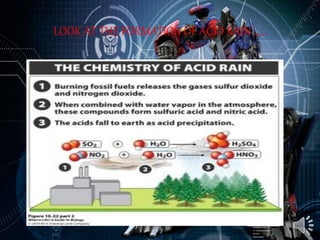
LOOK AT THE FORMATION OF ACID RAIN ……
Before going further into this
topic…………..
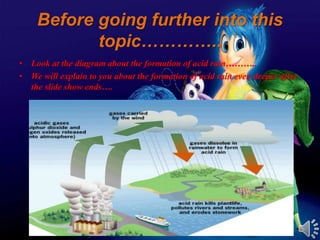
• Look at the diagram about the formation of acid rain………..
• We will explain to you about the formation of acid rain even deeper after
the slide show ends….
Howdoesacidrainforms?
• Firstly, the sunlight will heat up the Earth’s
surface.
• Then, evaporation will occur and the air will
be hotter.
• The hotter air expands and rises into the
atmosphere.
• Burning of fossil fuels in power plants,
factories and vehicles releases sulphur
dioxide and nitrogen dioxide into the air.
.These gases will rise up into the atmosphere
and mixes with the water vapour producing
weak acid.
.Air becomes colder and condensation takes
place.
.These water vapour which is weak acid
condenses into water droplets.
.Finally,the water droplets falls to the ground
in form of acid rain.
Now let’s go to the effects of
ACID RAIN ( WATER )
• Acid rain has many ecological effects, but
none is greater than its impact on lakes,
streams, wetlands, and other aquatic
environments.
• Acid rain makes waters acidic and causes
them to absorb the aluminium that makes its
way from soil into lakes and streams.
Now let’s go to the effects of
ACID RAIN ( aquatic animals )
• Acid rain causes a cascade of effects that harm or kill
individual fish, reduce fish population numbers, completely
eliminate fish species from a waterbody, and decrease
biodiversity.
• As acid rain flows through soils in a watershed, aluminium is
released from soils into the lakes and streams located in
that watershed.
• So, as pH in a lake or stream decreases, aluminium levels
increase. Both low pH and increased aluminium levels are
directly toxic to fish.
• In addition, low pH and increased aluminium levels cause
chronic stress that may not kill individual fish, but leads to
lower body weight and smaller size and makes fish less able
to compete for food and habitat.
Now let’s go to the effects of
ACID RAIN ( ECOSYSTEM )
• Biological organisms and the environment in which they
live are called an ecosystem. The plants and animals living
within an ecosystem are highly interdependent.
• For example, frogs may tolerate relatively high levels of
acidity, but if they eat insects like the mayfly, they may be
affected because part of their food supply may disappear.
• Because of the connections between the many fish,
plants, and other organisms living in an aquatic
ecosystem, changes in pH or aluminium levels affect
biodiversity as well.
• Thus, as lakes and streams become more acidic, the
numbers and types of fish and other aquatic plants and
animals that live in these waters decrease.
Now let’s go to the effects of
ACID RAIN ( FOREST )
• Acid deposition may influence forest vegetation and
soils. Acid rain weakens the trees natural defenses,
making them more vulnerable to diseases.
• Acid rain has been cited as a contributing factor to the
decline of the spruce-fir forests throughout the Eastern
United States.
• Acid rain may remove soil nutrients such as calcium
and magnesium from soils in high elevation forests and
cause damage to needles of Red Spruce.
• Acid rain may also help weaken natural defenses of
some trees, making them more vulnerable to some
diseases and pests.
Now let’s go to the effects of
ACID RAIN ( HUMAN HEALTH )
• Air pollution like sulphur dioxide and nitrogen oxides can cause
respiratory diseases, or can make these diseases worse.
Respiratory diseases like asthma or chronic bronchitis make it hard
for people to breathe.
• The pollution that causes acid rain can also create tiny particles.
When these particles get into people’s lungs, they can cause
health problems, or can make existing health problems worse.
• Also, nitrogen oxides cause ground-level ozone. This ground-level
ozone causes respiratory problems, like pneumonia and bronchitis,
and can even cause permanent lung damage.
• The health effects that people have to worry about are not caused
by the acid rain, but are caused when people breathe in these tiny
particles or ozone.
• Swimming in an acidic lake or walking in an acidic puddle is no
more harmful to people than swimming or walking in clean water.
Now let’s go to the effects of
ACID RAIN (Buildings and Objects )
• Acid rain can also have a damaging effect on
many objects, including buildings, statues,
monuments, and cars.
• The chemicals found in acid rain can cause
paint to peel and stone statues to begin to
appear old and worn down, which reduces
their value and beauty.
•Thank you,everyone.We
love you,Teacher
Aishah.

acid rain

  • 1.
    THEFORMATIONOFACID RAIN GROUPE: a.Thanush A/LGovindarajoo b.Putri Najihah c.Zarith Sofea d.Durgheswaran A/l Sivaraja e.Umairah f.Intan
  • 3.
    WHATIS ACIDRAIN? • Acidrain is rain that has been made acidic by some pollutants especially sulphur dioxide and nitrogen dioxide. • This rain contains weak acid which is roughly about pH value of 5.6. • Acid rain can take form of snow,rain,fog and even mist. • It can be carried far away in the atmosphere.
  • 4.
    WHAT GASES AREINVOLVED IN ACID RAIN? • SULPHURDIOXIDE a. Also known as “oxides of sulphur” b. Is a chemical compound which is [SO2]. c. Released from burning of fossil fuels. .NITROGENDIOXIDE a. Also known as ‘oxides of nitrogen’ b. Is a chemical compound which is [NO2] c. Is one of a group of highly reactive gases. d. Is released from power plants and vehicles.
  • 5.
    LOOK AT THEFORMATION OF ACID RAIN ……
  • 6.
    Before going furtherinto this topic………….. • Look at the diagram about the formation of acid rain……….. • We will explain to you about the formation of acid rain even deeper after the slide show ends….
  • 7.
    Howdoesacidrainforms? • Firstly, thesunlight will heat up the Earth’s surface. • Then, evaporation will occur and the air will be hotter. • The hotter air expands and rises into the atmosphere. • Burning of fossil fuels in power plants, factories and vehicles releases sulphur dioxide and nitrogen dioxide into the air.
  • 8.
    .These gases willrise up into the atmosphere and mixes with the water vapour producing weak acid. .Air becomes colder and condensation takes place. .These water vapour which is weak acid condenses into water droplets. .Finally,the water droplets falls to the ground in form of acid rain.
  • 10.
    Now let’s goto the effects of ACID RAIN ( WATER ) • Acid rain has many ecological effects, but none is greater than its impact on lakes, streams, wetlands, and other aquatic environments. • Acid rain makes waters acidic and causes them to absorb the aluminium that makes its way from soil into lakes and streams.
  • 11.
    Now let’s goto the effects of ACID RAIN ( aquatic animals ) • Acid rain causes a cascade of effects that harm or kill individual fish, reduce fish population numbers, completely eliminate fish species from a waterbody, and decrease biodiversity. • As acid rain flows through soils in a watershed, aluminium is released from soils into the lakes and streams located in that watershed. • So, as pH in a lake or stream decreases, aluminium levels increase. Both low pH and increased aluminium levels are directly toxic to fish. • In addition, low pH and increased aluminium levels cause chronic stress that may not kill individual fish, but leads to lower body weight and smaller size and makes fish less able to compete for food and habitat.
  • 12.
    Now let’s goto the effects of ACID RAIN ( ECOSYSTEM ) • Biological organisms and the environment in which they live are called an ecosystem. The plants and animals living within an ecosystem are highly interdependent. • For example, frogs may tolerate relatively high levels of acidity, but if they eat insects like the mayfly, they may be affected because part of their food supply may disappear. • Because of the connections between the many fish, plants, and other organisms living in an aquatic ecosystem, changes in pH or aluminium levels affect biodiversity as well. • Thus, as lakes and streams become more acidic, the numbers and types of fish and other aquatic plants and animals that live in these waters decrease.
  • 13.
    Now let’s goto the effects of ACID RAIN ( FOREST ) • Acid deposition may influence forest vegetation and soils. Acid rain weakens the trees natural defenses, making them more vulnerable to diseases. • Acid rain has been cited as a contributing factor to the decline of the spruce-fir forests throughout the Eastern United States. • Acid rain may remove soil nutrients such as calcium and magnesium from soils in high elevation forests and cause damage to needles of Red Spruce. • Acid rain may also help weaken natural defenses of some trees, making them more vulnerable to some diseases and pests.
  • 14.
    Now let’s goto the effects of ACID RAIN ( HUMAN HEALTH ) • Air pollution like sulphur dioxide and nitrogen oxides can cause respiratory diseases, or can make these diseases worse. Respiratory diseases like asthma or chronic bronchitis make it hard for people to breathe. • The pollution that causes acid rain can also create tiny particles. When these particles get into people’s lungs, they can cause health problems, or can make existing health problems worse. • Also, nitrogen oxides cause ground-level ozone. This ground-level ozone causes respiratory problems, like pneumonia and bronchitis, and can even cause permanent lung damage. • The health effects that people have to worry about are not caused by the acid rain, but are caused when people breathe in these tiny particles or ozone. • Swimming in an acidic lake or walking in an acidic puddle is no more harmful to people than swimming or walking in clean water.
  • 15.
    Now let’s goto the effects of ACID RAIN (Buildings and Objects ) • Acid rain can also have a damaging effect on many objects, including buildings, statues, monuments, and cars. • The chemicals found in acid rain can cause paint to peel and stone statues to begin to appear old and worn down, which reduces their value and beauty.
  • 16.