INTEGRATED PROJECT DELIVERY
ACE Mentorship Program: Team 2, January 20th, 2015
Design-Bid-Build: traditional approach – owner contracts separately with all
parties. Occasionally referred to as Design-Bid-ReDesign-ReBid-Build.
Design-Build: One entity performs both architecturalengineering design and
construction under one contract. Either an architect-led or contractor-led
approach.
CM-at Risk, or GMP: Construction Manager is a consultant to the owner during
design phases, and acts as general contractor during construction with a
commitment to deliver the project within a guaranteed maximum price.
Turnkey Project Delivery: frequently used in power plants, manufacturing
facilities, a method to provide an owner with a complete facility, ready to operate
and turn out product.
Traditional processes
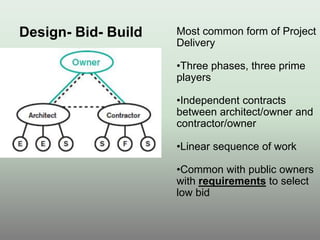
Design- Bid- Build Most common form of Project
Delivery
•Three phases, three prime
players
•Independent contracts
between architect/owner and
contractor/owner
•Linear sequence of work
•Common with public owners
with requirements to select
low bid
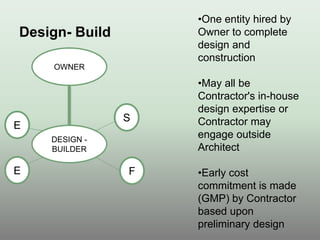
•One entity hired by
Owner to complete
design and
construction
•May all be
Contractor's in-house
design expertise or
Contractor may
engage outside
Architect
•Early cost
commitment is made
(GMP) by Contractor
based upon
preliminary design
OWNER
DESIGN -
BUILDER
S
F
Design- Build
E
E
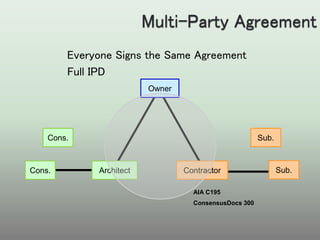
Everyone Signs the Same Agreement
Full IPD
Owner
Sub.ContractorCons. Architect
Sub.Cons.
AIA C195
ConsensusDocs 300
1/14/2016
6
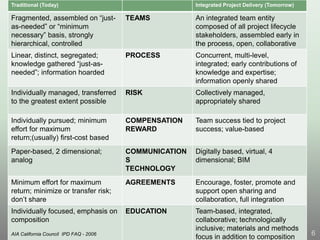
Traditional (Today) Integrated Project Delivery (Tomorrow)
Fragmented, assembled on “just-
as-needed” or “minimum
necessary” basis, strongly
hierarchical, controlled
TEAMS An integrated team entity
composed of all project lifecycle
stakeholders, assembled early in
the process, open, collaborative
Linear, distinct, segregated;
knowledge gathered “just-as-
needed”; information hoarded
PROCESS Concurrent, multi-level,
integrated; early contributions of
knowledge and expertise;
information openly shared
Individually managed, transferred
to the greatest extent possible
RISK Collectively managed,
appropriately shared
Individually pursued; minimum
effort for maximum
return;(usually) first-cost based
COMPENSATION
REWARD
Team success tied to project
success; value-based
Paper-based, 2 dimensional;
analog
COMMUNICATION
S
TECHNOLOGY
Digitally based, virtual, 4
dimensional; BIM
Minimum effort for maximum
return; minimize or transfer risk;
don’t share
AGREEMENTS Encourage, foster, promote and
support open sharing and
collaboration, full integration
Individually focused, emphasis on
composition
EDUCATION Team-based, integrated,
collaborative; technologically
inclusive; materials and methods
focus in addition to compositionAIA California Council IPD FAQ - 2006
1/14/2016
7
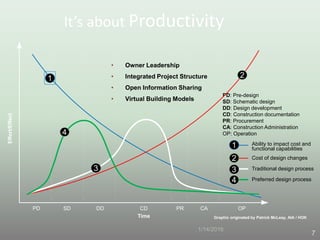
PD SD CD PR CA OPDD
Time
Effort/Effect
PD: Pre-design
SD: Schematic design
DD: Design development
CD: Construction documentation
PR: Procurement
CA: Construction Administration
OP: Operation
Graphic originated by Patrick McLeay, AIA / HOK
Ability to impact cost and
functional capabilities1
1
Cost of design changes
2
2
Traditional design process3 3
Preferred design process
4
4
• Owner Leadership
• Integrated Project Structure
• Open Information Sharing
• Virtual Building Models
It’s about Productivity
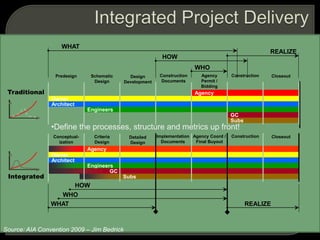
Agency
Owner
Architect
Engineers
GC
Subs
Predesign Schematic
Design
Design
Development
Construction
Documents
Agency
Permit /
Bidding
Construction Closeout
WHO
REALIZE
HOW
WHAT
Traditional
WHAT
WHO
HOW
Agency
Owner
Architect
Engineers
GC
Subs
Conceptual-
ization
Criteria
Design
Detailed
Design
Implementation
Documents
Agency Coord /
Final Buyout
Construction Closeout
REALIZE
Integrated
•Define the processes, structure and metrics up front!
Source: AIA Convention 2009 – Jim Bedrick
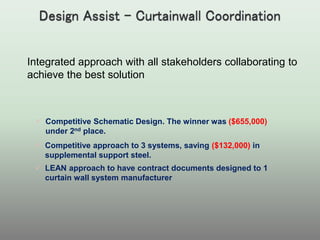
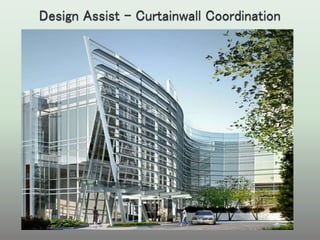
 Competitive Schematic Design. The winner was ($655,000)
under 2nd place.
 Competitive approach to 3 systems, saving ($132,000) in
supplemental support steel.
 LEAN approach to have contract documents designed to 1
curtain wall system manufacturer
Integrated approach with all stakeholders collaborating to
achieve the best solution
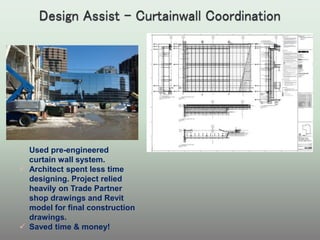
 Used pre-engineered
curtain wall system.
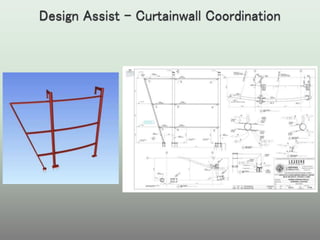
 Architect spent less time
designing. Project relied
heavily on Trade Partner
shop drawings and Revit
model for final construction
drawings.
 Saved time & money!
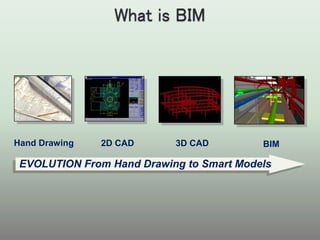
Hand Drawing 2D CAD 3D CAD
EVOLUTION From Hand Drawing to Smart Models
BIM
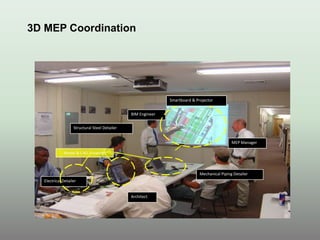
Electrical Detailer
Structural Steel Detailer
Mechanical Piping Detailer
MEP Manager
BIM Engineer
Model & CAD Drawings
Architect
Smartboard & Projector
3D MEP Coordination
ANY QUESTIONS?

ACE Team 2 - WK6 - IPD Presentation

  • 1.
    INTEGRATED PROJECT DELIVERY ACEMentorship Program: Team 2, January 20th, 2015
  • 2.
    Design-Bid-Build: traditional approach– owner contracts separately with all parties. Occasionally referred to as Design-Bid-ReDesign-ReBid-Build. Design-Build: One entity performs both architecturalengineering design and construction under one contract. Either an architect-led or contractor-led approach. CM-at Risk, or GMP: Construction Manager is a consultant to the owner during design phases, and acts as general contractor during construction with a commitment to deliver the project within a guaranteed maximum price. Turnkey Project Delivery: frequently used in power plants, manufacturing facilities, a method to provide an owner with a complete facility, ready to operate and turn out product. Traditional processes
  • 3.
    Design- Bid- BuildMost common form of Project Delivery •Three phases, three prime players •Independent contracts between architect/owner and contractor/owner •Linear sequence of work •Common with public owners with requirements to select low bid
  • 4.
    •One entity hiredby Owner to complete design and construction •May all be Contractor's in-house design expertise or Contractor may engage outside Architect •Early cost commitment is made (GMP) by Contractor based upon preliminary design OWNER DESIGN - BUILDER S F Design- Build E E
  • 5.
    Everyone Signs theSame Agreement Full IPD Owner Sub.ContractorCons. Architect Sub.Cons. AIA C195 ConsensusDocs 300
  • 6.
    1/14/2016 6 Traditional (Today) IntegratedProject Delivery (Tomorrow) Fragmented, assembled on “just- as-needed” or “minimum necessary” basis, strongly hierarchical, controlled TEAMS An integrated team entity composed of all project lifecycle stakeholders, assembled early in the process, open, collaborative Linear, distinct, segregated; knowledge gathered “just-as- needed”; information hoarded PROCESS Concurrent, multi-level, integrated; early contributions of knowledge and expertise; information openly shared Individually managed, transferred to the greatest extent possible RISK Collectively managed, appropriately shared Individually pursued; minimum effort for maximum return;(usually) first-cost based COMPENSATION REWARD Team success tied to project success; value-based Paper-based, 2 dimensional; analog COMMUNICATION S TECHNOLOGY Digitally based, virtual, 4 dimensional; BIM Minimum effort for maximum return; minimize or transfer risk; don’t share AGREEMENTS Encourage, foster, promote and support open sharing and collaboration, full integration Individually focused, emphasis on composition EDUCATION Team-based, integrated, collaborative; technologically inclusive; materials and methods focus in addition to compositionAIA California Council IPD FAQ - 2006
  • 7.
    1/14/2016 7 PD SD CDPR CA OPDD Time Effort/Effect PD: Pre-design SD: Schematic design DD: Design development CD: Construction documentation PR: Procurement CA: Construction Administration OP: Operation Graphic originated by Patrick McLeay, AIA / HOK Ability to impact cost and functional capabilities1 1 Cost of design changes 2 2 Traditional design process3 3 Preferred design process 4 4 • Owner Leadership • Integrated Project Structure • Open Information Sharing • Virtual Building Models It’s about Productivity
  • 8.
    Agency Owner Architect Engineers GC Subs Predesign Schematic Design Design Development Construction Documents Agency Permit / Bidding ConstructionCloseout WHO REALIZE HOW WHAT Traditional WHAT WHO HOW Agency Owner Architect Engineers GC Subs Conceptual- ization Criteria Design Detailed Design Implementation Documents Agency Coord / Final Buyout Construction Closeout REALIZE Integrated •Define the processes, structure and metrics up front! Source: AIA Convention 2009 – Jim Bedrick
  • 11.
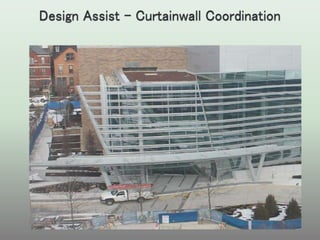
     Competitive SchematicDesign. The winner was ($655,000) under 2nd place.  Competitive approach to 3 systems, saving ($132,000) in supplemental support steel.  LEAN approach to have contract documents designed to 1 curtain wall system manufacturer Integrated approach with all stakeholders collaborating to achieve the best solution
  • 12.
     Used pre-engineered curtainwall system.  Architect spent less time designing. Project relied heavily on Trade Partner shop drawings and Revit model for final construction drawings.  Saved time & money!
  • 19.
    Hand Drawing 2DCAD 3D CAD EVOLUTION From Hand Drawing to Smart Models BIM
  • 20.
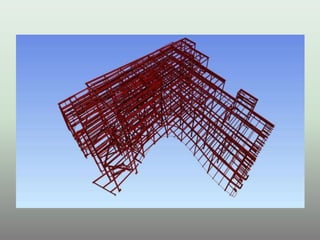
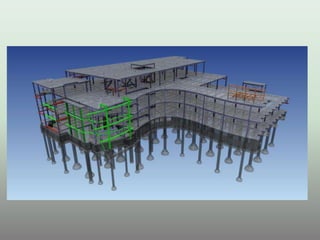
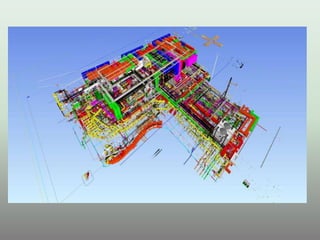
    Electrical Detailer Structural SteelDetailer Mechanical Piping Detailer MEP Manager BIM Engineer Model & CAD Drawings Architect Smartboard & Projector 3D MEP Coordination
  • 24.

Editor's Notes

  • #2 1
  • #3 2
  • #4 3
  • #5 4
  • #7 Talk about categories
  • #8 In the following diagram provided courtesy of Patrick McLeay of HOK, we understand that the ability to impact cost and functional capabilities during a project decreases over life of the project. All the while, the cost of design changes increases as the project cycle progresses. Currently, most of the project design decision-making occurs in the white curve, where the ability to impact cost and functional capabilities crosses with the cost of design changes. A preferred scenario would be to move the design decisions forward in the design process, when the cost of change is low, and the ability to impact cost and functional capabilities is high. A building information modeling approach seeks to accomplish this objective.
  • #9 IPD Definition Task Group
  • #20 19