Report by: Hannah Gabrielle Lledo and Jasmine Rivera
What is Abortion?
Abortion is a procedure to end a
pregnancy. It uses medicine or
surgery to remove embryo or
fetus and placenta from the
uterus. It is often called
miscarriage.
Types of Abortion
Induced
Spontaneous
Induced Abortion
It is also called as self-induced
miscarriage. Induced abortion is an
abortion performed by the pregnant
women herself outside the recognized
medical system. Most induced abortions
are done in the first 12 weeks of
pregnancy.
Risks of this type of abortion:
 Incomplete abortion
 Infection
 Hemorrhage
 Damage to the uterus
 Death
Spontaneous Abortion
Spontaneous abortion, also known as
unintended miscarriage, is the
unintentional expulsion of an embryo or
fetus. It occurs in at least 15-20% of all
recognized pregnancies and usually
takes place before the 13th week of
pregnancy.
Causes:
 Chromosome problems
 Drug and alcohol abuse
 Exposure to environmental toxins
 Hormone problems
 Infection
 Obesity
 Physical problems with the
mother’s reproductive organs
Causes:
 Problem with the body’s immune
response
 Serious body-wide diseases in the
mother
 Smoking
 Trauma
 Stress
Methods
Medical
Surgical
Medical
The medical abortion method is also
referred to as the “abortion pill”
method. Medical abortion is an abortion
caused by medicine rather than surgery.
Two medications are used in medical
abortions: methotrexate and misoprostol.
It is only available in women who are
less than 7 weeks pregnant.
Methotrexate
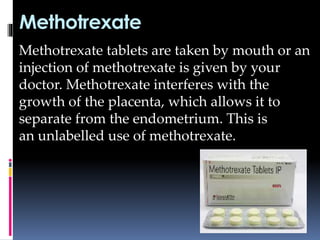
Methotrexate tablets are taken by mouth or an
injection of methotrexate is given by your
doctor. Methotrexate interferes with the
growth of the placenta, which allows it to
separate from the endometrium. This is
an unlabelled use of methotrexate.
Misoprostol
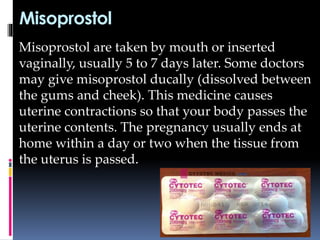
Misoprostol are taken by mouth or inserted
vaginally, usually 5 to 7 days later. Some doctors
may give misoprostol ducally (dissolved between
the gums and cheek). This medicine causes
uterine contractions so that your body passes the
uterine contents. The pregnancy usually ends at
home within a day or two when the tissue from
the uterus is passed.
Side effects:
 Nausea
 Vomiting
 Fever
 Chills
 Haemorrhage
 Incomplete abortion
 Uterine or pelvic infection
Side effects:
 On-going intrauteine pregnancy,
requiring a surgical abortion for
completion
Surgical
A surgical abortion also known as
aspiration abortion, empties the contents
of your uterus and is usually performed
within 12-14 weeks from your last
normal menstrual period.
Two types of surgical
abortion:
Vacuum Aspiration
 Manual Vacuum Aspiration
(MVA)
 Electric Vacuum Aspiration (EVA)
Dilation and Evacuation
Vacuum Aspiration
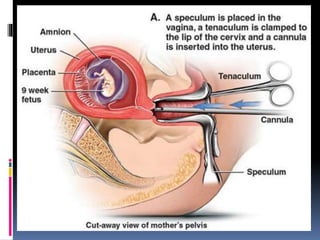
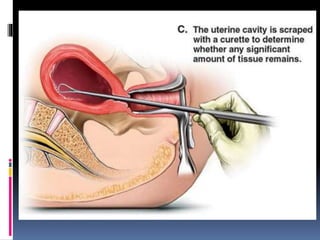
Vacuum aspiration (also called
suction curettage abortion) is the
most common abortion procedure in
the world. It falls under the broader
banner of dilation and curettage
(D&C), which can also be performed
with a sharp curette.
Manual Vacuum Aspiration
(MVA)
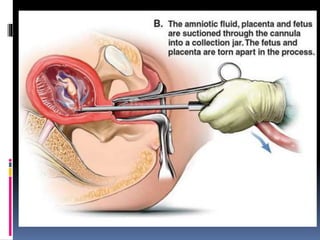
 removes the
fetus/embryo by suction
using a manual syringe
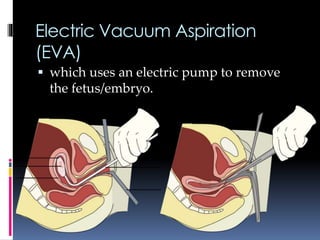
Electric Vacuum Aspiration
(EVA)
 which uses an electric pump to remove
the fetus/embryo.
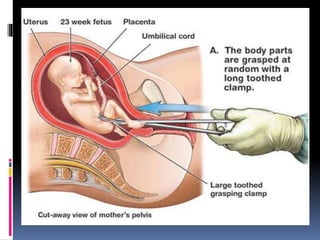
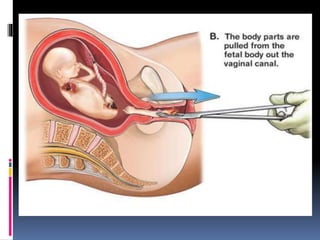
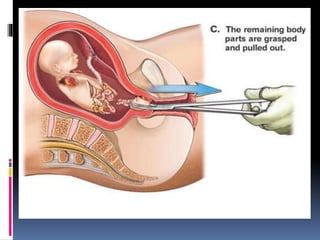
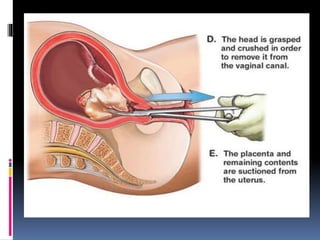
Dilation and Evacuation
 Dilation and evacuation (D&E) is done in the second 12
weeks (second trimester) of pregnancy. It usually includes
a combination of vacuum aspiration, dilation and
curettage (D&C), and the use of surgical instruments (such
as forceps).
 An ultrasound is done before a D&E to determine the size
of the uterus and the number of weeks of the pregnancy.
 A device called a cervical (osmotic) dilator is often inserted
in the cervix 24 hours before the procedure to help slowly
open (dilate) the cervix. Dilating the cervix reduces the
risk of any injury to the cervix during the
procedure. Misoprostol may also be given several hours
before surgery. This medicine can help soften the cervix.
Why the procedure is performed?
 The baby has a birth defect or
genetic problem.
 Your pregnancy is harmful to your
health.
 The pregnancy resulted after a
traumatic event such as rape or
incest.
Risks:
 Damage to the womb or cervix
 Uterine perforation
 Excessive bleeding
 Infection of the uterus or fallopian
tubes
 Scarring of the inside of the uterus
 Reaction to the medicines or
anesthesia
Risks:
 Not removing all of the tissue, with
the need for another procedure
Further Possible Complications
include:
 urinary tract infections (UTI)
 cervical trauma
 peritonitis
 endometritis
 salpingitis
 renal trauma
 pelvic inflammation
 embolism
 sterility
Motivation
 Personal
 Societal
 Maternal and fetal health
 Cancer
Society and Culture
 Abortion debate
 Abortion-rights movement
 Modern abortion law
 Sex-selective abortion
 Anti-abortion violence
PROS
 Safe & Low Risk
 Minimizes Illegal Abortion Risks
 Abortion is Non-Cancerous
 Minimizes Unwanted Children Abuse
 Financial & Success Stability
 Limiting Life-Threatening Suffering
 Fetus is Not a Separate Entity
 Population Control
CONS
 High Abortion Costs
 State Limitations & Restrictions
 Religious Influence
 Effect on Children Adoption
 Effect on Contraceptive Use
 Effect on Relationships
 Psychological Stress
 Future Contributions
Abortion in the Philippines
 470,000 induced abortions were
performed in the Philippines in
2000
 Researchers have shown that 90%
of the women who have abortions
are Catholic and that 70% have
some high school education
Abortion in the Philippines
 Metro Manila has the highest rate
at 53 per 1,000 women.
 Luzon has a rate of 2 per 1,000
women, while Visayas and
Mindanao have a similar rate of 18
per 1,000 women.
 800-1,000 women die because of
abortion complications.

Abortion

  • 1.
    Report by: HannahGabrielle Lledo and Jasmine Rivera
  • 2.
    What is Abortion? Abortionis a procedure to end a pregnancy. It uses medicine or surgery to remove embryo or fetus and placenta from the uterus. It is often called miscarriage.
  • 3.
  • 4.
    Induced Abortion It isalso called as self-induced miscarriage. Induced abortion is an abortion performed by the pregnant women herself outside the recognized medical system. Most induced abortions are done in the first 12 weeks of pregnancy.
  • 5.
    Risks of thistype of abortion:  Incomplete abortion  Infection  Hemorrhage  Damage to the uterus  Death
  • 6.
    Spontaneous Abortion Spontaneous abortion,also known as unintended miscarriage, is the unintentional expulsion of an embryo or fetus. It occurs in at least 15-20% of all recognized pregnancies and usually takes place before the 13th week of pregnancy.
  • 7.
    Causes:  Chromosome problems Drug and alcohol abuse  Exposure to environmental toxins  Hormone problems  Infection  Obesity  Physical problems with the mother’s reproductive organs
  • 8.
    Causes:  Problem withthe body’s immune response  Serious body-wide diseases in the mother  Smoking  Trauma  Stress
  • 9.
  • 10.
    Medical The medical abortionmethod is also referred to as the “abortion pill” method. Medical abortion is an abortion caused by medicine rather than surgery. Two medications are used in medical abortions: methotrexate and misoprostol. It is only available in women who are less than 7 weeks pregnant.
  • 11.
    Methotrexate Methotrexate tablets aretaken by mouth or an injection of methotrexate is given by your doctor. Methotrexate interferes with the growth of the placenta, which allows it to separate from the endometrium. This is an unlabelled use of methotrexate.
  • 12.
    Misoprostol Misoprostol are takenby mouth or inserted vaginally, usually 5 to 7 days later. Some doctors may give misoprostol ducally (dissolved between the gums and cheek). This medicine causes uterine contractions so that your body passes the uterine contents. The pregnancy usually ends at home within a day or two when the tissue from the uterus is passed.
  • 13.
    Side effects:  Nausea Vomiting  Fever  Chills  Haemorrhage  Incomplete abortion  Uterine or pelvic infection
  • 14.
    Side effects:  On-goingintrauteine pregnancy, requiring a surgical abortion for completion
  • 15.
    Surgical A surgical abortionalso known as aspiration abortion, empties the contents of your uterus and is usually performed within 12-14 weeks from your last normal menstrual period.
  • 16.
    Two types ofsurgical abortion: Vacuum Aspiration  Manual Vacuum Aspiration (MVA)  Electric Vacuum Aspiration (EVA) Dilation and Evacuation
  • 17.
    Vacuum Aspiration Vacuum aspiration(also called suction curettage abortion) is the most common abortion procedure in the world. It falls under the broader banner of dilation and curettage (D&C), which can also be performed with a sharp curette.
  • 21.
    Manual Vacuum Aspiration (MVA) removes the fetus/embryo by suction using a manual syringe
  • 22.
    Electric Vacuum Aspiration (EVA) which uses an electric pump to remove the fetus/embryo.
  • 23.
    Dilation and Evacuation Dilation and evacuation (D&E) is done in the second 12 weeks (second trimester) of pregnancy. It usually includes a combination of vacuum aspiration, dilation and curettage (D&C), and the use of surgical instruments (such as forceps).  An ultrasound is done before a D&E to determine the size of the uterus and the number of weeks of the pregnancy.  A device called a cervical (osmotic) dilator is often inserted in the cervix 24 hours before the procedure to help slowly open (dilate) the cervix. Dilating the cervix reduces the risk of any injury to the cervix during the procedure. Misoprostol may also be given several hours before surgery. This medicine can help soften the cervix.
  • 28.
    Why the procedureis performed?  The baby has a birth defect or genetic problem.  Your pregnancy is harmful to your health.  The pregnancy resulted after a traumatic event such as rape or incest.
  • 29.
    Risks:  Damage tothe womb or cervix  Uterine perforation  Excessive bleeding  Infection of the uterus or fallopian tubes  Scarring of the inside of the uterus  Reaction to the medicines or anesthesia
  • 30.
    Risks:  Not removingall of the tissue, with the need for another procedure
  • 31.
    Further Possible Complications include: urinary tract infections (UTI)  cervical trauma  peritonitis  endometritis  salpingitis  renal trauma  pelvic inflammation  embolism  sterility
  • 32.
    Motivation  Personal  Societal Maternal and fetal health  Cancer
  • 33.
    Society and Culture Abortion debate  Abortion-rights movement  Modern abortion law  Sex-selective abortion  Anti-abortion violence
  • 34.
    PROS  Safe &Low Risk  Minimizes Illegal Abortion Risks  Abortion is Non-Cancerous  Minimizes Unwanted Children Abuse  Financial & Success Stability  Limiting Life-Threatening Suffering  Fetus is Not a Separate Entity  Population Control
  • 35.
    CONS  High AbortionCosts  State Limitations & Restrictions  Religious Influence  Effect on Children Adoption  Effect on Contraceptive Use  Effect on Relationships  Psychological Stress  Future Contributions
  • 36.
    Abortion in thePhilippines  470,000 induced abortions were performed in the Philippines in 2000  Researchers have shown that 90% of the women who have abortions are Catholic and that 70% have some high school education
  • 37.
    Abortion in thePhilippines  Metro Manila has the highest rate at 53 per 1,000 women.  Luzon has a rate of 2 per 1,000 women, while Visayas and Mindanao have a similar rate of 18 per 1,000 women.  800-1,000 women die because of abortion complications.