Dr. Mayur Pai,
M.S. (OBG)
Consultant Infertility, Obstetrics, Gynecology
Laparoscopic and Minimal Invasive Surgeon,
Pai Hospital,
Vasco, Goa
The menstrual cycle is one of the
ways the body says that
everything is alright.
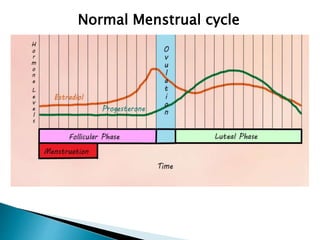
Normal Menstrual cycle
 A normal menstrual pattern is taken to be a ‘monthly bleed’. The cycle
length can vary, with a generally accepted normal range of 21-35 days
and a bleeding duration of 4-7 days.
 Abnormal bleeding can consist of intermenstrual bleeding with a flow
similar to that of a menstrual period. It can be ‘spotting’ that is noted as
stains on the underwear or after toileting.
 Abnormal bleeding also includes postcoital bleeding and
postmenopausal bleeding.
 Amenorrhoea (no menses)and menorrhagia (heavy menses) may occur as
part of the abnormal menstrual pattern.
 It is important to understand that menstrual patterns that do not
conform to the regular cycling discussed above can also be a
normal occurrence
 The age of the woman is a critical factor in assessing the need to
investigate or manage an abnormal menstrual pattern.
 In both puberty and the perimenopause, anovulatory cycles
occur, leading to failure to establish a distinct ‘withdrawal’
menstrual bleed.
 In periovulatory bleeding, bleeding or spotting can occur at
ovulation, about 14 days before the following menstrual
period.
 If there is a luteal phase defect, spotting can occur
premenstrually each month, said to be due to a lack of
progesterone.
 The incidence of irregular bleeding is low overall,
and the incidence of significant pathology is also low
 In a study of menstruation in 621 normal women over
20,672 cycles, intermenstrual bleeding was reported
in 100 cycles (39 women; 6.3% of the women studied
and 0.5% of cycles studied). These women were all
investigated and no pathology was found
General
 Contraceptives — hormonal contraceptive
methods and intrauterine devices
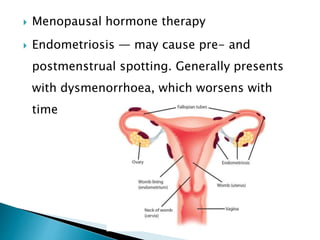
 Menopausal hormone therapy
 Endometriosis — may cause pre- and
postmenstrual spotting. Generally presents
with dysmenorrhoea, which worsens with
time
Uterine
 Endometrial polyps
 Endometrial hyperplasia (thickening)
 Fibroids — generally cause heavy bleeding but can
present with intermenstrual bleeding
 Pregnancy — ectopic, Miscarriage
 Endometritis — postnatal and postsurgical
 Uterine Cancer
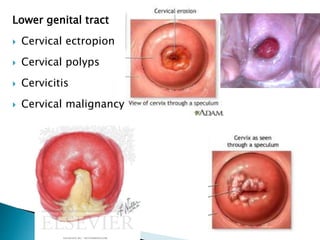
Lower genital tract
 Cervical ectropion
 Cervical polyps
 Cervicitis
 Cervical malignancy
 This is the most common invasive gynaecological cancer in
Australia, ranking sixth in terms of incident cancers in women
 It results in about 1400 new cases and 260 deaths every year
 Risk increases with age. It is most commonly diagnosed in
women aged 50-70 and is rare in those under 40.
 Risk factors include age >40, weight >90kg, prolonged exposure
to endogenous or exogenous unopposed oestrogen.
 The incidence of cervical cancer in Australia has
been dramatically reduced as a result of the
cervical cancer screening program.
 IMB is vaginal bleeding at any time other than during normal
menstruation.
 IMB is common, especially in women using hormonal
contraception or hormonal therapies. It is impractical and
unnecessary to refer every woman with a single episode of IMB
for immediate investigation. Women at risk of sexually
transmitted infection should have appropriate tests performed.
Women with persistent IMB should have a cervical Pap smear, a
transvaginal ultrasound and referral to a gynaecologist for
further assessment.
 PCB is vaginal bleeding after intercourse
 PCB is regarded as a cardinal symptom of cervical cancer
and the commonest presenting symptom for Chlamydia.
Therefore women complaining of PCB should have tests to
exclude this. It is commonly accepted that a single episode
of PCB in a woman who has a normal smear and cervical
appearance does not warrant immediate referral, but
recurrence or persistence of this symptom mandates
specialist gynecologist examination.
 Generally a cause of concern in the absence
of pregnancy
 These ladies have other related menstrual
disorders and fertility issues.
 Can be easily corrected if the lady visits the
doctor early.
 The woman’s age and stage of reproductive life.
 History of bleeding (how often, what time of the month,
postcoital, etc).
 Risk of pregnancy/recent delivery/recent gynaecological surgery
or instrumentation.
 Use of hormonal therapy and contraceptive history.
 Previous abnormal Pap tests.
 Sexual history, including risk for sexually transmissible
infections, and relevant partner history.
 Previous history of STIs
Depends on what the doctor suspects
 Speculum examination
 Pap test
 Blood or urine tests if indicated
 Can be a useful additional test in investigating abnormal
bleeding when an endometrial cause is suspected.
 Focal thickening of the endometrium can be suggestive of
polyps, and submucosal fibroids may distort the
endometrial stripe, while global thickening of the
endometrium can be indicative of hyperplasia, and gross
myometrial involvement is suggestive of malignancy.
Routine pap test. Yearly once
Cervical cancer vaccination. Once in life time
Sono mammography. Once every 1-3 years.
Abnormal uterine bleeding

Abnormal uterine bleeding

  • 1.
    Dr. Mayur Pai, M.S.(OBG) Consultant Infertility, Obstetrics, Gynecology Laparoscopic and Minimal Invasive Surgeon, Pai Hospital, Vasco, Goa
  • 2.
    The menstrual cycleis one of the ways the body says that everything is alright.
  • 3.
  • 4.
     A normalmenstrual pattern is taken to be a ‘monthly bleed’. The cycle length can vary, with a generally accepted normal range of 21-35 days and a bleeding duration of 4-7 days.  Abnormal bleeding can consist of intermenstrual bleeding with a flow similar to that of a menstrual period. It can be ‘spotting’ that is noted as stains on the underwear or after toileting.  Abnormal bleeding also includes postcoital bleeding and postmenopausal bleeding.  Amenorrhoea (no menses)and menorrhagia (heavy menses) may occur as part of the abnormal menstrual pattern.
  • 5.
     It isimportant to understand that menstrual patterns that do not conform to the regular cycling discussed above can also be a normal occurrence  The age of the woman is a critical factor in assessing the need to investigate or manage an abnormal menstrual pattern.  In both puberty and the perimenopause, anovulatory cycles occur, leading to failure to establish a distinct ‘withdrawal’ menstrual bleed.
  • 6.
     In periovulatorybleeding, bleeding or spotting can occur at ovulation, about 14 days before the following menstrual period.  If there is a luteal phase defect, spotting can occur premenstrually each month, said to be due to a lack of progesterone.
  • 7.
     The incidenceof irregular bleeding is low overall, and the incidence of significant pathology is also low  In a study of menstruation in 621 normal women over 20,672 cycles, intermenstrual bleeding was reported in 100 cycles (39 women; 6.3% of the women studied and 0.5% of cycles studied). These women were all investigated and no pathology was found
  • 8.
    General  Contraceptives —hormonal contraceptive methods and intrauterine devices
  • 9.
     Menopausal hormonetherapy  Endometriosis — may cause pre- and postmenstrual spotting. Generally presents with dysmenorrhoea, which worsens with time
  • 10.
  • 11.
     Endometrial hyperplasia(thickening)  Fibroids — generally cause heavy bleeding but can present with intermenstrual bleeding  Pregnancy — ectopic, Miscarriage  Endometritis — postnatal and postsurgical  Uterine Cancer
  • 12.
    Lower genital tract Cervical ectropion  Cervical polyps  Cervicitis  Cervical malignancy
  • 14.
     This isthe most common invasive gynaecological cancer in Australia, ranking sixth in terms of incident cancers in women  It results in about 1400 new cases and 260 deaths every year  Risk increases with age. It is most commonly diagnosed in women aged 50-70 and is rare in those under 40.  Risk factors include age >40, weight >90kg, prolonged exposure to endogenous or exogenous unopposed oestrogen.
  • 15.
     The incidenceof cervical cancer in Australia has been dramatically reduced as a result of the cervical cancer screening program.
  • 16.
     IMB isvaginal bleeding at any time other than during normal menstruation.  IMB is common, especially in women using hormonal contraception or hormonal therapies. It is impractical and unnecessary to refer every woman with a single episode of IMB for immediate investigation. Women at risk of sexually transmitted infection should have appropriate tests performed. Women with persistent IMB should have a cervical Pap smear, a transvaginal ultrasound and referral to a gynaecologist for further assessment.
  • 17.
     PCB isvaginal bleeding after intercourse  PCB is regarded as a cardinal symptom of cervical cancer and the commonest presenting symptom for Chlamydia. Therefore women complaining of PCB should have tests to exclude this. It is commonly accepted that a single episode of PCB in a woman who has a normal smear and cervical appearance does not warrant immediate referral, but recurrence or persistence of this symptom mandates specialist gynecologist examination.
  • 18.
     Generally acause of concern in the absence of pregnancy  These ladies have other related menstrual disorders and fertility issues.  Can be easily corrected if the lady visits the doctor early.
  • 19.
     The woman’sage and stage of reproductive life.  History of bleeding (how often, what time of the month, postcoital, etc).  Risk of pregnancy/recent delivery/recent gynaecological surgery or instrumentation.  Use of hormonal therapy and contraceptive history.  Previous abnormal Pap tests.  Sexual history, including risk for sexually transmissible infections, and relevant partner history.  Previous history of STIs
  • 20.
    Depends on whatthe doctor suspects
  • 21.
     Speculum examination Pap test  Blood or urine tests if indicated
  • 22.
     Can bea useful additional test in investigating abnormal bleeding when an endometrial cause is suspected.  Focal thickening of the endometrium can be suggestive of polyps, and submucosal fibroids may distort the endometrial stripe, while global thickening of the endometrium can be indicative of hyperplasia, and gross myometrial involvement is suggestive of malignancy.
  • 23.
    Routine pap test.Yearly once Cervical cancer vaccination. Once in life time Sono mammography. Once every 1-3 years.