NON INVASIVE VENTILATION
LOW AND HIGH FLOW OXYGEN DEVICES
Unnikrishnan.sv90@gmail.com
9995274650
NON INVASSIVE VENTILATION
WHAT IS NON INVASSIVE VENTILATION ?
ADVANTAGES
• Avoids intubation
• Reduces patients work load
• Provides adequate oxygen
• Improves quality of sleep
• Allows patient to communicate
• Allows patient to drink and eat
• Reduces the chance of infection
• Inexpensive
uses
• Weaning trial
• A/C Respiratory failure
• Neuro muscular diseases
• Copd
• Pulomonary edema
• Bronchiectasis
• Poliomyelitis
• Muscular dystrophy etc ..
Contraindications
• Respiratory arrest
• Uncoperative patients
• Inability to protect airways
• Trauma or burns in face
• Facial or GI Surgery
• Apnoea
• Extreme anxiety
• Obesity
Types of non invasive ventilators
• Generally classified into 2
1. Volume pre set ventilators
2. Pressure preset ventilators
Pressure pre set ventilators 2 modes
• CPAP
• BiPAP
NURSING RESPONSIBILITY
• Check patients breath rate and ausculate
• Maintain spo2 100%
• Inform the physician regarding any abnormality in ABG Values
• Always check for air leake
• Give more importance to patients needs like suctioning ,or giving
sputum cups if secretions are present
• Maintain a ABG CHART
Complications of CPAP and BiPAP
• Insufficient ventillatory support
• Mask leake
• Skin trauma
• Sputum retention
• Nutritional deficiencies
• Abdominal discomfort
OXYGEN DELIVERY METHODS /SYSTEMS
• 2 SYSTEMS
• LOW FLOW DELIVERY SYSTEMS
• HIGH FLOW DELIVERY SYSTEMS
LOW FLOW OXYGEN DEVICES
• NASAL CANNULA
• SIMPLE FACE MASK
• PARTIAL REBREATHER MASK
HIGH FLOW DEVICES /SYSTEMS
• TRANS TRACHEAL CATHETRES
• VENTURI MASK
• AEROSOL MASK
• TRACHEOSTOMY COLLARS
• T –PIECE
• NON REBREATHING MASK WITH RESERVOIR AND ONE WAY VALVE
• HIGH HUMIDITY FACE TENTS
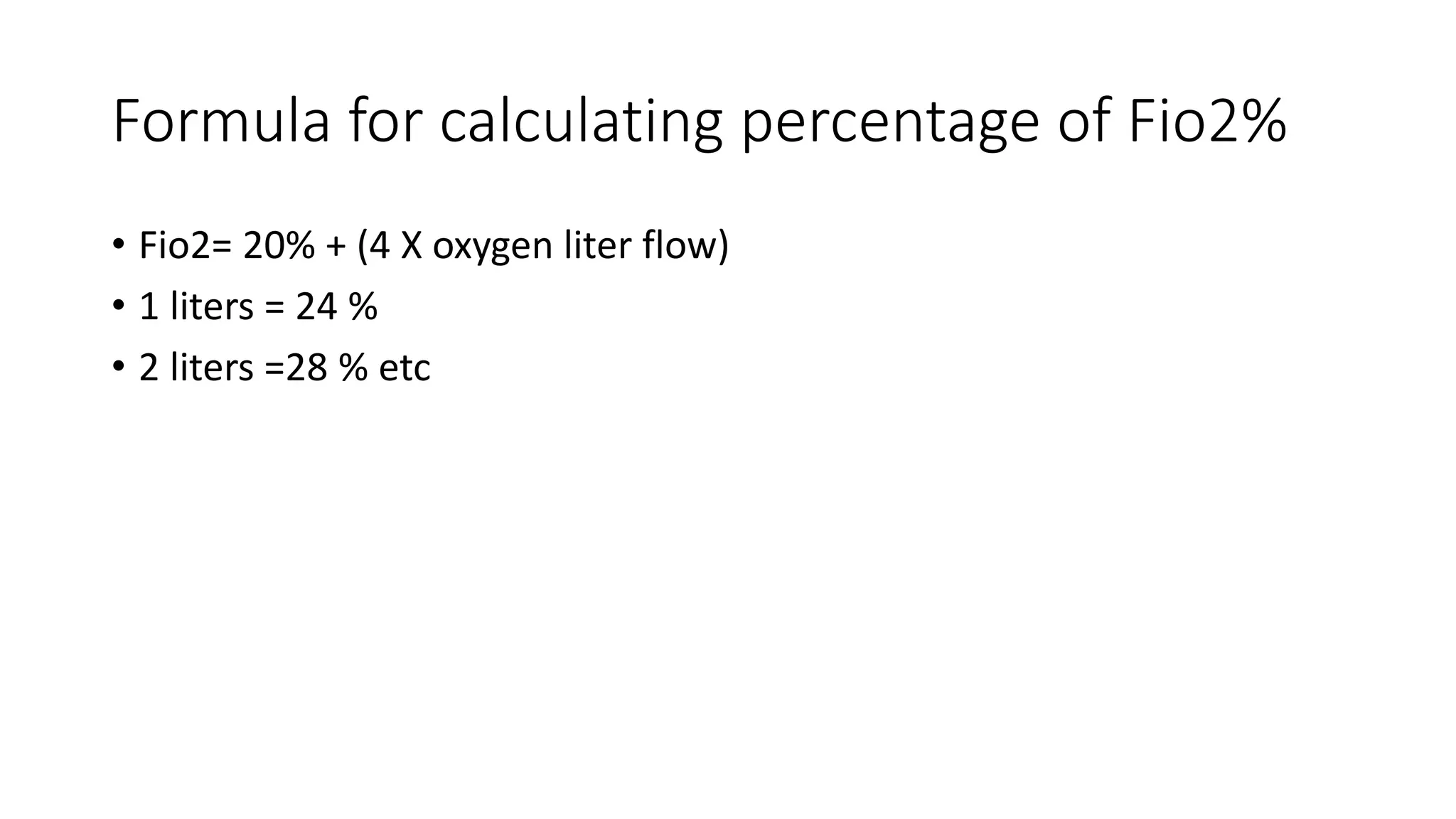
Formula for calculating percentage of Fio2%
• Fio2= 20% + (4 X oxygen liter flow)
• 1 liters = 24 %
• 2 liters =28 % etc
• Suppose if we deliver 6 litres of oxygen per min ,what is the Fio2
• ANS- Fio2 = 44% with 6 litres of O2 P/M
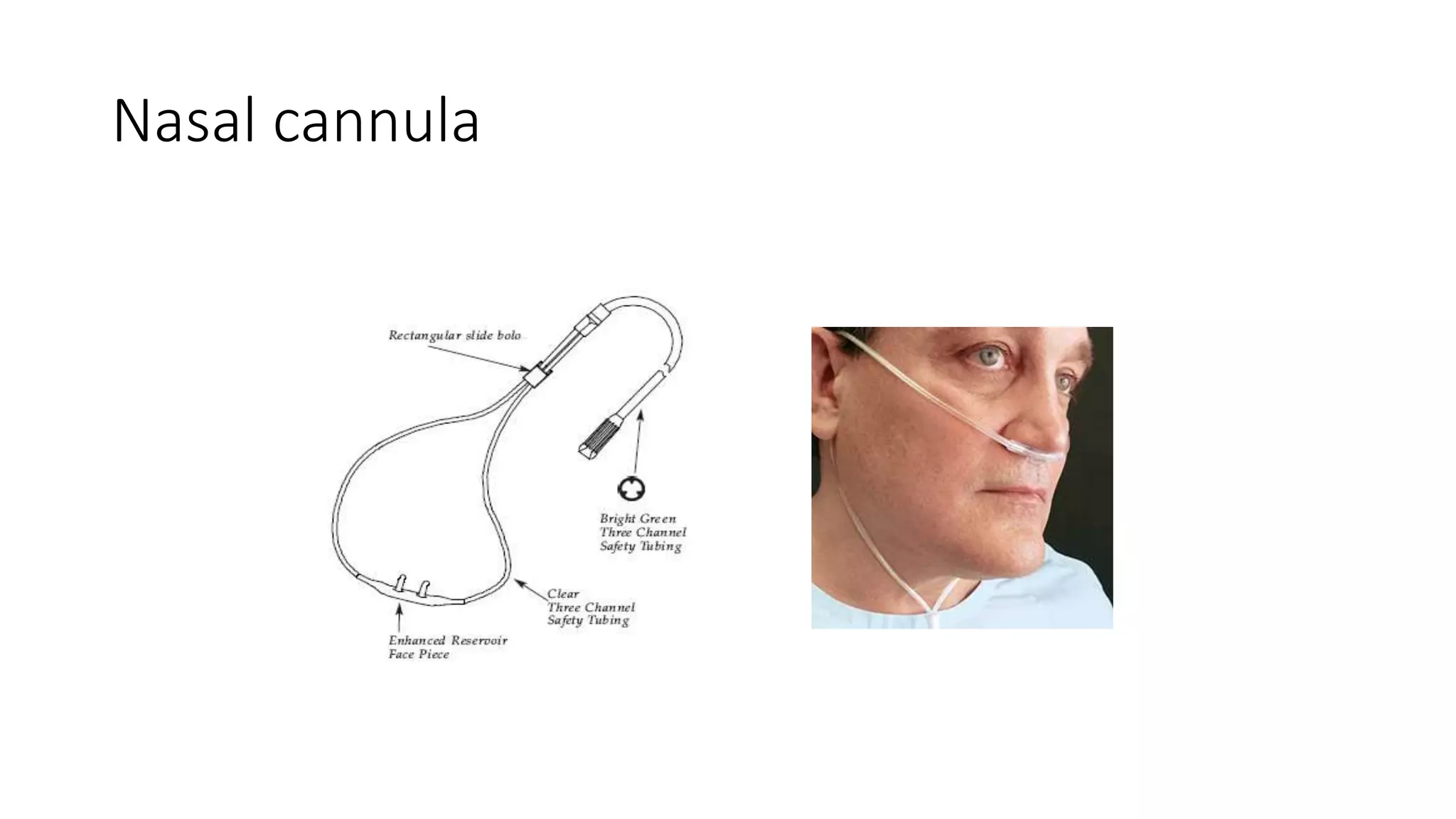
NASAL CANNULA
• Flow rate - 2-6 litres per min
• 24-45 percentage
• Advantage – light weight ,comfortable,inexpensive and continuous
use with meals and activity.
• Disadvantage – nasal mucosa drying
Nasal cannula
Oropharyngeal catheter
• Flow rate – 1-6 Litres
• Deliver 22-44 %
• Adv – inexpensive and no need for tracheostomy
• Dis adv – mucosal drying ,catheter should be changed frequently to
both nostrils
Oropharyngeal catheter /air way.
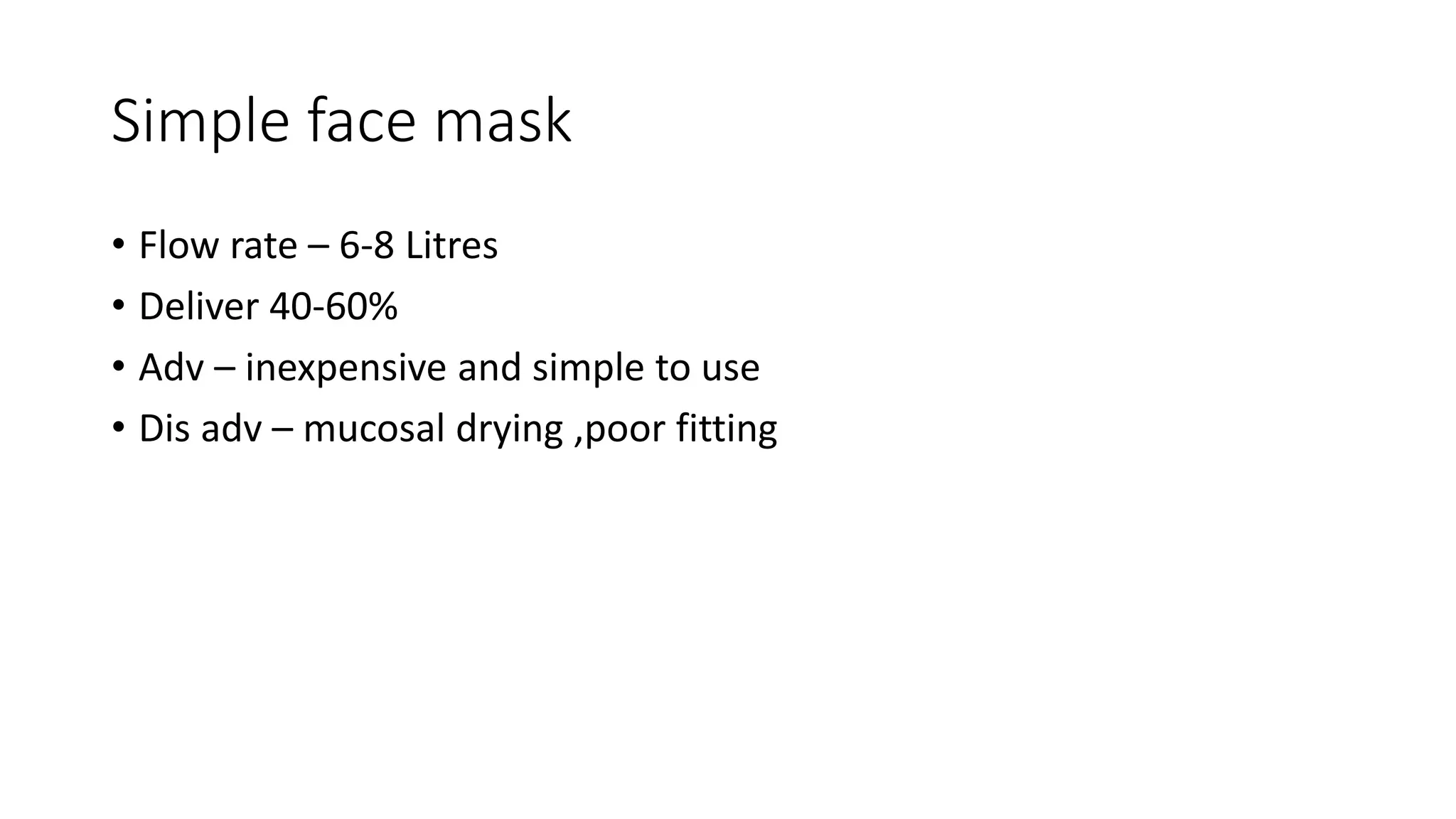
Simple face mask
• Flow rate – 6-8 Litres
• Deliver 40-60%
• Adv – inexpensive and simple to use
• Dis adv – mucosal drying ,poor fitting
Simple Face mask
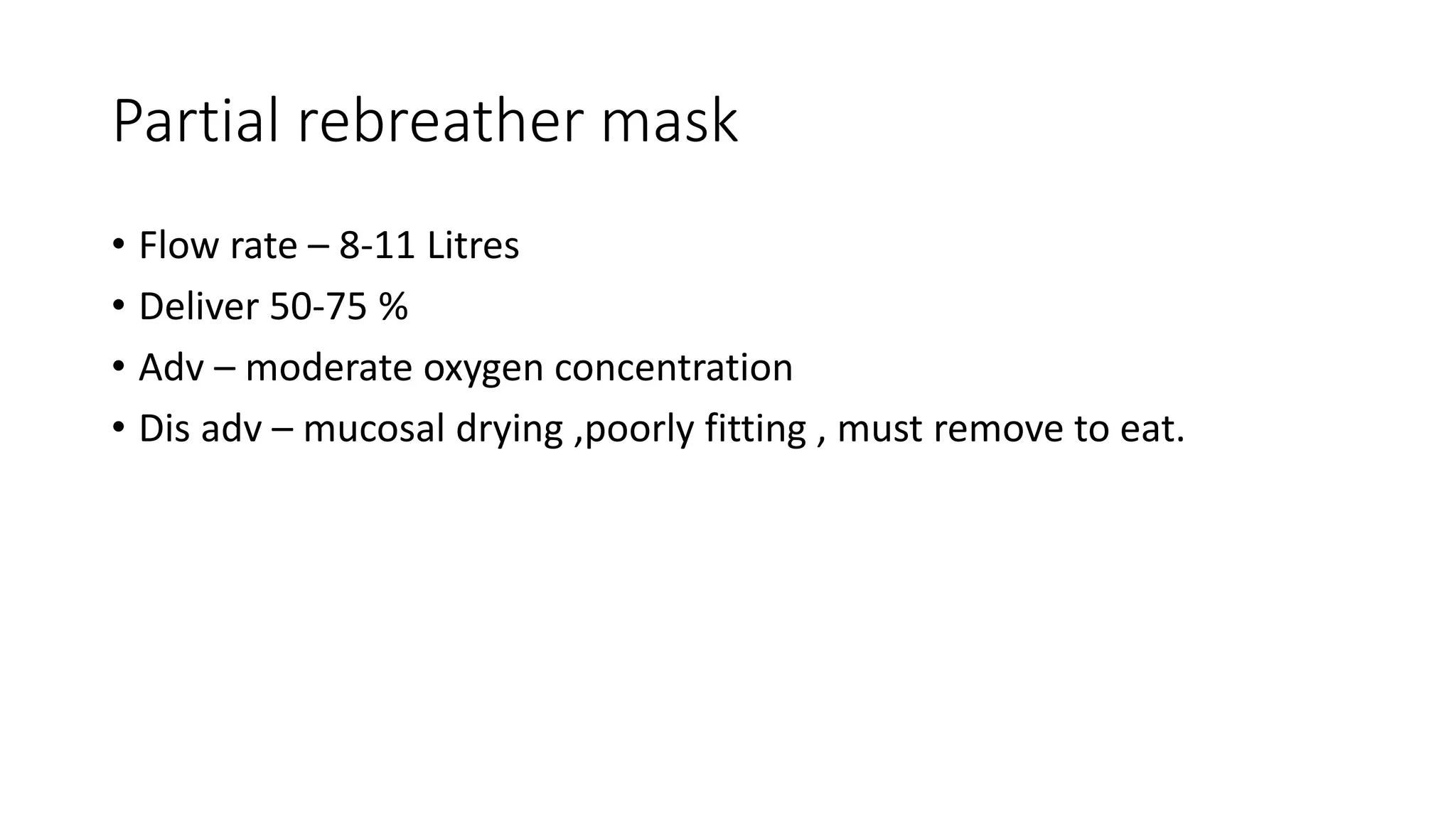
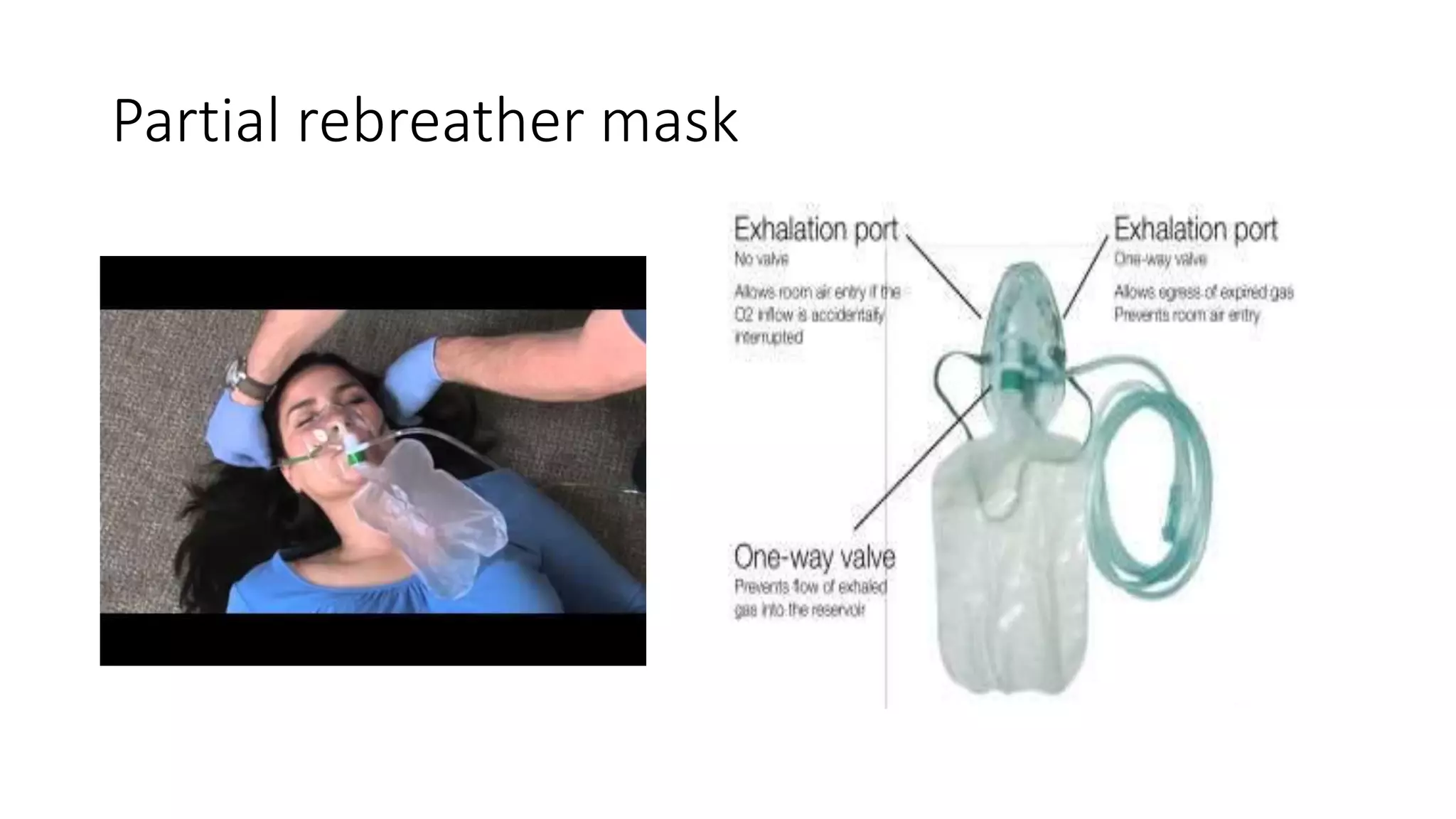
Partial rebreather mask
• Flow rate – 8-11 Litres
• Deliver 50-75 %
• Adv – moderate oxygen concentration
• Dis adv – mucosal drying ,poorly fitting , must remove to eat.
Partial rebreather mask
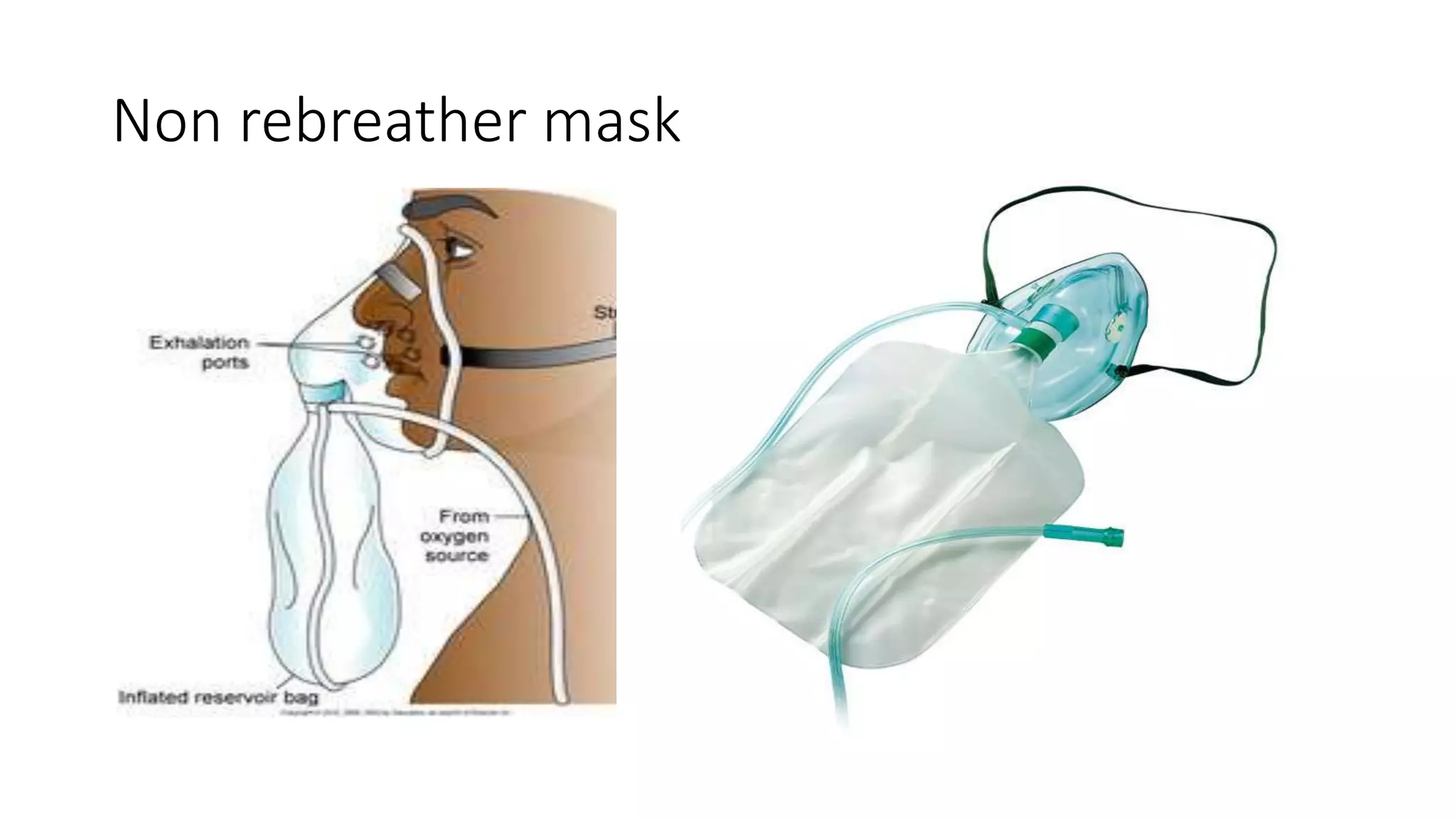
Non rebreather mask
• Flow rate – 10-12 Litres
• Deliver 80- 100 %
• Adv – High oxygen concentration
• Dis adv – poorly fitting ,must remove to eat
Non rebreather mask
HIGH FLOW DEVICES
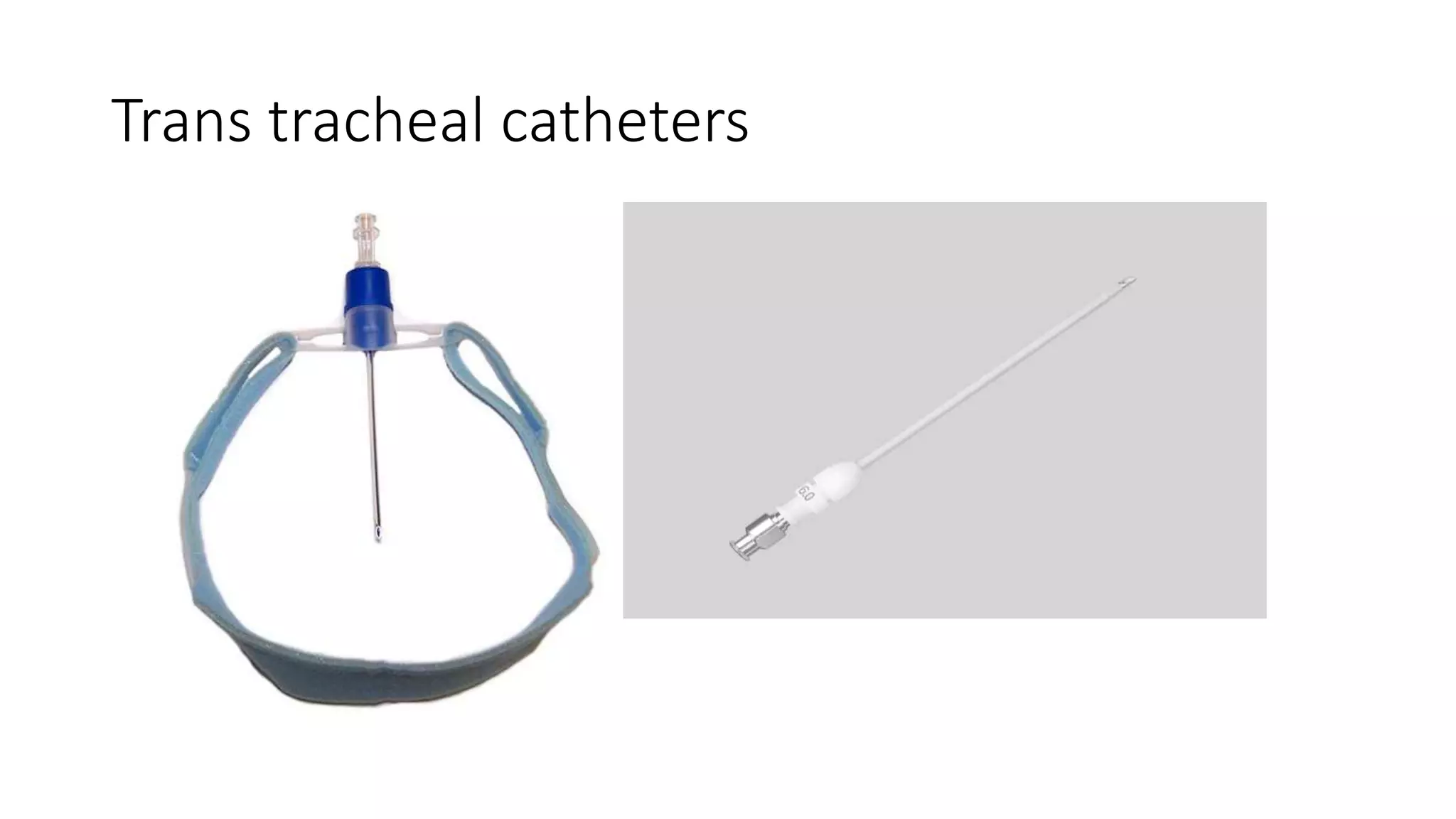
Trans tracheal catheter
• Flow rate – 4 Litres/min
• Deliver 60=100 %
• Adv – more comfortable , concealed by clothings ,less o2 is needed to
achieve 100% saturation
• Dis adv – requires frequent and regular cleaning and needs surgical
intervention
Trans tracheal catheters
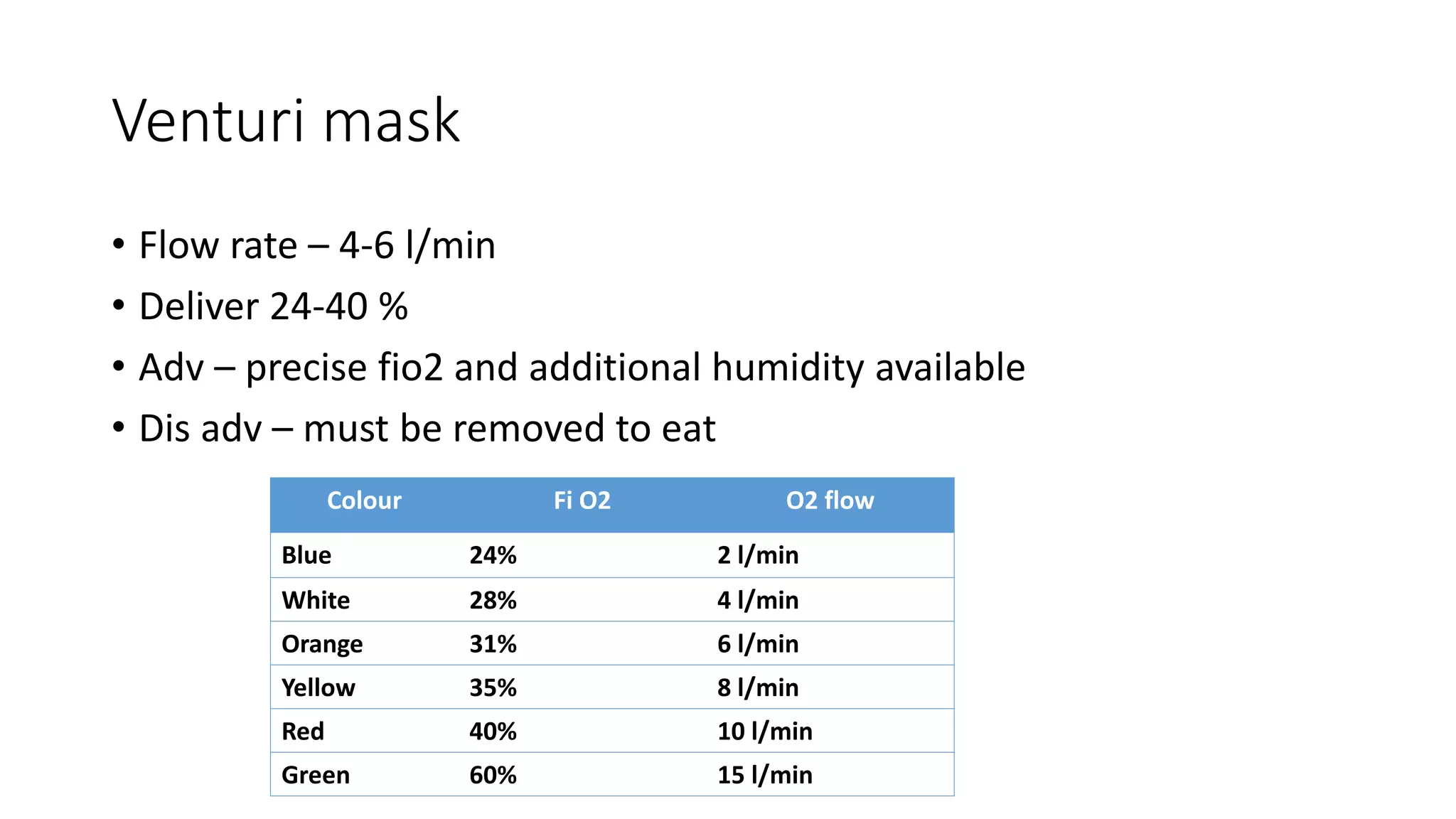
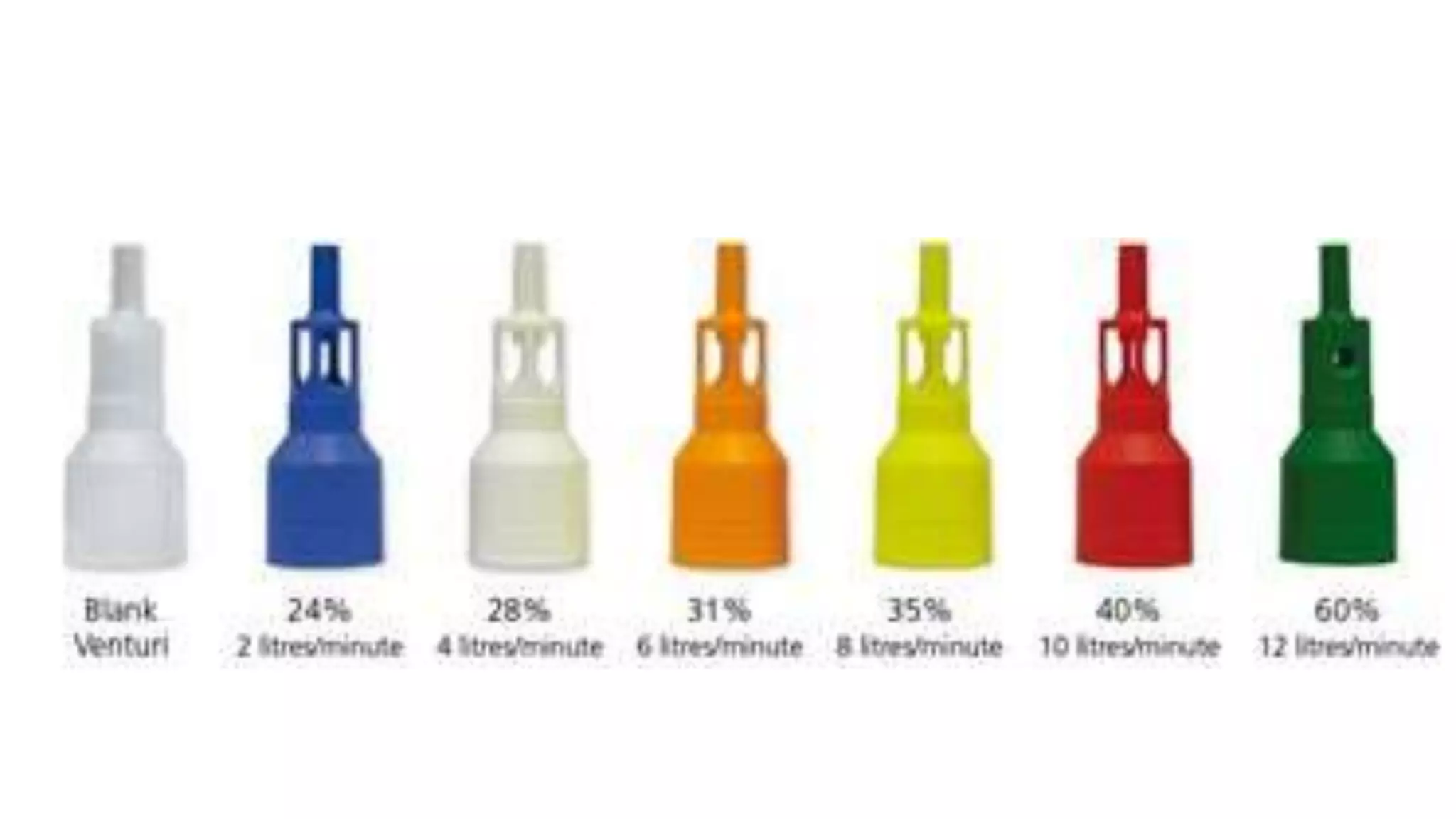
Venturi mask
• Flow rate – 4-6 l/min
• Deliver 24-40 %
• Adv – precise fio2 and additional humidity available
• Dis adv – must be removed to eat
Colour Fi O2 O2 flow
Blue 24% 2 l/min
White 28% 4 l/min
Orange 31% 6 l/min
Yellow 35% 8 l/min
Red 40% 10 l/min
Green 60% 15 l/min
Trans tracheal catheter
• Flow rate – 4 Litres/min
• Deliver 60=100 %
• Adv – more comfortable , concealed by clothings ,less o2 is needed to
achieve 100% saturation
• Dis adv – requires frequent and regular cleaning and needs surgical
intervention
Aerosol mask
• Flow rate – 8-10 Litres/min
• Deliver 21- 100% fio2 based on nebulizer setting
• Adv – good humidity and accurate Fio2
• Dis adv – uncomfortable for some
Aerosol mask
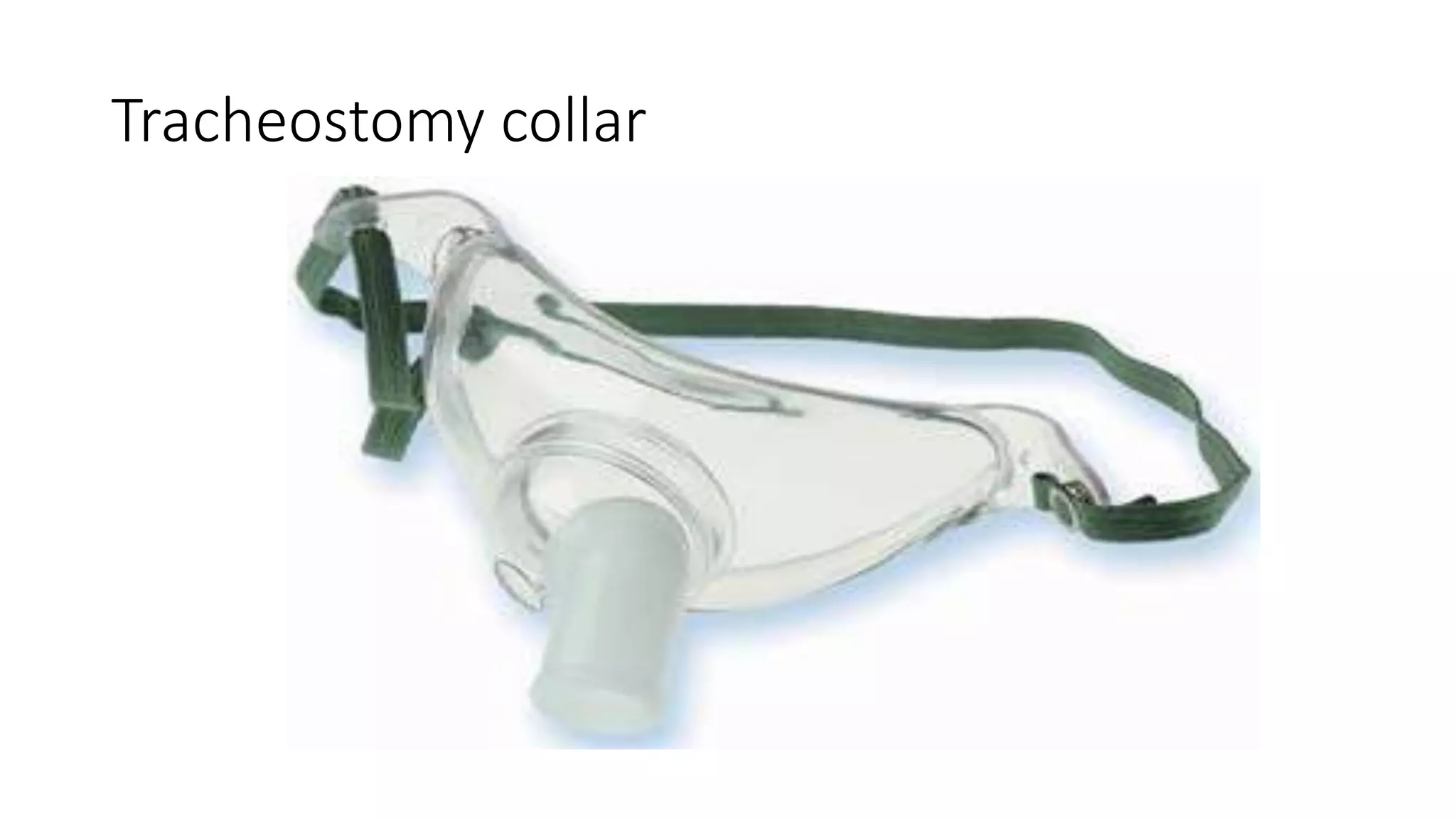
Tracheostomy collar
• Flow rate – 8-10 Litres/min
• Deliver 30- 100 %
• Adv – good humidity , comfortable ,fairly accurate Fio2
• Dis adv – requires surgical intervention
Tracheostomy collar
T-piece
• Flow rate – 8-10 Litres/min
• Deliver 60=100 %
• Adv –good humidity , comfortable ,fairly accurate Fio2
• Dis adv – heavy with tubings
T-piece
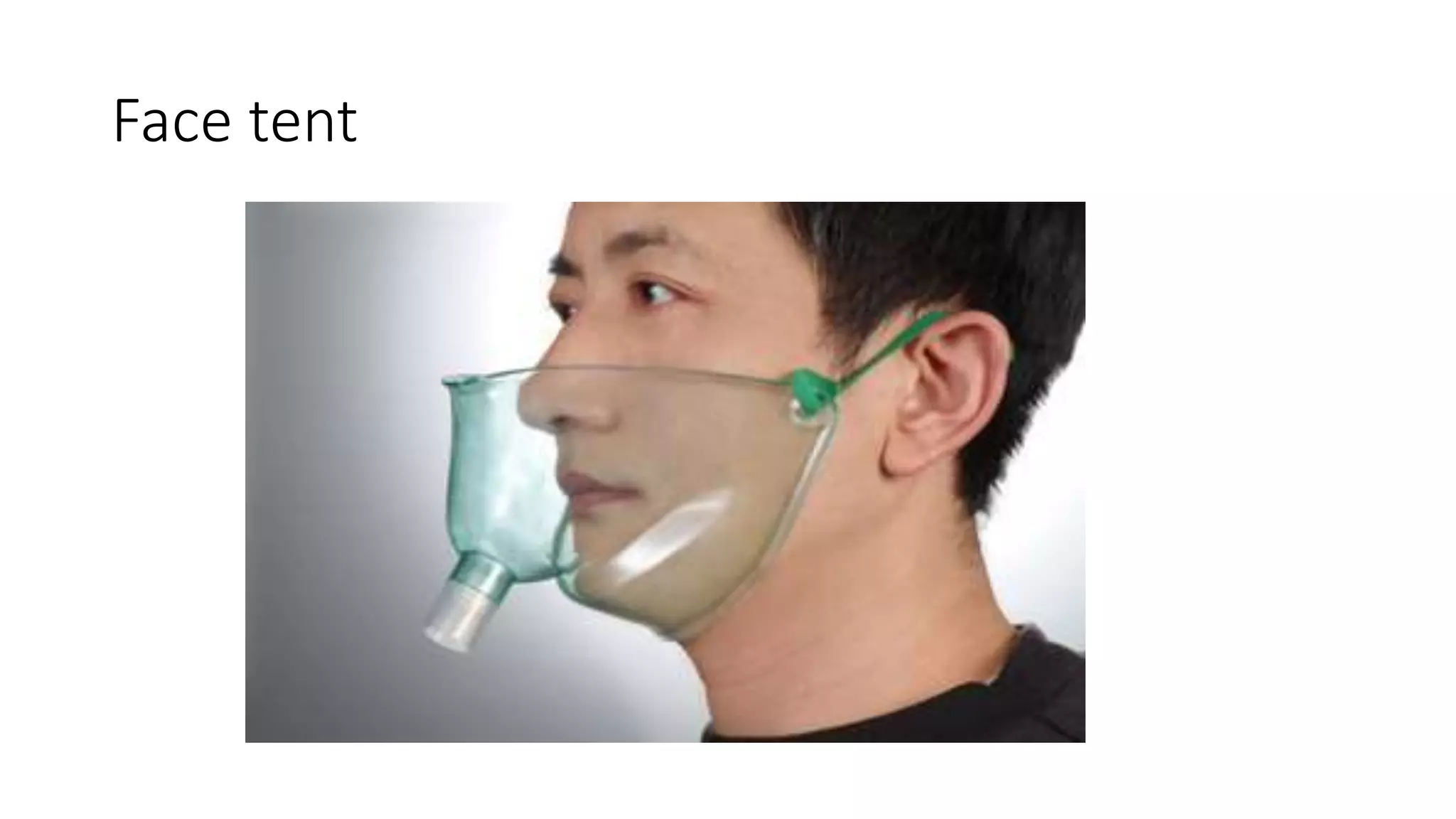
Face tent
• Flow rate – 8-10 Litres/min
• Deliver 30- 100 %
• Adv –good humidity , comfortable ,fairly accurate Fio2
• Dis adv – bulky and cumbersome
Face tent
Complications Of Oxygen therapy
• Infection
• Combustion
• Oxygen toxicity
• Atlectasis
• Retrolental fibroplasis
• Retinal damage
• Asphyxia
• Thank you
• Count down starts now ……….
• Study well ,future of India is in our hands ……..

HIGH AND LOW FLOW OXYGEN DEVICES

  • 1.
    NON INVASIVE VENTILATION LOWAND HIGH FLOW OXYGEN DEVICES Unnikrishnan.sv90@gmail.com 9995274650
  • 2.
    NON INVASSIVE VENTILATION WHATIS NON INVASSIVE VENTILATION ?
  • 3.
    ADVANTAGES • Avoids intubation •Reduces patients work load • Provides adequate oxygen • Improves quality of sleep • Allows patient to communicate • Allows patient to drink and eat • Reduces the chance of infection • Inexpensive
  • 4.
    uses • Weaning trial •A/C Respiratory failure • Neuro muscular diseases • Copd • Pulomonary edema • Bronchiectasis • Poliomyelitis • Muscular dystrophy etc ..
  • 5.
    Contraindications • Respiratory arrest •Uncoperative patients • Inability to protect airways • Trauma or burns in face • Facial or GI Surgery • Apnoea • Extreme anxiety • Obesity
  • 6.
    Types of noninvasive ventilators • Generally classified into 2 1. Volume pre set ventilators 2. Pressure preset ventilators Pressure pre set ventilators 2 modes • CPAP • BiPAP
  • 7.
    NURSING RESPONSIBILITY • Checkpatients breath rate and ausculate • Maintain spo2 100% • Inform the physician regarding any abnormality in ABG Values • Always check for air leake • Give more importance to patients needs like suctioning ,or giving sputum cups if secretions are present • Maintain a ABG CHART
  • 8.
    Complications of CPAPand BiPAP • Insufficient ventillatory support • Mask leake • Skin trauma • Sputum retention • Nutritional deficiencies • Abdominal discomfort
  • 9.
    OXYGEN DELIVERY METHODS/SYSTEMS • 2 SYSTEMS • LOW FLOW DELIVERY SYSTEMS • HIGH FLOW DELIVERY SYSTEMS
  • 10.
    LOW FLOW OXYGENDEVICES • NASAL CANNULA • SIMPLE FACE MASK • PARTIAL REBREATHER MASK
  • 11.
    HIGH FLOW DEVICES/SYSTEMS • TRANS TRACHEAL CATHETRES • VENTURI MASK • AEROSOL MASK • TRACHEOSTOMY COLLARS • T –PIECE • NON REBREATHING MASK WITH RESERVOIR AND ONE WAY VALVE • HIGH HUMIDITY FACE TENTS
  • 12.
    Formula for calculatingpercentage of Fio2% • Fio2= 20% + (4 X oxygen liter flow) • 1 liters = 24 % • 2 liters =28 % etc
  • 13.
    • Suppose ifwe deliver 6 litres of oxygen per min ,what is the Fio2 • ANS- Fio2 = 44% with 6 litres of O2 P/M
  • 14.
    NASAL CANNULA • Flowrate - 2-6 litres per min • 24-45 percentage • Advantage – light weight ,comfortable,inexpensive and continuous use with meals and activity. • Disadvantage – nasal mucosa drying
  • 15.
  • 16.
    Oropharyngeal catheter • Flowrate – 1-6 Litres • Deliver 22-44 % • Adv – inexpensive and no need for tracheostomy • Dis adv – mucosal drying ,catheter should be changed frequently to both nostrils
  • 17.
  • 18.
    Simple face mask •Flow rate – 6-8 Litres • Deliver 40-60% • Adv – inexpensive and simple to use • Dis adv – mucosal drying ,poor fitting
  • 19.
  • 20.
    Partial rebreather mask •Flow rate – 8-11 Litres • Deliver 50-75 % • Adv – moderate oxygen concentration • Dis adv – mucosal drying ,poorly fitting , must remove to eat.
  • 21.
  • 22.
    Non rebreather mask •Flow rate – 10-12 Litres • Deliver 80- 100 % • Adv – High oxygen concentration • Dis adv – poorly fitting ,must remove to eat
  • 23.
  • 24.
  • 25.
    Trans tracheal catheter •Flow rate – 4 Litres/min • Deliver 60=100 % • Adv – more comfortable , concealed by clothings ,less o2 is needed to achieve 100% saturation • Dis adv – requires frequent and regular cleaning and needs surgical intervention
  • 26.
  • 27.
    Venturi mask • Flowrate – 4-6 l/min • Deliver 24-40 % • Adv – precise fio2 and additional humidity available • Dis adv – must be removed to eat Colour Fi O2 O2 flow Blue 24% 2 l/min White 28% 4 l/min Orange 31% 6 l/min Yellow 35% 8 l/min Red 40% 10 l/min Green 60% 15 l/min
  • 29.
    Trans tracheal catheter •Flow rate – 4 Litres/min • Deliver 60=100 % • Adv – more comfortable , concealed by clothings ,less o2 is needed to achieve 100% saturation • Dis adv – requires frequent and regular cleaning and needs surgical intervention
  • 30.
    Aerosol mask • Flowrate – 8-10 Litres/min • Deliver 21- 100% fio2 based on nebulizer setting • Adv – good humidity and accurate Fio2 • Dis adv – uncomfortable for some
  • 31.
  • 32.
    Tracheostomy collar • Flowrate – 8-10 Litres/min • Deliver 30- 100 % • Adv – good humidity , comfortable ,fairly accurate Fio2 • Dis adv – requires surgical intervention
  • 33.
  • 34.
    T-piece • Flow rate– 8-10 Litres/min • Deliver 60=100 % • Adv –good humidity , comfortable ,fairly accurate Fio2 • Dis adv – heavy with tubings
  • 35.
  • 36.
    Face tent • Flowrate – 8-10 Litres/min • Deliver 30- 100 % • Adv –good humidity , comfortable ,fairly accurate Fio2 • Dis adv – bulky and cumbersome
  • 37.
  • 38.
    Complications Of Oxygentherapy • Infection • Combustion • Oxygen toxicity • Atlectasis • Retrolental fibroplasis • Retinal damage • Asphyxia
  • 39.
    • Thank you •Count down starts now ………. • Study well ,future of India is in our hands ……..